
| Rank | Name | Country | Group | Speeches | |
|---|---|---|---|---|---|
| 1 |

|
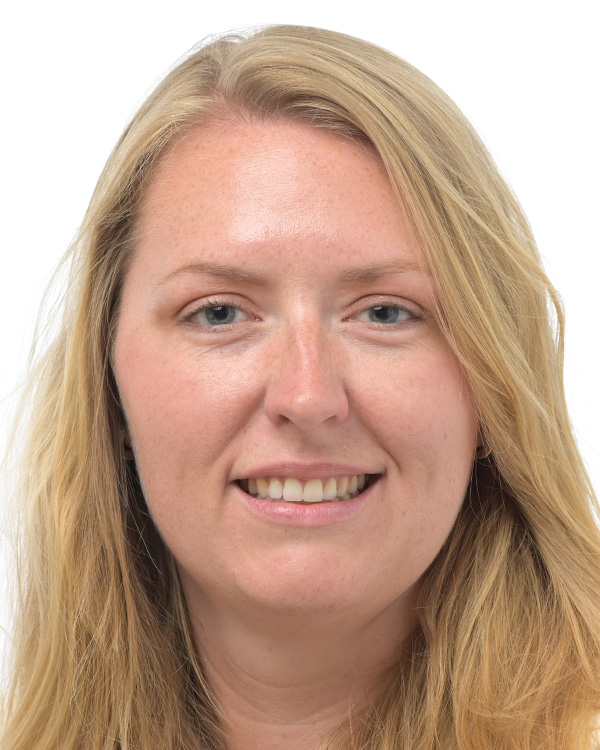
Lukas Sieper | Germany DE | Renew Europe (Renew) | 487 |
| 2 |

|
Juan Fernando López Aguilar | Spain ES | Progressive Alliance of Socialists and Democrats (S&D) | 454 |
| 3 |

|
Sebastian Tynkkynen | Finland FI | European Conservatives and Reformists (ECR) | 451 |
| 4 |

|
João Oliveira | Portugal PT | The Left in the European Parliament (GUE/NGL) | 284 |
| 5 |

|
Vytenis Povilas Andriukaitis | Lithuania LT | Progressive Alliance of Socialists and Democrats (S&D) | 273 |
All Speeches (13)
Interim report on the proposal for the multiannual financial framework for 2028-2034 (debate)
Date:
28.04.2026 10:24
| Language: NL
Speeches
Mr President, a European AI company that is becoming a global player. An external border that stands like a house. A defense that keeps our continent so safe that we can just live here. That is what this budget should make possible. And you can. But then we have to be honest. More money is not the answer. I'll make choices. A budget that invests a little in everything does not really invest in anything. We don't need a bigger budget. We must dare to choose what makes us stronger: our security, our innovation and our economy. Choosing is one thing, but we also need to know what it yields. And that's where it's wringing. The taxpayer can expect us to spend his money well and that it will also produce results. But time and time again, the European Court of Auditors warns that this is not yet the case. It is time to change that with a better view of where European money ends up and a stricter approach to abuse, because every euro counts.
Savings and Investments Union: time to accelerate the process to deepen market integration (debate)
Date:
11.03.2026 15:39
| Language: NL
Speeches
Mr President, Commissioner, Europe is full of talent. Everywhere ‑ups are born with smart ideas and technologies, which make our economy stronger and make us less dependent on others. Too often we see the same thing happen: a company starts in Europe, grows a little and then leaves for another country, because it cannot get enough money here to continue to grow. If we want to focus on strong European companies and remain competitive, we have to start with the start ‑ups. They must be able to get enough money here, not only in the beginning, but also when they want to grow. That is why we must finally regulate the European capital markets. Only in this way will the Netherlands and Europe remain strong in today's world. Fewer rules and differences between countries, more investments and, above all, more opportunities for our companies to grow here. We already have the talent in Europe. Now we have to take care of the money.
European Semester for economic policy coordination 2026 - European Semester for economic policy coordination: employment and social priorities for 2026 (joint debate)
Date:
10.03.2026 15:03
| Language: NL
Speeches
Mr President, we must invest in our defence to ensure that we remain safe. Because our security is not free, but neither is the money we need for it. We have made clear agreements with each other about our national debts and to ensure that European countries are financially sound. Now new situations call for new choices. This was the case with the coronavirus outbreak, with the Russian invasion of Ukraine, and it is now the case again, in order to guarantee our security. This requires money. This requires making choices. We need to cut back where possible and set new priorities to invest in our security. If we do not do this and only increase the national debt, the bill will end up with the taxpayer. We can't let this happen. In the Netherlands we dare to make these choices, but we should do so throughout Europe, because we are jointly facing this challenge and all Member States must take their responsibility. That also means stopping your own pants and getting your public finances in order so that the bill does not end up with someone else. Provide financial buffers, reduce debt and invest in defense.
Presentation of the EU Cardiovascular Health Plan (debate)
Date:
16.12.2025 17:50
| Language: NL
Speeches
No text available
The EU’s post-2027 long-term budget: Parliament’s expectations ahead of the Commission’s proposal (debate)
Date:
09.07.2025 11:31
| Language: NL
Speeches
Mr President, Commissioner, Minister, with the new multiannual budget, we have the opportunity to build a strong Europe. Then, however, we must seize that opportunity. We do this by investing heavily in our defence, by jointly producing weapons, strengthening our infrastructure and increasing our digital security. Also by growing our companies and economy with more room for innovation, clean technologies and a strong manufacturing industry. By building technological independence of America and China in terms of chips and AI, so that Europe is once again at the forefront. If we want to keep this affordable, we have to make choices within the current budget. Not opting for what we have always done, but opting for a multiannual budget that looks forward to a safe and prosperous Europe. The choices are clear. Now it's up to us to show courage and choose the future.
The EU’s post-2027 long-term budget: Parliament’s expectations ahead of the Commission’s proposal (debate)
Date:
09.07.2025 11:31
| Language: NL
Speeches
Mr President, Commissioner, Minister, with the new multiannual budget, we have the opportunity to build a strong Europe. Then, however, we must seize that opportunity. We do this by investing heavily in our defence, by jointly producing weapons, strengthening our infrastructure and increasing our digital security. Also by growing our companies and economy with more room for innovation, clean technologies and a strong manufacturing industry. By building technological independence of America and China in terms of chips and AI, so that Europe is once again at the forefront. If we want to keep this affordable, we have to make choices within the current budget. Not opting for what we have always done, but opting for a multiannual budget that looks forward to a safe and prosperous Europe. The choices are clear. Now it's up to us to show courage and choose the future.
Financial activities of the European Investment Bank – annual report 2024 (debate)
Date:
07.07.2025 18:59
| Language: NL
Speeches
Mr President, Commissioner, Vice-President, defence, weapons and ammunition contribute directly to our security in an increasingly unsafe world. However, there is still a stigma and that causes our collective security to be hindered. We need to get rid of that stigma. We no longer have the luxury of abandoning weapons and ammunition. The European Investment Bank has already made great strides in strengthening our security. The EIB is increasingly contributing to essential projects that protect our citizens. And I am pleased that our Vice-President, Robert de Groot, is making an effort to do so. However, one last necessary step remains to be taken: the removal of weapons and ammunition from the access list. So let us further strengthen the EIB as a cornerstone of our security. It is time to break the taboo and invest with confidence in our defence capabilities. This is how we protect not only Europe, but also our future.
A revamped long-term budget for the Union in a changing world (debate)
Date:
06.05.2025 13:45
| Language: NL
Speeches
Mr President, if we want Europe to emerge stronger from this era, we must dare to invest smartly and purposefully. A strong European Union starts with security. That means investing more in our own defence, so that we are no longer dependent on the United States but can guarantee our own security. It also means focusing on innovation and industry, so that we can once again become a leader in technology. In this way, we can better protect our jobs and prosperity here in Europe. But that requires choices, because not every European project contributes to that power. The answer cannot always be: Then a bigger budget. After all, it is the people at home who pay the bill. That's why we need to re-prioritize. Take away resources where they no longer make a difference and invest them where they are helping us to move forward: in our security, innovation and economic strength. Let us choose a European budget that does not do everything a little, but does the right thing really well, a budget that looks ahead and makes Europe resilient and prosperous.
Mr President, we hear the concerns of our entrepreneurs and companies on a daily basis. They want to innovate and grow in Europe, but money is needed to do so. However, this venture capital is currently not sufficiently present in Europe. That is why companies still leave too often and we are less and less able to compete with the United States and China. For more than a decade, the European Parliament has spoken many fine words about our capital markets. However, too little is happening. We are stuck in thick reports and good intentions. However, words do not allow companies to grow and do not help innovative start-ups with money. Words don't help our entrepreneurs stay competitive. This requires action. Now let's roll up our sleeves and make sure that our companies can get money more easily. It cannot be the case that successful companies have to go abroad, because the financial grass is greener there. We know what is needed and we need to take immediate action, because the entrepreneurs and investors are not waiting. We're ready. Let's get to work.
Mr President, today European politics speaks with a clear voice. The ECB shows strong ambition on climate change, but seems to underestimate the impact of geopolitical tensions on inflation. We therefore call upon you: Take geopolitics seriously. The world is changing fast. War and conflict have shown over and over again in recent years how they can fuel inflation and disrupt our economy. The energy crisis that followed Russia's invasion of Ukraine was not an incident, but a warning. Geopolitical instability will continue to play a major role in the economy in the coming years. It is therefore essential that the ECB develops scenarios and is prepared for future crises. Because when you work hard in the Netherlands, you should be able to live a nice life and not have to worry about a new bill or a washing machine that breaks down. It's time to take people's money worries at home seriously. This is possible when the ECB takes geopolitical risks seriously, but also closely monitors its own role. True independence means: No political business. The ECB has one task: maintaining price stability. This requires strictly market-neutral policies without the ECB making political choices in its buy-back programmes and other instruments. The ECB should not be guided by political pressures or ideological agendas – this undermines its credibility and effectiveness. We therefore ask you: Maintain the neutral role of the ECB. Let the financial markets function without undue distortions and ensure that the ECB remains independent in its actions, not just in its name. Only in this way can we effectively fight inflation and protect the purchasing power of all of us.
Mr President, Mrs Lagarde, Europe was once a continent of stability, where hard work was rewarded, where your savings grew and where you could plan for the future. You could set aside part of your salary every month for a bigger purpose – a house, a pension or a well-deserved holiday. Thanks to a decent interest rate, that goal came closer step by step. But that certainty is gone. More and more people can't make ends meet. Not because they don't work hard, but because life becomes priceless. Saving feels like luxury, while it used to be a matter of course. Money that was put aside evaporates. Because while wages are lagging behind, the prices of groceries, energy and housing are rising to unsustainable levels. The main task of the European Central Bank was to safeguard price stability. Yet we have been surprised by skyrocketing inflation in recent years. How could this happen? What went wrong? Yes, the Russian invasion of Ukraine has played a major role. Suddenly, energy prices became unpredictable, supply chains were disrupted and food prices skyrocketed. But this crisis was not the first shock to our economy. And she won't be the last either. I'm not saying the ECB has been idle, but the question is: Were we prepared? While the ECB was busy researching climate and sustainability – key themes, no doubt – other risks were underestimated, especially geopolitical ones. War and conflict. Mrs Lagarde, why did the ECB not have scenarios ready for a geopolitical shock like this? Why were we not prepared to mitigate the impact on inflation and the economy? This is not a hypothetical discussion. Today, it is the war in Ukraine that is putting pressure on the economy. But what is tomorrow? Tomorrow may be something else. After all, what if tensions around Taiwan escalate and global chip supplies dry up? Or what if the United States soon imposes new trade restrictions on European companies? What if energy prices skyrocket again due to geopolitical instability in the Middle East? The ECB must not only respond to crises, but must be ahead of them. We cannot afford to be surprised again and again, when inflation is shooting through the roof again and millions of Europeans are paying the price. Let's not forget who pays the final bill. These are the ordinary people at home: the hardworking Dutch, the young Europeans trying to buy their first home or the pensioners watching their savings slowly evaporate. They expect leadership. They expect us, as policymakers, and you, from the ECB, to think ahead and not lag behind the facts. So I ask you, Mrs Lagarde, to take geopolitical risks as seriously as climate change, to develop scenarios, to be prepared for the next economic shock, so that we are not surprised again, so that we do not let our purchasing power slip away again. After all, this is not about numbers, interest rates or inflation. This is about people, this is about their dreams and this is about their future. Europe must once again become a continent where people can look forward with confidence, where hard work pays off again, where saving is possible again and where you can make plans and actually make them happen. That's the assignment. That is the responsibility, and the time to take that responsibility is now.
No text available
General budget of the European Union for the financial year 2025 – all sections (debate)
Date:
22.10.2024 14:02
| Language: NL
Speeches
Mr President, it is time to open our eyes to the harsh reality. Our security is under pressure and economic prosperity is no longer self-evident. This requires a budget that is ready for the future. We can no longer spend two-thirds of our budget on agriculture and cohesion. We need to invest heavily in defence, get a grip on migration and stimulate innovation. These are the real challenges of today. Together, let's create a budget that not only keeps our continent safe, but also ensures green growth and a strong position in the world. Together we can build a better future.