
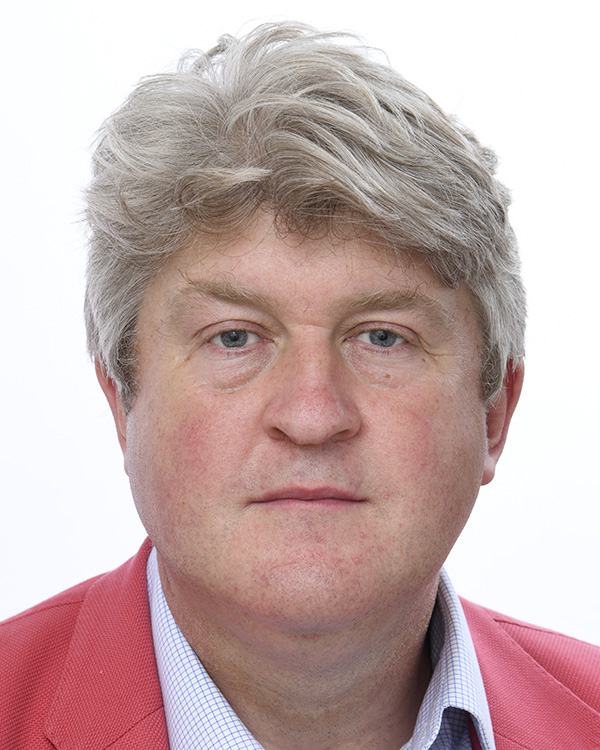


| Rank | Name | Country | Group | Speeches | |
|---|---|---|---|---|---|
| 1 |

|
Lukas Sieper | Germany DEU | Non-attached Members (NI) | 390 |
| 2 |
|
Juan Fernando López Aguilar | Spain ESP | Progressive Alliance of Socialists and Democrats (S&D) | 354 |
| 3 |
|
Sebastian Tynkkynen | Finland FIN | European Conservatives and Reformists (ECR) | 331 |
| 4 |
|
João Oliveira | Portugal PRT | The Left in the European Parliament (GUE/NGL) | 232 |
| 5 |
|
Vytenis Povilas Andriukaitis | Lithuania LTU | Progressive Alliance of Socialists and Democrats (S&D) | 227 |
All Contributions (42)
One-minute speeches on matters of political importance
Mr President, the aim of hate speech laws is, of course, to suppress division in society and to create social harmony. However, there is absolutely no evidence that they work. In fact, the effect of hate speech laws is exactly to the contrary: people resent the fact that they are threatened with prosecution for expressing their views. We now know that increasing proportions of populations across Europe are afraid to express their views, rightly or wrongly, but this does not affect how people think in any way, it just affects what they are afraid to say and what they resent. Nevertheless, it is proposed to initiate a prosecution against Ireland for failure to comply with European Union laws. I say that is fundamentally misguided, and the reason that Ireland perhaps is so reluctant to comply with those laws is because it looks across the channel and it sees elderly people being prosecuted, it sees police increasingly tied up with looking at social media postings on the internet, instead of making neighbourhoods and communities safer. It is simply not working, and I would urge the Commission to revisit the approach that they are taking to hate speech laws, and indeed to Ireland.
Violations of religious freedom in Tibet
I'm just wondering: if one has been wilfully misrepresented, do you have a right of reply under standing orders? Because I did say freedom of religion was contained in the International Covenant on Civil and Political Rights. The previous speaker chose to misrepresent what I said, wilfully. I presume he's not a stupid person, so he wilfully chose to misrepresent what I said.
Violations of religious freedom in Tibet
Madam President, as we stand here at this moment we're celebrating 50 years of diplomatic relations with China. In that time much has been achieved by the European Union. There have been enormous developments. There have also been enormous developments in China, which must be commended. However, differences also remain, and while it would be wrong not to acknowledge the developments that have taken place in China – huge advances particularly in technology and in AI, equally it would be wrong not to acknowledge the differences. However, just because there are differences does not mean that we shouldn't engage in dialogue, that we shouldn't seek to persuade each other of each other's positions. Freedom of religion is a central tenet of Western belief, of Western civilisation. We believe that religious groups should be autonomous in how they organise themselves. That is not the experience of Buddhists in Tibet, nor is it the experience of Muslim groups in China, be it Uyghurs or Hui Muslims, or indeed of Roman Catholics, where two bishops have been appointed notwithstanding the fact that the Apostolic See is now vacant. However, it is more than a central tenet of Western belief: it's also a commitment that China entered into when it signed the ICCPR, and it's one that I think we can legitimately ask that they honour for the sake of adherence to various religions across China.
One-minute speeches on matters of political importance
(start of speech off mic) ... I suppose the instability and unprecedented level of conflict in the world is such that when two of the world's greatest powers, two of the world's most populous nations, both nuclear armed, are squaring up and threatening each other, it barely receives a word here in the European Union, or indeed from this Parliament. I would like to take this opportunity to express my condolences to the families of those slaughtered so savagely in Kashmir recently. But I think it is also important for this Parliament to call for restraint and dialogue. The speech of Pakistan's army chief, General Munir, to representatives of the diaspora a couple of days before the attack is viewed as inflammatory in India. However, there is no evidence of any link between Pakistan and the heinous attack and, in the absence of such evidence, any attack by India and Pakistan, which is itself a frequent victim of terrorist attacks, would be unjustified. However, one cannot help but reflect on the benefits of democratically elected leaders speaking on behalf of their country rather than military men. In that regard, one might recall that when the Great Leader Jinnah outlined his vision of Pakistan in 1947, he spoke of no distinction between one community and another.
Action Plan for Affordable Energy (debate)
Mr President, I'm not here very long, but already I have the impression that this place operates like a bubble. I've listened to numerous speeches this week saying that the only thing that our citizens care about is defence. Colleagues, I do not believe for a moment that this Parliament will be judged on whether or not there are soldiers wearing the European Union insignia on their shoulder in five years' time. The success or failure of this Parliament will be judged on whether or not we bring down energy prices in Europe, and whether or not we provide energy stability and security across Europe. And the same is true, Commissioner, of your Commission, in my view. I do very much welcome the action plan that has been announced, though. Clearly, we need a huge investment in our infrastructure. Clearly, we need to break the link between gas‑pricing and energy‑pricing, because that has resulted in energy prices remaining artificially high across Europe. But we can't wait for grid infrastructure. We do need to look at innovative solutions. Everybody across Europe is talking about the benefits of AI. At the same time, the same people are saying that we can't have data centres. Well, we can't have it both ways. We do need to look at whether data centres can be used to stabilise our grid in the short term, while we wait for our grid to be enhanced.
The need for EU support towards a just transition and reconstruction in Syria (RC-B10-0157/2025)
Mr President, I voted in favour of this resolution supporting a just transition and reconstruction in Syria today. The people of Syria have suffered for too long at the hands of a brutal dictator to have it replaced by an equally brutal regime. I acknowledge the suspension and revision of the sanctions regime, which – we must acknowledge – had little or no impact on Assad's reign and worsened the lives of the ordinary people of Syria, 90 % of whom now live in poverty. I look on with great dismay at the persecution and revenge killings of 1 225 civilians and members of the Alawite majority faith in recent days, and even greater dismay at the Commission's silence in the face of that killing. The silence of the European Union's chief diplomat on the slaughter of civilians – even if they were once protected by, or may even have supported, leaders that she doesn't like – is a failure on her part; one that lowers her and lowers the EU further on the world stage.
Unlawful detention and sham trials of Armenian hostages, including high-ranking political representatives from Nagorno-Karabakh, by Azerbaijan
Mr President, colleagues, the deterioration in respect for human rights in Azerbaijan should be a source of concern to this Parliament. But so, too, should the Commission's silence in the face of that. The ongoing detention and trial of 16 persons from Nagorno-Karabakh, including eight former leaders, must be condemned for what it is: a Stalinist show trial. So, too, the denial of access to the media and observers, even though the trials are supposedly being held in public. This is exacerbated by Azerbaijan's ongoing refusal to cooperate with the European Committee for the Prevention of Torture and Inhuman or Degrading Treatment, and this, too, should be noted by this Parliament and the European Commission. The Red Cross, the only external organisation with access to these prisoners, has now been asked to withdraw from Azerbaijan and this, too, needs to be noted. It does seem that the Commission is only capable of condemning one country at a time, and that should not be the case when there is such a clear deterioration in standards, as there is in Azerbaijan.
Stepping up international action to protect whales following Iceland’s decision to extend commercial whaling until 2029 (debate)
Madam President, colleagues, the extension of Iceland's commercial whaling, allowing up to 426 whales to be killed each year, must be condemned and combated by the European Union. Whales are vital for our marine ecosystems, for carbon stability and for sequestration, and scientific research also underscores their intelligence and social complexity, making their protection even more urgent. Existing international laws lack strict enforcement and, we know, are not adequately effective. Therefore, a stronger, enforceable action under updated international frameworks is required. However, we also need to look at the other causes of the decline of the whale population. It has been suggested by some politicians that offshore wind farms are responsible for that. But in that regard, I would say, quoting Herman Melville, that 'ignorance is the parent of fear', because there is no evidence. There is limited evidence linking wind farms that are embedded in the seabed, at least in their construction. There is no evidence whatsoever linking floating wind farms to the damage to whales.
Georgia's worsening democratic crisis following the recent parliamentary elections and alleged electoral fraud (RC-B10-0179/2024)
Mr President, I just wish to explain my vote on Georgia and why I voted against the resolution. Simply, I voted against the resolution because it bore no relation, in my view, with the statement of the long-term mission which was in place of the OSCE-ODIHR, but to which the European Parliament, the NATO Parliamentary Assembly, the OSCE Parliamentary Assembly, the Council of Europe and the Parliamentary Assembly of the Council of Europe also subscribed. Colleagues, in 2016 a Declaration of Principles for International Election Observation was agreed, and it was endorsed at that time by the Commission and since by the Parliament. Essentially, what it does is say that we need to be very careful about people who arrive in country for a very short period of time around election time. We put in an impartial mission for a long period of time that assesses the overall election during the whole period of the election and indeed looks at the treatment of essential freedoms around that. That mission was put in place with the agreement of everybody, and it came up with a statement. I happen to know the person who was in charge of that, but that is not why I agree with it: it is the principle. I also know those who put forward the resolution, but I just think we have to respect the processes, and there is always a danger that people who are going there for a very short period of time can have their heads turned by regimes, but there is equally a danger that they can have their heads turned by the opposition, and when faced with a conflict between short-term observers and a long-term mission, I have to side with the long-term mission. And for that reason I have no alternative – and reluctantly, given that many of my colleagues were involved – but to not support the resolution.
Need to adopt an ambitious international legally binding agreement on plastic pollution, including in the marine environment
Mr President, colleagues, plastic pollution is one of the most visible manifestations of humanity's destruction of the planet that we see. It is also something that profoundly frightens me. To walk on Spanish Point Beach with my little children when the tide goes out, and to pick up pieces of plastic and put them away, I'm struck by how different it was to when I was a child, and how different it will be when they're adults if they get to bring their children out to that beach, because plastic production is increasing exponentially. We produce approximately 460 million tonnes of plastic in the world annually, and that production is set to triple by 2060 with current productions. Yes, recycling of plastic is hugely important – we currently recycle only a third of the plastic produced – but recycling isn't enough. We have to reduce the production of plastic. If you look at those who developed plastic and interviews with them and their hopes for it, it's really instrumental because they saw it as an environmental benefit that we wouldn't have to cut down trees, but they never imagined that plastic would be produced for single-use materials. They imagined that it would be something that could be used and reused, rather than this single-use plastic, which we must combat. In my own constituency, plastic pollution and litter is a huge problem along the Clare coast. Lahinch, Doolin and even Mountshannon, which is inland, are cited by An Taisce for plastic pollution. Ireland is the highest producer of plastic waste per person in the European Union, 65 kg a year per person, twice the EU average. Most of the EU's plastic is burned and, as I said, less than a third is recycled. So I think it is very important that we conclude the Global Plastic Treaty this week. But, Commissioner, I share your reservations about it – we do need to go further, but we do need to at least start combating this. Because, as I said, I talked about my aesthetic sensibilities in picking up plastic – that, of course, is irrelevant compared to the impact it is having on habitats and the many species that rely on not having to survive amid plastic for their future. So it is, as I say, something that I hope the European Union can work on and support, but also develop further because there are many weaknesses in what is proposed. But it is at least a start.
Prison conditions in the EU (debate)
Madam President, the Council of Europe's 2023 annual report on prison populations noted that Cyprus, Romania, France, Belgium, Hungary, Italy and Slovenia are all grappling with severe overcrowding, with the prison density of more than 105 inmates per 100 places available, with Ireland, Portugal, Finland and Denmark not far behind. Cork prison, in the constituency that I represent, is already at 120 % capacity, with 60 of its 355 inmates sleeping on the floor. Of course, those levels of overcrowding make the prisons extremely dangerous – not just for inmates, but also for those who work with those inmates. Yet we hear our government parties, as they campaign, talking about increasing minimum sentencing. I mean, the question arises: where are you going to put these inmates? Who is going to be Barabbas? Who is going to be released instead? Instead of just talking about more prison spaces, which, yes, are needed, we also need to ensure that there are fewer people serving short-term sentences, and prisons don't become a place where we are housing people with addiction problems and mental health issues. Fundamental reform is needed of our prisons across Europe.
One-minute speeches on matters of political importance
Mr President, I suppose I too wish to express reservations about the proposed Mercosur agreement. Over the past number of years, farmers have been asked, rightly, in my view, to farm in a sustainable way, to farm in a way which is environmentally sustainable and can guarantee a high-quality product to European consumers, and also a very high quality of animal welfare, and to increasingly farm in a way that reduces carbon emissions and reduces the use of pesticides, herbicides, et cetera. All of that, colleagues, I believe, is threatened by the Mercosur agreement. But even more than that, the proposal which we are now hearing that because there is opposition to the Mercosur agreement in particular Member States that it will be split so that only the trade component will be voted on here by qualified majority voting and the remainder left to be ratified by Member States at some time in the future, if at all. That, colleagues, is profoundly undemocratic. If that was the road that we had started on, it might be acceptable, but it is not. It will only be done if it is clear that it cannot be passed any other way, to bypass Member States. And that is unacceptable in my view.
Escalation of violence in the Middle East and the situation in Lebanon (debate)
Madam President, in the TEU, the European Union pledges itself to respect the principles of the UN Charter and international law. That is why we must suspend the trade association agreement with Israel now. Irish troops and those of our Polish colleagues in southern Lebanon are there serving in UNIFIL in furtherance of those principles of the UN Charter. That is why the Union must stand with them when they refuse to relocate, when they fly the UN flag, and when they protect the civilian populations of that area from both sides and their service there has not been without sacrifice. We must recall that. We must also recall that only two years ago, Irish troops were attacked. Captain Seán Rooney paid the ultimate price and the perpetrators were shielded from justice by Hezbollah. So it is not a case of taking one side over the other. It is a case of standing up for the principles of the UN Charter. We must sanction Israel to further that and Irish troops must be supported in maintaining their positions in southern Lebanon.
One-minute speeches on matters of political importance
(Start of speech off mic) … like the need to regulate disciplinary procedures for medical professionals at a European level. The procedures for recognising qualifications are already recognised at a European level. Obviously there's a considerable amount of transfer of medical professionals between European countries, and that is beneficial for both medical professionals, but also, perhaps more importantly, for our populations. However, procedures are not regulated – disciplinary procedures. In Ireland, the length of time it takes for fitness-to-practise procedures and complaints made against doctors has increased twofold in the past five years. It takes a number of years in some instances. That means that doctors have this black mark hanging over them for long periods of time, waiting to clear their name. In some instances, doctors who are unfit to practise are allowed to practise for long periods of time in others. Either way, it is a barrier to free movement of doctors, and it is something that needs to be regulated at an EU level, where Member States such as Ireland are failing to regulate it properly nationally.
Facing fake news, populism and disinformation in the EU - the importance of public broadcasting, media pluralism and independent journalism (debate)
Madam President, it is indeed important to acknowledge the huge threat to democracy posed by disinformation. But equally, it's important to acknowledge the threat to democracy posed by excessive government control of the media, be it at a European level or at a national level. Members of the Irish Government acknowledged the dangers of direct exchequer funding, at the discretion of the government, of state broadcasters. Nevertheless, the Irish state broadcaster this year is reliant on exactly that type of funding for 20 % of its funding. Print journalist Mark Tighe over the weekend unearthed that applicants to another government fund aimed at boosting media coverage of major geopolitical developments and the changing nature of Ireland's role in the world were told there should be more emphasis on the wider topic of climate change and a focus on EU issues, such as the rise of populism and disinformation. Now, colleagues, those of you who agree with that emphasis, and I suspect its many, should consider that there may well be governments in future with an opposite approach. And they will say that the precedent has been set that governments can determine what public media must do in return for funding, even if we agree with that emphasis.
The deteriorating situation of women in Afghanistan due to the recent adoption of the law on the “Promotion of Virtue and Prevention of Vice”
Mr President, colleagues, this August, three years after the fall of Kabul, the Taliban promulgated a new law, Article 22(10) of which stated 'an enforcer is duty bound to prevent the following individual wrongful acts: the sound of a woman's voice or any music emanating from any gathering or from the home'. I think one of the saddest aspects of this is that it was entirely predictable that this is what the Taliban would do. Yet it begs a lot of questions as to how the Taliban were able to come to power: how they were able to sweep across the country and into Kabul with such little resistance from the civilian population, or indeed the army; how the population were so sickened by the regime which had preceded it that they were almost resigned to their fate, to the Taliban – and yet that was the regime which enjoyed huge financial support from the European Union. Afghanistan was one of the biggest beneficiaries of EU development aid. By 2021, EUR 11 billion of taxpayers' money had been spent, exceeding even the amount of money being spent by the United States on the reconstruction effort. It appears that there was very little concern by the donors as to where exactly that money was going and who it was propping up and the degree of support that they had from the civilian population. Yet the answer is not to reduce funding, because we know that by reducing funding, infant mortality will rise again, and maternal mortality, which had been halved in the preceding years, will increase again, and women will die giving birth to a new generation of Afghans. The answer is not simply to stop funding – it is to take responsibility for who we fund and how.
War in the Gaza Strip and the situation in the Middle-East (debate)
Madam President, colleagues, Israel has a right to defend itself. Of that there is absolutely no doubt. However, it must, in defending itself, act within the confines and constraints of international law. It is not doing that at the moment. And we, the European Union, are standing idly by and watching that unfold. The attacks of 7 October by Hamas were barbaric. They were designed to provoke a reaction, and they have achieved that. Likewise, the hostage-taking is barbaric and the hostages should be released. However, none of that justifies the Israeli response in Gaza and the orders of the ICJ of 26 January and 28 March, made pursuant to the Genocide Convention, point to the fact that Israel is not acting within the constraints of international law. The EU Trade Association Agreement with Israel is founded upon respect for the principles of the United Nations Charter, yet the European Union refuses to act on that and thereby jeopardises its own claim to be founded on the principles of rule of law. We must act, colleagues, to prevent what is happening and unfolding in Gaza.



