
| Rank | Name | Country | Group | Speeches | |
|---|---|---|---|---|---|
| 1 |

|
Lukas Sieper | Germany DEU | Non-attached Members (NI) | 390 |
| 2 |

|
Juan Fernando López Aguilar | Spain ESP | Progressive Alliance of Socialists and Democrats (S&D) | 354 |
| 3 |

|
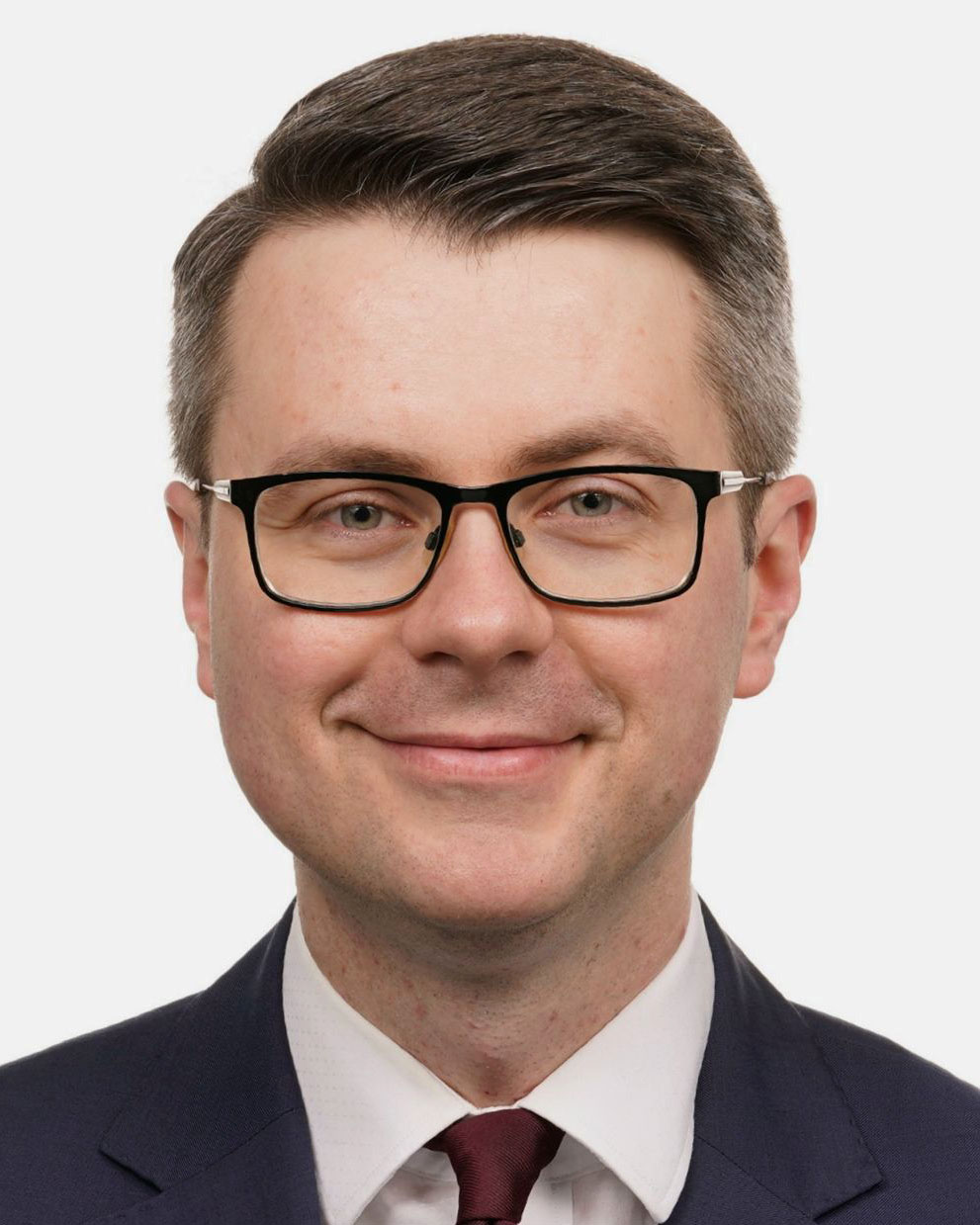
Sebastian Tynkkynen | Finland FIN | European Conservatives and Reformists (ECR) | 331 |
| 4 |

|
João Oliveira | Portugal PRT | The Left in the European Parliament (GUE/NGL) | 232 |
| 5 |

|
Vytenis Povilas Andriukaitis | Lithuania LTU | Progressive Alliance of Socialists and Democrats (S&D) | 227 |
All Contributions (63)
The importance of trans-European transport infrastructure in times of stalling economic growth and major threats to Europe’s security (debate)
Mr President, thank you very much. In the context of the discussion on trans-European transport networks, I would like to emphasize the importance and role of building a new expressway Via Pomerania, which is extremely important for my region in Poland - Pomerania. This is a road that would connect the Baltic Sea - from Ustka through Słupsk, Bytów, Chojnice, to Bydgoszcz - in order to improve economic opportunities there, but also to ensure transport security in terms of potential weapons, in terms of what could happen in crisis situations. This is very important for the security of Poland, but also for the security of the Baltic Sea and the security of those countries that are in this basin. From this point of view, I would like to ask the European Commission to speed up, for this reason, the revision of this list of the transport network, which is currently in place, so that precisely these new ones, important for road safety, can be taken into account. At the same time, I am taking the opportunity to convince the Polish Presidency to quickly prepare a corridor study that can be forwarded to the European Commission.
Accelerating the phase-out of Russian gas and other Russian energy commodities in the EU (debate)
Mr President, thank you very much. Ladies and Gentlemen, A key mistake that was committed against Russia was the development of infrastructure that allows the transmission of gas. This infrastructure has its name, it is called Nord Stream. In 2014, when Russia attacked Ukraine for the first time, Germany decided to continue the construction of the Nord Stream 2 gas pipeline. In that case, if you really want independence from Russia, then I have one simple proposition. Let the Germans prove that they want this independence. Let them liquidate, let them destroy the Nord Stream and Nord Stream 2 pipelines effectively. Let them withdraw from its further exploitation in the future. Let them show that they really do not want to pay Russia the euro for gas that will flow from there or will be able to flow in the future. Prove your true intentions and stop Russian gas forever.
Clean Industrial Deal (debate)
Madam President, I'm sorry. I have the impression that many in this room, unfortunately, do not mind that citizens are getting poorer due to high energy prices and heating prices. I have the impression that many in this Hall, unfortunately, also do not mind the fact that in Europe more factories are falling and our industry is collapsing. But what's more shocking to me: I have the impression that this Hall is not very impressed by the war that is approaching the European gates, because in order to win it, we must be ready to prepare our weapons, and for this we need steel. Tanks are not made of cardboard, ladies and gentlemen. If the steel industry collapses in Europe, we will have no way of arming ourselves. That is why we urgently need to withdraw from the ETS, to block the introduction of the ETS2, simply to introduce a pragmatic, not ideological, green industrial policy. And, Commissioner, I call on you to do so. I am counting on French and European common sense.
Threats to EU sovereignty through strategic dependencies in communication infrastructure (debate)
Mr President, thank you very much. Ladies and Gentlemen, Financial resources are needed to build infrastructural independence, including technological independence. The European Union should decide what it wants to spend these funds on from its own budget. There are three major policies that we are pursuing at the same time: it is a security policy, including technological security, a social policy that allows citizens to live at a sufficiently high level, and unfortunately the Green Deal policy, which increases these costs of living and generates various types of expenditure in this policy. If we want to be truly technologically independent, we should allocate additional financial resources to this area. But for this to be possible, we must give up one of the three policies I have mentioned, and we should give up the Green Deal policy, which at the moment limits Europe's development and independence. Secondly, we should stop insulting our technology partners from different continents in the world and work with them to ensure that the right technologies are also being developed in Europe.
Competitiveness Compass (debate)
Mr President, the biggest threat to Europe's growth is not China or the USA, it's a weak leadership. This became clear in Paris. Vice-President JD Vance spoke with confidence, warning that strict rules could kill AI before it even starts. Ursula von der Leyen couldn't connect with the message. While Vance spoke of opportunity and leadership, von der Leyen focused on ideas that have been holding Europe back for years. The new strategy from the Commission should have been a roadmap for growth and a clear rejection of failed policies like the Green Deal. Does the left side of this Parliament have the courage to accept new technologies and use them to help Europeans? The US is ready to work together to build a better future. Europe must have the courage to do the same.
Need to enforce the Digital Services Act to protect democracy on social media platforms including against foreign interference and biased algorithms (debate)
Thank you for that question. It's very apt. I'll tell you what I'm afraid of. Among other things, I am concerned that the European Commission has so far failed to provide information on what actions it has taken against Platform X in terms of preventive censorship. I have asked the European Commission twice about this, and so far I have no answer as to whether such proposals for preventive censorship against X were directed or not. The Commission does not want to answer me and I expect it to do so. That's the first thing. Secondly, I have the impression that the DSA in the hands of this European Commission is to be treated as a kind of preventive censorship. Why is that? Because you think that you decide what is bad content and what is good content. And that's the fundamental difference.
Need to enforce the Digital Services Act to protect democracy on social media platforms including against foreign interference and biased algorithms (debate)
Madam President, I'm sorry. Ladies and Gentlemen, When I listen to you, I have no doubt. Indeed, democracy and freedom of speech in Europe are under threat. But for completely different reasons than the left side of the political scene says here. First of all, because you want to play big brother. You want to play censor who will decide what is true and what is not. In fact, today in this room we are discussing how you want to introduce mechanisms of preventive censorship, which for years were well known in the years of communism in Eastern Europe. Today you're talking about how it's bothering you to let people decide for themselves on the basis of facts what's true and what's not a ready-made solution that you want to serve to people online. Today we are talking about the fact that social media should be free. They should be free from censorship and your solutions that you propose. And some of you seem to know better what is true, but really believe me, citizens are able to distinguish it. On one condition: You will give them the freedom to judge.
Misinformation and disinformation on social media platforms, such as TikTok, and related risks to the integrity of elections in Europe (debate)
Ladies and Gentlemen, Freedom of speech is the foundation of any democratic system. I have the impression that there are people in this room who would like to violate the foundations of democracy by violating freedom of speech, in this case freedom of expression on the Internet. Some of you in this room would very much like the European Commission or other EU institutions to act in such an enlightened way and prevent certain content from being banned in some miraculous way. Who would decide that, ladies and gentlemen? Officials from the European Commission? Do you on the left want to make that decision? No, that's not right. It is supposed to be freedom of speech, that is, in short, freedom of expression under different conditions. If you want to fight disinformation, let's focus on education. Let's show how to fight it, how to translate fake news, which appear. But do not go with the instruments of censorship, which unfortunately we know very well from the communist times in Poland. On the other hand, Commissioner, I would very much like to ask you to answer a question about the actions taken by the previous Commission in relation to Platform X, because I have not yet received an answer on this matter.
Foreign interference and espionage by third country actors in European universities (debate)
Mr President, Ladies and Gentlemen, In the debate on the issue of academic freedoms, it is worth recalling what influences look like in various areas, precisely those external ones that appear in Europe. And I would like to point out these three above all and a certain naivety, which, unfortunately, is also shown by some people in this room. The first area is energy. Let us remember perfectly how Russia influenced many universities in Europe and argued that gas is better as a way of supplying Europe than, for example, electricity from nuclear power plants. A lot of people in this room have fallen for this rhetoric. The second point: limiting, under the pretext of science, under the pretext of protecting the environment, the development of infrastructure, for example in the case of Poland on the Oder. Here, too, there are often scientific arguments, but in fact behind the backs of the lobby of other countries. And the third thing: identity. Because it is often precisely in the course of various activities at universities that attempts are made to build a cosmopolitan identity so that we do not have strong nations in Europe. In fact, this will make Europe weak in the future.
Abuse of new technologies to manipulate and radicalise young people through hate speech and antidemocratic discourse (debate)
Madam President, thank you very much. There is no doubt that we should be concerned with protecting against content that can be harmful, against content that can have a negative impact on society and, in particular, on the upbringing of children. However, in this House and also in the European Commission, this topic is very often used to take steps that go much further. Steps that limit freedom of expression. Steps that lead to preventive censorship. Finally, the steps that cause the proposal to withdraw from the possibility of data encryption, encrypting communications in such messengers as Signal, WhatsApp, Messenger and so on. The European Commission recently presented one of its projects, which includes, among other things, the elimination of encrypted communication and preventive scanning of citizens' content. Ladies and Gentlemen, this is probably a version of the Chinese Internet, not the European one! I demand a clear declaration from the European Commission that the Chat Control project to eliminate encryption will be withdrawn. That's the first thing. And finally, I demand an answer to the question, did you propose illegal agreements at X, at Elon Musk?
A stronger Europe for safer products to better protect consumers and tackle unfair competition: boosting EU oversight in e-commerce and imports (debate)
Mr President, thank you very much. Mr. Commissioner, I would like to thank you. Ladies and Gentlemen, Product safety regulations in Europe are extremely important. On the one hand, they make consumers safe and, on the other hand, they make us standardise some kind of production solutions in Europe, which, of course, also brings tangible benefits and safety for consumers. However, we see this growing competition from Asian markets in particular, and my concern is that these regulations will not apply in practice to those countries that enter the European market in a different way than production on our home market. In this connection, I have a question for the Commissioner as to what action could be taken here (if only by enshrining, in the new budgetary perspective that we will be working on, additional resources for offices, for national and EU institutions, but above all for national ones, because they most often control the quality of products) so that the actual control of these products, which come in particular from Asia, takes place.
The future of European competitiveness (debate)
Madam President, thank you very much. Europe is at a crossroads today. He can choose one of the paths of economic development or go the way of the abyss, de facto Today we are talking about such an option. Prime Minister Mateusz Morawiecki, the former Prime Minister of Poland, pointed out many months ago that Europe is on the wrong path when it comes to economic development. And today, Mr Draghi's report actually fully confirms this. Let's give one number. Recently, only 6% of global investments in artificial intelligence, in this very modern area, goes only to the European Union, 6% from the global market. This shows that, unfortunately, Europe is very unattractive in terms of modern technologies and economic development. Europe needs change, it needs immediate change, but for this to happen, it needs less bureaucracy, more freedom for entrepreneurs, a real common market, no protectionism and, above all, a fundamental change when it comes to the Green Deal and the ETS, which generates huge energy costs. If we do not do this, if we do not react today, the United States and the Asian tigers will quickly defeat us economically, and Europe will unfortunately become an economic open-air museum.
Global measures towards social media platforms - Strengthening the role of DSA and protecting democracy and freedom in the online sphere (debate)
Mr President, thank you very much. Ladies and Gentlemen, The word ‘censorship’ has the worst connotations. It's about systems that have nothing to do with democracy. Associations with systems that have done a lot of harm in Eastern Europe, especially in Central and Eastern Europe. Freedom of speech must be a pillar of democracy. Freedom of expression in the 21st century also means freedom of expression on the internet. That is why we need to keep a close eye on every action that is taken by the European Commission and by social media platforms as part of the DSA package. It was intended to protect a democratic society from all sorts of attempts at influence that might arise. But I have the impression that, although Commissioner Breton, responsible for the implementation of this package, is no longer in the European Commission, the problem that has arisen, the problem of preventive censorship that can be introduced by this package, is unfortunately very topical. Officials in the European Union are talking about the fight against disinformation. This is the official reason why this package works. But shouldn't we really say today that this is part of the introduction of preventive censorship? Is there a risk that will come up? And today's question: Who's to judge? Is criticising the migration package, for example, a fight against disinformation? Is this a fight against hate speech? But is it possible to have a public debate in a situation, especially when Germany is closing its borders today? Ladies and Gentlemen, we did not read Orwell to observe the creation of a European Ministry of Truth. There can be no consent to this.