
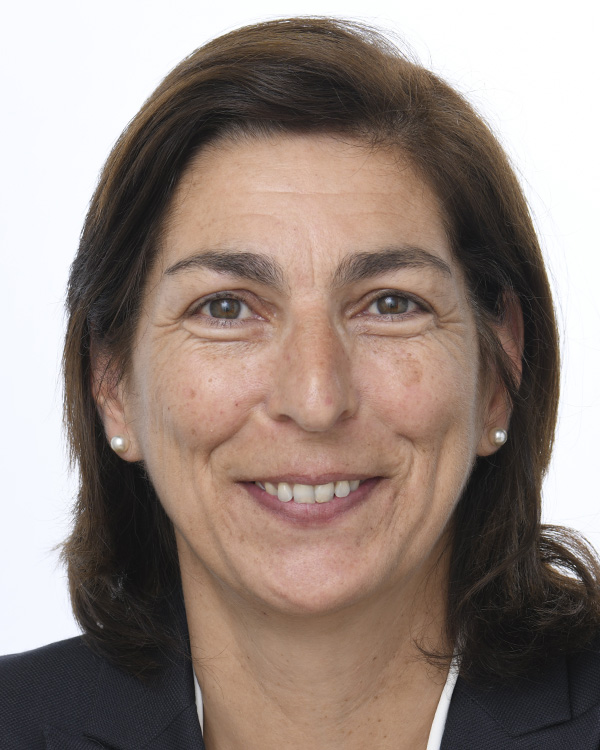






| Rank | Name | Country | Group | Speeches | |
|---|---|---|---|---|---|
| 1 |
|
Lukas Sieper | Germany DEU | Non-attached Members (NI) | 390 |
| 2 |
|
Juan Fernando López Aguilar | Spain ESP | Progressive Alliance of Socialists and Democrats (S&D) | 354 |
| 3 |
|
Sebastian Tynkkynen | Finland FIN | European Conservatives and Reformists (ECR) | 331 |
| 4 |
|
João Oliveira | Portugal PRT | The Left in the European Parliament (GUE/NGL) | 232 |
| 5 |
|
Vytenis Povilas Andriukaitis | Lithuania LTU | Progressive Alliance of Socialists and Democrats (S&D) | 227 |
All Contributions (77)
Commission Work Programme 2026 (debate)
Mr President, Commissioner, ladies and gentlemen, I have three very brief notes. The President of the Commission has spoken about competitiveness and I would like to warn that this competitiveness is not at the expense of our fundamental values, but that it is guided by a clear social and democratic compass. This means not confusing simplification with deregulation, reducing our high social and environmental standards. Secondly, I leave an alert. Pretty words are not enough to say that you want the Migration Pact implemented. The truth, ladies and gentlemen, is that today there are deep divisions in the Member States to adopt a joint and solidarity-based response on migration, and the Commission's failure to submit the first annual report on migration and asylum is worrying and not acceptable, because if the Commission does not comply, it cannot ask the Member States to comply. Finally, the promise of creating a European centre for democratic resilience is far from being realised, and we need a strong, well-funded structure to ensure that extremism and populism are combated, because that, yes, is a threat to our democracies.
Need for a strong European Democracy Shield to enhance democracy, protect the EU from foreign interference and hybrid threats, and protect electoral processes in the EU (debate)
Madam President, Madam Minister, Commissioner, ladies and gentlemen, let us have no doubt that our democracy is under attack. And it is under attack by the worrying growth of hybrid attacks against the European Union, by disinformation online, which has reached alarming levels in virtually all Member States, which undermines citizens' confidence, but also because citizens often fail to believe in what the welfare state can give them and what the answers to their problems are. But it is absolutely essential for the European Commission to act. Today, the President of the Commission has given a good speech on the need to defend democracy, but I have two very specific questions, Commissioner. The first: there is no democracy without a strong rule of law and scrupulous respect for the rule of law. At what point is the monitoring of the recommendations of the Rule of Law Report that has been made to the Member States, so that we can assess the health of our democracies? And secondly, Commissioner: how can we work together – Parliament, which has the Defence of Democracy Committee, with the Commission – and make our institutions stronger and more susceptible to the trust of our citizens?
After 10 years, time to end mass migration now - protect our women and children (topical debate)
Madam President, ladies and gentlemen, the first note I want to make is that this debate is contrary to the construction of the European project, contrary to the values of the European Union, because it is, in itself, a title and a debate - as we have heard here from the presentation of the proposer - which instigates division, hatred and prejudice, and this goes against all the values of the European Union. And against perceptions and against perceptions, what the proponent came here to do was to say a set of perceptions, to generalize situations. First, the rule of law exists for everyone, and anyone who commits crimes, be they nationals or immigrants, must be punished before the law and the judicial system. Second, Eurostat and the OECD have said over time that there is no direct link between immigration and crime. Third, it is proven that, in the overwhelming majority of states, domestic violence or rape is mainly perpetrated by nationals. Last note, Madam President, irregular immigration fell by 38% in 2024, which means that in the face of perceptions, we will always have the facts and the truth.
Lessons from Budapest Pride: the urgent need for an EU wide anti-discrimination law and defending fundamental rights against right-wing attacks (topical debate)
Madam President, Commissioner, ladies and gentlemen, dear European citizens, today, more than ever, it is our duty to remember with firmness and hope that the European Union was born from the ashes of intolerance and division. It was born out of the collective commitment to ensure that future generations would never again live under the weight of hatred, exclusion or fear. That is why, at this moment, we cannot remain silent. On 28 June, thousands of people took to the streets of Budapest, not just to celebrate who they are, but to claim something basic and something essential: The right to exist with dignity, to love in freedom, to live without fear. They marched with courage, with pride, with joy and with the conviction that Europe also belongs to them. The courage of the mayor of Budapest is a symbol of the struggle for freedom and democracy. The Budapest march is more than a parade of colors. It's a cry for equality. It is a call for European solidarity. It is a reminder that, even within our borders, discrimination has not yet been eradicated. It was also the denunciation of a government that, under the pretext of protecting children, has censored dissenting voices, attacked press freedom, weakened justice and turned LGBTQI+ people into a political target. Ladies and gentlemen, it is not acceptable in the 21st century for European citizens to have their rights restricted on the basis of their identity. It is not acceptable for laws to be passed to silence LGBTQI+ voices. It is not acceptable that hate speech still finds shelter in national parliaments. And so we reaffirm here our commitment, S&D's commitment to the European Equal Treatment Directive, also known as the Anti-Discrimination Directive. This directive is a key part of our legal and political building. But more than a legal document, it is a moral declaration that there will be no second-class citizens in Europe, that everyone has the right to equal access to employment, education, health, civic participation; No child in any school in the Union should be taught to be ashamed of who he is. And it is because it is a moral obligation that the Commission, Commissioner, cannot and should not withdraw the proposal for a directive against discrimination. If you do, you will be complicit in an attack on the most elementary of European values. Building a free and fair Europe requires constant vigilance. We cannot allow democratic setbacks, often disguised as traditional values, to erode the pillars of the European Union. Freedom is not negotiable. Dignity is not relative. Human rights are not subject to the will of the majority, because they are universal. And, ladies and gentlemen, let us not forget that diversity is the soul of Europe. From the languages we speak to the ways we love, from the cultures we celebrate to the lives we choose to live. We are many and that is exactly what makes us stronger. To all citizens, from every corner of Europe, where they still face institutional discrimination, we say: They're not alone. Your fight is our fight. Your freedom is the measure of our democracy. And I conclude with a promise: We will continue to work so that no European or European has to march to prove that they deserve the same rights. But as long as it is necessary to march, we will be by your side, step by step, street by street, country by country. Because freedom in Europe is not a privilege for some; Yes, it is everyone's right.
The United Kingdom accession to the Convention of 2 July 2019 on the Recognition and Enforcement of Foreign Judgments in Civil or Commercial Matters (debate)
Mr President, Commissioner, ladies and gentlemen, I believe that the summit of 19 May 2025 between the European Union and the United Kingdom marks a new stage in our post-Brexit relationship of strengthening our cooperation in various areas. Whether it is strengthening in the area of security and youth, which should even be done, whether it is strengthening in the area of defence and security policy – we know how the international context demands it – or strengthening historical relations with the United Kingdom. So from that point of view, and on the part of S&D, I would like to underline here my congratulations for the success of this summit, but also for the return to good relations of cooperation, solidarity and neighbourliness, if we want to, with the United Kingdom. This is the background to the express wish of the United Kingdom to accede to the Hague Convention, which I would also like to welcome here on behalf of S&D. What is expected, as the previous colleague said, is to know what the Commission's position is and whether the Commission, as soon as possible, accepts this expressed will and confirms as soon as possible its favourable assessment of the acceptance of the United Kingdom's accession to the Hague Convention. However, as the previous colleague also said, Commissioner, institutional relations must be respected; Article 218(6) states very clearly that this Parliament also has a role to play in this context, not only to applaud, not only to welcome, but above all to be committed and committed to strengthening this relationship. That is why, Commissioner, my speech seeks to call for good institutional cooperation to continue and not to ignore the extraordinary role that the European Parliament can also play in the ratification of this Convention by the United Kingdom, which, I say again, I welcome with great joy.
Freedom of assembly in Hungary and the need for the Commission to act (debate)
Madam President, Commissioner, ladies and gentlemen, it is extraordinary that on the day we adopt yet another report on the rule of law, we must once again be talking about one of the most grotesque breaches of the rule of law. Ladies and gentlemen and Mrs Anderson, I am sorry, but it is decency to defend respect for human rights. It is decency to realise that Hungary has entered the European Union to respect human rights, to respect the rule of law, to respect democracy. What we are seeing from Orbán is a huge violation of human rights, forbidding the right to demonstrate, the right to association, the right to be, the right to choose who I am. This is what we are talking about, human rights. And it is in this Parliament and with this Commission that we must once again call for Article 7 to be applied. Because those who are the transgressors, those who do not respect European laws, cannot be part of this space.
Situation in the Middle East (joint debate)
Mr President, ladies and gentlemen, in a few years' time we will all say that we have done everything we can to prevent the genocide that is taking place in Palestine. Our choices today will tell whether it was true or not. I therefore take this minute to call on the Commission to swiftly conclude the report on the values enshrined in Article 2 and assess whether or not they are being breached. Clearly, yes. I call on you to look at what is happening in Gaza, in the occupied Palestinian territories. I call on you to look, see and act. In view of the decisions of the International Court of Justice, the tireless work of the UN Special Rapporteur on the occupied Palestinian territories and the images that come home to us every day, it is difficult to argue that we are not dealing with gross human rights violations. The European Union cannot remain silent, it cannot remain impatient, it must act and it must suspend the Association Agreement with Israel in whole or in part. I said it here a few months ago. In a few years, I'll say it again, we'll all say we did everything. History will be here to judge us. Today is the day to act.
The Commission’s 2024 Rule of Law report (debate)
Madam President, first of all I would like to thank all the shadow rapporteurs who have participated in this report and in the construction of this report, in particular those who are part of the democratic field. Ladies and gentlemen, I apologise, but the rule of law is not a vague concept, nor is it an ideological concept. It is indeed the foundational basis of our European Union. It is respect for rights, freedoms and guarantees, it is respect for the separation of powers, it is respect for democracy. What we are seeing here is, once again, not looking at this report as an instrument assessing the democratic health of our Member States, which requires cooperation, solidarity and improvements among all of us in order to have a stronger Europe. Those who are legitimately elected to this Chamber, the most democratic house in the European Union, are the ones who want to attack the foundations of the European Union, the foundations of our democracy and the reason why there is a European Union today. So to those I keep saying: disinformation cannot pass, because in the face of disinformation, manipulation and lies we must respond with facts, truth and what is essential. We have to respond every day to those who elected us to solve their problems. Ladies and gentlemen, I have heard it said today, to my great astonishment, that democracy is a danger. So I end by saying: dangerous are those who attack every day the democratic foundations, because there is no better system than the one in which we live, that is, live in freedom and democracy. Thank you very much, Commissioner, for counting on this Parliament to continue the institutional cooperation that we must continue in order to respond to the citizens. This is what they expect from us; It is not hatred, it is not violence, but solidarity and cooperation.
The Commission’s 2024 Rule of Law report (debate)
Madam President, Commissioner, ladies and gentlemen, the European Union is above all a project of peace, freedom and respect for human dignity. These are values that for decades seemed to us to be guaranteed, but which today are under attack and under threat. We live in times of uncertainty, wars on Europe's doorstep, mass disinformation fuelled by social media, social and economic crises. It is precisely in these moments of fragility that democracy becomes even more vulnerable, and the far right and its enemies know this. We see in several European countries anti-democratic forces conquering political space through fear, lies and hatred. They undermine institutions from the inside, undermine the separation of powers, delegitimize free and independent media, attack the rights of women, minorities and migrants. This is not just an ideological deviation, it is a clear attempt to destroy the rule of law. Ladies and gentlemen, the rule of law is not a political option; This is the basis of our democratic coexistence. It is what prevents arbitrariness, protects the most vulnerable and ensures that no one is above the law – neither governments nor parties. The European Union must be firm. We cannot finance those who attack the fundamental values that we all subscribe to. We need binding and effective mechanisms, to make access to European funds conditional on full respect for the rule of law, to strengthen the role of the Court of Justice of the European Union and to give concrete support to civil society, which resists in countries where democracy is being stifled. Today, defending democracy is more than voting; It is to act, it is to speak, it is to fight and it is to resist. We cannot remain silent in the face of the normalisation of intolerance, racism, censorship or hate speech. Democracy is not eternal, and the silence of the democrats is the extremists' greatest ally. The European Commission’s 2024 Rule of Law Report is a clear and urgent warning: democracy and the fundamental values of the European Union are under threat, not only outside but also within our borders. That is why the report, underlining progress, also reveals dangerous setbacks. More than half of the recommendations made in 2023 were ignored or only superficially addressed. This shows that the current mechanisms are insufficient to halt the democratic decline. Ladies and gentlemen, tomorrow we will vote on this report. Let me be clear: It is fundamental rights that we are talking about in this year's Rule of Law Report. When Journalists Are Targeted software spy in Italy, when LGBTQI+ rights are attacked in Hungary, when reproductive freedom is threatened by a new nationalist president in Poland, the European Parliament must send a clear message. To those who try to rewrite history, we respond with memory. To those who attack the achievements of these years we respond with more democracy. To those who manipulate information, we respond with the truth of the facts. To those who restrict women's rights, we respond more equally. To those who want to destroy democracy, we respond with energy, to defend a society of progress and social justice. Democracy lives on the separation of powers, freedom of the press, access to justice and respect for fundamental freedoms. Without this, the rule of law becomes an empty thing and the space opens up for authoritarianism, even within democratic regimes. Today, Parliament has a responsibility to continue to fight for democracy in our Member States, with more care, with more vigilance, with much more courage and with much more action. It is for this fight that the report calls you.
The Hungarian government's drift to Russia-style repression: legislative threats to freedom of expression and democratic participation (debate)
Madam President, ladies and gentlemen, Commissioner, I believe that the question that needs to be asked today is how many more breaches of the rule of law Mr Orbán needs to make in order for us to be able to act. It has been said for seven years that the conditionality mechanism and Article 7 must be applied – systematically disregarded by Mr Orbán. What we are seeing here once again is an attack on the rule of law, an attempt to muzzle, to shut up, to stop what is essential work that non-governmental organisations and civil society must do to help strengthen democracy. Commissioner, I have listened carefully to your speech and I have followed your action. I trust you, but please, Article 7 really must be applied, the attacks on democracy that are being made in Hungary really must be stopped. Because (allow me to reflect on this) whenever we are complicit in silence or inaction about what is happening in Hungary, a Member State of the European Union, we are broadening the discourse of those who want to kill democracy. You have Parliament with you, please act, apply Article 7 of our Treaty.
Preparation of the EU-UK summit (debate)
No text available
100 days of the new Commission – Delivering on defence, competitiveness, simplification and migration as our priorities (topical debate)
Mr President, ladies and gentlemen, the mandate of the European Commission is very clear: a strong Europe faithful to its values, respecting the central role of this Parliament. The first 100 days leave concerns about the working method and also about the relationship with the pro-European platform that underpins it. First of all, we see with concern the migration package that gives in to a security discourse, confusing immigration with security, and also with concern the so-called simplification package, under the pretext of de-bureaucratisation that pushes us towards dangerous deregulation, putting at risk some of the social and environmental achievements. But this beginning of the mandate, Commissioner, should be focused on people's core problems. In 2026, the deadline for the implementation of the RRP expires. I see with particular concern the delay and reprogramming of the RRP, for example, in Portugal and I think that they should also be focused on this matter, because it decides people's lives. Finally, there are 100 days of major geopolitical changes, and defence must be a priority – but it must not come at the expense of cohesion policy.
Presentation of the proposal on a new common approach on returns (debate)
Mr Oliveira, I absolutely agree with what you said and I would like to ask you the following: do you or do you not consider that this is a regulation that goes against what is enshrined in the Charter of Fundamental Rights? Contrary to what is practiced in Portugal, for example, which does not have detention centres, has temporary accommodation centres, up to 72 hours, citizens can appeal their decisions. I ask you whether or not this is in the sense of a blatant violation of these people's human rights.
Presentation of the proposal on a new common approach on returns (debate)
Madam President, ladies and gentlemen, Commissioner, while it is true that a consensus has been found in this House for the Pact on Migration and Asylum, the fact remains that the issues of return continue to divide us. If there are measures put forward that are positive, there are three that I would like to stress as being negative and which, from my point of view, from the point of view of S&D, violate fundamental rights. Firstly, the idea of giving Member States the freedom to choose with which third country to negotiate for the return of their citizens. I believe that this freedom is a danger, because it does not meet what the Commissioner has said here, that there must be a common policy of return. Secondly, the possibility of people being sent to third countries that have not ratified any instrument of international law or that cooperate with non-recognised entities, including those controlling parts of countries that are not diplomatically recognised (terminal) is a danger and I think it should be reviewed. And finally, Commissioner, (I am even ending) the fact that unaccompanied minors can be sent to third countries is a danger and violates the most basic freedoms – and I ask the Commissioner to go back on that point.
Honouring the memory of Ján Kuciak and Martina Kušnírová: advancing media freedom, strengthening the rule of law, and protecting journalists across the EU (debate)
Madam President, Commissioner, ladies and gentlemen, it is right to recall the memory of Ján Kuciak and Martina Kušnírová, especially so that we never forget that media freedom and the press are an essential pillar of the rule of law and that a free and independent press makes and deepens our democracy. It is therefore right to greet all those who, sometimes in difficult conditions, continue to carry out their mission of informing with courage and determination. That is why it is important for everyone, even all crimes against journalists, to be thoroughly investigated and for justice to play an absolutely essential role here. Today, we are facing threats to press freedom. The various Rule of Law Reports have said so. The information that the Commissioner brings here is important, but it is not enough to say that we have a shield of democracy, there needs to be effective action and the implementation of the Media Freedom Regulation plays an absolutely essential role here. Today let us honour the courage of all those journalists who died doing their job: inform the people, because that's what they exist for.
Competitiveness Compass (debate)
Thank you very much, honourable Member, it is very simple. There are several moments when we need to realise that it is not enough to say that they like the Draghi report. The Draghi report has a set of measures that point to the possibility of the European Union being able to invest more, first and foremost in skills, in the just transition, both green and digital, first and foremost in the way in which we can generate wealth. I think it is essential that we gain strategic autonomy by always leveraging the welfare state, but the deregulation that is envisaged here is a deregulation that attacks the welfare state.
Competitiveness Compass (debate)
Mr President, Honourable Member, I can tell you the following: I totally disagree with what is the compass for competitiveness that the Commission is presenting here, all the more so because it is based on the deregulation on which Mrs Lídia Pereira has just insisted. In my view, Commissioner, this deregulation... As I am in favour of simplifying procedures, I believe that this deregulation is a step backwards in a significant set of achievements. And what was heard here from the benches on the right this afternoon is a danger to the future of the Green Deal in Europe, for example.
Competitiveness Compass (debate)
Commissioner, ladies and gentlemen, this debate comes at a particularly demanding time for Europe and at a time when we are witnessing the reconfiguration, if you will, of globalisation. This morning's debate on the work programme was a debate where I hoped there would be more answers. To call it a compass or something else, Commissioner, let me tell you, competitiveness needs more investment, and that is what I expect from this debate. I was hoping that today we could talk about more competitiveness, more social rights, and how we are going to finance this need for strategic autonomy. This is why deepening the single market is important. Let's forget the adjectives and go to the concrete. How does the European Commission think it can get more investment to ensure that our capacity in the global environment is effective, that the Draghi report really has consequences? This is the answer we need from the European Commission.
Commission Work Programme 2025 (debate)
Madam President, Commissioner, ladies and gentlemen, on the day we present the working document of the European Commission, what is expected is to strengthen democracy and confidence in our institutions. And what is expected is that the President of the European Commission will have respect for the most democratic institution of the European Union, which is the European Parliament. To discuss this working document today is also to discuss democracy with this respect at a time when we all feel that our democracies, both in the Member States and in the European project as a whole, are in crisis and under attack. When we hear the Commissioner speak during his presentation quickly on all the points, not on any specific ones, we get the feeling that competitiveness is the key. But, Commissioner, there is no competitiveness without democracy, there is no competitiveness without a strong rule of law that responds independently in its justice and transparently in its procedures. There is no competitiveness without equal opportunities for all. There is no competitiveness without the ability to integrate those who choose here the European area to live, to live with dignity. There is no competitiveness if women in the labour market are not treated equally to men, there is no democracy and no competitiveness if we are not able to look at the green transition and the digital transition with the necessary social justice. That is why, Madam President, and I will conclude, competitiveness and democracy must go hand in hand and the institutions deserve respect. This Parliament deserves respect on such an important day as today, with the presence of the President of the European Commission.
The Universal Declaration of Human Rights: the need for the European Union to contribute to resolving the humanitarian crisis of persons missing in wars and conflicts (debate)
Mr President, I totally agree that President Trump's statements are statements that are not only an infamy, a disgrace, but also a blatant violation of international law. They contribute to the genocide and ethnic cleansing that is taking place in that territory. And, yes, this Parliament has a duty to take concrete action and strongly condemn what are unacceptable statements for a suffering people.
The Universal Declaration of Human Rights: the need for the European Union to contribute to resolving the humanitarian crisis of persons missing in wars and conflicts (debate)
Mr President, ladies and gentlemen, I have just come from a difficult mission to Palestine and Israel, where I have witnessed the destruction, despair and precarious conditions in which thousands of people, including many children, are trying to survive. Gaza is one of the most densely populated regions in the world, which has been facing daily challenges for years due to systemic constraints and limited resources. Since the horrific attack of 7 October 2023, conditions have worsened further. All wars and conflicts, and this is no exception, also leave the marks of the disappeared. The Mothers of Plaza de Mayo in Argentina, the Mothers of Saturday in Turkey, books and films such as the recent I'm Still Here, about Rubens Paiva, in Brazil, show the inhumanity of disappearances and the apnea of the search for answers in which their family members have plunged for decades. Add to this Syria, Cyprus, Ukraine. Today, the Universal Declaration of Human Rights aims to ensure that its calls for truth, justice and non-repetition of history are heard. Let us fight for memory to continue to live in freedom, with respect for human rights.
Major interpellations (debate)
Mr President, Commissioner, ladies and gentlemen, I was very concerned at the end of your speech, Commissioner, let me share this with you. In 2021, when the money for the Integrated Border Management Fund was increased, the President of the Commission said - and I quote - 'the European Union will finance neither walls, nor wire, nor fences'. The Commissioner concluded his speech by saying: “Let’s increase funding for fences». And I would like to tell you, on behalf of the Socialists and Democrats, that we fully agree that we need to manage our borders, but managing our borders does not mean a violation of human rights, as we have often seen. Therefore, the money that has been allocated – more money – for the borders, for this fund, cannot be for the surveillance cameras, for the fences, for the walls, because that is contrary to what the European Union's migration policy has been over the years. And so, Commissioner, what I wanted to say to you is that you take into account the data you mentioned here, which I mentioned yesterday in my other speech, and which are true: in 2024, there was a decrease in irregular immigration by 38%. That means, Commissioner, that we must continue to be attentive to the implementation of the Migration Pact and have a humanistic view of what immigration is. We will not stop immigration with our hands, as we do not stop the wind with our hands, it is impossible. Migration flows have always existed. Frontex has often been accused of violating fundamental rights and, recently, the platform for cooperation on undocumented citizens has warned of the systematic violation of these citizens' human rights at the borders, so what I am asking you to do is to continue to be the guardian of the treaties and to treat people with dignity.
EU financing through the LIFE programme of entities lobbying EU institutions and the need for transparency (debate)
Honourable Member, I am totally in favour of transparency, totally in favour of transparency. But to demand – with the vehemence with which it is calling for civil society to be scrutinised – that we also scrutinise those who are lobbyists for private interests, those who have, over time, been contributing to and attacking various governments and also attacking our institutions. But, ladies and gentlemen, I am amazed at the EPP, because the EPP has gone after a false far-right narrative that wants to silence NGOs and castrate NGO funding.
EU financing through the LIFE programme of entities lobbying EU institutions and the need for transparency (debate)
Madam President, ladies and gentlemen, this debate is not really about transparency and lobbying. Because if it is about transparency and lobbying, then let's look at the instruments, let's look at the lists of lobbyists that are funded and let's ask the questions that we have to ask. But this is not the debate that we are asking for here, and that the right has asked for, it is a debate to say that we do not want to continue to fund non-governmental organisations, civil society and citizenship, because we believe that they are harmful to the democratic system. This is the only point that is under discussion, and so we at S&D are all in favour of funding rules being transparent. But we will be outspoken against silencing civil society, which is part of our democracies and must continue to be supported, to also be part of that instrument which is our active citizenship, and to which the European Union must contribute.
Links between organised crime and smuggling of migrants in light of the recent UN reports (debate)
Madam President, ladies and gentlemen, Commissioner, this debate is about reality and perception, and so I would like to give you two figures that I believe are essential to the seriousness of this debate. The first is that there is no UN report – contrary to what the right and the far right have said – that links immigration to crime. And secondly, ladies and gentlemen, the truth is that, from 2023 to 2024, irregular immigration has fallen by 40% in the European area. But having said that – and these are two facts that run counter to perceptions and undermine this debate – there is a reality that we need to discuss: whenever policies are more restrictive to immigration, human trafficking increases and illegal immigration increases, because more secure rules push the most vulnerable citizens into immigration. That is why, Commissioner, I am very pleased that you have said here that we are moving forward with the directive that is being revised. My only question is: When will the revision of the Directive take place? And for when a serious, strong and effective sanction to human traffickers? Because, yes, they need to be penalized.