
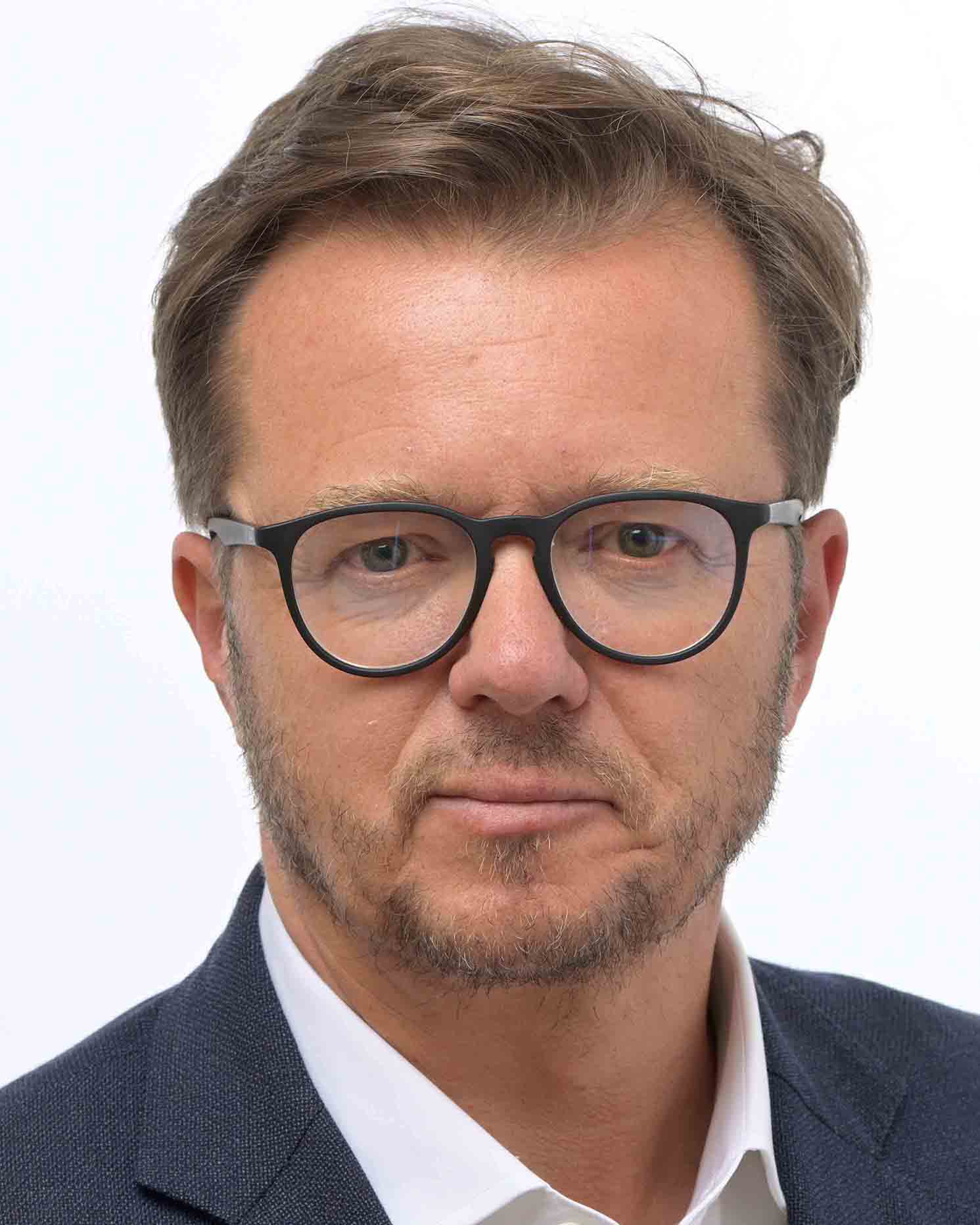






| Rank | Name | Country | Group | Speeches | |
|---|---|---|---|---|---|
| 1 |
|
Lukas Sieper | Germany DEU | Non-attached Members (NI) | 390 |
| 2 |
|
Juan Fernando López Aguilar | Spain ESP | Progressive Alliance of Socialists and Democrats (S&D) | 354 |
| 3 |
|
Sebastian Tynkkynen | Finland FIN | European Conservatives and Reformists (ECR) | 331 |
| 4 |
|
João Oliveira | Portugal PRT | The Left in the European Parliament (GUE/NGL) | 232 |
| 5 |
|
Vytenis Povilas Andriukaitis | Lithuania LTU | Progressive Alliance of Socialists and Democrats (S&D) | 227 |
All Contributions (66)
Full accession of Bulgaria and Romania to the Schengen Area: the urgent need to lift controls at internal land borders (debate)
No text available
Competitiveness Compass (debate)
The European Union stands at a crossroads. Mario Draghi’s report on European competitiveness made it clear: if we want to sustain our economic model, we need an annual additional investment of EUR 800 billion. This is not just about growth; it is about Europe’s ability to finance its social model, sustain innovation, and remain globally competitive. Draghi warned us about the innovation gap, the incomplete single market, and our growing dependencies on foreign technologies. The Competitiveness Compass addresses these concerns, but it will only succeed if we follow through. We need bold policies that attract private capital, support strategic sectors like biotech, quantum, and semiconductors, and ensure energy security while advancing climate goals. The Commission’s pledge to cut red tape by 25 % is welcome, but simplification alone won’t bridge the investment gap. We need a fully functioning Investment and Savings Union, a real European industrial strategy, and stronger coordination with Member States. Colleagues, competitiveness is not an option; it is a necessity. If we want Europe to lead in the 21st century, we must act now. Let’s turn strategy into action.
Immunity of International Criminal Court officials and the activation of the EU Blocking Statute to strengthen EU strategic autonomy (debate)
Madam President, Commissioner, colleagues, we are talking today about independence of the judiciary, independence of justice – the cornerstone of the European Union. And the International Criminal Court stands as one of the central pillars of the international legal order. Its mandate to prosecute genocides, crimes against humanity, war crimes and the crime of aggression ensures that the gravest violations of international law do not go unpunished. For this system to function, judges, prosecutors and officials of the court must be able to act independently. Immunity for ICC officials is therefore not a personal privilege: it is a structural safeguard, protecting the integrity of international justice. This principle is particularly relevant today. The prosecutor of the Court is investigating allegations of war crimes, crimes against humanity and genocide committed on the territory of Ukraine since November 2013, including crimes linked to the annexation of Crimea and the ongoing aggression by Russia. Those who investigate such crimes must not face any pressure. Judicial independence can be undermined not only through political attacks, but also through financial leverage. European judges must be free from any pressure – also economic pressure. They must always be safe and fully independent. This is in our best interests, because only then can we speak about justice. We must strive to strengthen our economy, our European autonomy and sovereignty to avoid being subject to any external oppression. Europe therefore needs stronger economic security, greater payment sovereignty, and greater independence from foreign financial and payment infrastructure. Only a Europe that is economically resilient can ensure that international judges and prosecutors act freely, without any fear, and are guided solely by the law.
European Union regulatory fitness and subsidiarity and proportionality – report on Better Law-Making covering 2023 and 2024 (debate)
Madam President, Madam Commissioner, colleagues, the European Union has taken an important step by establishing significant financial support for defence through the Safe Programme ‑ Security Action for Europe. These resources are essential to reinforce our defence capabilities and strengthen Europe's security. However, funding alone is not enough. To ensure these resources genuinely enhance our security, we must guarantee that defence industries across the Member States can operate with within a regulatory environment that allows them to fully, efficiently and rapidly use these support. These means removing unnecessary barriers, simplifying procedures, and enabling faster investment and production in the defence sector. We must also ensure that the regulatory framework supports the development of a stronger and more integrated European defence ecosystem capable of responding to hybrid threats, strengthening critical infrastructure protection and improving military readiness. This must remain at the core of our efforts to build a regulatory environment that supports both Europe's economic strength and its security.
Rule of law, fundamental rights and misuse of EU funds in Slovakia: the need for an EU response (debate)
Dear colleague, I have one simple question for you. You have heard many times during this debate about this new law about confiscating land. Do you think that this amendment, which was introduced by the government, that allows punishment for criticism of this law – you can go to prison for six months, for example – do you think it is compliant with European standards or not? Is it violating European standards or not? Please stick to this question.
Rule of law, fundamental rights and misuse of EU funds in Slovakia: the need for an EU response (debate)
Madam President, Commissioner, since 2023, we have been observing the rule of law decay in Slovakia in various areas, as well as an incredible level of corruption. We have just heard what the Commissioner presented. But what we are witnessing right now has crossed the legal and moral threshold. I would like to draw your attention to the actions of the Slovak Government, which is currently enforcing post-war legislation, allowing ethnically-motivated land confiscation. Moreover, can you imagine – or not – that they have recently introduced an amendment to that law that makes the criticism of this measure a criminal offence, punishable by up to six months in prison. That is not all. Those affected by these laws cannot even seek justice, as they lack effective judicial protection against these measures, which has been confirmed by the European Court of Human Rights in the Bosits v Slovakia case. Such measures are definitely violating the Union's legal order and our values, and should not be accepted from the point of view of European standards. They stand against Article 17 and against Article 47 of the Charter – which protect the right to property, and provide the guarantees of an effective remedy and a fair trial – and they stand against Article 11 of the Charter, which protects freedom of expression. A state cannot retroactively enforce dormant confiscation regimes, fail to provide effective judicial protection and at the same time deter public criticism. That combination undermines legal certainty and strikes at the core values set out in Article 2 of the Treaty. This is precisely the moment when the European Union must look very closely and assess whether Union law is being breached – and act accordingly. So I urge the Commission to do so.
Spain’s large-scale regularisation policy and its impact on the Schengen Area and EU migration policy (debate)
Madam President, Commissioner, we made a very clear promise to European citizens that the European Union would remain safe and that our migration policy would be rational, coherent and under control. Today, as this House takes important steps to strengthen our common asylum system and reinforce external borders, we must remain faithful to that commitment. For that reason, the Spanish Government's proposal is a step in the wrong direction. Introducing such far-reaching rules concerning regularisation without proper consultation at European level is irresponsible. Measures of this scale cannot be seen as purely national. They have direct implications for the Schengen Area, for secondary movements across the Union, and for the mutual trust between Member States on which free movement depends. Acting unilaterally in this sensitive field risks undermining the harmonised and joint response that the European Union is currently implementing in its migration policy. The EPP Group stands for security, safety and responsibility in Europe and, therefore, for a migration policy that is coherent, that is controlled and that is European.
Pending approval of the Hungarian national plan for Security Action for Europe (SAFE) funding in light of persistent concerns around the allocation of public funding (debate)
Madam President, Madam President of the Council, Madam Commissioner, the government of the biggest autocrat in the European Union, Viktor Orbán, is requesting astronomical payment from the SAFE programme. How is this possible? The answer is very simple. Orbán and his Fidesz oligarch buddies saw an opportunity to make a fortune on military contracts financed by the SAFE programme and use this fortune for electoral purposes. Suddenly, a fast track for privatising state-owned defence companies emerged. Look at the 4iG example: in June '25, just a few days after the formal adoption of the SAFE programme, the private company 4iG acquired the majority of shares of formerly Hungarian national defence companies. And Gellért Jászai, the main shareholder of 4iG, is known – by coincidence, of course – for his very close ties to Orbán's circle. What an arrogant, primitive and impertinent way to extort money from the European Union just before the elections. Let's not forget that Orbán is the biggest violator of the EU fundaments. His government is subject to article seven procedure, the conditionality mechanism and dozens of judgments from the European courts. Ladies and gentlemen, Madam Commissioner, let us not make this mistake.
European Democracy Shield – very large online platform algorithms, foreign interference and the spread of disinformation (debate)
Mr President, Commissioner, colleagues, the European Union is undoubtedly under attack. European democracy is challenged by the architecture of online platforms. They play a crucial role in determining what citizens see, share and, ultimately, what they believe in. The platforms promote content that is polarising, misleading and emotionally charged, while fact-based journalism and constructive political discourse are structurally disadvantaged. And who benefits most from that? Of course: Russia, whose main goal is to destroy our European unity, values and democratic system. A destabilised, weak and manipulated Europe is Russia's strategy. The platforms have learned how to exploit algorithms to spread its propaganda, using coordinated networks, bots and targeted narratives to manipulate visibility and shape political debate. However, the European Union is not powerless against this threat. The European Democracy Shield must not only be a shield, but also a sword that allows us to protect ourselves from these acts of hybrid warfare. Now, the Commission needs to use the available tools to ensure that Europe's digital public space is resistant against Russian propaganda.
Cases of pro-Russian espionage in the European Parliament (debate)
No text available
Cases of pro-Russian espionage in the European Parliament (debate)
Madam President, I'm sorry. Mr. Commissioner, I'm sorry. The European Union is undoubtedly in a state of hybrid warfare with Russia, and one of the tools of this hybrid warfare is, of course, the spreading of propaganda. These are no longer conjectures, but facts. Russia buys influence inside the Union and pays politicians, including MEPs, to shape public debate in line with its expectations, its interests. Less than a month ago, former British politician and MEP Nathan Gill was finally sentenced to 10 and a half years in prison for accepting bribes in exchange for spreading lies, Kremlin positions. This case unequivocally, as in the lens shows the scale and reality of foreign interference in Europe, this political interference. Moreover, press reports indicate that this phenomenon may be much broader. Far-right politicians from countries such as the Czech Republic, Poland, Hungary and the Netherlands are suspected of supporting Russian propaganda in exchange for financial gain. In the face of the war in Ukraine and the very real threats from Russia to European countries, the European Union cannot tolerate the spread of Kremlin propaganda. We have to act. And now a message to those who are involved in this process. You are playing with the safety of our citizens, our citizens, and you will not get away with it. Justice will reach you and you will end up like Nathan Gill, behind bars.
Implementation of the rule of law conditionality regime (debate)
Madam President, Commissioner, as rapporteur of the LIBE opinion, I would like to sincerely thank the committees on budgets and budgetary control for their constructive cooperation and for effectively integrating LIBE opinion into the final report. Our priority has been to reaffirm the fundamental importance of the rule of law conditionality mechanism, and to underline that it has proven to be an effective instrument within the broader rule of law toolbox, particularly when it comes to the safeguarding of the Union's budget. I am pleased that this report highlights the need to enhance the overall effectiveness and coherence of the rule of law toolbox. I especially welcome the inclusion of our recommendation to establish a rule of law semester, conceived as a structured, preventive and annual framework that links monitoring, recommendations and financial consequences in a transparent and systemic manner. Finally, in line with our recommendation, this report strongly emphasises the need to protect final recipients and beneficiaries. Local authorities, civil society organisations, SMEs and citizens must not bear the consequences of violations at the central level.
EU response to the continuous airspace violations and sabotage of critical infrastructure in the EU originating from Russia and Belarus (debate)
No text available
Existence of a clear risk of a serious breach by Hungary of the values on which the Union is founded (debate)
Mr President, Commissioner, thank you for the presentation of your statement with this regard. As one of the shadow rapporteurs to this report on the Article 7 procedure regarding the situation of rule of law preservation in Hungary, I would like to say that this is the second report of this House, which launched the procedure from Article 7 of the treaty, against the Hungarian Government, and we have been able to prepare this report on the basis of the rulings of both courts – the Court of Justice of the European Union and the European Court of Human Rights – on the basis of the assessment of the European Commission with that regard, and especially on the basis of the visit on the ground in Budapest. We had the chance to visit Budapest together with the rapporteur, Tineke Strik, and other shadow rapporteurs, and, unfortunately, what we observed in Budapest, in Hungary, is that all of the standards of the rule of law and the preservation of human rights are unfortunately dropped down within that time since the last visit to Budapest of the delegation from the European Parliament. So we described all of the violations of the rule of law very precisely in this report, and we are presenting the full description to this House, which launched the procedure against the Hungarian Government, eight years ago in 2018.
The ongoing assault on the democratic institutions and the rule of law in Bulgaria (topical debate)
Mr President, colleagues, the rule of law remains a cornerstone of our Union, and I hope we are all fully convinced of this. In recent years, this has been reaffirmed through the jurisprudence of the Court of Justice of the European Union, as well as through efforts of the European Commission and the European Parliament. The Union has developed a number of instruments to follow and assess developments in this field. Among them, the rule of law report offers a valuable overview of the situation in each Member State, acknowledging That no country is entirely free from challenges. I am fully confident that Bulgaria, as a member of the European family and as a country deeply attached to our shared values, as shown, among others, through its consistent support for Ukraine in the face of Russian aggression and through membership in Schengen, and soon in eurozone, will continue on its path of commitment to democracy, justice and the rule of law and the full implementation of all recommendations of the European Commission.
Promoting EU digital rules: protecting European sovereignty (debate)
Madam President, Madam Vice-President, dear colleagues, we are discussing today the issue of digital sovereignty. What does that mean, actually? It means two things. First, reducing dependence on non-EU technologies, such as iCloud data, AI and chips. Second, it means safeguarding the EU's right to apply its own digital rules freely. We, Europe, must build our own tech capacity through open standards, through interaction between separate systems, and investment in European solutions. When it comes to sovereign enforcement, please bear in mind that the DSA, DMA and AI Act are objective laws. They are not political. We don't want to hurt anyone with these laws. They protect consumers. They protect competition and citizens' rights, no matter where companies are coming from. We, the Union, must not give in to the political pressure. Consistent enforcement of our laws is the essence of true sovereignty.
Lessons from Budapest Pride: the urgent need for an EU wide anti-discrimination law and defending fundamental rights against right-wing attacks (topical debate)
Madam President, dear Commissioner, colleagues, this debate is not only about the attempt of the Hungarian Government to ban Budapest Pride. It is a much broader issue because this is yet another example of the Orbán regime trampling the freedoms of its people. This time it's about the freedom of assembly. This regime led democracy to a total and complete collapse. Yesterday, the Commission published its sixth Rule of Law Report and look at this: no progress on making court case allocation transparent. No progress on reforming the judiciary in line with European standards. No progress on stopping the revolving door corruption and shady lobbying. No progress in tracking down and punishing high‑level corruption. No progress on protecting public media from government control. No progress on removing legal obstacles for civil society. No progress on restoring the right to speak, to organise and to dissent. So, let me say it very clearly: those 200 000 people who march in Budapest, they are just the beginning because the Hungarian society is awake again and ready to end this authoritarian order. So, to Mr Orbán and his representatives, I say this: you can ban pride, you can ban every assembly, you can buy the media, you can bend the cords, but you cannot stop the people. Your regime will fall. And if you want to hear more, please start the blue‑card procedure.
Lessons from Budapest Pride: the urgent need for an EU wide anti-discrimination law and defending fundamental rights against right-wing attacks (topical debate)
Madam President, dear Commissioner, colleagues, this debate is not only about the attempt of the Hungarian Government to ban Budapest Pride. It is a much broader issue because this is yet another example of the Orbán regime trampling the freedoms of its people. This time it's about the freedom of assembly. This regime led democracy to a total and complete collapse. Yesterday, the Commission published its sixth Rule of Law Report and look at this: no progress on making court case allocation transparent. No progress on reforming the judiciary in line with European standards. No progress on stopping the revolving door corruption and shady lobbying. No progress in tracking down and punishing high‑level corruption. No progress on protecting public media from government control. No progress on removing legal obstacles for civil society. No progress on restoring the right to speak, to organise and to dissent. So, let me say it very clearly: those 200 000 people who march in Budapest, they are just the beginning because the Hungarian society is awake again and ready to end this authoritarian order. So, to Mr Orbán and his representatives, I say this: you can ban pride, you can ban every assembly, you can buy the media, you can bend the cords, but you cannot stop the people. Your regime will fall. And if you want to hear more, please start the blue‑card procedure.
Case of Ahmadreza Jalali in Iran
Mr President, Commissioner, colleagues, this resolution is about the citizen of one of the Member States of the European Union, Sweden, who was caught and sentenced to death by the Iranian regime. And what we are witnessing in the case of Mr Jalali is not an isolated miscarriage of justice – it is a very symptom of a regime that weaponises law to punish truth and uses human beings as bargaining chips in a cynical game of geopolitical extortion. I rise today not only on behalf of the EPP, but in defence of the most basic principles we claim to uphold: the rule of law, human dignity and justice. Dr Jalali, an academic, a European resident, was sentenced to death on fabricated charges by the Iranian regime. For nearly a decade, he has endured confinement, psychological torture, brutal treatment, lack of legal aid, medical neglect, and just one week ago he suffered a heart attack. His life is hanging by a thread, and so is our credibility if we do not act. We in the EPP call for the immediate unconditional release of Dr Jalali and all other political prisoners. Punishing a human being with death is an atrocity in itself that does not fit within the framework of our fundamental values we share. This is not about ideology. This is about principle. Human rights are not negotiable. Academic freedom is not expendable. And silence in the face of tyranny is not neutrality – it is complicity.
Safeguarding the rule of law in Spain, ensuring an independent and autonomous prosecutor's office to fight crime and corruption (debate)
Mr President, as far as I understand it, today we are discussing the rule-of-law crisis in Spain, and we are discussing what the government is doing, what the Prime Minister is doing. And here I have the article from El Mundo, which describes very precisely all of these issues, that I deliver to you. So this is my answer to your question!
Safeguarding the rule of law in Spain, ensuring an independent and autonomous prosecutor's office to fight crime and corruption (debate)
Mr President, Commissioner, colleagues, I am an external observer of this situation in Spain, from the country where the rule of law was devastated for years. I am truly saddened to have to admit that the state of the rule of law in Spain raises the most serious concerns. There comes a moment where the silence becomes complicity. Today in Spain, the rule of law is not only eroding, it is being dismantled from within, because it is about the Prime Minister. We see a Prime Minister, Sánchez, whose right-hand man has been caught on tape negotiating kickbacks, whose own wife and brother are under corruption charges. How does the Government respond? By launching smear campaigns against prosecutors, by declaring judges the real opposition, by tabling laws that retroactively protect those in power, and by politically motivated conversion of substitute judges into a permanent one. Tell me it is not true. Convince me. Prove me I'm wrong, because you haven't done it yet during this debate. Let us be clear. This is not governance. This is a systematic abuse of institutions for personal and political gain. The European Union cannot afford to be naive. When a government instrumentalises justice, when it compromises its own courts, and when it writes amnesty laws to blur accountability, it is no longer fit to lead a democratic nation. Spain deserves better. Europe demands better.
Freedom of assembly in Hungary and the need for the Commission to act (debate)
Dear colleague, I would like to ask you a question. Have you read this opinion of Advocate General from 5 June of this year, which was mentioned by the Commissioner in this case? I suppose you read it. Good. You read it. So your colleague has just recently said that you're calling from Law and Justice that we do not understand the Treaty. You know what the Attorney General has recently said? Hungary's measures deviate significantly from the model of constitutional democracy enshrined in Article 2 of the Treaty. What would you say to that? They are not also entitled to interpret European Union law?
Freedom of assembly in Hungary and the need for the Commission to act (debate)
Madam President, Commissioner, ladies and gentlemen, how many times have we debated in this House about the violations of the rule of law and fundamental rights in Hungary? It is hard to count, even during this mandate. Of course, the representatives of Orbán's regime and their political friends will immediately start to explain to us that the European Union is determined to harass the sovereign country. But the truth is that we rely on law, on treaties, on charters, on conventions and on dozens of judgments of the European courts. And this is what the rule of law is all about. The truth is that what we are currently witnessing in Hungary is the 'Putinisation' of its political system. The recent law banning Pride marches is a direct assault on the freedoms of assembly and expression, protected under the EU Charter. Orbán is following the path set by Putin: first came the anti-LGBT propaganda law, now a ban on assemblies that promote or display homosexuality or gender change to minors, effectively prohibiting Pride marches. And we all know what will come next if we do not act: a total ban, prohibition of any expression of views that are inconsistent with the government line.
The Commission’s 2024 Rule of Law report (debate)
Madam President, Commissioner, colleagues, I am really happy, as one of the shadow rapporteurs, that we are finally presenting this report to Parliament. Thank you, Ana Mendes, for your cooperation, and all of the other colleagues that were working on this important report, because respect for the rule of law can never be taken for granted. It is not an empty, well-sounding phrase – it is the very foundation of our European Union. It is a frame without which the Union and any of its policies cannot exist. It is the backbone for our independence, for our freedom and democracy. That is why continuous and credible monitoring of the rule of law is essential to detect cracks in the system early and react swiftly and firmly when democracy is under threat. Five years ago, the European Commission launched its first annual rule of law review cycle, and since then, I believe that we, as the European Union, significantly strengthened the EU's capacity to respond to challenges and support necessary reform. Our report, Parliament's report, supports and complements the Commission's assessment. In this year's report, we focus on expanding our toolbox, notably by calling for the establishment of a permanent group of independent experts, a 'wise persons group'. Their role would be to monitor developments in Member States, issue regular assessment and sound early warning to the Commission when needed. For the first time, this report also addresses the vital link between the single market and the rule of law. It rightly highlights that corruption and judicial inefficiency erode investor confidence, hamper cross-border cooperation and threaten the integrity of the internal market. In case of systemic rule of law breaches, we should explore mechanisms to protect the internal market from the consequences of such violations – violations which undermine trust, mutual recognition and the EU legal order.
Combating the sexual abuse and sexual exploitation of children and child sexual abuse material and replacing Council Framework Decision 2004/68/JHA (recast) (debate)
Madam President, Commissioner, colleagues, we are discussing today the most important topic of all, and I would like to thank Mr Lenaers and all of the others that worked on that file for the great job. Protecting children from sexual abuse, especially online, is our core duty, and I believe no one in this House has any doubts about that. With over 32 million reports in 2022, stronger EU-wide protection is urgently needed. The DSA sets a framework, but enforcement is still too weak. We need real accountability from platforms and better coordination across all of the 27 Member States. This legislation brings essential updates, clear definitions, longer limitation periods, and stronger victim support. This is the great advantage of these documents. Parliament must also address online anonymity and poor age controls by promoting effective age verification and identification to protect children. And finally, the huge topic of using artificial intelligence was raised by the rapporteur at the beginning of this debate. This is probably our biggest challenge in protecting children against sexual abuse.