
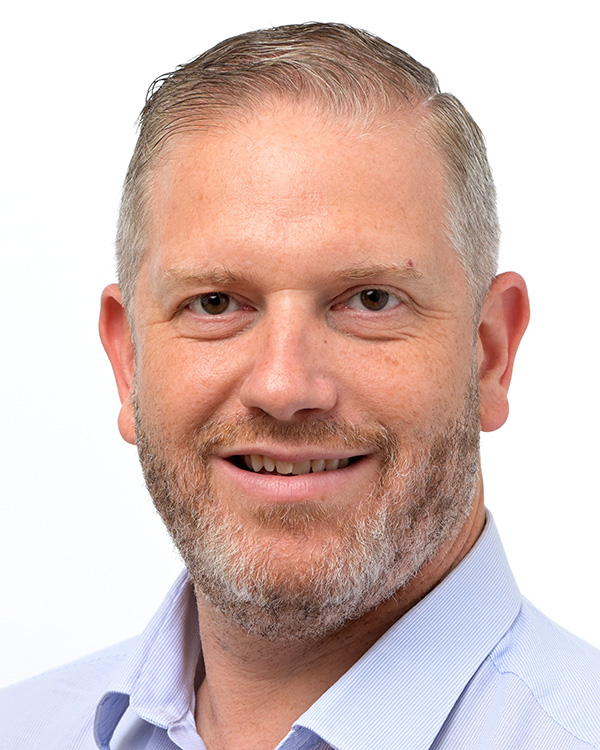





| Rank | Name | Country | Group | Speeches | |
|---|---|---|---|---|---|
| 1 |
|
Lukas Sieper | Germany DEU | Non-attached Members (NI) | 390 |
| 2 |
|
Juan Fernando López Aguilar | Spain ESP | Progressive Alliance of Socialists and Democrats (S&D) | 354 |
| 3 |
|
Sebastian Tynkkynen | Finland FIN | European Conservatives and Reformists (ECR) | 331 |
| 4 |
|
João Oliveira | Portugal PRT | The Left in the European Parliament (GUE/NGL) | 232 |
| 5 |
|
Vytenis Povilas Andriukaitis | Lithuania LTU | Progressive Alliance of Socialists and Democrats (S&D) | 227 |
All Contributions (63)
One-minute speeches on matters of political importance
Madam President, it has been 83 days since a great flood swept entire populations in my land, Valencia. You start to know more about what happened, although there are still many unknowns to clear. It is known that both PP and PSOE governments left in the drawer projects to adapt the ravines in the area, because they were not interested in spending money on prevention. It is known that floodgates were opened to protect obsolete infrastructure, without maintenance necessary for years. It is known that the populations that could be affected by these wastelands were not informed in a timely manner, nor of the volumes of water that were accumulating through the different ravines of the mountains near Valencia. It is known that the necessary resources were not activated in the first 72 hours. It is known that without the help of civil society, the early days would have been even more dramatic. We are not sure of the number of missing or deceased. There are so many unknowns in that information that not even the Church itself was able to contact those affected to celebrate a farewell Mass. And the messages I receive from the relatives of those affected give a lot to think about.
Powering Europe’s future - advancing the fusion industry for energy independence and innovation (debate)
Madam President, Commissioner, fusion energy is an incredible promise, a clean and inexhaustible future, but achieving the Sun's temperatures here on Earth and storing that energy is literally one of humanity's greatest challenges, as ITER demonstrates. I'm sure we'll make it, but let's face it, that future is still far away. In the meantime, we need solutions that work now, that are sustainable and, above all, coherent. Today, nuclear power is the cleanest, most efficient and most stable option we have. The International Energy Agency already forecasts a nuclear production record this year, with China innovating at the helm. But, in Spain, we have decided to close our nuclear power plants, losing competitiveness, increasing our dependence on foreign gas and buying nuclear energy from France because it is cheaper for us. These decisions are not sustainable and do not respond to the real needs of citizens; They are part of an ideological agenda that is sacrificing people's well-being in the name of a political narrative. Meanwhile, large electricians continue to play with bills that are impossible to understand, leaving families with no control over what they spend. Let's continue working on the ideal energy mix for each country, invest in the interconnection of the electricity grid between countries and agree on fair energy market rules. It is time to think about people, to put ideology aside and to bet on a fair, balanced and sustainable energy future.
Need to update the European strategy for the rights of persons with disabilities (debate)
Madam President, Commissioner, today I want to talk about Ezekiel: Ezequiel Gómez Ruiz. Ezequiel is a child with disabilities, neighbor of Catarroja. Ezekiel has not left home since October 29. Ezequiel is kidnapped by local authorities because they don't want to help clean the garage of the house where he lives. Yesterday the administrator of his building confirmed to me that they are still in the same state, unable to leave home. Ladies and gentlemen, today we raise our voices for those who face barriers that limit their rights. Although laws guarantee non-discrimination, words are not enough. It's time to act. States must commit to real action. We cannot continue to spend on the superfluous while millions of people lack accessible environments, adapted transport or essential treatments. We need budgets for trained staff in schools, healthcare and public services. We need budget to remove architectural barriers, support companies that integrate people with disabilities and, above all, reinforce volunteering, support and professionalize caregivers. This is not just inclusion, it is dignity, justice and ethics. I call on national governments to invest in equality, to give these people the tools to live fully. Inclusion is not an expense, it is an investment in humanity. Let's act now.
Regional Emergency Support: RESTORE (debate)
Madam President, Commissioner, 48 days have passed and Valencia still needs a lot of help. Aid is being received, for example to buy cars, but it is not enough. There are families that are asking for loans to be able to buy those cars. The time will come when families will have to decide if they pay a loan, if they pay a electricity bill or if they have to eat. In short, families working to pay debts they did not have before this catastrophe. Is that fair? In the age of technology, with artificial intelligence, with cloud systems, with blockchain, are we not able to put in place a secure and reliable budget monitoring system that citizens can consult and that brings transparency to the items allocated? Or is this not of interest? Who doesn't care about transparency?
Rise of energy prices and fighting energy poverty (debate)
Madam President, this month, in Spain, the cost of energy has once again reached annual peaks. Normally, private companies usually develop strategic plans for three or five years, and we evaluate sales data, profits, we review them and see if our plans are going well. Obviously, if we look at the plans and signals that energy prices are sending us for both industries and homes, we have to realize that there is something we are doing wrong. We have to think about what we are doing, what has brought us here and make changes. Let's stop extremism. Let's work on each country's ideal energy mix, which doesn't have to be the same. Let us work on the interconnection of the different electricity networks between countries to help each other in the supply of energy, breaking the dependence on third countries that only look out for their interests.
Presentation by the President-elect of the Commission of the College of Commissioners and its programme (debate)
Madam President, I shall leave a few comments and questions. First comment: in Valencia the system has failed. As much as you and Sanchez say, the only thing that has worked have been the citizens who have stepped forward. On the issue of the technology gap: Either we start to take a 180-degree turn or with the regularization we have of technology we do not reach either the United States or China. We are seeing the situation of our industrial fabric, very bad, to which the policies carried out in the last five years have led us. Are we going to follow that same path? And now several questions. How can we have a curator on your team who is directly responsible for what happened in Valencia? Mrs Ribera, why did you give the order to disburse water and not alert the local authorities, in form and time, to prepare? Why did they not execute the projects in the Poyo ravine that they had in the drawer for so long? What does Sanchez owe you to put her as curator, to give her this award? Will she resign if she is charged in Spain? How is it possible that Sanchez makes direct aid to Valencia conditional on the approval of its annual budgets? Aren't we going to do anything to stop him?
Prison conditions in the EU (debate)
No text available
One-minute speeches on matters of political importance
Mr President, today I would like to share with you the situation in Valencia, on 25 November, in the affected area. By the way, do you know how much water or how much it rained on October 29 in Paiporta? Do you know how much water was unpacked, for example, from the Forata reservoir? Were the authorities notified of the unpacking of that water? On whom do these infrastructures depend, future Commissioner Ribera? Well, the situation in Valencia is more or less the same: There's mud, there's cars, there's mud, there's flooded garages. And, I don't know, has anyone given orders to the EMU, Minister Robles, not to help the neighbors in their garages? Does Tragsa have any interest in lengthening the situation to take a cut of the budgets allocated to the recovery of the affected areas? Because it seems that there is beginning to be more interest in the business than actually in helping to recover the populations. Next weekend we will return volunteers to help the neighbors and we hope collaboration on the part of the State Security Forces and Bodies and that they do not hinder the work of the volunteers.
The devastating floods in Spain, the urgent need to support the victims, to improve preparedness and to fight the climate crisis (debate)
Madam President, how many hours have you slept in the last fortnight? How many muds have been removed? How many volunteers have you managed? Today I am not here to talk only about figures or infrastructure. Today I speak to you of humanity, of lives lost, of solidarity, of the values that unite. Valencia, my land, has been devastated by a murderous DANA that has devastated lives, homes, businesses and dreams. And while the volunteers worked - because I was working with the volunteers - on the muddy streets to help our neighbours remove the mud and devastated cars so that they could continue to live, we felt the weight of true brotherhood among the peoples who, in the face of such a catastrophe, have met the needs that politicians have not wanted to meet. In this catastrophe, only one great truth remains: the people save the people. Neither right nor left have been up to the task, allowing the catastrophe to worsen. Today we pay the price of mediocre leaders, more focused on maintaining their positions than on the decision-making and management capacity that those positions demand because, basically, they have never worked outside of politics. Aren't you surprised that politicians refuse help on ideological grounds? Now we ask for real, tangible and immediate help. We don't need hollow promises or cosmetic measures for the future. The situation is critical, the systems are collapsed and the situation will only get worse without an urgent, direct response that reaches whoever has to reach.
Closing the EU skills gap: supporting people in the digital and green transitions to ensure inclusive growth and competitiveness in line with the Draghi report (debate)
Mr President, Commissioner, ladies and gentlemen, if we want a competitive, realistic and sustainable Europe, we need rapid impact changes on our citizens. We have three important areas where you have to take a 180-degree turn. First, a suicidal and totally inverted population pyramid. Without family, birth and work-life balance policies, this will not be solved by importing millions of immigrants, as you claim. Second, depoliticization of education in Europe. Only by prioritizing excellence and student effort will we overcome mediocrity: Let's speed up the homologation of European university degrees, develop a business connection with those same successful educational environments. And third, training employees in technologies to exploit their productivity. 99% of our business fabric is small and medium-sized and lacks the necessary resources to comply with all the bureaucracy we impose on them from Europe. The time to act is now. Tomorrow it'll be too late.
Tackling the steel crisis: boosting competitive and sustainable European steel and maintaining quality jobs (debate)
Madam President, 'you will have nothing and you will be happy'. Looks like we took the highway road to that destination and we're packed. The automotive, ceramics, steel, agriculture, etc. industries all have a common denominator: the crisis. Where is the problem so that all these industries are crying out to us for help and change? Will it be the regulations and regulations that we are forcing them to comply with? Are we helping them become more competitive or are we plunging them into transformations that prevent their survival? Are we off this highway yet?
The crisis facing the EU’s automotive industry, potential plant closures and the need to enhance competitiveness and maintain jobs in Europe (debate)
What's the question? What we're saying is we can't influence. We can't set rules for the electric car. What we need to do is invest in combustion and biofuel technologies to continue to have a strong automotive industry.
The crisis facing the EU’s automotive industry, potential plant closures and the need to enhance competitiveness and maintain jobs in Europe (debate)
Madam President, Commissioner, are we going to have to regret another Qatargate? Is any foreign power paying to influence European regulation? I ask you this clearly because it is the only explanation for having industrial regulations in Europe that are killing us. At least, we can say that they have harmonized the laws with other fields, such as migration, because, just as in Europe we already treat illegal immigrants better than local citizens, you have managed to favour foreign technologies to the detriment of our own. A common market where we treat better those who come from outside. What do you gain from Europe being slow, clumsy, and increasingly dependent on external technologies? The European Automobile Manufacturers Association confirms that production in Europe has decreased by 20% in the last decade, while import from places like China increases exponentially. Is it because electric cars pollute less? According to official data from Transport & Environment, the manufacture of an electric car generates 70% more emissions than that of a traditional car. Can the Commission tell us what we do next with batteries and lithium? Why do we not support zero-impact fuels more than imposing polluting foreign technologies that are not even accompanied by infrastructure to sustain them? We cannot power the electric car based on threats, prohibitive legislation or fines. We cannot be the only region in the world that has announced to ban the commercialization of combustion vehicles by 2035 as if we were going to save the planet. Why are we giving out millionaire funds, like NextGeneration, to extra-community corporations, especially Asian ones? Which companies are behind the large battery factory constructions in Europe, directly or indirectly? Chinese companies like CATL or Envision? In this way we will never catch up with China and the United States in the technological advantage that, according to the Draghi report, we must reduce. Will it not be more logical to invest these funds in the development of our own technologies and industrial fabric? We are clear for those who work. Who do you work for?