
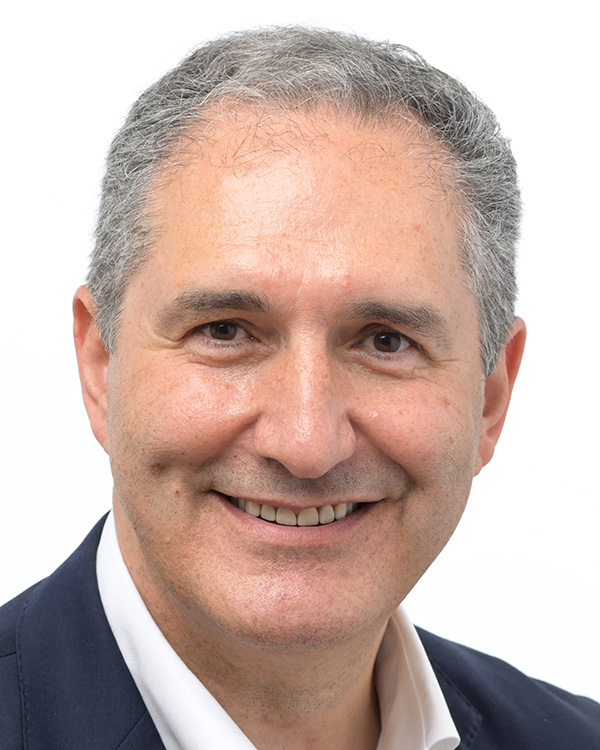

| Rank | Name | Country | Group | Speeches | |
|---|---|---|---|---|---|
| 1 |

|
Lukas Sieper | Germany DEU | Non-attached Members (NI) | 390 |
| 2 |

|
Juan Fernando López Aguilar | Spain ESP | Progressive Alliance of Socialists and Democrats (S&D) | 354 |
| 3 |

|
Sebastian Tynkkynen | Finland FIN | European Conservatives and Reformists (ECR) | 331 |
| 4 |

|
João Oliveira | Portugal PRT | The Left in the European Parliament (GUE/NGL) | 232 |
| 5 |

|
Vytenis Povilas Andriukaitis | Lithuania LTU | Progressive Alliance of Socialists and Democrats (S&D) | 227 |
All Contributions (65)
Serious threats to aviation and maritime transport from Global Navigation Satellite System interference: urgent need to build resilience against spoofing and jamming (debate)
Madam President, Commissioner Kubilius, my first words are one of support, solidarity and strength. And also, why not say it, of a feeling of resilience that Europe has to have, right now, with all the Polish people. It seems to me that it is very important that they know that they are not going to bend us and that we are not going to lack efforts, resources or desire to defend peace on European territory, and of course in Poland, because it is suffering these misfortunes on the part of some who think that they are going to destabilize them. Much of this afternoon's speech has a lot to do with the work being done; Mr Kubilius has already put some measures on the table, but I think it is very important to stress that we need, fundamentally, two elements: firstly, to have our own infrastructure – for example, we do not have a European military satellite plan of our own and it would be very important to develop it – and, secondly, to have a robust intelligence system, purely European, to protect the 27. And in that we will continue to work intensively over the coming months.
Safeguarding the rule of law in Spain, ensuring an independent and autonomous prosecutor's office to fight crime and corruption (debate)
Mr President, how bad, ladies and gentlemen of the People's Party of Spain, this debate has come to you! But how dare they come here to talk about corruption in Spain and to tarnish the public image of all Spaniards? I've been working against corruption for 20 years. From Madrid I have faced any corrupt party, of any color, in Spain, and now also from Europe I have to say it out loud. But are you – the People’s Party of Spain – going to come and teach us about corruption? You, Mr. Zoido? You, Mrs. Montserrat? But, well, if you had as leader of the office of defense against the corrupt in your party Mr. Pradas, who has just been sentenced to seven years in prison for corruption. Do you – the Community of Madrid, Spain’s biggest source of corruption, led by the People’s Party – talk about families? Are they talking about corrupt? Please make him look at it and don't bring back here a debate that's strictly national, because... Do you know what I'm telling you? We will not stop denouncing what you have done, also in Madrid, throughout Spain.
Upcoming NATO summit on 24-26 June 2025 (debate)
Mr President, Mrs Kallas, the first thing I want to do is congratulate you. Many congratulations, Happy birthday! I hope today's debate is more about peace than war, to congratulate you on the day, isn't it? But let me tell you that, ahead of the next summit, I came a little worried from the Parliamentary Assembly that we had in Ohio, in Dayton, more worried almost than I had gone. Fundamentally, because I realized that there was a feeling based on a debate that we've had all this morning here and, a priori, it seems to me profoundly false: and it is talking about the percentages, what each of the countries can contribute. Honestly, I think it is much more important for Europe to think about that great European shield, that great strategy that, from the Commission, you have to develop in order to create a genuine European military defence structure. We can't talk about a war each of the twenty-seven on our side. I would like, for example, to ask you what decisions you take in the Commission. On what systems, on what intelligence bases do you make decisions. About the 27-year-old's reports? It's a mess. I believe that Europe must have its own model, it must have its own army, that countries must contribute more to the budget of the European Union, to speak of a reality that you made clear and evident this morning: There is a real threat from Russia which, for the next three or five years, may be a reality. And, in the face of that, there are not only speeches about industry, about companies or about an Omnibus package, such as the one presented to us yesterday by Commissioner Kubilius, only to simplify what is not very well known. What we have to do is really think about European defence.
Discharge 2023 (joint debate)
Mr President, Commissioner Serafin, the first thing I want to do is to thank the work done by, above all, Niclas Herbst, who has done a magnificent job, and all the shadow rapporteurs for the collaboration. Welcome to this report. I believe that Parliament has a great deal of concern, especially on two issues that I am, of course, also concerned about: one is the error rate, more than 5,6 %, an upward trend almost since 2020; the other is the debt, which really already amounts to EUR 458.5 billion. But I believe that Parliament has and asks the Commission for a clear and effective action plan to try to circumvent all these kinds of issues. What happens is that here in the debate today we have also seen some contradictions, especially in how we try to talk about NGOs, which the Commissioner - I think also in his speech - has made quite clear: there has been no irregularity. Therefore, there are some debates in which some talk about transparency, about ... In short, if there had not been transparency, for example, we would not have learned that there are some companies in which some also have interests. I would sincerely like us to ask ourselves when defending human rights, the environment or social justice has become suspicious in Europe. I believe that we have to continue working in an intense way, especially the parties and groups that are building Europe. Eighty years after the end of the Second World War, I believe that it is well worth following this path which, for example, in collaboration within the committee with Mr Herbst and with the other groups, we have been able to consolidate.
Protection of the European Union’s financial interests – combating fraud – annual report 2023 (debate)
No text available
Presentation of the New European Internal Security Strategy (debate)
Mr President, Commissioner, first, I would like to extend my congratulations on the European Union's internal security strategy. But there are two things that I am particularly concerned about that I wanted to share with you and Vice President Virkkunen. The first has to do with the digital ecosystem. You have said that we will even remove content from the platforms. That may be fine, but we should at least make it clear how to verify the identity of each of the platforms and how the DSA is actually implemented in Europe. I believe that in this you have to be much harder and much more forceful. Secondly, we are talking about the Rearm Europe Plan. We're really talking about how to define our border security strategy outwards. And one of the big deficits that, for example, the Niinistö Report raises is that of the intelligence services. To really make an internal security it is much more important that the internal intelligence is also perfectly coordinated. That, without a doubt, is one of the challenges they have to develop in this work programme.
Cutting red tape and simplifying business in the EU: the first Omnibus proposals (debate)
Madam President, deregulate? Yes, I think we all agree on making our Europe more and more competitive. The Draghi Report says it in a special way. But I believe that, rather than deregulating and removing bureaucracy, the fundamental goal is to be world leaders at something. It has been shocking to me that some of the previous speakers have given the Chinese economy as an example, as if it were the beacon of the West. Anyway, it's kind of surprising to take steps backwards. I find it very problematic that the due diligence rules, which are undoubtedly a risk, are placed on the frontispiece of that great weapon that we must use to deregulate. I do share that you cannot cut bureaucracy without thinking about what the Draghi Report itself puts on the table, which is to lead. That is really our goal, Commissioner, to lead, and for that we have to be much more competitive, but not deregulating, no. What we have to do is remove bureaucracy to be competitive in the world. Of course I do.
Threats to EU sovereignty through strategic dependencies in communication infrastructure (debate)
Mr President, ladies and gentlemen, is Europe at war or not? I think we're at war. We are in a hybrid war and, for the first time in many decades, we are not sufficiently aware of the situation we are going through. We need to invest in our security and in our defence, in our critical telecommunications infrastructure. And to be truly sovereign we only have to do two things: invest in a significant way in technology, but not in any technology, in our technological development, and also invest in greater cooperation of our intelligence systems, to precisely protect in an efficient way all critical telecommunications infrastructures. In this case there are numerous works developed by research institutes, such as Max Planck; we have to strive for them to be visualized much more. And we have to generate our own resources if we really want to be sovereign and protect ourselves from what is directly invading us today.
EU financing through the LIFE programme of entities lobbying EU institutions and the need for transparency (debate)
Your Honor, I understand that you are a Democrat like me. I would give my life to listen to anyone who even thought differently. What we cannot do is subsidise – neither by the Commission nor by any EU body – only those NGOs that are going to be favourable to us. From what I gather from your words, you would be in favour of those NGOs that only finance your political opinion. Well, I am not, I am a Democrat and I want civil society, all civil society – even those who do not think like me – to have a voice, including in their opinions, to influence all of us who are represented in this Chamber. Of course I do. And that's what we're working on, and that's why we're going to keep fighting: for democracy, including in this House.
EU financing through the LIFE programme of entities lobbying EU institutions and the need for transparency (debate)
Madam President, the truth is that we are witnessing a debate at least surprising, because the reality is stubborn. Talk about lobbying is to speak of an instrument that anyone can exercise in our society. The Commissioner himself talked about wanting an active civil society - me too - and that's what NGOs are for. What happens is that the People's Group is trying to misuse, to go against a financial instrument such as the LIFE programme, which I believe has very good repercussions on society as a whole. Can you imagine, for example, the work carried out by NGOs to alert us, to make us aware of what, for example, has happened to us in Spain with the DANA? Of course I do. And we're going to keep working to make that a reality. Nothing happens, there are sufficient controls within the Union and that is where we need to be rigorous, so that all those systems of financial rules that the European Union and the Commission employ vis-à-vis any organisation – including NGOs – are implemented in a transparent manner. But it's okay. What happens is that you are trying to misuse and misrepresent all that because you have a very right-wing objective in this House, by the way, and that is quite worrying.
Foreign interference and espionage by third country actors in European universities (debate)
Mr President, ladies and gentlemen, 2019: cyberattack at Maastricht University, with a ransomware and then the requirement of more than EUR 200 000 to release your data; 2021, University of Oxford; 2022, University of Cambridge: an attack of phishing to extract data and credentials from our researchers. Undoubtedly, the issue of protecting our science, our universities, our knowledge is a priority issue that the latest Niinistö Report has put on the table. And this is an issue that, of course, the next Commission - which is already working on protecting our data, our knowledge, our researchers, our research centres - has to place at the centre as one of the top priorities. Our knowledge, that of our investigations, that of our investigators, is at stake; We played a lot. And that is why talking about cybersecurity and the protection of our research centres is also a priority for the Commission that is being launched today.
Enhancing Europe’s civilian and defence preparedness and readiness (debate)
Madam President, ladies and gentlemen, the Niinistö report is extremely interesting. It puts us squarely in the face of the threats we are already facing today, but I wanted to highlight two fundamental elements of this report: the first is the ability to coordinate the intelligence of our countries and, secondly, to try to develop a protective shield that, above all, values the defense of our citizens. This is not only done with investments. This is not only done by investing in defense. This is done by investing in a change of attitude which, unfortunately, even here this morning we see has nothing to do with it. There are some Members who are here today raising their voices and their words with a conceptualisation more specific to the Second World War and with an attitude of trying more to deconstruct Europe than anything else. This report is therefore extremely important. Let's safeguard our intelligence systems, let's have information shared and let's all protect ourselves from what is coming upon us that, without a doubt, is going to be extraordinarily important.
Presentation of the Court of Auditors' annual report 2023 (debate)
Mr President, Commissioner, it is a pleasure to share this debate with you. I would also like to thank the Court of Auditors, Mr Murphy and, in particular, Mr Gregor, who has made this report so excellent; of course, to a large extent, it seems to us that it is an essential task in the work of the accounts of the European Union. Undoubtedly, it also seems to us that the Digital Decade and, in particular, the European Green Deal are some of the most important strategies that we have precisely to seek the digital sovereignty of the Union, in the face of the international geopolitical context that we are experiencing. And, in that sense, we think it is essential, of course, to ensure that European funds are developed and implemented in an efficient, effective and transparent way. It seems to us, of course, that there has to be a certain balance between control and regulatory simplification – as we have seen this morning – but we want to make a strong commitment to digital transformation, trying to avoid gaps. And, above all, the most important thing is to provide security coverage to our citizens to avoid also the great cyber threats, which today are already becoming a reality.
Facing fake news, populism and disinformation in the EU - the importance of public broadcasting, media pluralism and independent journalism (debate)
Madam President, Commissioner, ladies and gentlemen, disinformation today is a reality that calls into question and blatantly puts our democracies at risk. Article 10 of the European Convention on Human Rights speaks of freedom of expression and freedom of information and clearly protects them. This is developed so that our citizens have the ability to make decisions and the ability to be able to choose freely in democratic processes. As our societies advance and digitalise, we see how, unfortunately, in the face of this ability to try to obtain more information and for our citizens to build a free and efficient opinion, disinformation, wrongdoing and lies are making their way and are increasingly putting our democracies at risk. It is an important job that all governments, like Spain's, must continue to do, because, if not, unfortunately, our European democratic societies will increasingly be at risk and, this, we cannot afford.