
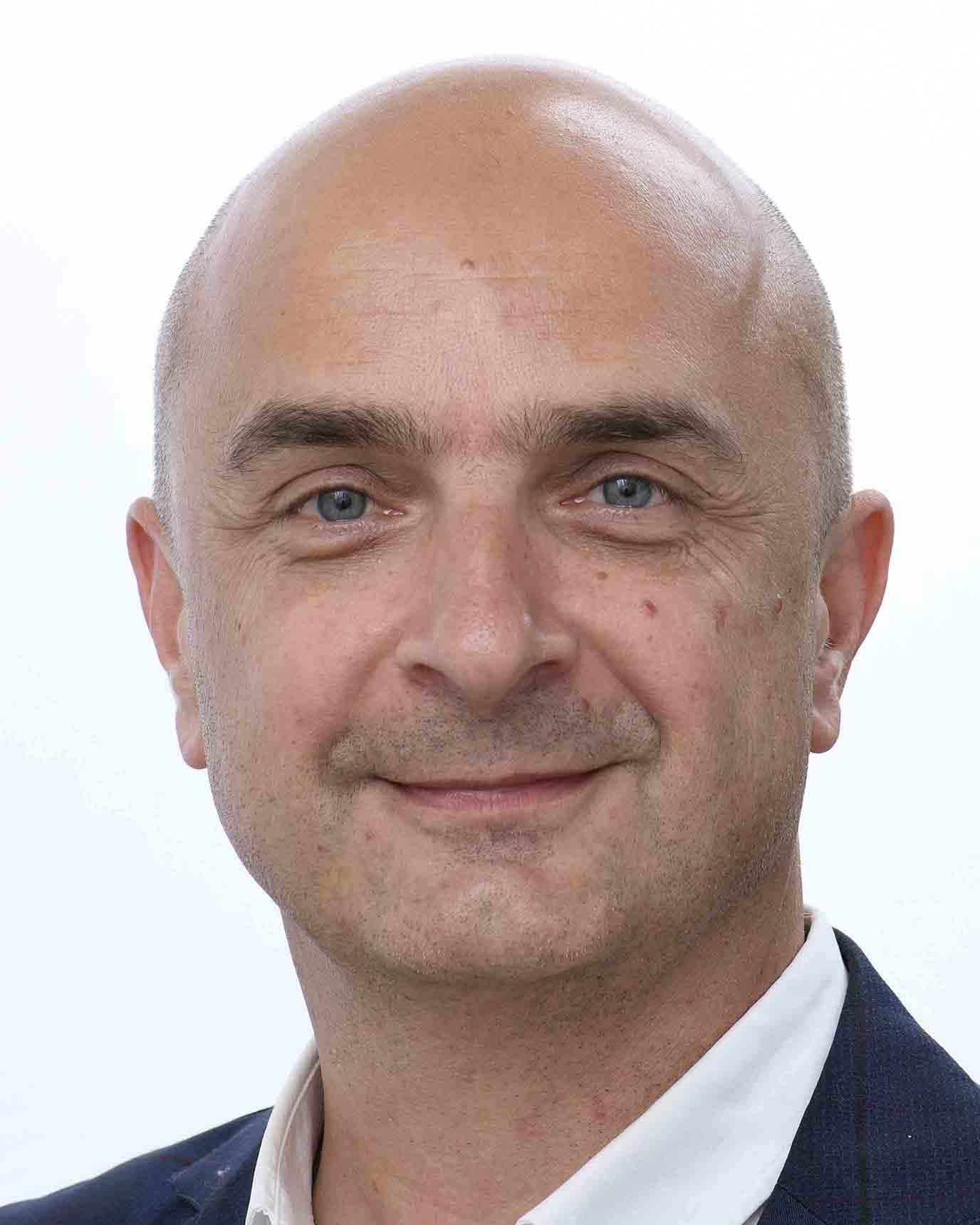






| Rank | Name | Country | Group | Speeches | |
|---|---|---|---|---|---|
| 1 |
|
Lukas Sieper | Germany DEU | Non-attached Members (NI) | 390 |
| 2 |
|
Juan Fernando López Aguilar | Spain ESP | Progressive Alliance of Socialists and Democrats (S&D) | 354 |
| 3 |
|
Sebastian Tynkkynen | Finland FIN | European Conservatives and Reformists (ECR) | 331 |
| 4 |
|
João Oliveira | Portugal PRT | The Left in the European Parliament (GUE/NGL) | 232 |
| 5 |
|
Vytenis Povilas Andriukaitis | Lithuania LTU | Progressive Alliance of Socialists and Democrats (S&D) | 227 |
All Contributions (52)
2023 and 2024 reports on Bosnia and Herzegovina (debate)
Dear Chairman, and now something different from my predecessor. I welcome this report, which clearly identifies the problems BiH continues to face on its path towards the European Union. Every time I visit Bosnia and Herzegovina, in addition to exceptional hospitality, I hear the stories of people who want only peace, security and a better life. And that's why I understand that most citizens want to join the European Union. Unfortunately, this path is constantly caught because political forces have been reluctant for years to put the European path ahead of their nationalist and private interests. I call for this to change in the Federation, in Republika Srpska, in the district, in the canton, in the city, in every village. They will only do so if you, the people of Bosnia and Herzegovina, put pressure on them. Don't let them gamble like they did with €100 million in EU money for growth. Do not allow them not to be able to agree who is negotiating on your behalf and to avoid the laws of Bosnia and Herzegovina. This parliament is waiting for MPs elected in Bosnia and Herzegovina as well.
Implementation report on the Recovery and Resilience Facility (debate)
Dear Chairman, colleague Glavak, I think you are mixing pears and apples, because you have to correct me if the information that the Government of the Republic of Croatia has invested five million euros to a private individual to build a Hilton hotel on the island is incorrect. Is this information wrong and is it a lie? I think it's accurate and easily verifiable and yes, that's not how the RRF should be spent.
Implementation report on the Recovery and Resilience Facility (debate)
The Recovery and Resilience Fund (RRF) is an important mechanism for the European Union to respond to the challenge of the COVID-19 outbreak. The good news is that a borrowing decision has been made to invest the money in recovery and avoid a new economic crisis. A lesson has been learned from the past when austerity measures were forced instead of borrowing and investment measures. But today we have to ask the question of how and what was invested in. The answer to this question is provided by the European Court of Auditors, whose findings on RRF spending are worrying. It is spent without clear indicators on investment performance, without clarity on who the final recipient is. What exactly does that mean? In my country, the government gave five million euros to an investment to build a Hilton hotel on an island. Five million euros for the Hilton Hotel. An investment that would super easy find support from any commercial bank. But no, he took public money. Shouldn't that money have gone to the house? This is a typical example of poor RRF spending, which certainly contributes neither to competitiveness, nor to recovery, nor to resilience. Let's stop spending public money like drunk billionaires and instead of deregulation, let's focus on smart and responsible spending of public money.
2023 and 2024 reports on Serbia (debate)
The Honourable Chairman, the Honourable Commissioner, to the Rapporteur, reading this report on Serbia, there is no doubt that from the country of champions and constructive dialogue, as it was until recently, Serbia is stuck in a dead end as far as EU integration is concerned. Arbitrary expulsion of EU and Serbian nationals, serious corruption problems, deterioration of media freedom, pressure on students, professors, teachers, NGO raids – this has become a daily reality. But at the same time, a different Serbia has woken up, opposing such a regime. Although students, peasants, workers, artists in huge numbers have been on the streets for months, their voices have not been taken seriously until recently. Three weeks ago, students arrived by bicycle from Novi Sad to this house to be heard. A group of students, as we have heard, are running, some are here with us. Today, their voice is much stronger, and this report recognizes that Serbia still has an alternative that cares about justice and European values. The policy of trading lithium, fighter jets, expensive tickets for MAGA events is slowly collapsing. Time is ripe for a new chapter in the process of joining the European Union.
Ninth report on economic and social cohesion (debate)
No text available
Topical debate (Rule 169) - Social Europe: making life affordable, protecting jobs, wages and health for all
Dear President, legal certainty, the rule of law and social Europe, where you do not go bankrupt because you go to college or because you get sick and where you have a salary for a dignified life, have made our Europe and our continent one of the most attractive places to live, but now all of this is somehow in danger. The announcement of the imposition of tariffs tonight by the US administration will certainly make the situation of a social Europe even worse. Our massive defence investments, which are also ahead of us, will certainly not contribute to strengthening a social Europe and that is why, Commissioner, someone will have to stand in front of people and tell them that simply money will not be for everyone. It won't be for housing both for a social Europe and for defence. Some higher priorities will have to be made, and the answer we see now is only deregulation, border closure and armament policies. This is certainly not the direction that will keep this kind of Europe that we have had so far.
Improving the implementation of cohesion policy through the mid-term review to achieve a robust cohesion policy post 2027 (debate)
Very good question. Because it's much easier to spend it on defence than to spend it on housing. The second thing is that I'm worried about who will control the spending in defence when on the national level, the Member States will say, but we have our security laws which are protecting us from disclosing the information on spending in defence. So, I see that for Member States it's much easier to grab into the defence than in the housing and energy transition.
Improving the implementation of cohesion policy through the mid-term review to achieve a robust cohesion policy post 2027 (debate)
Madam President, Mr Commissioner, I think one of my first speeches in this House was calling for the reform of cohesion policy, but not in my dream – or call it nightmare – I couldn't imagine that we will get such a comprehensive and, I will say, radical proposal how to change the cohesion policy, which I can partially agree with. However, we will need more time to study more in depth what was written in the documents that were released only a few hours ago. But I have to challenge the idea that with these six new priorities, defence will also be included. Because can you imagine how this priority will overburden the other ones which we are talking about from the beginning, like solving the housing crisis or working more on the green energy transition. It's really good that you also emphasise the green transition, access to water, housing, but I'm afraid that defence will just swallow up everything. Also, in my first reading, I haven't seen that you are proposing the change of Article 7(5) to enable investments from the cohesion policy directly into housing. So let's see what can happen there. And one thing which I find good: finally, you are putting more strong European urban initiatives. If we are going in the direction of more direct funding to regions and cities, this is the right way forward.
Secessionist threats in Bosnia and Herzegovina and the recent escalation (debate)
Mr President, Commissioner, I guess it will be much more pleasure to you and to us that tonight we speak about agriculture of Bosnia and Herzegovina and the food of Bosnia and Herzegovina. But instead, I will speak about something else. Dear Chairman, this year we will mark 30 years since the establishment of peace in Bosnia and Herzegovina by the Dayton Agreement. Unfortunately, after 30 years these days, we are again listening to worrying news about the separatist efforts to dismember BiH. I mean, we hear this news sporadically year after year, but today we also look at the actions of Dodik, who moves from words to actions. Tonight, it is important to support a complete and sovereign Bosnia and Herzegovina and condemn any attempt at separatism, but it is even more important that such behavior is condemned by the citizens of BiH themselves, because it is the crown of failed policies, characterized primarily by nationalism, nepotism and corruption. This system has had a chance to deliver some progress in the last 30 years, and it delivers fear and restlessness today. That's why it's time for a change. The doors of the EU must be wide open to BiH, and I call on people in Bosnia and Herzegovina who want a normal, just and equal life to close ranks, resist any separatism and any call for violence. Don't let them drag you into hatred a second time. We are waiting for you in the European Union.
Union of Skills: striving for more and better opportunities to study, train or work in the EU and to bring our talents back home (debate)
Dear Chairman, thank you, Mr. Sokol, but of course, you've confused the crucibles again. I wasn't talking about not needing an army, I was talking about finally discussing people and when it turns a little bit differently, when people start investing more in people, when people start getting quality citizenship education, when they start worrying about each other, then there is a lot less conflict and that makes us more powerful and resistant than the situation now when, unfortunately, here we see that dictators use both fake news and other manipulations to manipulate people. That's why we invest in education and make our societies more resilient.
Union of Skills: striving for more and better opportunities to study, train or work in the EU and to bring our talents back home (debate)
Mr President, Madam Commissioner, the importance and the beauty of this debate is that we are finally talking again about the people. After one and a half days of talking about defence and regulation, now we are going back to talking about the people. But maybe there is one trap that we can get into, and this is that we also talk about work and competitiveness, because skills are not only about that. We also need the new generation not to be just skilled workers in the labour market, but also to be people who are empathic, who can understand and feel what fake news is, who can think with their own heads. And this is what should also count as a skill. And this is why education should be available and accessible to each and every person in Europe throughout life. And one more thing, when we talk about the talent pool and about needing talent, I also want to remind all of us that sometimes we should also take care of untalented people, because we have also seen that sometimes untalented people make a big difference. So don't forget about those people as well.
Commission Work Programme 2025 (debate)
Madam President, Mr Commissioner, I woke up early this morning just to go through the document because I didn't want that my speech to be based on the leaked draft document that was circulating around European media. I have to say I was quite surprised this morning when I saw that something is missing. Something that was in the leaked document is not in the final document, and this is the European affordable housing plan. This is really quite shocking because I think that we agreed – this House and the Commission – that we are facing the housing crisis. Look at the faces of these young people who are also sitting up on the galleries, who will very soon also challenge and face the crisis of not being able to pay for their rent. I'm begging you and I'm calling you and please, to your assistant, who is also taking the notes, please write it down and underline that in the next College, reconsider this idea to put back affordable housing plan into the Commission Work Programme, because this is something that we have to do to protect social Europe. This is the promise which has been done from the President and also Parliament is ready to back up.
Political crisis in Serbia (debate)
The Honourable Chair, Commissioner Kos, President of the European Commission Von der Leyen visited in October 2024. Serbia on the occasion of the adoption of the growth plan. At a press conference with President Vucic, she said this: Serbia is one of the most advanced countries in the accession process. You have committed to reform, in particular on the foundations of the rule of law and democracy. And then she told the president: And you have shown that deeds follow your words. How deeply politically this sentence was missed two months ago, because even two months later the streets of Serbia were flooded by students, workers, farmers, artists and raised their voice precisely because of deep problems with the rule of law and democracy. How is it possible that the President of the Commission made such a cardinal mistake and caused great damage to enlargement because she justifiably fuelled the doubts of a large part of Serbian citizens in the European Union? She just supported the wrong side. Commissioner Kos, now is not the time for an inclusive dialogue with the autocrat, but it is crucial that you give clear and loud support to students. And you and I know that there wouldn't have been this blood under the ruins of the Novi Sad bus station if it had been all by law. Serbia is not just Vucic, the EU is not just Von der Leyen. There are us both on one side and on the other side of the wall that we do not allow to break the excavation.
Preparation of the EU-Western Balkans Summit (debate)
Dear Chairman, I wish I could speak Montenegrin or Serbian here today, but then there will be no translation. I would like to speak Bosnian, but immediately someone will rebel that it is not a language. I would like to speak better Macedonian or understand Albanian, but I know that people living in the Western Balkans will hear and understand me in Croatian, and my message is: The moment when the door of the European Union is reopened has indeed opened. Let's use that moment! Press decision-makers in your countries to deliver reforms because no matter what the moment, they won't look through the fingers. We need to put an end to our mistakes on the European side, such as the uncontrolled hunger for lithium that has led some citizens to resist the European Union. Let's stop this approach! And I want to give special support today to all those in state administration or on the streets of cities and villages who still believe that the Western Balkans can be a space of respect for the rule of law and social justice. Students in Serbia who today block faculties due to deep social injustices are a great inspiration for the European path.
Misinformation and disinformation on social media platforms, such as TikTok, and related risks to the integrity of elections in Europe (debate)
Dear Chair, Dear Commissioner, I regret to share with you the latest experience from my country of Croatia, where only the finals of the presidential campaign are underway. So, after Romania and in Croatia, we follow a whole series of fake news placements about a candidate. The method has already been seen. Anonymous profiles on TikTok, Instagram, Facebook and X regularly place false information. Part of it is transferred mainstream The media, in this way, creates a distorted image. It is important to note that this case is most likely not about external influence, but about the influence of people and political options that have direct, financial or other private interests in the campaign. I think it is important to recognise and combat such disinformation campaigns, as much as they are linked to internal rather than external actors. For this reason, I am calling on social networks and regulators in Croatia and the EU to urgently take steps to keep the presidential campaign within democratic frameworks and to punish those responsible.
Regional Emergency Support: RESTORE (debate)
Dear Chair, Dear Vice-President, The Green Group will, of course, support this RESTORE proposal, but we also want to make it clear that it can no longer do so. We cannot one day, which will happen tomorrow, vote against a resolution related to deforestation in the forest, and then at the same time demand that the money for compensation for damage from disasters be dragged out of cohesion. We need to get serious and realize that climate change is here and no longer be hypocritical. Also, as much as I support this proposal, I want to express regret that we did not integrate into it, and we could, because there was time, the principle of Building back Better. And this should be made clear to the citizens of both Spain and Poland, who will use these funds, that, unfortunately, the way in which the public infrastructure will be restored may not be solid enough, so here's the next wind, the next water will take these buildings again. So I ask once again, as a Parliament, to take the climate crisis seriously, to take it as a reality, and to deal with it responsibly.
Activities of the European Ombudsman – annual report 2023 (debate)
Dear Chairwoman, Dear Ombudswoman, we have before us a report on the work of your office for 2023. This is also the last report you submit here in the European Parliament. For this reason, on behalf of the Greens/EFA Group, I would like to thank you for your long-standing commitment to the protection of human rights, the protection of the rule of law and the strengthening of the transparency of the institutions of the European Union. In particular, I would like to underline your determination to work on topics that are not simple or pleasant, but are essential for preserving the democratic quality of the institutions and gaining citizens’ trust. You didn't hesitate to touch those who might have thought they were untouchable, so thank you. This is how you have worked on the topic of migration with great precision and dedication during your term of office. In particular, I would like to highlight your work on the horrific tragedy of drowning over 600 people in the Adriana shipwreck. You yourself have said how deeply these situations have marked you. You have also worked on environmental topics, in particular on access to information in this area, where you have identified recurrent irregularities, i.e. condemned the European Commission, which is often unwilling to give access to information or has stalled its responses. I am convinced that your brave and professional work, however exposed to some criticism, ultimately made the institutions of quality. Tomorrow we will elect a new Ombudsperson and it is up to us MPs to ensure that this person meets the criteria and standards set by you. Thank you so much again.
Presentation by the President-elect of the Commission of the College of Commissioners and its programme (debate)
Dear President, Dear President of the European Commission, in July this year you received the support of this House mostly from pro-European groups. Today we have a decision on the composition of the new Commission and it is more than clear that things have changed a lot. Today, those who do not believe in the idea of a democratic and strong Europe will also vote for this Commission. The voice will be given by those who persistently deny climate change. You will get the votes of those who do not respect the rule of law. You will get the voices of those who are inclined to attack the rights of minorities and do not believe in gender equality, who spread conspiracy theories, as well as those who do not believe in secular Europe. Today there will be a serious precedent, and it should not have been so that you showed greater wisdom and courage. My vote against, as well as a good part of my group's colleagues, is a message of resistance to this serious precedent. Although I believe that there are quality Commissioners in the composition of the new Commission, as I recognize in the announcements of the programme some important moves, tackling the housing crisis, continuing to work on the fight against climate change, I am not convinced that, precisely because of the flirtation with anti-democratic forces, the policy proposals that will come from you will be in the direction of a better life for all in the European Union. Paradoxically, my vote against is also a vote for. For all those who are ready to fight for the preservation of the European values on which we have built this European Union so far. There's no surrender!
The important role of cities and regions in the EU – for a green, social and prosperous local development (debate)
On Monday, more than 90 mayors of major European cities adopted a declaration urging, among other things, us in the European Parliament to work together to deliver concrete results for citizens by 2029. Today, 75% of the EU population lives in urban areas. The implementation of the vast majority of laws we adopt here ends up on the mayor's shoulders, and the voices of cities and regions often remain hidden under the umbrella of nation-states. If we want faster implementation of European policies among people, then we need to find models of faster lowering of European policies to the local level, and it is precisely the solutions that cities offer us. For many years, the possibilities of direct financing of cities and regions have been cautiously discussed. We in the Green EFA group believe that now is the time to create an instrument that will allow direct access of cities and regions to European funds. We are not talking about the fact that all funds have to go directly to cities, but to see which part of the fund can go through the model of direct financing. Perhaps this is precisely the money we want to focus on tackling Europe's most pressing crises, such as the housing crisis. If we want a quick response to this crisis, funding needs to be brought down to cities and regions as soon as possible. The cities were the first to start warning about the housing crisis more than five years ago. They were not heard at the time, and the crisis took on a European scale. Let's not make the same mistake again this time. Trust in cities is trust in the people of the European Union.
Ensuring sustainable, decent and affordable housing in Europe - encouraging investment, private property and public housing programmes (debate)
Five years ago, the magic word in this Parliament, but also in Brussels circles, was demography and we all talked about how demography is a key problem. She got her commissioner, but when we look at it after five years, not much has moved. And now it frightens me that housing, which has finally become the subject of all the topics of this Parliament, does not come to life, does not live through the same fate in five years, that we do not take decisive steps. Commissioner, if we are to face this housing crisis, we must be resolute, courageous and let's speak concretely immediately. Let's not subsidize the instalments of housing loans of banks. That mistake was made in my country. Young people were pushed into debt slavery, banks profited, and housing prices rose. Let's activate the housing stock that hasn't been activated. Yes, this is through tax policy, where the European Union does not have much space, but we can certainly motivate Member States to tax longer-term rentals more than short-term rentals, and not to be the other way around, that is, to tax short-term rentals more. Also, let's see what happens to the tenants' rights. In many member states, our people who rent an apartment end up on the street overnight, end up on the street because tourists come. Let's see what we can do here. And finally, the key thing is, let's invest massively in a public housing fund. Let's amend Article 7. Regulation 1058 and directly start financing cities to increase public housing stock.
Recent devastating floods in Bosnia and Herzegovina (debate)
Dear Chair, at the outset, in front of the Greens-EFA group, I would like to express my condolences to the families and friends of the victims of the floods in Bosnia and Herzegovina, with the hope that the search for the missing will yield results as soon as possible. This tragedy, which occurred just a few weeks after the devastating floods in Central and Eastern Europe, is another painful reminder of the climate crisis we live in, regardless of the fact that some colleagues also persistently deny or downplay in their speeches in this Parliament. I am afraid that in the coming period we will increasingly pass resolutions to support people whose lives and property will be lost in extreme weather. In addition to unprecedented storms, this disaster has apparently been amplified by inadequate, or even illegal, infrastructure in local communities unprepared for such events. We invite you to investigate in detail possible irregularities related to the work of the quarry in Jablanica, whose stones, carried by a water flood, killed people. But in every tragedy, there is something good that gives rise to hope. Once again, we have witnessed incredible solidarity among people to help each other, exposing their lives to help others. When it's hardest for us, we work together to erase the boundaries and differences between us. Yesterday, we all voted almost unanimously to mobilise the European Solidarity Fund. Bosnia and Herzegovina, unfortunately, is not yet a full member and cannot automatically apply for funds from this Fund, but it is good that the European Union immediately responded to BiH's request to activate the Civil Protection Mechanism and the operational forces of many of our members responded in record time and are already committed to working on the ground. But that won't be enough. We call on the European Commission to urgently explore the possibilities of repurposing part of the pre-accession funds used by Bosnia and Herzegovina, to focus them on repairing damage. This additional step of solidarity will be of great importance for all victims. Let's stand firmer with the victims in Bosnia and Herzegovina.
Outcome of the Summit of the Future: transforming global governance for building peace, promoting human rights and achieving the sustainable development goals (debate)
Honourable Chair, Honourable Commissioner, I think this pact must be a kind of opportunity for us as the European Union to reflect what happened to us that we lost our capacity for peacemaking. Today, peacemaking is not something that the European Union is recognised for. Viktor Orbán is promoting himself as some kind of peacemaker, and the European Union was a peacemaking organization, and that is why I would like us to somehow return to that trail of peacemaking and not to be guided by these slogans that our fellow citizens tell us through their campaigns, who say if you want peace, prepare for war. We think that this is the wrong direction for the European Union to go, because we know that if you want peace, you have to be socially fair and responsible. If you want peace, don't buy energy from a dictator. Invest in mediation. Separate yourself in time from those who advocate violence and if you want peace, isolate rather than encourage those anti-democratic behaviors. So we're building peace, and let's not admire war. (Applause)
The devastating floods in Central and Eastern Europe, the loss of lives and the EU’s preparedness to act on such disasters exacerbated by climate change (debate)
On Monday, in this chamber, we discussed the future of European politics and many of you from the center to the far right fired very toxic arrows, manipulative arrows, according to the idea of the green transition and the need to fight climate change. Today, however, there are slightly different tones in this hemicycle, with the exception of some eccentrics, conspiracy theorists, and spreadrs of fake news who will continue to deny the story of climate change. But the fact that today a much larger part of us here recognizes and understands what is happening with the climate on the territory of Europe, but also around the world, is good news and I would like that in the future, when we discuss here the future of agriculture, the future of energy in Europe, the future of housing in Europe, that we remember this debate and that we have in mind all those who are on the front lines of the fight against floods today and that we remember all those who perished in the floods.
War in the Gaza Strip and the situation in the Middle-East (debate)
Dear Chair, colleagues, a lot has been said in the last 11 months, after October 7, 2023. Many of you here today have condemned this utterly unacceptable behavior by Israel. International courts have called for a ceasefire, for the release of the hostages. The result of all this is silence, that is, non-action by Israel with a clear message, we just don't care, we don't care, and the question is what we will judge further, whether anything will happen on the ground itself. I think, on the one hand, that all further measures of pressure should be taken to stop this massacre taking place in Gaza, but I want to draw attention to something else. I want to draw attention to the thousands of Israelis and Israelis who are demonstrating against Netanyahu because Israel is not Netanyahu. But I also want to draw attention to those Palestinians and Palestinians who are critical of radical Hamas because Palestine is not radical Hamas and in fact there is a solution, to give our support, and that is why I call on you, Commissioner, to support these people, to just make a change from the inside.
War in the Gaza Strip and the situation in the Middle-East (debate)
Dear Chairman, it is interesting to me that with your great support to the Israeli Government, how do you explain the fact that then tens, hundreds of thousands of Israelis are demonstrating against the decision of that very government that you have now tried to defend here? So here she is not criticized by outsiders, but the people who live in Israel are on the road every day and are very opposed to the decisions of the Israeli government. Then how do you interpret it?