
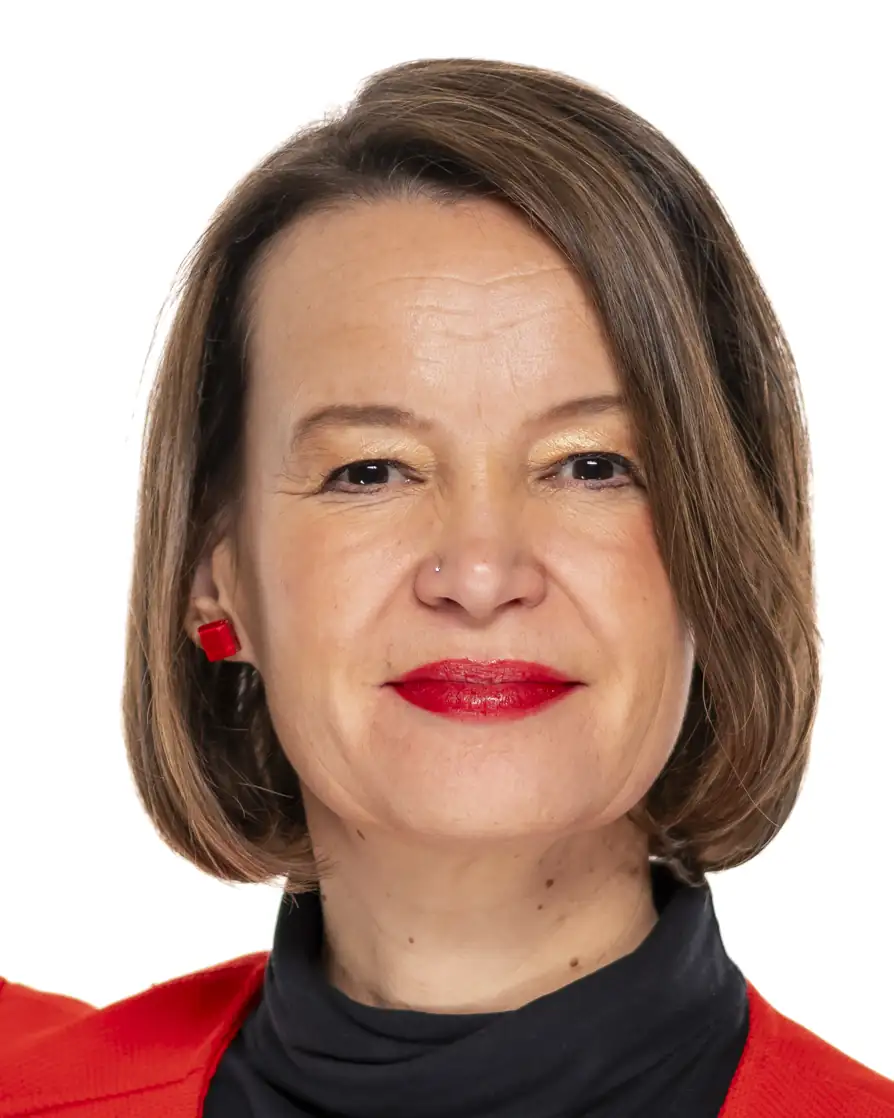

| Rank | Name | Country | Group | Speeches | |
|---|---|---|---|---|---|
| 1 |

|
Lukas Sieper | Germany DEU | Non-attached Members (NI) | 390 |
| 2 |

|
Juan Fernando López Aguilar | Spain ESP | Progressive Alliance of Socialists and Democrats (S&D) | 354 |
| 3 |

|
Sebastian Tynkkynen | Finland FIN | European Conservatives and Reformists (ECR) | 331 |
| 4 |

|
João Oliveira | Portugal PRT | The Left in the European Parliament (GUE/NGL) | 232 |
| 5 |

|
Vytenis Povilas Andriukaitis | Lithuania LTU | Progressive Alliance of Socialists and Democrats (S&D) | 227 |
All Contributions (83)
The outcome of the G20 Leaders' Summit (debate)
Madam President, the G20 Leaders' Summit, held in Rio de Janeiro, has left us with a bittersweet feeling. On the one hand, we want to value a joint statement with positive elements, something that many did not expect. But on the other hand, we see – with regret – how it is becoming increasingly difficult to reach comprehensive agreements at the multilateral level, where we need more multilateralism than ever before. But this summit has left several lessons for the European Union. The first is that a country like Brazil, an emerging country, has placed at the heart of the global agenda the need to fight, without excuses, against poverty, against hunger, against inequality. And this comes at a time when, in this house, there are temptations to backtrack on climate change and nature conservation. We need more ambition in meeting the Sustainable Development Goals (SDGs). We need to continue fighting, without excuses, against climate change; because after COP29 in Baku we cannot afford any more excuses or delays. COP30 will be our last chance, it will be time for truth, and there the European Union will have to live up to it.
Enhancing Europe’s civilian and defence preparedness and readiness (debate)
Madam President, the Niinistö report is timely because it alerts us to the real threats we have today: military aggressions, cyberattacks, sabotage of our infrastructures, health and climate crises, such as DANA in Spain. But in an increasingly globalized world, we must ask ourselves what it means to be better prepared. The report clearly states that greater preparedness is not built by isolating us from the rest of the world; on the contrary, we must strengthen our capacities, but also ensure that our partners, especially those in the Global South, do so. We need to understand – as the pandemic told us – that our well-being and security also depends on the well-being and security of the countries of the Global South. And we also need a comprehensive approach, to ensure that the Commission works in a coordinated and effective way. We need much greater early warning systems, that are anticipated, and decision makers that are able to prevent and save lives, as was done in Valencia in 2019 and was not done in 2024. We need to fight disinformation and ensure truthful reporting. We need to be able to integrate science into our political decisions and, above all, we need to understand that we need more global governments and more integration of the countries of the South into our global response.
The devastating floods in Spain, the urgent need to support the victims, to improve preparedness and to fight the climate crisis (debate)
Madam President, the DANA disaster that has struck my region is unprecedented in Europe. It is something that will go to more according to all experts and that forces us to fight harder against climate change. The time will come to assess the response and to debug responsibilities. Wow, we will! But we will not allow ourselves to be carried away by the strategy of those who seek to cover up their shames there by trying here even to jeopardise the most sacred foundations of the European Union. Because we do know where the mayors were, and the government delegate, and Minister Ribera calling again and again to a president who was off and out of coverage. But today is the time to talk about families, about all those who have lost their loved ones, their homes, their properties, their memories, their jobs. It is time to make them feel the importance of being part of the European Union and of putting all the resources at their disposal, of being at the level of the young people who have worked day and night, of public servants. It's time to tell them clearly that we will be there, especially when the lights go out and when they disappear from the covers. We will remain there effectively, humbly and in solidarity; Trying, at least, not to relive such pitiful spectacles as we have seen here today.
Outcome of the Summit of the Future: transforming global governance for building peace, promoting human rights and achieving the sustainable development goals (debate)
Madam President, the results of the Future Summit are valuable, first of all, because they are based on a great consensus during a time of deep global polarisation. And they are also because they are demanding greater ambition, greater political commitment, in favor of cooperation and multilateralism. But words are not enough: we really have to commit ourselves to financial commitments and political commitments, as some Member States such as the Government of Spain have done. That is also where we want to see the European Union. We need more than ever to uphold the principles of the UN Charter and we also need, once again, to denounce the flagrant violation of international humanitarian law in Ukraine and Gaza, as the High Representative was doing today. It is absolutely necessary to fight for gender equality once and for all, starting with the next Secretary-General of the United Nations being a woman. We must do all this not only out of solidarity – which also – not only for the future – which also – but also for intelligence, because we will not be able to guarantee our well-being if we do not guarantee that of others.
Possible extradition of Paul Watson: the danger of criminalisation of environmental defenders and whistle-blowers, and the need for their protection in the EU (debate)
Mr President, Commissioner, thank you for your presentation and for your commitment. It brings us here today - and I regret that it is at the end of this plenary session - a subject of fundamental rights, of basic pillars of the rule of law and democracy, because today we are talking about Captain Paul Watson, a well-known environmental activist for his denunciation and his actions against illegal whaling, but we could talk about many others. In a few days, his possible extradition by Denmark under an international arrest warrant issued by Japan in 2012 will be resolved. We are therefore talking about the arrest in a Member State of the European Union of an environmental activist for actions linked to the denunciation of acts contrary to international and European law. More and more citizens are speaking out and demanding to denounce the violation of European law and are also desperate to draw our attention to action in the fight against climate change. We have seen activists, we have also seen scientists and that is why we are talking about the need to improve protection for whistleblowers in Europe; i.e. to protect people who witness illegal activities or abuses of the law and decide to bring it to light. We in the Socialist Group have long been leading the need to articulate the protection of whistleblowers, whether journalists, activists, human rights defenders or women's organisations. And it is true that we have made progress, that we have endowed ourselves with instruments such as the Whistleblowers Directive or the most recent Directive against strategic lawsuits against public participation, but we must make it effective and, therefore, we want a real review, so that we can make it effective and never consent to this again in our societies.
EU response to the Mpox outbreak and the need for continuous action (debate)
Mr President, Commissioner, I thank you for your commitment. This is precisely the moment when we should ask ourselves two questions: the first is what we have learned from a pandemic that only a few years ago put our security, our economy, our health systems and our lives in jeopardy, and the second is whether we are better prepared today than a few years ago to respond to possible upcoming epidemics and pandemic outbreaks. By now, we should have learned by now that health crises and pandemics do not understand borders; whereas we need more commitment and more effort; whereas although the Commission has made an effort, it is insufficient; whereas we need to strengthen our capacities to prevent, prepare for and respond to such outbreaks; whereas we need to be much more supportive and share our stockpiles of vaccines, as requested by Spain and as some Member States have done; We also need, once again, to make it clear that the capacities of the countries of the South must be strengthened in the manufacture, generation and implementation of vaccination in their countries, which must be the instruments of development and partnership of the European Union. We need above all, in addition, to strengthen once and for all that agreement on pandemics that allows the transfer of technologies. In short, we should have already learned from what happened to us a few years ago and not continue to be reactive and denialist, because that will be a profound irresponsibility.
Outcome of G20 ministerial meeting in Rio-de-Janeiro and fighting inequality (debate)
Madam President, Commissioner, first of all I would like to highlight the Ministerial Declaration on Development of the G20 summit, in its commitment to tackling inequality - the main challenge that surely lies ahead - and I would also like to highlight the leadership of Brazil and President Lula in the initiative to fight hunger and poverty that we support. Now, after that agreement, we have to start working from the European Union and we need political ambition to lead a reform of the United Nations that is capable of strengthening the multilateral system. We need funding. We need political ambition to support, at the financing for development summit, the financing needed for sustainable development. We need financial instruments that also have indicators of evaluation and of the real impact of those instruments. We also need a budgetary ambition that allows us to lead the fight against poverty. We need strong partnerships with civil society, with our partner countries, with research institutes. In short, we need to reform the system of cooperation and there we will be tremendously demanding.
Situation in Venezuela (debate)
Madam President, this is my first speech in this House, in this Chamber, and I do so out of the deep respect that I have for it and for the role that we who are here today must play. Venezuela has been in serious political conflict for many years: of course, with profound elements of lack of democracy and freedom. The S&D Group is committed to Venezuelans, freedom and democracy in the future. The electoral authorities have not provided sufficient data to prove the electoral result of July 28. It is the result of this profound deterioration, of the breakdown of the essential democratic norms. But the best way to support the Venezuelan people is, precisely, to think in capital letters, in that useful policy that thinks of Venezuelans and not of the partisan interests we see here. Helping Venezuelans means working to get political prisoners out of jail; work to seek consensus, as European governments do, not to divide and measure the adversary. We will continue to work for the Venezuelan people, for their democracy, for their freedom, with international organizations, with the Latin American and Caribbean region, because they deserve hope, they deserve a democratic future and freedom. But we will not acquiesce to a single lesson from those who continually ally themselves with the far right, from those who are incapable even of condemning the dictatorship of their own country. We will work for the Venezuelan people, and we will not use it as we have seen here today.