
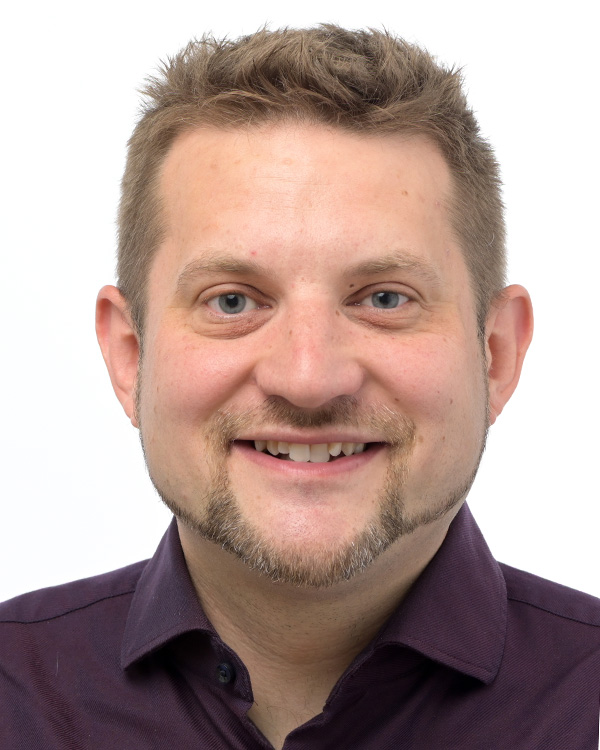

| Rank | Name | Country | Group | Speeches | |
|---|---|---|---|---|---|
| 1 |

|
Lukas Sieper | Germany DEU | Non-attached Members (NI) | 390 |
| 2 |

|
Juan Fernando López Aguilar | Spain ESP | Progressive Alliance of Socialists and Democrats (S&D) | 354 |
| 3 |

|
Sebastian Tynkkynen | Finland FIN | European Conservatives and Reformists (ECR) | 331 |
| 4 |

|
João Oliveira | Portugal PRT | The Left in the European Parliament (GUE/NGL) | 232 |
| 5 |

|
Vytenis Povilas Andriukaitis | Lithuania LTU | Progressive Alliance of Socialists and Democrats (S&D) | 227 |
All Contributions (54)
Outcome of COP 29 and challenges for international climate policy (debate)
No text available
Need to strengthen rail travel and the railway sector in Europe (debate)
Mr President, ladies and gentlemen! Rail is still not competitive compared to air and road transport. Yeah, as well? On a partially dilapidated infrastructure, high-speed, goods and local transport compete with each other, which often also leads to security risks. One solution could be a European network of magnetic levitation trains – explicitly not in competition, but as a complement to traditional rail transport. In China, research has been carried out on this topic for many years, and in Europe, too, metropolises could be connected with trains of 600 km/h and faster, if only we wanted to. Operating renewable energies could make intra-European short-haul flights obsolete and thus make a valuable contribution to climate protection. That's why I appealed at a late hour: Europe, let's not forget the magnetic levitation!
The devastating floods in Central and Eastern Europe, the loss of lives and the EU’s preparedness to act on such disasters exacerbated by climate change (debate)
Madam President, Commissioner, ladies and gentlemen! My sympathy goes out to all the victims. However, we should not speak of floods of the century, but of floods of the century. I read this very appropriate sentence on the Internet a few days ago. And then you hear here on Monday during the debate on the strategic dialogue and again today that the vast majority of MEPs are only calling for improvements in civil protection and civil protection in order to counter terrible flood events and other climate catastrophes – higher dams, thicker walls and, above all, higher compensation. Can we perhaps just work on the causes of climate change instead of constantly messing around with the consequences? Even if some here in the room – especially on the right – would like to displace the connection: Schnitzel and steak, SUVs, cruises – all of these have an impact on climate change. Our consumption and the way we live have a massive impact on climate change and the resulting disasters and loss of life. Another point that is often left out is the surface sealing. As a result, more and more green areas are disappearing, but agricultural areas are also being destroyed in favour of settlement and traffic areas. On the other hand, settlement and traffic areas are growing every day. Instead, let's save human and animal lives together and take on the historical responsibility and do something about climate change! I would like to end with the words of the Brazilian writer Paulo Coelho: “The world is changing by your example, not by your opinion”.
Outcome of the Strategic Dialogue on the Future of EU Agriculture (debate)
Mr President, Commissioner! In the strategic dialogue we can see some very concise sentences. Among other things, it states: “The time for change is now!” "Switching to a balanced, healthier and sustainable diet is essential". I can fully subscribe to these statements, because it is now time to talk about how we can slowly get out of climate-damaging, polluting and, above all, cruel animal husbandry – of course, with full consideration for farmers within the EU. I would like to point out another point very quickly. It states that there is a trend in the EU towards fewer animal products and, at the same time, an increasing interest in plant proteins. What can we derive from the strategic dialogue? We must clearly move towards net zero area consumption, i.e. less forage crop cultivation. We need a transparent animal welfare labelling system, away from animal fertilisers and financial support for agriculture towards animal welfare-free agriculture. Finally, in this one minute of my speaking time, I would like to point out that 43 cattle, 418 pigs and around 11,000 chickens have been slaughtered.