
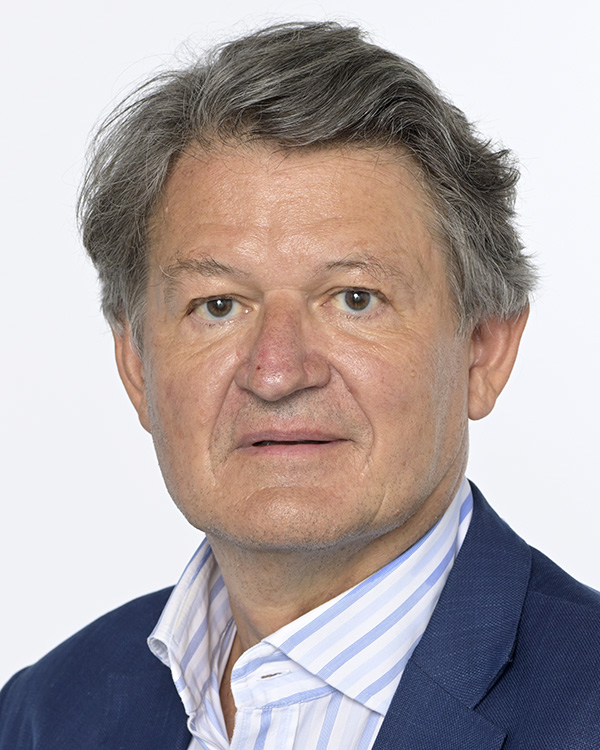






| Rank | Name | Country | Group | Speeches | |
|---|---|---|---|---|---|
| 1 |
|
Lukas Sieper | Germany DEU | Non-attached Members (NI) | 390 |
| 2 |
|
Juan Fernando López Aguilar | Spain ESP | Progressive Alliance of Socialists and Democrats (S&D) | 354 |
| 3 |
|
Sebastian Tynkkynen | Finland FIN | European Conservatives and Reformists (ECR) | 331 |
| 4 |
|
João Oliveira | Portugal PRT | The Left in the European Parliament (GUE/NGL) | 232 |
| 5 |
|
Vytenis Povilas Andriukaitis | Lithuania LTU | Progressive Alliance of Socialists and Democrats (S&D) | 227 |
All Contributions (140)
2023 and 2024 reports on Bosnia and Herzegovina (debate)
Madam President, Commissioner! I will speak in German, because I am also addressing the many people from Bosnia and Herzegovina who live in Austria, many of whom had to come to us as refugees, who have found a home with us, and who are now so important to me because they can have contact back to their homeland, to their two homelands in Europe. But first of all, many thanks to Ondřej Kolář. Thank you for the cooperation, for the hard work, and also for the others, the shadow rapporteurs. As I said, Bosnia and Herzegovina and the people, they definitely belong to the European Union in their diversity and uniqueness. EU membership is the only way we can bring Bosnia to Europe – that goes without saying. This future is under threat and the name Milorad Dodik has already fallen. Of course, this is dangerous, because he wants to destroy. He wants to destroy, also on behalf, in cooperation, of course, with Russia, with political interests, with China, with economic interests. And we must not forget President Vučić, who also sees his work in destroying coexistence in Bosnia and Herzegovina. But the EU stands in support of a united, stable Bosnia and Herzegovina. The people of Bosnia and Herzegovina deserve this, and we will continue to work for them.
2023 and 2024 reports on Albania (debate)
Madam President, Commissioner, following this discussion, I had the impression, but I understand now why it is so difficult to have any conversation with the right‑wing extremists. They come out and say, 'If you look at Albania, it's just a gang of drug dealers, and there's only crime'. Yes, we heard about it. There is crime. There are problems. The media situation is not perfect at all. But on the other hand, there is a strong civil society that wants to develop. On the other hand, there is very strong Russian influence there, which you probably like, but which is very dangerous not only for Albania but is also very dangerous for us. So we have to talk to them. It's a merit‑based process, as we heard many times, which is very good, and the Albanians have to prove that they can be part of the European Union. And one last sentence: when I was in Albania in the early 1990s, many people spoke Italian and they knew a lot about the world because of the Italian media, even in this terrible communist system. And that brings me again to the idea we have to give more information for those societies today who have no information, like Belarus, when nobody of the right‑wing people were there, like Russia and other countries. That's also our job in Europe.
Situation in Belarus, in particular the release of political prisoners (debate)
Madam President, dear Commissioner, dear Minister, when I think about Lukashenka, I don't think of a president. I think of a dictator. But moreover, I also think of a traitor because he sold out his country to a war criminal, to Putin. He told him he can make war against Ukraine also out of Belarus. Of course, we talked about the political prisoners. I was always impressed when I talked to Ms Tsikhanouskaya. I really didn't dare to ask, 'Did you hear anything from your husband?', because once she told me, 'No, for over a year I haven't heard from him', and now we know that it's for many years. Just imagine what kind of torture it is, not only to throw people into a prison, but then you say you will never hear from your family again. As it was mentioned, it's at least 1 100, 1 200 political prisoners who are still there and we have to talk about them. We have to put pressure on Lukashenka, as it was mentioned again. Also, thank you very much, Commissioner, you talked about those 400 000 people here. We have to help them. We talked about action already – action is media. We need more information for the people who still live in Belarus. Belarus is Europe. It will be free. It belongs to the EU. Zhyve Belarus!
One-minute speeches on matters of political importance
Madam President, 'Nationalism is war'. It was François Mitterrand who said this to the European Parliament. Now I have to continue in German, because it is also about Austria. There is this warlike nationalism that we are witnessing from Putin, who has the people of Ukraine murdered. There is the aggressive nationalism of a Romanian presidential candidate who says: We own a piece of Ukraine. There is the aggressive, a bit playful nationalism of Orbán, who walks with a scarf, with great Hungarian, also a claim, there belongs to us more. This stupidity is also committed by an Austrian provincial government, the Styrian, among the so-called patriots of the FPÖ. They have the Dachstein song and say that part of Slovenia belongs to Austria. This is an old song, has nothing to do with today, but this provincial governor wants this in the provincial constitution or at least his own law. It's destructive, it's broken. Everyone has the right to a home. Our home is called Europe. If we live together in our homeland, let's not let that destroy us. We live together, not against each other.
Commemoration of the 30th anniversary of the Srebrenica genocide
Madam President, dear colleagues, I've been to Srebrenica; I know how much pain is there, if you look in the eyes of the relatives of the countless victims. It was predominantly men who were killed, but also women and children. They endured unimaginable horrors. The pain remains a stark reminder of those terrible days of July 1995. Some of the Bosnian perpetrators – including the leader Ratko Mladić – are still behind bars for their crimes. And I ask the Serbian people: please understand what happens. Open your eyes, acknowledge the past and engage with the victims of this genocide. Accepting the truth is the first step towards healing. We Europeans strive for unity, embracing our diversity and history to forge a peaceful future together. And I can tell you, as an Austrian, we in Austria also had a difficult time accepting the role of Austrians in the Holocaust, but it was so important to acknowledge this painful truth. It was essential for understanding our past, but also our common future here in Europe. The events in Srebrenica have been ruled a genocide by international courts. We honour the victims. I bow my head and solemnly declare: Never again! Yet even today, we witness similar atrocities. When we look to Ukraine, and what some Russians are doing there, they remind us that the shadows of genocide still loom. We have an exhibition on the other side of the bridge, in the Churchill Building. Thank you, Madam President, for opening it tomorrow. And thank you to the people from the Srebrenica Memorial Centre for working there. I really ask you to go there, look at it and let's repeat: Never again!
Choose Europe for Science (debate)
Mr President, some right-wing colleagues told us that Trump wants to chase away just the 'woke' scientists. That's wrong. I have here the editorial of The Lancet, a well-known publication of science. What they're writing is that Elon Musk's department slashed federal budgets and awards, interrupting investigations into paediatric cancer, diabetes, HIV, prematurely ending at least 113 clinical trials and withholding funds from more than 200 universities. PhD projects have been cancelled, graduate admissions rescinded and infrastructure investment foregone. The visas of foreign-born American students and faculty have been revoked. So that's the situation. In the United States, they can't work freely anymore. So please, Commissioner, go there, get them. We really have to do something. They have great talent and they should come to Europe. One more thing: yesterday, we had a conference about the mental health of the children of Ukraine. They are refugees – 20 000 of them were stolen and brought to Russia. They need a lot for mental health. Please think about them as well. Let's do something for them.
The Hungarian government's drift to Russia-style repression: legislative threats to freedom of expression and democratic participation (debate)
Mr President, how I love these really strong men – autocrats – when they are trembling. And now I see Mr Orbán is trembling. He's afraid of the situation. But what's the situation? He says it's about transparency. He wants more transparency. OK, let's have more transparency about corruption. Let's have more transparency: what do you do with the money? Let's have transparency: why is his family so rich? Why are his friends so rich? Open the coffers. Tell us where the money is from. It's from our taxpayers. Of course we know that. So what is he afraid of? He's afraid that his political business plan doesn't work anymore – the political plan to have a majority by suppressing the media and oppressing the public mind and the business plan by making money with our taxpayers' money. One more thing: he says that his opponents are bugs, animals. He says that political activists must be liquidated. People who talk like this have nothing to do in my – in our – European Union.
EU support for a just, sustainable and comprehensive peace in Ukraine (debate)
Madam President, there's a group from the Ukraine Leadership Academy in the House today. I saw them already in Vienna, and they are the future of Ukraine. They told me that of course they want peace, but they also want freedom. And I will tell you this: one day some of them will be here as Members of the European Parliament. They have understood that without freedom there is no lasting peace. And they also watch Russian television. What do they see there? Mr Putin – some of you love him – shows his own chapel. That's where he's praying: praying to the devil to kill more people. That's the fact: he wants to kill more people. And his people say also on television that Ukrainians don't have a right to live as long as they don't speak Russian. Those are the facts, and that is the reason also why we have to continue to support Ukraine and also take all these Russian assets. Ms von der Leyen's not here anymore, but she should do it now. Don't only talk about it, do it now. Give them the money. They need it for the reconstruction of Ukraine. Slava Ukraini!
2023 and 2024 reports on Serbia (debate)
Mr President, dear colleagues, first of all, thank you very much for the cooperation for the report. I went to Serbia last week to talk to parties of government and opposition and to civil society, and of course, to mourn the victims of Novi Sad – 16 people died there. When I was in Serbia, I realised how terrible the oppression of the free media is, how the secret service is spying on and wiretapping opposition groups and civil society, how meanly Vučić is speaking about the opposition, calling them 'political paedophiles' and how deeply corruption is rooted in his system. The catastrophe of Novi Sad was not bad luck; it was the result of corruption. Thank you very much, Commissioner Kos, we have been there together and we talked to young people. We talked to civil society. They explain to us: it's corruption. And this corruption brings more and more people – not only students, also professionals, workers – on the street, and the majority want to live in Europe, they want to live in the European Union, just like us. And I really have to tell you: you, the young people, but also the other older people, everybody in Serbia, you are part of Europe, you are part of the European Union. You are welcome here. But the regime of Vučić in this form cannot enter the European Community. Mr Vučić , don't stand in the way of the future of your people.
110th anniversary of the Armenian genocide
Mr President, Commissioner! The Austrian writer Franz Werfel has the genocide of the Armenians very well in his book The Forty Days of Musa Dagh described. Franz Werfel was Jewish. The book was burned in Germany in 1933. And just as we, today’s generation of Germans, Austrians and others, are not to blame for the Holocaust, but have the responsibility to talk about it, to remember it, so today’s Turkish government, the people of Turkey, would have the responsibility to talk about what was, to acknowledge what was – this book The Forty Days of Musa Dagh to read. This is not a weakness, quite the contrary, it is the conviction that we must accept history, understand it and do everything we can to ensure that it does not happen again. 110 years later, however, people in Armenia are again threatened – they are threatened by Azerbaijan. And the good news is: The Armenian government, the Armenian population – they know where their historical homeland is. And just interrupted for some time, but the historical homeland is here with us in Europe. This is a European country. The Armenian government, the people – they want to come to Europe. And I find it very positive that they are also making this request that they want to be admitted to the EU. Armenia is part of Europe. Let us not forget what was, but let us work together for a better Europe.
Immediate risk of further repression by Lukashenka’s regime in Belarus - threats from the Investigative Committee (debate)
Madam President, Madame Commissaire, Belarusians are Europeans just like us – they share our values, they want to live with us, and one day they will find their rightful place in the European family. Until then, they have to fight for freedom, and we have to support them. Especially, we have to support now their political prisoners. Sergei Tsikhanouski is one of them, and he's in prison because he wanted to run against the president. Then his wife took over the fight for freedom, and she had to leave the country, although she won the presidency. When I talked to her last time, she told me that for more than two years she hasn't heard anything about her husband. So you see what a cruel regime it is. Today, on 2 April, Lukashenka and Putin say they have a day of unity. It's not a day of unity of two peoples. It's a day of unity of two dictators, and it's very important to say that we will continue to support the real people in Belarus, that we have to have stronger sanctions against the leadership, and that we will work for the freedom of Belarusians. Zhyve Belarus!
Execution spree in Iran and the confirmation of the death sentences of activists Behrouz Ehsani and Mehdi Hassani (debate)
Mr President, Commissioner! Iran is a beautiful, wonderful country with a wonderful population, a very interesting history and at the same time a government that does everything it can to destroy this country and above all to destroy the people of this country – with a very special organisation, the so-called Revolutionary Guards. It is important to me that we also call them a terrorist organization and declare them for it, because this is also an economic organization that also gives a lot of money to the mullahs who destroy the people. And we've already talked about it: The people sentenced to death – almost 1 000 in a year –; Two have been named. But I want to talk to someone else: Mahwasch Sabet. A writer who was sentenced to 10 years in prison at the age of 70, having been in prison several times. It is almost a death penalty. And why? Just because she is Baha'i. And I just want to read a few words from this writer, and that says it all: “You are the man in the cage, becoming zero among other zeros. And believe what is not wa(h)r, and confess what you have not done.’
Safeguarding the access to democratic media, such as Radio Free Europe/Radio Liberty (debate)
Madam President, Commissioner, colleagues, I had a wonderful teacher as a journalist, Hugo Portisch. He learned in America, and he told me it's the land of the free speech – that's what we have to take to Europe. And that's what he did, and that's how we grew up. And now if I listen to Mr Trump, he hates journalists, he wants to decide who's reporting, and this Mr Vance is coming to Europe and he says there is no freedom of speech. No, no, it's the other way round. There is no freedom of speech in America any more. It's worse. There are TV stations in America where they publish Russian propaganda. And now we have to tell that that's why we need strong media in Europe. But also, I mean, all the right-wing extremists are gone, but they should know, in Hungary, they also publish Russian propaganda, and there is no freedom in Hungary. And they don't want to realise that. And one more important sentence: if it's Mr Trump, if it's Madam Le Pen, you have to accept the verdict of courts. That's rule of law. That's the division of power. That's how our freedom, that's how Europe works, and it's very important. And we will fight that it remains like this.
White paper on the future of European defence (debate)
Mr President, Commissioner, ladies and gentlemen, We, my generation, we are the happiest generation that has grown up in Europe, in free Europe. And it is the responsibility of our generation and those who have subsequently been given the freedom to ensure that the next generations can also live in peace and freedom. I always say: We haven't done anything about it, but now we need to do something to ensure that we can defend Europe for the next generations – and we can only do that together. We can only do this together. And then sometimes it says: Yes, Russia is weak, what are they supposed to do to us? Mr Eroglu has already said very clearly: We must bear in mind Putin’s brutality – he has been murdering people since 1999; We have heard today how the people of Ukraine are suffering from him. And he also threatens us, and many of us do not want to take note of that, and that is the sad thing. There is also disinformation, which is very good. And unfortunately, there are also many people sitting in this house – now no longer, they are already elsewhere – who take part in Putin’s disinformation, who translate what he says in Russian into German, English, other languages and thus endanger us. We must also defend ourselves against this.
Establishing the Reform and Growth Facility for the Republic of Moldova (debate)
Madam President, first of all, I want to say Austria has a good tradition, more than 20 years of development cooperation with Moldova, so we know very good development. And so thank you, Commissioner, that you talked about the enlargement of the EU also with Moldova within the next years. Of course, we see the geopolitical situation. We see what Russia is doing. Russia is destroying; Europe helps – Europe helps with development solidarity. Russia uses energy to blackmail you; the EU installs solar panels and connects the energy centres. Russia divides; the EU unites. And – that I saw as an election observer – the Moldovans are strong. They defend their democracy, and we have to help them there as well. One more thing: there is beautiful soil there, they are great agriculture, wine we know, and also wonderful culture. It's always great to listen to Moldovan singers, like Valentina Nafornița. If she is in Vienna State Opera, in any other opera, please go listen to her, she's wonderful, like many others as well.
Political crisis in Serbia (debate)
Madam President, Madam Commissioner, Minister, I would like also to express my deepest condolences with the victims of the Novi Sad tragedy. Here's the point: it has to be investigated, but people do not believe that Vučić allows a real investigation. What the people want and why they go on the street: they want rule of law, they want freedom of speech, they want to express without limitation and violence. And what people in Serbia tell me is they don't want to see Vučić every night on television to say the same things. Sometimes people get fed up with it. The students are protesting because they need, because they want the rule of law. They want transparency. They are fighting for their future and for their country, and they can be proud of their commitment. Here in Parliament, we stand for these young people. And Ms Kos, thank you very much for your clear expression. But I'm afraid not everybody in the Commission sees it like you. I think the Commission has to be very clear to Mr Vučić: if you want to be part of the European Union, it's the rule of law, it's the freedom of media, with all the possibilities that people can live in free freedom and peace.
Continuing the unwavering EU support for Ukraine, after three years of Russia’s war of aggression (debate)
Mr President, Madam Commissioner, Minister, dear disciples, many important things have been said. I want to concentrate on one group of the victims and that is the children. Just imagine you have a child, you go to bed and you don't know if the child is still alive the next day in the morning, there might be a rocket from Russia. Imagine your child has cancer, you bring it to a hospital and it's killed by a rocket in this hospital. Imagine you have children and they are kidnapped, brought to another country where they tell you that your mother language doesn't really exist and that you have to learn a new one. That's what's happening and that's one of the reasons why we have to support, why we have to continue to support the Ukrainians. Mr President! I would like to say in German to my fellow citizens in Austria: Putin is also fighting us. He is already waging a hybrid war against us, and if he conquers Ukraine, he is 500 km from Vienna. Putin wants us not to live in freedom. What I have always heard in Ukraine – we do not want to be Putin’s slaves – applies to all of us in Europe. That's why we stand together for Ukraine. Slava Ukrajini!
Case of Boualem Sansal in Algeria
Madam President, Commissioner, 'I do not agree with what you are saying, but I will fight to the death so that you have the right to say it'. These words attributed to Voltaire are at the heart of European values. The arrest of Boualem Sansal violates the fundamental principle of democracy: freedom of expression. His arrest is not an isolated incident, but part of a broader crackdown on dissenting voices critical of this authoritarian regime: Hundreds more have been arrested for offences as trivial as an anti-government hashtag. The Algerian people deserve to enjoy the same freedoms and prosperity as the citizens of the European Union. These freedoms and prosperity are interlinked; Some cause others. It is therefore essential that the Algerian penal code, a tool of oppression, be reformed and that the rule of law be respected. The best way to start is to release all political prisoners.
Presentation of the programme of activities of the Polish Presidency (debate)
Madam President, I would like to thank the Prime Minister for for talking about security. I'm from Austria – a neutral country – and for us, it's also very important. I have to inform you that we have a right-wing party, FPÖ, pro-Putin, and they are against Sky Shield now. All the other parties are in favour of Sky Shield because security is so important for us. But now, your friends in the Österreichische Volkspartei – in the People's Party – they also against Sky Shield now. So I really ask probably you can talk to them, talk about security, talk about how important this is for us, because we all know that we are in danger from Putin's rockets, and we want to live in peace and security together in our common Europe.
Further deterioration of the political situation in Georgia (debate)
Mr President, Commissioner! In Australia, I'm sometimes asked: Why are you dealing with Georgia? Then I can say: Yes, because Georgia was once a prime example of democracy and has become an authoritarian state; No, it was made an authoritarian state by an oligarch, a man who just wanted to make money, along with another, an unscrupulous man, the one in Moscow, a war criminal who wants to occupy the next country. I already know that this does not bother the colleagues from the AfD, because of course you cannot do anything with democracy, especially not with what you can do, that this is a European people, an old European cultural people, and the people there want to live like us. They want to live in freedom. They want to live with democrats, with democracy, they want to have normal democratic media, and they are not allowed to do that, and that is why it goes without saying that we stand up for them. It was impressive how President Surabishvili was there, and I thank all those who were there, whether it was Mr Roth from the German Bundestag or others. Clear words: Dear people of Georgia, we are on your side, we do not forget you.
Need for actions to address the continued oppression and fake elections in Belarus (debate)
Mr President, dear colleagues, it's 31 years that this dictator, this ruthless dictator, imprisons and tortures his opponents. He brutally represses the public and hands over his country to the Kremlin. By the way, it's interesting there are no Patriots here, no Patriots speaking. Why? Because they are Putin's propagandists. They wouldn't be critical to Lukashenka because they are all in one camp. It's not a patriotic camp. It's a camp against Europe. It's hard for us, for Europeans, to imagine what is really happening in Belarus. But it's a terrible reality every day for these people. They are fellow Europeans. They deserve what we have – a free country, freedom. Every vote counts, and now Lukashenka wants to steal another election. But he's not a president. He's illegitimate. He's a criminal, and he belongs at a tribunal. We are on the side of the freedom‑loving people in Belarus, of the strong opposition, the Belarusian democratic forces, and with Ms Tsikhanouskaya, who was here with us. We will work together. She's very optimistic. I can only say Zhyve Belarus!
One-minute speeches on matters of political importance
Madam President, ladies and gentlemen, Exactly 44 years ago, as an Austrian, as a young Austrian, I was allowed to start a traineeship at the European Commission – all young people. It was clear to us: Our fathers shot each other, we live in a better Austria. Then it took a few more years and exactly 30 years ago Austria joined the European Community – a unique success story. The EU is a peace project, especially for a small country like Austria. It is an economic project: Austrians benefit from the EU at around €5,000 per year. The EU is also a union of values. I've just been to Poland, there's a program Restoring the Rule of Law – This means that the rule of law must be restored because it did not exist in the last government. From this you can see: We have to work together, we have to rely on each other. Then we can keep this Europe safe and peaceful for the next generations. I look forward to the next 30 years.
Continued repression of civil society and independent media in Azerbaijan and the cases of Dr Gubad Ibadoghlu, Anar Mammadli, Kamran Mammadli, Rufat Safarov and Meydan TV
Mr President, dear colleagues, you already talked about Doctor Gubad Ibadoghlu and we talked to him and at the same time there was his daughter, and she cannot go to him and he cannot go to her. I have two daughters and I really have a hard time not talking about this – how impossible is this situation for these people? We know about the hundreds of millions, obviously, that Aliyev and his people are stealing and bringing to London, to Europe, to any places. Okay, he wants to be rich, but why do they have to be so cruel? Why is it not possible that a father can meet a daughter and a daughter can meet the father? That's something which is really incredible and that's why we have to do something, and we have to tell him we don't want to have any business with those people. We have to tell him that this is not the way you can do business with European nations. We have to be much clearer and we have to tell the real, very clear message to the people of Azerbaijan: we continue to support you in your fight for you to have a country free of corruption and free of this political violence.
11th year of the occupation of the Autonomous Republic of Crimea and the city of Sevastopol by the Russian Federation and the deteriorating human rights situation in occupied Crimea, notably the cases of Iryna Danylovych, Tofik Abdulhaziiev and Amet Suleymanov
Mr President, dear colleagues, you are very right: we have to do something and not only talk about it. But first of all we have to explain it also to our voters, to the people in Europe, what is happening in Crimea. It didn't start in 2022 – no, it was more than eight years before. Then, many European companies, also Austrian companies, continued to have business with Putin, which is a problem. We have to talk now about it. We have to tell it because they said Russian gas does not stink but yes, it does stink – it stinks like gunpowder! But we also have to explain to the public in Europe what happened in Crimea. It's not ethnic cleansing – I don't like this word – actually, they just tried to harass all the Tatars, to harass the Ukrainians, and some of them really had to watch out that they were not killed. It's very difficult for politicians to understand, but we have to say it again: it doesn't make sense to appease Putin. He only respects us when we do things, when we tell him 'we are not afraid of you', when we fight. Also, again, I want to say: free all political prisoners!
Russia’s disinformation and historical falsification to justify its war of aggression against Ukraine (debate)
Madam President, dear colleagues, for years already, Putin has been waging a war against us Europeans in different ways, with obvious lies, like his essay a year before the full-scale occupation of Ukraine, that there was no Ukrainian nation existing. He complained that we do not see how great the Soviet Union was and he always said that there are no borders for the Russkiy Mir. All this was no accident – his tactic was hybrid warfare, taking land by force and taking people's mind by lies. This strategy was paying off here in the European Union, very often with right-wing extremists. I really wonder there was a colleague from the Patriots for Europe who also sees how terrible Putin is – so some people are learning and I'm very happy about that. It's not the same case in Austria – they still love Putin and say everything is fine what he is doing. But we have to stand up against him. That's the reason why I really call on the Commission – you have to do something. Kaja Kallas explained how we defend ourselves against misinformation, but we have to do information. I've been a correspondent for a long time in Germany, also in East Germany – the East Germans, they wanted another regime because another government, because they saw it from Western television, that life there was better, the rule of law was better, and so on and so forth. We have to explain to the Russians what rule of law means. We have to explain to them what democracy means, not disinformation. We have to give them information also by the internet, by all the means we have, and then they have a problem, Putin has a problem, but not us anymore.