
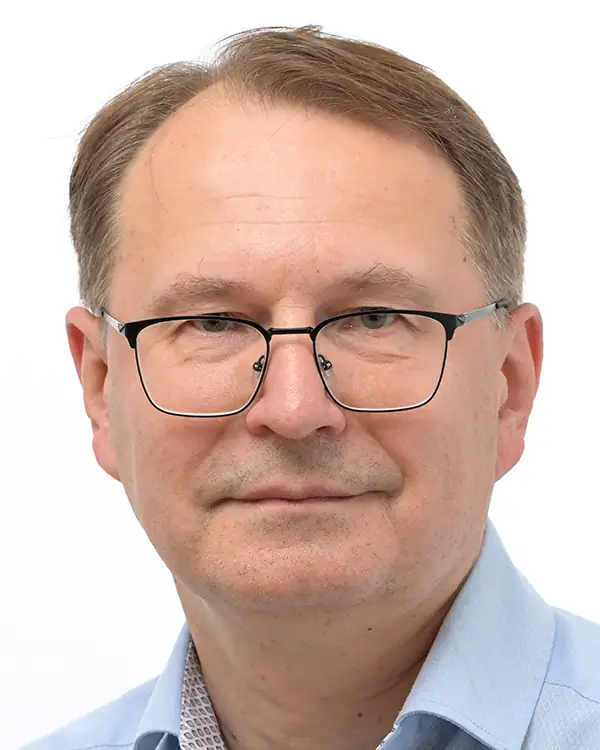


| Rank | Name | Country | Group | Speeches | |
|---|---|---|---|---|---|
| 1 |

|
Lukas Sieper | Germany DE | Renew Europe (Renew) | 487 |
| 2 |

|
Juan Fernando López Aguilar | Spain ES | Progressive Alliance of Socialists and Democrats (S&D) | 463 |
| 3 |

|
Sebastian Tynkkynen | Finland FI | European Conservatives and Reformists (ECR) | 451 |
| 4 |

|
João Oliveira | Portugal PT | The Left in the European Parliament (GUE/NGL) | 284 |
| 5 |

|
Vytenis Povilas Andriukaitis | Lithuania LT | Progressive Alliance of Socialists and Democrats (S&D) | 276 |
All Speeches (47)
Freedom of assembly in Hungary and the need for the Commission to act (debate)
Date:
18.06.2025 14:23
| Language: EN
Answers
Thank you very much, dear colleague, for the question. As a lawyer, I can assure you that sovereignty doesn't mean the free discretion which international commitments are to be fulfilled or which are not. It is inseparable from the proper fulfilment of all international obligations, including those stemming from the EU membership in a goodwill. And if no, if somebody wouldn't like those obligations, there is always the way to withdraw.
Freedom of assembly in Hungary and the need for the Commission to act (debate)
Date:
18.06.2025 14:20
| Language: EN
Speeches
Madam President, dear Commissioner, dear colleagues, regrettably, Hungary acts as a Russian Trojan horse within the European Union, eroding our fundamental values from inside and weakening our common security. The Orbán regime echoes Moscow's disinformation and anti-LGBTQ policy. According to the classification adopted recently by the Venice Commission, Orbán's regime can be described as an electoral autocracy with unfair elections, regular abuse of state resources, erosion of civil liberties and subverted institutions. The more space this regime is given, the more aggressively it restricts fundamental rights, in particular the freedom of assembly. The regime does not hesitate to abuse laws, even rewrite the constitution with incredible speed in order to consolidate its power. Will we tolerate these actions until the damage is irreversible? The time for hesitation is over. Apart from all the infringement procedures, ultimately Hungary's voting rights must be suspended at the Council.
Madam President, dear Commissioner, dear colleagues, the European Union is more than a market. It is founded on the rule of law, inseparable from pluralistic democracy and fundamental rights. These values are not optional. They do not have different meaning. They define who we are. Now, across the European Union, we are witnessing a dangerous trend. The abusive rule by law, replacing the rule of law. We see it when courts are politicised, when civil society is silenced, media freedom is attacked, the rulings of the Court of Justice are ignored. Hungary stands as a stark example. It has experienced a decade of democratic backsliding. How did we respond? We talk too much. We don't do enough. This must be changed. We need to act at the first signs of democracy erosion. The Parliament has already demonstrated its leadership. However, the Commission and the Council must stop turning away. In my own country, Lithuania, we can notice signs of concern. The attempts to control the national public broadcaster, to legitimise corruption, and not to comply with the ruling of the constitutional court defending family rights of same-sex couples. And the Commission seems to step back, insisting that family rights belong to national rather than EU domain. Altogether ...
The human cost of Russia’s war against Ukraine and the urgent need to end Russian aggression: the situation of illegally detained civilians and prisoners of war, and the continued bombing of civilians (debate)
Date:
16.06.2025 19:48
| Language: EN
Speeches
Madam President, dear colleagues, we have heard many right words about the Russian war of aggression against Ukraine, including immeasurable human losses and sufferings. Regrettably, we have also heard extreme right and left representatives aligning themselves with the aggressor and spreading Russian lies. There is no doubt that the aggression is the gravest international crime, no doubt that Russia is committing numerous crimes against humanity and war crimes, no doubt that we have to support Ukraine. However, first and foremost, we must believe in the victory of Ukraine, in the victory of international law and justice. All the delays and shortcomings in supporting Ukraine can be explained by a lack of belief and consequently, a lack of determination. If Israel, which is almost ten times smaller than Iran, can dismantle the latter's aggressive potential, why couldn't Ukraine, with our support, do the same? Our belief in Ukraine and trust in ourselves is the most important in compelling the aggressor to peace, and it is indeed the issue of our survival. This is also a burden that history has placed on us.
The human cost of Russia’s war against Ukraine and the urgent need to end Russian aggression: the situation of illegally detained civilians and prisoners of war, and the continued bombing of civilians (debate)
Date:
16.06.2025 19:48
| Language: EN
Speeches
Madam President, dear colleagues, we have heard many right words about the Russian war of aggression against Ukraine, including immeasurable human losses and sufferings. Regrettably, we have also heard extreme right and left representatives aligning themselves with the aggressor and spreading Russian lies. There is no doubt that the aggression is the gravest international crime, no doubt that Russia is committing numerous crimes against humanity and war crimes, no doubt that we have to support Ukraine. However, first and foremost, we must believe in the victory of Ukraine, in the victory of international law and justice. All the delays and shortcomings in supporting Ukraine can be explained by a lack of belief and consequently, a lack of determination. If Israel, which is almost ten times smaller than Iran, can dismantle the latter's aggressive potential, why couldn't Ukraine, with our support, do the same? Our belief in Ukraine and trust in ourselves is the most important in compelling the aggressor to peace, and it is indeed the issue of our survival. This is also a burden that history has placed on us.
EU support for a just, sustainable and comprehensive peace in Ukraine (debate)
Date:
07.05.2025 11:06
| Language: EN
Speeches
Madam President, today we can recall the commitment made 80 years ago at the end of the Second World War: any peace must be grounded on international law. And indeed, the legal order established then was built on the same core principles: the prohibition of aggression, a respect for state sovereignty and territorial integrity, self-determination of peoples. The duty not to recognise forceful annexation has withstood all tests for almost 100 years. There is nothing different when we seek just sustainable and comprehensive peace in Ukraine. The Russian annexation of four Ukrainian regions, including Crimea, can never be recognised and the territorial integrity of Ukraine must be restored. Full reparation for the aggression must be ensured to Ukraine, including the use of frozen Russian assets. Criminal responsibility for the aggression has to be achieved through the special tribunal to be established with the assistance of the Council of Europe and the European Union. Meanwhile, only the Ukrainian people are entitled to decide their future, including their robust security through full membership of the European Union and NATO. These are the principles that cannot be compromised by any business deals, no matter who is the dealer.
Immediate risk of further repression by Lukashenka’s regime in Belarus - threats from the Investigative Committee (debate)
Date:
02.04.2025 21:15
| Language: EN
Speeches
Mr President, dear colleagues, dear Commissioner, recently, we marked the Belarusian Freedom Day, anniversary of the proclamation of democratic Belarus in 1918. Peaceful Belarusians who commemorated this day publicly in Lithuania, Poland, Germany and elsewhere abroad are now being persecuted by the so-called Investigative Committee of Belarus with threats of imprisonment and confiscation of their property. Needless to say, this is one more crime against humanity involving gross violations of universally recognised human rights. We do know all the names of the organisers and perpetrators of this crime, and that this time extends the Belarusian borders. Therefore, first, the EU Member States must effectively apply universal jurisdiction in respect of all crimes of the Lukashenka regime. Regretfully, this is not the case yet. And now the National Prosecutor's office hasn't named any suspects. Second, the EU must target by sanctions all the employees of the so-called investigative committee. And third, the sanctions have to include the confiscation of Lukashenka's and his associates assets for the purpose to compensate the damage done to the repressed Belarusian people. This is a language that all the dictators can understand.
Recent legislative changes in Hungary and their impact on fundamental rights (debate)
Date:
02.04.2025 17:36
| Language: EN
Speeches
Madam President, dear colleagues, I think today we are not debating on elections in France or Romania, but what is most important. What I would like to emphasise is that the latest criminalisation of Pride marches – together with the authorisation to use facial recognition in order to persecute peaceful protesters in Hungary – is not only a simple breach of the freedoms of assembly and expression; with this type of legislation, Hungary has put itself at the distance of only one step short to Russia, where the LGBT community has been proclaimed as an extremist organisation. Needless to say that in such a manner, Hungary seriously and persistently breaches EU fundamental values, such as human dignity, freedom, democracy and the rule of law. Being an agent of Putin's regime, Orbán has nothing to do in the European Union. Therefore, let us be honest: the further delay in applying Article 7 for Hungary can lead only to the self-destruction of the European Union itself.
Mr President, dear colleagues, lex semper dabit remedium - the law must always provide appropriate remedies against any breach. This maxim fits the best in seeking the legal solution on the frozen Russian assets. The legal and moral imperatives in this case, indeed, are more than clear. There is no doubt that Russia, as an aggressor, must stop the war and provide the full reparation to Ukraine. There is also no doubt that the war of aggression is the grossest possible breach of international law. Therefore, other states must cooperate in bringing to an end the aggression. This cooperation includes legitimate countermeasures. This is the answer as to how to justify under international law the use of frozen Russian assets for self-defence and the reconstruction of Ukraine. We must weigh what has to be safeguarded: the sovereign immunity of the aggressors' assets or the survival of a victim, independent and democratic state of Ukraine, as well as the whole rules‑based international order. Therefore, Europe must be decisive by developing progressively international law with the decision to transfer frozen Russian assets to Ukraine at the account of future reparations. Let us ensure that the aggressor always pays.
Mr President, dear colleagues, the fight for women's rights is not just a political choice. It is also a choice between civilisations or between inclusive, participatory democracy and authoritarianism, usually accompanied with violence and sexism. However, progress on gender equality in the EU still seems to be uneven and fragile. A new EU-wide gender-based violence survey exposes that violence against women remains a daily reality. The EU directive on violence against women fails to include a consent-based definition of rape. Five EU Member States: Bulgaria, Czechia, Lithuania, Hungary and Slovakia, refused to ratify the Istanbul Convention, sounds like a betrayal of our core values. The Women's Rights Roadmap is a step forward to the single European human rights space, however not sufficiently concrete. It should be implemented by ambitious legislative proposals, appropriate education and conditionality instruments for those who do not adhere to European standards of gender equality. If we need a reminder of what is at stake, look at Ukraine. Even at war, Ukraine has launched its first gender equality index because of understanding that there is no civilised world without women's rights and gender equality.
Continuing the unwavering EU support for Ukraine, after three years of Russia’s war of aggression (debate)
Date:
11.02.2025 12:11
| Language: EN
Speeches
Mr President, there are only two ways to achieve long‑lasting peace in a war of self-defence against aggression: victory or capitulation. However, only in the case of victory against an aggressor can we see legitimacy restored and justice achieved. This means the full restoration of Ukrainian sovereignty, full reparation for all the damages sustained by Ukraine, punishment by a special tribunal of the Russian and Belarusian leadership for the crime of aggression, as well as holding accountable all those responsible for war crimes. And, certainly, the implementation of other principles of President Zelenskyy's victory plan, such as the full membership of Ukraine in the European Union and NATO. Justice cannot be separated from peace, and conditions of peace cannot be dictated by the aggressor. They should be determined by the victim and international law. Everything else is the fundamental failure for us political leaders of Europe. Our generation might be remembered with shame and disgust. Do we really want this to be our legacy?
Further deterioration of the political situation in Georgia (debate)
Date:
21.01.2025 20:22
| Language: EN
Speeches
Mr President, today we can ask ourselves, is it worth being an ally of the European Union? The reality before us suggests a painful answer. Those who stand under the EU flag and fight for our values face violence, silence and even sometimes, betrayal. In Ukraine, people are dying for the European aspirations. In Georgia, citizens striving for democracy suffer from brutality. Just last week, as it was mentioned, Giorgi Gakharia, one of the opposition leaders, and Zviad Koridze, the head of Transparency International in Georgia, were attacked and severely beaten. The editor of Georgian independent media outlet Mzia Amaglobeli was arrested and started a hunger strike. Our liberal democracy is becoming a synonym of weakness. I fear we are losing the respect of those who look to us as a beacon of hope. To restore that respect in Georgia we must clearly recognise Salome Zourabichvili as the legitimate president of the Georgian people, not to recognise the legitimacy of the Georgian regime authorities, as well as to target all the accomplices of the regime with the most effective sanctions. Our financial resources must be redirected immediately to those upholding democracy, independent media and civil society.
11th year of the occupation of the Autonomous Republic of Crimea and the city of Sevastopol by the Russian Federation and the deteriorating human rights situation in occupied Crimea, notably the cases of Iryna Danylovych, Tofik Abdulhaziiev and Amet Suleymanov
Date:
18.12.2024 20:17
| Language: EN
Speeches
Mr President, dear colleagues, as we discuss today the occupation of Crimea, I want to draw your attention to one specific aspect of the aggression against Ukraine. This is the involvement of the Russian judiciary in the crime of aggression, which is the gravest possible discrediting of justice. The judges of Russia's so-called Constitutional Court authorised the annexation of five Ukrainian territories. The first ruling was namely on Crimea in 2014, and encouraged further aggression and human rights violations. The Chairman of Russia's so-called Constitutional Court, Valery Zorkin, openly justified this decision by the alleged threat of neo-Nazism in Ukraine and Islamic radicalism of the Crimean Tatar people. The so-called Constitutional Court was followed by the entire judiciary machine in Russia, in persecution and massive repression of the Crimean Tatars and other Ukrainian people. Accountability of the so-called Russian judges has to be also among our guiding principles. First and foremost, the judges of the so-called Constitutional Court must be put in the dock for the crime of aggression, together with the political and military leadership of the Russian Federation.
Russia’s disinformation and historical falsification to justify its war of aggression against Ukraine (debate)
Date:
17.12.2024 19:43
| Language: EN
Speeches
Madam President, dear colleagues, Russia's war of aggression is not only brutal attacks against civilians. It has ideological background, often called the 'Russian world' concept. It rather deserves to be named 'Russo‑fascism' or 'Russo‑Nazism'. This ideology can be traced back to Russia's glorification of the Soviet crimes of aggression, genocide, crimes against humanity and war crimes. I recall that the occupation of the Baltic states is justified by Russia with the same arguments as the Nazis attempted to use at the Nuremberg trials for the seizure of Austria or Czechoslovakia. Just as Hitler, Putin proclaims the aim to take all the so-called Russian‑speaking lands, while at the same time denying the right to existence of entire nations. Russo‑fascism is built on disinformation and falsification of history, where aggression, extermination of people, torture and rape are called liberation. The war of aggression against Ukraine is the best demonstration of this manipulation. We must respond to the appeal of the Ukrainian parliament by condemning Russo‑fascism as totalitarian and misanthropic ideology. Like Nazism in Nuremberg, it must also be proclaimed illegal.
Recent legislation targeting LGBTQI persons and the need for protecting the rule of law and a discrimination-free Union (debate)
Date:
27.11.2024 18:20
| Language: EN
Speeches
Madame President, dear colleagues, the European Union is a promise to uphold democracy and human rights. However, as regards LGBTIQ persons, we are still falling short of this promise. We failed to create a common European area of human rights, where dignity and family life of each person is equally recognised and protected. In some EU countries, including my own country, Lithuania, same‑sex couples are denied of legal recognition of their family life. Children growing up in those families are subject to humiliation, laws prohibiting information about the LGBTIQ community are being adopted and even LGBTIQ 'free zones' are being declared. Such discriminatory ideas perfectly resonates to one of the pillars of Russian world ideology, under which the LGBTIQ community has been declared to be the first enemy after Ukrainians. Therefore, the EU must decisively act by first launching timely infringement procedures against any violation of fundamental rights. Second, ensuring full enforcement of court judgements protecting LGBTIQ persons in all Member States. Third, restricting EU funding to those Member States who gravely break the Charter of Fundamental Rights.
Reinforcing EU’s unwavering support to Ukraine against Russia’s war of aggression and the increasing military cooperation between North Korea and Russia (debate)
Date:
26.11.2024 11:39
| Language: EN
Speeches
Madam President, I have just returned from Ukraine. I have a strong impression from the front lines that, despite of our statements of solidarity, Ukrainians increasingly doubt the reliability of Western and European commitments. Ukraine still struggles to secure even the basic weapons and ammunition it urgently needs. Meanwhile, Russia seems to be successful in implementing its strategy of war of exhaustion. With North Korean troops directly entering the aggressive war on the Russian side, we are now witnessing the emergence of new axis powers in the 21st century: Russia, Belarus, North Korea, Iran and China. These tyrannical regimes view Ukraine as merely the first step in their broader goal to destabilise Western democratic world and dismantle the rules-based international order. We must act actively. We must also have our strategy in countering the axis powers. This means no more self-imposed red lines, boosting our own defence capabilities and enforcing harsher sanctions on Russia and other axis powers. Let us ensure that our support is worthy of the Ukrainians' courage.
International Day for the Elimination of Violence against Women (debate)
Date:
25.11.2024 18:02
| Language: EN
Speeches
Mr President, dear colleagues, today we confront an uncomfortable truth. Gender-based violence against women poisons Europe's fight for democracy and human rights. Nowhere is this more evident than in the brutal Russian war against Ukraine, where violence, including sexual violence, is being used systematically as a weapon of war. The crimes of aggression and gender-based violence are not isolated. They are deeply rooted in the destructive ideology of the Russian world, which, inter alia, promotes discrimination against women. Regretfully, even in the EU, similarities to and traces of this ideology exist, undermining women's rights. We have powerful instruments to combat this, such as the Istanbul Convention. Yet, it is shameful that this treaty is still not binding on all EU countries, including my own country, Lithuania. Political resistance fuelled by disinformation cannot justify our failure to act. We must ensure that every EU Member State commits to the Istanbul Convention, building a united Europe where women are safe, equal and free.
Georgia's worsening democratic crisis following the recent parliamentary elections and alleged electoral fraud (debate)
Date:
13.11.2024 20:19
| Language: EN
Speeches
Mr President, dear colleagues, while discussing the current situation in Georgia, we must follow two key principles. Firstly, massive election fraud, bribery and intimidation of voters, well documented by local and international observers, are grave breaches of such universally recognised democratic principles as fair and free elections. Consequently, the will of the Georgian people is presumed to be distorted and electoral results cannot be held legitimate. Secondly, pluralistic democracy inevitably implies the existence of both position and opposition in a democratically elected Parliament. Meanwhile, following the protest of the democratic forces, the new Georgian Parliament seems to be a one-party organ. Therefore, this Parliament cannot be recognised as the legitimate representative of the Georgian people. Our response must be strong. First, to demand an independent international investigation and call for accountability of those responsible for the election fraud. Second, to support Georgian civil society and democratic political forces in their fight for new free and fair parliamentary elections in Georgia. This is our opportunity to uphold our shared European values and stand with the free Georgian people.
People’s Republic of China’s misinterpretation of the UN resolution 2758 and its continuous military provocations around Taiwan (debate)
Date:
22.10.2024 19:53
| Language: EN
Speeches
Madam President, dear colleagues, today we are discussing the UN General Assembly resolution, which is used by the People's Republic of China to ground its claims to Taiwan. This is the most deplorable resolution in UN history. It is inconsistent with the UN aim to be a universal organisation that respects equal rights and self-determination of all peoples. The resolution has settled only the issue of representation of China in the UN; in no way does it deny the specific sui generis status of Taiwan, which has never been a part of the People's Republic of China. The Taiwanese people have already realised their right to self‑determination by establishing a liberal democracy, which shares with us the same values of the rule of law and human rights. They have their own representative government. Neither the UN charter nor any UN General Assembly resolution can be invoked in forcing them to be represented by the PRC Government that itself is not representative at all. In conclusion, upholding our principles and values, we must do our utmost to make the voice of the 23 million Taiwanese people heard at all available international organisations and forums.
Establishing the Ukraine Loan Cooperation Mechanism and providing exceptional macro-financial assistance to Ukraine (debate)
Date:
22.10.2024 10:29
| Language: EN
Speeches
Mr President, dear Commissioner, dear colleagues, Russia's criminal aggression against Ukraine is the grossest possible breach of international law. Such an extraordinary situation undoubtedly requires extraordinary measures and solutions. Therefore, I welcome and support today's Commission proposal to employ the profits from immobilised Russian assets. However, in my opinion, this is not yet the most comprehensive and the most effective solution to the problem. In my opinion, the Commission should also initiate, without undue delay, more courageous decisions on the secure confiscation of frozen assets of Russia, as well as very effective use in strengthening Ukraine's defence and ensuring Ukraine's post-war reconstruction. I am convinced that under international law, this can be done at the expense of Russian reparations. By the way, the Commission's proposed regulation clearly states that Russian state funds must remain frozen until Russia ends its aggressive war and compensates Ukraine ...
The democratic backsliding and threats to political pluralism in Georgia (debate)
Date:
08.10.2024 18:15
| Language: EN
Speeches
Mr President, dear colleagues, Georgia now is at the front line. We all are witnessing the attack against European values by the current Georgian Government imposing Russo-fascist narratives. This is evident from the Foreign Agent Law, anti-LGBT legislation, the abolishment of gender quotas in elections and the so-called 'family values package'. Not a single recommendation of the Venice Commission has been taken into account. Moreover, those legislative measures were taken without consultation with civil society, and they completely ignore the national constitution, including the aim to become a fully fledged member of the European Union. However Russo-fascism in Georgia can be defeated. We must play here a decisive role by, first, insisting on fair parliamentary elections without the use of administrative resources and pressure on the opposition by the ruling party. Second, we must request accountability, including personal sanctions on those responsible for Georgia's democratic backsliding. Third, we must provide support to all the democratic, pro-European political forces, including promising parties such as For Georgia. Together, we must bring Georgia back to a path of democracy and the rule of law. It's time to do all we can to remove Georgia from the claws of Russia.
The severe situation of political prisoners in Belarus
Date:
18.09.2024 19:42
| Language: EN
Speeches
Madam President, dear colleagues, there is a famous legal maxim: 'Justice delayed is justice denied'. I could not find better words to describe the main challenge for Europe in relation to our topic. We are aware of numerous facts of repression against Belarusian civil society. We know the names of perpetrators and who is their master. Many of them are the so-called judges and prosecutors. We know that those repressions legally are qualified as crimes against humanity. What is our response to the ongoing repressions? So far, almost nothing in fighting impunity. What else is there to feel when you read routine calls to apply universal jurisdiction and you know perfectly well that there is only one investigation going on on this basis in Lithuania. However, no suspects have been named yet and no arrest warrants issued. Now it is the time to act and make justice effective, not delayed, to urge other Member States to invoke universal jurisdiction to refer the situation in Belarus, to the extent possible, to the ICC, as well as to consider the establishment of a special tribunal – by the way, again, only Lithuania is going to make referral to the ICC. Both the crimes in Ukraine and the crimes in Belarus have a common denominator, that is, an attack against core principles of decency and humanism, with a delay in delivering justice. We as democracies can lose again against the autocratic regimes. In other words, our viability and even survival might be at stake.