





| Rank | Name | Country | Group | Speeches | |
|---|---|---|---|---|---|
| 1 |
|
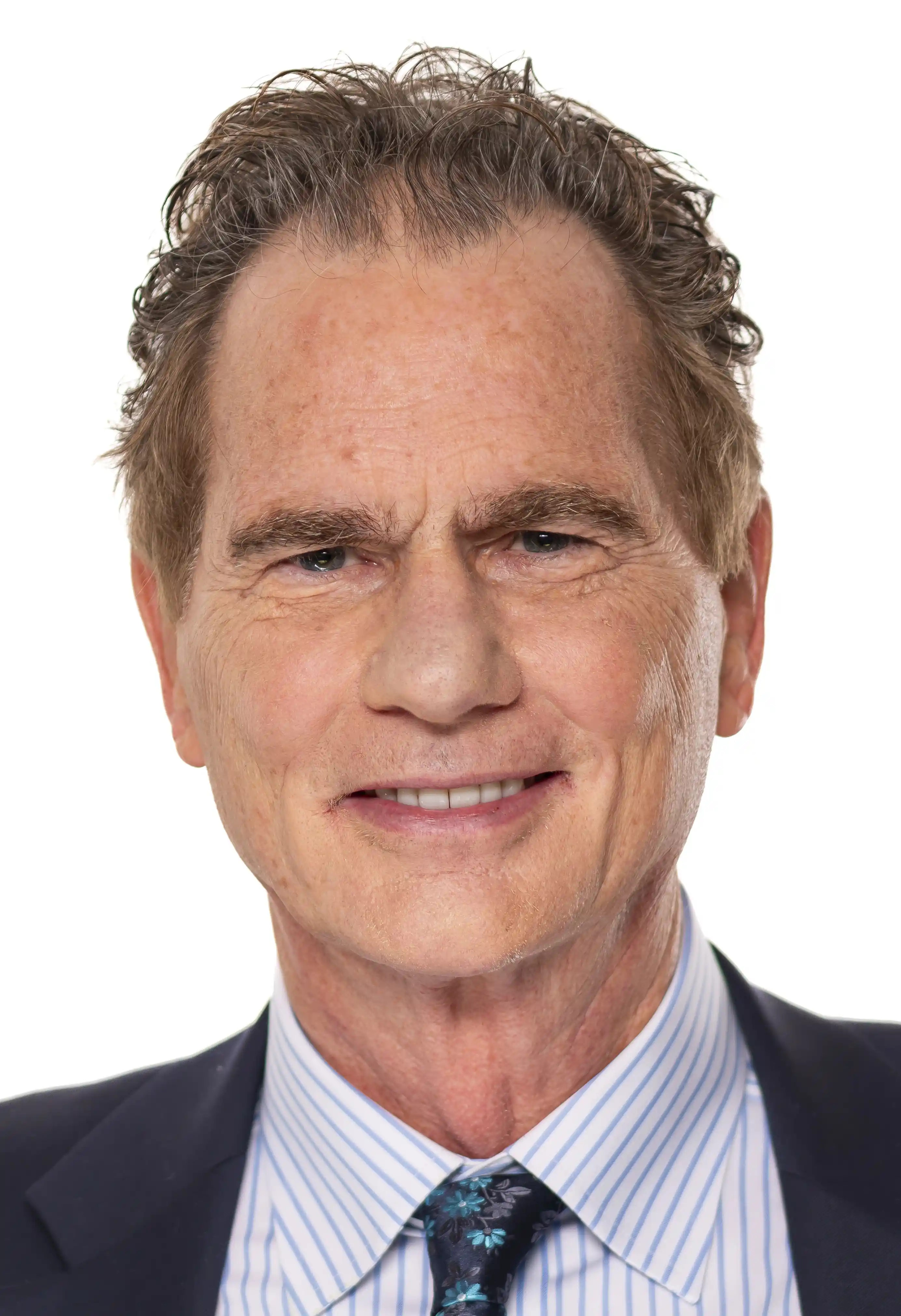
Lukas Sieper | Germany DE | Renew Europe (Renew) | 487 |
| 2 |
|
Juan Fernando López Aguilar | Spain ES | Progressive Alliance of Socialists and Democrats (S&D) | 454 |
| 3 |
|
Sebastian Tynkkynen | Finland FI | European Conservatives and Reformists (ECR) | 451 |
| 4 |
|
João Oliveira | Portugal PT | The Left in the European Parliament (GUE/NGL) | 284 |
| 5 |
|
Vytenis Povilas Andriukaitis | Lithuania LT | Progressive Alliance of Socialists and Democrats (S&D) | 273 |
All Speeches (53)
Presentation of the proposal on Critical Medicines Act (CMA) (debate)
Date:
11.03.2025 15:23
| Language: EN
Speeches
Madam President, Commissioner, the Critical Medicines Act is our answer to shortages and supplies and less dependence on China and India. Very simple to say that. What medicines are we talking about? Basic ones like penicillin, amoxicillin, but even infusions for chemotherapy. The task will not be easy. We have many instruments at our disposal. We have the new pharma legislation. We have our effort on competition, AI effort and innovation. We're trying the Capital Markets Union. We want to industrialise. I don't even know if it's bringing back pharma to Europe. It's creating new pharma in Europe. It's not only reshoring. We are not going to use tariffs. We are going to produce it in our own country. We'll succeed on some. We won't succeed on others. That's how it works. But I think today we heard that everybody agrees with the CMA with its own criticisms. So I think we're on a good road. Congratulations for bringing this in time. And we're all here to work with you for the health of European citizens.
Silent crisis: the mental health of Europe’s youth (debate)
Date:
12.02.2025 20:58
| Language: EN
Speeches
Mr President, Commissioner, I agree with most of what you said – almost everything – and what I've heard today, except for the idea that EU policies bring depression and suicide. That I disagree with. If we knew the answers to why people get depressed, we would have solved it a long time ago. Education? Sports, for sure. Culture, for sure. I would like to add one more practical element, which maybe is in the discussion – I just joined the SANT Committee – maybe not, and that is self-reporting. How do we get young people to know that they're not? I like that 'silent' very much. You're silent because you don't know. You don't know you're not well, which means what we should call 'mental health literacy' – indicators that a 14-, 15-, 16-year-old will know: 'I'm sleeping too much. Why am I crying every day? Why am I drinking two bottles of vodka Friday night?' If we do some training in school, in a way it'll destigmatise and we will know the signals early. By the time they're 25 or 30, it might be too late. So those proposals you have are exactly on point. Plus, the idea that we learn and we destigmatise, and we can be aware of the issues before they evolve into something deeper.
Mr President, the reason for today's debate is again Erdoğan, who imprisoned the mayors, especially in the Kurdish areas at the beginning of November. And three more the other day. Turkey is on the wrong path. We all say it in here. But we have to give him messages. First of all, let's call for the release of the mayors. Secondly, sanctions on all appointed mayors and the people who put them there. And thirdly, unfortunately, we say fine words here, but allied countries, like France, will soon sell very expensive weapons to Turkey. To propose a clause on these weapons so that Europe's weapons are not used against Europe, especially against Greece, Cyprus, Northern Syria and the Kurds. Sanctions on the weapons that Europe will sell to Turkey, so that they will not use them against us.
Madam President, President Szłapka, Commissioner Kos, let's see where we are now. We had two very good statements from the President and the Commissioner, but we went one step more. I would say most of us here are giving a message to the Serbians. The message is: 'We're listening to you. We are listening to your demand for accountability. We are listening to your calls of corruption.' And that they are on the streets might be proof of democracy, but it's democracy that wants change. In fact, the people in the streets are very inspiring. They remind us, President Szłapka, of 1989 in Poland; they bring back memories for us here that are very exciting. So the message from Parliament today: 80 % are saying we want to be on the right side of history when it comes to Serbia.
If I understood the question, we have two ways of using crypto: one is companies which invest, and the other is individual purchases. Those are two separate entities. The companies that use crypto to invest need to be regulated. The individual using it for purchases is not a legal entity and comes under different rules, if I understood you properly.
Cryptocurrencies - need for global standards (debate)
Date:
23.01.2025 11:19
| Language: EN
Speeches
Madam President, Commissioner, from this discussion I think the answer is staring us in the face. We have two distinct philosophies, one on one side of the Atlantic and one on the other side. The US is a free market, let it bloom, let's have the $TRUMP coin and then we regulate. Ours is let's regulate and see what happens. What's happening now is, besides the criminal activities with crypto, it's also used by poor people in countries with inflation. So they put it into crypto, a very unsafe coin, and then turn it back into their currency. What we need to do is to create the Spinelli coin, which is the digital euro, and to have our own digital crypto competing so that we can impose international standards with safe asset from Europe. We will not be able to regulate the huge space from the rest of the world, unless we have our own digital coin that people will trust in, not only in Europe but internationally. MiCA helps on that. The way we will impose international standards and MiCA is by having our own innovation and our own Europe.
Mr President, Commissioner, after years of conflict, Sudan suffers from what we must call the world's worst humanitarian disaster. We have spoken about the massacres and rapes, famine, cholera and malaria. Half the population is in dire need of aid. Dear Commissioner, you are right to say that the EU has done a lot – over EUR 200 million – and you also said we need to do more. Let me be a little practical: we need to pressure the African Union and the UN. The United Nations, unfortunately, has lost its legitimacy in Sudan. The African Union can deploy force to create safe areas, especially for the women who have been raped and abused and fallen victim to sexual violence. There also we can provide humanitarian aid, and there also we can provide the food and even cash. That would be something very practical that you could do. Finally, dear Commissioner, we should also pressure the third‑party countries – this was mentioned earlier – in the Middle East to stop supporting the war in countries with money and with weapons. As you said, this is a fight for humanity, for their humanity, and in the end for our humanity. We are here, all of us in Parliament, to lead that fight.
Situation in Venezuela following the usurpation of the presidency on 10 January 2025 (debate)
Date:
21.01.2025 19:36
| Language: EN
Speeches
Mr President, Commissioner Kubilius, who better than you to support the Venezuelan people in their struggle against oppression? We heard many things here today, and I personally don't care if Maduro came from the working class and was a trade unionist. Today he's a dictator. I don't care if the dictator is communist or from the landed aristocracy. I care that there's torture in that country, and that's what we care about here. How do we know that the elections were not real? Because the results were never handed out. If they were, we would have known who won. So for those who doubt the results, we have the answer: publish the results. And of course we know that Urrutia won and Maduro lost, yet Maduro is in power. To stay in power, he resorts to torture, he puts people in prison and he collaborates with organised crime. He terrorises the poor in his barrios. So dear Minister, dear Commissioner, we do not recognise this regime. You spoke about peaceful transition. Yes, but it will only happen with great pressure: sanctions. We might have to stop buying petroleum products. We have pain in oil today, but we have to continue that process. Our motion for a resolution on Thursday shows that we support the people of Venezuela.
Use of rape as weapon of war, in particular in the Democratic Republic of Congo and Sudan (debate)
Date:
17.12.2024 18:38
| Language: EN
Speeches
Madam President, in the Congo and Sudan, men are drunk and evil. They live in a world of savagery. They themselves have been destroyed even as they destroy the women, the men and the children. Every woman raped is an assault on our soul. We do have programmes for aid. We do have support for women. We have made endless efforts for peace. We have imposed sanctions on warlords. And yet I myself am at a loss at what we need to do. Sometimes, in our dream world, I think, 'Give me an army. Let me solve it like that. Give me an army to save the women and save the men.' We have resorted to violence with far less cause, unfortunately. Yet, is that the only solution? Violence with violence? Somewhere in the skies a devil is smiling. Somewhere in the skies an angel is crying.
The arrest of the Franco-Algerian writer Boualem Sansal and the call for his immediate and unconditional release, and the repression of freedom of speech in Algeria (debate)
Date:
27.11.2024 20:26
| Language: EN
Speeches
Mr President, we have here a country that has all the possibilities of being a European country: a very high education/literacy rate, a powerful industry based on energy, very close to France – but I would say a schizophrenic relationship with France. In the daytime it's the revolution, at night it's quoting Anatole France. So that relationship we have to exploit, we have to make sure that, given their power, given the ancientness of this government, they follow the rule of law that Europe proposes. And I would like to remind those people there that in 1953, the original document of revolution was written by a writer, and today they put Sansal in jail, a writer. So go back to your values of 1953 and apply them today in 2024, and we will be with you.
Promoting a favourable framework for venture capital financing and safe foreign direct investments in the EU (debate)
Date:
27.11.2024 18:47
| Language: EN
Speeches
Madam President, with my turn, I would like to thank the Commissioner for her good work. I've only been here a year, but it's been great to hear you. I'd like to comment on what my colleague from Berlin just said – I think you were from Volt, I forget which party you are in now – the capital markets union will be difficult unless we break the backs – that sounds a little bit radical – of the banks in the countries. No country wants to give that one up, because for many reasons. I won't go into the details. So how do we do that in the next five years? It's not clear. Second of all, the lack of venture capital, among the many bad things that it causes, is that the talent that we produce with our free education – more or less subsidised – goes abroad, comes back as a foreign company and runs the show here. That's the third thing. And Draghi – this is why it's very topical in the new five years – supports – and I think that's also the S&D position – more public investment to de-risk and to allow for venture capital. It's not an easy thing. We have a few years to do it. I hope we succeed because that really is the way we will enter Web3 and the 21st century.
U-turn on EU bureaucracy: the need to axe unnecessary burdens and reporting to unleash competitiveness and innovation (topical debate)
Date:
23.10.2024 14:04
| Language: EN
Speeches
Mr President, Madam Commissioner, I won't be political, I think I'll be boringly practical. You ask for recommendations – I'm an economist. 'It's a little bit crazy', someone said earlier, I don't know which party. We come here from 20 different professions, some mayors, some taxi drivers, basketball players. And the next day we're passing laws. I would like some training on that, if you want a very boring recommendation. What kind of training? What does it mean when we pass a law? What are the effects of the law and the people that we pass the law on? And we have incentives, we're trying to help the farmer, we end up not helping him. We try to protect wildlife and we ended up reducing wildlife. I'd like to know more about that. It's something we can do in-house. Second of all, we have a built-in incentive – I like incentives – to pass laws. At the end of five years, we are judged on how many laws we pass. How about a metric – Timmermans would like this – on the laws we didn't pass, that would never pass. How about people who try to reduce bureaucracy get a star? Because right now, at the end of the five years, the voters will look at my list of laws. So my incentive is to pass laws. That's not only here, that's all parliaments. Those are my recommendations, that we look at those metrics.
Mr President, colleagues, I understand our good Commissioner's balanced approach – highly diplomatic. I'd like to stress, however, the problem of democracy. Tunisia, for many of us, was the birthplace of the Arab Spring, and I think we have to be a little bit tougher. I understand Mr Millán Mon's approach with trade – that's one policy. We need to use that trade to push Tunisia, because these elections, with 90 %, which are dictatorial numbers, and very low participation rate, as you pointed out, is a big problem for us. One would hope that Tunisia would continue to have high participation rates. This means that people have given up. It's for us to give them hope. We hope, we ask the Tunisian authorities to release all those they put in prison during the elections – journalists, activists, members of the opposition. We believe that the Tunisian people deserve a political system that reflects all voices and fundamental freedoms. I call on the Commission to ensure that no EU funding is disbursed to the entities that undermine democracy – not the whole country, the entities.
Madam President, Mr Erdogan, Mr Erdogan! Again you bring us here for the rule of law and the attempt to silence the free press. This time you put another man in jail, Bulent Mumay, who had the audacity to talk about corruption in his articles. Not only him, we have Ishmael Ari, Timur Soikan and Ishmael Shaimaz. You keep going down this road. On the other hand, you want to join the European Union. You are continuing to silence freedom of the press at the same time as you want special relations with the European Union. We support our neighbour in getting closer to European values, but there are also limits. We call for the immediate release of Bulent Mumay, as well as an end to the persecution of independent journalists. Mr. Erdoğan, a request. Criticism of journalists is good for democracy.
Madam President, Members, I won't repeat what we've heard about the hunger and the immigrants leaving Venezuela. Some people think it's nice to live there. Maybe they haven't visited. I would say what we heard tonight overwhelmingly supports the return of democracy to Venezuela. There's also evidence about who won, and we know who that is. There is a window of opportunity right now for us to exercise our pressure. 10 January is the official transfer of power. We have about three months to pressure diplomatically to get Maduro to publish the results, one way or the other, since the European Parliament seems to be voting in favour of the resolution that will lead to what we want. I call on even those who do not yet recognise president-elect González to help publish the true electoral results. That is the way we can ensure that the man who really won the elections will indeed become the next President of Venezuela.
Need to impose sanctions on the import of Russian and Belarusian food and agricultural products to the EU and to ensure stability of EU agricultural production (debate)
Date:
12.03.2024 21:23
| Language: EN
Speeches
– Mr President, Madam Commissioner, there are two arguments that we have here: one is the purely economic argument about the financial consequences of Russia dumping on the European market. That is one reason we want the embargo, because we want to stop financing the machine in the Kremlin. The other argument, which I fully support, is value—based. Let’s drop the economic argument. Are we going to fight this war? Are we going to do what we can in Europe to stop the aggressor? We need to form, in the next term, a trade policy that includes geopolitical circumstances and human rights. This is the opportunity to form a holistic policy for Europe that will automatically put sanctions on any aggressor. That’s why I support the sanctions.
Strengthening European Defence in a volatile geopolitical landscape - Implementation of the common foreign and security policy – annual report 2023 - Implementation of the common security and defence policy – annual report 2023 (joint debate - European security and defence)
Date:
28.02.2024 10:48
| Language: EN
Speeches
Madam President, colleagues, I hear the calls for peace from one of the colleagues and for negotiations. But the people we’re talking about do not listen to negotiations. And perhaps if we are a third-world country, it’s because we do not have a strong defence policy. Something happened recently and that is called Ukraine. Did we shake our paralysis? Did we wake up for a new voice? Are we changing, building a new Europe? Yes. In that distant and also close Ukraine, we show that when we want, we can support our ideals. However, the world still doubts us. They doubt us because of our response or absence of response to the destruction of Palestine, to the Kurds in Syria, to Armenia and Central Africa. And if Trump wins, as Javi López said, we need to have our own defence policy because the umbrella of protection will be full of holes. At some point, we have to give our citizens the sense that Europe can protect its own borders from aggressors.
This is Europe - Debate with the President of Romania, Klaus Iohannis (debate)
Date:
07.02.2024 12:34
| Language: EN
Speeches
Madam President, I would like to thank the Romanian President for his presentation today. Our two countries have similar histories, not just in Christian orthodoxy, but we had dictatorships – you had a totalitarian country run by the Kremlin, we had a dictatorship run by the Pentagon. Today we see clouds gathering over Europe. We have the European elections. I would like your wisdom and your experience. How do we convince the voter that the solution is not the extreme populists, but more democracy? That we need a new contract for the citizens of Europe? That’s what I would call it, a ‘contract’ to complete the European project, something that most of the Members here and the farmers in the streets feel has not been completed. So it’s our duty and your wisdom, perhaps, in the answer, will help us come up with the proper arguments to bring about the Europe of our dreams.
Madam President, some say that the Greek people have forgiven the government for bringing it back to power in the last election. Oh, that's wrong. Victory in elections does not absolve any government of such sins. The Greek people do not forget. We never understood why the President of PASOK and then MEP Nikos Androulakis, along with many others, were being watched. At the end of September there was an extremely controversial action. I'm talking about the hasty replacement of members of independent authorities. And that was the day before they announced the fines from the National Intelligence Service, the EYP, and all this with the cooperation of the far right. Yesterday, the report was published by the SDOE, i.e. the Financial Crime Unit, on grants to the mass media. The report says felonies were committed. The answer? SLAPPs are filed against journalists. Dear colleagues, where there is smoke in the public sphere, unfortunately, sometimes there is also fire. Europe, as we have heard today, is concerned about the rule of law in Greece and not only there. These issues must be clarified immediately and Greece must finally enforce and implement the PEGA proposals.
Conclusions of the European Council meeting of 14-15 December 2023 and preparation of the Special European Council meeting of 1 February 2024 - Situation in Hungary and frozen EU funds (joint debate - European Council meetings)
Date:
17.01.2024 11:24
| Language: EL
Speeches
Mr President, we want the Belgian Presidency to continue on the same path as the admittedly successful Presidency of Pedro Sánchez, with climate change, economic recovery and enlargement as priorities. In relation to climate change, the European Union must act swiftly. My country, especially the region of Thessaly, was also affected by this martyrdom last year. Preventive measures on the one hand, quick compensation on the other. We are in favour of enlargement to the Western Balkans. But these countries must respect the rule of law, which we have heard so much about today from the previous speakers, and we must not have phenomena such as the imprisonment in Albania of Mayor Beleris, who must be released immediately. Finally, European leaders should set a high standard for resolving the issue of accuracy. We call for immediate measures to relieve the most vulnerable households. This is how people's relationship with Europe's vision will flourish.
Madam President, colleagues, that India is an important trading partner, there’s no doubt, and under the good stewardship of Rapporteur Alametsä, for a change, all the political parties agreed on this report without many changes. That shows how much importance we give to, I would say, a new day. Why is it a new day? Because we have huge geopolitical shifts going on. Today, China and Russia are not looked at the same way we looked at them ten years ago. India is now seen not only as a trade and a cultural partner, but as a strategic partner that perhaps could take the place of our past partners and present partners like China and others. The country, we agree, is a stabilising force in the Indo-Pacific region. It is important that it keeps major sea routes open and provides stability and security in the region as a whole. We call for redoubling of the efforts in non-proliferation for nuclear weapons and, in a relatively energy-deficient country, we still ask it to reduce its dependence on Russian oil. But I think we need to propose alternative energy as the replacement. India is a natural partner for the greening of the globe. Its technical proficiency and technical advances in renewable energy are an obvious area for mutual cooperation. Solar panels, pumped storage, cheap hydrogen and significant digital expertise are a strong foundation for creating a more competitive Europe and a more competitive India. In keeping with the emphasis that Europe places now on human rights – something that it didn’t do 20 or 30 years ago in its trade agreements – it would be remiss if we did not take a strong stance on these issues. Our report points out significant deviations from the strict norms of a full Western-style democracy. We do not expect a country with such a great history and tradition to move suddenly into the nirvana of a democratic world. However, we do expect the largest democracy in the world to move forwards and not to move backwards with respect to human rights and rule of all. Over time, we hope it comes closer and closer to the values that we hold dear. To quote from the report itself ... (The President cut off the speaker)
One year after Morocco and QatarGate – stocktaking of measures to strengthen transparency and accountability in the European institutions (debate)
Date:
13.12.2023 16:12
| Language: EN
Speeches
Mr President, we know the scandal has cast a long shadow on this institution, and yet, a year later, we are still scandalised and we’re looking for solutions. We are working in a democracy. And that’s what’s good about this establishment on which the scandal has shamed us. Madame Aubry earlier asked Madame Loiseau some questions. Madame Loiseau is an example that I would like to follow in terms of morality and fighting back against the lobbyists. We should all have her spirit. There’s one problem with this scandal, which is not to do with the European Parliament, and it is that the justice system in Belgium has not moved fast enough, it seems to me, to clear up the situation. As long as the perpetrators are not called to justice ˗ that’s not the role of the European Parliament ˗ we will not have clarity, we will not have what they say closure. And finally, we can pass as many rules as we like, as many procedures, as many signatures, it is an ethical, personal matter. It is to us to be the pure politicians serving the public interest.
The unlawful detention of President Mohamed Bazoum in Niger
Date:
22.11.2023 22:18
| Language: EN
Speeches
Madam President, colleagues, right now, at this exact moment, in the troubled country that is Niger, President Mohamed Bazoum and his son are waiting to die. His crime: being a Democrat. The son’s crime: being his son. This is the sick logic of dictatorships. They are foes of light. Along with ministers and civilians, the Nigerien junta arrested democracy and snuffed out the light. We have seen many dictatorships in our lives, unfortunately, but we continue to be offended. As George Steiner wrote a long time ago, we must never grow accustomed to even the smallest violations – we must remain outraged. Though I have never met President Bazoum –one day I might – I get it. As a young boy of 11, I witnessed my own father being jailed and my grandfather died under house arrest. President Bazoum has been offered an escape clause to resign and go free. Simple, no? Not so simple. A warrior at heart, as I found out from my friend, he refuses to yield to his captors, even if this means he loses his life. With our vote tomorrow, we might just save a Democrat and his son. With our vote tomorrow, we show our solidarity with the people of Niger.
Madam President, rapporteur Picula’s report is very strong and congratulations for being honest, for not cutting any corners. And I agree with the colleague from the Greens that Montenegro has come so far and it has to go the extra mile. And I agree with the colleague Dzhambazki that there is an influence, as the report points out, from other countries, both Serbia and China, and the effort should be to encourage Montenegro to use the EU Investment Fund so it doesn’t depend on this largesse of China to enter in the Balkans. It’s one of the tricks, and Greece as well has fallen into that trap. President Milatović has shown keen interest in coming closer to Europe. He visited here many times. He’s very pro-Europe, but as pointed out by some of the speakers, it’s an unstable government. And the very nice title of Europe Now expresses the need, but it has to bring it to delivery. I was actually, in the last elections, an observer and it was peaceful and fair. But then we also discovered the problems about the influence of the foreign countries. If we are to bring the Western Balkans in by 2030, all these matters have to be resolved. And one small matter – nothing to do with Montenegro – we need to resolve the problems in other countries like Albania and to free mayors like Fredi Beleri.
Urgent need for a coordinated European response and legislative framework on intrusive spyware, based on the PEGA inquiry committee recommendations (debate)
Date:
17.10.2023 20:03
| Language: EN
Speeches
–Mr President. I’ll speak in Greek, but first I would like to say to my colleague, Ms Vozemberg-Vrionidi from EPP New Democracy, that I hope that Greece never does this again. She says her government has stopped with PEGA, with the following, and with the spyware. I hope that’s true. However, there are some unsettling things still going on. Now I’ll switch to Greek. Είναι εξαιρετικά ανησυχητικό ότι η νέα ελληνική κυβέρνηση δεν ακολούθησε τις προτάσεις της επιτροπής PEGA, εκείνες που αφορούσαν τη λειτουργία της ΑΔΑΕ. The Hellenic Authority for Communication Security and Privacy. Maybe that’s ironic. Σας θυμίζω ότι γνωστό θύμα των υποκλοπών ήταν και ο σημερινός πρόεδρος του ΠΑΣΟΚ Νίκος Ανδρουλάκης. Η κυβέρνηση «κίνησε γη και ουρανό» έτσι ώστε μαζί με το μικρό δεξιό κόμμα να αλλάξει τα μέλη της επιτροπής, ακριβώς μια μέρα πριν από τη συνεδρίαση της ΑΔΑΕ για το θέμα των υποκλοπών. Μια μέρα πριν. Αυτό λέγεται συγκάλυψη. Με αυτόν τον αμφίβολο τρόπο η κυβέρνηση προστατεύεται από τις συνέπειες των πράξεών της. Κάνω έκκληση στο Συμβούλιο και την Ευρωπαϊκή Επιτροπή να θεσπίσει μια πανευρωπαϊκή νομοθεσία με ισχύ, ώστε να μπορέσουν τα θύματα των υποκλοπών να μάθουν επιτέλους αν παρακολουθούνταν, από ποιους και γιατί παρακολουθούνταν, και να αναζητήσουν δικαίωση.