

| Rank | Name | Country | Group | Speeches | |
|---|---|---|---|---|---|
| 1 |
|
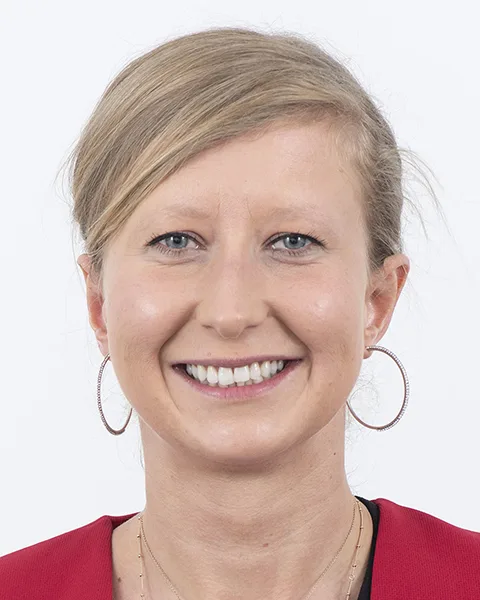
Lukas Sieper | Germany DEU | Non-attached Members (NI) | 390 |
| 2 |
|
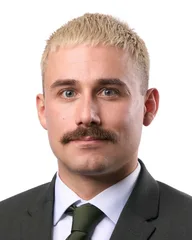
Juan Fernando López Aguilar | Spain ESP | Progressive Alliance of Socialists and Democrats (S&D) | 354 |
| 3 |
|
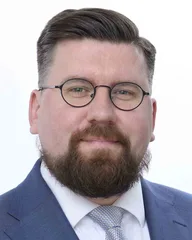
Sebastian Tynkkynen | Finland FIN | European Conservatives and Reformists (ECR) | 331 |
| 4 |
|
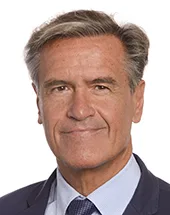
João Oliveira | Portugal PRT | The Left in the European Parliament (GUE/NGL) | 232 |
| 5 |
|
Vytenis Povilas Andriukaitis | Lithuania LTU | Progressive Alliance of Socialists and Democrats (S&D) | 227 |
All Contributions (56)
Industrial Emissions Directive - Industrial Emissions Portal - Deployment of alternative fuels infrastructure - Sustainable maritime fuels (FuelEU Maritime Initiative) - Energy efficiency (recast) (joint debate - Fit for 55 and Industrial Emissions)
Madam President, the text in question deals with the deployment of alternative fuels infrastructure, but in truth it could have been called ‘deployment of infrastructure to make individual car owners pay more and more’. For we must collectively stop lying to ourselves and, above all, to the people. What the European Commission, with the backing of the environmental left, has been boasting about for several years now, is an unnamed blunder. The all-electric mobility you impose without consent will end up completing one of the last dominant European industries internationally, aggravating the climate crisis and creating the conditions for a social massacre for people. The planned roll-out of forced-run electric terminals in this context is only one way to speed up its implementation, in defiance of the principle of technological neutrality, which would require each State to be free of the technologies it uses to decarbonise transport. The European Union is gradually turning into the European Soviet Union where unelected and disconnected technocrats are imposing absurd decisions against the interests of the people. But do not forget that in democracy, it is the people who decide. And in a few months, you may relearn this lesson at your expense.
The water crisis in Europe (debate)
Madam President, ladies and gentlemen, the issue of the water crisis is a very cross-cutting one, because water is everywhere and is used for all purposes. It is necessary for our food and hygiene, it conditions our agricultural and industrial production, it affects the attractiveness and liveability of our territories, and it is itself greatly affected by our lifestyles and by climate change. We will not overcome a problem of this magnitude with incantations, i.e. with solutions advocated by political ecology as it is currently developed. How can we trust policies that, pretending to respond to climate change, advocate the introduction of all-electric mobility, when we know that the production of a single battery is equivalent to the annual water consumption of 500 people? How can we trust policies that, claiming to restore nature, want to destroy the water reservoirs that are essential for regulating aquifer flows? The time is obviously too short to address here all the absurdities of the pseudo-ecologist policies put in place in Brussels or to develop all viable solutions. The water crisis will be overcome by a radical and logical change, by challenging the free trade model still advocated by the European institutions, by directing our environmental policies towards more localism and by real trust in science, instead of ideology.
Data Act (debate)
Madam President, ladies and gentlemen, what a pity! This is what inspires me with such a legislative proposal. Because, once it was not customary, the basic finding that prevailed in the data legislation started from a good intuition: Unlock access and use of data to enable the creation of new goods and services. But after this observation, we realise that the Data Act takes up the eternal wanderings of the European Union: lack of strategic vision, blind faith in the market and naivety in its relations with the rest of the world. After completely missing out on the digital revolutions, the data economy and artificial intelligence, the European Commission wants us to believe that the answer to the abysmal delay between Europe, the United States and China is born in digital. In the digital world would be liberalisation. This text, which does not vary from that submitted by the Commission, is nothing more than a pure and simple liberalisation of the data market along the lines of the opening up of State monopolies in the 1990s and 2000. It requires the holder of an essential resource to grant access to it on fair contractual terms, hoping that the market will take care of the rest. This logic is completely wrong. Worse, it is backwards reasoning. The priority question is not so much whether the data is circulating enough or not enough. The key question is why they are not controlled by European giants in a European innovation ecosystem. The Commission is like an overly naive child who is led to believe that Google, Facebook, Apple and others are simply the result of great minds locked in their parents' garages. In doing so, she is unable to understand that it was the strategic vision of state interventionism that helped create the digital champions. It is the development of essential skills combined with massive investment in cutting-edge technologies and the development of the latest generation of networks. But again, the EU is fundamentally incapable of this kind of reasoning. Moreover, this text raises so many other problems that time prevents me from addressing them. Nothing about the effective protection of our companies' data against international competitors. Nothing about cybersecurity, nothing about the abuse of authority of public entities that this text seems to completely ignore. Nothing yet on the cost of accessing certain data. So certainly, the Data Act will actually be able to help create some economic opportunities on the margins. But fundamentally, Europe is and will remain bound to remain digitally submissive to the rest of the world.
One-minute speeches on matters of political importance
Mr President, the Identity and Democracy Group takes note of the decision of the negotiators in the Council to reposition their vote on the legislation putting an end to thermal vehicles by 2035. We take all the more note of this decision as it is finally a common sense decision. Would I dare to say that this is in all respects the position expressed by the Identity and Democracy Group? Since the beginning of the negotiations, our group has taken a clear and consistent position on the subject. Is it imperative to reduce CO2 emissions from transport? Yes, yes. Is the all-electric policy a solution? Certainly not. This is an environmental nonsense, will create a social catastrophe and the destruction of an industry over which Europe is still a world leader. Ladies and gentlemen, let us seize this flash of clarity from the Council and finally adopt legislation that makes sense. Invest in synthetic fuels and hydrogen produced from decarbonised, reliable and abundant sources. In a word, let us regain our sovereignty so that all our fellow citizens do not pay the high price for our decisions.
Availability of fertilisers in the EU (debate)
Madam President, ladies and gentlemen, before coming up with solutions to a problem, it is first necessary to make the right diagnosis. It is therefore important to recall, in this regard, that the conflict taking place in the east of our continent is having a disastrous impact on the entire Western world, and in particular on the countries of the European Union. In this communication, the European Commission says it wants to limit the negative impact of the conflict on the circulation of mineral fertilisers. At the same time, the Commission does not wish to promote the path of diplomacy between the two parties in order to initiate a peace process, but, on the contrary, it favours the crystallisation of relations and, thus, the stagnation of the conflict. It therefore deplores the effects whose causes it cherishes. Secondly, the Commission says it wants to encourage the diversification of imports in order to reduce dependence on Russia for food and fertilisers. This is to put a bandage on an open wound, and it is absolutely not a solution for the countries of the European Union. Indeed, if we want to guarantee our food sovereignty, do you not think that we need to take another path instead of replacing one dependency with another? On the contrary, should we not ensure that we produce again on our soil, through protectionist policies, in these key sectors? This is the spirit of a Europe that protects, rather than a Europe that exposes. Unfortunately, however, this is not what the current European institutions are advocating.
One-minute speeches on matters of political importance
Madam President, I wanted to take the floor on the industrial competitiveness strategy, on which we will have to vote this week. Let us not be fooled: this strategy only has a name strategy. The last few months have shown us more than ever that the world is changing its times and changing very fast. While China massively subsidizes its domestic industries and blocks some global markets, such as solar technology, the United States is implementing a massive protectionist policy, of which our companies are the first victims. No more happy pseudo-globalization, no more free trade without constraint, no more hopes of reciprocity: it is high time to agree that the process of globalisation is receding, and that it is now necessary to change our ways of thinking. Let us not, once again, lag behind the great challenges facing us. Let us put in place real policies to repatriate our industrial capacities. Let us invest massively in the production capacities of the technologies of the future. Let’s develop ambitious industrial projects at European level, where every Member State willing to do so can make its contribution. Ladies and gentlemen, the stakes are enormous. This is obviously true of our ability to be sovereign in economic matters, but, more broadly, it is true of the stability of our societies. So let's live up to it and protect our industries.