

| Rank | Name | Country | Group | Speeches | |
|---|---|---|---|---|---|
| 1 |
|
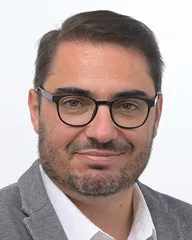
Lukas Sieper | Germany DEU | Non-attached Members (NI) | 390 |
| 2 |
|
Juan Fernando López Aguilar | Spain ESP | Progressive Alliance of Socialists and Democrats (S&D) | 354 |
| 3 |
|
Sebastian Tynkkynen | Finland FIN | European Conservatives and Reformists (ECR) | 331 |
| 4 |
|
João Oliveira | Portugal PRT | The Left in the European Parliament (GUE/NGL) | 232 |
| 5 |
|
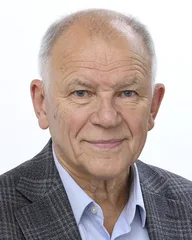
Vytenis Povilas Andriukaitis | Lithuania LTU | Progressive Alliance of Socialists and Democrats (S&D) | 227 |
All Contributions (139)
Situation in the Middle East (debate)
Madam President, dear colleagues, I want to reiterate when we talk about the Middle East, we have always have to remember the most significant threat in the region stems unmistakably from Iran and its network of proxies like Hamas, Hezbollah and the Houthis. While Israel's pre-emptive strikes disrupted Tehran's operational capacity, the mullah regime, of course, will seek ways to continue destabilising the whole neighbourhood. And we saw it yesterday: the latest missiles were fired by the Houthis against Israel, and some weeks ago, Iran itself fired missiles on a major American base in Qatar. What we need is to push for diplomatic, political and economic initiatives to help to stabilise the region, like the European Commission is doing it, with the negotiations for a free trade agreement with the UAE. This is a good example of how we should act as a European Union. But the real threat is Tehran.
Dissolution of political parties and the crackdown on the opposition in Mali
Mr President, dear colleagues, Europe has played an active role in supporting all the Sahel countries and mobilised more than EUR 600 million for Mali alone since 2014. This has included support for development, humanitarian aid and efforts to stabilise the region and fight and combat terrorism. But we see in Mali, if we fail in our engagement, there is dissolution of political life, the erosion of freedoms are spreading and immediately Russia is active on the ground whenever they see an opportunity. Just three weeks ago, we were on a mission in Mauritania, five kilometres away from Mali, and there we were in the Mbera camp. There are more than 120 000 refugees from Mali. This is another result, if we fail. Thousands of refugees are leaving their homeland. So what I want to say is, even it's very difficult, we have to work very hard to bring Mali back on a democratic path in the interest of the people of Mali.
Assassination attempt on Senator Miguel Uribe and the threat to the democratic process and peace in Colombia (debate)
Mr President, dear colleagues, the Inter-Parliamentary Union, with 181 member parliaments out of 193 countries in the world, expresses each year more and more concern over the growing number of human rights violations against parliamentarians. The number of cases brought before the IPU has more than tripled within one decade, from 311 in 2014 to 956 in 2024. The assassination attempt against Colombian Senator Miguel Uribe is one of these grave attacks on democracy, the rule of law and the fundamental rights of political participation and free expression. Therefore, we have to be in solidarity with Senator Uribe, and the EU must defend human rights and stand clearly against all forms of political intimidation.
Situation in the Middle East (joint debate)
Mr President, dear colleagues, we must always have in our mind that the big danger in the Middle East stems unmistakably from the mullah regime of Iran and its proxies, Hamas in Gaza, Hezbollah in Lebanon and the Houthis in Yemen. It is not Israel which is the aggressor. These groups – enriched, equipped and directed by the mullah regime – present a unified front of existential threat to Israel and of destabilisation of the whole region. Israel is under immense pressure. Its pre-emptive strikes aim to disrupt the nuclear ambitions of Iran and degrade its operational capacity. This is an act of self-defence. We should respect it and Europe should support Israel.
2023 and 2024 reports on Montenegro (debate)
Madam President, dear Commissioner, dear colleagues, I want to underline what the Commissioner and also our rapporteur, Šarec, said. Yes, Montenegro is a frontrunner towards EU accession with a fully committed, pro-European government. There is also strong support from society: more than 75 % of the people back EU integration, and European legislation is supported by the governmental parties, but also by the opposition. The country has been using the euro since 2002, and Montenegro has been a reliable partner in NATO since 2017. I was in Montenegro last December, at the time when there was controversy regarding the retirement of a Constitutional Court judge. The Prime Minister took on board the advice of EU diplomats and also politicians, and he agreed to involve the Venice Commission. After their proposal, they found an acceptable and effective solution. So, what I want to say is that the report shows this progress, but it also includes negative points we have to work on, like corruption or a better electoral and judicial system. So finally, it recognises the significant progress. This is the most important thing: Montenegro is on its path for reforms and strong commitment to EU integration.
Arrest and risk of execution of Tundu Lissu, Chair of Chadema, the main opposition party in Tanzania
Madam President, Tundu Lissu is a long life fighter for human rights and democracy, currently serving as chair of Chadema, the biggest opposition party in Tanzania. He was arrested and charged with high treason on 10 April ‑ which carries a death penalty ‑ after calling for electoral reforms during a peaceful rally. International organisations like Amnesty International, Human Rights Watch or the International Democracy Union have condemned Lissu's arrest, with many calls for his release and condemnation of the attacks on political freedoms and human rights. The EU contributes hundreds of millions of euros to Tanzania through various initiatives. We have to be very clear that any European cooperation investment has to be tied to progress in the areas of the rule of law and human rights. The European Commission must closely monitor developments and especially Tundu's trial.
2023 and 2024 reports on Türkiye (debate)
Mr President, colleagues, this report is both timely and necessary. Yes, Türkiye remains an important partner for the European Union politically, economically and strategically, but a strong partnership, however, must be based on shared values, on a commitment to democracy, the rule of law and fundamental rights. Let me underline clearly that respect for the sovereignty and sovereign rights of all EU Member States, especially the Republic of Cyprus, is non-negotiable. Moreover, persistent shortcomings regarding fundamental rights, democratic backsliding, and compliance with the European Court of Human Rights are deeply concerning. Therefore I think that the report's conclusions that accession negotiations should remain suspended until Türkiye demonstrates clear and substantial progress is moving in the right direction. It is appropriate to show Türkiye our disappointment in a clear way. If there is no progress at all I think it will be better to stop the negotiations with Türkiye.
110th anniversary of the Armenian genocide
Mr President, dear colleagues, the Armenian Genocide resulted in the murder of over 1 million Armenians and as well countless Assyrians, Chaldeans and Pontic Greeks. We remember the victims of violence, murder and expulsion and honour their memory by reaffirming our commitment to truth, justice and reconciliation. The recognition of historical truths is not merely an academic exercise. It is a moral imperative for all of us. By acknowledgement of the Armenian Genocide, we take a crucial step toward preventing future crimes against humanity. As history has shown, denial and silence only serve to perpetuate cycles of violence and injustice. It is our duty to ensure that the mistakes of the past are neither forgotten nor repeated. In 2015, I initiated that the Austrian Parliament adopted a resolution recognising and condemning the Armenian Genocide. The path to reconciliation is neither simple nor swift. It requires courage, transparency and the willingness to confront painful truths. We must call upon to Türkiye to engage earnestly in this process by recognising the crimes committed against the Armenians and other Christians through the Ottoman Empire. We have to do everything to ensure that this never happens again.
Delivering on the EU Roma Strategy and the fight against discrimination in the EU (debate)
Mr President, ladies and gentlemen! How we treat minorities shows whether we are actually able to enforce respect for human rights for all. The largest group in Europe is the Roma and Sinti. More than 10 million people from Spain to Romania, also recognized as an ethnic group in Austria. That's the one, the positive. The negative: Roma are of course – and unfortunately so – affected by disadvantages on a daily basis, whether on the labour market or in the housing sector. Europe is a continent of diversity. Our task is therefore not only to tolerate this diversity, but also to actively protect and promote it. A society is only fair if it offers equal opportunities to all citizens. That's why we have to work together.
Recent legislative changes in Hungary and their impact on fundamental rights (debate)
The worst thing for me is that Orbán is stealing Hungary's future in the European Union, pushing Hungary more and more into isolation. This is the biggest theft of Hungary's future.
Recent legislative changes in Hungary and their impact on fundamental rights (debate)
Madam President, dear colleagues, 'Je suis Marine', said Prime Minister Orbán two days ago. What did he mean? The misuse of EUR 2.9 million. Is this what he shares with Marine Le Pen? But it's not this statement on X that is concerning. The recent legislative changes in Hungary should be a wake up call for all democrats in Europe. They undermine fundamental rights, weaken democratic institutions and erode the rule of law, all of which are core values of the European Union. And as Members of this Parliament, I think it's our duty to speak out and act when these principles are at risk. Austria has always had in its history a special relationship with Hungary, the Hungarian colleagues know it, and we always supported constructive dialogue. But media restrictions, judicial interference and the erosion of civil society are unacceptable. As the EU Member States have to be on the right side, also Hungary must uphold its commitments under EU law. The rule of law conditionality mechanism must be enforced. EU funds cannot support governments that undermine democracy. If Orbán ‑ and its Orbán ‑ continues on this path, there must be consequences.
Targeted attacks against Christians in the Democratic Republic of the Congo – defending religious freedom and security (debate)
Madam President, the targeted attacks against Christians in Congo are horrific acts of violence which demand our immediate attention and decisive actions. What do we have to do? We must intensify, of course, diplomatic efforts with DCR authorities to ensure the protection of all religious communities. We must establish a comprehensive monitoring and reporting mechanism, and we have to hold perpetrators accountable. We must provide stronger support to civil society organisations that are working tirelessly to promote interfaith dialogue. And we must collaborate with international partners, including the United Nations and regional organisations, to enhance our collective capacity to address religious persecution effectively.
Crackdown on democracy in Türkiye and the arrest of Ekrem İmamoğlu (debate)
Madam President, dear colleagues, as many colleagues mentioned already, the recent arrest of Istanbul Mayor Ekrem İmamoğlu is not just an attack on an individual, it is an attack on democracy. Detaining a leading opposition figure, along with 100 others on politically motivated charges, is an attempt to eliminate political competition ahead of a crucial election. This repression extends beyond politics. Independent media is being silenced. International journalists are being expelled, and peaceful protesters are met with brutal crackdowns. Still, an EU candidate country and a member of the Council of Europe, Türkiye must uphold democratic principles and the rule of law, and the EU must respond with more than words. We must apply diplomatic and economic pressure to demand accountability.
Human rights and democracy in the world and the European Union’s policy on the matter – annual report 2024 (debate)
Madam President, the EU is not only an economic and political union. Two of our cornerstones are human rights and democracy. Looking around the world, we see increasing threats to these principles. Authoritarian regimes are suppressing civil society, independent media and political opposition. But the misuse of EUR 2.9 million, as it was done by Le Pen and her party members, that has nothing to do with political oppression. It is justice if someone is doing criminal acts that he is sentenced or she is sentenced, in this case. The space for human rights defenders is shrinking worldwide. Therefore, we must remain a force that protects human rights in its Member States and we have to fight around the globe as our High Representative Kaja Kallas mentioned it.
Conclusions of the European Council meeting of 20 March 2025 (debate)
Madam President, ladies and gentlemen, If a speaker in front of me has attacked the French judiciary so head-on, it shows how important it is that we stand by European values, that we defend our legal system, and that can only be done if the European Union remains strong and united. Because if in the tone of the Putin spokesman Peskov after the abuse of 2.9 million euros here is done as if nothing had happened, and the judiciary is found guilty and not the culprit is held responsible, then this shows: Sometimes it is already five to twelve for colleagues here. It is therefore all the more important that the European Union clearly showed at this Council meeting that this strength in the EU remains on key points when it comes to setting us up economically strong; that this plan will be presented in June here, where the single market will be strengthened, where there will be deeper financial integration and also an Investment Union. Then it is all the more important when a black Wednesday comes here tomorrow – when President Trump will kick off this customs avalanche. There is a need for a strong European Union, which will jointly take appropriate countermeasures and which will be guided by the values and the legal system in Europe. This sets us apart from other groups in the House.
Secessionist threats in Bosnia and Herzegovina and the recent escalation (debate)
Mr President, ladies and gentlemen. Thirty years after the end of the Bosnian war with 100,000 victims, Bosnia and Herzegovina is once again at a crucial point in its history. At a time when the country needs stability and the rule of law to move towards the EU, dangerous separatist tendencies are holding it back. On the one hand, High Representative Christian Schmidt is doing everything in his power to support the rules-based order; His work is essential to the implementation of the Dayton Agreement. On the other hand, Milorad Dodik systematically undermines state institutions, refuses to implement decisions of the Constitutional Court and repeatedly threatens to secede Republika Srpska. Bosnia and Herzegovina does not need a division, but a uniform approach. The European Commission is also called upon to: It must take clear and unequivocal action against those who are constantly violating this policy.
The need for EU support towards a just transition and reconstruction in Syria (debate)
Madam President, Commissioner, dear colleagues, we have to monitor developments in Syria very closely. We see, on the one hand, progress; on the other hand, of course, also setbacks. It is vital for the country to continue developing national unity. It's good to see that the government finalised an agreement with the Kurdish-led Syrian Democratic Forces, and they have to use the chance to integrate them into the national army and into the governing structure. While these developments are promising, challenges, of course, persist. The recent violence in Latakia, where more than 1 500 people lost their lives, highlights the fragile security situation. And this needs our engagement. No Syrian should live in fear anymore. Therefore, it is positive that we discuss Syria and that we work for a good future for the Syrian people. They deserve it.
Establishing the Reform and Growth Facility for the Republic of Moldova (debate)
Madam President, dear colleagues, dear Commissioner, like many speakers before, I want to underline that Moldova has made significant progress, particularly in areas of governance, the rule of law and anti-corruption. Under the leadership of President Sandu, the country has demonstrated strong political will and commitment to reforms. However, Moldova still faces substantial external challenges. The ongoing threats from Russia, including the instability in the region of Transnistria, continue to jeopardise Moldova's sovereignty and European aspirations. Despite these pressures, Moldova has remained determined, pushing forward with its reforms and advancing EU standards with unwavering resolve. And the growth facility is not just a financial tool, it is a clear message of our united support for Moldova.
Recent dismissals and arrests of mayors in Türkiye
Mr President, the recent actions by Turkish authorities, including the removal of mayors and the detention of opposition officials, once again raise significant concerns regarding the state of democracy in Türkiye. These highly worrying developments, often justified on grounds of alleged terrorism affiliations, have led to the replacement of elected officials with state appointees. Election results are overturned by Recep Erdoğan and his ruling party. This is not the way to join the European Union. While the threat of terrorism, of course, is a legitimate concern, counter-terrorism efforts should not be misused to erode the principles of the rule of law and freedom of expression. We need to re-evaluate the status of Turkey as a candidate for EU membership, and we have to consider alternative partnership options.
Political crisis in Serbia (debate)
Madam President, dear colleagues, we stand at a pivotal moment for Serbia, a cornerstone country for the Western Balkans, with significant impact to the security and stability of the region, and of whole Europe. The tragic collapse of the Novi Sad railway station canopy, which claimed 15 lives, ignited a wave of protests which have become now a big movement initially started by students but now, step by step, with supporters from many sectors of the society. The protesters believe the incident was a consequence of systemic corruption, and their demands are for accountability and transparency. I think they need support. And in response to these demonstrations, Prime Minister Miloš Vučević has resigned, stating his intent to defuse tensions. So what is necessary now? Serbian leaders have to engage in an open dialogue with this protest movement. The path forward must be paved with transparency and steadfast commitment. This is a condition for Serbia's EU integration to continue in a positive way. Italy's Minister Tajani mentioned yesterday he sees Serbia in the European Union in 2029. I am not that optimistic, but I hope he is right. So Serbia has to continue with its reform agenda, which is absolutely necessary for a future in the European Union.
Wider comprehensive EU-Middle East Strategy (debate)
Mr President, dear Commissioner, dear colleagues, the EU must act in adopting a comprehensive strategy for the Middle East very fast, particularly in the light of the developments in Syria and Israel. We have a responsibility to lead on fostering cooperation and diplomacy in the region, not least because it has a strong impact on our own security, stability and prosperity. Our relationship with the Gulf Cooperation Council – with which we have increased trade by over 35 % only in one decade – highlights this potential. We need a free trade agreement with the GCC, but we also have to address the negative role of Iran and its proxies, destabilising the region. And our support for a two‑state solution for Israel and Palestine has to play a key role in this strategy, like the support for Israel in their fight against Hamas terrorists.
Continuing the unwavering EU support for Ukraine, after three years of Russia’s war of aggression (debate)
A short answer on my part: Putin can end the war in the minute, immediately. He has it in his hand. The second: The Freedom Party of Austria still has a treaty of friendship with Idinaya Rossiya, the party of Putin. It has not been dissolved. This is your problem: You're on the wrong side! We remain on the side of Ukraine.
Continuing the unwavering EU support for Ukraine, after three years of Russia’s war of aggression (debate)
Mr President, colleague Steger, you should be ashamed of your speech. Three years have passed since Russia launched its brutal war of aggression against Ukraine, displacing millions and causing immeasurable suffering. And the spirit of the Ukrainian people remains unbroken, demonstrating remarkable resilience against Russian tyranny. You and your party colleagues are still the voice of Russia here in the European Parliament, but the huge majority here is supporting Ukraine, not least because this struggle is also a struggle and a fight for democracy, freedom and the rule of law globally. Russia's aggression threatens European and international stability and security. Therefore, we must enhance our support by increasing economic assistance for Ukraine's recovery and restructuring. We have to counter Russian propaganda and disinformation.
Systematic repression of human rights in Iran, notably the cases of Pakhshan Azizi and Wrisha Moradi, and the taking of EU citizens as hostages
Madam President, as so many colleagues mentioned it before, the regime in Tehran is among the most brutal on earth. It has been desperately trying for all means, including murder and torture, to suppress civil society and the nationwide protests following the death of Mahsa Amini. Countless demonstrators have been arrested and death sentences are regularly carried out. The Iranian regime is a long term threat to its own citizens, to Israel, to neighbouring Arab states, to Ukraine with the drones and other support it provides to Russia, and to EU citizens who are taken hostage. The actions of the Iranian authorities are shocking and absolutely unacceptable. We must support the civil society, as well as EU citizens in the country, and widen restrictive measures against the Islamic Republic of Iran.
Further deterioration of the political situation in Georgia (debate)
Mr President, Commissioner, dear colleagues, the 24 October parliamentary elections have raised serious questions about the Georgian Government's commitment to democratic values and to European integration. As one of the election observers, together with my colleagues, we noted significant irregularities, including political pressure before the election day, misuse of state resources and attacks on opposition politicians, all undermining the principles of free and fair elections. But something absolutely new for me was the use of surveillance cameras in all polling stations. I have observed elections in 35 different countries, but this was absolutely new for me. Such actions are unacceptable for a country with EU candidate status. We have to support all the democratic forces and we have to say it very clearly: the 'Georgian Dream' stopped European integration and they are very close with Russia. This is the situation, and here we have to be loud and clear.