
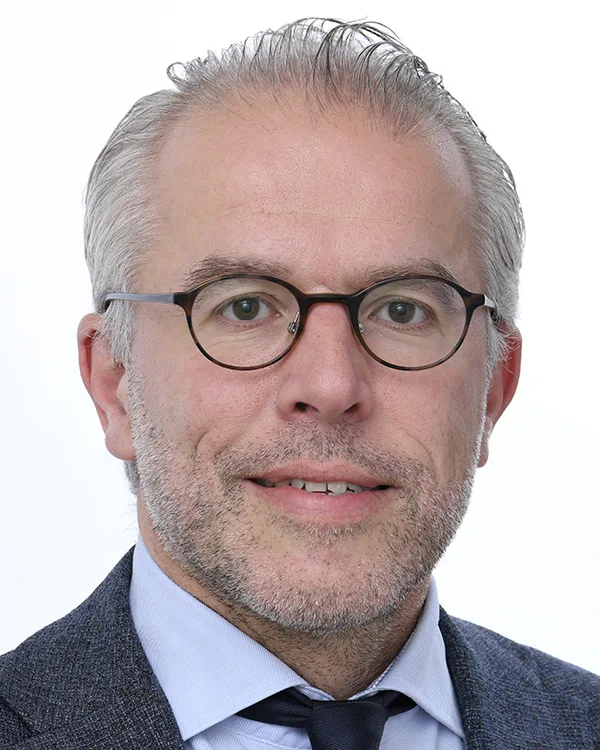
| Rank | Name | Country | Group | Speeches | |
|---|---|---|---|---|---|
| 1 |
|
Lukas Sieper | Germany DEU | Non-attached Members (NI) | 390 |
| 2 |
|
Juan Fernando López Aguilar | Spain ESP | Progressive Alliance of Socialists and Democrats (S&D) | 354 |
| 3 |
|
Sebastian Tynkkynen | Finland FIN | European Conservatives and Reformists (ECR) | 331 |
| 4 |
|
João Oliveira | Portugal PRT | The Left in the European Parliament (GUE/NGL) | 232 |
| 5 |
|
Vytenis Povilas Andriukaitis | Lithuania LTU | Progressive Alliance of Socialists and Democrats (S&D) | 227 |
All Contributions (175)
Human trafficking and grave human rights violations linked to the recruitment of non-Russian nationals, in particular from Africa, for Russia’s war of aggression in Ukraine
Mr President, Commissioner, colleagues, thanks to the authors for this timely resolution. Because Putin uses foreign fighters recruited under false pretence from Africa and elsewhere, and he's running out of soldiers thanks to the effective Ukrainian defenders. The alternative to this – conscription in Russia's cities – would expose a losing war. It is very uncomfortable to watch African fighters dying on a battlefield they were never prepared for, for a cause they never chose and being abused by Russian soldiers. Ukraine's defence also takes place in multinational fora, where African voices are too often silent or pro-Russian. Therefore, the EU must join forces with our African partners to clarify the human cost of Russia's brutal and illegal policy, also on African streets. Second, make clear that Russia and its Wagner Group and Africa Corps are no friends to Africa, but only advance Russian interests through disinformation, deceit and exploitation. Third, that we offer credible alternatives, including through our CSDP missions.
Tackling barriers to the single market for defence - Flagship European defence projects of common interest
Madam President, colleagues, thank you for both reports. Short‑term national interests, no matter the origin, are holding back the establishment of a European defence, and nowhere more so than in the internal market for defence. Contrary to what some say here, this is an indispensable part of a genuine defence Union. Of course, we want all the countries of Europe to flourish, but hidden, covert protectionism is not the answer. Because of closed minds in the leadership of defence primes and old cultures in national ministries of defence, Europe's internal market for defence does not take off. These nationalistic approaches abusing the concept of national security interest cost European taxpayers tens of billions of euros. It weakens innovation and competition, forces us to buy American products and spend our money inefficiently, and it costs lives, as Mr Cremer said. For Europe to do better, we need the synergies of a single defence market with unified innovation, development and procurement. We need real binding action to enforce this defence internal market.
EU enlargement strategy (debate)
Mr President, colleagues, in recent days the Commission President, the High Representative and you, dear Commissioner Kos, have all in different ways admitted that the enlargement process is not delivering the required outcomes. For starters, because of some 100 moments to veto one accession process. It's absurd. We also recognise where Member States and the Commission have actually failed candidate countries by letting bilateral issues take the process hostage, by championing those who reject reforms, and by not supporting public, civil society and political actors who crave for action in the right direction. Without a credible and predictable accession perspective, how can we put the blame on those who fail to reform? Yes, the process remains merit‑based, but the geopolitical moment demands more of us – to improve, to move forward and to deliver. Colleagues, this enlargement report is solid based on the current methodology. Yes, but I agree with you, Commissioner: we need to do more, because Member States do not. We must proactively push for maximum creativity and for alternatives to the current methods, for ourselves and for Europe.
Four years of Russia's war of aggression against Ukraine and European contributions to a just peace and sustained security for Ukraine (debate)
Madam President, colleagues, after four years of brutal aggression, terror and war crimes and of Russia breaking its teeth on Ukraine's courage and resilience, we honour the fallen, the tortured prisoners, the abducted children and all Ukrainians who have shown us what real bravery means. Out of fear of escalation, we enabled escalation. What if, in the first year, we had matched the determination of Ukrainians from day one? This Parliament has been at the forefront always, but Member States were often late or let themselves be held hostage by fake sovereign lists like Orbán and Fico and Bardella here. They are siding with the aggressor. Putin does not want peace. Pretending he does or blocking essential support is moral complicity and falling for psychological warfare. Europe must end fear-driven policymaking, force Putin to want peace, act with real urgency, shape the conditions for peace, a European-led air protection zone, long-range strike capabilities and strict enforcement of a sanction, bringing Ukraine into our Union. Ukrainians will not give up. We will not give up. We are one. Slava Ukraini!
Situation in Northeast Syria, the violence against civilians and the need to maintain a sustainable ceasefire (debate)
Mr President, Commissioner, colleagues, this could have been the year in which Syria finally saw an end to the bloodshed and a start of a transition to democracy, building accountable institutions, restoring justice and recognising the rights of all citizens, but the ongoing siege of Kobani and atrocities also on 9 January against the Kurds in Aleppo and their forced displacement tell a different story. A small, bright spot may be the agreement between Damascus and the SDF now, but the process of gradual integration must come with full rights for and protection of Kurdish citizens. Real stability can only come with respect for all minorities – Kurds, Druze, Alawites, Christians and others – with peaceful coexistence between these communities based on principles of transitional justice. Europe cannot impose this, but we must make our financial support conditional. Being the largest humanitarian donor is not enough. If we are bystanders, fragile stability may once again collapse with far-reaching security risks.
European response to the attacks on the Ukrainian energy system causing a humanitarian crisis (debate)
Mr President, Council, colleagues, the Council is not here. That's a problem. Europe stands by Ukraine for as long as it takes, but after four years, are we really doing everything it takes to defend Ukraine? The scale of Russia's attacks on civilian infrastructure are unprecedented. Then we can underline and say 'yes, these attacks are war crimes and barbaric state terrorism', 'Russia's approach to peace talks and the attacks are part of the same psychological warfare', and 'yes, Member States are willing for the EU budget to pay for a critical loan'. Yes, it's all true, but words and money are not enough. Ukraine needs real help now. Where is the European humanitarian assistance, the generators, the engineers? Why is there no air protection zone over West Ukraine, no towers, missiles, additional Patriot batteries or crisis ramp-up of our production? We must make sure now that standing by does not mean becoming a bystander.
Building a stronger European defence in light of an increasingly volatile international environment (debate)
Madam President, Commissioner, colleagues, the answer to strengthening our sovereignty and security is simple: more Europe, not more slogans. Last month we adopted here a clear agenda for concrete action, which I know you support. We must stop dressing up national reflexes as strategy. Fragmentation is an expensive weakness, you said it, Commissioner, but Member States are not even close to understanding the urgency, so it seems. What do we need? First, political courage and operational doctrine to act – not after the next crisis, but now. Second, make Article 42(7) real. Third, build EU command and control, autonomous if needed. Fourth, fix decision-making: no unanimity traps, no defence planning by Council working groups. And fifth, spend together: a European DARPA, also, and EU-owned strategic enablers. Contrary to the Member States – you said it also, Commissioner – our citizens understand the urgency and we have clear recommendations in this regard. My question is, will we finally care whether Member States actually listen?
Implementation of the common security and defence policy – annual report 2025 (A10-0265/2025 - Thijs Reuten) (vote)
Madam President, after paragraph 19 we should like to include the following text: 'Supports all European initiatives in solidarity with Greenland and Denmark; welcomes Greenland's important decision to select Eutelsat, a European satellite operator, to provide its satellite internet coverage; and calls for the rapid development of the European space sector, which is essential for Europe's security, particularly through the ongoing EU Space Act initiative;'.
CFSP and CSDP (Article 36 TEU) (joint debate)
Mr President, thank you very much, and thank you, colleagues, for the remarks and for the support. While recognising that this could be an architectural moment for Europe, the report, the CSDP report focuses on realistic avenues for short-term progress ‑ I mentioned them in my first intervention ‑ but we do need more. Operationalise Article 42(7) with European command and control, clear definition of the EU pillar of NATO and how decision-making takes place. Make the Defence Union a reality. Combined with a strong role in peacebuilding and diplomacy. The need for a new security architecture is clear, but with a European internal architecture to match. And there are some questions there. Can we do it? Are we up for it? We can do it because we must. We cannot tell ourselves or our children that we didn't have the ideas. We do, but we couldn't find a way to organise it. We can. But in view of the urgency, I think we need to work faster. We cannot wait another year to take stock again of what happened. We have to jump our shadows as a Parliament, together with you, HR/VP and Commissioner Kubilius and the Commission. Lets continue the dialogue and make sure that we do not stand here next year and say again, well, we should do this, and we should do that. Lets do it now. Let's do it together.
CFSP and CSDP (Article 36 TEU) (joint debate)
Madam President, dear High Representative, dear colleagues – and I hope the Council is also listening in – first off, I want to acknowledge the vital importance of the EU's CSDP missions and operations, with staff from the EU and non-EU countries often working under very challenging circumstances. But our common security and defence policy devised in Lisbon was a vision for so much more. The imperative to realise this vision has long been clear, but Member States continue to prioritise short-term national interests. Recent conflicts in our neighbourhood starkly reveal that we are still not the global actor for peace and security we aspire to be. Crucially, our citizens know better: popular support for a truly European and unified – federalist, if you want – common foreign and security policy has never been higher than today. Our citizens grasp the vision. A common and collective European defence is not a luxury; it's an absolute necessity. Today, we need to be greater than the sum of our parts – in procurement, in military capabilities and in being able to take responsibility for defending ourselves. And today, faced with unprecedented threats and risks, we must ask ourselves: if not now, then when? While the brave Ukrainians stave off Russian and perilous threat to our collective way of life, the US administration threatens us through its national security strategy and, indeed, its unacceptable threats against Greenland and those who stand with it. We have a deterrence gap, not merely a capabilities gap. We cannot just spend our way out of a deterrence gap: we must also look at the doctrines, and our confidence and our resolve to act. Do we believe it's worth defending who we are, what we are? Are we willing to pay the price if necessary? Regarding Ukraine, investing in the success of Ukraine's defence remains the best investment in our own security, in the face of an enduring lack of real Russian desire for peace. Our task remains clear, but the sense of urgency is still not. It is not we who wish to undermine the security relationship with the United States or discard NATO – quite the contrary. Our report explicitly recognises the importance of NATO and the goal of building a robust European pillar within NATO. But this is an empty slogan, a diffused slogan, now more than ever. Hoping for common sense, constructive dialogue, a joint way forward is not a strategy. Now is the time for brutal honesty, not wishful thinking. The imperative for a European Defence Union and to shed strategic dependency is not new, but is now becoming more urgent by the day. We must fully and transparently operationalise Article 42(7). We emphasise the urgent need for armed forces of our Member States to work together seamlessly through European command and control, enabling and preparing for territorial defence operations outside NATO's framework. Shaking off dependency must not mean European isolationism. Partners like Norway, the UK, Canada and South Korea are more important than ever. Allow me to end by thanking the team of shadows we worked with. Our joint aim was not just reflection, but a practical yet ambitious proposal. For example: accelerating the acquisition of strategic enablers, potentially by the EU itself; creative financing solutions; European-level open source intelligence analysis; a European DARPA, potentially funded by windfall profits; and many more ideas. Dear colleagues, I ask for your support for the report so that it can become a forward-looking agenda for a stronger, even more unified and more resilient Europe, able to defend itself.
Preparation of the European Council meeting of 18-19 December 2025, in particular the need to support Ukraine, transatlantic relations and the EU’s strategic autonomy (debate)
Mr President, Commission, Council, colleagues, we need a real sense of urgency and determination. For a long time, we in this House asked for bringing Russia's assets in place. So thank you, Commission, for the reparations loan proposal, and thanks to the Council for ending the ability of Russia's assets to block our sanctions against Russia's financial assets. This clears the way. But myths are stubborn, so, for tomorrow's final discussions with Prime Minister De Wever, but also with others, it's not theft. The assets stay frozen. Used is the cash owned by financial institutions structured in a loan. Belgium and others are not alone. When did we ever leave a Member State to carry such responsibility alone? Proposals prove the opposite. This will not destabilise the euro. Our sanctions did not, using Article 122 did not, nor will this legal action. Euroclear's profits are not our concern and litigation will not exceed EUR 1.5 billion already withheld by Euroclear. The risk is not too high. The greatest risk is doing nothing and that is unmitigated ...
Establishing the Reparations Loan to Ukraine (vote)
Madam President, the EPP, S&D and Renew groups requested the application of Rule 170(6) of the Rules of Procedure to the Commission proposal for a regulation establishing a reparations loan for Ukraine. This proposal is an extraordinary and urgent response to Ukraine's severe financial needs resulting from Russia's war, and is intended to increase pressure on Russia to also want peace. Swift action is required, and the Commission has asked for a clear commitment from the co-legislators ahead of the upcoming European Council. We therefore request a vote on the urgent procedure now, with the vote on the substance in next plenary, and we call on the Council to finalise discussions without delay. This request ensures effective exercise of Parliament's institutional prerogatives and meets conditions of Rule 170(6): an exceptionally urgent situation of critical geopolitical relevance, requiring rapid legislative action to protect the interests of both the Union and Ukraine.
Incentivising defence-related investments in the EU budget to implement the ReArm Europe Plan (debate)
Madam President, colleagues, dear Commissioner, thanks, first of all, to rapporteur Kols and all other colleagues from all committees. This not-so-mini omnibus is a welcome step forward: bringing Ukraine into the European Defence Fund is a strategic win-win, giving Ukraine's defence industrial base access to funding and incentivising cooperation between European and Ukrainian industries. Opening EU funding to dual-use projects and reinforcing the Connecting Europe Facility for military mobility and the repair of critical infrastructure are equally necessary. Yet security is not built by weapons alone: social cohesion, regional development, societal resilience are critical. And that is why, for example, the inclusion of civil protection and societal resilience matters. To be effective, this omnibus must be matched by deeper European defence integration, from research to joint development and procurement and European command and control capabilities. Our security and defence do not stop at internal borders. When European funds are used, they must deliver genuinely European solutions subject to this House's oversight. Only like that can we build a genuine European Defence Union.
Implementation of the EU-UK Trade and Cooperation Agreement (debate)
Madam President, thanks to all colleagues for the mostly constructive, supportive, encouraging remarks. And thanks to the Commissioner especially for his extra remark on SAFE, because – on defence, close continued cooperation and reinforcing our industrial base together – we need to deliver. I hope, with unleashing every possible creativity, we will still be able to make it. Thanks also to the support of some colleagues, Barry Andrews and others, in this regard. We cannot afford to be hesitant. Many of you said that when it comes to foreign policy cooperation, our shared security and foreign policy interests are at stake, and we have to take common responsibility with those who fight for the same cause. In this regard, I do want to commend also Prime Minister Starmer and the Commission for the efforts on the coalition of the willing for Ukraine, but also the UK's support in south-east Europe, their active involvement there, supporting candidate countries on their path to the European Union. This report shows in all elements and all themes that we have come far, but we are not there yet. It shows the road ahead, so let's keep moving in the right direction.
Implementation of the EU-UK Trade and Cooperation Agreement (debate)
Madam President, dear Commissioner, dear colleagues, 2025 has been a good year for relations between the EU and the UK. I would even dare to say that it has been the most positive year since the UK left the European Union, as it was a year marked by renewed energy and cooperation. After a period of coolness following Brexit, it is encouraging to see that reconnection is coming with this year's EU-UK summit and the renewed commitments from both sides to enhance cooperation. I want also to thank the Commissioner in particular for his longstanding efforts to improve that relationship. It builds naturally on the foundations that were established after Brexit in the Trade and Cooperation Agreement, together with the Withdrawal Agreement and the Windsor Framework – the backbone of the post-Brexit relationship on which my co-rapporteur Nina Carberry and I have reflected in this report. And together with the involved opinion-giving committees, we have evaluated how those foundations have held up in practice. As it covers a wide range of topics, there is a lot to say about it. The list is long, but I will mention just a few of the areas addressed: energy cooperation, the youth experience scheme, the SPS Agreement, law enforcement and judicial cooperation. We have reflected on the progress made towards the full implementation of the TCA, while also looking ahead to deepening our existing cooperation and exploring new areas. As AFET rapporteur, I will focus a bit more on foreign policy and security cooperation. I have seen how both EU and UK have been taking significant steps towards closer cooperation, which is more important than ever as we support Ukraine together in fending off Russia's brutal invasion, and the EU is at the same time confronted with the consequences of having neglected its deterrence for too long. This geopolitical reality demands a deeper partnership with our like-minded allies and in particular, with our best friend, the United Kingdom. At the summit in May, we saw a renewed willingness from Keir Starmer and Ursula von der Leyen to work together on key issues, and it's encouraging to see that both parties recognise the need to intensify and ramp up joint efforts in the field of foreign policy, security and defence – areas that were lacking in the TCA but where the UK continues to play a leading role. And in this report, we therefore welcome the establishment of the Security and Defence Partnership, which provides a key framework for collaboration in areas such as military mobility, space security, cyber defence and hybrid threats. We also welcome the launch of a more structured dialogue on foreign and security policy, as well as enhanced cooperation in support of Ukraine on sanctions regimes against Russia and the shadow fleet. While this is a good start, we are not there yet. We call for a deeper defence-industrial cooperation, strengthening the common European defence industrial base and the UK's involvement in EU initiatives such as SAFE. However, the most recent signals from SAFE negotiations have not been positive, as no agreement has yet been reached, we have to keep looking for a way forward. Joint defence efforts can strengthen Europe's strategic position as a whole, thereby increasing our resilience to future threats. I want to sincerely thank my co-rapporteur, Nina Carberry, the shadows from both AFET and INTA and the opinion-giving committees for the good and smooth cooperation. I look forward to hearing your views on the report.
EU response to the continuous airspace violations and sabotage of critical infrastructure in the EU originating from Russia and Belarus (debate)
Madam President, Commissioner, dear colleagues, every week we witness new incursions into EU airspace and fresh attempts to target us or sabotage our critical infrastructure on our territory, on our seabed. These are not accidents. They are part of a sustained hybrid campaign by Russia to intimidate our citizens, gather intelligence, destabilise our democracies and weaken our support for Ukraine. Europe cannot afford to treat these incidents as routine. Prevention must be our starting point – improve detection and shared situational awareness, from air to maritime and subsea – because our vulnerabilities are interconnected, and we must reinforce our societal resilience. No Member State can counter all this alone. We must raise our level of cooperation; break down the barriers between national systems; share expertise, intelligence, innovation strength, capabilities – as a true Union with a common security and defence policy. Ukraine's expertise in this is invaluable, so we must support, cooperate and invest accordingly in Ukraine. Hybrid attacks demand executive action – timely, coordinated and firm – without ambiguity about rules of engagement. We must be seen as strong and be strong. Our doctrine must evolve, and when the source of an attack is established, we must be ready to escalate, to respond with proportionate retaliation. Europe must show that our airspace, our infrastructure and our values are not up for negotiation. (The speaker declined to take two blue-card questions from Petras Gražulis and Lukas Sieper)
EU position on the proposed plan and EU engagement towards a just and lasting peace for Ukraine (debate)
Mr President, Commission, Council, dear colleagues, Vladimir Putin has a long history of breaking agreements and using fake negotiations to delay and divide. Ukraine and Europe want peace. A fair and sustainable peace – not a peace that rewards the aggressor, delivers impunity, undermines European security, ignores past violations and emboldens future aggression. Unless one side is losing or a powerful third party steps in, peacemaking is a slow and delicate process. It requires either strength or patient, skilled diplomacy. Today, both are missing on both sides of the Atlantic. So there is no room for quick and dirty fixes, indecision and risk avoidance: peace is neither a real estate deal or another round of Council statements. Russia is not winning its war of aggression. There is no reason for Ukraine to capitulate, but the cost for Ukrainians remains deep and painful. So I implore the Council: break the cycle we have witnessed again and again. I implore you to finally start making Europe a relevant force for peace. We had no choice again but to react – in a somewhat panicked flurry – to a deeply flawed plan, with Moscow's fingerprints all over it, to protect Ukraine and Europe and our ability to decide our future. You talk about actions and pressure, but you missed, as Member States, a chance last month on the loan. The pressure would have been on already. What we really need now is an urgent, proactive approach – action, dear Council and Commission. Do not wait for Putin to prove once again that he is not interested in peace before we increase the pressure. Do it now! Do it together! The reparations loan is critical, as are deep strike and air defence capabilities. Nobody here wants a debate in which we again say more or less the same in a couple of weeks or months, while nothing fundamentally has changed. Take action! Take the lead!
Enhancing police cooperation in relation to the prevention, detection and investigation of migrant smuggling and trafficking in human beings; enhancing Europol’s support to preventing and combating such crimes (debate)
Madam President, colleagues, Commission, cross-border crimes like migrant smuggling and human trafficking are best tackled with a cross-border approach, so it's only logical to use a cross-border organisation like Europol to establish a coordinated response. Therefore, from the outset, my group has been supportive of efforts to find ways to dismantle and tackle the criminal networks that mislead and misuse migrants. The migrants should never, ever become victims of this approach in any way or form. We have to continue to protect people who are lured by criminals with false promises, only to end up in misery and exploitation. That is why the establishment of the Centre against migrant smuggling and human trafficking in the Europol regulation is a good step. This targeted amendment of Europol's regulation shouldn't have been as complicated as it at some point appeared to be, and I am glad that my colleagues, and also the Council and Commission at the last instance, have come to that realisation and that we managed to keep it focused and limited. It was not easy, given the persistent lobbying activities of the agency itself – and this is a serious point, Commissioner. These activities were frankly not appropriate for an EU agency, and I expect that the Commission will have a conversation with the agency on the whole process. So I would be interested to hear from you, Commissioner, how you experienced this process yourself, and how it was possible that certain elements suddenly appeared at the negotiation table without them being in the position of the Commission, nor the Council, nor Parliament.
The need for a united support to Ukraine and for a just and durable peace concluded on Ukraine's terms, with Europeans and without surrendering to Vladimir Putin's conditions ahead of the foreseen Budapest summit (debate)
Madam President, Commission, Council, dear colleagues, one phone call was enough for Trump to again change his mind. Thankfully, reality kicked in early. Putin is still not interested in peace – surprise, surprise. Ukraine wants peace. We want peace. Real peace involves talks and compromises, yes. The US could play a critical role, but we can do without Witkoff's ignorance, incompetence and conflicts of interest. When Putin thinks he is gaining ground and gets to keep it, he will continue. Putin will not de-escalate unless Europe and the United States firmly and decisively escalate support and pressure. So Europe must take the initiative as a credible, proactive force for peace and not as a background actor for a Trump-Putin tragedy. My proposal: enable deep strikes, boost Ukraine's air defence now, adopt a reparations loan and fair talks framework, starting with a ceasefire but including real security guarantees, accountability, reparations, the children, the prisoners – not just territory. Act, Member States, act to defend Ukraine and Europe!
Situation in Belarus, five years after the fraudulent presidential elections (debate)
Madam President, colleagues, imagine not knowing anything about your loved ones for months, for years – convicted on trumped up charges and imprisoned under harsh conditions. It is the reality under the cruel regime of Putin's lapdog, Lukashenka. It is again the reality for the family of opposition leader Mikalai Statkevich, released about six weeks ago – now again imprisoned and incommunicado. Maria Kalesnikava, Alex Bialiatski – incommunicado. It was the reality for years for a brave woman, Sviatlana, who carried a picture of her husband Siarhei everywhere. It's great to have them both here today. For many, the horror of repression and terror continues. For Irina Tkachuk – illegally detained for defending her imprisoned daughter – her untreated health conditions risk irreparable harm. We demand an immediate end to the systematic repression of the Belarusian people and for the unconditional release of all political prisoners. Strengthen the sanctions and do not forget Belarus. Zhyve Belarus!
Polarisation and increased repression in Serbia, one year after the Novi Sad tragedy (debate)
Madam President, colleagues, Commissioner, one year after Novi Sad, we first and foremost commemorate the victims. We are reminded that corruption is not a victimless crime. In fact, in Serbia today, people are worse off because of endemic corruption and state capture. Civil society and the opposition are criticised time and time again. One year after, we recall violent crackdown, intimidation of peaceful protesters, inappropriate pressure on free media and independent judges, and manipulation of facts for political survival. This is not a government following a path towards the EU. Quite the opposite. And the EU should support the reasonable demands of those in Serbia demanding democracy, transparency and justice. But finally, President von der Leyen changed her language towards the leadership. Well done! But no business as usual at the next meeting, please! I warn the Commission: this should be the start of a more realistic and honest approach, as you outlined, Commissioner. Without that, we won't see the needed reforms and we will not restore the EU's credibility. Bad news for Serbia and for Europe!
Stepping up funding for Ukraine’s reconstruction and defence: the use of Russian frozen assets (debate)
Madam President, colleagues, I'm quite disappointed that the Council is not here, but I am sure they are listening carefully. Now is the time to support Ukraine and to show European leadership towards a durable peace. Now is the time to support the Commission's proposals for the reparations loan that is legally sound, avoids confiscation, is morally right, and you have broad support here, Council, to do it. Russia's aggression and responsibility for reparations are indisputable. The process to render binding decisions will take time; time that neither Ukraine nor we have. The strategic moment is now, and I urge you, the Council, to act fast, sending a very clear message to Russia, to the United States and to our Ukrainian friends. We stand with Ukraine for as long as it takes. We want peace – fair, just, durable. But when we and you, Council, were sending these very clear messages, it was a bold message. But bold messages must be accompanied with bold actions to make them a reality. A reparations loan offers the best path forward to strengthen Ukraine's defence, increase the pressure on Russia, and put Europe in a leading position, and to enforce peace. Because it is an advance on reparations that Russia will be obliged to pay; if Russia fails to pay, the reparations that have been agreed or awarded assets should remain frozen or be seized. If Russia pays, Ukraine can pay back. And those still worried about risk, imagine, the long term economic and security costs for our continent if Ukraine fails for lack of money. The reparation loan is a game changer. Now is not the time for short term national interest, but for a strong Union action. Now is the time for the loan.
Institutional consequences of the EU enlargement negotiations (debate)
Mr President, dear colleagues, 15 to 20 years – that's how long some accession countries are in the waiting room. Citizens in and outside the EU become sceptical about our intentions. We need to restore the credibility of enlargement. It's a geopolitical necessity and it makes our Union stronger. It does not mean abandoning merit-based processes. It means we should invest efforts where it's merited. We also need to change our paralysis by design. Hence I welcome the proposal of António Costa: interim benchmarks should not require unanimity. Thank you for your strong stance. Yes, we need reforms. But even without new members, we must adapt to new realities and move towards a more federalist Union, at a minimum on foreign affairs and defence. Let's not use our flaws as an excuse not to live up to the promise of European unification and building that stronger Union.
United response to recent Russian violations of the EU Member States’ airspace and critical infrastructure (debate)
Madam President, testing us must not be a consequence-free exercise. Russia's hybrid war is not only probing our defences; it's also testing our political resolve. We cannot assume any incursion is accidental. Russia wants us to doubt its intentions. Hybrid war happens because of a deterrence gap. Capabilities mean little without the will to deliver consequences. Putin respects only strength, not diplomacy. And we need clear red lines, credible consequences and preventive measures. And yes, Council, it includes also action on full fossil fuel ban on the assets now, but there's more: binding travel restrictions for so-called Russian diplomats; no free movement; mandatory notification for all travel; real interdiction of the Russian shadow fleet; full synergy with Ukraine's defence industry; integrating them into a strong and efficient European defence against drones, and our best prevention – ensuring that Russia is occupied elsewhere because we have finally provided sufficient military support to Ukraine.
The EU’s role in supporting the recent peace efforts for Gaza and a two-state solution (debate)
Madam President, Commission, Council, colleagues, the Middle East and the innocent people of Israel and Palestine cannot endure yet another broken promise of peace, sabotaged by extremists from either side once again. And frankly, it saddens me deeply that the Trump plan is the closest to a peace proposal we have seen in years because of our own passivity. And close is not enough. Yes, Hamas must go. Hostages must be freed. But true peace requires ending Hamas's grip. And all those who say that as well in this room must realise that that means strengthening the Palestinian Authority and taking Palestinian self-determination seriously – not about Palestinians without Palestinians. A real two‑state solution, with the West Bank. Not a distant dream, but a decision, now. An immediate ceasefire, humanitarian aid, fair reconstruction, and truth and accountability to heal and restore dignity. The cycle of terror, injustice and inhumanity must end, and Europe can help, but only if we have one voice.