
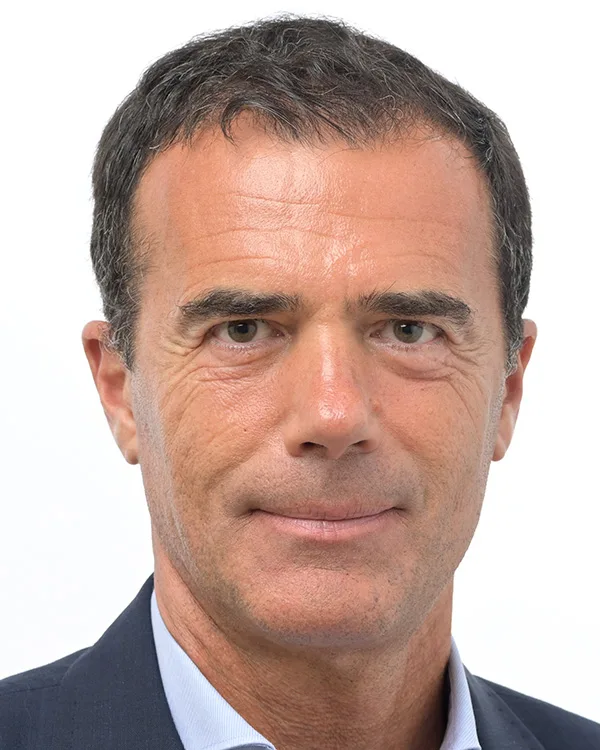






| Rank | Name | Country | Group | Speeches | |
|---|---|---|---|---|---|
| 1 |
|
Lukas Sieper | Germany DEU | Non-attached Members (NI) | 390 |
| 2 |
|
Juan Fernando López Aguilar | Spain ESP | Progressive Alliance of Socialists and Democrats (S&D) | 354 |
| 3 |
|
Sebastian Tynkkynen | Finland FIN | European Conservatives and Reformists (ECR) | 331 |
| 4 |
|
João Oliveira | Portugal PRT | The Left in the European Parliament (GUE/NGL) | 232 |
| 5 |
|
Vytenis Povilas Andriukaitis | Lithuania LTU | Progressive Alliance of Socialists and Democrats (S&D) | 227 |
All Contributions (109)
Digital Services Act (continuation of debate)
Mr President, Vice-President of the European Commission, Commissioner, two centuries later, finally, the Union is taking its responsibilities in the face of the digital revolution. Yes, two centuries, ladies and gentlemen, since the last great text on e-commerce dates back to 2000 – and 20 years in digital is two centuries. Digital is part of our lives and brings us many benefits, opportunities, but it also poses new threats to citizens and democracies. I am talking here about counterfeit products sold online, fake newsdisinformation, hate speech, harassment, cyber threats. With the DSA, an imperative: In Europe, what is prohibited offline must also be prohibited online. This is the end of the Wild West and I invite you to watch a video on Twitter, which the Commissioner has just put on and which I find very effective in this respect. I am convinced that the DSA will make Europe an example for the rest of the world. Indeed, in the face of the Chinese model where the state controls everything and the American model that advocates laissez-faire, we propose a balanced text that will ensure fair competition for European companies and better protection of citizens’ rights. With this text, we force platforms to face reality and assume all their responsibilities, a new system of sanctions will be put in place and, above all, we open the black box of algorithms. More transparency about algorithms is introduced. This is unprecedented legislation at global level and the EU is a pioneer in this area. I think we should be proud of that. The DSA is a good basis for future negotiations. And as President Emmanuel Macron recalled here this morning, the closure of these discussions under the French Presidency is possible and necessary. We must work to achieve this goal.
Digital Markets Act (debate)
Madam President, our market is unique and it creates more opportunities for businesses and 450 million consumers. Yet it is not yet fit for the digital age. Paradoxical, because Europe accounts for 15% to 20% of GAFA turnover and offers huge business opportunities that these players cannot and do not want to ignore. I would therefore like to thank Margrethe Vestager, Thierry Breton, the rapporteur Andreas Schwab and all colleagues for their excellent work. With the DMA, the Digital Market Act, we are taking back control of the global digital giants and can finally demand responsible behavior. There is no place in our single market for abusive practices and unfair conditions imposed on businesses and consumers. The DMA ensures more pluralism, competition, guarantees for SMEs and choice for consumers, more efficient governance and more innovation. Yes, ladies and gentlemen, the DMA is a centrepiece of our new digital sovereignty.
The rise of right-wing extremism and racism in Europe (in light of recent events in Rome) (debate)
Madam President, ladies and gentlemen, the mobilisation against the severe attacks on the headquarters of the CGIL has sent a very clear message to the whole of Europe: Italy has the antibodies to defend itself against the fascist virus. Of course, it is true, there are those who pursue some minorities, no vax, no pass, there are those who blow on discontent, there are those who, it is incredible, still give political residence to people who in the twenty-first century think of doing politics with their right arm stretched out, who attack Jews, who attack migrants, who attack sexual freedoms. That is why, Mr Fitto, it is essential that all parliamentary forces, including the far right like your group, completely cut bridges with the violent without ambiguity. We are waiting for clear words, we are also waiting for convincing acts. I say this in particular to the ECR Group and the ID Group, and I believe that today too you have missed an important opportunity because, instead of attacking the real problem of this continent, which is not fascism, but nationalism and populism, you have attacked the European Commission. Extraordinary. And this is the deep division in my opinion, beyond the debates on History, which do not interest me, I do not believe that there is a fascist danger, I do not believe that there are fascist parties neither in Italy nor elsewhere. But the difference between us and you, when it comes to extremism, is that we believe that the European Union must act for the rule of law, it must act for fundamental freedoms, that when we debate the rule of law it is not an undue interference in the sovereignty of a Member State. Instead, you think that sovereignty is absolute, so absolute that in an absolute way it can also compress fundamental freedoms and the rule of law. If there is a real debate, for which this debate today is also useful, it is to mark the differences. I believe that we should continue to fight for the rule of law and fundamental freedoms across our continent.
The Rule of law crisis in Poland and the primacy of EU law (debate)
Mr President, by challenging the primacy of European law in a systemic way – and I am saying it in a systemic way – Poland is attacking the jackhammer at the heart of the European edifice. If this were accepted, each Member State would be a member of nothingness, as there would no longer be any unity. It looks like yes to Europe à la carte, in which everyone takes what is right for them. A continental ATM, a securities supermarket. It is a model of non-Europe. But we are fighting for a community of destiny. This community was fought by a great European and a personal friend, Bronisław Geremek. So we are also fighting tirelessly for the Polish people, against a government that is deliberately attacking the independence of the judiciary. No, Prime Minister, this is not blackmail. You missed an opportunity this morning. Your provocations are desperate and useless. Instead of protecting our common rules that you freely accepted, you are now flagrantly violating them.
The Council's lack of will to move the European cross-border mechanism forward (debate)
Mr President, today in Europe, millions of our citizens live close to border regions. They cross the border to go to work, to educate their children or to access health services. However, the incompatibility between national legal regimes hampers their mobility and possibilities. The pandemic has sometimes exacerbated this trend. Yet we need more cooperation in areas such as health or the environment. Too many barriers still exist, be it health services, labour law, tax rules or differences in administrative culture. However, we all know that there is a direct link between the removal of obstacles and the further social and territorial development of border regions, which is an essential element of European cohesion policy. These mechanisms to remove these obstacles to cross-border cooperation can offer a European solution to a European problem and I can say that this Parliament has been there. The same cannot be said of the Council. The Council remained silent and its Legal Service put forward arguments that were questionable to say the least. As often happens – and I have some experience as a former member of this institution – the Council Legal Service has created new political obstacles instead of removing legal ones. This story is well known and repeated today. Colleagues, our fellow citizens deserve better. The discussed European cross-border mechanism has a solid legal basis in the Treaties, promotes territorial cohesion and meets the requirements of the Member States, while leaving them the freedom to choose whether and when to use the Regulation. It is a specific action, which will have a positive impact on the economic and social situation of a region and a territory, in full compliance with Article 175 of the Treaty on the Functioning of the European Union. The cohesion rules are uniform, but do not in any way imply a one-size-fits-all approach to development projects. My question is therefore addressed to the Council: When will you become aware of the urgency and relaunch the dialogue with us? I would ask the President-in-Office: What are your proposals and alternatives? We are open to dialogue, you cannot just block everything, because we need a clear legislative solution and above all, because our citizens need answers and above all more open borders so that they can live their daily lives better and feel even more European. So let us not waste any more time and resume the legislative dialogue.
Disinformation and the role of social platforms (debate)
Madam President, disinformation comes first and foremost through social networks. This is a fact and it is also a threat to our democracies. Practices such as hidden foreign funding and other online interference are also a fact, except for the representatives of the far left and far right in this Chamber, which we heard again this evening. Moreover, platforms themselves seem to choose to always protect their interests rather than the public interest. Always protect their income rather than democracy. Therefore, we must stop turning a blind eye to the risks of deviance from these platforms. They know the problem well, but simply refuse to solve it. They have parameters to reduce the spread of disinformation, but they use them very little, because they prioritise growth over security – as you rightly pointed out tonight, Commissioner. Self-regulation, voluntary measures and unilateral strategies have all shown their limits. We need a regulation with effective instruments ensuring more transparency and dissuasive sanctions. There is a need for regulation that effectively tackles disinformation, regardless of the language in which it is disseminated. We need to step up our efforts to develop digital education and independent media, thus enabling our citizens to have a better capacity for discernment. In this respect, the Digital Services Act has great potential. It can be a new model for the rest of the world and must become the spearhead of the fight against disinformation.
The Pegasus spyware scandal (debate)
Madam President, cybersecurity is a necessity to preserve our democracies and sovereignty. While software such as Pegasus can be useful in the fight against terrorism, it is vital that we establish a clear legislative framework to control its use. Journalists, political opponents, but also several of us, ladies and gentlemen, have been victims of different types of cyber attacks, and I know something about this personally, Commissioner. The battle against cybercrime must be fought at national and European level, but also from a multilateral perspective, reflecting on an international cybersecurity agreement to ban certain practices, based for example on the model of the Chemical Weapons Convention of 1993. Pegasus has also highlighted threats and violations from within the EU and we must demand full transparency from the Member States that have used Pegasus, starting with Hungary. Which other Member States used it? We have the right to know, European citizens have the right to know.
Situation in Lebanon (debate)
Madam President, since Friday Lebanon has had a government. This small step was one of the conditions for international aid, but we need to be very careful; The fact that Lebanon has a government does not mean that the European Union must refrain from punishing some of its corrupt leaders who are guilty of the country’s non-stability. Our policy of sanctions against Lebanese leaders, even with a government, must be implemented in the coming weeks with the vote on a first list of names, since we now have a very clear political and legal framework, voted last July. We also expect this new government to guarantee the holding, smooth running and transparency of the elections in 2022, with a view to the legislative elections on 8 May, followed by the municipal elections and the presidential elections. Ladies and gentlemen, for the Lebanese, we Europeans must be there.
Foreign interference in democratic processes (debate)
Madam President, in 2016 in the United Kingdom and Italy, in 2017 in France, during the COVID-19 crisis in several countries, we witnessed serious interference that undermines our democratic life and supports far-left and far-right nationalist and populist forces. And the speeches by some colleagues in this Chamber today, from ECR, ID and the Left, only confirm all this. However, the observation is very clear: Russia has been playing a dangerous game for too long. It has been joined by other countries, such as, above all, China and Venezuela. Europe must be there. We need to fully integrate disinformation into the common foreign policy and decide by majority on sanctions in case of interference. Proven funding of political parties from abroad must be constantly identified and blocked. To repeat what you said, Mr High Representative: even if being right for a while is good, acting is even better.