
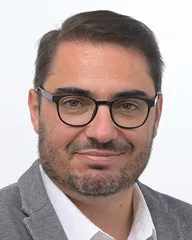
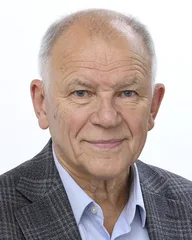
| Rank | Name | Country | Group | Speeches | |
|---|---|---|---|---|---|
| 1 |
|
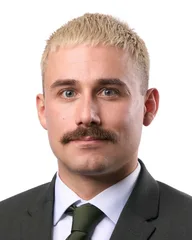
Lukas Sieper | Germany DE | Renew Europe (Renew) | 487 |
| 2 |
|
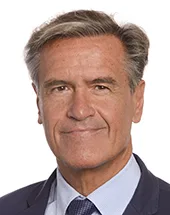
Juan Fernando López Aguilar | Spain ES | Progressive Alliance of Socialists and Democrats (S&D) | 454 |
| 3 |
|
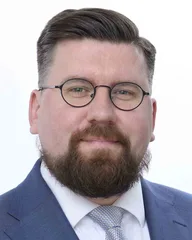
Sebastian Tynkkynen | Finland FI | European Conservatives and Reformists (ECR) | 451 |
| 4 |
|
João Oliveira | Portugal PT | The Left in the European Parliament (GUE/NGL) | 284 |
| 5 |
|
Vytenis Povilas Andriukaitis | Lithuania LT | Progressive Alliance of Socialists and Democrats (S&D) | 273 |
All Speeches (156)
Mr President, ladies and gentlemen, today I speak not only as a MEP, but as a woman and mother who will give birth in a few days. And I want to show you the beauty of a life that already takes its place in this world. Listening to them, I wonder: Why are they afraid of life? Why are they afraid of a baby? Who can't fall in love with the miracle of a tiny life that unfolds on its own? They deny a reality that transcends us. Within our body there is a complete life, already from its beginning, with all its dignity and rights, with an infinite value always, regardless of the circumstances, no matter how complicated they may be. Let's support women. The only birth that really hurts and hurts without measure is one that does not reach its fullness by its own decision. We must all fulfill the mission of protecting each new life and may its tenderness fill us with hope. There are many of us who want this to happen and we strive for it, in Texas, in the European Parliament and around the world. Love and beauty will save the world.
EU Health Emergency Preparedness and Response Authority: ensuring a coordinated EU approach for future health crises and the role of the European Parliament in this (debate)
Date:
05.10.2021 15:46
| Language: ES
Speeches
Madam President, Commissioner, we cannot confine ourselves to discussing today in this House the role of the European Parliament in HERA. Many other issues are objectively more relevant if this new Authority is to be effective, operational and useful in managing close to €50 billion by 2027 in four months. Health is a competence of the Member States. Therefore, we need to know the structure and functioning of this Authority, the coordination mechanisms with the States, the instruments that are going to be put at the service of HERA to guarantee the availability, access and distribution of medicines. What are the Commission's plans to avoid overlapping competences with agencies whose mandates have just been extended, such as the EMA or the ECDC? In short, Commissioner, we will support efforts to develop a European pharmaceutical industry and improve our capacity for research and response to health emergencies. But we need guarantees to prevent good ideas from being transformed into mastodontic structures with no added value for the European citizen and blurring the sovereignty of nations.
The impact of intimate partner violence and custody rights on women and children (debate)
Date:
04.10.2021 19:27
| Language: ES
Speeches
Mr President, ladies and gentlemen, national laws, in their codes, already regulate violent behaviour on an objective and non-discriminatory basis. The Union's meddling in these matters is an interference in its sovereignty. Laws must ensure legal certainty and be based on a fundamental premise: We are all equal before the law, men and women. Aggression knows no sex and violence is reprehensible in any case. A subject as delicate as custody, which may involve aggression, should have a serious and rigorous legal treatment. And not in this confusing way including various ideological concepts, without precise meaning. They can lead to misinterpretations and wrong decisions with fatal consequences. In this report it is proposed to judge on the basis of unproven indications, subjective interpretations, always presupposing the guilt ... of the male, as if he were a criminal. But where is the right to the presumption of innocence? This is an abuse of justice that leads families to litigation, to confrontations that harm children for life, giving rise to a pile of unfounded complaints, while the real victims remain helpless. The introduction of gender ideology into norms leads to the deconfiguration of the rule of law, introduces inequality and enmity between men and women and magnifies conflicts, fostering division in families and generating even more violence in society.
Identifying gender-based violence as a new area of crime listed in Article 83(1) TFEU (continuation of debate)
Date:
15.09.2021 19:14
| Language: ES
Speeches
Madam President, ladies and gentlemen, after obtaining recognition before the law of equality between men and women, they are now coming up with proposals that destroy it. National legislation already covers all types of criminal acts of aggression against any person. The perversity of gender ideology would be consummated by this action, conquering the heart of laws. It is the greatest setback in equality. It is false that the woman is going to be protected. The real intention is another: sowing insecurity and mistrust. Face the men and women. Breaking the unity of society, of the family. Children are shown their parents' relationship as a power struggle, even for their custody, depriving them of their parents, dividing them in affections. Of course, no one in this world can doubt or disagree about these ideas. Whoever does so will be persecuted by the laws that have been legitimised here in the European Parliament itself. It is an interference with rights and freedoms, especially freedom of expression. Even more: freedom of conscience, the foundation of one's own human rights.
European Centre for Disease Prevention and Control - Serious cross-border threats to health (debate)
Date:
13.09.2021 17:22
| Language: ES
Speeches
Mr President, I take the floor today on behalf of Mrs Kopcińska, rapporteur for this report. She cannot be present because of her mother's passing. From here I send you a strong hug and all my support in these difficult moments. Exactly 25 weeks have passed since we started working in Parliament on the revised mandate of the European Centre for Disease Prevention and Control. It has been a time of hard work, with many ideas to improve the Commission's proposal. Ideas that have been discussed very frankly during the meetings and, despite the differences between the political groups, we have managed to find a solid common approach. The COVID pandemic has clearly demonstrated that our readiness to manage emerging health threats needs to be more structured and deliver precise actions for future health crises at EU level. As a result, work on the expanded mandate of the ECDC has become a central concern. Mrs Kopcińska, rapporteur for this report, would like to thank Commissioner Stella Kyriakides for the draft proposal that has been put forward as part of the Health Union package. Mrs Kopcińska is a strong supporter of this proposal and, in her view, Parliament's position constructively complements this text which adds important proposals. Quoting Benjamin Franklin, the best doctors give the least number of medicines. Guided by this principle, Joanna Kopcińska, also a medical trainee, has therefore sought to find appropriate solutions and achieve synergies between the ECDC, the Commission and countries, while ensuring that resources match our real capacities. In terms of priorities, Parliament has focused on several key elements: strengthen the preparedness of the Centre, improve data reporting and ensure reliable epidemiological risk assessment. On strengthening preparedness, we believe that preparedness plans and recommendations for health crises and pandemics in the EU should respect the competences and responsibilities set out in the EU Treaties and be based on indicators developed in cooperation with Member States. That is why we emphasise responsibility and competence within the report, as ultimately it is really the Member States that will have to implement these Centre recommendations. As regards improving data reporting across the Union, the rapporteur considers that, in order to strengthen epidemiological surveillance, Member States should seek to step up reporting of health system indicators. Only then, by stepping up analysis and mobilisation by collecting and processing more data from Member States, can we really improve security. In the context of the work of the risk assessment, the decision of the European Ombudsman in the strategic inquiry OI/3/2020 on the work of the Centre was also very important. One of the key problems identified in the Decision was the underestimation of the capacity of Member States to prevent and control disease outbreaks. That is why we have acted on the work of the Ombudsman and sought to increase transparency and accountability, as well as to equip the Centre with the tools it needs to fulfil its mandate to prevent and control upcoming pandemics. When talking about actual support for the Centre's activities, it is essential to refer to Member States' national preparedness plans, as the Centre's recommendations will be used to adopt broader plans at the level of all States, aligned with a comprehensive and transparent reporting and budgetary control framework. Regarding the implementation of the mandate to cover non-communicable diseases - the hot topic during committee work - we agree that the Centre could become a one-stop shop for health information at EU level and for data exchange between Member States. This would make it possible to level the playing field across the Union through increased technical support, capacity building, knowledge sharing and coordinated activities. However, this task goes far beyond the current activities of the Centre, and we must approach this new responsibility with caution so as not to hamper the work of communicable disease control, which should remain the agency's core activity. In conclusion, rapporteur Joanna Kopcińska would like to reiterate, when discussing increasing EU preparedness, especially in the context of the European Health Union, that we need to be practical and manage expectations when it comes to the European Centre for Disease Prevention and Control. As mentioned above, we need to reflect carefully on the incorporation of the new tasks in the context of their limited financial and organisational capacity. Moreover, we must strive for synergies between the Centre, the Commission and the Member States in order to achieve the best possible results. As a final remark, there is a clear overlap between this proposal and the work of Mrs Trillet-Lenoir on serious cross-border threats to health. In the new structure proposed by the Commission, this Regulation is the backbone of the Health Union, while the ECDC Regulation acts as its executive. This should be taken into account as work progresses on these files under the Slovenian Presidency. Once again, the rapporteur would like to thank her colleagues and the other political groups for their fruitful collaboration and mutual trust, and looks forward to further cooperation during the upcoming interinstitutional negotiations.
Madam President, Commissioner, we hope that the new role of the EMA will serve, in an effective and practical way, to improve coordination and promote communication throughout the sector, at critical times such as the one we are experiencing; increase the scientific basis for decision-making; speed up clinical trials and registrations of medicinal products; generate effective tools to cope with shortages. But this debate does not end here; continues the challenge of designing a pharmaceutical strategy that provides legal support that incentivizes opportunities in the health field. We must respond effectively to citizens' expectations, but bearing in mind that better coordination is by no means the pretext for meddling in the competences of the Member States, nor does it create the obstacle of excessive bureaucracy and complexity in management and decision-making.