
| Rank | Name | Country | Group | Speeches | |
|---|---|---|---|---|---|
| 1 |
|
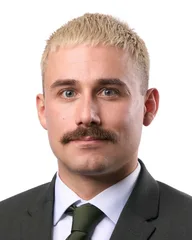
Lukas Sieper | Germany DEU | Non-attached Members (NI) | 390 |
| 2 |
|
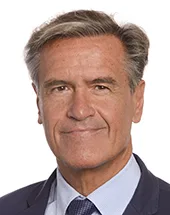
Juan Fernando López Aguilar | Spain ESP | Progressive Alliance of Socialists and Democrats (S&D) | 354 |
| 3 |
|
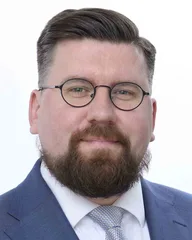
Sebastian Tynkkynen | Finland FIN | European Conservatives and Reformists (ECR) | 331 |
| 4 |
|
João Oliveira | Portugal PRT | The Left in the European Parliament (GUE/NGL) | 232 |
| 5 |
|
Vytenis Povilas Andriukaitis | Lithuania LTU | Progressive Alliance of Socialists and Democrats (S&D) | 227 |
All Contributions (150)
Amending ERDF, Cohesion Fund and Just Transition Fund as regards specific measures to address strategic challenges in the context of the mid-term review (debate)
Mr President, cohesion policy is Europe's social flag. It is the policy that creates jobs, that generates investments where they are needed. It is the policy that turns disaffection into Europeanism, improving infrastructure, building health centers or schools. It is also an instrument of solidarity within the Union and has responded to the challenges we have faced in recent years, which have not been few. We live in a challenging context and cohesion policy has responded. That is why, in this review, we are opening the door for States in need to reschedule needs. Flexibility, yes, but not at the cost of issuing a blank check to the states or forgetting about common policies, as we see in the proposal for the next financial framework. Because that path dismantles the idea of a Europe that acts integrated and cohesive and returns us to be a mere sum of countries with very different approaches. Europe needs to ensure its own security and defence and that is why we, from the S&D Group, have worked to ensure that every euro of cohesion and defence has a dual use for citizens. We have also strengthened the water resilience strategy, incorporating desalination to ensure water for regions like mine – the Region of Murcia – that are suffering from increasingly harsh and unpredictable droughts due to climate change. And we have also reinforced the need to support affordable housing to avoid the ravages of an uncontrolled market. And we have added safeguards to the rule of law, so that not one euro of cohesion policy goes to those who do not respect the common rules. Commissioner, this group is going to fight for a cohesion policy with sufficient funding, clear rules and guarantees. We cannot accept the re-imposition of cuts, austerity and men in black, because, for socialists, cohesion is an inalienable principle of our idea of Europe.
European Citizens' Initiative 'Cohesion policy for the equality of the regions and sustainability of the regional cultures' (debate)
Madam President, Commissioner, the European Union is the union of our cultures, a melting pot of different heritages that makes us the richest land in the world. However, in smaller regions the cultural heritage is at risk: Traditions, rituals, languages, songs... are part of the immense cultural richness of the European Union and we cannot allow them to be lost. Cohesion policy is the best lifeline for our regions; but, Commissioner, a cohesion policy that today, more than ever, is at risk from the proposal for the new financial framework. We need to strengthen cohesion policy funds to protect our cultural heritage, which is at risk in many regions. We cannot allow cohesion policy to be lost and diluted into a single fund per state. Regions and cities must remain at the heart of a modernised, decentralised cohesion policy adapted to the new challenges of the European Union; Because to lose culture is to lose the European Union.
2023 and 2024 reports on Georgia (debate)
Madam President, Commissioner, Georgia's aspiration to be part of the European Union has become a nightmare. The culprit? Georgian dream. This was already proven by the European Parliament's mission in the elections last October: purchase of votes and other irregularities before the elections and while they were being held. The elections were not clean and the Georgian Dream Government is now taking an authoritarian drift. Every day fundamental freedoms are attacked, social conquests are reversed, legal reforms are promoted to criminalize legitimate protest and opposition. And we can't consent to it. We want Georgia within the European Union and we will work towards that. The country deserves it, and we won't let the Georgian Dream take it away from you. Therefore, we need to support sanctions against those responsible for this nightmare: Let the democratic opposition feel the support of its allies.
2023 and 2024 reports on Moldova (debate)
Mr President, Commissioner, the road to integration into the European Union is the road to democracy, justice and peace. Moldova knows this and has chosen to follow this path. This was made clear by its citizens, last October, in the referendum to shield its Constitution towards European integration. And not only its citizens, its government is making progress on the necessary and essential reforms to achieve membership as soon as possible. It is now up to Europeans to support this process, to help strengthen public administration and institutions and, above all, to cooperate in strengthening the independent judicial system. We must acknowledge this: All support is little when democracy and resistance to Russia's neighbour are at stake. Only the path of Moldova’s European integration – together with Ukraine – will be able to stabilise the peace that we so long for in the area.
Strengthening rural areas in the EU through cohesion policy (debate)
Madam President, Commissioner, whoever is born today in a rural area of the European Union is condemned to emigrate. Our rural areas are depopulated and any citizen should have the right to stay where he or she was born. Rural areas account for 83% of the EU territory, but are home to only one third of the population, and their average income is only 87.5% of the average income of urban areas. Rural areas have major challenges ahead: improve their mobility and connectivity, ensure lower unemployment rates, increase basic services and opportunities for economic development... If we fail to act, we jeopardise European diversity as well as social and economic progress. Rural depopulation and inequality run counter to the principles of cohesion policy, which should inspire the work of the Community institutions. Cohesion policy beyond 2027 should be ambitious and increase decentralisation, fostering balanced growth, with more resources in strategic sectors, rural entrepreneurship, rural tourism, policies supporting the energy transition, and supporting especially women and young people to curb demographic decline. If we centralise cohesion policy, we will definitely be killing our rural areas. It is our responsibility: guarantee the right of everyone to stay where they were born.
The human cost of Russia’s war against Ukraine and the urgent need to end Russian aggression: the situation of illegally detained civilians and prisoners of war, and the continued bombing of civilians (debate)
Madam President, crimes against humanity: So, no palliatives. This is how the UN report defines what is happening with the disappearances of Ukrainian civilians, enforced disappearances, deportations to Russia, disregarding all international law. Human rights violations, torture and sexual violence: This is what Putin’s government is committing against Ukrainian citizens whom the regime perceives as a threat and who have been captured during the war – local politicians, officials or journalists, among others. There is also the murder and disappearance of captured military personnel. Commissioner, we need the immediate return of the missing, especially Ukrainian children forcibly transferred and deported to Russia. Only the European Union is the guarantee to secure the future: a democratic and socially just Ukraine. We cannot fail the Ukrainian people. Their struggle for freedom is our struggle for democracy.
EU support for a just, sustainable and comprehensive peace in Ukraine (debate)
Madam President, what lesson do we want to draw from this war? Where is democracy, respect for human rights? The Russian invasion of Ukraine is an attack on democratic values, on the fundamental principles of the European Union: It is also a war against us, and its result cannot be an unjust peace, an outrage against Ukrainian sovereignty, a punishment for the invaded. The European Union has remained steadfast in helping our neighbouring country since the first minute of the war, and that is where we must remain, on the side of the attacked. We must work for a fair solution: to put an end to the conflict as soon as possible, but not to impose the law of the strongest. Our European value system is at stake, we must continue to support Ukraine until the final minute.
A revamped long-term budget for the Union in a changing world (debate)
Mr President, Commissioner, the budget of the European Union must further our founding objectives: solidarity between territories, balanced growth, less poverty, more equality. These are also the principles of cohesion policy. That is why, in this new multiannual financial framework, we must increase the allocation for cohesion policy. Challenges have multiplied and we cannot do more with less. We must support the most disadvantaged regions: islands, rural areas. We need a public housing stock in the European Union to tackle this social emergency and support young people, workers who retrain to find a new job. The planet is also asking us to take decisive action to combat the climate crisis. How many more natural disasters do we need? For this reason, the budget beyond 2027 has to be higher. We must finance it with more contributions and with new own resources.
Ninth report on economic and social cohesion (debate)
No text available
110th anniversary of the Armenian genocide
Mr President, for centuries the land of what makes up the European Union today has been stained with blood: blood of young people killed in wars. Until now, no one could imagine that, with much effort, we were going to build a political project that has kept us at peace for more than seventy years. If we look at our Ukrainian neighbors, we can easily understand the enormous value of that. That is why it is important today to commemorate the Armenian genocide here. We must do this not only to remember the tragic events of the past, but also to see that we can be stronger united in diversity. From the European Parliament, we must strongly urge Turkey and Armenia not to let this issue continue to cloud their relations and to continue to take firm steps towards their reconciliation. The brighter future awaits us if we are united and at peace. And the only way to achieve this is through understanding, dialogue and cooperation.
Delivering on the EU Roma Strategy and the fight against discrimination in the EU (debate)
Mr President, Commissioner, if we look around us, we can see - the European Parliament is an example of this - that: Europe is a diverse set of peoples. We carry diversity in our motto. However, there are minorities who continue to be discriminated against in our territory, and the Roma people are one of them. The data says it: in the 2023 Eurobarometer on discrimination in the European Union, two thirds of Europeans recognise that discrimination against Roma is widespread. Access to the education system is uneven; we need to involve families in the education system and reduce early school leaving. It is essential that Roma culture is preserved and recognised in order to avoid stereotypes and prejudices. Roma culture is also European culture. We have strategies and recommendations in the Union, but we need to go further, push for their implementation in every corner of the Union. Our diversity is stronger from equal opportunities.
Improving the implementation of cohesion policy through the mid-term review to achieve a robust cohesion policy post 2027 (debate)
Madam President, Commissioner, a citizen walks through the streets of his rural town. He picks up his child from school, drives along a small road and takes him to the health centre. In all three places, he can read the same sentence: 'Financed by European funds.' Which is the European Union's greatest social policy? Cohesion policy which helps all European regions grow at the same pace, which creates quality jobs, which makes us more competitive. But we have challenges to solve: bureaucratic burdens, new needs of the citizens. We need to accelerate its implementation. What is the solution? Modernisation. Greater involvement of regions and citizens. More flexibility and a large budget. Investment not only for defence or large corporations, investment for small and medium-sized businesses, investment for the most disadvantaged territories and investment for a safer, more competitive Europe with less inequality. Commissioner, we socialists will work on the Commission's proposal. We will work to achieve these objectives.
Situation of European academics and researchers in the US and the impact on academic freedom (debate)
Madam President, Commissioner, the enemies of freedom always attack research and education first. They always attack first those who want to turn on the lights of progress in our society. They want to keep us in the darkness of obscurantism. This is what happens in the United States with massive cuts in research and teaching. And, in this situation, the European Union must be the beacon of knowledge, the beacon that leads the way in defence of academic freedom, in defence of a fundamental pillar of democracy. We must strengthen our universities. We must facilitate the reception of affected researchers. We must consolidate ourselves as a land of free thought. More international partnerships, more funding, more attracting foreign talent. Strong European university alliances that exemplify. We must show the affected researchers in the United States that here freedom is an unwavering pillar, a beacon against obscurantism.
European Cultural Compass as a driving force for economic competitiveness and resilience (debate)
Madam President, the pot is almost empty, and without resources there is no room for improvement. The cultural and creative sector has a strong capacity to improve European competitiveness: more than 7.5 million people work in the cultural world, which today accounts for more than 5.5% of the European Union's gross domestic product. However, its funding is insufficient and, even so, there are those who propose to reduce the money we put in that pocket for the next budget. Do we want to build a more competitive society? Do we want to build a more resilient society? Do we want to strengthen European values? A strong cultural sector will help us to achieve it, and we can only achieve it by betting on it. We need at least 2% of the next European budget for Creative Europe; sufficient background to create an effective cultural compass. We need to invest in the cultural hub to strengthen the European Union.
Need for targeted support to EU regions bordering Russia, Belarus and Ukraine (debate)
Madam President, Mr Executive Vice-President, the three years of invasion of Ukraine are also three years of resistance in border regions, European Union territories close to Ukraine, Russia or Belarus suffering the consequences of Putin's invasion: less investment, less tourism, less employment, more economic hardship. One piece of information: Since the beginning of the conflict, almost six million refugees have fled the war, most of them to these border regions, an unprecedented request for asylum. And now we, with the budget review, need more measures to support these regions, and cohesion policy can also be a tool: economic support for countries hosting refugees, cohesion policy funds to help refugees and infrastructure, economic incentives for countries bordering the war. Mr Executive Vice-President, the European Commission must commit to these measures so that we all emerge stronger from this conflict.
Competitiveness Compass (debate)
Madam President, Commissioner, competitiveness is the way to build a strong Europe – today more than ever – on the global stage we live in. A strong and competitive Europe can only be achieved with competitive cities and regions. Far from centralising cohesion policy, we need to be very aware that only the involvement of cities and regions in the design and implementation of cohesion programmes will guarantee us more competitiveness. And as the Draghi report points out: more decentralisation to make the most of the potential of each territory. And if we want to be more competitive, we need the most prepared in the European Union: Investing in training is the way, preparing our workforce for the technological changes that are already here. The green and digital transition, better trained workers and more co-governance of regions: These are the keys to the European Union's competitive success.
Boosting vocational education and training in times of labour market transitions (debate)
Madam President, do we want European talent to lead changes in the labour market? We need to strengthen the role of the European Union in quality education and training, there is no other way. One of the most important elements is equal opportunities: it is crucial to ensure that all young people, regardless of their gender, background or situation, have access to quality education and training. Just today, in addition, International Day of Women and Girls in Science, we must commit to continue working to eliminate gender gaps in education: we need to encourage women's equal participation in science, technology, engineering and mathematics. These areas are particularly important to address the green and digital transitions. Education and training are engines of equality and social progress, and that is why we need more investment. If we want better European talent, we have to give training opportunities regardless of the origin of those who receive it.
Continuing the unwavering EU support for Ukraine, after three years of Russia’s war of aggression (debate)
Mr President, three years of war, three years of invasion, three years of confrontation between Putin's authoritarianism and European values over the resistance of Ukrainians. From the European Parliament we continue to support the Ukrainian people with measures such as the Ukraine Facility – €50 billion until 2027 – or the financial assistance framework, which will be financed from the profits generated by Russian assets frozen in the EU. But we need more: more military, humanitarian and economic aid. Ukraine has to be reborn after the war: a country that looks to the future and has the resources to cope with post-conflict reconstruction and modernisation. Now that the global geopolitical context pales in the face of populist drift, the European Union must be more than ever the bulwark of democracy and human rights, and the place to which Ukraine must turn.
Further deterioration of the political situation in Georgia (debate)
Mr President, Commissioner, democracy is still under threat in Georgia. This has already been said by the European Parliament's observation mission to the country: alerted of cases of vote-buying, double voting, before and during the elections. A Parliament elected in an election of dubious validity has now elected a new president and the escalation goes further: the rise of political violence, attacks on opposition leaders... I would like to recall here expressly Giorgi Gajaria, one of the leaders of the opposition, who had to be hospitalized after the aggression of the violent. There is still a long way to go before Georgia can become a member of the European Union. This is the path that Georgian Dream wants to interrupt, it wants to slow down Georgia's progress and advance towards Europe. Georgian citizens deserve transparent elections and to be able to elect a president that is consistent with the will of the Georgian people. A democratic Georgia moving towards a more united Europe.
The situation in Mayotte following the devastating cyclone Chido and the need for solidarity (debate)
Madam President, Commissioner, it is as if an atomic bomb has fallen on Mayotte. This is how the victims of the devastating cyclone Chido describe the situation. Cyclones of this nature occur once every hundred years. But we are seeing the extraordinary become the norm. We must denounce climate denialism from here. Ignoring reality, putting sticks in the wheels of the green transition only makes these disasters worse. The European institutions have responded quickly to other disasters with the RESTORE Regulation, a rapid response mechanism, with aid for the reconstruction of the affected sites and for assistance also to victims: humanitarian and emergency aid. The outermost regions also need our full attention and affection. But it's not enough. It is not enough to resort to emergency mechanisms. Faced with an increasingly frequent situation, we need to be able to create a dedicated, robust and sufficient fund to address the consequences of these natural disasters, accelerate the green transition and prepare for disasters. There are many lives at stake.
Misinformation and disinformation on social media platforms, such as TikTok, and related risks to the integrity of elections in Europe (debate)
Mr President, Commissioner, social media brings the world closer to young people. For them, they have a similar effect as television had in my generation, with the addition of the introduction of a greater number of voices to the political debate. But among these voices, actors sneak in with the sole objective of manipulating and spreading disinformation for their own benefit: We've seen it on X or TikTok. We must establish mechanisms so that electoral integrity is guaranteed on social networks: increase transparency and political guidance for communicators and introduce measures to combat disinformation in real time, despite the speed of content. In addition, we must provide young Europeans with media and digital literacy that allows them to develop critical thinking to access verified and diverse information. There is an urgent need to properly implement the Digital Services Act adopted in this Parliament. If we want to preserve the quality of democracies, it is essential to ensure safe and healthy social networks for our young people.
Regional Emergency Support: RESTORE (debate)
Madam President, Commissioner, catastrophe happens in minutes. Suddenly, the flood produced by the torrential rains bursts into your house with overwhelming force. In a moment, the water has devastated your entire life and, sometimes, without anyone notifying you. The European institutions must respond to tragedies with the same forcefulness and speed. Herein lies the importance of RESTORE. It is a source of pride that we have acted soon and that we are responding to those affected by the natural disasters that have occurred this year throughout the European Union – with the ERDF or the European Social Fund – to rebuild infrastructure and to provide food, health support, cleaning materials or what is necessary to get ahead. On many occasions those affected by these disasters have lost everything: his house, his car, his job. At this time more than ever, institutions must stand by their side to ward off the specter of anti-politics. I want to send strength and encouragement to those affected by DANA in Valencia, Letur and other parts of Spain. Let them know that we don't forget them. The European institutions will give the answer they deserve. A response that adds to the more than 16 billion euros that the Government of Spain has already committed for reconstruction. We will shine again with the same strength as before the storm.
Foreign interference and espionage by third country actors in European universities (debate)
Mr. President, autonomy and freedom. These are the pillars of our universities and we must preserve them if we want to maintain higher education and research, which are the spearhead of social progress. We need to strengthen our competitiveness and strategic autonomy in order to be able to cope with great powers such as China or the United States. And this path passes through free and autonomous universities. We must defend them from outside interference by foreign powers that seek to weaken our democracy, undermine the integrity of our academic institutions, and censor our intellectual diversity. There must be academic cooperation in the European Union and more transparency in the funding of research. The European Union should explore – together with the Member States – measures to protect academic research and ensure our democracy and academic freedom; measures which, in addition, have the appropriate budgetary allocation.
Strengthening children’s rights in the EU - 35th anniversary of the adoption of the United Nations Convention on the Rights of the Child (debate)
Mr President, Commissioner, children and young people are the future, we always say so; But this future is determined by the opportunities we offer them. Do we want an unequal future or are we going to work towards a just and equal society? To do so, we need to give young people and children the tools they need to develop fully as people. Education and health are the drivers of equal opportunities. All children should have access to free, compulsory and accessible education. The economic, gender, social or cultural situation at the outset cannot be an impediment to their opportunities. In addition, we must protect their physical and mental health and well-being: bullying and cyberbullying stalk children in classrooms and impede their normal development; and, now, this problem is increased twenty-four hours a day by the mobile phone inside the pocket. Let's address these issues for a better future.
Question Time with Commissioners - Challenges in the implementation of cohesion policy 2021-2027
No text available