
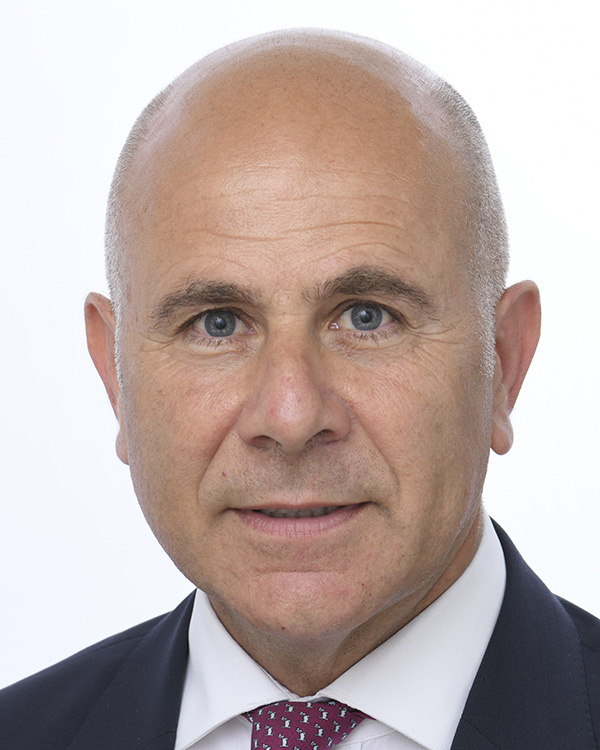






| Rank | Name | Country | Group | Speeches | |
|---|---|---|---|---|---|
| 1 |
|
Lukas Sieper | Germany DEU | Non-attached Members (NI) | 390 |
| 2 |
|
Juan Fernando López Aguilar | Spain ESP | Progressive Alliance of Socialists and Democrats (S&D) | 354 |
| 3 |
|
Sebastian Tynkkynen | Finland FIN | European Conservatives and Reformists (ECR) | 331 |
| 4 |
|
João Oliveira | Portugal PRT | The Left in the European Parliament (GUE/NGL) | 232 |
| 5 |
|
Vytenis Povilas Andriukaitis | Lithuania LTU | Progressive Alliance of Socialists and Democrats (S&D) | 227 |
All Contributions (109)
Criminal intimidation against investigative journalists in the EU: the attempted attack on Sigfrido Ranucci (debate)
Mr President, Commissioner, ladies and gentlemen, the attack on journalist Sigfrido Ranucci is a very serious act that deeply shakes our civil consciences: To him and to all the journalists who risk every day to tell the truth goes my most sincere solidarity. It is clear that this is not a direct attack only on a professional, but on all courageous investigative journalism, that silent work that guarantees citizens the right to be informed. Freedom of the press is not a category privilege, but the very foundation of any democracy. Without free information there is no control, there is no truth, there is no freedom. Defending it means defending the dignity of our civilized life. It means ensuring that fear does not become censorship and that intimidation does not become silence. Because, look, every time a journalist is threatened, it's the whole society that gets hit. And precisely for this reason it is wrong and worrying that such serious episodes are bent to political controversy: In this sense, the words spoken by the secretary of the Democratic Party at the congress of the European Socialist Party are astonishing, when she said that freedom of speech and democracy are at risk when the right governs. I believe that they are unjust and divisive words, that have nothing to do with the reality of the facts and that risk exploiting ignoble episodes for partisan purposes. Freedom has no political color: It is a value that defends itself together and is not a weapon to be used against the opponent. We are living in very difficult times and today more than ever citizens expect common sense, balance and seriousness from us. It cannot all turn into a permanent ideological struggle. Unfortunately, there are already too many wars in the world: Let us not add to all this violence of words, political hatred and mutual delegitimization. Defending freedom of the press also means defending freedom and responsibility in language and truth as a common good. We need to focus on the facts, strengthen cooperation against organised crime, fully enforce the European Media Freedom Act, concretely protect threatened journalists and support media independence. Only by joining forces can we ensure a free and safe environment for those who seek the truth and risk every day to inform. Freedom is not divided, it is protected. And it is protected together, with courage, with respect and with truth.
Institutional consequences of the EU enlargement negotiations (debate)
Mr President, ladies and gentlemen, Commissioner, enlargement of the Union today is a historic commitment and a strategic investment in the future of our continent. It is a choice of responsibility towards countries that regard Europe as a home of freedom and democracy but, at the same time, it is also a challenge that requires the Union to be able to decide, act and defend its values and interests in the world. It is clear that a larger Union cannot continue to function with rules designed for a Europe of 27: We need a decision-making process that is up to today's challenges, a faster and more transparent process, capable of responding to citizens by overcoming those mechanisms that limit our action today. This report goes hand in hand with Parliament’s resolution of November 2023, where it was made clear: It is time to reform the Treaties and to go beyond those rules that, too often, have paralysed European decisions and deprived the Union of the ability to react to crises quickly. Perhaps the time has come for the Council too, which is unfortunately absent today, to take note of this decision and to open up a constituent phase. President von der Leyen herself, in her State of the Union address, stressed the urgency of overcoming unanimity on certain issues. We need a strong Union with a Parliament with full legislative initiative and reinforced competences in strategic policies. Europe needs to strengthen its authority and credibility. We need a single figure for the Commission and the Council, a single political direction. Only in this way can we have a coherent and determined union. Let us make enlargement an opportunity to regain the courage to reform the Treaties, for a more cohesive Europe that can truly count on the international stage.
A new legislative framework for products that is fit for the digital and sustainable transition (debate)
Madam President, Commissioner, ladies and gentlemen, in a context where technological innovation and environmental objectives are increasingly intertwined, if we are to strengthen the single market, we must ensure modern, consistent and truly enforceable rules: This is to protect our consumers and the competitiveness of our businesses. I am pleased and thankful that the rapporteur wanted to consider some of the highlights of my report on e-commerce, in particular all aspects of the online sale of non-compliant products, which pose a threat to both consumer safety and fair competition. We must insist on more effective traceability tools such as the digital product passport, the obligation of a responsible person established in the Union, the strengthening and coordination of all supervisory authorities but, above all, the timely creation of a single European customs authority. Only in this way will we be able to ensure that European rules apply to all and thus build a single market that is more secure, transparent and competitive, where the digital and environmental transitions really go hand in hand, for the benefit of our businesses and consumers.
United response to recent Russian violations of the EU Member States’ airspace and critical infrastructure (debate)
Madam President, ladies and gentlemen, violations of the airspace and critical infrastructure of the Member States have put a strain on European security. They are real tests of political and military resistance that aim to measure their vulnerability and ability to react. This is why we need a united and determined response, strengthen joint surveillance, rapidly develop the pan-European air and drone defence network, improve data sharing and alert mechanisms. The security of our skies, our infrastructure, our seas means ensuring the security of our citizens and our economies. But this does not mean arming Europe, but building a common defence culture that goes beyond the military dimension, combining diplomacy, industry and innovation. Or, let's face it, we will remain vulnerable and dependent. A common defence that does not replace NATO, but strengthens its European pillar, making the Atlantic Alliance more solid and credible. Alcide De Gasperi, more than seventy years ago, understood that Europe's peace and security pass through a common defence. Today it is up to us to finally give concreteness to that vision, transforming it into reality.
Common agricultural policy (joint debate)
Madam President, ladies and gentlemen, strengthening the position of farmers in the agri-food chain means strengthening our food security and autonomy. Ensuring a fair income for farmers requires a balance between the various actors in the supply chain and strengthening their position must be based on clear rules, transparent trade relations and written contracts that guarantee clear and predictable conditions. Farmers today too often find themselves crushed by high production costs, unfavourable contractual conditions and margins that rarely reflect market value. It has been estimated that for every euro spent by the consumer on processed products, only 6 cents arrive at farms. In other words, the agri-food sector creates value, but does not pay those who produce. Exports grow, production invoices, but agricultural incomes fall and bureaucracy weighs disproportionately. If we want European agriculture to be truly sustainable, competitive and fair, it is essential that farmers are not only suppliers, but an active and respected part in defining the rules of the supply chain. Only in this way can we guarantee decent incomes and an agricultural sector that is not sacrificed, but valued.
Time to complete a fully integrated Single Market: Europe’s key to growth and future prosperity (debate)
Madam President, ladies and gentlemen, Commissioner, the real strength of the European Union has always been its single market, the engine of prosperity, innovation and economic freedom. Yet this engine is proceeding at a reduced speed because too much fragmentation, too much bureaucracy and too many overlapping rules confusing and slowing down our businesses, especially small and medium-sized ones. Lack of investment and dependence on foreign technologies make the Union strategically and economically vulnerable, which is why we need a step change, with more harmonisation, more simplification and true digital integration. The new omnibus package goes in the right direction, but there is no need to write new rules, there is a need for real implementation, especially in key sectors such as e-commerce, a great challenge of our time, where the lack of uniform application opens the way to unfair competition. Just as another concrete step could be the introduction of a 28th European regime that allows companies to operate and grow throughout the Union, with a single set of harmonised rules, reducing costs, time and uncertainties. It is clear that only the complete, digital and integrated single market will be able to restart the engine of the economy and have an economy that competes, innovates and grows together.
Circularity requirements for vehicle design and management of end-of-life vehicles (debate)
Mr President, ladies and gentlemen, every year more than six million vehicles in Europe reach the end of their lives, so it is necessary to set clear requirements on the use of recycled materials in new vehicles. This regulation is a fundamental piece for the automotive industry, which is called to adapt to new production challenges without sacrificing quality and safety and, at the same time, favoring a circular economy model. The objective is clear: Newly produced vehicles must be designed from the outset for reuse, recycling and recovery, so as to reduce the environmental impact throughout their life cycle and combat the illegal sale of stolen or even resold vehicles in the poorest countries. Of course, producers have to bear the costs of end-of-life, but we cannot exclude small and medium-sized enterprises which operate, for example, in the demolition sector and which form the backbone of the sector in some Member States. From this point of view, it becomes essential to clarify the definition of "authorised treatment plant" in order to avoid ambiguities and instead to precisely outline the responsibilities of the different operators, in order to avoid confusion with other treatment operations. Finally, it is necessary to build forms of collaboration between car manufacturers and vehicle demolition plants, a collaboration capable of generating mutual trust and combining environmental objectives with economic sustainability. It is not just a question of competitiveness, it is a strategic choice to strengthen a key sector of the European economy and to give certainty to businesses, workers and citizens.
Product safety and regulatory compliance in e-commerce and non-EU imports (debate)
Mr President, ladies and gentlemen, first of all I would like to thank Commissioner McGrath for his presence and for recognising the urgency of tackling the challenges posed by e-commerce and imports from third countries. I take note, from the debate, of the total convergence of all colleagues in recognising that the number of parcels arriving in the Union each year puts customs, market surveillance and consumer protection under pressure, and creates an unfair advantage for those who do not respect our rules. We welcome, as underlined by the Commissioner, the intensification of consumer safety network investigations and the continuous monitoring of large platforms under the DSA and the CPC Regulation. These are indispensable tools to remove dangerous products, but also to counter manipulative practices such as misleading discounts, selling under pressure or the absence of clear information for our consumers. This report, fully in line with the European Secure and Sustainable e-Commerce Package, is a first step towards a more modern, coherent and efficient regulatory framework: promotes the uniform application of the rules, calls for more resources for the competent authorities and demands a level playing field for our companies, especially for small and medium-sized enterprises, which are today among the most affected by counterfeiting, digital dumping and unfair competition. I therefore call on all colleagues to strongly support this text and urge the Commission to take forward its recommendations with determination, from the reform of the Customs Code – now more than ever necessary – to the revision of the CPC Regulation, to strengthen controls and sanctions also at European level. Because only by joining forces – Parliament, the Commission, Member States and national authorities – can we build an innovative but also secure, transparent, reliable and, above all, rules-abiding European digital market. Finally, I would like to express my sincere thanks to all my colleagues, from all the political groups, who wanted to contribute with competence, seriousness and spirit to a constructive work that we will be voting on these days and which will be a decisive step towards an even stronger digital market.
Product safety and regulatory compliance in e-commerce and non-EU imports (debate)
Mr President, Commissioner, ladies and gentlemen, the explosion of online commerce has revolutionised the way we buy and sell, it has broken down barriers and created new opportunities, but it has also exposed the single market to problems for European citizens and businesses. Never before has it been so easy, with a simple click, to buy a product on the other side of the world and receive it comfortably at home in a few days. The numbers speak for themselves: in 2024 alone, more than 4.6 billion items entered the Union, with a declared value below the duty-free threshold of €150. We're talking about 12 million articles a day. It is an impressive mass of goods, which too often escapes control, jeopardising the safety of consumers and undermining the competitiveness of European companies, which operate in accordance with very precise rules. E-commerce is a market that we must govern and face responsibly, because behind every package that crosses a border without adequate controls there are shadow areas that concern security, legality and fairness. For consumers, the dangers are real: unsafe products, widespread manipulative practices and lack of guarantees of reliability. It is not acceptable for European citizens to be exposed to health risks or scams when shopping online. Freedom of choice must go hand in hand with the protection of safety, health and rights. Strong information and education is needed to make citizens consumers aware and accountable. For companies, on the other hand, especially small and medium-sized ones, the competition becomes harder and often unfair every day: It is unacceptable that those who comply with strict fiscal, environmental and social regulations should compete with non-European operators who do not comply with the same production standards and are also able to circumvent controls. We cannot allow exposure to unregulated markets to compromise the future of our business fabric. Looking at the customs authorities, the challenge is immense: They manage millions of parcels every day and are often forced to do more, but with limited resources. It is clear that this model is no longer sustainable. We need state-of-the-art technological tools, greater European awareness and a shared strategic vision. The current European regulatory framework is valid, but we need to apply it rigorously, strengthen it if necessary, and strengthen the supervisory authorities by appropriate means. Online platforms also need – of course, especially those based outside the European Union – to ensure traceability and transparency. For this reason, it is essential to strengthen the role of the person responsible for product safety and to introduce tools such as the digital passport, which makes it possible to verify origin and conformity before placing on the market. We hope for an acceleration of the reform of the Union Customs Code and we agree with the introduction of the figure of the presumed importer, just as we agree with the elimination of the current duty-free threshold below EUR 150, which unfortunately has become a privileged channel for circumventing controls. At the same time, a European customs authority needs to be set up, with a digital centre for monitoring flows to combat fraudulent practices. We are also in favour of the proposal to introduce a management fee for sellers to cover the costs of control activities. In view of these problems, sanctions must be harmonised at European level, so that those who break the rules do not find loopholes at national level. Finally, in the interest of our fellow citizens, we must firmly combat misleading marketing and manipulative techniques that push our consumers towards compulsive and unconscious behaviour, compromising their freedom of choice and putting their health and economic well-being at risk. Dear Commissioner, dear colleagues, this report is a decisive step towards a fairer, safer and more transparent digital market: It is not a question of stopping innovation, but of guiding it with clear and sustainable rules, because defending the single market means defending a European model based on legality, responsibility and the protection of people, it means contributing to strengthening the strategic autonomy of the Union, which is today an essential condition for a strong and credible Europe on an increasingly global scenario.
European Ocean Pact (debate)
Madam President, ladies and gentlemen, for too long we have focused our attention on the mainland or at most on the coastal strips, without realising a broader horizon towards which today we are looking with the awareness that our seas are a common heritage, vital for climate balance, but also for our food and energy security, indispensable for strengthening our strategic autonomy. In Europe, the blue economy employs around 4.5 million people and generates almost €650 billion in added value. However, the oceans are under pressure not only because of pollution and climate change, but also because of the absence of a certain regulatory framework that can protect and exploit their potential. The Ocean Pact is an ambitious and necessary policy response to engage institutions, businesses, coastal communities and citizens. In an increasingly complex and delicate global scenario, the Ocean Pact is not just a vision, but a vision. roadmap Concrete for a bluer, safer and more sustainable future, contributing to a stronger, more resilient and autonomous Europe.
The human cost of Russia’s war against Ukraine and the urgent need to end Russian aggression: the situation of illegally detained civilians and prisoners of war, and the continued bombing of civilians (debate)
Madam President, ladies and gentlemen, in the face of the serious human costs and cruelty of Russian aggression, a war on our doorstep that directly undermines our security, we can no longer limit ourselves to condemnations or packages of sanctions. Europe must move from solidarity to responsibility. For this we need a concrete turning point in our defensive capacity, where defense does not mean only tanks or war investments. Defense today means protection of civil infrastructure, of our hospitals, of digital energy networks, it means food security, strategic mobility, cybersecurity. It means building a credible response capability against threats that are no longer conventional, but hybrid, asymmetric and pervasive. The time has come to strengthen with great conviction the European pillar of NATO to make the alliance stronger, fairer and more credible. Transatlantic unity is, and remains, our strategic horizon, but for it to be sustainable, everyone must play their part and Europe must finally take responsibility for its own security today.
EU support for a just, sustainable and comprehensive peace in Ukraine (debate)
Madam President, ladies and gentlemen, I believe that Europe today must resolutely reaffirm its role as responsible leader in promoting stability and security. Because defending Ukraine is not only a moral duty but a strategic investment for the peace and freedom of our continent. Supporting Kiev means defending the sovereignty of states and the freedom of peoples, but it also means strengthening the credibility of the Union as a global actor capable of translating solidarity into concrete action, without ever renouncing the firmness of its principles. The peace we want, however, cannot be the result of a surrender or an imposed compromise but must be based on just and shared conditions: the cessation of Russian aggression, respect for Ukrainian territorial integrity and a genuine return to multilateral dialogue. We need a clear vision with which to promote a common defence: strengthen the European pillar in the Atlantic Alliance and re-launch Europe’s geopolitical role in the international arena. In a world marked by new tensions and old imperialisms, true peace is not achieved by retreating, but by building a just and lasting international order.
A unified EU response to unjustified US trade measures and global trade opportunities for the EU (debate)
Mr President, Commissioner, ladies and gentlemen, the recent trade tensions with the United States remind us of the fragility of the global economic balance and of the need, today more than ever, for a strong, cohesive and credible European voice. In the face of unilateral measures that risk affecting entire strategic sectors of our economy, the Union's response cannot be fragmented or hesitant: It must be based on dialogue and a clear and shared strategy. We need to strengthen the single market, remove the internal barriers that still limit its potential today and invest decisively in our industrial and technological competitiveness. But the real goal must be more ambitious: Building a partnerships a structured economy with the United States and Canada, with zero tariffs, balanced free trade and common rules that protect businesses, workers and consumers. We can't just pursue other people's choices. Europe has the credentials to be a protagonist in trade but it can only do so if it speaks with one voice, strengthens its strategic autonomy and acts with courage and seriousness and foresight. A strong Europe is not afraid of confrontation but leads it.
CFSP and CSDP (Article 36 TUE) (joint debate)
Madam President, ladies and gentlemen, in an increasingly unstable geopolitical context, common security and defence are not an option, but an obligatory choice. Europe needs a credible deterrence capacity that shows the world a strong, cohesive Union that protects its citizens, interests and values. That is why we must strengthen the European pillar within NATO, with which we must be in synergy and not in competition, taking our share of responsibility and making the Atlantic Alliance and the West all the stronger. But a change in cultural perception is also fundamental, because when we talk about defence, citizens should not be frightened, nor can we think only of the military dimension. Today, defence also means cybersecurity, protection of critical infrastructure, trade routes, energy supply; means control of irregular immigration and support in civil protection activities. Security is not a cost. Investing in defence does not mean waging war, but it is the precondition for our social and economic stability, our freedom, our international credibility. Either we become global players, or we will continue to be just spectators of other people's decisions.
EU-Mercosur Trade Agreement (debate)
Mr President, ladies and gentlemen, although the Mercosur trade agreement with the countries of Latin America represents a strategic opportunity, because it aims to strengthen European competitiveness by diversifying supply chains and reducing dependence on other markets, it nevertheless presents certain risks and problems which, especially for the agri-food sector, deserve our attention before it is finally approved. Our farms meet very high standards in terms of safety, quality, environmental sustainability and animal welfare, unlike those of the Mercosur countries. Against this background, we must provide for strict controls to ensure reciprocity in imports, prevent unfair competition to guarantee our farmers and consumers, as well as strengthen the instruments for protecting European geographical indication products. A competitive Europe is built not only with the opening of markets, but also with the protection of its companies and its excellence. This agreement can be defined as fair if we are able to guarantee new opportunities, without sacrificing our food security and identity and above all the future of our businesses.
Preparedness for a new trade era: multilateral cooperation or tariffs (debate)
Madam President, ladies and gentlemen, Minister, Commissioner, in an ever-changing global trading environment, the only question we need to ask ourselves is how to make Europe truly autonomous, strong and competitive. We can't just chase other people's choices. Trade wars are not the solution; on the contrary, they risk being worse than armed ones. Europe is a large and rich market, but without an ambitious trade policy, without concrete investments in innovation and without a drastic reduction in bureaucracy we risk being prisoners not only of the decisions of others, but prisoners of ourselves. It is good to diversify our business relationships, but it is necessary to strengthen our production chains and defend our companies not with an obsessive and frenetic hyper-regulation, but with concrete tools that increase global competitiveness. If we want to be a credible and authoritative player on the international stage, we must stop reacting and start acting, because a strong Europe is not afraid of confrontation, but leads it.
Combating Desertification: 16th session of the Conference of the Parties (COP16) of the United Nations Convention (debate)
Mr President, Commissioner, ladies and gentlemen, desertification is one of the most urgent challenges of our time, exacerbated by climate change and human activities. It is not just an environmental crisis, but a social and economic problem that threatens biodiversity, food security and the stability of our communities, fueling tensions and forced migration. Every year, 12 million hectares are degraded, putting the survival of more than a billion people at risk. This alarms us and reminds us that desertification, together with increasing water scarcity, requires immediate, coordinated and ambitious responses. COP16 was an opportunity to reflect on our responsibilities, because the European Union lacks adequate joint action and the resources dedicated are still too limited compared to the scope of interventions. We must commit to and support the development of sustainable policies, promoting regenerative and resilient agricultural practices, responsible use of water resources and technological innovation to restore degraded environments. International cooperation is also important because no country can face this battle alone. Desertification knows no borders and its consequences are felt on a global scale. Only by working together can we face the complexity of this challenge. This means sharing knowledge, technologies and resources, as well as building – as is being done – strong partnerships between governments, international organisations, civil society and the private sector. Combating desertification means investing in the future, in our diversity, in food security and in the stability of future generations.
Challenges facing EU farmers and agricultural workers: improving working conditions, including their mental well-being (debate)
Mr President, Commissioner, ladies and gentlemen, we all agree that agricultural work is physically demanding, often solitary, characterised by long and irregular hours, which certainly do not reconcile with a balanced lifestyle, let alone with the possibility for farmers to be followed by structures dedicated to psychological support. I was particularly struck by the personal testimony of Commissioner Hansen who, in spite of himself, recalled during the hearing the accident of his brother, a farmer, who lost his life. A domestic accident, yes, in which, however, the stress and worries about his activity as a breeder have certainly had an impact. Because you know that those who work and those who live on agriculture never pull the plug, even if they take three days off, because they have to deal with the difficulties arising from climate change, access to credit, regulatory pressure to reduce the environmental impact or excessive bureaucracies – conditions and circumstances that contribute to increased stress, anxiety and, in some cases, depression, often the cause of accidents or even suicides. For this reason, it is necessary that our agricultural policies go beyond strategies on improving animal production and welfare, including actions and measures to support the physical and mental health of farmers, in the awareness that agriculture is a strategic sector thanks to so many women and men whose passion and determination can never be replaced by technology – which must instead be used to support efficient production processes and improve the well-being of those who work in agriculture and contribute to our autonomy and food security.
Foreign interference and espionage by third country actors in European universities (debate)
(IT) Mr President, ladies and gentlemen, European universities have become increasingly subject to espionage and direct or indirect interference by non-European countries which, for political or economic reasons, seek to exploit the openness and scientific research of our universities to gather sensitive information on technology, innovations, defence, international policy, and then try to influence decision-making processes. There are in fact many documented cases of unauthorized transfer of sensitive data by hostile countries that do so through regular academic collaborations or espionage activities. Italy was one of the countries that promoted the Council's decision so that there is a better sharing of information between universities and government agencies. intelligence. And it is in this direction that we must insist to ensure that scientific research remains an instrument of progress and not of external manipulation, in the interests of national security and the integrity of our European institutions.
Prison conditions in the EU (debate)
No text available
Foreign interference and hybrid attacks: the need to strengthen EU resilience and internal security (debate)
Madam President, ladies and gentlemen, in recent years we have seen increasingly bold attempts to influence our democracies and threaten our security through disinformation and hybrid attacks. This Parliament has already expressed its deep concern at attempts at interference by outside actors, which are considered as dangerous as traditional war attacks, to the extent that it also envisages the use of the mutual assistance clause and the principle of solidarity under the Treaties. The same thing NATO did, recalling the famous article five of the treaty. It is clear that these phenomena undermine citizens' trust in the institutions and jeopardise the stability of our States. That is why investments in cybersecurity technologies are needed, just as we need to foster the broadest and most widespread media literacy of our citizens, so that they are able to distinguish false from true information. We must work towards closer cooperation with the Member States to share information and resources and to have a united and coordinated approach in the fight against external threats, because only an informed society can obviously become the best response against any kind of divisive attempt. I believe it is also essential to promote enhanced cooperation with international organisations such as NATO, which is already necessarily adapting its preparedness, deterrence and defence capabilities to deal with the increasing number of attacks on critical infrastructure and democratic institutions in allied countries.
A stronger Europe for safer products to better protect consumers and tackle unfair competition: boosting EU oversight in e-commerce and imports (debate)
Mr President, ladies and gentlemen, in recent months the issue of competitiveness has been on the agenda, especially in this House. But we read from the recent Letta report that 75% of dangerous products in circulation in Europe come from third countries and this is a worrying increase. You can well understand that this not only puts at risk the competitiveness of our businesses but also the health of our consumers, to whom we must guarantee safe products with strict controls, in particular those purchased on the market.e-commerce, platforms exploded during the COVID period. We must take urgent action to combat the excessive presence of products from third countries, which through platforms can easily reach millions of users in a very short time. This situation creates unfair competition that penalizes our companies, which are instead obliged to comply with increasingly stringent rules, while many products are imported without the necessary controls. Particular attention should be paid to toys, or drugs, because they are aimed at children and people in need of care. We need to ensure safety standards. In this context, the customs union can obviously do much more and we hope that, of course, the reform that has been initiated can be carried out to ensure stricter surveillance of imports, protecting our market and above all our citizens. Only then can we ensure fair competition and a future of growth and security for all.
Empowering the Single Market to deliver a sustainable future and prosperity for all EU citizens (debate)
Madam President, ladies and gentlemen, the Letta report, together with that of President Draghi, arrives at the beginning of this legislature, which I would like to see become reformatory, ambitious, courageous but responsible, so that the European Union is no longer a spectator in a global scene but becomes a protagonist. And we have the tools to do it: a single market that in recent years has not only been an instrument of integration but has allowed our economic growth and prosperity, an instrument that must be simplified from a bureaucratic point of view, but above all strengthened, to further express its potential and face new opportunities. Just as it is necessary to achieve a single energy market, a financial market that obviously makes it possible to guarantee conditions of competitiveness. So we have important challenges ahead of us, for which only a strong single market can guarantee us a future that lives up to our climate, social and productive ambitions.
Droughts and extreme weather events as a threat to local communities and EU agriculture in times of climate change (debate)
Mr President, ladies and gentlemen, today's debate follows and is linked to yesterday's debate on floods. And just last night, in the region of Emilia Romagna, Italy suffered a violent flood that caused over 1 000 displaced persons and showed us once again the devastating impact of climate change on our increasingly fragile territory. This dramatic event reminds us that we can no longer put off concrete and incisive action to address climate-related emergencies. Well, then, the choice of President von der Leyen to entrust the Commissioner for the Environment Jessica Roswall also with the delegation of water resilience. This shows his attention on a now crucial issue, but also the strong concern that we must express with respect to a natural resource, indispensable, irreplaceable, but unfortunately not infinite. During the last legislature, Forza Italia called for a debate in Parliament and obtained a commitment from the Commission to take concrete action to prevent and mitigate the dramatic consequences of this phenomenon. The agricultural sector will be the most penalized, because it obviously affects productivity and jeopardizes our autonomy and food security. We are at the beginning of the new legislature and I would like to take this opportunity to reiterate my call for a concrete European infrastructure plan for the use, reuse and storage of water, so that this disaster can be tackled effectively. At the same time, we need to speed up European legislation on the use of assisted evolution techniques, which are very different from GMOs, to develop new crops that are more resilient to new pathogens, but also to water scarcity. The European Union demonstrates a strategic and courageous vision in tackling the water crisis, because only through strong commitment and coordination between states will we be able to ensure the protection of natural resources and the sustainability of our economies.
Situation in Venezuela (debate)
Madam President, ladies and gentlemen, the pain and suffering that millions of Venezuelans are experiencing under the Maduro regime cannot and must not leave us indifferent. The European Union must not remain indifferent, but must make its authoritative voice heard in a firm and clear position regarding a situation destined to turn, if action is not taken immediately, into an international and humanitarian crisis. For our part, the Italian government, also because of its strong ties with Venezuela, has immediately expressed its deep concern about an electoral outcome without any legitimacy and, through the intense diplomatic work of Foreign Minister Antonio Tajani, we are urging each other to get to create a strong and coordinated response also at international level. The concern about what is happening in Venezuela, unfortunately, is not limited only to the lack of electoral transparency, for which we insist on asking for clear and verifiable results, but also extends to the systematic violation of all fundamental rights, from arbitrary detention, torture and persecution to freedom of expression and information. It is a moral duty for all of us to support Venezuelans in their legitimate expectations to see their vote respected and to be able to live in a context of peace and justice, free from intimidation and repression, guaranteeing for themselves and their children a future of opportunity, prosperity and democracy. We must insist on putting pressure on the Maduro regime and guarantee our full support to ensure that the will of the Venezuelan people is respected, but above all that democracy prevails over dictatorship. Europe should do its part, use its diplomatic strength, but do it today, otherwise tomorrow we will be complicit in an unacceptable injustice.