


| Rank | Name | Country | Group | Speeches | |
|---|---|---|---|---|---|
| 1 |
|
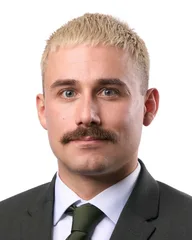
Lukas Sieper | Germany DEU | Non-attached Members (NI) | 390 |
| 2 |
|
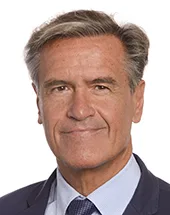
Juan Fernando López Aguilar | Spain ESP | Progressive Alliance of Socialists and Democrats (S&D) | 354 |
| 3 |
|
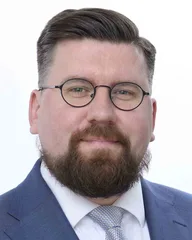
Sebastian Tynkkynen | Finland FIN | European Conservatives and Reformists (ECR) | 331 |
| 4 |
|
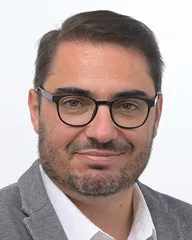
João Oliveira | Portugal PRT | The Left in the European Parliament (GUE/NGL) | 232 |
| 5 |
|
Vytenis Povilas Andriukaitis | Lithuania LTU | Progressive Alliance of Socialists and Democrats (S&D) | 227 |
All Contributions (66)
Topical debate (Rule 169) - Social Europe: making life affordable, protecting jobs, wages and health for all
Dear President, Commissioner, dear colleagues, across Europe there are more and more people, especially young people and families with children, who cannot find a dignified home at a reasonable price, but give too much of their income just to have a roof over their heads. In some Member States, households spend more than 40% of their income specifically on housing, which has a direct impact on quality of life and social inclusion. This is a challenge to which the European Union must respond in solidarity but also responsibly. Cities must already use all that is available to them, such as the Urban Development Fund and the European Investment Bank, to support the construction of affordable housing, especially in the most pressured urban environments. We have almost 13 million unemployed people in the European Union, and many employers report a shortage of skilled labour at the same time. Therefore, we need strong support for employment through education, lifelong learning and encouraging entrepreneurship because only a strong economy can provide quality jobs and fair wages in the long run. We must strive to build a Europe that cares, but also a Europe that empowers, builds and invests responsibly in people and communities.
Improving the implementation of cohesion policy through the mid-term review to achieve a robust cohesion policy post 2027 (debate)
Today, Commissioner, we are not only discussing the mid-term review, but also the future of cohesion policy. It must be clearly geared towards addressing affordable housing, the demographic crisis and the economic development of our regions. If we want our regions not to develop, if we want depopulation, then there is no investment in cohesion policy, but I am sure that this is not the policy or direction of this European Commission. If we want to increase investment in affordable housing through cohesion policy now, allow for a change Common Provisions Regulation Code 126, Annex I, where the current climate impact on affordable housing is 0, and afforded housing is a climate-relevant investment. Therefore, with this move, you immediately influence the use of cohesion for housing. Cohesion needs to be flexible, which means it serves our businessmen, our farmers and ultimately our citizens.
Union of Skills: striving for more and better opportunities to study, train or work in the EU and to bring our talents back home (debate)
The European Union is undergoing major challenges, the digital and green transitions and demographic change, while preserving competitiveness. The key to success in all these processes are people: educated, skilled and ready to adapt to new labour market requirements and new technologies. But the data is devastating. Only 40% of adults participate in training programmes, with the target set for 2030. 60%. This means investing in education, digital skills and STEM, but also ensuring better conditions for talent development in Europe. In this context, I would like to highlight the positive steps taken by the Croatian Government by investing significant resources in lifelong learning programmes and the development of digital skills. I therefore support this initiative and believe that the Union of Skills will contribute to creating a fairer and more prosperous society.
Action Plan for the Automotive Industry (debate)
Dear Chairman, Commissioner, the automotive industry is not only an economic pillar, but also a key driver of innovation. It is facing global competition, technological change and the necessary green transition. Commissioner, I welcome the action plan providing €1.8 billion to create a secure and competitive supply chain for battery raw materials, which will contribute to our strategic autonomy. Electrification is an important direction, but we must not neglect the role of alternative fuels and hydrogen. The European automotive industry can be at the forefront of innovation, but only if we create fair conditions in the global market, prevent unfair competition from third countries and provide incentives for clean mobility. If we want the next generation of vehicles to be manufactured in Europe, we must now act with vision, courage and responsibility.
Roadmap for Women`s Rights (debate)
The Honourable Chair, Commissioners, dear colleagues, the plan for women's rights points to the tragic fact that in the European Union, which is an example of respect for women's rights, we still face too much violence against women. A study published in November last year shows that violence against women is still almost common, even in Europe. One in three women has experienced physical or sexual violence in adulthood, and one in five has faced domestic violence. And while older forms of violence against women have not been eradicated, unfortunately we are witnessing new ones. The latest annual report on gender equality shows that cyberviolence against women has become ubiquitous. As of 2023, 97% of online child sexual abuse reports were related to sexual abuse of girls. The European Union has the most advanced legislation covering protection against cyber violence, including violence based on unethical use of AI, but legislation alone is not enough. We need to educate women, and girls in particular, to empower ourselves with regard to violence of all kinds, including online and social media violence. As Members of Parliament, we must do everything in our power to make women feel safe and free.
US withdrawal from the Paris Climate Agreement, the World Health Organisation and the suspension of US development and humanitarian aid (debate)
Dear Chairman, the US decision to withdraw from the Paris Agreement and the World Health Organization reminds us of one key thing. Europe must take responsibility for its future. Climate change is not waiting. Regardless of global policy choices, we must remain committed to a responsible green transition, emission reductions and investments in a sustainable future, but with one rational approach, not to the detriment of European competitiveness. Global health security must also remain our priority. The pandemics have taught us that we need to be ready to invest in research, strengthen health systems and ensure international cooperation. Europe has shown that it can be at the forefront of global crises and we must continue on this path. The world is changing, but it's up to us to keep our course. Our strength lies in the unity and consistency of our values.
Commission Work Programme 2025 (debate)
Dear Chair, Commissioner, colleagues, the European Commission Work Programme 2025 comes at an important moment for the future of the European Union. From economic recovery, the digital transition to the erosion of the global order, we are facing a number of challenges. The program is ambitious, but also realistic. We need a strong industrial policy that will ensure the competitiveness of the European economy, reduce dependence on third countries and foster innovation. Affordable housing is essential for social cohesion and the demographic revitalisation of Europe and we expect from the European Commission the announced plan for affordable housing as soon as possible because without investing in the quality of life of our citizens there is no competitive Europe. Also, investing in sustainable transport is key to our competitiveness. We need strong cross-border rail connectivity and an ambitious high-speed train network, making Europe more economically efficient and connected. The new Multiannual Financial Framework needs to simplify access to European funds, but not at the expense of cohesion policy objectives, which must remain strong and focus on the well-being of European citizens. Through cohesion policy, we must ensure that Europeans have the right to stay in their regions, the right to housing, the right to education and all the infrastructure needed to enable the economy, and in particular small and medium-sized enterprises, to develop and offer quality jobs. The future of Europe depends on the decisive but wise moves we take today.
Boosting vocational education and training in times of labour market transitions (debate)
Dear Chair, Commissioner, we are undergoing rapid industrial and social change, we are facing a serious shortage of skilled workers, the digital and green transitions are changing the nature of jobs, and it is vocational education and training that must be our key. Today, around 50 per cent of secondary school pupils in the European Union complete vocational education programmes, but despite this, more than 75 per cent of European companies report difficulties in finding workers with the right skills. This is why we need to ensure that vocational education is flexible, innovative and in line with labour market needs. Member States must implement an ambitious reform of vocational education to increase the number of skilled workers and enable lifelong learning. Only in this way will we ensure that European workers remain competitive and our economy strong and resilient.
Strengthening children’s rights in the EU - 35th anniversary of the adoption of the United Nations Convention on the Rights of the Child (debate)
Today we mark the 35th anniversary of the United Nations Convention on the Rights of the Child, a historic document that has recognised children as holders of their own rights. As Members of the European Parliament, we are proud of achievements such as the European Strategy for Children’s Rights and the European Child Guarantee, which tackle child poverty. In particular, I must emphasise the revision of legislation aimed at combating child sexual abuse, both online and offline. In conclusion, we need to make efforts to put the voice of children at the centre of all policies that concern them. Children are not only the future, they are the present and their rights are not a matter of choice, but an obligation. May this anniversary be a reminder of our responsibility, not only to celebrate what we have achieved, but to work boldly and decisively together on what lies ahead. All of us in this room.
Outcome of COP 29 and challenges for international climate policy (debate)
No text available
Question Time with Commissioners - Challenges in the implementation of cohesion policy 2021-2027
No text available
International Day for the Elimination of Violence against Women (debate)
Today marks the International Day for the Elimination of Violence against Women, a day that reminds us of the terrible reality in which millions of women around the world, including the European Union, live. One in three women globally has experienced physical or sexual violence. In the European Union, the situation is no better. In different Member States, between 57% and 12% of women reported violence throughout their lives. These data point to barriers to reporting that underline the importance of women's empowerment and awareness-raising. This is not just a statistic, it is the lives of entire families, marked by violence, discrimination and systemic injustice. The European Parliament has demonstrated its determination to address this issue through the adoption of legislation such as the 2024 Directive on combating violence against women and the ratification of the Istanbul Convention. But there's still a lot of work ahead of us. We need to ensure strict law enforcement in the European Union and available funding for victim-supported programmes. Violence against women is not a personal problem. It is a social wound that requires our urgent and collective action.
Closing the EU skills gap: supporting people in the digital and green transitions to ensure inclusive growth and competitiveness in line with the Draghi report (debate)
Dear Chair, Commissioner, we are facing a serious skills and labour shortage in the European Union, and according to the latest data, about 44% of the population of the European Union still lacks sufficient digital skills, and as many as 54% of companies in the European Union report skills shortages as one of the key problems in their business. What do we do? Reskilling and upskilling the workforce must be at the heart of our policy action. This is particularly crucial in the STEM field, where we face a significant shortage of skilled workers, but also the underrepresentation of women. We need to invest in lifelong learning, develop a European certification system for acquired skills, reform vocational education and strengthen cooperation between Member States in this area. This is the key to our success.
Need to strengthen rail travel and the railway sector in Europe (debate)
Since the 1990s, we have been promoting the transition from road to rail, aware that medium and long-distance rail is the most efficient mode of transport and a sustainable alternative to road and air transport. We have committed to building the TEN-T network by 2030 to meet our Green Deal targets of reducing transport emissions by 90%. All this is accompanied by co-financing from various European funds. However, the reality is that rail is not used as much as it should, and this is corroborated by the 2020 figure that rail accounted for only 5 % of passenger traffic and 11 % of freight traffic between the Member States of the European Union. We are also witnessing that investment in the road continues to outperform investment in rail and the closure of railway lines in rural and cross-border areas. Although the current European budget foresees 26 billion euros for transport through the Connecting Europe Facility, this is simply not enough. I think we must all work together to make sure that our railroad plans are not just on paper. We need to step up our efforts to make rail the backbone of public transport in all European regions and accessible to all our citizens, no matter where they live. That is why we need to develop accessibility standards for public transport that allow access to essential facilities for our citizens without the need for a private car. By doing so, we are not only ensuring emission reductions, but what is equally important, if not more important, is that people stay in rural areas and thus demographic renewal.
The important role of cities and regions in the EU – for a green, social and prosperous local development (debate)
Dear President, Commissioner, dear colleagues, more than two thirds of Europe's population live in cities. They are epicentres of innovation, job creation and the transition to a green economy, and through the development of cities, we also encourage the development of the surrounding rural areas. That is why it is extremely important to focus our efforts on urban development. My country Croatia has good practice through its new urban agenda, where, using the mechanism of integrated territorial investments, it has doubled funding and tripled the number of cities covered. In order to encourage the balanced development of cities, it is essential to continue strengthening cohesion policy and to ensure that the bureaucratic burden is reduced in the coming period, as well as a stronger focus on strategic objectives, such as for example affordable housing. However, it should be made clear that this simplification must not go in the direction of reducing control over the spending of European funds. It is time for all of us to realise that regions and cities are not just administrative units, but bearers of the future of the European Union, especially for our young people, for whom we must ensure a dignified life.
Ensuring sustainable, decent and affordable housing in Europe - encouraging investment, private property and public housing programmes (debate)
Housing is a fundamental human right enshrined in our European Pillar of Social Rights and a prerequisite for a dignified life. Unfortunately, from 2010 to 2022, on average, house prices jumped by 47%, rents by 18%, and as many as 10% of our citizens spend over 40% of their income precisely for housing. While housing policy is primarily a Member State competence, the European Union must play an active role in addressing this crisis. I therefore urge the European Commission to effectively double the planned investments from cohesion policy, as well as the announcement of a revision on state aid. But that's not enough either. A solution is needed that takes into account the specificities of each Member State, with concrete measures at European Union level. Affordable housing policy is key to keeping our young people in Europe. Without these young people, our social model, our economy is unsustainable and Europe's demographic image is irreversibly changing. Europe can only matter to its citizens if it proves that their needs come first.