
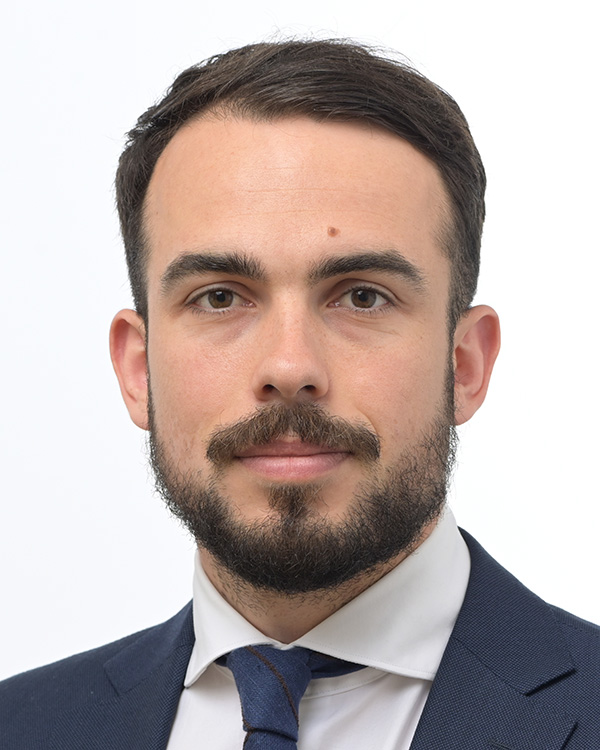






| Rank | Name | Country | Group | Speeches | |
|---|---|---|---|---|---|
| 1 |
|
Lukas Sieper | Germany DEU | Non-attached Members (NI) | 390 |
| 2 |
|
Juan Fernando López Aguilar | Spain ESP | Progressive Alliance of Socialists and Democrats (S&D) | 354 |
| 3 |
|
Sebastian Tynkkynen | Finland FIN | European Conservatives and Reformists (ECR) | 331 |
| 4 |
|
João Oliveira | Portugal PRT | The Left in the European Parliament (GUE/NGL) | 232 |
| 5 |
|
Vytenis Povilas Andriukaitis | Lithuania LTU | Progressive Alliance of Socialists and Democrats (S&D) | 227 |
All Contributions (47)
Ukraine (joint debate)
Madam President, first of all, let me pay tribute to the many Ukrainian civilian casualties of the last few days. The Russian vehicles that cross the Ukrainian sky with impunity have brought them death. We are told that the plans for a European Reinsurance Force are ready. Very well. But these plans are plans of the mind. Their details are certainly scholarly, their logistics well thought out, but they are valid for the future. While the war is still raging and the blood of the Ukrainians maculates the fortresses of Donbass, these plans are a terrible admission of impotence. Not only are they only worth it in the event of an American green light, without which there will be no intelligence, no surveillance, no detection, but, above all, they say to the world: We Europeans have not been able to prevent this invasion, we have not been able to dictate the outcome of the conflict, but believe us, we will act when it is over and if we are allowed to do so. In the midst of the ensauvagement of the world, Europe runs towards great misfortunes if it persists in believing that power is given rather than taken.
Presentation of the programme of activities of the Danish Presidency (debate)
Madam President, Prime Minister, what if the Danish Presidency was that of a European preference finally assumed? Denmark has an opportunity to lead the way. As regards the defence industry, you inherit the negotiations of the EDIP programme, and it is essential that the ambition of this text is not undermined by derogations that would prolong dependence on the United States. In terms of migration policy, Denmark is a source of inspiration. You show us that the cultural and social cohesion of a nation is only possible through strict border control and regulation of demographic balances. Defence, immigration: These are only two issues, but perhaps the most essential and emblematic of the new world that is emerging before our eyes. The two are intimately linked. Europe will have no free destiny if it does not have the military means to deter new imperial claims. And Europe will not be credible on the outside if its identity is not guaranteed on the inside. Guardian of the Nordic Straits, Denmark now has the opportunity to steer the European isthmus towards a new direction: that of his rebirth.
Preparation for the 2025 EU–China Summit - Tackling China's critical raw materials export restrictions
Madam President, 'hide your talents to better wait for your time'. This was the advice given by former No. 1 of the People’s Republic of China Deng Xiaoping. The impressive restoration of China’s power can be seen in the depths of Europe’s decline. Beijing has deployed a grand strategy to close its critical dependencies on the rest of the world. China has built up strategic stocks and organised the transhumance to its territory of Western industries to better flood it in return for its overproduction. For its part, the European Union has spent the last 30 years thinking of itself and building itself as the vanguard of a new nomos of the earth, based on the negation of territory and, more generally, on the denial of geopolitics. The ‘Reckless Thirties’ are shattered, even if some would like to cling to this hallucinated parenthesis. Europe will not escape the duty of power, and this power will only be able to claim it by recognising and assuming the world trade war that is under way, one of whose fronts opposes it in Beijing.
Upcoming NATO summit on 24-26 June 2025 (debate)
Madam President, in the history of military alliances, NATO is an anomaly. At its origins, the power on which the bulk of the alliance's effort would rest – the United States – was somehow forced to secure its support for Western Europe through a treaty. NATO was not self-evident for the Americans, who remained, for some, faithful to the founding fathers, George Washington in particular, who invited the United States to renounce binding alliances. Since 1949, the United States has consistently ensured that its freedom of action is never hindered by an alliance. America, of course, knows how to show solidarity, and history proves that. But first she has the will to think and act on her own, alone. Today, the Atlantic Alliance remains the primary framework within which European states enshrine their collective defence. But we need to question what a military alliance is: is to have common values. On the margins. Is it a technological or normative instrument? Not only that. An alliance is first and foremost the sharing of strategic interests. That is why we need to ask this crucial question: Do we constantly share the same goals and interests as the United States? The pressure on some close allies, the desire to get along with competitors and opponents over Europe or the lack of consultation make it possible to doubt this. NATO cannot be an alliance in which each member must visit the Oval Office to ensure its validity. While all European states are engaged in significant rearmament, it is essential that they also consider increasing their responsibilities within the alliance. This is what the next NATO summit should do: confirm to America that Europe intends to play its full part in its defence and therefore its full part, and no less, in the decision-making and leadership of the alliance. We cannot increase our capabilities while remaining strategic dwarves.
The human cost of Russia’s war against Ukraine and the urgent need to end Russian aggression: the situation of illegally detained civilians and prisoners of war, and the continued bombing of civilians (debate)
Mr President, we are used to saying that wars always result in civilian casualties, but what about when, under missiles, under drones and under rubble, brothers are killed? To speak of brothers to speak of Russians and Ukrainians is obviously not to question the existence of a Ukrainian nation, identity and people. It is to point out their objective proximity, that of a language certainly distinct, but coming from the Eastern Slavic family, that of the same founding myth, that of the same Orthodox faith, even if it is torn between two Churches. We Europeans know very well how terrible fratricidal wars are. Our beliefs and myths bear witness to this: Cain and Abel, Romulus and Remus, Eteocles and Polynics. Why did Putin, who claims all the time that Ukrainians and Russians are one and the same people, embark on a war of annihilation? For him, Ukraine is a little brother, but he is an unequal brother, an illegitimate brother. As we know since 2014, Putin wants to reign supreme in his imperial domain, he refuses that the Ukrainians can choose another destiny than the one decided for them. He prefers an annihilated Ukraine to a Ukraine freed from Russian tutelage. Thus, while the American neoconservatives were bombing in the name of humanity, the Russian Falcons are pounding in the name of fraternity; While Westerners changed regimes in the name of human rights, Russians want to do so in the name of historical pseudo-rights. Each time, it is our conception of a world based on relations between nations that is broken and it is the Empire that asserts itself at the expense of nations. Colleagues, peace remains possible, but it must also be accompanied by a change of mentality at the top of Russian power: consider the Ukrainian as a brother, not to better tie him up and destroy him, but to recognize him as an equal.
EU support for a just, sustainable and comprehensive peace in Ukraine (debate)
Madam President, soon 1,200 days of unceasing fighting since Russia's full-scale invasion of Ukraine. Open and almost total war since 2022, more localized but already deadly war since 2014 and, in truth, war constantly renewed for centuries and in different forms by Russia against the very existence of Ukraine. How can we not see that the fierce resistance of Ukrainians to the Russian army is a feat and even a miracle? It would be disastrous if the miracle, even if marred by an unbearable territorial amputation, did not end in disaster. This disaster would be the outright collapse of the Ukrainian armed forces, those that, from Soumy to the Black Sea via Pokrovsk, Kherson and the banks of the Dnieper, hold the sovereignty, independence and freedom of Ukraine in their hands. That is why the Europeans, who unfortunately do not have a magic wand that can give the decisive victory to the Ukrainians, can nevertheless two things: best ensure the material capacity of Ukrainians to hold the front and seek a general ceasefire, leading to lasting peace, their permanent agenda and even their obsession.
Protecting Greenland's right to decide its own future and maintain the rule-based world order (debate)
Madam President, in proposing to buy Greenland and its people, the US administration has not only shown that it does not understand indigenous aspirations, nor has it merely adopted a brutal attitude towards a loyal ally. Donald Trump is in fact part of a long succession of American desires to acquire this island so strategic as resources are discovered, maritime traffic intensifies nearby and it is at the heart of an area where Russians and Chinese are also deploying a great strategy. While it is worth recalling our fullest solidarity with Denmark – and I want to do so here – let us also try to better understand what is being played out across Greenland or over it. On the one hand, it must be clear to all Europeans that, in American diplomatic grammar, being an ally has never meant and never will mean being equal. On the other hand, the Arctic zone no longer escapes the return of the logics of confrontation and militarization. It is no longer the sanctuary of cooperation it has been since the end of the Cold War. May Greenland be an additional warning for Europe to assume and agree to defend itself everywhere, all the time and vis-à-vis everyone.
110th anniversary of the Armenian genocide
Mr President, it is in conquest that empires are born, and it is in massacres, wars of eradication and genocide that they end up dying. What is the Armenian Genocide but the expression of Turkish supremacy within an Ottoman Empire that could no longer support the diversity of its whole? The Armenians, like the Pontic Greeks or the Assyrians, were crushed in the infernal imperial gear, the one that needs not to unify, not to gather, but to destroy everything that differs from the central element, everything that could pose a threat to its hegemony. Denying horror is an admission of failure. By doing the worst, Ankara has certainly wiped out a whole swathe of Armenian civilization – to be Armenian today is to live with the devastation already accomplished as a legacy – but Armenia lives on. Armenians live and continue to live their unique civilization in the world despite the expansionist and revisionist plans of its neighbors. On this day of commemoration of the Armenian Genocide, I want to express my full support to the Armenian people and tell them that they will always find in us an ally against those who want to deny or forget.
CFSP and CSDP (Article 36 TUE) (joint debate)
Madam President, the international context in which we live is in the process of being reconstituted. European nations no longer have the right to weakness and naivety. Beyond the necessary military rearmament that each state must provide, it is moral rearmament that we must carry out. We know it, the XXIe The century will not only be the century of power, it will also be the century of identity, the century of the ability to defend who we are, what we believe in. In order to be credible on the international stage, Europe must not lend itself to internal destabilisation. It must at all costs avoid saying or acting in such a way as to give our opponents and competitors the opportunity to weaken and discredit us. That is why, ladies and gentlemen, I want to denounce here the profound attacks on democracy carried out by our own nations, here in the heart of the continent that gave life to democracy. After Romania, it was France that decided yesterday to deprive its citizens of their freedom to vote by eliminating the main candidate in the presidential election. I fear, ladies and gentlemen, that this undemocratic drift will seriously damage our reputation, and therefore our ability to make our voice of freedom heard in the world.
The need for EU support towards a just transition and reconstruction in Syria (debate)
Madam President, Europe’s biggest problem is never doing things at the right time: too early, too fast or too late and too little. It was not until the invasion of a European country that we became aware of the weakness of our military stockpiles and the extent of our dependencies, too late or almost so. In Syria, the opposite is true. Some people’s Manichean reading grid led them to believe that a executioner could succeed only a hero. Ministers and officials, and unfortunately among them the French Foreign Minister, flew as quickly as possible to complicated Syria with simplistic ideas. However, children are taught that one train can hide another. Should European diplomacy be reminded that a dictatorial regime – that of Assad – can hide Islamist barbarism – that of the new power and its armed factions? Prudence would not have prevented the terrible massacre of the Alawites, but it would have avoided dishonour. Shame on those who reached out to Syria’s new masters when it was dirty with yesterday’s atrocities and full of tomorrow’s crimes!
White paper on the future of European defence (debate)
Mr President, Minister, Commissioner, ladies and gentlemen, I would like to express my concern and doubt. The concern is that of a transient European excitement, without a future; Doubt is about the real determination to ensure that Europe does not depend on anyone for its defence. The US administration’s statements have caused a state of amazement on the continent. A historical parenthesis is about to close: the one that wanted the US to commit to protecting Europe. It had lasted for 70 years for some states, for 30 years for others. However, are the calls to build this European strategic autonomy really sincere? Let's imagine a scenario: having conditioned the maintenance of US protection on an increase in defence budgets, Donald Trump announces an additional condition tomorrow: Europe’s rearmament must be done with the US military industry. This will be the moment of truth for Europe, the moment when it will face an existential choice: Should our common destiny remain in the hands of the tenant of the White House, or are European nations capable of regaining self-confidence, believing in their genius, exploiting their immense potential and asserting themselves on the international stage as a union of free states, capable of deciding and acting in their own interests? Colleagues, let us say it aloud: we do not want a Russian Europe or a Europe made barbaric by Islamism, but neither do we want an American Europe. What we need to look for and build is European Europe.
One year after the murder of Alexei Navalny and the continued repression of the democratic opposition in Russia (debate)
Madam President, Navalny writes in his memoirs that the biggest mistake Westerners make is to confuse the Russian state with the Russian people. Navalny was fiercely fighting the Kremlin and the corruption of a system of which, according to him, the people are not the primary concern. His enemies have happily portrayed him as a puppet in the service of the foreigner. Yet Navalny was a fervent patriot, so much so that some liberal circles saw fit to exclude him, for they considered him too nationalistic. A Russian patriot, Navalny had also become a fervent Orthodox. Blessed are those who hunger and thirst for righteousness, for they shall be satisfied.Gospel of Matthew According to him, this was the central political doctrine of modern Russia. His struggle was that of homeland, freedom and justice and, unlike Tolstoy, he firmly believed in the role of the individual in history, or rather in the possibility of hastening things, of creating the conditions for radical change. What does Alexei Navalny's fight tell us one year after his death? It is a message that is addressed to both Russians and Europeans and that combats all determinism. Russia can take a direction where everything around it, and especially Europe, will cease to be perceived as a hostile world. Yes, another relationship is possible and nothing pushes Europe and Russia against each other forever.
Continuing the unwavering EU support for Ukraine, after three years of Russia’s war of aggression (debate)
Mr President, as seen from the European capitals and their views, the war that has been raging for almost three years is framing the struggle between good and evil, between democracy and autocracy or, for others, NATO's war on Russia. Beyond diplomatic and strategic considerations, the deeper meaning of this conflict has been overlooked. This war unleashed by Moscow is, for Ukrainians, a war of national liberation. Let's hope so, the last one they have to lead. Already between 1917 and 1920, Ukraine had proclaimed its independence. But unlike the Poles, Finns or Baltics, it had not been able to preserve it, because it had been shaken from the inside or overthrown from the outside. Ukraine cannot therefore claim a long state continuity and this allows some to deny it the right to exist. In Putin's speech on Ukraine, Metternich is sometimes thought to be heard, who called Italy a mere "geographical expression." In the nineteenth century as today, the language of empires has always denigrated and fought the spring of peoples. Bummed between powerful neighbors and despite attempts to eradicate their culture, Ukrainians have a strong identity. In the Ukrainian soldier who holds the front, one can guess the freedom-loving Cossack who guards the border. This war finally sheds light on one of the great questions posed by the fall of the USSR, that of the possibility of a post-imperial Russia. Russia's invasion of Ukraine tells us what choice Russia has made today. While Russia is taking a path away from the nation-state, Ukraine is becoming one more every day.
Geopolitical and economic implications for the transatlantic relations under the new Trump administration (debate)
Mr. Speaker, are we ready to speak the language of force? Are we ready to swap the diplomacy of values for the grammar of power? It is to these questions that the new US administration invites us to answer. Not just because Donald Trump is going to put global pressure on us, but because America is going to move away from multilateralism and shake up the liberal order that once dominated. This is Europe forced to look at the world as it is and as it has never really ceased to be: a terrain of confrontation of interests, a permanent balance of power, a clash of identities and representations. Yet it is as if some Europeans are suddenly petrified. We even saw those who fiercely criticized candidate Trump throw their swords and put a knee down. More than two thousand years ago, Thucydides told us how the inhabitants of the island of Melos refused to submit to the Athenian Empire. They had certainly ended up being defeated, but they had defended a certain idea of freedom. Today, with forces far greater than the modest citizens of Mélos, Europeans are quick to be docile. Christine Lagarde, Stéphane Séjourné, Ursula von der Leyen... The apostles of federal Europe are already offering their submission and promising to buy more and more from the Americans – more for defence, more for energy, more for trade. Ladies and gentlemen, let us take this historic opportunity to turn this page of history where Europe has been made up of client states, subject to a distant metropolis. Let us find a little of this truth of the Greeks and their models of free, strong and united cities before being subjugated or swallowed by foreign powers.
Russia’s disinformation and historical falsification to justify its war of aggression against Ukraine (debate)
Mr President, ladies and gentlemen, the fact that Putin devoted an entire article and televised messages to the history of Ukraine on the day before and on the day of the invasion, as well as an hour-long interview with journalist Tucker Carlson, was anything but trivial. It was an undertaking to deny the history of a Ukrainian nation that we witnessed. The invasion of Ukraine was preceded and then accompanied by a mental invasion aimed at both Russians and Ukrainians and at us, the peoples of Europe and the West. In Putin’s hands, the weapon of history serves to convince us of the inseparable fate of the Russian and Ukrainian peoples. In a supreme lie, the Kremlin wants to assure us that by invading Ukraine, killing its sons and bombing its cities, Russia would actually be committing a fraternal gesture. The Ukrainian nation is resilient. But here, in Western Europe in particular, we are poorly protected against this ideological assault. Who does not really think that Ukraine is Russia's little sister, that Ukrainian is a dialect of Russian and that all this has always or almost always formed a bloc, from the time of the Tsars to the former USSR? Colleagues, to be with Ukraine as we have been since the beginning of this war is also to get rid of an obsolete imaginary that contributes to the defeat of Ukrainians.
Toppling of the Syrian regime, its geopolitical implications and the humanitarian situation in the region (debate)
Mr President, the horror and darkness of the Assad regime is giving way to the joy of colourful Syrian crowds. On the faces of the children, the smile is wide, where, thirteen years earlier, the repression began with their horrible mutilation. How can we not wish this country, these ethnic and religious minorities, these peoples who make up the long Mediterranean memory, harmony and lasting peace? Departed from the great Syrian game, the Europeans can, it is true, rely only on their hopes. But to give the impression that they existed, some people thought that the fall of the hated regime was also a victory for their ideals. I am deeply concerned about the resilience of our continent to the threats that surround us and permeate us when I see that, to reassure you, it is enough for a jihadist to cut off a few beard hairs and pronounce the word ‘inclusiveness’. It is possible, of course, that the new Syria is showing signs of opening up, and perhaps it should even be encouraged. But please don’t let your emotion affect your lucidity. Many fly to the complicated East with generous ideas, but once their desires are satisfied, they leave behind a devastated East. And often, to cry, only the eyes of others remain.
Enhancing Europe’s civilian and defence preparedness and readiness (debate)
Madam President, security is the basis on which everything is built. Mr President, that is a welcome formula. A few years ago, to those who shared the idea, it earned them contempt, mockery and especially indifference. But let's move on, rehashing mistakes is not in anyone's interest. This report contains proposals against which our group will always be opposed, particularly when national sovereignties could be planed or circumvented. Nevertheless, this high-quality report embodies the psychological revolution that is underway. Yes, external threats are accelerators of lucidity, the Russian military threat in the East has proved it. But some threats are still poorly designated. You mention the instrumentalisation of migratory flows by certain powers, but that is only one aspect of the problem. By the sheer scale of the numbers, both legal and illegal, immigration is jeopardizing the entire continent. It breaks the cultural cohesion of Europe, it installs foreign peoples on our soil who come into confrontation with our European peoples. Mr President, I propose an addition to your quote: Security and identity are the foundation on which everything is built.
One-minute speeches on matters of political importance
Mr President, ladies and gentlemen, a Frenchman should not say that, but the first military power in Europe is not France, it is not even another European nation, it is the United States. The military weakness of the Europeans at the beginning of the Cold War had led them to beg for American involvement in Europe from the time of peace, contrary to Washington's diplomatic tradition, which never tasted the binding alliances that could undermine its freedom. It is their same weakness today that makes Europeans fear the distancing of their distant protectors. Certainly, the US president will work to end the war in Ukraine. But he is also preparing, like the parent letting go of the child's hand for his return to school, to push us to take our responsibilities to dissuade Russia from any new offensive. America no longer wants to do the work that Europeans should do. An illustrious Frenchman claimed that the defense of France had to be French. With the same consistency, he fought for the defence of Europe to be European. This fight is ours. Otherwise, ladies and gentlemen, it is futile to speak in this Chamber of any kind of European political existence.
Strengthening Moldova's resilience against Russian interference ahead of the upcoming presidential elections and a constitutional referendum on EU integration (debate)
Mr President, more than a century ago, on 6 February 1918, the Moldavian Democratic Republic of Bessarabia was proclaimed. Then, very quickly, faced with the demands of the Bolsheviks, the young Republic voted to join Romania. Let us dive back into the context of this Europe that emerged from the First World War. Borders are disputed everywhere, against the backdrop of the decomposition of empires, and nations that have been oppressed for too long aspire to independence. Young Bolshevik Russia does not understand it that way. Lenin took up the imperialist ideology of the Tsars and put it at the service of the revolution. He throws his troops in all directions to quell the aspirations of the peoples. Moldova, like others, is becoming a target. Under false pretexts, the Russians are already attacking the old province and looking as far as the Carpathians. In addition to Romanian support, the Moldovans can count on France, which then wants to erect an eastern barrier against the Reds. France would go so far as to deploy an infantry regiment to protect the Moldovan Republic, which would engage in intense fighting against the Bolsheviks as far as the Dniester. Why recall these episodes largely disappeared from our memories? Russia's large-scale invasion of Ukraine has been a game-changer, putting Moldova's strategic importance back at the heart of European concerns. With the war in Ukraine, Russia has shown that it no longer forbids itself from directly resorting to armed struggle. At the beginning of the invasion, if Odessa fell, Transnistria was a natural extension of the New Russia project. Moldova would then have been quite unable to oppose any resistance to the powerful Russian neighbor. This war revealed the fragility of Moldova, and therefore the importance of this country for Europe. If the hypothesis of a direct military intervention by Moscow has moved away, the sources of concern remain major. Russia uses all non-military means to destabilize the country and expand its influence, to bring it down without fighting: from the use of Transnistria to financial support, energy blackmail or information warfare. It is therefore essential that Moldova be able to cope with this hybrid offensive, especially in the electoral context. This should not prevent us from having a realistic and firm discourse on the sometimes disappointing and often mixed results of the promised reforms, particularly in the fight against corruption. Moldova's resilience to Russian ambitions cannot simply be strengthened from the outside. It will first require citizens to regain confidence in their ruling class and in real prospects for the future.
Continued financial and military support to Ukraine by EU Member States (debate)
Mr President, ladies and gentlemen, calls for unconditional military support for Ukraine have met with little support in Europe, except sometimes in this Chamber, on benches which, even a few years ago, were busy liquidating our means of defence. By laying down certain conditions, by reflecting on the purposes of this aid, would no one really want to help the Ukrainians? Rather, the answer lies in a well-known, almost banal formula, Clausewitz's, which stated: War is the continuation of politics by other means. This formula has more implications than we think. Military force must not be an end in itself, nor an instrument of morality. It is at the service of politics. The war between Ukraine and Russia did not interrupt their interaction, but it took its most violent form. And in this raging war, peace is in the seed, necessarily, because the outcome of the conflict will involve political negotiation. It is in this context that we must think of support for Ukraine. The goal cannot be the crushing of Russian forces in a decisive victory. And yet, interrupting all support for Ukraine would cause a general collapse and therefore a decisive Russian victory. A Ukrainian victory today is not to lose, it is to weaken the will of Moscow whose strategy, reduced to snacking, has been bogged down for two years. It is to prevent Ukrainian exhaustion in this war of attrition. It is then in this dynamic that a window of diplomatic opportunity can open, which we must want and know how to seize, and in which Ukraine must be in the most favorable situation possible. Strength and negotiation do not oppose each other, we must know how to assemble them. It is in this context that support for Ukraine takes on a political meaning, in addition to having, of course, but it is something else, a historical meaning, that of the very real and ancient existence of a Ukrainian nation, of the right of its people to choose their destiny without a power dictating it to them in the name of a biased rereading of history.