

| Rank | Name | Country | Group | Speeches | |
|---|---|---|---|---|---|
| 1 |
|
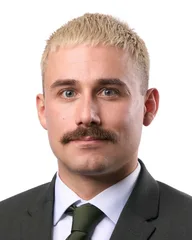
Lukas Sieper | Germany DEU | Non-attached Members (NI) | 390 |
| 2 |
|
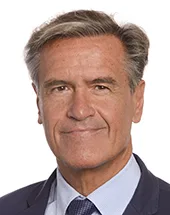
Juan Fernando López Aguilar | Spain ESP | Progressive Alliance of Socialists and Democrats (S&D) | 354 |
| 3 |
|
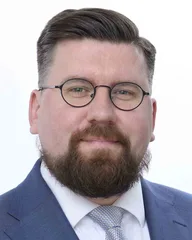
Sebastian Tynkkynen | Finland FIN | European Conservatives and Reformists (ECR) | 331 |
| 4 |
|
João Oliveira | Portugal PRT | The Left in the European Parliament (GUE/NGL) | 232 |
| 5 |
|
Vytenis Povilas Andriukaitis | Lithuania LTU | Progressive Alliance of Socialists and Democrats (S&D) | 227 |
All Contributions (66)
One-minute speeches on matters of political importance
Madam President, the fatal shooting of journalist Shireen Abu Aqla in Jenin in the West Bank just one week ago is deeply shocking, as were the horrifying scenes of brutality at her funeral. Shireen was shot and her producer and colleague also injured in the course of their work as journalists and while clearly identifiable as press. The critical work of journalists, particularly in places of conflict, underpins human rights and democracy and must be protected. Only two weeks ago, we marked World Press Freedom Day, which pays tribute to all journalists who have risked or lost their lives in the course of their work. That day also serves as a reminder that accurate information is of vital public good. It is incumbent on us all to ensure that courageous and independent journalists continue to expose injustices without fear or threat of grave violence. I join the calls from a growing number of organisations for an immediate, independent and transparent investigation into Shireen Abu Aqla’s death. Those responsible must be held accountable.
One-minute speeches on matters of political importance
Mr President, after a strong campaign under the city’s first female chief executive, Ann Doherty, I’m delighted that Cork is set to become one of the EU’s climate neutral cities by 2030 under the EU’s mission programme. This will mean transforming transport systems, making Cork a global centre for offshore renewable energy, fostering urban diversity as well as a strong retrofit campaign for warm, sustainable housing. Cork is known as the ‘Rebel County’. Well, this is a chance to rebel for a sustainable future, and against an economy dependent on fossil fuels and against cold houses and fuel poverty, but to rebel against climate change – the greatest threat facing humanity. So I say, ‘up the Rebel County.’
A sustainable blue economy in the EU: the role of fisheries and aquaculture (short presentation)
Mr President, it is time for some common sense in ocean protection and not the bare minimum proposed by some of my colleagues here today. Protected means protected. And we must protect our marine protected areas. Let’s face it – most marine protected areas in the EU are nothing but lines on a map. In almost every MPA today, you find gas exploration, marine traffic, and yes, intensive industrial fishing. Only 10% of EU waters are so-called marine protected areas and 86% of these MPAs are bottom trawled, while trawling is actually 1.4 times more intensive inside MPAs in northern Europe. And this, to my mind, is a complete contradiction. So I call on MEPs tomorrow to use their vote to support concrete measures for all marine protected areas. As I said, protected must mean protected.
Situation in Afghanistan, in particular the situation of women’s rights (debate)
Madam President, I wish to thank the High Representative, Mr Borrell, for being here. Following years of US—led war and Taliban repression, over 22 million Afghans now face acute food insecurity. As the humanitarian crisis sweeps through Afghanistan, we have seen UN appeals for assistance fall on deaf ears and suffering brushed aside as the eyes of the world focuses now on the horrors in Ukraine. The very worst affected in Afghanistan are women and girls. And the Taliban have added to that pain by refusing to allow them access to basic education. The EU must step up support for Afghan women, girls and female—focused civil organisations on the ground which face alarming pressure from the Taliban regime. Many EU countries took part in the invasion of Afghanistan or fuelled it on with weapons exports. Are those same countries willing to spend as much on peace as they did on war? I surely hope so, because women and girls in Afghanistan cannot write with bullets or take a tank to school.
General Union Environment Action Programme to 2030 (debate)
Madam President, we are voting on this Environment Action Programme (EAP) just a week after the Intergovernmental Panel on Climate Change (IPCC) published its latest sobering assessment report. That report concludes that the scientific evidence is unequivocal: climate change is a threat to human well-being and planetary health. Any further delay in global action on adaptation and mitigation will miss a rapidly closing window of opportunity to secure a liveable and sustainable future for us all. Scientists are clear that between now and 2030 is the decisive decade for humanity, for our future on Earth. We are in a triple planetary crisis of climate change, biodiversity loss and waste and pollution, and that requires rapid, bold and far—reaching action. So we are voting at a time when the violent consequences of our dependence on fossil fuels have been laid bare for all to see. It is therefore imperative that all objectives and measures contained in the eighth EAP are implemented, and implemented fast. This includes the objective of a well—being economy, which gives back more to the planet than it takes. We know the endless pursuit of eternal GDP growth is simply incompatible with our planet’s finite resources. For us to live well, within the planetary boundaries, we need to rethink how we define economic progress. This is echoed in last week’s IPCC report, which states that benefits for health and well—being can be gained by transitioning to a low carbon, well—being-oriented and equity—oriented economy consistent with the aims of the Sustainable Development Goals. With this eighth EAP, the EU recognises that the systemic change necessary to meet our environmental goals requires a new kind of economy that looks beyond GDP, and now is the time to deliver. This week, we have seen that our addiction to fossil fuels does not just steal the future from next generations, but also brings conflict and destruction to our very own neighbourhood. Massive public subsidies to already profitable fossil fuel industries continue to this day, while hundreds of millions of euros are sent to undemocratic regimes every single day. Investment in fossil fuel infrastructure meanwhile locks us into this pattern for decades to come. After difficult negotiations, the European Parliament won a key point – the EU now must set a concrete deadline to phase out fossil fuel subsidies that is consistent with the ambition of limiting global warming to 1.5 °C. To secure a liveable planet for today’s young people and future generations, public money must be redirected away from activities that further heat the planet and towards those truly sustainable ways. The eighth EAP’s commitment to end other environmentally harmful subsidies is just as important. Nature is key to our planet’s life support system, yet governments continue to subsidise these activities that destroy ecosystems. As the rapporteur, I have high expectations for the Commission to swiftly pinpoint and end these harmful subsidies once and for all, so that we can invest instead in biodiversity protection and restoration. It is also now incumbent on the Commission to treat the protection of EU soil just like air and water, with legislation on soil health required by 2023. This agreement makes it clear – at the behest of the Parliament – that measures taken to protect the environment and climate must be carried out in a socially fair and inclusive way in line with a just transition, in line with a just transition. We must remember that the longer we delay environmental action, the more disruptive and damaging the transition will be. Fair environmental action is fast environmental action. So, while the agreement we are voting on today is an ambitious framework programme to bring us to 2030, we know that we need more ambition. We need results. That’s why the addition by the Parliament of a governance mechanism to the eighth EAP is so crucial. We must ensure that our progress towards our environmental objectives are kept high on the political agenda and that decision makers are held to account. In this most crucial decade of implementation, we cannot miss our 2030 goals. I would, at this time, like to thank the shadow rapporteurs for all of your excellent cooperation in the negotiations on this file over the past year, as well as the Slovenian Presidency and, of course, the Commission, who have worked very well to agree on this meaningful framework for environmental action. Now, while the window of opportunity remains open to us, let us make sure it happens.
The deterioration of the situation of refugees as a consequence of the Russian aggression against Ukraine (debate)
Mr President, Putin’s war threatens an entire nation’s people; with nuclear weapons in the hands of a reckless despot, it threatens us all. In any war zone, it is the ordinary people, the children, women and men who bear the heaviest burden. The number of refugees escaping the Ukraine war zone has hit the staggering figure of over two million people – people fleeing their homes in terror, as I speak. For those with disabilities or with other vulnerabilities, the situation is particularly dire and so we must show solidarity in welcoming the people of Ukraine into our homes, our communities and into our nations. Let this war be a wake—up call for EU refugee policy in general, which has only hardened in recent years, punishing migrants and humanitarians alike. The potential for war is close to us all now. Will this be the catalyst for change?
EU-Russia relations, European security and Russia’s military threat against Ukraine (debate)
Madam President, Ukraine, a word ironically originating from the Slavic word for ‘borderland’. As tensions rise along its borders with Russia, activities close to Ukraine’s border with Belarus are an ominous reminder we are, all of us, citizens of a world where the threat of nuclear knows no borders. Footage aired last week showing the chilling sight of Ukrainian military undertaking ammunition training in Pripyat, a now abandoned city in Ukraine, once home to workers of the Chernobyl nuclear plant, just one kilometre from the border with Belarus. Troops crept around empty apartments, an abandoned library, along quiet school playgrounds, all in sight of Chernobyl – scene of the world’s worst nuclear accident, where today huge tanks store radioactive waste in the aftermath of that ongoing tragedy. There is no safe way to store nuclear waste, and disturbing those dumps could have catastrophic impacts on humankind and the environment that crosses multiple borders with the message, when it’s too late, that peace must always be the ultimate goal.
Preparation of the European Council meeting of 16-17 December 2021 - The EU's response to the global resurgence of Covid-19 and the new emerging Covid variants (debate)
Mr President, thank you and greetings from Dublin to all of you. As you know, in countries around the EU many people face the inconvenience of queuing for hours to avail of COVID-19 booster shots. However, in other parts of the world citizens have been waiting far, far longer, but not for boosters, but for their first dose of COVID-19 vaccines. We face this pandemic from a very privileged position. It’s a position of inequality when vaccines are not reaching enough people in parts of the globe already pressurised by poverty, conflict and crippling challenges. When I recently wrote to the European Commission, I criticised the EU for neglecting low-income countries. We really must behave with decency by offering fulsome support for a waiver from certain provisions of the TRIPS agreement for the prevention, containment and treatment of COVID-19. It’s time for fair and equal distribution of vaccines globally. It’s about doing what’s right, but also about doing what’s sensible. Higher levels of vaccine distribution globally saves lives and raises safety levels for all.
Outcome of the COP26 in Glasgow (debate)
Mr President, COP26 was meant to be an international red alert call to climate action for all industries and governments to stop funding our very own destruction. But are EU Member States hearing this call? Hugely profitable fossil fuel industries that are sending us hurtling towards climate catastrophe continue to receive billions of euros of public funding through subsidies. 25 countries, including 11 Member States, pledged at Glasgow to stop funding the international fossil fuel energy sector by the end of next year. The European Parliament supports a binding commitment to end all fossil fuel subsidies by 2025 under the key legislation of the eighth Environment Action Programme. Is the EU Commission listening to this ambition? Today, I call on EU Member States and the EU Commission to heed this call and demonstrate a level of real ambition that reflects the urgency of climate action. To end fossil fuel subsidies, both at home and abroad, support the European Parliament’s mandate in the eight Environment Action Programme to phase out all fossil fuel subsidies by 2025. Time to listen to science, time to listen to people, time to face up to the evidence.
One-minute speeches on matters of political importance
Mr President, in a week’s time, the young humanitarian worker, Seán Binder, along with 20 others, will face trial on the island of Lesbos. Their crime: providing a warm and often lifesaving welcome to people on one of the most dangerous migration routes in the world. They stand accused of espionage because they used WhatsApp, an encrypted messaging app used by almost everyone in this room. They are accused of being members of a criminal organisation, a humanitarian NGO which worked with local authorities to distribute blankets and basic medical care. In short, they stand accused of showing humanity. International law demands that we provide assistance to people in distress at sea and refuge to those who seek it. Yet Member States have pursued similar charges against at least 180 humanitarian workers like Seán in efforts to criminalise these acts of basic humanity. Tonight, I ask the European Parliament to join with me in calling for these charges to be dropped and for true solidarity on EU borders.
The Right to a Healthy Environment (debate)
Madam President, there will be no human rights on a dead planet. There will be no jobs, no equality, no democracy, education, culture or freedom. Scientists warn that we are in the decisive decade for humanity’s possible future on Earth. The right to a healthy environment recognises that protection of the environment must be top of the agenda. Underpinning all other rights, the right to a healthy environment is simply fundamental. A healthy biosphere is vital for achieving the Sustainable Development Goals in social and economic areas. I welcome the UN’s recognition of this right but, unless this is replicated in courtrooms across the Union, it will be just more talk and no action. With the eighth environmental action programme, Parliament has backed my calls for this fundamental right of EU citizens to be defended by the highest EU courts. We must fight for the well-being of our planet and our people. A healthy environment is vital in this fight because this fight, in fact, is for our very survival.
The role of development policy in the response to biodiversity loss in developing countries, in the context of the achievement of the 2030 Agenda (debate)
Mr President, dear colleagues, throughout our planet, biodiversity is interlinked, interconnected and interrelated. For nature and humanity to survive and thrive together and for the Sustainable Development Goals to be achieved, the current trends in biodiversity loss must be reversed. Until this happens, we’re on the back foot around the challenges of poverty and hunger – challenges that are magnified in the world’s poorest regions. We need systemic change and, vitally, an end to practices that prop up and worsen impacts. In the Eighth Environment Action Programme, for example, we call for an end to harmful subsidies. This is crucial. We need action on local and indigenous empowerment around, for example, protecting ocean biodiversity in a way that respects human rights. Last week’s annulment of a fisheries agreement with Morocco due to occupation and oppression of Western Sahara is the type of initiative we in the EU should be leading out on. Biodiversity is the bedrock of many SDGs, and its loss is undermining progress. It’s time to reverse the trend globally.
Situation in Afghanistan (debate)
Madam President, Afghanistan. The pictures have all but disappeared from our TV screens but in Afghanistan the horror continues for vulnerable women, children, minority populations, human rights defenders and those falling through the cracks. To ensure safety I can’t disclose the painful, direct stories Afghan families have shared with me, their stories of people hiding in fear, driven to despair with grief and terror. I need to be able to tell these people the EU is doing something. We need more comprehensive action around providing visas and safe passage to Europe for those fleeing for their lives; more work with bordering countries to negotiate a deal for Afghans to enter the EU safely; a broadening of the scope of family reunification to include vulnerable family members under threat; and we must, we must uphold our 2030 UN Agenda commitment to leave no one behind.
Announcement of voting results
Mr President, in accordance with Rule 59(4) I request that the file be referred to the committee responsible for institutional negotiations.
Establishment of Antarctic Marine Protected Areas (MPAs) and the conservation of Southern Ocean biodiversity (debate)
Madam President, I am really proud to bring to Parliament today the resolution on the establishment of marine protected areas in the Antarctic Ocean. I am delighted that MEP Catherine Chabaud and I could work very hard on this resolution. I caught my first glimpse of Antarctica from the deck of a Greenpeace ship, long before climate change was recognised by world leaders as an urgent crisis. I was utterly moved as an activist. I knew then the importance of this last great wilderness for survival on planet Earth. In the European Parliament today, once again we recognise that Antarctica is a space of rich biodiversity. It’s more threatened by climate change now than ever before. This resolution, which is co—signed by Members of almost every political colour, shows that Europe and all of her institutions are united behind the protection of Antarctica and over three million square kilometres of our oceans, as internationally recognised marine protected areas. But this fight is not over yet. Despite Antarctica experiencing the warmest summers in history, some nations fail to see the urgent need for action. With today’s resolution, my activism continues, joined by my colleagues here in Parliament. Today, we send a strong message to those world leaders who continue to bury their heads in the snow: stand with us for Antarctica – show the world that activism works!
General Union Environment Action Programme to 2030 (debate)
Madam President, today is the culmination of many months of hard work. I owe a debt of gratitude to those who have been involved with myself and my team in compiling this report. It has been a process helped by valuable input from shadow rapporteurs and their teams, as well as other MEPs, NGOs and civil society groups. With their support, I now bring to this chamber what I consider to be a balanced and ambitious report. The eighth Environment Action Programme has the potential to play an important role in decision-making on the environment over the next decade – the critical decade for environmental action. Nobody knows that more than our Greens adviser Joanna Sprackett and my assistant Rose Ní Chleirigh. They have both worked on this report with dedication, professionalism and commitment. Honourable Members, I hope today that you too can show commitment. With this report, I call on you to face the real urgency for strong, effective environmental legislation in the EU and vote to support this report in its entirety. In November 2019, we in the European Parliament declared a climate and environment emergency. Since that headline-grabbing moment, in this same Parliament, we’ve heard countless lofty claims on tackling that emergency. We hear speeches that would give the great orators of history a run for their money. Speeches and declarations and grandiose plans that at face value would have us all believing that the climate and environment emergency is in hand, and that we’ll soon see, as the saying goes – everything rosy in the garden. But as another saying goes – talk is cheap. We need less talk, more action and real change. We need immediate, comprehensive and sustained environmental action. But we also need more. We urgently need systemic change! The EU’s Environment Action Programme to 2030 can help deliver on those ambitions. It can help deliver in a way that is not loosely rooted in shallow rhetoric and empty promises. As a field ecologist, I recognise the biological and symbolic reality that shallow roots equal instability. This report has deep roots. This report is not just talk. It makes for far-reaching decade-long legislation that will help spur real action and systemic change. There is nothing shallow in the report’s long-term priority objective for 2050 at the latest: for citizens to live well within planetary boundaries. This report is on track with six environmental priorities for the EU from now to 2030: climate mitigation, climate adaptation, transitioning to a circular economy, achieving zero pollution, protecting and restoring biodiversity, and reducing the EU’s production and consumption footprint. These are essential requirements in the fight for a future. If we want to survive, the time to act is now. We have just a few short years of time, of hope. Unless we take ownership for our actions and make decisive moves today, humanity’s future on planet earth is in jeopardy. This report is constructive and ambitious around areas that have the potential to be transformative in people’s lives. GDP, for example, is not a meaningful measure of human and ecological wellbeing, and we know that the aim of eternal economic growth is fundamentally unsustainable. This report, therefore, puts forward a bold and timely proposal on transitioning beyond GDP to a sustainable wellbeing economy that puts the wellbeing of people and the planet at the heart of policy and decision-making. We also tackle the subject of environmentally harmful subsidies. We are engaged in useless tasks of running around in circles if we continue with contradictory talk of ambition, talk of reaching the SDGs, talk of living within the planetary boundaries while at the same time incentivising practices that are wrecking the planet. It’s simply wrong for governments to spend massive amounts of money on activities that heat the planet and destroy nature. Article 3 of this report sets concrete deadlines for ending all environmentally harmful subsidies in the EU, including fossil fuel subsidies. Deadlines that will bring certainty, predictability and accountability. Finally, the Commission presented the monitoring framework as the real added-value of the eighth Environmental Action Programme. But we know that monitoring is only effective if it goes hand in hand with political accountability. For this reason, Article 4 of this report lays down a monitoring – and governance – mechanism to ensure that progress made towards the Programme’s objectives is examined and discussed by political leaders every year, with corrective measures implemented when needed. Science tells us that we have just a few years before irreversible and catastrophic damage is done to our life-support system on earth. We need to get this planet back on a path to recovery, and for that to happen we need environmental protection, conservation and restoration on a massive scale, which must be part of broader systemic change. A vote for the full report that was adopted in the Committee on the Environment, Public Health and Food Safety (ENVI) is a vote for a serious, genuine conviction, and commitment to get us out of this crisis and ensure the survival of life on our planet and into the future.