
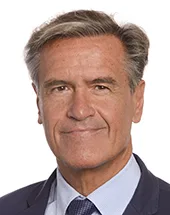
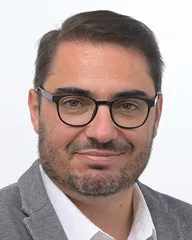
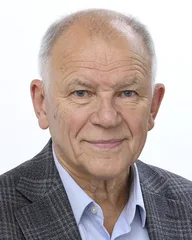
| Rank | Name | Country | Group | Speeches | |
|---|---|---|---|---|---|
| 1 |
|
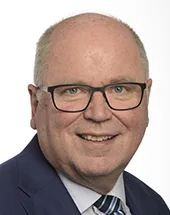
Lukas Sieper | Germany DEU | Non-attached Members (NI) | 390 |
| 2 |
|
Juan Fernando López Aguilar | Spain ESP | Progressive Alliance of Socialists and Democrats (S&D) | 354 |
| 3 |
|
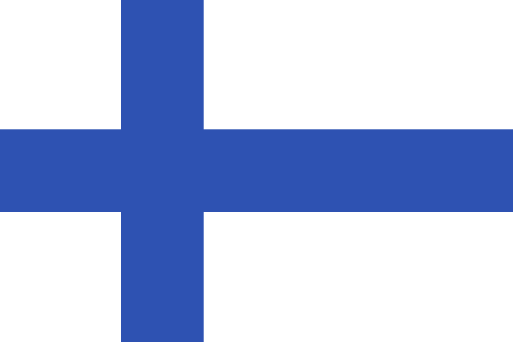
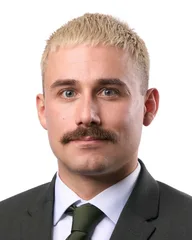
Sebastian Tynkkynen | Finland FIN | European Conservatives and Reformists (ECR) | 331 |
| 4 |
|
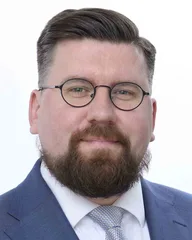
João Oliveira | Portugal PRT | The Left in the European Parliament (GUE/NGL) | 232 |
| 5 |
|
Vytenis Povilas Andriukaitis | Lithuania LTU | Progressive Alliance of Socialists and Democrats (S&D) | 227 |
All Contributions (71)
Need to detect and to counter sabotage by the Russian shadow fleet, damaging critical undersea infrastructure in the Baltic Sea (debate)
Mr President, there are now far too many breakages of vital cables in the Baltic Sea for all of this to be regarded as coincidence. The EU can only succeed if it contributes to ensuring uninterrupted cross-border connectivity for telecommunications and electricity. Therefore, repeated breaches of the Baltic cables are a matter for the Union as a whole. Baltic Sea countries have already taken steps to improve controls. The increased presence of European NATO allies in the Baltic Sea is to be welcomed. The environmental risks of the Russian shadow fleet need to be addressed. The EU must approach the flag states of ships and require compliance with safety rules and normal shipping practices. There is now a need to increase the number of sanctioned vessels. The oil price cap must be lowered. Contribute to the practical implementation of collateral checks. Strong action is expected from the Commission.
Human rights situation in Kyrgyzstan, in particular the case of Temirlan Sultanbekov
Mr President, the European Union is a community of shared values. And these values must be respected not only by our own Member States, but also by our partners around the world. Countries that want to cooperate with the Union must commit to respecting fundamental values like democracy and human rights, which include also respect for the political opposition. The developments in Kyrgyzstan are concerning. Efforts to limit the participation of opposition parties in elections are unacceptable and do not belong in a democratic society. I am especially concerned about the detention of the opposition leader and chair of the Social Democratic Party, Temirlan Sultanbekov. I have the honour to know Temirlan personally, and I know that he is fully committed to democracy and to serving the Kyrgyz people. So he must be immediately released, and Kyrgyzstan must live up to its commitments in the enhanced partnership and cooperation agreement signed with the European Union this summer.
Promoting social dialogue and collective bargaining and the right to strike in the EU (debate)
Mr President, European thinking includes workers' rights and also cooperation between the social partners. Let us uphold these principles also in the current parliamentary term. Respect for workers' organisational rights, including the right to strike, are also part of European thinking. At the same time, we know that a strike is always a last-resort form of influence. Tesla's Elon Musk operations in Sweden are completely intolerable. It shows the difference between American business and European business. Opportunities must be created for joint action, and it will also be accompanied by a proposal to strengthen the role of European Works Councils to be discussed tomorrow. Please vote boldly in favour of this good proposal. It is part of the European sustainable model and competitiveness.
Critical infrastructure vulnerabilities and hybrid threats in the Baltic Sea (debate)
Mr President, the Baltic Sea is the inland sea of Europe. We have a responsibility for the state of the Baltic Sea and, in particular, for its safety. The main trade routes in Northern Europe pass through the Baltic Sea. Important telecommunications connections and gas connections important for our energy security also run on the bottom of the Baltic Sea. When these connections are repeatedly damaged, the idea comes to mind that this is not an accident, but a deliberate action. The countries bordering the Baltic Sea need the opportunity to investigate possible crimes related to shipping. The Commission must therefore examine the agreements on the law of the sea, their interpretation and the need for their development. We need to act quickly now, and this is what the new Commission has to do. (The speaker refuses to answer the blue card questions that Mr Rzońca and Mr Gražulis wished to put.)
Enhancing Europe’s civilian and defence preparedness and readiness (debate)
Mr President, Mr Niinistö, thank you for your valuable work in strengthening the Union's preparedness. Your extensive experience and judgement are reflected in the balanced presentations of the report. The European Union's readiness is not only about money, iron and legislation, but above all about a paradigm shift. Thinking in which citizens themselves take responsibility and take security and preparedness seriously, as President Niinistö has often said. Then there are our current treaties, the Treaties. What are they obliging us to do in terms of security? The Union has a mutual assistance clause in its Treaties. Do we have procedures in place for the clause? What will we do in practice if a Member State is subjected to an external attack? There really is no time for silence. Here's a job site for the new incoming Defence Commissioner. This is one of the first issues to which the Union must give an answer.
Fight against money laundering and terrorist financing: listing Russia as a high-risk third country in the EU (debate)
Mr President, Madam Commissioner, next week it's 1 000 days since the brutal full-scale invasion from Russia into Ukraine. As the European Union, we stand behind Ukraine from day one. The EU adopted several sanctions packages against the aggressor and we tackled also many oligarchs. But, as we have heard, there are still loopholes and these need to be closed urgently. Indeed, yesterday it was revealed that the US authorities are inquiring into problematic recent transactions by Swiss bank UBS. Only a few weeks ago, Russia escaped the global AML blacklist thanks to support of countries like North Korea and Saudi Arabia. This is unacceptable. Following the ambitious AML package, the Union must continue to take the lead and list Russia as a high-risk third country now. If we want to stop this war, we have to close the funding channels. We have to stop financial institutions helping to launder money and financing, in this way, various kind of terrorism. Last but not least, may I express my appreciation to you, Commissioner McGuinness. You have done excellent work during last mandate. You have been a creator of the new AML package. You have always appreciated the cooperation with Parliament, and you have helped to get a deal here during the last mandate. Money laundering is still a problem and we should not wait the USA to solve it here in Europe. So let's be ambitious again and let's be also practical. Let's be bold against the aggressors. Let's blacklist Russia. This is what my group expects from this Commission and from the next Commission.
Presentation of the Court of Auditors' annual report 2023 (debate)
Mr President, first of all, thanks to President Murphy, you are doing valuable work at the Court of Auditors, the importance of which is emphasised in circumstances where there is a shortage of money and resources. The EU budget is a key instrument for achieving our common objectives. However, citizens are increasingly asking – quite rightly – how to use European money responsibly. The annual report is worrying in many respects. Mistakes have continued to grow. In the area of cohesion, they are already falling by 10%. Although mistakes do not automatically mean misuse of money, the situation is in no way acceptable. In particular, it is worrying that no error rate is foreseen for the use of funds from the Recovery Instrument to tackle the economic crisis caused by COVID-19. The focus is now on the Commission and the new Commission. The Court of Auditors' report calls for changes in the control of the use of funds, particularly for funds outside the EU budget.
Tackling the steel crisis: boosting competitive and sustainable European steel and maintaining quality jobs (debate)
Mr President, the steel industry is the cornerstone of European industry. Without steel, there is no construction, there is no automotive industry, there is no defence, and there is no strategic autonomy. And without the transition to carbon-free steel, Europe will not see the success of the green transition either. We have a state-of-the-art steel industry with long-term plans to produce steel without burning coal. However, I would remind you that we also need extensive emission-free energy production for fossil-free steel. When we set high environmental and emission standards for our own steel industry, we cannot accept the spillover of steel impregnated with state subsidies that are ignorant of climate requirements into Europe. Urgent action is now required from the Commission to enable the European high-quality, fossil-free steel industry to fulfil its role in fulfilling our well-being and security.
The Hungarian “National Card” scheme and its consequences for Schengen and the area of freedom, security and justice (debate)
Mr President, the Hungarian Government's clear disregard for other EU countries and their security is another link to the growing concern about what is happening in a country that is important to us, Hungary. Violations of the rule of law appear to continue, the Union's foreign policy decisions are being blocked, support for Ukraine is being made more difficult and, most recently, rapid Schengen visas for Russian and Belarusian citizens. This is happening while Russia continues its war of aggression against Ukraine, targeting EU Member States with hybrid operations, as we have also seen on the EU’s eastern border. Free movement is one of the great achievements of European cooperation. Every day it benefits hundreds of thousands, millions of citizens and also European business. But freedom of movement also requires common rules, rules that are the responsibility of each Member State and that give rise to our common security. The fact is that the Hungarian Government has not taken into account the common security interests of the EU when adopting its new visa policy. This year's many strange events are accompanied by suspicions of Russian influence and destabilisation of organised societies. There are break-ins near important targets, drone flights and outright acts of violence. The risks have not decreased, but increased. Therefore, the core issue is that Hungary must carry out security assessments when issuing visas. It is not a question of numbers, it is a question of assessing the risks and of other Member States being able to rely on the fact that citizens coming through Hungary are checked and do not pose a threat to citizens of other EU countries.
The sixth Anti-Money Laundering Directive - Anti-Money Laundering Regulation - Establishing the Authority for Anti-Money Laundering and Countering the Financing of Terrorism (joint debate - Anti-money laundering)
Mr President, this discussion was, I would say, one of the most constructive ones in our Parliament during recent months and years. Happy to know this, that I would say as my conclusion that obviously nearly all the political groups are backing this proposal, which is a really important thing, and I’m pretty sure that our voters are appreciating it. Now the time is to go to the vote. I hope that we will get really good figures to accept this proposal, and after that, the thing is the implementation. Here we have one thing which is also worth mentioning, and that is that this Parliament must do its work so that the new agency, AMLA, will have the real resources and real possibilities to really do the work which they have been authorised to in this EU legislation. After that, we can look at the results and be sure that we will have more money in the hands of the welfare societies and not in the hands of criminals and oligarchs.
The sixth Anti-Money Laundering Directive - Anti-Money Laundering Regulation - Establishing the Authority for Anti-Money Laundering and Countering the Financing of Terrorism (joint debate - Anti-money laundering)
Mr President, the anti-money laundering and countering the financing of terrorism package is one of the key projects of this parliamentary term. It will make the European Union a safer and fairer place for our citizens to live. The vote in the afternoon is the last step in the entire parliamentary term. Events in the world, in particular the Russian invasion of Ukraine and the movements of Russian money from Europe, have made stricter money laundering regulations also a necessity in terms of security policy. Criminal money has been flowing to Europe for too long and has also been used to buy influence. Anti-money laundering and countering the financing of terrorism (AML/CFT) rules are more important today than perhaps ever before. The Union must now move in order to put an end to these billions of euros in financial flows. With the new rules, we will ensure not only that financial institutions comply with due diligence and reporting obligations, but also that authorities have adequate tools at their disposal to find and hold accountable dishonest actors. A few aspects of our presentation. Firstly, with the new regulation, we will have uniform anti-money laundering and anti-terrorist financing rules throughout the Union. In these matters, the time for directives is over. The same rules for everyone across the Union. A single rulebook for all will enhance the enforcement of the rules and improve our cooperation to end money laundering. For honest traders and business, this is a good day, a bad day for oligarchs and criminals. Secondly, in the future, more and more operators will be obliged to comply with anti-money laundering rules. This applies equally to cryptocurrency traders, brokers of investor visas, merchants of luxury goods such as gemstones, luxury cars, planes and yachts, including large professional football clubs. Thirdly, the new rules will help us to better see who are the real beneficiaries behind complex corporate structures. Increased transparency, public access to registers for citizens and journalists. Greater transparency is important, because then we will see who really benefits from these financial flows in the end. This also applies to undertakings established outside the Union. If they wish to operate in the territory of the Union, they must likewise indicate the beneficial owners. The rules ensure that wealthy, influential third-country nationals cannot invest their money in the Union, for example by circumventing economic sanctions. In order to create organisations that enable money laundering, criminals receive a wide range of assistance. In the future, key experts, such as lawyers, will not be able to invoke the obligation of professional secrecy, but will have to report their clients if advice is sought from them specifically for the purpose of money laundering. Finally, the EU is neither an island nor inaccessible to criminal financial flows from third countries. For the new framework to work, we also need strict anti-money laundering rules for third countries. The Commission will have the power to identify and intervene in high-risk third countries. With the new ambitious legislative package, we will deliver on the promise we made at the beginning of the parliamentary term. Today's vote is the result of good cross-party cooperation. I would like to thank all my colleagues, especially Damien Carême, all the teams, all the negotiators. Thanks are also due to the Swedish, Spanish and, in particular, Belgian EU presidencies. And thanks go to Commissioner McGuinness and the great staff of the Commission, without whom this proposal would not have been finished today. Thanks also to my assistants Miguel Carapeto and Jan Moens, you have done a great job.
The use of Russian frozen assets to support Ukraine’s victory and reconstruction (debate)
Mr President, Russia is continuing its brutal war of aggression against Ukraine for the third year. When Ukrainians are fighting bravely not only for their own freedom, but also for the freedom of all of us Europeans, the European Union must also be brave. The suffering caused by Russia's military actions is incomprehensible, both to Ukrainian civilians and to society as a whole. Therefore, Russia must be prepared to compensate for the suffering caused by Russia's military actions. In order to restore Ukraine's sovereignty and enable its reconstruction, Russia's frozen assets and their proceeds must be mobilised without delay by the European Union. The European Parliament has long called for frozen funds to be used to support Ukraine. Now is the time to make real decisions. The Commission's proposals are important steps on the road to accountability.
Effective coordination of economic policies and multilateral budgetary surveillance - Speeding up and clarifying the implementation of the excessive deficit procedure – amending Regulation - Requirements for budgetary frameworks of the Member States – amending Directive (joint debate – Economic governance)
Mr President, reform of the rules is indeed necessary. The old economic rules have not worked for a long time. A new solution must therefore be found. This proposal is an important step forward. It gives room for the necessary investment in employment. It also provides flexibility when it comes to meeting the terms of the agreement. There also seem to be colleagues here who think that there is no need for any economic rules at all, that it would be better if there were no limits to indebtedness. Well, that would be the perfect path to destruction. Yes, we need limits in terms of debt, both in terms of our common life and in terms of the lives of each Member State. When it comes to flexibility and when, for the first time, human well-being and the social side are also included, I think it is very justified to vote in favour of this new agreement and I hope that all colleagues will support this.
Russia's undemocratic presidential elections and their illegitimate extension to the occupied territories (debate)
Mr President, the results of last month's presidential elections in Russia did not surprise anyone. The so-called elections took place in a situation where the opposition in the country is imprisoned, in exile or killed. True political challengers were prevented from standing and free media was pushed down. In a situation where civil society has been repressed and citizens imprisoned for demonstrating their minds. So the elections were certainly neither free nor fair, but a show to prolong the reign of the incumbent president. The elections took place in the context of Russia’s third year of its war of aggression against Ukraine. In the Russian-occupied territories of Ukraine, elections were held under the observation and pressure of armed soldiers. The holding of elections in the occupied territories is a blatant violation of Ukraine’s independence, sovereignty and territorial integrity. They were contrary to international law and, therefore, their result cannot be regarded as lawful. When Putin uses a bogus election victory to justify the military action in Ukraine, the European Union must stand with Ukraine and the Ukrainians even more firmly. Our support for Ukraine must continue unwavering and be increased, not reduced. Russia's transformation is the responsibility of the Russians themselves. As Alexei Navalny before his death and the opposition appealed before the elections, Putin's opponents arrived in the polls at noon on Sunday. These citizens represent a different kind of Russia, a new Russia, a Russia that we should support.
This is Europe - Debate with the Prime Minister of Finland, Petteri Orpo (debate)
It is good to see you, Prime Minister Orpo, here in the European Parliament. Finland has always been a respected, constructive member. You set out your ideas for a contingency union. Oh, that's good. But what about a social union, a union that defends people, in the midst of all market forces? This is what Delors said: promoting the contractual functioning of the labour market, dialogue, co-operation, mutual respect. Shouldn't you take forward the corporate responsibility directive, respect women's rights, workers' and consumers' rights in the squeeze of large multinationals? Shouldn't we move forward with legislation that stops biodiversity loss? Europe is building the most positive initiative. That is why I hope that your government will promote a socially sustainable Union, but also take the initiative in defence cooperation. Isn't it time to make Finland the EU's first defence commissioner?
Financial activities of the European Investment Bank - annual report 2023 (debate)
Mr Nadia Calviño, President of the European Investment Bank, congratulations on your new mission and success in your work! The European Investment Bank is doing important work to boost growth, clean transition and new jobs. We will continue to need a well-resourced bank in the face of increased global competition. In addition to European innovation and support for European businesses, the impact is also important for the well-being of citizens. That is why our S&D Group is asking the bank to invest in social infrastructure, such as affordable and energy-efficient housing, health, gender equality projects and solutions that improve the environment. The bank also needs to live in time and renew itself as the world around it changes. For this reason, there is a need to look further at the role of the Bank, in particular in defence projects. Once again, good luck and success for the new President! Parliament is ready to cooperate.
The need for unwavering EU support for Ukraine, after two years of Russia’s war of aggression against Ukraine (debate)
Mr President, Russia's barbaric invasion of Ukraine continues. By its aggression, the Russian leadership has rejected all key commitments made by the country, thus falling outside the normal framework of European and international cooperation. The Ukrainian people are fighting a heroic battle not only for their right to self-determination, but also for the freedom of all European peoples. It is up to us to support Ukraine with all our abilities. The European Union must help financially, humanitarianly and militarily. The Russian leadership must be aware that it will be held accountable for the war of aggression and the human rights violations committed. It will have to rectify every act of destruction and every damage it commits in Ukraine. Ukraine is fighting in difficult and demanding conditions. Our promise of a European connection, of EU membership, is an important factor in giving direction to Ukraine. While understanding the demanding circumstances of the war, we are confident that the EU accession path will help Ukraine to carry out the necessary reforms, commit to democracy and civil liberties and a society free from corruption.
Instant payments in euro (debate)
Mr President, I am delighted that the regulation on payment transactions, which has been prepared in my own Committee on Economic and Monetary Affairs, is now about to be finally adopted. I would like to thank the Commission and Parliament's negotiating team as a whole, and in particular my good friend Marek Belka. You have done a good job of making life easier for citizens and making the benefits of European decision-making accessible to all citizens. The new regulation allows for fast money transfers: Money will be transferred in seconds, not days. At last, you could say. Money transfers in the euro area and cash transactions in the euro area as a whole will be free of charge in the future. The role of the consumer will be enhanced by the obligation on banks to ensure that account numbers and the name of the beneficiary match. The negotiated proposal meets Parliament's and my group's negotiating objectives well and deserves to be adopted.
Amendments to the Markets in Financial Instruments Directive (MiFID II) - Amendments to the Markets in Financial Instruments Regulation (MiFIR) (joint debate - Markets in financial instruments regulations)
Mr President, I would like to thank the rapporteur, Professor Hübner, and her team for leading the work on this important piece of legislation. This MiFID review is a key reform for two main reasons. Firstly, thanks to the newly created consolidated tape, investors will get clarity around where to find the best deal in the European Union. This is how a European market should work. Secondly, thanks to the push of also my group, we get rid of the harmful practice of payment for order flows. This is absolutely necessary as this regime generates the worst outcomes for their clients. Of course, this MiFID review is only the first step towards a capital markets union which serves investors. The next big test lies in the retail investment strategy, which is being negotiated right now. If we really want to create a well-functioning capital markets union which can finance all the challenges ahead of us, let’s follow the logic of the MiFID review with the ban on payments for order flows, which is one type of inducement. Indeed let’s put the interest of retail investors in the centre and let’s go for a full ban on inducements. All independent studies demonstrate that a full ban on inducements leads to better deals for retail investors. Overall costs for products that carry inducements are nowadays around 25% higher than those products which do not carry inducements. Colleagues, EU citizens want to get a fair deal, and rightly so. Let’s stop financing unsustainable business models. Tomorrow I hope we get rid of payments for order flows. Next I hope we can get rid of all inducements.
The unlawful detention of President Mohamed Bazoum in Niger
Madam President, the imprisonment of democratically elected President Mohamed Bazoum is a blatant violation of all laws. His continued detention is not only personally inhumane, but also blocks dialogue towards a desperately needed resolution to the crisis. Since the military coup, the security and humanitarian situation in Niger has further deteriorated. Over 4 million people are now in dire need of aid. I have the honour to know Muhamad Bazoum personally, and I know that he is fully committed to serving his people according to the democratic principles. He must be immediately and unconditionally released. The European Union must be ready for real actions, and also sanctions must be on the table. At the same time, we must continue our humanitarian support to those in need. We must support an African solution to a problem in Africa. This means backing the political and diplomatic efforts made by ECOWAS and other African actors for a return to constitutional order, with Bazoum as President.
Cyprus Confidential - need to curb enablers of sanctions-evasion and money-laundering rules in the EU (debate)
Mr President, Danske Bank, Deutsche Bank, Credit Suisse and now the latest one, the Cyprus Confidential files. The list of money laundering scandals in the EU seems to be endless. Criminals, oligarchs and the super-rich continue to get help of our financial system and intermediaries to launder their money. And the fact is that especially Russian money is also a security threat to us. This has to stop for good. And this is not a question of Cyprus, it is a question of whole financial system. That is why S&D takes the lead in pushing for an ambitious and effective AML package. This package ought to close its regulatory loopholes despite any kind of resistance. I have great confidence in the Spanish presidency. Let’s work together to create a better world for honest entrepreneurs and citizens. Let’s close the loopholes. Let’s set up stringent rules around beneficial ownership to ensure we identify the real criminals behind the opaque corporate structures. Let’s come forward with strict and effective rules around targeted financial sanctions against the oligarchs. Let’s close the loopholes in the crypto sector to ensure it will not be used anymore to finance terrorism. Strict and effective AML rules will make Europe more fair and safe. That is what our voters expect from us.
Threat to rule of law as a consequence of the governmental agreement in Spain (debate)
Mr President, I’m really delighted that it seems that this Parliament really holds the rule of law in high regard, and I hope that all of us are ready to do it in every circumstances and in every situation. From history, we know that the rule of law also means the possibility of reconciliation for forgiveness and pardon. Here, I think of Nelson Mandela and his way of fostering national reconciliation, and I’m just wondering if there is someone in this House who would say that Nelson Mandela didn’t have the right to give pardon. In my own country, Finland, after a very bloody civil war, those guilty of rebellion were pardoned, so I totally understand that national reconciliation is sought in Spain, and an amnesty law for those related to the Catalan independence process movement is being prepared to achieve this aim. Pursuing national reconciliation and granting amnesty is fully in line with the rule of law, as my colleague René Repasi just said. We ought to respect the efforts of Spanish people and Prime Minister Sanchez for reconciliation in Spain. That’s my message today.
Reducing regulatory burden to unleash entrepreneurship and competitiveness (topical debate)
Madam President, this is an important debate. Nobody likes burden. On the other side, calling legal obligations to protect people or the environment a burden is more of an ideological statement. I fully understand some legal requirements are demanding, in particular for SMEs. And yes, we need to be more proportionate and ensure Member States can adjust more to national circumstances. At the same time, we absolutely need rules to protect consumers and workers, to protect the environment, to protect our health. An example: almost month after month, we face a natural disaster. Only 25% of natural catastrophe losses were insured. That’s the reason that insurance companies need to be better prepared to protect us, to protect the future of our children. These rules are not a burden. They are just common sense.
Recent developments at the EU’s external border between Finland and Russia and the need to uphold EU law (debate)
Mr President, Russia continues to act ruthlessly and to exert pressure on its neighbours. Now it is time for Finland, which is responsible for the EU's longest land border with Russia, more than 1,300 kilometres. The EU needs unity and determination. Russia transports asylum seekers and migrants to the border between Finland and Russia. The Russian Security Service (FSB) is active in attracting people to Russia. According to the Finnish authorities, this is a clear hybrid operation. The aim of the operation is to punish Finland for supporting Ukraine. Russia is making every effort to destabilise the security of Finland and other EU countries, to create divisions and divisions in Europe, and also within our countries, and to ruthlessly exploit people's distress. Finland is fully committed to the rule of law. Border control is professional and respects Finland's international commitments. Union law, our principles and our mutual solidarity allow the elements to survive the harassment of Russia. Finland and other EU borders need the full support of the Union and Parliament. Frontex must be ready to help. Proposals for new sanctions are expected from the Commission. The EU must also be prepared to provide financial support to regions and communities in Eastern Finland and other border regions.
Order of business
Madam President, really, it’s worrisome news what we have heard from the Finnish-Russian border. Russia’s actions at the border with Finland are completely unacceptable and are against international agreements. The Finnish-Russian border is really a long border – over 1 300 km – and it’s also an EU external border. Therefore, Russia is attempting to pressure not just one or two Member States, but the whole European Union, and to undermine also our security. The actions are an attempt of hybrid warfare against the European Union. It’s important that the Parliament will discuss the situation. Therefore, our group proposes to debate the issue under the heading ‘Council and Commission statements – Recent developments at the EU’s external border between Finland and Russia, and the need to uphold EU law’. I hope this is a title which everybody can accept and vote in favour. We must be decisive and send a clear message to Russia that we will not tolerate this kind of actions.