
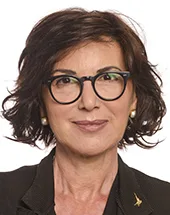

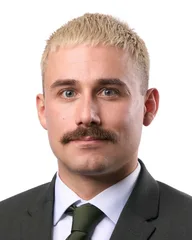
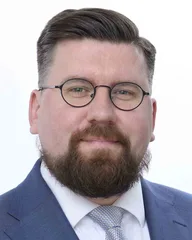
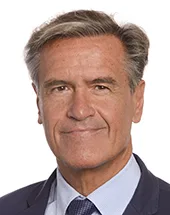
| Rank | Name | Country | Group | Speeches | |
|---|---|---|---|---|---|
| 1 |
|
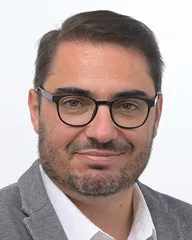
Lukas Sieper | Germany DEU | Non-attached Members (NI) | 390 |
| 2 |
|
Juan Fernando López Aguilar | Spain ESP | Progressive Alliance of Socialists and Democrats (S&D) | 354 |
| 3 |
|
Sebastian Tynkkynen | Finland FIN | European Conservatives and Reformists (ECR) | 331 |
| 4 |
|
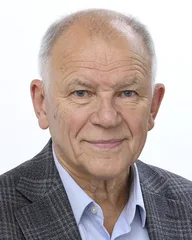
João Oliveira | Portugal PRT | The Left in the European Parliament (GUE/NGL) | 232 |
| 5 |
|
Vytenis Povilas Andriukaitis | Lithuania LTU | Progressive Alliance of Socialists and Democrats (S&D) | 227 |
All Contributions (55)
Question Time (VPC/HR) - Strengthening the Trans-Atlantic ties in an ever challenging multilateral world
Mr President, High Representative, ladies and gentlemen, in this century we know that there is little that a single national security strategy can do, that a European security strategy is not enough: We need an increasingly strong transatlantic security strategy. And in the context of the transatlantic dialogue, we know that for our greatest and most important ally, the United States, the concept has become a matter of national security according to which, who will lead the enabling and emerging technologies, from energy to biomedical sciences, from artificial intelligence to quantum computing, will emerge as a world leader and will be able to exercise the soft power and thehard power better than others. I ask you, therefore: Is there perfect harmony between Europe and the United States in this doctrinal assessment? Do you find weaknesses, vulnerabilities in implementing this doctrine?
Tensions between Rwanda and the Democratic Republic of Congo (debate)
Mr President, ladies and gentlemen, Madam Commissioner, talking about Congo and the border with Rwanda opens up a particularly painful wound for us Italians: the tragic death, on 22 February two years ago, of the Italian Ambassador Luca Attanasio. Together with him, in the convoy of the World Food Programme, the carabiniere Vittorio Iacovacci and the driver Mustapha Milambo lost their lives. They were there to give peace a chance to end conflicts that endanger life, the future, global progress. And in their name we must question the safety of civilian and military personnel employed in missions. Colleagues, violence in the regions of North Kivu and South Kivu has tragically increased. The European Union therefore supports the efforts of the East African Community, Kenya, Ethiopia, South Sudan, Uganda, Burundi and Tanzania to stop hostilities between Congo, Rwanda and the M23 rebels. And do so by remembering the essential role that women have in achieving peace. It is our mission in the face of the multiple crises that fuel global insecurity and new wars. Among the most dangerous crises I think of the interference of Russia and China. In addition to the humanitarian crisis, I would also like to mention the biodiversity crisis. In fact, despite being a UNESCO World Heritage Site, Virunga Park is constantly threatened by poaching and barbarism, illegal activities, including the killing and wounding of rangers of the park in order to finance the criminal and violent activities that are taking place in that region.
Preparation of the EU-Ukraine Summit (debate)
Madam President, Swedish Defence Minister Jonson, Commissioner Hahn, ladies and gentlemen, anyone who believes in the principles and values of the current rules-based international order knows that they must oppose Russian aggression, for various reasons and moral duties. We cannot allow the use of force to annex territories of other states; We cannot allow the return of imperialism and colonization. We cannot remain indifferent while the civilian population is being massacred. This war is between a dictatorship that has invaded and a sovereign country that is defending itself. And what about the defense and security aspects of our response to Russian aggression? We must reassure NATO allies and like-minded countries. We must deter China from the temptation to annex Taiwan and erase Taiwan's democracy. We must promote the social model and the fundamental freedoms that distinguish us. We need to strengthen our leadership in global strategic partnerships. We must uphold the rule of law everywhere, because only the rule of law maintains peace between nations and between peoples. Our role as parliamentarians, therefore, today is to guarantee proper information to our citizens, to guarantee consent to the increase in spending for the defense of our sovereign states and the West.
Defending democracy from foreign interference (debate)
Mr President, ladies and gentlemen, thank you for the contributions that I have been able to listen carefully to, but the questions of this oral question session today could be asked by all European citizens after the events of . They are a harsh sentence of history, democracy and our freedom. We have discovered, therefore, that not only China, for example through the Chinese police stations infiltrated on our territory, not only Russia, through disinformation, aim to weaken our freedom and violate our sovereignty. That is why High Representative Borrell, dear Commissioner, was absolutely right in his metaphor on the jungle and the garden; the garden, which we must defend. Therefore, a different approach to that difficult and turbulent environment in which we live today is necessary. This is the lapidary message that the European Union and its Member States must convey to the citizens of Europe in order to give them confidence in the resilience of our democracy, because the reality is that this democracy of ours is being challenged by the malicious actions of third countries that aim to weaken the foundations of the European Union. And we are aware of the danger of the fair and free conduct of the next European elections, for example, but it is simple what we have to do. We must make significant progress compared to our adversaries in every field of knowledge and knowledge and try to maintain a broad competitive advantage, for as long as possible; we must protect our scientific talents and our societies; We must strongly affirm that there is no alternative to the international order and European rules.
Prospects for the two-State solution for Israel and Palestine (debate)
Mr President, ladies and gentlemen, we all need a spirit and a mentality of normalisation made up of many small steps aimed at building peace. We need those simple human predispositions that are already expressed in the agreements of Abraham: strengthen peace, not destroy it as Iran or Qatar do by arming terrorism; promoting coexistence, human dignity, freedom, cooperation, tolerance and respect; supporting science, art, medicine, trade and finally ending radicalisation. That's what it takes. I have complete confidence in Israel's ability to build peace among peoples and no longer see the so-called "Israeli-Palestinian question" as an international political challenge. And if the Union wanted to play an important role in mediating between Palestinians and Israelis, perhaps it would be necessary to start by suggesting to President Abbas not to do disinformation.
Suspicions of corruption from Qatar and the broader need for transparency and accountability in the European institutions (debate) (debate)
Mr President, ladies and gentlemen, Qatargate, which concerns NGOs, trade unions, individuals, assistants and Members of the European Parliament, is the most serious political attack on European democracy in autocratic third countries since the institutions of the European Union have existed. We ask first of all for a strong criticism of Qatar and of the enemies of democracy who threaten us directly from the outside, as we have already had the opportunity to write in a parliamentary question tabled two years ago by our colleague Ceccardi. But we want to be united, as a fundamental process for the production of antibodies that defend our society, whose freedom and democracy is so vital to maintain full respect for the presumption of innocence. The rule of law, which we all believe in. Today we could speculate against some of us and, instead, we also regret being excluded from the democratic process of this Parliament and playing the valuable role of constructive opposition that serves any democratic majority. In the self-referentiality that often distinguishes some of you you have called us with the cordon sanitaire, but it was a tragic mistake. Nevertheless, in the face of this disaster, I repeat to you, we stand together to defend the European institutions and the European citizens.
Question Time (Commission) - “Protection of strategic infrastructure from China's influence”
Thank you, Mrs Vestager, you spoke before about the subject of defence, the defence industry. This is the great test before us. The challenge before us is to interpret, today, all this economic regulation, of which the Green Deal is a large part, in order not to further weaken our companies, to strengthen them and to be able to protect and defend territories, ports, infrastructures, everything that animates our life not only economic, for the purposes of security and defence of Europe. The defense!
Question Time (Commission) - “Protection of strategic infrastructure from China's influence”
Mr President, ladies and gentlemen, I would like to thank Vice-President Vestager for her comprehensive and comprehensive answers to the many questions. My question is in addition to that of my fellow Members to ask you to account for a whole great policy of liberalization and competitiveness that you have represented in the European Union in recent years, a policy of a few decades which, however, in the light of the facts and above all in the light of the geopolitical change that has taken place around us and so close to Europe, risks showing all its weakness. Entire sectors of European industry, I am thinking for example of the shipbuilding industry, have become much weaker and compete in the world with greater difficulty, thanks to our European regulatory system, which you have so strongly favored among the Member States. This concerned financial services infrastructures, such as banks, but also the European Union's industrial mechanical production infrastructure. Today all this is so fragile that not only can it no longer compete with other actors, but it even risks no longer being even autonomous and witnessing China's invasion of Europe.
EU response to the increasing crackdown on protests in Iran (debate)
Madam President, ladies and gentlemen, thanks also to you, Commissioner Várhelyi, for being here with us this evening, we have asked, with several colleagues, the High Representative and Ambassador Olof Skoog, to take action at the United Nations to remove Iran from the Committee on the Status of Women, an obligatory response from the European Union to the growing repression of protests in Iran. Thank you for what you can do, Commissioner. Even today, this Parliament helps to make the voice of protest resound among the Iranian people, who feel defrauded of the possibility of living a safe and peaceful life with themselves and with the world. The Iranian people demand one thing from the supreme leader, the ayatollahs, President Raisi and the armed forces. He asks for a simple thing: That of abandoning a spurious state of mind of permanent revolution, based only on repression, corruption, enmity towards the Muslim Brotherhood of the Gulf, hatred towards Israel and a deep contempt for the liberal democracies of the West. The Iran proposed by the Ayatollah is only imbued with murderous cynicism and is a blasphemy of Islam itself. We continue to help the Iranian people and to keep the light of hope for them and for us on.
EU-China relations (debate)
Mr President, ladies and gentlemen, Mr Borrell, several facts now tell us that China is not seeking peace and quiet and I wonder: Where is the example of balance and trade reciprocity that the European Commission seeks to establish with China both bilaterally and at the WTO? All this does not materialize, and so our debate indicates the clear political will to safeguard a free, multipolar, rules-based international order. You mentioned the crucial issue of semiconductors. That is why we must find ways to allow Taiwan to continue to exist in the current status quo, expanding trade and political relations and categorically rejecting the false narrative of reunification proposed by China. Just as we must oppose the hegemony that the Chinese Communist Party attempts to extend into the East and South China Seas by challenging freedom of navigation, thus challenging the Western world.
Question Time (VPC/HR) - The impact on third countries of Russia’s war of aggression against Ukraine in relation to the “Black Sea Grain Initiative” agreement
Mr. High Representative, thank you for your reply. In order to resolve quickly the obstacles of the "Black Sea Grain Initiative", which has its own peculiarities, for example it does not contain a provision for dispute settlement, and which grants the Secretary-General and Turkey a high degree of independence as mediators, and this seems to me to be the most important practical point of the agreement, would the European Union like to introduce provisions or rules to that effect?
Question Time (VPC/HR) - The impact on third countries of Russia’s war of aggression against Ukraine in relation to the “Black Sea Grain Initiative” agreement
Mr. High Representative, thank you for your clarifying words. Looking to the future, we can say that the food crisis could kill more people than those affected by the pandemic. Food insecurity and world hunger have shocking numbers: in Afghanistan 20 million, in Yemen 19 million, in the Sahel 18 million, in the Horn of Africa 37 million. What Ukraine was putting into the global market before the war was millions of tons per month, so we are only seeing today the precursor signs of the disaster that is about to happen. I would therefore like to ask you: in an effort to bring together emergency food assistance, can you tell us what changes to the aid system the Union is preparing to make to improve it, given that it was unsustainable even before the war?
EU-Western Balkans relations in light of the new enlargement package (debate)
Madam President, Commissioner Várhelyi, ladies and gentlemen, since the signing of the Treaty of Rome, the European Union has shown itself to be a community of shared intentions and values, a beacon of democracy and the rule of law. By promoting peace, our states have become stronger together. Enlargement is now an essential objective to strengthen the Union and promote more peace and stability, prosperity and security. While aligning with the common foreign and security policy is not a formal criterion for enlargement negotiations, today we understand its vital importance and impact in the present geopolitical context in terms of international relations, starting from the great added value of our participation in NATO. Conscious of Russia's continuous attempts to attract the countries of the area to its area of influence, we reiterate that the Western Balkans remain the strategic priority of the European Union and its Member States. We are stepping up our efforts to offer the Western Balkans full participation in our economic, energy and health plans and we are also seeking to improve the possible connections from an infrastructural point of view. The current global situation is reflected in this year's enlargement package, which sees the analysis of the international positioning of the different countries involved substantially expanded. Thank you, Commissioner Várhelyi, for the work you are doing together with the Commission, the High Representative, the Special Representative for Facilitated Dialogue Belgrade-Pristina, continue with the determination that characterizes you, with your work you strengthen Europe and the perspective of freedom and democracy for those countries that must be able to become more and more like each other.
Question Time (Commission) - Protecting critical infrastructure in the EU against attacks and countering hybrid attacks
Mr Vice-President, do you know that Italy is the seventh country in the world for cyber attacks? The first country in Europe. There is therefore a need to support an important process because Italy is a strategic country compared to some large infrastructures; At the beginning of the debate those submarines were mentioned, but there are also many others. What are you going to do?
Question Time (Commission) - Protecting critical infrastructure in the EU against attacks and countering hybrid attacks
Mr President, ladies and gentlemen, thank you, Vice-President, it has been very interesting to hear your words and I hope that you are right in quickly building this shield for European countries, consisting of the ERC directive, the NIS 2, the Cyber Resilience Act, which is really effective, otherwise Mr Glucksmann, who has already highlighted our delays, will be right. Then I ask you: Will this regulatory framework be as rapid as attacks? And the second question is: Will the administrative burden on our companies, on companies, in order to be able to align with risk reduction, also reduce their competitiveness compared to other companies in the world? So what can the European Union do to support the efforts of these companies? Yes, with guidelines, but also with resources.
The death of Mahsa Amini and the repression of women's rights protesters in Iran (debate)
(IT) Mr President, ladies and gentlemen, Mr High Representative, many of us would have liked the courage of your words today also on the part of the European Union in boycotting the inauguration ceremony in Raisi in August 2021, because it is on the actions that we come and we will be judged. I would therefore like you to be clearer about the scope of these sanctions, so that they are as real and harsh as possible, and also to be clear in recognizing all the massacres perpetrated by the Iranian regime since 1988. Clearer in defining as a crime against humanity any illegitimate and arbitrary incarceration, torture, violence or the death penalty and discrimination against women and girls in Iran and all minorities. Clearer in promoting international investigations against the regime of Raisi, the butcher of Tehran, to restore justice to the Iranian people. Clearer against a regime that makes no contribution to humanity, only death and terror. Clearer against that veil that brings blood and death. And those strands of hair, the hair of Iranian women, our hair, in which the freedom of women blows, the freedom of the world and its future.
Order of business
Madam President, ladies and gentlemen, France's failure to extradite to Italy ten red brigadiers for acts of terrorism committed during the lead years is a controversial page in European history. Those ten terrorists are European citizens who have used violence to kill innocent lives and servants of the state, have endangered democracy and the rule of law, have denied pluralism, tolerance, justice, solidarity and human dignity. Those ten European terrorists are anti-European at the root and undermine that friendship that unites Italy and France. France should put an end to this sad affair of friction with Italy, characterized by the bitter taste of injustice and impunity. The Italians have all appreciated the words of respect spoken by President Macron, so I ask the support of colleagues to our proposal to add tomorrow the debate on judicial cooperation in Europe, in the light of the judgment of the French court to refuse the extradition of convicted Italian terrorists.
2021 Report on Albania (debate)
Mr President, ladies and gentlemen, I agree with President Roberta Metsola that the European Union must think of ways to speed up the enlargement process in the Western Balkans, because stability in the immediate neighbourhood means stability in the Union. And in the face of this new geopolitical context, we must clearly find a way to think about our Europe and its unity, without weakening it from within. As an Italian MEP, I reiterate my strong support for Albania's European path, which has already been traced and cannot be slowed down, and together with this Parliament I recognise Albania's effort to reform and converge in order to become a complete, pluralist and just democracy, capable of strengthening its regional, international role within NATO and in alignment with the European foreign and security and defence policy, which we have been able to see in the reaction against Russian aggression. The rule of law is one of the fundamental values of the Union. conditio sine qua non for the protection of all the other fundamental values of the Union, it must be fully realized in Albania, so as to turn the page forever with the past. The Albanian people want Europe in its future, Europe to play its part.
2021 Report on North Macedonia (debate)
Mr President, ladies and gentlemen, thank you to the rapporteur for his work. North Macedonia confirms its position in the liberal and democratic tradition of the European Union and NATO, of which it has been an active member since 2020. In addition, it aligns with the European foreign and security and defence policy line also against unjustified and illegal Russian aggression, having decided to send military equipment to support the Ukrainian army in the fight for freedom and the rule of law. We strongly hope for the continuation of the bilateral dialogue with Bulgaria, so as to finally encourage the process of national reforms necessary for full cooperation within the European framework, especially on the issue of minorities. This is the historic moment to demonstrate the common will to converge towards a single, large and strong European family, bearer of values of freedom and democracy. North Macedonia is a geostrategic investment in peace, stability and growth for the entire European continent; Europe lives up to this mission.
EU preparedness against cyber-attacks following Russia invasion on Ukraine (debate)
Mr President, ladies and gentlemen, Vice-President Schinas, the issue of the European Union's preparedness against cyber-attacks following the Russian invasion of Ukraine is mainly influenced by the different level and degree of preparedness of the Member States. Strong Member States make a strong Union, but this applies in all fields, in all sectors and in all domains. The current Italian government has also increased its capacity, launching the National Cybersecurity Agency, unifying all cyber threat protection activities, thus contributing to the security of the European Union. Cybersecurity ensures national defence, the defence of the European Union, socio-economic stability, the democratic order of states, the cohesion of society, the fact that citizens can rely on reliable information and remain psychologically intact, i.e. they do not lose confidence in the leadership of their countries. Not only that, European citizens must rely on vital critical services and must be defended against espionage and disinformation. In the hybrid war that is taking place in Ukraine we have evidence of the lethal attacks of the Russian Federation. It is our duty to help the Ukrainian people and organizations to protect themselves. It is our duty to extend this protective and capacitive umbrella to all those who are close to us and to continue the deepening with NATO of the exercises. That is why I still call for an end to the disinformation that afflicts the European Union because it is perhaps too forgotten by all of us.
Situation in Afghanistan, in particular the situation of women’s rights (debate)
Madam President, Commissioner, ladies and gentlemen, I would like to recall the words of High Representative Borrell when she said that no religious or social reason could ever justify the unequal treatment of women in Afghanistan. For us Europeans it is even more unacceptable and I particularly welcome the words of the foreign ministers of many countries, including the United Kingdom, Germany, Belgium, Norway, who have strongly denounced the Taliban's lie about the reopening of schools to girls. It is from the Beijing Conference that we define women's human rights. And for us too, the Afghan crisis is a test. Firstly, by making provision for any possible dialogue, such as that in Oslo, to be consistent with the principle of gender equality also in the representation in negotiations by the European Union, because it is our duty to do more. I therefore ask the Commission, Commissioner, to evaluate the proposal that has already been made in this House and that I stress, to be able to bring together Afghan women, whom we have welcomed in our countries and who are refugees in the Member States of the European Union, in an organization, in a forum that supports the work of the European institutions that are engaged in humanitarian aid to Afghanistan - Afghanistan destroyed by the Taliban - and to measure the Taliban by their actions, not by their words.
Question Time with the Vice-President of the Commission/High Representative of the Union for Foreign Affairs and Security Policy - Security and the EU's strategic compass
So I ask you, High Representative, what else can the European Union do in its political organisation to support its NATO member states in the common European defence effort?
Question Time with the Vice-President of the Commission/High Representative of the Union for Foreign Affairs and Security Policy - Security and the EU's strategic compass
Mr President, ladies and gentlemen, I thank the High Representative for being here today. I would like to return to the issue of NATO. Very briefly, I would ask you what are the main obstacles that you see in the implementation of the Strategic Compass and its roadmap, with reference to the complementarity between the European Union and NATO and above all how the strategic concept, which you have already mentioned before, of NATO, should reflect the new role of security and defence actor that the European Union is trying to assume in the Ukrainian crisis, for example. Put another way, High Representative: How do we align the postures of the countries of the European Union with those of NATO? In the next five years, what progress will the two organisations be able to make?
Implementation of the common foreign and security policy – annual report 2021 - Implementation of the common security and defence policy – annual report 2021 (debate)
Mr President, ladies and gentlemen, I would like to thank President McAllister for his report. In our reports, as also stressed by President Loiseau, there are key topics for the economic well-being and security of European citizens, especially for the lessons learned from the pandemic. Mr Borrell, yesterday President Lagarde made clear reference to negative factors on the well-being of our citizens, such as logistics bottlenecks and energy costs, highlighting how geopolitical tensions have increased and high energy costs could exert a stronger than expected brake on consumption and investors. In other words, the well-being of Europeans is continuously eroding and we are becoming impoverished. This weighs on European foreign policy, on our capabilities, on our influence and on our ambitions, as we have shown, for example, in Afghanistan. We are moving towards a new global order, which will be defined by competition between major powers. The type of relations to be maintained with China, which has become more authoritarian on the inside and more aggressive on the outside, is clearly the driving argument. But we have finally reached, also thanks to my political side, the awareness that we must continue, we can continue, to negotiate with China only from a position of value, economic, technological and military superiority. And we will not do it alone, we will do it in a systemic way, with the United States and with the other democracies developed similar to us: Japan, Korea, India, UK and more. And we will not be alone on this path. Many states in Africa, Latin America and Asia will have to make clear field choices. On Russia, I recommend paying more attention to how Putin exercises his power. On Turkey, I welcome the fact that our two relations, in line with my political side, clearly acknowledge that Turkey is a threat to peace and that this process must now be stopped. In this regard, I propose a panel international lawyers to stop it.
EU-Africa relations (debate)
Madam President, ladies and gentlemen, Mr Borrell, the Member States, together with the European Union, European citizens and European businesses, have great challenges in their relations with Africa. It is a question of balancing economic expansionism and Chinese trade and of seizing together with the African peoples all the opportunities for balanced social development, but bearing in mind that it is imperative to counter Russia's asymmetrical threats, to counter the spread of authoritarian regimes that use the military tool irresponsibly, and to cope with a growing number of migrants and refugees, whose volumes and needs are certainly not manageable by European states. In summary, great security issues along with great opportunities, but everything we do today is too little. We need to deepen, in the work of Parliament, in the work of the Commission, the exchange of information in order to have precise knowledge of the actions to be taken, to look with a little optimism at the continent of the future from the point of view of development and from the point of view of the economy, without forgetting the great values of the European Union and of dialogue with democratic institutions, in order to promote freedom and democracy on that continent.