





| Rank | Name | Country | Group | Speeches | |
|---|---|---|---|---|---|
| 1 |
|
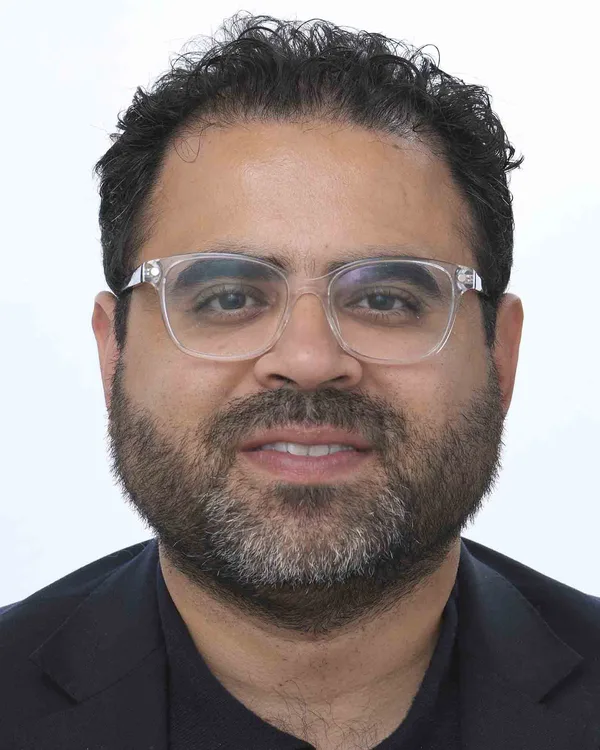
Lukas Sieper | Germany DEU | Non-attached Members (NI) | 390 |
| 2 |
|
Juan Fernando López Aguilar | Spain ESP | Progressive Alliance of Socialists and Democrats (S&D) | 354 |
| 3 |
|
Sebastian Tynkkynen | Finland FIN | European Conservatives and Reformists (ECR) | 331 |
| 4 |
|
João Oliveira | Portugal PRT | The Left in the European Parliament (GUE/NGL) | 232 |
| 5 |
|
Vytenis Povilas Andriukaitis | Lithuania LTU | Progressive Alliance of Socialists and Democrats (S&D) | 227 |
All Contributions (124)
Sustainable use of plant protection products (debate)
Mr President, poison in the ground, in the air and in our groundwater, that sounds absurd, but it is not. Due to the increasing use of chemical pesticides, our nature is becoming increasingly polluted and not without consequences. Biodiversity is being degraded and our health is also at stake. These substances can cause serious diseases. The pollution problem of pesticides is persistent. That is why we need to set clear targets for reducing the use of pesticides. Sustainable alternatives are available, but we need to ensure that more alternatives are available quickly, in particular in the form of biological pesticides. Authorization needs to be faster. We help our farmers with that. In addition to a 50% reduction target within the EU, it is also important to make integrated pest management mandatory. In many cases, integrated pest management also reduces cultivation costs, while yields are high and of good quality, with fewer pesticides on our food. Good for the environment, public health and the farmers themselves. Madam President, a small point of order. I think we have the tradition here not to drag people into discussions who cannot defend themselves in this room. I really do not understand the obsession some people have with Frans Timmermans. Commission comes with proposals. We have Ms. Kyriakides here or von der Leyen. Address them, please. Not someone who's not in the room.
Framework of measures for strengthening Europe’s net-zero technology products manufacturing ecosystem (Net Zero Industry Act) (debate)
Mr President, this law must ensure that our industry in Europe is greened. On the one hand, so that green technology, cleantech, is produced within the EU and, on the other hand, by making these products available to green existing industry. But that starts with clear choices. Prioritizing everything doesn't really mean prioritizing anything, and I think it can be done better. There is a mentality difference within the European Parliament between those who see the Green Deal as a tool to achieve sustainability and the energy transition – thereby strengthening our competitiveness and that of our industry – and those who see the Green Deal primarily as a burden for our industry and business. They look away from green developments in the US and China. If we are not going to green ourselves in the EU, these sustainable components and products will soon mainly come from abroad. Then we remain dependent. We must clearly choose what we want to specialise in and set an example for the rest of the world. If we don't make those choices, we'll miss the boat.
UN Climate Change Conference 2023 in Dubai, United Arab Emirates (COP28) (debate)
Mr President, today, new research by Oxfam shows that the richest 1% is responsible for more global CO2 emissions than the poorest 66%. Let that get through to you. A small group of super-rich have an extremely big impact on the destruction of our planet. Also in our cities, where the air is getting dirtier and nature is deteriorating. The luxury life of this polluting elite is causing suffering worldwide. This extreme pollution has terrible consequences for groups that are already vulnerable, such as people living in poverty. They are particularly exposed to extreme weather, as there is an increasing link between climate change and, for example, floods and heat waves. 91% of deaths related to extreme weather are back in developing countries. The climate crisis and global inequality are inextricably linked and feed each other. Climate justice has never been more crucial at the climate summit. Our message for COP28 is clear: countries must seize this moment to change course with the aim of keeping a limit on global warming to one and a half degrees within reach.
Order of business
Madam President, sorry, it was really, really confusing.
The proposed extension of glyphosate in the EU (debate)
Mr President, everyone knows the aerial photographs from the Netherlands. Vast green fields and fields surrounded by small ditches. But in the spring, something crazy happens to these fields. Although the rest of nature will bloom again, some of these fields turn orange-yellow. We no longer see healthy nature here, but fields sprayed with agricultural poison, glyphosate. This controversial weed fighter is widely used to clear agricultural land from weeds. But while this substance counteracts weeds, it poses a huge risk to people and the environment. More and more studies indicate the link between neurological disorders such as Parkinson's and the use of pesticides and insecticides. People working with this substance are not sufficiently protected against these risks, which makes farmers, farmers in particular, particularly vulnerable and poses a risk to local residents. In France, the regulations have already been tightened. Parkinson's disease has even been classified as an occupational disease for farmers and farmers who have been overexposed to glyphosate. In 2018, a court in the United States found it proven that a gardener's cancer diagnosis was due to the multiple use of glyphosate. A massive compensation for producer Monsanto was the result. It has become painful that important opinions and studies on health risks of glyphosate have not been taken into account in the opinion by the European Food Safety Authority. The interests of the industry seem to be the most important in this opinion, because only studies of the industry itself have been taken into account in the opinion. So on those orange-green fields there is a assassin. That is not only bad for the farmer himself, but also for biodiversity. This makes it harder for bees to find their way back to their nests and weakens their immunity to parasites. Also, glyphosate kills fields of nectar-rich wild flowers that feed bees. In addition, we need to move towards more and more resilient and sustainable agriculture. That is better for the climate, the environment and the farmers themselves. The extension of glyphosate for ten years is in direct opposition to this. It is time for an accelerated procedure for the authorisation of biological pesticides. To me, it's clear: Use the principle of caution. I expect Europe to do the same. It is irresponsible to wait until we are 100% sure that glyphosate is harmful before we abolish it. Let's turn it around. First we have to make sure that it is 100% harmless to people and the environment before we allow it again.
Framework for ensuring a secure and sustainable supply of critical raw materials (debate)
Mr President, if you look at how this regulation came about, we should congratulate the European Commission, but certainly also our reporter, Mrs Beer, who acted quickly and came up with a good report in which she found the right balance, including between the groups. I believe that what lies ahead is a balanced report, which will be supported by industry, trade unions and NGOs, and I expect broad support for this report in this Parliament tomorrow. This regulation is essential, because without bauxite there are no windmills, without graphite there are no batteries and without silicon metal there are no solar panels, to name but a few examples. We finally realize that we need to define the long-term plans and investments to ensure the supply of these materials. And that is what we are doing with this regulation. Supply is one thing, but once we have these materials, we have to deal with them properly, efficiently and smartly. The demand for critical raw materials will increase in the coming years and therefore it is up to us to set as much ambition and objectives as possible in terms of efficiency, reuse and upcycling. I am proud that, as a Parliament, we have added more ambition to these objectives. The transition to a circular economy will be an essential link in the success and competitiveness of the industry and also in reducing our footprint. In addition, we cannot exclude potential reserves of critical materials in Europe. I know that's a very sensitive subject. We are not just digging unnecessarily in search of raw materials. This must be done with the utmost care, while respecting environmental and social conditions. I also think it is a good thing that we are going to develop those highest standards here in Europe and not only impose them on projects in Europe, but also that projects where we source raw materials outside Europe must meet the highest environmental and social conditions. And we have tried to strengthen that with this proposal. Critical raw materials, their supply and use, that is not only about the present, but also about our future. Now we are investing for later. That is why, tomorrow, we as Social Democrats can agree to an ambitious, future-proof Critical Raw Materials Act. I hope that, if we agree with the Council tomorrow, we can come to the conclusion of this report very quickly because it offers a lot of perspective and defines goals that the business community is asking for.
Towards a more disaster-resilient EU - protecting people from extreme heatwaves, floods and forest fires (debate)
You can't ignore it this summer: extreme weather in Europe, from floods in Slovenia to giant hailstones in northern Italy and forest fires and heavy rainfall in Greece. Europe is facing a huge challenge to adapt to the increasingly common extreme weather, closer and faster than we ever expected. Climate change is no longer a far-from-my-bed show, it's here and now. We are faced with a world that is changing rapidly, with extreme weather causing more and more damage. And it's our responsibility to limit the damage. For the time being, aid and solidarity for affected areas are important, but we must also ensure that we are better prepared for what is to come. If we really want to reduce the impact of natural disasters, Europe must now get to work. Climate change is no longer Plan B.
Delivering on the Green Deal: risk of compromising the EU path to the green transition and its international commitments (debate)
Mr President, where should I start? I really think there’s a difference in vision we have between how our industry looks, let’s say, in a decade or two. I think that’s the crucial difference between our political groups. I envision an industry that’s decarbonised, most efficient worldwide, leading production worldwide, and not an industry that needs heavy subsidies to survive. I see that globally we’re not leading in every sector; other sectors outside the EU produce with a smaller footprint. For that, we have the Critical Raw Materials Act, for that we have the Net—zero Industry Act. The train of decarbonisation is running, and the question is, are we going to catch it, or are we going to wait and hope that it comes back so we can step on it again? Let’s stick to the facts. Let’s cooperate. Let’s work on good compromises to strengthen our industry, to give a better future perspective for our farmers. Let’s sit at the table, work together in honouring Europe and helping Europe also for the green transition.
Nature restoration (debate)
Mr President, nature restoration is a beautiful story. Nature is about our future, about healthy land on which we can produce sustainable food, and healthy land that is resistant to the effects of climate change. But unfortunately, the creation of this law has been hijacked by political self-interests. The Christian Democrats have turned it into a mudfight, regardless of its content. And the fact that the President and Vice-President responsible for this law are now holding a press conference during this debate is a contempt for Parliament. Shame on you! Because make no mistake, this nature restoration law is just as important for the biodiversity crisis as the climate law for the Paris Agreement. Climate and biodiversity are two sides of the same coin. And yet certain political parties began a symbolic struggle against this law. This is what you get if you don't bring parties around the middle together. Then you feed the extremes, something that has been going on in the Netherlands for a long time: polarizing viewpoints and creating false contradictions. This is now also happening in Europe. The CDA and a number of other parties are chasing the voices of the extreme right and climate deniers. And at the expense of what? At the expense of our nature, at the expense of our future. This is cynical politics. That's politics you should be ashamed of. In the end, it's simple what we'll be voting on tomorrow: Do we want to leave the world better than how we got it? For me, the answer is very simple. I hope that tomorrow we can all vote for the law, move forward, and as César said: “¡Adelante!”
Industrial Emissions Directive - Industrial Emissions Portal - Deployment of alternative fuels infrastructure - Sustainable maritime fuels (FuelEU Maritime Initiative) - Energy efficiency (recast) (joint debate - Fit for 55 and Industrial Emissions)
Mr President, the Industrial Emissions Directive is desperately needed. Not only to protect nature, but also for our health. It is clear to everyone that pollution has major negative consequences for the environment, but also for our health. The disadvantages are great. The toxins released into our air, our water, our soil are a direct threat to nature and the health of us and our loved ones. They contribute to respiratory diseases and cardiovascular diseases. Residents of these types of companies are often more likely to have cancer and other diseases. And too often, it is the most vulnerable communities that live near polluting factories and suffer from those adverse health effects, and that is unacceptable. In addition, the revision of the Directive is also important for a level playing field in Europe. It cannot be the case that in one country there are very low and strict emission standards and that in other countries much higher limits are allowed. This creates an uneven playing field for our industry within Europe. We need to put an end to that. It is good that we are revising this directive, that the right to compensation is improved and that higher fines can be imposed for infringements, and that we are imposing stricter requirements on emissions from heavy industrial installations throughout Europe. It is important that our children can look forward to a healthy future and swim in open water without worry. We must not put profits above our health, our lives. One more comment on agriculture, Mr President, because it is being done here as if a certain party is the only one standing up for agriculture. The biggest threat to small and medium-sized family businesses is the industrialisation of agriculture. We are talking about less than 3% of the livestock farms that we want to be covered by this directive. It is precisely companies that compete unfairly with those small and medium-sized family businesses because of their economies of scale. And those farms, they certainly have a future in the Netherlands, and in Europe.
EU Day for the victims of the global climate crisis (debate)
Mr President, let me start by saying to Commissioner Vestager, you can count on our support. We will support what I think is a very important commemoration of all the victims of climate change. So you can count on the S&D Group for that. I’m going to switch to Dutch. Wanneer we het over klimaatverandering hebben, gaat het vaak over de hoeveelheid CO2 in de lucht, het aantal hectare afgebrand bos, het aantal meters stijging van de zeespiegel of het aantal graden opwarming van de aarde. Laten we echter niet vergeten dat klimaatverandering ook steeds meer menselijke slachtoffers maakt. Wetenschappers schatten dat er jaarlijks zeven miljoen mensen sterven als rechtstreeks gevolg van de opwarming van de aarde. Dat zijn zeven miljoen levens die vroegtijdig eindigen omdat een echte klimaataanpak te lang vooruit is geschoven. Als Europese Unie dragen we niet alleen een verantwoordelijkheid ten aanzien van ons werelddeel, maar ook ten aanzien van de rest van de wereld, waar eilanden in de oceaan verdwijnen en hitte en droogten het leven op steeds meer plekken onmogelijk maken. Een herdenkingsdag is een goede zaak. Laten we echter elke dag denken aan de klimaatslachtoffers in de wereld en met hen in onze gedachten de moed verzamelen om sneller en ambitieuzer te werk te gaan bij het aanpakken van de wereldwijde klimaatcrisis.
The role of farmers as enablers of the green transition and a resilient agricultural sector (continuation of debate)
Mr President, the role of farmers in the green transition: Then what are we talking about? Those who ask for support for greening, or the farmers of the mega stables, the peak loaders? Farmers have a future in Europe. Farmers play a huge role in greening, but organic farmers do. Farmers who get a fair price from intermediaries and supermarkets, because it has to pay. While in Austria it is possible to give organic farmers a prominent place in our supermarket shelves without measures, so that those farmers get a good price and can compete with non-organic farmers, we in the Netherlands get our noses up for it and see organic as expensive. A myth that is hard to break. Address those who only benefit from the work of the farmers, those who make huge economic gains at the expense of the farmers. Take the gravitational inflation. We have to do something about that. By changing the system and developing new revenue models, a sustainable agricultural sector is possible. And farmers who contribute to it must be rewarded. Choosing between farmers and nature is a false contradiction. Farmers should also be rewarded for nature management. Dedicate yourself to this, because with a njet you don't help either the farmers or nature.
Keeping people healthy, water drinkable and soil liveable: getting rid of forever pollutants and strengthening EU chemical legislation now (topical debate)
Sometimes there are things you just don't understand. For example, if someone dumps a liter of frying fat, he is rightly fined. But for companies, the opposite is true. They are allowed to dump tons of poison into our nature and environment every year. This includes PFAS, a collection of substances that we don't even know how harmful they are. Only if it is shown that a certain PFAS is harmful will it be banned. Way too late. When do we intervene and ban these substances as a group? Only when it affects us personally? If it is found in our bodies or in our children's bodies? I have news for you. It's probably been in there a long time. It is sad that in some regions it is better not to give your child breast milk because of the high concentrations of PFAS, sometimes more than ten times the norm. And in the meantime, we dare not take a general ban. I was also surprised by an interview of two top women from a chemical company, last week in the Algemeen Dagblad. They said, referring to PFAS, that anything you take too much of will eventually become toxic. How cynical can you be? What are we waiting for? Apply the precautionary principle and prohibit PFAS.
Revision of the EU Emissions Trading System - Monitoring, reporting and verification of greenhouse gas emissions from maritime transport - Carbon border adjustment mechanism - Social Climate Fund - Revision of the EU Emissions Trading System for aviation (debate)
Mr President, I think I should like to address two points very briefly here. The first: There seems to be a large majority for all three packages, but I'm surprised. A number of people here are very critical. They're standing here. They mostly tell me what they're against. I have to say that I'm also surprised, because on the one hand, if you're against something, you do everything you can to change it. You're not just going to stand up at a time and say you're against it, then you're going to walk away, and then you're just going to blame Europe and Brussels. Europe and Brussels, that's us. Europe is not an invisible hand that makes decisions that happen to the Member States. We, the democratically elected parliamentarians, have come to this result in a very careful process, together with the Member States. Very democratic, very transparent. Europe is like getting up in the morning and looking in the mirror, and then there are days when you like it and days when you don't like it. But it's really you. That's what I wanted to say. There are simply a number of people who are champions ‘throwing ass against the crib’. I don't know if this is translated correctly by the interpreters, but I think most people in the Netherlands will understand what I mean. What have we done now? We have set very carefully frameworks within which companies can excel. You have companies that are good at it and companies that are less good at it. But that's the market. That's how it goes. I very much believe that with the conditions we have set today, we can really work towards a green, competitive EU industry. That is why we must vote in favour of this legislation. Those who vote against this and then hope that the energy market, with the energy prices, will be okay someday... Yes, I also believe in fairy tales, but I much prefer to work to ensure that the situation for households and for business is improved. Because simply relying on fossil fuels will only cause prices to rise. We then roll from crisis to crisis, to crisis. Another important element that we will hopefully vote for tomorrow is that level playing field at the border. We have had emissions trading in Europe for 15 years, and yet we continue to allow unfair competition from outside Europe. Well, we'll stop there. That alone should be enough reason to vote in favour of this package here – for the people in the Chamber. I will, and I call you to do the same tomorrow. Hopefully we can work together very quickly on the greening of our industry.
Revision of the EU Emissions Trading System - Monitoring, reporting and verification of greenhouse gas emissions from maritime transport - Carbon border adjustment mechanism - Social Climate Fund - Revision of the EU Emissions Trading System for aviation (debate)
Mr President, as the CBAM rapporteur, I am proud to be standing here and I can say that it has not been an easy ride, but we’ve made it. At least let’s hope tomorrow we will vote in favour and that the Council sticks to the agreement. The Green Deal is at the heart of social democracy because it is not only about reaching our goal – it is also about the path towards this goal, leaving no one behind. During the European election electoral campaign, we promised to deliver on a social and ecological transition, and today we take a major step in fulfilling our promise. I am proud of S&D. We have never walked away from the negotiations. We always took responsibility and did not hide behind any other political group. Dear President, I would like to thank my colleagues for the good cooperation, all of them, and the Secretariat of the Parliament, advisors and assistants for the outstanding work, and I thank the Czech Presidency for rising above themselves. And let me not forget the Commission for providing us with the necessary information and being an honest broker. The agreement reached between Parliament and Member States on ETS CBAM and the Social Climate Fund are historic. Historic because for the first time… Sorry, because they will bring us to our 2030 climate target, as set in the climate law. Historic because, for the first time, the highly polluting maritime sector is included. Historic because we will create a level playing field between EU producers and non-EU producers and finally respecting the ‘polluter pays’ principle. And historic because we will fund the energy transition for households and help them decrease their energy bill. ETS has been and will be the most efficient and cost effective way to incentivise decarbonisation. The system creates a clear framework under which our producers can distinguish themselves from bad- or underperformers. For the first time in history, the free allowances – basically a right to pollute for free – will be conditioned and eventually phased out. Those companies that do not show progress, and thus do not have the intention to decarbonise, will have no future in the EU. It sounds hard, but we have to be very clear about it: they should not abuse our subsidies and allowances because these limited funds should be used for others that do have the will to invest in clean technologies and help us keep the EU competitive. It is time to separate between the unwilling and the willing, between those with good intentions and those with bad intentions. With the introduction of CBAM, this will also become applicable for producers outside the EU. You are still welcome to sell your products on the EU market, but we will stop the unfair competition compared to our producers. You will pay for your pollution at the border. And let me be very clear: we are not in it for the money. I don’t care about the money. I really hope that the revenues of CBAM go to zero as quick as possible because this means that producers outside the EU either already pay an equivalent CO2 price in their own region or they became fully decarbonised. Let us start shaping the future of a clean, competitive EU industry today. Let us vote in favour of these legislative files.
Energy performance of buildings (recast) (debate)
Mr President, I must be very surprised at times when I hear a debate on this subject here, as if we have not had an energy crisis or are really still in it, as if we do not want to reduce our dependence on fossil fuels. But what does this file do now? Door wat we hier met elkaar hebben afgesproken, en dat doen heel veel politieke partijen met elkaar – goed nadenken over wat nu het beste is als het gaat om het verminderen van die olieafhankelijkheid en het verbeteren van de energie—efficiëntie in de gebouwde omgeving –, zijn we gekomen tot een plan dat ervoor zorgt dat we a) gaan vergroenen, b) de rekening doen verlagen, en c) ook nog eens heel veel werkgelegenheid gaan creëren – ongeveer 160 000 banen worden er geprojecteerd. So I think everyone benefits from it. And I really don't understand the resistance to this. And when it comes to compliance, it is mainly the Member States and not so much the citizens. But I get it somewhere. The parties that are calling today to vote against this want you to remain in the cold during the next crisis, to be confronted with a huge energy bill, so that they can point the finger and blame Europe.
Access to strategic critical raw materials (debate)
Mr President, lithium, cobalt and nickel are crucial for battery production and for achieving the energy transition and our climate goals. A strategy is therefore needed in which access to these raw materials is properly regulated. This is important because there will be more demand than supply. Companies want to become greener, but often have limited access to critical raw materials. We must therefore dare to set priorities. We cannot expect help from the invisible hand, as there is no functioning market yet. It is up to us to decide who gets access to what and when. In addition, we need to use the materials we already have longer and more efficiently. Furthermore, the consent of local communities to exploitation is a prerequisite and must be based on the highest standards. So let's get this right. Removal of fossil fuels should not lead to any other dependency. The debate on this will be a crucial step towards achieving our digital and climate ambitions.
A Green Deal Industrial Plan for the Net-Zero Age (continuation of debate)
Mr President, there are two thoughts I would like to share today in the context of the Green Deal Industrial Plan. The first one: panic is a bad adviser. It is true that the United States presented a huge package – the Inflation Reduction Act – which will be very good for their green industry. But some could say that the Inflation Reduction Act is a reaction to our European Green Deal or to our carbon border adjustment mechanism. So we should not panic. We have many instruments in place to support our industry. Instead of panic, we should use our existing instruments effectively and targeted. And make no mistake here: industrial policy is green deal policy. Secondly, we cannot build competitiveness on subsidies: giving state aid or EU subsidies to a company that is not competitive might be a quick fix, but is no long-term solution. To make sure the EU industry is resilient and competitive, it must decarbonise as soon as possible. The race to decarbonisation will determine the competitiveness of our industry. So, Madam Commissioner, no panic. We are on the right track. But let us seize the moment and accelerate – for our industry, for our competitiveness.
A Green Deal Industrial Plan for the Net-Zero Age (debate)
Madam President, there are two thoughts I would like to share today in the context of the Green Deal Industrial Plan. The first one: panic is a bad adviser. It is true that the United States presented a huge package – the Inflation Reduction Act – which will be very good for their green industry. But some say that the Inflation Reduction Act could be seen as a reaction to our European Green Deal or to our carbon border adjustment mechanism. We should not panic. We have many instruments in place to support our industry. Instead of panic, we should use our existing instruments effectively and targeted. And make no mistake here: industrial policy is green deal policy. Secondly, we cannot build competitiveness on subsidies: giving state aid or EU subsidies to a company that is not competitive might be a quick fix, but is no long-term solution. To make sure the EU industry is resilient and competitive, it must decarbonise as soon as possible. The race to decarbonise ... (The speaker was interrupted)
CO2 emission standards for cars and vans (debate)
Look, I'm trying to find arguments here. The climate argument is more than clear because it has sufficient urgency to address this problem. For other aspects, I try to come up with arguments from an economic point of view. If we see what is happening in America now with the support of the electric car, if I see how many Asian brands bring a technology to Europe that is miles ahead of many of our own European brands, then I am worried whether we are fast enough with an answer and whether we still have a chance to keep this sector in Europe. This can be done by creating very clear frameworks. These are the frameworks we need to create today.
CO2 emission standards for cars and vans (debate)
Who remembers Stanley? You might know it from the popular children's movie "Cars" as Stanley Steamer. If not, I would say: Ask your children. Stanley made a very successful car with a steam engine at the end of the nineteenth century. That was a very reliable technique at the time, especially compared to the emerging combustion engine. At one point, Stanley made more cars than any other American car company. The parallels with today are truly amazing. To counter the rise of the combustion engine, Stanley was one of the first to start a campaign to sow fear, uncertainty and doubt. The internal combustion engine was supposedly unreliable and could explode. How do we recognize that? Of the smear campaign against this regulation and against electric cars, including in this Parliament. In 1924 they finally closed their doors at Stanley because they were not able to compete with the internal combustion engine. Even now, we know that it will be very difficult for the internal combustion engine to remain competitive. The electric car is already cheaper to use and the purchase price continues to fall. Competition and development outside Europe are on the rise. If we want to help the automotive sector in Europe to be future-proof and remain competitive, we need to adopt this regulation today. This will bring us closer to our climate goals, improve air quality and prevent European Stanleys in particular. (The speaker accepted a "blue card" response)
REPowerEU chapters in recovery and resilience plans (debate)
Madam President, let me first start by congratulating the rapporteurs, because I know it wasn’t that easy and there were very tough negotiations. So from this place, Ms Gardiazabal Rubial, congratulations, Mr Mureşan and Mr Pîslaru. It’s very important to see people coming from political groups and really working hard to make a piece of legislation that really could get us to the next step. Because REpowerEU is not only our response to the energy crisis, but also creates a clear framework to enable clean tech, build our needed infrastructure and improve interconnectivity. It is built on strong financing and the direction is clear towards climate neutrality and improved autonomy – a shift away from Russian gas towards renewables. It is important that we continue on our path, because we are on the right path. Deviation will only cause delays and will not help us decrease prices. We need to make energy clean and affordable. REpowerEU is an essential milestone for our green transition. It will help us shape the future of our energy system and create opportunities for greening our industry, making it more competitive.
UN Climate Change Conference 2022 in Sharm-el-Sheikh, Egypt (COP27) (debate)
Mr President, in Glasgow we completed the Paris rulebook. In Egypt we have to deliver on the Paris Agreement on our climate goals. When it comes to decarbonising the world, we have a momentum to engage with developing countries to share the benefits and advantages of the global energy transition. Let this African COP be more than just a symbolic gathering, let’s pave the way for a real European-African partnership with a strong pillar for sustainable energy. A lot of sustainable energy potential in Africa is still untapped. This represents a unique opportunity to provide affordable, reliable and sustainable energy for Africa and Europe. Solar panels have a very high yield in Africa. If we cooperate more, both Africa and the rest of the world can benefit tremendously from their capacity for renewable energy. As the Green Deal is on its way to deliver on climate neutrality in Europe while leaving no one behind, the Paris Agreement reminds us that we have to do the same for the rest of the world.
Keep the bills down: social and economic consequences of the war in Ukraine and the introduction of a windfall tax (debate)
Mr President, while I am standing before you, millions of households are in danger of a dark scenario this winter. Not only the energy bill rises, but also the expenses for daily groceries and transport. And this energy crisis is exacerbating existing social inequalities. During the COVID crisis, a new billionaire was added on average every 30 hours. What would that be like? Who benefits the most from this crisis? The rich get richer and the poor get poorer, but we go on to the order of the day. The belief in the free market is so great that few politicians dare to intervene. But now people are also being hit who so far can just keep their heads above water, who do not directly depend on the government to survive. And what are we going to do about this? How do we ensure that energy bills become affordable? The price cap in combination with excess profit tax is the key here, but it is not the only step. Hopefully, the Heads of Government will come to an agreement next Friday to tame the unleashed energy market. What are you waiting for? Buying together now and working on reforming the market now! Then we can look forward to the coming winters with a calmer heart.
EU response to the increase in energy prices in Europe (debate)
Mr President, when we talk about the energy crisis, the most important thing for my group is to answer one question: how can we ensure that energy bills remain affordable for households and small and medium-sized enterprises? Combating energy poverty has always been a priority for the Social Democrats. Today, the number of people at risk of energy poverty is enormous. Almost no one has EUR 1 000 to spend on energy alone. We must take measures that now or even retroactively have a positive effect on people's energy bills. People crave clarity. They want to know if they can still pay an energy bill. We need to remove that uncertainty and stress. The strange thing is that at the moment the crypto market is more stable than the European gas market. The gas market is no longer functioning. Intervention is needed to combat panic prices. We must put an end to speculation that leads to these excessive and unreasonable prices. As a PvdA we have been asking for months for a price cap for energy and a tax on the ridiculous coincidence profits. We cannot ask people to live even more economically, to lower the thermostat even more, to take a shorter shower, without paying the companies that benefit from this crisis. Mr President, we are pleased that there are finally some measures on the table that we have asked for over the past twelve months. However, I am a little surprised that no strong market interventions in the gas market are planned to reduce uncertainty and tackle speculation. There is also a lack of the idea of a price cap for imports, which says a lot about the difficult discussions in the Council. Furthermore, we need to be prepared for a recession and keep people in work with a permanent SURE instrument to mitigate unemployment risks in emergencies. Mr President, I am more procedurally sorry that we as an EP are not involved in the decision-making process. We are discussing tough measures that demand full democratic support and accountability. The EP has demonstrated its ability to work quickly under the urgency procedures. Take gas storage, for example.