
| Rank | Name | Country | Group | Speeches | |
|---|---|---|---|---|---|
| 1 |
|
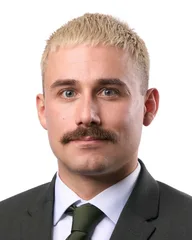
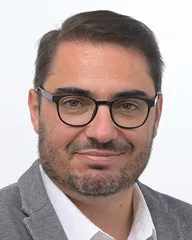
Lukas Sieper | Germany DE | Renew Europe (Renew) | 494 |
| 2 |
|
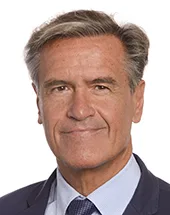
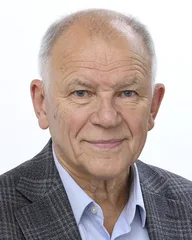
Juan Fernando López Aguilar | Spain ES | Progressive Alliance of Socialists and Democrats (S&D) | 463 |
| 3 |
|
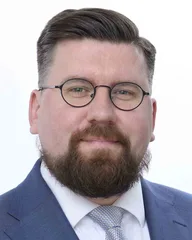
Sebastian Tynkkynen | Finland FI | European Conservatives and Reformists (ECR) | 460 |
| 4 |
|
João Oliveira | Portugal PT | The Left in the European Parliament (GUE/NGL) | 288 |
| 5 |
|
Vytenis Povilas Andriukaitis | Lithuania LT | Progressive Alliance of Socialists and Democrats (S&D) | 276 |
All Speeches (45)
Madam President, congratulations to the rapporteur on her work. This long-term vision for rural areas was both long-awaited and necessary and represents a unique opportunity to put rural areas at the centre of the European agenda. The Green Deal and the pandemic have revealed the potential that rural Europe has to achieve a new, more sustainable economic model, with renewable energy production, making use of the circular economy and innovation, and thus playing an active role in the green and digital transitions to which the European Union aspires. But, in order to exploit all this potential, the challenges they present must be addressed, so that they serve to retain and attract people who want to enjoy the quality of life in rural areas. We are talking about infrastructure, connectivity, quality services and, of course, employment opportunities. Opportunities that go beyond agriculture. New forms of work, new technologies, which must also involve women and young people and thus curb depopulation. This requires a rural pact with the commitment of all and instruments such as the rural verification mechanism, to assess the impact of European policies on rural areas.
Presentation of the Court of Auditors' annual report 2021 (debate)
Date:
19.10.2022 15:05
| Language: ES
Speeches
Mr President, Commissioner, thank you, President Murphy, for presenting the 2021 annual report. We are certainly concerned that the level of error estimated by the Court of Auditors is 3 %, even if the Commission puts it at 1,9 %. But, beyond the percentage, what I do think is important and necessary is to identify concrete errors in order to solve the problems that cause them. On the other hand, this is the first time that the audit of the Recovery and Resilience Facility, a novel instrument with an implementation model based on meeting targets and milestones, has been included. Spain was the first and only country to receive a payment in 2021 following the Commission’s positive assessment, because all milestones had been satisfactorily fulfilled, and this has been confirmed by the Commission. Being first in class sometimes means taking on greater scrutiny and control, but it also helps us get ahead of challenges that may arise in the future. Although Spain has fulfilled, it may happen that other countries do not meet all the milestones committed and it will be necessary to see how it acts in those cases. The good cooperation of all will undoubtedly improve the management of the European budget.
Commission proposal for measures under the Rule of Law Conditionality Regulation in the case of Hungary (debate)
Date:
04.10.2022 18:01
| Language: ES
Speeches
Madam President, upholding the founding values of the European Union and strict respect for the rule of law must be above all else. We are glad that the Commission has activated, after so long and thanks to Parliament's commitment, the conditionality mechanism against the Orbán government. €7.5 billion is the only thing that has managed to get the Hungarian government to take the warnings seriously. Continuous breaches of the rule of law in the fight against corruption and fraud in public procurement, shortcomings in the treatment of conflicts of interest and attacks on the independence of the judicial system pose a risk to the European budget and it is therefore imperative to take measures to protect it. Hungary is one of the biggest beneficiaries of European regional funds, so if you want to be in our club you will have to comply with the established rules. Not only are you going to receive aid, there are also conditions to meet. For now we only have a commitment to reforms, so we will have to keep pushing until they become a reality. In the Council, for their part, they only have to decide whether they defend democracy and the rule of law or whether they prefer to look the other way.
Question Time (Commission) Tackling depopulation through cohesion policy instrument
Date:
04.10.2022 16:24
| Language: ES
Speeches
Commissioner, we have already spoken about this on other occasions; the demographic challenge of depopulation is a democratic challenge that deserves the cooperation of all institutions at all levels and, of course, at European level. You referred to strategies at national and regional level. Well, my region, Aragon, has been a pioneer in adopting a law on the revitalization of the rural environment that includes active policies similar to those proposed by the Commission in the Communication for a long-term vision for the EU’s rural areas; dynamizing measures aimed at combating the fading of the rural environment; initiatives to increase the number of businesses and services in demographically diminished territories; and also other instruments, such as administrative decentralisation or the development of an economic dynamisation territorial management programme that promotes the entrepreneurial culture, as well as one of the main novelties, which we had also asked for here, from Parliament; the application of the principle of rural verification to assess the impact of the main regulations on rural areas. In addition to those actions to which you referred, at regional or national level, separately, my question is as follows: Does it envisage a common European strategy to combat depopulation with binding measures and, in that strategy, incorporate the application of the principle of rural proofing into the Structural Funds?
Consequences of drought, fire, and other extreme weather phenomena: increasing EU's efforts to fight climate change (debate)
Date:
13.09.2022 10:18
| Language: ES
Speeches
Mr. President, this summer has been, much to our regret, the summer of fire. At the end of August, in Spain, there had been more than 63 large fires that exceeded 300 000 hectares burned. Some of the most worrying have happened in my land, in Aragon. The fires of Ateca and Añón de Moncayo have caused incalculable losses, citizens displaced from their homes, irreparable damage to agriculture, livestock, infrastructure, loss of biodiversity ..., without forgetting the professionals who have worked tirelessly to quell the flames risking their lives. One of the major causes of these natural disasters has a name and surname: climate emergency. The funding and coordination instruments we have in Europe to address these disasters are not adapted to the severity and intensity of natural disasters in recent years. The EU Civil Protection Mechanism and the Solidarity Fund, created 20 years ago, were a European success story, but fall short of the reality of the global climate emergency. The Commission must rethink its efforts to strengthen them and revise its budget upwards for the benefit of the planet and its citizens.
Facilitating export of Ukrainian agricultural products: key for Ukrainian economy and global food security (debate)
Date:
06.07.2022 14:22
| Language: ES
Speeches
Madam President, the invasion of Ukraine has highlighted the importance of having developed a resilient logistics chain prepared to deal with potential disruptions. To this end, it is essential to strengthen Europe's rail corridors and to strengthen ports, airports and other infrastructure. Putin knew perfectly well what he was doing by attacking Ukrainian ports from the outset, blocking them, breaking the European and global supply chain and provoking an international food crisis that is destabilizing the world order. We need short-term solutions that improve connectivity between Ukraine and the European continent, such as solidarity corridors, and that allow agricultural products to be taken out, but also humanitarian aid and basic products. The Government of Spain has taken the lead in one of these solidarity projects to take cereal stored in Ukraine by rail and take it to Spanish ports, from where it can be exported to other countries. Solidarity and responsibility is what is expected of the European Union and is what the Government of Pedro Sánchez is already doing.
Implementation of the Recovery and Resilience Facility (debate)
Date:
22.06.2022 19:33
| Language: ES
Speeches
Madam President, Commissioner, in 2020 the European Union was up to par and faced with an unprecedented health, economic and social crisis, conceived the Next Generation EU funds and the Recovery and Resilience Facility as a unique opportunity to boost Europe’s recovery; this time leaving no one behind. It is now up to the Member States to prove that they are up to the task by delivering on their national reform plans approved by the Commission. And as countries reach the targets set in those plans, the Commission must ensure that aid continues to arrive. It is essential that it is carried out quickly, but this does not mean that there has to be less control. The implementation of the Recovery and Resilience Facility should be transparent, effective and rigorous, for which it needs monitoring and control mechanisms to ensure that money is used according to established rules and that not a single euro is lost due to fraud or corruption. Only in this way will we make the most of the recovery funds, achieve Europe's green and digital transition and maintain citizens' trust. With these objectives in mind, we in Parliament will continue to carry out democratic oversight of the mechanism for which we are responsible.
Madam President, the letter sent yesterday by the Court of Auditors, with the latest changes to its Code of Conduct, told us that these reforms are proof of its commitment to a rigorous discharge process. I am glad to know that we agree in the search for that rigor that I have maintained from the beginning. I am also pleased that the Court has gradually adjusted its position on the draft initial report and the resolution adopted in the Committee on Budgetary Control, accepted the need for changes and has taken action on the revision of the Code of Conduct so as to ensure the highest ethical standards. The Court of Auditors decided not to answer some specific questions from some shadow rapporteurs, and that is what I transferred to it, but this is not the reason for not giving the discharge. The reason is in the information they have given us. And the key is ethics. You said it, Mr. Lehne: We must apply the same standard. Well, that's what we're doing: our control work for the sake of maintaining the credibility of the institutions. Finally, Mr Kuhs, what I would be ashamed to do is to do otherwise. The difficult thing has been my position. The easy thing would have been to profile myself.
Madam President, Madam Minister, Commissioner Hahn, President Lehne, 2020 was a difficult year for everyone, with a strong impact on the functioning of all European institutions. It was a year in which the EU had to demonstrate its capacity to react and adapt, as well as putting on the table a historic policy response, the Next Generation EU stimulus package. Institutions had to find ways to continue to fulfil their mandate, adapt to a changing work environment and, at the same time, protect their staff. I am pleased to be able to say, as rapporteur for the 2020 discharge for the other institutions, that the European institutions more than passed this test, in addition to having a crucial role during the pandemic, as is the case with the EEAS with the repatriation of European citizens or the Data Protection Supervisor with the evaluation of tracking applications, to give two simple examples. The reports we are voting on today highlight the measures taken to deal with the pandemic that have allowed the institutions to continue their activities, proposing innovative solutions without sacrificing sound budgetary and administrative management and internal controls. They also identify a number of challenges and opportunities for the future of the Union, such as the need to ensure the resilience of our institutions, by reviewing continuity plans; continue and improve the internal digitalisation process, which is essential for a modern, efficient and capable European public administration in all circumstances; without forgetting the duty of care towards staff, which includes both physical and mental health and safety. We regret, however, that different reasons have led the Committee on Budgetary Control to vote to postpone the discharge of three institutions: the Council, one more year – and now 12 years in a row – due to the lack of cooperation and the lack of consideration for this Parliament; the Economic and Social Committee, because some of Parliament's recommendations requested in previous years are still pending - although I am aware that important progress is being made - we need to verify that they are a reality, especially the agreements with the victims of the serious case of harassment of the former Group 1 president and the revision of the ethical framework that is underway - and, finally, the European Court of Auditors, the institution responsible for auditing and controlling the accounts of the European Union, the institution responsible for ensuring the financial interests of European citizens, which, however, we have been able to verify that it has allowed certain behaviors of some of its members, but above all of the president, which do not correspond to the highest ethical standards and sound financial management required of it. Who is watching, in this case, the watchman? Trust, credibility and transparency are central to the interinstitutional relationship between Parliament and the Court of Auditors. The work carried out by the institution as auditor of the European budget is not called into question. That I want to be very clear. But as ambassadors of the institution, the behavior of its members and the management they make of their own budget must be exemplary and blameless. Is it an ethical example that the President of the European Court of Auditors receives a subsistence allowance to settle in Luxembourg and monthly residence allowances, while sharing and subletting a house to members of his own cabinet? Is it an ethical example that members of the European Court of Auditors use official cars for personal use in exchange for €100 per month or that missions are used to attend party events, when impartiality and independence are presumed? Is it an example of transparency that the official missions of the members of the Tribunal are not kept publicly available on the web and that there is no attendance register showing the extent to which they fulfil their mandate? Perhaps for some they may seem appropriate behaviour, but what I am sure of is that they are not for European citizens. These behaviours have greatly damaged the image of the guardian of the European Union's financial interests and we must, together, help restore it. But we can't look the other way as if nothing had happened. We cannot allow the slightest questioning of the Tribunal. That is why we have called for clear rules that combine sound financial management and the exemplary ethical behaviour of its members. Something that goes beyond regularity or legality. By the way, I would like to sincerely thank all the work and support of the shadow rapporteurs and their teams, including the Secretariat, in reaching compromises that reinforce our defence of rigorous and impartial budgetary control. I am glad that, following the first draft report, a diligent and express process of amending the Court's internal rules was initiated, which lasted until yesterday, when we were aware of the latest reform. I welcome these new rules, which will solve many of the problems encountered in 2020 and contribute to improving the reputation of the institution. But this shows that those patterns of behaviors allowed in 2020 were not adequate and needed to be modified. That is why I recommended postponing the discharge in the Committee on Budgetary Control and why I recommend postponing it now to plenary. I would remind you that we assessed the 2020 management and, if we are consistent and fair, the Court of Auditors does not pass the assessment. I know that there has been intense pressure for us to approve the discharge, both to groups and to Members. But at this point, everyone who votes in conscience. But keep in mind that Parliament's image is going to be marked by the outcome of this vote.
Charging of heavy goods vehicles for the use of certain infrastructures (debate)
Date:
16.02.2022 21:51
| Language: ES
Speeches
Mr President, I would like to congratulate the rapporteur and highlight the work that has been done during all these years and, above all, during the complicated negotiations, which has made it possible to achieve a balanced compromise that makes it possible to respond to the main national interests. The amendment of the Directive establishes a European regulatory framework that reinforces the polluter pays principle, in line with the Green Deal, and which is a further step for the transport sector in the fight against climate change. This European framework will ensure uniformity of guidelines across the Union, providing legal certainty and ensuring fair competition between European transport undertakings. The agreement does not impose road charging obligations on Member States; these continue to maintain their competence. It also provides the necessary flexibility of instruments to enable States to adapt and respond to their territorial, socio-economic and population distribution particularities, as well as to the needs of their road transport system. Ultimately, the final agreement combines climate commitment with socio-economic and territorial commitment to make further progress towards a green and just transition for all EU territories.
Mr President, Commissioner, two years ago, the Member States of the European Union began to introduce the first restrictive and containment measures against the COVID-19 virus. Among them, travel restrictions, with the purpose of protecting the health and safety of all. From the outset, we in Parliament's Tourism Working Group have called for uniform and binding measures across the Union to travel safely. From time to time, we bring this matter back to the House and ask again for the Commission's support and impetus. Last autumn, when we thought that the situation was more or less controlled, the new Omicron variant appeared, again creating uncertainty, cancellations of flights and other means of transport, accommodation reservations, as well as stress on European passengers, companies and workers in the tourism sector. We cannot anticipate the emergence, and its effect, of new variants, but what we can do is establish a protocol for joint action from the European institutions. The situation at all times is different, but the ability to react should be immediate and effective, always. The European tourism industry has been exemplary all these months: raised solutions in the most difficult times, such as the European seal of hygienic certification and the same digital COVID certificate; has united, has created, even, clusters sustainable tourism, as it has done in my region, Aragon, models of shared governance that demonstrate that to advance in a more resilient, sustainable and innovative tourism model, a transversal understanding of all parts of the sector is necessary. Let us follow their example, work in unison and put in place European measures that benefit everyone.
Mr President, Commissioner, the truth is that I agree with much of your speech. Just one year ago we held a debate on our expectations for the European Year of Rail and today we have the opportunity to take stock of this European initiative and we can say that it has served to convey to citizens the advantages of rail, but also to highlight the challenges that must be overcome to achieve that long-awaited single European railway area. The most tangible initiative of this European year has been Connecting Europe Express, a train that travelled 26 countries, crossed 33 borders and leaves us with many lessons learned, but also a list of tasks to be done to overcome the current lack of interoperability of the trans-European rail network: On its route, this train had to face three different track gauges, use fifty-five locomotives for the different signalling systems and types of electrical voltage and even change drivers several times. Making these challenges clear is only intended to help us renew our commitment to European rail, a commitment that comes at an opportune time to include many of these lessons in the revision of the Trans-European Transport Network Regulation, the proposal for which was presented yesterday by the Commission. But we need your help, Commissioner, and the commitment of the Member States: Public-private partnerships need to be increased to invest in infrastructure, advance projects and meet deadlines; there is a need to create incentives for rail to make it more competitive, more attractive and more affordable; effective use must be made of European funds, Next Generation EU, in complementarity with other European funds, such as the EDF or the ERDF, and a European vision must be advocated. Political will – and cross-border cooperation on projects with high European added value – is needed to boost and continue the implementation of the European Rail Traffic Management System, the European track gauge and the electrification of the network. The European Year of Rail is over, but our commitment must remain intact so that the next Connecting Europe Express serves, as its name suggests, to connect Europeans in an effective and fast way.
Mr President, Commissioner, there is no doubt that greater climate ambition is necessary to combat climate change and that the contribution of the transport sector to reducing emissions is unavoidable. But we must not forget that this transition must be fair and, something very important: must be perceived by European citizens as an opportunity. And that happens because the decarbonization of transport is accompanied by an increase in its competitiveness and the connectivity of all territories. Transport is an international sector and climate commitment must be global. That is why the European Union must be a leader in IMO and ICAO. We must avoid creating CO2 tax havens in third countries where we can continue to pollute without any consequence and to the detriment of many European jobs and companies. We need to accompany this transition with sufficient economic resources to mitigate the possible adverse impacts, especially among the most vulnerable groups and the most affected regions. A social climate fund without conditionalities will be indispensable to ensure the affordability and accessibility of transport, to boost public transport, including in rural areas, and to incentivise the purchase of zero-emission vehicles. Our bet: a socially and territorially responsible green sector in line with the red-hearted Green Deal we stand for.
Presentation of the Court of Auditors' annual report 2020 (debate)
Date:
24.11.2021 21:47
| Language: ES
Speeches
Madam President, Commissioner, President Lehne, the annual report of the Court of Auditors is the basis for the discharge procedure for the European budget. For the Committee on Budgetary Control this report is of the utmost importance, and this should be the case for the whole of Parliament. So I just hope that next year we can have this debate in prime time. But hey, 2020 was a difficult year for everyone, but I would like to highlight the resilience demonstrated by the European institutions during the pandemic, which have been able to adapt quickly to continue fulfilling their mandate while protecting the health of their workers and introducing new and innovative ways of working, some of which have come to stay. The Court of Auditors is an example. It has been able to continue its audit work, in which it has estimated the same overall error rate as in 2019, which shows that things have been done well despite the difficulties. That is why we should not value European policies only with parameters such as the absorption rate, because these policies have a multiannual projection and what is really important is their final result and their long-term impact, not the fixed photo at the end of the year and, much less, the comparison with the previous multiannual financial framework. The year 2020 is a clear example. Simplify bureaucracy, give clear rules, digitize systems: all this will improve that overall error data.
Statute and funding of European political parties and foundations (debate)
Date:
11.11.2021 10:30
| Language: ES
Speeches
Madam President, Commissioner, European political parties have a fundamental role to play in representing the will and diversity of European citizens and bringing them closer to the European institutions. That is why it is important that they have adequate public funding. This funding should be transparent and comply with the principle of sound financial management, as it is part of the general budget of the European Union. For this, clear, simple but strict rules are needed, which help to avoid errors and always under effective controls that allow detecting any abuse. We are pleased that the Authority for Political Parties has developed a set of principles to operationalise the right to campaign in the European elections, as we called for in the resolution of 6 April 2011, because of their importance for the future of the Union. On the other hand, we must ensure that registration and membership criteria allow for democratic, genuine and inclusive representation. Most importantly, European political parties must respect the founding principles of the Union enshrined in the Treaty on European Union and any infringement must be effectively sanctioned in order to prevent undemocratic attitudes from entering the institutions. As draftsman of the opinion of the Committee on Budgetary Control, I am pleased to see that our opinion has been widely taken up.
General budget of the European Union for the financial year 2022 - all sections (debate)
Date:
19.10.2021 15:58
| Language: ES
Speeches
Madam President, Commissioner Hahn, we all know the great impact that COVID-19 has had on European transport and tourism, sectors that are very important for the proper functioning of our internal market. Transport accounts for around 5% of European GDP and tourism for around 10%, both of which employ millions of Europeans; if that were not enough, the need to move towards a more sustainable model of economy becomes imperative, and that implies a great effort of these sectors in investment and planning at European and national level, so there is no other: the 2022 budget should be the budget for European socio-economic recovery. In transport we have important challenges: developing European corridors, deploying alternative fuels infrastructure, improving passenger transport and freight distribution through multimodality, making infrastructure more resilient to climate change and adapting it to technological developments such as autonomous cars; Luckily, we have the European transport agencies - ERA, EASA and EMSA - whose role is key in this transformative process, and we need their budget to reflect this.
Assessing the Union’s measures for the EU tourism sector as the end of the Summer season nears (debate)
Date:
05.10.2021 21:07
| Language: ES
Speeches
Madam President, Commissioner, Next Generation, the vaccination campaign or the COVID certificate are European achievements of which we can be very proud. These are measures achieved thanks to the collaboration, coordination and good management of the European and national institutions. The EU COVID certificate has achieved its objective of facilitating and incentivising cross-border mobility and, in addition to the health certification seal, has allowed tourism to start recovering to some extent this summer, and, although far from pre-pandemic volumes, it sheds some light on the terrible scenario left by the pandemic. For example, Spain, where almost 80% of the adult population is vaccinated, is already perceived as a safe destination and tourist numbers are increasing. In addition, it has been a success of technological homologation, since the controls of the certificate have worked without setbacks. And I would like to highlight the work being done by the Commission on that roadmap to prepare the sector for the green and digital transition. But we need to do more. You know, Commissioner Breton, that from our Committee on Transport and Tourism we have been asking you for more ambitious actions and that the response to this crisis will be more Europe, just as it has been in the field of health. Despite not having competences in health matters, we have been courageous and have opted for a European Health Union. Therefore, I wonder why they do not consider establishing in the same way a European tourism Union that develops a true European policy that allows for the creation of mechanisms for prevention and early management in the face of possible future crises. Twenty-seven million people work directly or indirectly in the European Union in the tourism sector and have been seriously harmed. What are we waiting for?
EU Road Safety Policy Framework 2021-2030 – Recommendations on next steps towards "Vision Zero" (debate)
Date:
04.10.2021 21:15
| Language: ES
Speeches
Mr President, Commissioner Dalli, every year around 22 700 people die and 120 000 are seriously injured on European roads. The commitment of my S&D Group to the "vision zero" objective is firm, and to achieve this a clear commitment to investment in road safety is needed. Public road users, especially the most vulnerable, must be protected, a responsible attitude at the wheel must be promoted and vehicle safety must be strengthened and, above all, investment in infrastructure must be made. It is key to reducing road mortality. But we also need mobility plans that are committed to more sustainable and safer transport models, such as public transport, and that support active mobility. It is essential to address practices that have intensified with the pandemic, such as the increase in delivery workers, whose safety and health should be guaranteed from a European framework, or the increase in new micromobility devices, such as scooters and electric bicycles, whose use should also be regulated, as well as to provide parking areas that prevent these from hindering the public road. As you can see, this report proposes ambitious measures and, therefore, I hope that the Commission will study it thoroughly.
Decent working and employment conditions in the aviation sector - Impact of the COVID-19 crisis on aviation (debate)
Date:
08.07.2021 15:57
| Language: ES
Speeches
Mr President, Commissioner, COVID-19 has been an unprecedented blow to the aviation sector. We are all aware of this, and it is urgent to work on its recovery. In addition, we have been calling for years for a social agenda for aviation and the revision of Regulation (EC) No 1008/2008, which has been open and on stand-by since 2015, something incomprehensible. If the working conditions of the sector were already precarious, with atypical forms of employment, social dumping and unfair competition, after the pandemic they are even more so. We have to act now. The Commission itself acknowledged in 2019 the existence of abusive practices that flout national and European social legislation. And, as the Commissioner has said, in the Sustainable and Smart Mobility Strategy, she promised a proposal for revision by the end of this year. We need aviation to recover to ensure the connectivity and cohesion of all European territories, but it must be done in a sustainable and socially responsible way. Decent working conditions must be ensured for all staff. And I would like to ask the Commission to be a real ally on this path and to act accordingly. Responsibility and competitiveness do not have to be at odds.
Connecting Europe Facility - Streamlining measures for the realisation of the TEN-T - Railway safety and signalling: Assessing the state of play of the ERTMS deployment (debate)
Date:
06.07.2021 11:53
| Language: ES
Speeches
Mr President, Commissioner Vălean, I am glad that we can finally finally approve the new Connecting Europe Facility 2021-2027. It has been months of hard work, tough negotiations, and I would like to congratulate the rapporteurs on the good result achieved. The next CEF will continue to boost investment in sustainable infrastructure and the decarbonisation of transport, creating European added value and strengthening the Union's socio-economic and territorial cohesion. The European Green Deal calls for more sustainable, smarter and resilient mobility, and we have made this new CEF responsive and markedly green, by allocating 60% of the budget to projects that support the Union’s climate objectives and by prioritising more sustainable modes of transport, such as rail, inland waterways and motorways of the sea. Transport funding over the next seven years will help improve the mobility of Europeans, making it safer, more innovative and accessible to all, including passengers with reduced mobility. It will also promote multimodality, strengthening the connection with ports and airports. At the same time, it will also improve the efficiency of rail freight transport, with particular emphasis on urban nodes, bottlenecks, missing links and cross-border projects. As you can imagine, this agreement represents an opportunity to advance the development of trans-European networks and corridors, such as the Atlantic and the Mediterranean, which run through Spain, and an important socio-economic boost for our regions, such as my own ⁇ Aragón ⁇ , with the passage of the Cantabrian-Mediterranean corridor. On the other hand, the agreement on the "smart TEN-Ts", which we also approved in this plenary, will help speed up the implementation of the network, thanks to greater clarity and simplicity in authorisation and public procurement procedures, of particular importance for cross-border projects. This will provide legal certainty for developers and will therefore also be an essential private investment attraction mechanism. Finally, the new CEF will emphasise synergies between the transport, energy and digital sectors, which will promote a more efficient cross-sectoral effort in areas such as connected and automated mobility and alternative fuels, and benefit all European citizens.