
| Rank | Name | Country | Group | Speeches | |
|---|---|---|---|---|---|
| 1 |
|
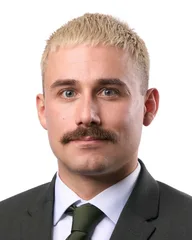
Lukas Sieper | Germany DE | Renew Europe (Renew) | 487 |
| 2 |
|
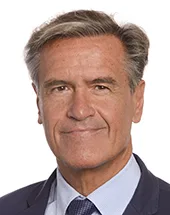
Juan Fernando López Aguilar | Spain ES | Progressive Alliance of Socialists and Democrats (S&D) | 454 |
| 3 |
|
Sebastian Tynkkynen | Finland FI | European Conservatives and Reformists (ECR) | 451 |
| 4 |
|
João Oliveira | Portugal PT | The Left in the European Parliament (GUE/NGL) | 284 |
| 5 |
|
Vytenis Povilas Andriukaitis | Lithuania LT | Progressive Alliance of Socialists and Democrats (S&D) | 273 |
All Speeches (59)
The need for an ambitious EU Strategy for sustainable textiles (debate)
Date:
10.03.2022 10:10
| Language: ES
Speeches
Madam President, at the outset I did believe the Commissioner's words. The consumption of clothing, footwear and household textiles in the European Union means the use, ladies and gentlemen, of 675 million tonnes of raw materials every year, that is to say, an average of 1.3 tonnes per citizen of the European Union per year. The textile sector exerts the second largest pressure on land use and is the fifth largest sector in carbon emissions from domestic consumption. And one more fact: The textile industry uses 53 billion cubic meters of water every year. And do you know where 73% of all textiles will end up in the end? Well, in landfills or incinerated. Therefore, we need an ambitious strategy that contributes to the sustainability and circularity of the sector and to creating the necessary conditions and incentives for resilience, for competitiveness, especially after the COVID crisis. We need a strategy that increases the life expectancy of textile products, that ensures that they can be easily reused or at least repaired, that also addresses the prevention, dissemination and traceability of the use of hazardous chemicals in textile value chains. And finally, we need a strategy that boosts the consumption of recycled textiles, that leaves behind that linear business model. It could also be an opportunity to tax the use of virgin resources by the textile sector. A strategy to hold the EU textile industry accountable for its role in the world, as much of the pressure from our textile consumption is outside our borders. Therefore, the textile sector should be circular. It is not enough for brands to promote some collections made with sustainable materials. It is insufficient while still selling thousands of cheap products with a huge environmental and climate impact. Circularity must therefore mean a radical reduction in the environmental impact of industry. The main objective of the new strategy must finally be to contribute to the reduction of the production of textile products, which is what the Commissioner said. We need better materials that are less toxic and last longer, ladies and gentlemen. That is, reusable, recyclable clothing. But this must be accompanied by an overall reduction in production. This is a desired, necessary strategy. What I am asking the Commission to do is to be ambitious, to include all the necessary legislative measures to enable the sector to be transformed, because I think we all share that we cannot miss this opportunity.
General Union Environment Action Programme to 2030 (debate)
Date:
09.03.2022 17:33
| Language: ES
Speeches
Madam President, Commissioner, it is good that we have here the future law on soil health; I think that is one of the achievements of this agreement. I welcome this because it reinforces the commitment of the Member States to the need to regulate soil problems at European level. It's about time. I hope that it does not happen to us as in 2006 - you know that in the end he fell out of the programme. It is also very important that the text reflects the need to develop a set of indicators beyond gross product. Social progress has to take into account – we have to take into account, ladies and gentlemen – other parameters: health, a stable climate, a healthy environment, thriving ecosystems, not just economic growth. There has also been talk here of the elimination of fossil fuel subsidies and subsidies that harm the environment. I regret the Council's refusal to create new obligations or to mention a specific year for phasing out. It is very good that the mention of environmental taxation and the creation of a methodology to identify other subsidies that harm the environment have been included. But, I repeat, we have to include a specific date; sometimes it is difficult to get concrete commitments. Finally, I think it is very appropriate to mention the reduction of the material and consumption footprint of the Union. I regret that the reference to binding targets for the reduction of the use of original raw materials has been deleted. I think that this way the text was more complete, but, well, we keep moving forward. Congratulations on the work, especially to the rapporteur, and let us make increasingly concrete dates and commitments.
Madam President, Commissioner, I would like to add my congratulations to the rapporteur and also to the shadow rapporteurs. The greening of batteries sought by this Regulation is essential in the green energy transition. We are already seeing an increase in the demand for batteries, and in the electrification of the transport sector, which will lead to a further increase – it is clear – for use in electric vehicles. The year 2035 is the year foreseen by the Commission to remove combustion engines from cars and vans and, in addition, there are more and more alternative means of transport – such as electric scooters – and a greater dependence on electric portable devices. We therefore need to be ambitious in setting limits on carbon emissions in battery production and in requiring Member States – including manufacturers – to collect and use recycled content. This last point is important given the potential lithium deficits in the market, which we are already seeing. Last year, while global sales of electric cars hit a record high, 108% higher than in 2020, lithium needs increased by 25%, but global production rebounded by only 21%. We already have the problem there. Batteries have become a strategic industry worldwide and, in these times, energy supply is key. Batteries will play an important role in the necessary stability of the energy system, as they can store and distribute renewable energy when the sun is not shining or when the wind is not blowing. For all these reasons, we support the excellent work, I support the excellent report and I advocate that this regulation can and should turn the European Union into a continent that is a leader in sustainable matters. Congratulations!
Mr President, Commissioner, Mr Vice-President, we all know that the Glasgow text uses a language we could call 'caution', sometimes not always clear, which sometimes justifies the frustration of scientists, activists and, in general, of all those who want to move faster. But there are positive points of this COP26 and I want to say them here, today, in this plenary: for the first time, the target of a rapid and deep reduction of carbon dioxide emissions by 45% by 2030 is set. We are already talking about the reduction target of one and a half degrees, and not two. The need to eliminate fossil fuel subsidies and also to reduce the use of coal is mentioned. The importance of forests to mitigate climate change is recognized (it is an agreement signed by more than 100 countries to stop deforestation by 2030). And many agreements have also been adopted – indeed they are voluntary – which send very important messages: the reduction of methane, the elimination of combustion vehicles or the cooperation agreement between the two largest pollutants on the planet that are the United States and China. Therefore, from this Conference I believe that the important thing is that we establish a common framework, harmonized rules of the game, common guidelines and that, therefore, it is now true that it is the turn of countries, regions and, also, local authorities. The results could have been more ambitious or better, of course, but it is step by step and together how we must build this global consensus, necessary to move towards a sustainable and just world. And it is important, Mr Timmermans, that, in that consensus, Europe remains at the forefront.
Madam President, Commissioner, rapporteur, I would like to add my congratulations. I welcome the report, but it is true that there are many measures to support the pharmaceutical industry that somehow ignore a social component, which I think it would have been good to reflect. On the one hand, a new system of research incentives is proposed, but the report does not mention the misuse that has been made of some of these incentives. For example, under the Orphan Regulation, which is soon to be revised. This is the report on transparency, price-setting, but we in the European Union should have harmonised criteria for price-setting, a new legislative proposal on price transparency and also reimbursement of medicines. About centralized purchases, they talk about exceptional cases, but it is the other way around. I think it should be that centralised purchasing is a general rule. Finally, I also miss some mention of plasma, because we are totally dependent on third countries and the report does not include it. That said, congratulations on the report, because it helps us to have fairer, more inclusive and more social health policies in the European Union.
Madam President, Minister, Commissioner, it was a pleasure to hear from you after just over a week ago the UN Human Rights Council recognised for the first time the right to a healthy, safe, clean, healthy and sustainable environment as a human right essential for the full enjoyment of all human rights. Moreover, as has been said here, it called on the Assembly to incorporate it into the Universal Declaration of Human Rights. That is why this debate is so necessary, ladies and gentlemen, today. It is necessary because most of our Member States have recognised the right to a healthy environment in their laws and constitutions. The question is why it is not included in the Charter of Fundamental Rights of the European Union. If a constitution of a Member State recognises the right to a healthy environment, this right must be respected in the application of national law. That is why we need the Charter of Fundamental Rights of the European Union to recognise a substantive right to a healthy environment, because it is this Charter that ensures that it applies when we are talking about European law. Something has been said here this morning, also with a certain gentleman whom I shall not name. The climate and environmental crisis, the need for the EU to also lead the global fight against climate change and biodiversity loss, and nature degradation force us to consider the role of environmental law more broadly in our European legal system. We make two requests: to be included in and supported by the Charter of Fundamental Rights of the European Union, which is part of the Universal Declaration of Human Rights. Thus, we defend the individual against administrations, we seek European state protection against private industries and we create a minimum and necessary legal infrastructure to defend this right. I believe that today we begin a path that will lead us to proclaim the right to a healthy environment as a fundamental right, as a human right and as a universal right that we need. This debate is worth it, and I thank the Commission and the Council once again for the sensitivity and commitment I have seen in their words.
Natural disasters during the summer 2021 - Impacts of natural disasters in Europe due to climate change (debate)
Date:
14.09.2021 12:07
| Language: ES
Speeches
Mr President, Commissioner, as we are seeing in this debate, I believe that a few years ago we thought that hundreds of people were going to die from fires in Portugal or Greece or that torrential rains were going to cause the deaths of two hundred people in Germany or Belgium this summer. Right now, in my country, in the south of Spain, a unique natural setting, Sierra Bermeja, is burning - it is already fortunately controlled. It is the first sixth generation fire we have in Spain. Ladies and gentlemen, what we should be most concerned about is how ill-prepared we are as a society to deal with global warming. We're ill-prepared. That is why, in view of this scenario, we have to put forward proposals. We must improve our capacities to adapt to climate change by strengthening our preparedness, planning and response tools. We need to provide more resources to the Civil Protection Mechanism and the Solidarity Fund. Incidentally, the European Emergency Response Capacity created by this Facility should be mandatory and not voluntary for Member States. Europe needs a specialised response preparedness body for natural disasters caused by climate change. I don't care, ladies and gentlemen, if we call it agency, agency, department, unit. The fact is that we need that unique space to predict, to prevent, to prepare, to respond better to these phenomena with sufficient technical, human, economic resources, because we are already arriving late.
Establishment of Antarctic Marine Protected Areas (MPAs) and the conservation of Southern Ocean biodiversity (debate)
Date:
07.07.2021 20:49
| Language: ES
Speeches
Madam President, Minister, Commissioner, thank you for your words and for your commitment. There is a growing interest in the commercial exploitation of Antarctic resources, which is a critical area for the survival of our planet. The Antarctic ⁇ has been said here ⁇ is facing increasing pressure, due to marine pollution, climate change, ocean acidification, illegal fishing, deregulated fishing and, also, rising ocean temperatures. It is striking that in 2002 the Commission for the Conservation of Antarctic Marine Living Resources agreed to create a network of marine protected areas and that, despite the urgency, no agreement was reached within it last year to establish two new marine protected areas in the Weddell Sea and in East Antarctica. Therefore, the designation of new marine protected areas in Antarctica should be a priority for the European Union and is a key objective, both in the Biodiversity Strategy and in the international ocean governance agenda. There is a growing international consensus among many countries ⁇ it has been said here ⁇ : the United States, New Zealand, Australia, Norway, the United Kingdom. We must therefore overcome the existing political impasse. And this resolution that we are debating today is a necessary impetus from Europe for these areas to be finally designated. To this end, the European Union must do its usual thing: assume the leadership we have. The European Union and the Member States should intensify bilateral and multilateral efforts, in particular with countries that are against it. The Commissioner said: Russia and China ⁇ let's be clear ⁇ are the ones who are against it. And, in addition, they must be persuaded to designate both areas this year; a decision that would send a very strong political signal ahead of COP15 in China, to push forward ambitious biodiversity targets internationally. Let's go for it.
General Union Environment Action Programme to 2030 (debate)
Date:
07.07.2021 18:39
| Language: ES
Speeches
Mr President, Commissioner, congratulations to the rapporteur and the shadow rapporteurs. Firstly, I welcome the resumption of the petition, the need for the Commission to present a legislative proposal for the protection and sustainable use of land. It is the third dossier in less than three months to reflect this need, so, Commissioner, Parliament's message is very clear. Second, there need to be no more fossil fuel subsidies in 2025 and environmentally harmful subsidies need to be phased out in 2027. Let us not do the same as in the Seventh Programme, which provided for phasing out by 2020, but we never did. Thirdly, there need to be binding targets regarding the reduction of the Union’s material and consumption footprint and the use of original raw materials. And finally, I welcome the fact that the text reflects the need to develop a set of indicators that go beyond GDP by 30 June 2023. Social progress has to take into account other parameters, such as health, a stable climate, a healthy environment, prosperous ecosystems, and not just economic growth. Let's move on, Commissioner.