
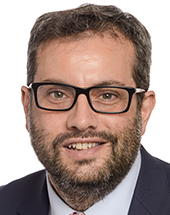

| Rank | Name | Country | Group | Speeches | |
|---|---|---|---|---|---|
| 1 |

|
Lukas Sieper | Germany DEU | Non-attached Members (NI) | 390 |
| 2 |

|
Juan Fernando López Aguilar | Spain ESP | Progressive Alliance of Socialists and Democrats (S&D) | 354 |
| 3 |

|
Sebastian Tynkkynen | Finland FIN | European Conservatives and Reformists (ECR) | 331 |
| 4 |

|
João Oliveira | Portugal PRT | The Left in the European Parliament (GUE/NGL) | 232 |
| 5 |

|
Vytenis Povilas Andriukaitis | Lithuania LTU | Progressive Alliance of Socialists and Democrats (S&D) | 227 |
All Contributions (53)
Disclosure of income tax information by certain undertakings and branches (debate)
Madam President, thank you very much, ladies and gentlemen, and thank you very much, Commissioner, for your words. It is true that this support seems massive and it is. I would just like to clarify a few points. First of all, I don't think this is a small step. I think it's a colossal step. I think it's a unique, pioneering step in the world. And I hope that, from this step that we are taking, others will also come to take the same step, because that will mean that we are also building not only a better Europe, but a better world. And for those who are concerned about whether the base is fiscal, then no, it is a base that is based on transparency and will serve, yes, so that citizens can make their accounts, they can know how much money these multinationals are effectively earning in the European Union, how many jobs they are generating, how many are, indeed, the benefits they have and not only in the main company, but also in the branches. And from there make your accounts and you can also ask for decisions from your own governments and decisions from your own deputies. And maybe, if necessary, change the Treaties; and maybe, if necessary, make the Treaties also the tax base and we can act collectively. This is what we are approving today, because you cannot sustain a society in which large multinationals that are earning tons, giants, huge amounts of money, are taxing some of them less than 2% - which is what is happening in real life. Let's put first order in our house: Of course, it would be better to have an agreement that involves an analysis, an overall review. But let's put order first in our house: in the European Union. And I'm done. For the one who said that the European Union was not a state: No, it's not, unfortunately it's not, but it will be, it will be. And it will also be a federal, social and legal state.
Disclosure of income tax information by certain undertakings and branches (debate)
Madam President, Voltaire said that the optimal, the perfect, is the enemy of the good. Here we bring a very good agreement, but not optimal, not perfect; And we don't mean it either. It's hard to pretend a thing like that when you sit at a negotiating table. But we do bring something that significantly improves the situation we had previously. We have had five years of deadlock on the table since this Parliament first pushed for the negotiation of this public country-by-country report. Five years that have allowed us to go with a few milestones down the path from the Panama Papers to the Pandora Papers and each and every one of those situations have been just as infamous. I want to thank the people who have made it possible for us to move forward. First of all, of course, to the shadow rapporteurs, in an exercise of pragmatism, but also an enormous exercise of solidarity, regardless of issues such as political cost. And I would also like to thank, of course, the Portuguese presidency of the day. Without their competition it would have been impossible in practice not even to advance. This is an agreement that establishes situations and sets such positive conditions and that changes so much the things that, as I say, have been blocked for many years and that has caused even some of the member countries to still amamate with being able to take it to court. But we're not going to take a step back. It cannot be assumed that companies – and this is a 2015 estimate –, that multinational companies – the ones we referred to, which invoice more than EUR 750 million per year – evade between EUR 50 and 70 billion each year. This is an estimate of 2015 and I want, above all, to focus on that, which is an estimate. And it is an estimate because we do not have any method to know in a real way that type of information that is essential when proposing a fair fiscal policy and a sufficient fiscal policy. From now on, this will no longer be the case in all matters relating to the taxation of these large companies and their activity within the European Union, but also in this list of tax havens: in the blacklist and in the greylist – by the way, a list that may also be increased if necessary. We also have a clause that will allow us in four years to be able to renegotiate, re-implement, re-increase the scope of a standard that can be, as I say, perfect or more perfect, but that is already essentially good. I believe that with this agreement that we are reaching and that we will support, we are sincerely making history. And history in democracies is not done by conquering that hill or watering the countryside with blood, it is done with a vote in a democratic parliament - as we are going to do here - and with a publication in an official bulletin. That's the epic in democracy. That's the way we have to make history: building one more building, building one more plant in that building called civilization. So I ask for all the support for this text, I think a great job has been done and I want to thank again all the people who have made it possible.
Artificial intelligence in criminal law and its use by the police and judicial authorities in criminal matters (debate)
Mr President, I would first of all like to thank and congratulate the rapporteur on his report, which I think is absolutely balanced and which is in line with what this Parliament has already raised on some occasions. We must indeed find a balance between the risk to the protection of rights and, of course, the technological development that somehow facilitates the achievement of social objectives. But we are, of course, dealing with a matter that directly affects fundamental rights. Several of them are involved in the legal development of this technology, or in the legal field that orders this technology, and, at the same time, social peace is also at stake when we talk about issues that affect security and the established order itself and the rules by which we are governed. It is that, indeed, some of those realities that science fiction has anticipated in the past - some of them are already a reality today in terms of technological development - do not become a kind of dystopia in our times of those approaches to films such as Minority Report, where the police even anticipate the commission of the crime or the intention expressed because they are able to foresee through technologies such as these the possible commission of a crime; Or, without going any further, that one day we have those robot judges who in some way would also have delighted some French revolutionaries when they said that of "the mouth that says the law", seeking an alleged impartiality in the expression of the justice of the people. But, at the same time, we also need to avoid obstacles to the development of tools that can effectively make us achieve some of the goals that can make our societies better; certainly in the area of the administration of justice itself, but also as a support tool for our own security forces. We cannot ignore those possibilities that artificial intelligence gives and hinder its development. That is why I also want to support this report, which I think fits perfectly - and this is something that I would like to remind some of my colleagues - into the approach adopted by this Parliament itself almost a year ago - a subject on which I was also rapporteur - which spoke of ethics applied to artificial intelligence technologies and which I think went in the same direction, trying to avoid scenarios that are not desirable, but also trying at the same time not to hinder. Ladies and gentlemen, this report cannot fully open the barriers and let everyone go their own way and, at the same time, be as intrusive as other colleagues denounce. I think it is precisely a report that finds the middle ground, which raises very interesting questions.