
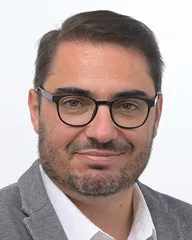
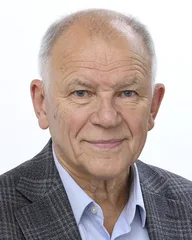
| Rank | Name | Country | Group | Speeches | |
|---|---|---|---|---|---|
| 1 |
|
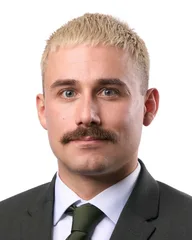
Lukas Sieper | Germany DE | Renew Europe (Renew) | 494 |
| 2 |
|
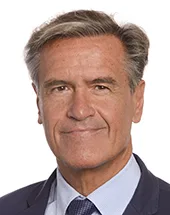
Juan Fernando López Aguilar | Spain ES | Progressive Alliance of Socialists and Democrats (S&D) | 463 |
| 3 |
|
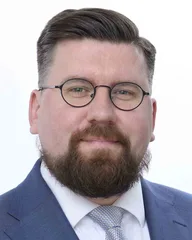
Sebastian Tynkkynen | Finland FI | European Conservatives and Reformists (ECR) | 460 |
| 4 |
|
João Oliveira | Portugal PT | The Left in the European Parliament (GUE/NGL) | 288 |
| 5 |
|
Vytenis Povilas Andriukaitis | Lithuania LT | Progressive Alliance of Socialists and Democrats (S&D) | 276 |
All Speeches (94)
Adequate minimum wages in the European Union (debate)
Date:
13.09.2022 12:56
| Language: ES
Speeches
Madam President, Commissioner, the proposal for adequate minimum wages is a good one for Europe and it is about social justice, especially for women, who are 60% of minimum wage earners in the European Union, when we only represent 46% of the workforce. We are talking, therefore, about closing the gender gap in wages, income, pensions, wealth, and fighting women's poverty and child poverty, as well as inequality, which is now particularly severe with inflation. Economic inequality is one of the greatest challenges we have and combating it is essential to successfully face the green, digital and, also, demographic transitions, which have to do with care. And it is especially in the long-term care sector where about 81% of the workforce are women who earn minimum wages and also with poor and poor working conditions. Therefore, this proposal for a Directive on minimum wages is an essential piece for the construction of Europe and socialists have been working to take it forward from all corners of Europe, from Andalusia to Thessaloniki, to be able to walk towards social convergence, guarantee the rise of wages and fight against economic and gender inequalities. Undoubtedly, it is a commitment to dignity and social justice.
Madam President, as the Commissioner and the Members who preceded me have said, gender discrimination and women's poverty speak for themselves, the data speak for itself. But, in addition, in these data the real poverty of women is statistically undervalued, since poverty is measured through the family unit, without taking into account intrafamily gender inequalities. This underestimates the real poverty data of women and masks the structural inequalities that women suffer, their lower access to all kinds of resources, their greater difficulty in escaping situations of sexist violence or the fact of being committed to prostitution or to being victims of sexual exploitation, especially sexualized women or immigrants with greater difficulties in accessing employment or social services. Statistics do not capture well the multidimensional nature of poverty or do not measure time poverty, which anchors women in this situation of poverty, especially in single-parent households, since women represent 85% of single-parent households, these constituting 42% of households that are at risk of poverty and social exclusion. This poverty of time leaves these women barely without tools to be able to reverse their situation, as well as that of their sons and daughters. We need to know that one in four children within the Union is at risk of poverty or social exclusion. We can't afford it. That is why we need better statistics, better laws, better policies, especially economic policies, to combat inequality, poverty and also gender inequality. Above all, we need a strong political commitment from the European Union and the Member States. We are here to act, to change everything necessary, so that people, including women, can live with dignity and fully exercise their citizenship rights. This is how we will build a European project for the future, a priority for socialists who believe in a feminist Europe with social justice. We will work for more Europe and less poverty.
Mr President, Commissioner, first of all, I would like to thank the shadow rapporteurs, the teams and the political groups for their work and their commitment to a problem, that of poverty, which affects the whole of Europe and is of increasing concern to European citizens, as the latest Eurobarometer shows. Poverty is immoral and, in a rich territory such as Europe, it is simply incomprehensible. It limits the effective citizenship rights that must underpin the European project and directly undermines the fundamental values of the European Charter. Poverty has soared in Europe with rising energy prices and an average increase in inflation of 10%. And I give you an example of my land, Andalusia, where the latest data tell us that more than 38% of the population is at risk of poverty and social exclusion. This is simply an embarrassment that urges us to act with courage and conviction. In the current context, with Russia's invasion of Ukraine, we are experiencing extreme uncertainty and also a very harsh reality. Prices of basic food, fuel and energy are rising steadily, and wages are not rising at the same rate. Growing poverty particularly affects the poorest of the poor, who are women. According to the latest Eurostat data, there are 64.6 million women, compared to 57.6 million men, in poverty in Europe and, in recent years, the gender poverty gap had already increased in 21 of the 27 Member States. We have no excuse. That is why this report seeks to put forward a series of proposals which must be put into effect as a matter of urgency. First, we must put in place an ambitious anti-poverty strategy for 2030, including the deployment of minimum incomes in all Member States; an income pact, betting on a new social contract that is feminist, with decent jobs and jobs. We must tackle all existing gender gaps: 11% in employment; an hourly wage of 13%; in pensions, 29%; or in revenue, 36%. Also the gap in access to all kinds of resources and services that ultimately lead to the risk of social exclusion and poverty. Secondly, we must resolutely combat energy poverty, whether in winter or summer, especially in this context of climate emergency, which particularly affects single older women and single-parent families. In the same way, we must combat the housing crisis, because every dignified life begins with having a roof. Third, we need to incorporate a gender perspective into the digital transition, including by creating a dedicated fund that increases women's participation in the digital economy, which is essential for inclusion. Fourthly, we need to create a European care strategy, a genuine European care pact, because care work should not be free, unrecognised, unpaid or naturalised for women. We need measures that guarantee the co-responsibility of all people in care, especially within ageing societies, and dignity for those who receive care and for those who care. Fifthly, we must review our economic policies, our economic governance and our taxation, to ensure equal access to basic public services, adequate financing, fair and progressive taxation, and economic policies that do not create inequalities, but on the contrary: a real rental agreement. And, sixthly and lastly, we must mainstream gender throughout the public policy cycle within the European Union and the Member States. Women's poverty has structural causes that we must combat if we want a dignified Europe with a future. I look forward to your support.
Global threats to abortion rights: the possible overturn of abortion rights in the US by the Supreme Court (debate)
Date:
08.06.2022 19:53
| Language: ES
Speeches
Madam President, it is precisely in the United States - champion of democracy and individual freedoms - that a basic human right such as the sexual and reproductive rights of women is about to be annulled, alluding to legal causes, but especially by the long hand of the anti-gender and anti-women movements that are coming to the Supreme Court of the United States and also, unfortunately, to Europe. This is the case in Poland, precisely with a far-right government controlled by intolerant ultra-Catholic movements, the same ones that in my country, Spain, are allies of Vox, such as HazteOir, who have just called a demonstration in Madrid against a recent amendment of the abortion law and where, curiously, part of the Catholic hierarchy has already confirmed its attendance, the same one that last weekend tried to interfere in the next Andalusian elections on June 19 expressly asking for the vote against the left parties. The enemies of women's rights never left: They have been weaving their anti-gender strategy for years and they are fighting a global battle, and we have them here, in this Parliament, where the extreme right is really reaching more and more parts, and in my own country, entering the governments thanks to the fact that the People's Party has opened the doors to them.
The impact of the war against Ukraine on women (debate)
Date:
05.05.2022 11:18
| Language: ES
Speeches
Madam President, Commissioner, the consequences of a war are terrible and disproportionately affect women, girls and boys, who, in addition, also on this occasion, account for the majority of those who have left Ukraine. We need to ensure their care and inclusion in our social, health and education systems and make the necessary funds available for it to be done with dignity. In particular, the European Union must protect these women and girls from the use of sexual violence as a weapon of war and ensure that women have access to sexual and reproductive health services, including care for legal and safe abortion. Europe must also participate in the collection of evidence against the atrocities of war committed, including rapes, which should not be prescribed, and open its eyes to the barbarism of surrogacy and not consent to the commodification and dehumanization of going to Ukraine to collect purchased babies and leave pregnant women, who are not even named mothers, to their fate. In short, we must guarantee the rights of women and girls now, and in these coming months, because we cannot forget that we are facing an anti-gender agenda that, on a global scale, does not respect our rights, especially sexual and reproductive rights.
Global approach to research and innovation: Europe’s strategy for international cooperation in a changing world (debate) (debate)
Date:
06.04.2022 13:49
| Language: ES
Speeches
Madam President, Commissioner, I wanted to use this debate on the global approach to research and innovation to vindicate the importance of academic freedom in advancing knowledge. Because the university must be a space for debate and critical analysis. And we need to respect that academic freedom to ensure that function. And the first thing we have to do in Europe is really respect it, because that way we can also defend it all over the world. Because one of the elements of the European Union's leadership, precisely in research and talent, can really be greatly strengthened by international cooperation in research and development. Cooperation that obviously must be based on fundamental principles and values and also on gender equality. In the resolution we are debating today, we call for intensified collaboration with third countries to find solutions in the green and digital transitions. For those transitions to be successful and just, we need international cooperation.
Madam President, Commissioner, first of all, I would like to congratulate the negotiating team which, after complex discussions, has reached a balanced compromise that ensures the continuity of roaming for another ten years, preventing that achievement from being interrupted for consumers. Roaming policy, such as at home or roaming, is a European achievement that we must continue to defend so that consumers can continue to use their mobile phones when travelling in the European Union without surprises or additional charges. The agreement reached in a trilogue that I had the honour of chairing guarantees the right to the same quality and speed of mobile connection when travelling to other Member States, as at home, and progressively reduces wholesale roaming charges, free access to emergency services, including for people with special needs, and provides for the Commission to assess whether there is a need to further reduce surcharges for international calls within the Union. Therefore, I believe that we must vote in favour of the agreement that ensures the continuity of roaming policy as at home, and thus maintain the great visible success for European citizens within the digital single market.
Gender mainstreaming in the European Parliament – annual report 2020 (debate)
Date:
08.03.2022 21:34
| Language: ES
Speeches
Mr President, first of all, thank you very much to the rapporteurs for their work: there is no doubt that gender mainstreaming in all policies and throughout the policy cycle is the best strategy we can pursue to advance gender equality, and to this end its inclusion in the European Parliament is essential because we also have a responsibility to set an example for many other parliaments. The reality is that we have advanced in this approach, but only in part: for example, it is true that all Parliament’s committees have adopted gender action plans, but there is a lack of oversight as to whether the objectives set have actually been achieved. It is also true that there is more presence of women in the positions of responsibility of the commissions, but it is still a minority and above all there is a great segregation, with women rather concentrated in the most social commissions and more absent from others that, in theory, have more power, such as those in the economic field, and that, in the end, define the limits of the policies that we can do in the rest of the continents. We also know from this report that we need a better and more structured connection in terms of gender mainstreaming, gender mainstreaming, between all the institutions of the European Union; We also need to join forces to fight the anti-feminist, anti-gender and ultimately anti-democratic movements that we have long known are receiving extraordinary funding to launch anti-equality campaigns, although now, unfortunately, with the war in Ukraine they are flourishing even more. We also see that it is necessary to measure whether the contributions made by the Committee on Women's Rights and Gender Equality are incorporated into other committees and into Parliament's final position, and for that we must have better data, more data, and that will be the way to measure real political will. We Socialists have that will and we believe that this report is a great step forward, especially the inclusion of zip lists in the next revision of the electoral law of the European Union, that in terms of anti-harassment and #MeToo we make training compulsory for Members of Parliament and that external audit is a real guarantee. We are, therefore, facing a solid and progressive proposal, and it is positive that we are debating it today, 8 March, International Women's Day, on which there are so many women and so many men seeing us everywhere.
The EU priorities for the 66th session of the UN Commission on the Status of Women (continuation of debate)
Date:
16.02.2022 20:20
| Language: ES
Speeches
Mr President, Commissioner, according to the United Nations, women, girls and boys are 14 times more likely to die in a climate disaster than men, and it is not because, as has been said here, there are biological differences but because women are still, or continue to be, more of the priority responsible for the creatures, and that makes us more vulnerable. Also because we have access to fewer resources, and that also explains why we constitute 80% of the people displaced by climate change. Therefore, we must include this feminist perspective to combat climate change and so that the transitions we undertake are really just transitions and address, and do not feed, do not increase, inequalities. Therefore, we need to do an exercise in collective intelligence in favor of the planet and in the service of the common good, incorporating more women into decision-making. Socialist women and men propose constant work for just transitions, and our commitment, without a doubt, is for a progressive, sustainable model that promotes transformative climate action from equality and social justice.
Sexual and Reproductive Health and Rights in the European Union (continuation of debate)
Date:
20.01.2022 10:39
| Language: ES
Speeches
Madam President, Commissioner, we know that responsibility for health falls within the competence of the Member States, but the Union is playing an increasingly important role, as we have seen, in harmonising the rules to combat COVID. It is even working on the implementation of a European Health Union, but I wonder if it is also about women's health, about our sexual and reproductive rights. Faced with this Europe, we have been finding groups of religious or non-religious origin, groups of extreme right or right, which add obstacles to abortion in different countries and have extraordinary funding. We also find government actions from Poland to my own land, Andalucia, where the Conservative government is funding associations to harass women who decide to end pregnancy. They are groups and governments that instrumentalise sexual and reproductive health and rights in order to undermine human rights and EU values and democracy. That is why, yes, we socialists have indeed proposed this debate, we applaud President Macron's proposal yesterday in this House to include abortion in the Charter of Fundamental Rights of the European Union and we also hope that President Metsola will defend the resolutions adopted in this own House, including respect for sexual and reproductive rights, and that she will be on the side of women in this struggle.
Mr President, Vice-President, Commissioner, first of all, I would like to congratulate my colleague Christel Schaldemose and her team for their hard work in these months. We all have to be aware that it has not been easy to try to advance the democratic control of the digital field with clear rules that put the common good before the interests of the big platforms. We are facing a very complex legislation that will undoubtedly mark a before and after, helping to redefine the relationship between citizenship and the digital sphere, contributing to democratize the Internet and possibly establishing global standards. As shadow rapporteur for the Committee on Industry, Research and Energy, I would like to highlight the work of the teams involved and the cooperation in these months of intense work. The first objective we pursued was to ensure that the digital sphere was a safe place, regardless of the size of the platform. Throughout these months of negotiation we have managed to strengthen the obligations for very large platforms and have facilitated access to data for researchers, something that was very important for us, as well as for non-profit organisations and bodies. Likewise, we have managed to increase interoperability and data portability measures to counteract the dominance position of large platforms. In addition, we have worked to achieve greater transparency on all online platforms, both in digital advertising, as well as greater protection for minors, and for recommendation systems. Although there is still a way to go. I would like to highlight that this week three Democratic congressmen introduced a law to ban the use of personal data for targeted advertising in the United States. Another proof that it is a debate and much-needed work in which we still need to move forward to regain control over our data and our privacy. We believe that the Digital Services Act is a first step in the right direction that will contribute to making digital services safer, helping to protect the rights of citizens, of our children, and also to improve our democracy. Socialists will continue to work to make the digital environment a fairer space and with greater democratic control of our data.
MeToo and harassment – the consequences for the EU institutions (debate)
Date:
16.12.2021 09:32
| Language: ES
Speeches
Mr President, we know that sexual harassment is like an iceberg from which only the dot is seen and all or most of it is hidden; We also know from the first survey by the European Union Agency for Fundamental Rights that, in a single year, one in four citizens has been the victim of sexual harassment, although we should say citizens, because 90% of us are women. As with gender-based violence, we know what difficulties people who have been victims have in asserting their rights and verbalizing, in telling their problem; That is why only a small part comes to light, and in the face of this invisibility of sexual harassment, the EU institutions must take a firm and clear stance against this problem and make it visible. Hence the importance of this resolution, which I also thank Mrs Regner and my entire group, the Socialist Group, for promoting, because it seeks precisely to facilitate these complaints and obtain justice, obviously by giving support to the people who have been victims; Resolution that we know already joins the one of 2017, but that after the movement "Me Too" takes much more force, in part because not enough has been done. We know that in this 'Me Too' movement it managed to create common knowledge about the inappropriate behaviour of powerful men, but we have to go further, both in Parliament and in the rest of the European institutions, and fight against the sexual abuse and harassment often perpetrated by men who are neither so famous nor so powerful, but who continue to have that sense of impunity. All women know, we all have our "Me Too" more or less, so the message has to be clear: non-impunity and zero tolerance; We have to create the institutional channels that allow us to say what they are capable of doing.
The European Commission Guidelines on inclusive language (topical debate)
Date:
15.12.2021 16:07
| Language: ES
Speeches
Madam President, Mr Vice-President of the Commission, the fact that the topical debate in this last plenary session of the European Parliament revolves around an internal document of the Commission that no longer exists shows that, with all due respect, the proposal of the European People's Party in this case has been unserious. I can assure you that the European right, especially coming from a Spanish one, has always seemed democratic and focused, but also that with this course it may undoubtedly be embarking on the path of populism most characteristic of the extreme right, far, undoubtedly, from the common European project. The European People's Party has been pointing out the Commissioner for Equality, I think undeservedly, and it is worth asking whether she is doing so to divert attention from the serious attacks on the rule of law and the rights of women and LGBTI people that are taking place in some Member States led by governments of her political family. Let's be serious: Moving forward on inclusion, equality and equal treatment must be a very serious issue for this Parliament, and it certainly is for socialists and democrats, who believe in an inclusive and progressive European Union, regardless of people's religion, gender, sexual orientation, age and ethnicity: We certainly count on your party, and also on the Commission, to build this Europe of all.
Mr President, Commissioner, I would like to start by stressing that today is World Science Day for Peace and Development, so I would like to highlight the intrinsic value of research for our societies and, as the Commissioner has referred to, that it has a significant participation of women. I do not want to miss this opportunity to remember that support and investment in science is not a luxury, it is a necessity: the pandemic has made it clear to us, as does the constant struggle to mitigate and curb the effects of climate change, how important research and investment in research is. In relation to the European Metrology Partnership, I join the comments of the colleagues who have worked very well and very consciously on this dossier of support for this initiative which aims to accelerate Europe's global leadership in metrology research by establishing European collaborative networks. What is not measured does not exist and, if something does not exist, we do not know it, we cannot really transform it, so I take this space to highlight the importance of metrology as a facilitator of economic and social activity and the need to support existing structures for the development of the metrology community and promote synergies between European centers.
Employment and social policies of the euro area 2021 (debate)
Date:
18.10.2021 19:13
| Language: ES
Speeches
Madam President, Commissioner, first of all, thank you very much to all the political groups, shadow rapporteurs and teams for the magnificent work they have done on this file. Today, we are discussing the proposal for employment and social policies in the euro area in 2021. I would like to stress once again that this is the starting point for laying the foundations for that new Europe, for that new economic and social framework that we must build together and urgently, because the situation has changed, and that we must adapt and anticipate, creating the conditions that allow stable, dignified jobs to be created and that also allow people to live with dignity. We have no excuses. We must face the profound social consequences of the pandemic, which has also ridden on previous crises, offering political solutions that leave no one behind, wherever they live. It is our historic duty to improve the well-being of all citizens. We must continue to work on the new roadmap, in which social rights and equity prevail, if we are to truly build a Europe with a future. And we will only achieve this by insisting on the need to design our economic policies including social conditionality. This was necessary before COVID-19 and now it is even more so, because we are talking about people and we know that economic policies have a differentiated impact on social groups and, also, on people, because we do not all have the same preferences, interests or desires, nor do all people have the same access to resources or decision-making space, nor have they socialised or prepared us in the same way or to have the same role in society, as we women very well know. Going out on the street we see that there are still families that do not reach the end of the month, fathers and mothers who cannot give their sons and daughters the education they would want. The consequences of the pandemic in some cases have opened and in other cases have increased deep gaps that already existed within the Union. We risk our future, our well-being and the consolidation of the European project. If inequality continues to rise, this will make us weak, and if we do not defend the well-being of our society, or a gender-responsive economy, or opportunities for the most vulnerable people, we will be weighing on everyone's opportunities. It is urgent that our economy includes macroeconomic indicators that incorporate or mitigate the unequal consequences of economic policy between different social groups, individuals, economic sectors or territories, reflect the reality of our society and take into account all citizens. It is the people who build Europe and we, their representatives, must live up to it. I will highlight a dozen key points in this report. First: the European Semester should be aligned with the objectives and strategies of the Sustainable Development Goals, the European Pillar of Social Rights and the Green Deal;, and to underpin Member States’ recovery plans. Second: the Semester should be based on an approach that integrates economic, social and environmental policies and promotes structural change so that social progress, sustainable development and well-being take into account the root causes of long-term economic and social imbalances. Only then can we ensure that Europe continues to enjoy the world's most advanced welfare systems and also becomes the first climate-neutral continent. Third: Therefore, we need to work with indicators that cover the social risks stemming from the effects of the pandemic and previous imbalances in the economy, employment, health, as well as the transformations that the green and digital transitions may bring about. Fourth: our current social indicators do not provide clear targets for measuring the impact of European Union action and we call on Member States to set ambitious national targets. Fifth: along these lines, we consider that sustainable well-being should be integrated into the annual sustainable growth strategy and the country-specific recommendations. Therefore, national reforms must have a clear orientation of solidarity, integration and social justice, with the aim of creating quality employment, fixing it on the territory and moving towards a new social organization of care so that it does not fall in a majority not recognized in women. Sixth: inequalities, as well as the employment, social and health situation of the Member States concerned, should be taken into account before taking the decision to deactivate the general escape clause. Seventh: We need to work towards establishing a European fiscal capacity that will provide stability to the economies of the euro area. Well-designed tax systems are essential to ensure a high level of protection of workers from risks throughout their lives, as well as their pensions. Eighth: people and also small and medium-sized enterprises must be protected so that they are not caught up in over-indebtedness, and because we know that they need support when it comes to non-performing loans. Ninth: we face this necessary coherence between the objectives of sustainable well-being and monetary policy. We must better integrate social objectives, social progress, well-being and sustainability in all European Union policies, especially in budgetary planning to make public investment efficient in social and environmental objectives. And tenth, and last: the architecture of the new governance of the European Union should be based on solidarity, social justice and integration, with equitable distribution of wealth, gender equality, high-quality public services, including a universal and high-quality public education system, decent employment and sustainable growth. That is why we consider investment in sustainable well-being to be vital. The scenario has changed and with the imminent digital and green transitions it will change even more. We need new recipes because we know the old ones didn't work.
The impact of intimate partner violence and custody rights on women and children (debate)
Date:
04.10.2021 19:49
| Language: ES
Speeches
Mr President, Commissioner, according to the European Union Agency for Fundamental Rights, 73% of mothers who were victims of physical and sexual violence by their partner say that at least one of their sons or daughters was aware of that violence. Violence that represents a serious social problem, that creates physical and psychological traumas in the victims and that, without a doubt, is an embarrassment for all of us as a society. We know that a batterer is not a good father. That is why it is necessary to move forward with the withdrawal of custody and visitation rights in such cases. In Spain, the Socialist Party promoted a reform of the Civil Code that was approved last May and that has been effective since this September. And in Europe we must recognise gender-based violence as a Eurocrime and we must establish both cooperation between Member States and minimum standards for the fight against gender-based violence against women and for the protection of the children of the victims of such violence. Because it is their right, it is their future and it must also be our future.
Fair working conditions, rights and social protection for platform workers - New forms of employment linked to digital development (debate)
Date:
13.09.2021 20:17
| Language: ES
Speeches
Madam President, Commissioner, at the beginning of September we saw a shocking photograph: While Hurricane Ida caused severe flooding and dozens of deaths in the United States, a food delivery worker continued to work, pedaling with difficulty with water up to his waist. It is a shocking image, but also outrageous, and that helps us to face the new emerging inequalities, such as that of workers without rights. While it is true that new types of employment and platform work can help or have the potential to help reconcile work and family life, that does not mean that many are precarious jobs and are below labor standards, and this is not tolerable. Europe must be characterised by respect for workers’ rights and fundamental freedoms, including in the digital sphere. And so, from Parliament, we urge human control behind algorithms, that companies have the obligation to report on the algorithms used and to ensure transparency in relation to the personal data used. Therefore, we are clearly against surveillance capitalism also in the workplace.
Review of the macroeconomic legislative framework (debate)
Date:
07.07.2021 22:07
| Language: ES
Speeches
Madam President, we are facing a new moment, a new economic narrative, a new fiscal era, and we cannot miss the opportunity to build a new Europe, a new economic and social framework; and we need it urgently. In this new roadmap, social rights and equity must prevail in the design of macroeconomic policies and their short- and long-term effects must be taken into account. To the macroeconomic conditionality we must also add the social conditionality to overcome the inequalities, which have deepened during the crisis, but which have also been caused by a dysfunctional economic governance framework and with obvious failures. To this end, we must change the rules of economic and social governance, also following the conclusions of the Porto Summit. We risk our future, our well-being and the consolidation of a European project of progress.
A new ERA for Research and Innovation (continuation of debate)
Date:
07.07.2021 19:22
| Language: ES
Speeches
Mr President, the European Research Area must be a solid framework for strengthening Europe's scientific and technological capacity and consolidating a common area of research and innovation focused on excellence and geared to all talents and, of course, contributing to social well-being. To this end, it will be vital, first of all, to improve the conditions in the development of the research career, especially for those who are starting out, especially women and underrepresented groups; secondly, to incentivise both the public and private sectors to make a greater commitment to European research; third, reducing territorial inequalities or the gender gap; fourthly, to increase cooperation between universities, research centres and industry; and fifth, facilitating open science and improving data availability and standardisation. Ultimately, it has to contribute to sustainable knowledge-based development and to achieving the objectives of the green transition and digital leadership, and support Europe’s social and economic recovery.