
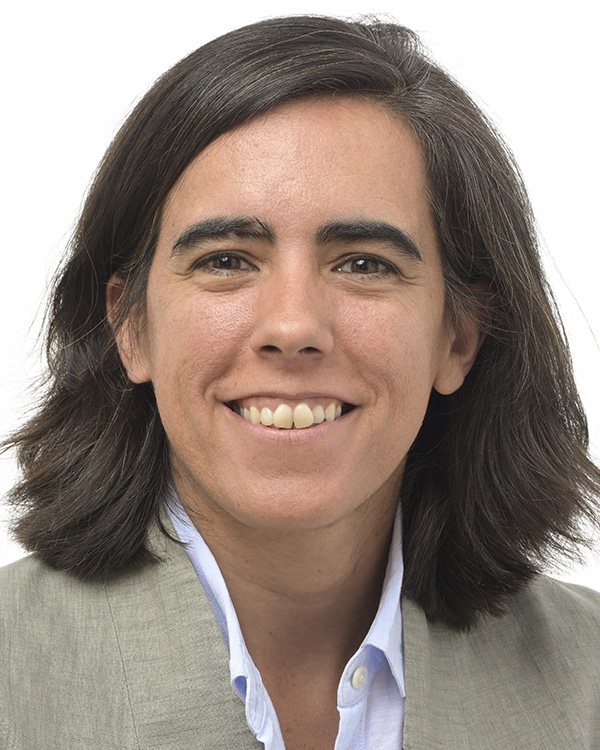


| Rank | Name | Country | Group | Speeches | |
|---|---|---|---|---|---|
| 1 |

|
Lukas Sieper | Germany DE | Renew Europe (Renew) | 494 |
| 2 |

|
Juan Fernando López Aguilar | Spain ES | Progressive Alliance of Socialists and Democrats (S&D) | 463 |
| 3 |

|
Sebastian Tynkkynen | Finland FI | European Conservatives and Reformists (ECR) | 460 |
| 4 |

|
João Oliveira | Portugal PT | The Left in the European Parliament (GUE/NGL) | 288 |
| 5 |

|
Vytenis Povilas Andriukaitis | Lithuania LT | Progressive Alliance of Socialists and Democrats (S&D) | 276 |
All Speeches (71)
More Europe, more jobs: we are building the competitive economy of tomorrow for the benefit of all (topical debate)
Date:
15.03.2023 14:13
| Language: ES
Speeches
Mr President, Commissioner, representatives of the Council. I am very glad, Commissioner, that in this debate you have highlighted something that I consider essential, which is the Next Generation EU funds. Precisely in a debate on competitiveness, when we have in place a plan of 800 billion euros that we are financing with European debt, which future generations will have to pay, and when we talk about competitiveness we have to ask ourselves if indeed those 800 billion euros, those national plans that the different Member States have presented and that the Commission has approved, are or are not contributing to making a more competitive Europe, a Europe that allows to create more jobs, a Europe in short, as the name says, more resilient. And I appeal to the Commission directly. Is the Commission really monitoring that the reforms that are included in the national plans are the reforms that are going to make us a more competitive Europe? Are we creating a legal framework that allows companies to act in a way that allows them to compete on an equal footing with the rest of the world? Honestly, I have serious doubts. Alert of a specific reform that is currently presented by the Spanish Government, the pension reform, which puts all the weight on entrepreneurs. It is a reform that has announced without having agreed with the employers, simply and simply agreed with the unions, and without having agreed with the opposition. And I warn about a reform in which the Spanish Government says it has the support of the Commission. It is a reform that is not proven to create a sustainable system and it is a reform of which all entrepreneurs denounce that they sat at the table without even having seen a single paper. I therefore call on the Commission to do that very important job of ensuring that the reforms of the Recovery and Resilience Facility reforms, the Next Generation EU reforms make us a more competitive Europe.
REPowerEU chapters in recovery and resilience plans (debate)
Date:
13.02.2023 19:17
| Language: ES
Speeches
Madam President, Commissioner, without a doubt, the adoption of the REPowerEU chapter today under the Recovery and Resilience Fund is very good news, because we are providing solutions to the real problems caused by Russia's illegal invasion of Ukraine, resolving the serious inflation crisis and the serious crisis that high energy prices are causing for both European families and businesses. But this is the beginning of Europe's reaction and we cannot congratulate ourselves on a programme from which we are not yet able to measure the results, to measure the impact. Our responsibility – the responsibility of Parliament and the Commission – does not end with the approval, which I hope will happen tomorrow, of this amendment. The day ends when we can tell the Europeans what the money has been spent on, assure them that the money has been spent well and also assure them that the necessary reforms that were planned in the original design of this programme have been undertaken. Therefore, Commission, I appeal to you to understand that now is when the most important thing begins. We need to ensure that every penny goes towards the goal for which it is intended, which is to make Europe more competitive and to create companies that are more productive. More importantly, we have an immense responsibility to future generations who will have to pay this money back. Therefore, today begins, and begins with the Commission's responsibility to ensure that, with good co-governance, with entrepreneurs, with regions, with municipalities, we are able to guarantee the proper implementation of the funds.
The 30th anniversary of the UN Declaration on the Rights of Persons Belonging to National or Ethnic, Religious and Linguistic Minorities (debate)
Date:
15.12.2022 09:44
| Language: ES
Speeches
Madam President, I was going to use my minute and a half to denounce - and I do not want to stop doing so - the persecutions of Christians in the world and to appeal to the Commission not to look away from the constant massacres of religious minorities, in this case Christians, throughout the world, especially in an institution such as Parliament, an institution of the European Union where we are constantly saying that we are united in diversity. And I do not want to stop raising my voice to say that we must give shelter, we must give protection and we must denounce each and every one of the massacres of Christians in the world, especially now that the time of Christmas arrives, since, sadly, in previous years we have seen massacres precisely on Christmas Day. But unfortunately, after listening to Mrs Ponsatí, I can only denounce several things. First of all, Mrs Ponsatí is a fugitive from Spanish justice. And it is precisely because it wanted to alter the constitutional order. Secondly, precisely the children who speak Spanish and who want to be educated in Spanish in Catalonia are precisely those to whom this right is not recognized. Spain is a wonderful country in which there are many co-official languages, but, in some territories of Spain, families who want to educate their children in Spanish, just the language that all Spaniards share, simply and simply can not do it. They receive all kinds of harassment and all kinds of impediments to be able to exercise a fundamental right that is to educate your children in their mother tongue. Therefore, nothing that Mrs Ponsatí has said is true, and I deeply regret that this Parliament is being used to say those things. Merry Christmas.
Tackle the cost of living crisis: increase pay, tax profits, stop speculation (topical debate)
Date:
14.12.2022 13:53
| Language: ES
Speeches
Madam President, Commissioner, Minister, of course it is a priority. And it must be our priority to tackle the escalation of prices that affects in a tremendously cruel way many European households, but also entrepreneurs, the self-employed, entrepreneurs and European SMEs who are making real, immense efforts to get ahead, to continue creating jobs, to continue creating wealth. I do not tire of saying that the European Union has put in place a spectacular mechanism, which is the mechanism of the Next Generation EU funds, which precisely what it talks about is investments and reforms. The question I ask the Commission is whether the Commission is carrying out its work, its responsibility to monitor that the necessary reforms are being undertaken, that these reforms are having the impact that was sought and whether, in addition, the funds are being implemented with the agility and speed that is needed at the moment. We are looking for big investments. For example, in my country, in Spain, we have an immense delay. We have a great instrument which is the Next Generation EU funds and I call on the Commission, with that responsibility, to take care to ensure that the funds are implemented quickly and the necessary reforms are undertaken.
Keep the bills down: social and economic consequences of the war in Ukraine and the introduction of a windfall tax (debate)
Date:
18.10.2022 10:29
| Language: ES
Speeches
Mr President, Commissioner, in the face of the terrible energy crisis, the inflation crisis, the difficulty of paying mortgages due to the high rate of interest rates or the supply crisis, there is already a tool to start tackling them: These are NextGenerationEU funds, which I know the Commissioner knows very well. We are talking about 800 billion euros which, in a very high percentage, are pending implementation, pending expenditure, pending investment. I would like to take this opportunity to encourage the Commission to put all its capacity into making that money, that EUR 800 billion, run quickly and efficiently, and to ensure that it reaches the real economy, families and businesses; also to carry out its audit work with the Member States to ensure that those reforms accompanying that investment are the right reforms. No more tax increases, but tax incentives and those measures that make our economy more competitive and help bring in that much-needed liquidity. Commissioner, there is an instrument called NextGenerationEU and I call on the Commission to do its job and really get the funds spent fast.
Madam President, Commissioner, today we are recalling that there are more than 24 million SMEs in Europe employing more than 100 million Europeans: We must not forget that there is no better social policy than job creation, but it is precisely these 24 million SMEs that have been suffering the consequences of the crises of the last fifteen years and, even so, have been able to continue to carry on their business. In recent years, they have been hit hard by the COVID-19 shutdown, as well as by the major inflation and supply crisis caused by Russia’s invasion of Ukraine. The European Union launched a wonderful instrument that is the Next Generation EU funds, an instrument that allowed, what it sought, was to inject liquidity and transform our economy to make it more competitive and help precisely SMEs and those who create jobs to get ahead, but the big question is where these funds are; where are the funds for SMEs, for digitalisation, to train their workers, to help them increase their exports, to succeed in shaping new services that can lead to new lines of business; where are these funds. And I ask this precisely because the Union has already communicated that it has transferred EUR 100 billion of the EUR 800 billion of Next Generation funds to the Member States, and the reality is that these funds are not reaching SMEs, they are not reaching the productive fabric, they are not reaching the real economy. And I ask the Commission what it will do; what you are going to do to make sure that the funds arrive, arrive quickly, reach those who need them, and how you are going to require Member States to make the actual implementation data public: because without data there is no transparency, and without transparency there is very dubious execution.
Mr President, I simply want to reaffirm myself in each of the words I have spoken. Mr Comín is a fugitive from Spanish justice and I hope he will be held accountable very soon... (the Chair took the floor from the speaker).
Mr President, before I begin my speech, I would like to remind you that the man who has spoken before me is a fugitive from Spanish justice and that I hope that he will soon be accountable to the Spanish courts so that they can judge him with all the guarantees for the crimes of which he is accused. We are in a debate that we have been talking about practically all this week, that is, that citizens are living the impact on their domestic economy of runaway inflation that is also having an impact on the CPI and basically on their purchasing power. There are two solutions: want to put all the blame on, as in this case, electricity and decide that the solution is to tax and tax its profits or take advantage of the tools that the European Union is already putting in place, such as the Next Generation and REPowerEU funds to make the reforms that are needed, that include tax cuts, that include bonuses and that include investing in those projects that help us to be energy independent. And that includes nuclear and gas. That's the way.
EU initiatives to address the rising cost of living, including the implementation of the European Pillar of Social Rights (debate)
Date:
05.07.2022 13:06
| Language: ES
Speeches
Mr President, Commissioner, Minister, in the face of rising inflation - I would say skyrocketing inflation - that we are living in Europe, which is punishing families, the self-employed, SMEs and anyone who is trying to develop an economic activity, but also anyone who is trying to make ends meet - and many are finding it increasingly difficult - Europe has put on the table, in the wake of the COVID-19 crisis, a stimulus plan that involves an unprecedented injection of European funds, which are the NextGenerationEU funds. As our Commissioner has just said, he has also now put the REPowerEU Plan on the table. Therefore, Europe has shown that solidarity and now is the time to know how to take advantage of these funds very well, so that they can serve to face this challenge of lowering inflation and help families, SMEs and companies to move forward. Therefore, it is important that these changes that Member States can make in their national plans include tax reductions that do whatever: to lessen the impact it is having on prices, and on our daily economy, this inflation; lower taxes that reduce the electricity bill and also reduce the price of energy; and generate tax incentives to encourage investments and projects that help create progress, opportunities and jobs. That is why I call on the Commission to encourage the Member States to take advantage of what already exists, which is the NextGenerationEU funds, and to press the Member States to make the necessary reforms and the right investments to address the drama we are experiencing today because of inflation.
Implementation of the Recovery and Resilience Facility (debate)
Date:
22.06.2022 20:04
| Language: ES
Speeches
Madam President, Commissioner, in future we will be judged by the speed and efficiency with which these funds were managed; We will be judged on whether, at this time of tremendous economic uncertainty, we were able to generate opportunity and growth. This is why it is now time to require Member States to implement these funds swiftly, effectively and transparently to ensure that they reach businesses, the self-employed and SMEs; to reach families and the middle classes; and to ensure that reforms are carried out that help us to be more competitive and that, among other things, facilitate job creation, not reforms that serve as a political payment to maintain coalitions of government. It is also time to send you ⁇ the Commission and the Council ⁇ to be demanding in your assessments. I am particularly concerned about my country, Spain, which is one of the major recipients of funds. We are not getting them to reach the productive fabric, they have a very low pace of execution, and the local authorities or the autonomous communities are not being counted on to implement this plan. Neither Spain nor any Member State can miss this historic opportunity. Therefore, let us be demanding and comply with the standards and objectives that we have set ourselves.
Global threats to abortion rights: the possible overturn of abortion rights in the US by the Supreme Court (debate)
Date:
08.06.2022 19:51
| Language: ES
Speeches
Madam President, Commissioner, I would like to take the minute and a half that I have of time to address the American people and sincerely apologize for the embarrassing spectacle we are giving from the European Parliament by organising a debate to, after wanting to stand up as the great defenders of the rule of law, criticise a decision of an independent court on the basis of a leak on a future judgment. We are the great guarantor of the rule of law and we allow ourselves the luxury of putting pressure on a court of a democracy on a decision made by those magistrates. What a shame this is! What a shame so great! It is tremendous how this Parliament is ideologicalized, which takes advantage of any situation, any debate, to bring it into the contest of ideological debate, without respecting the basic bases of the independence and sovereignty of a State such as the United States of America. Beyond the positions we have on abortion, it is neither our ability nor our competence to come in to value a court's decision of a democracy, and we are no one to lecture America on democracy: is one of the oldest and most established democracies, and, of course, what we should be very grateful to the United States in Europe for how much it has done to ensure that there are precisely such democracies in Europe as we have; therefore, it is neither the time nor the place: I apologize to the United States on behalf of European citizens.
Minimum level of taxation for multinational groups (debate)
Date:
18.05.2022 21:15
| Language: ES
Speeches
Madam President, Commissioner, today's debate is a debate to ratify a decision taken by the main states within the framework of the OECD to decide that there should be a minimum tax rate. We can discuss whether this minimum tax rate should be higher or lower, but, really, what we have to do is ratify a decision that has been taken, which is what the Commission is doing by putting that ratification on the table. However, what I am very concerned about is that this debate – as is always done in this Parliament every time there is a debate on taxation, such as this debate, which is a very important debate – is used to talk about more interventionism, more bureaucracy and more costs for European businesses. We are living in a terrible moment, a moment in which we are still dragging the consequences of the financial crisis of 2018, in which, in addition, we have lived and are seeing the social and economic consequences of COVID-19, in which we are living the very harsh economic consequences of the illegal invasion of Russia in Ukraine. And, without a doubt, it is time to talk about how we have to make Europe more competitive, how Europe creates more jobs, and that also means talking about tax cuts. We cannot seize - as is the case in this Parliament - any opportunity to constantly talk about the need to raise taxes. Taxes have to be lowered. It is proven that this makes it easier for companies to create jobs, easier to grow and create that necessary progress and, finally, more ability to raise and pay the much-needed social expenses.
Madam President, Commissioner, in the Committee on Petitions we adopted an opinion which had two main objectives. On the one hand, to reflect the fundamental principles of the rule of law, principles to be respected by each and every Member State: separation of powers, independence and impartiality of the judiciary, equality before the law, enforcement of sentences, fight against corruption and fake news, protection of whistleblowers and journalists and, of course, honouring victims of terrorism by making every effort to clarify unsolved crimes. But, on the other hand, this report should also reflect, and that is what it has done, the large number of petitions from Union citizens that have come to the parliamentary committee related to the defence of the rule of law and to the denunciation of violations that have taken place in the territories of the Union. Let us not forget that upholding the rule of law must always be accompanied by coherence: We will have no credibility if we only denounce violations and violations taking into account the political color of the current government and keeping silent about other cases due to alleged ideological closeness; This game, which is being played by some, and not a few, Members of this House, is very damaging to our institutions and to our bill of rights and freedoms.
Mr President, Commissioner, first of all, I wanted to thank and congratulate the rapporteur, Mr Marques, because I think it is a good report that we are presenting today and also for the good spirit that has reigned during all the negotiations and long meetings that we have had to be able to present this report today and put it to the vote. And I have already told you that the EPP Group is going to vote in favour. In the current socio-economic context marked by the latest COVID outbreaks and the geopolitical instability that the Russian invasion of Ukraine is undoubtedly causing, it is clear that the European Union must become, now more than ever, an economically strong region, capable of competing on the international stage. This report is a good instrument for achieving this objective. We need to establish a European framework for tax withholding that fosters market integration and incentivises cross-border investments. In this way, the establishment of this European framework will make it possible to move towards the much-needed Capital Markets Union, where our companies and investors can operate freely and without bureaucratic obstacles. For this reason, that Union is the area in which Member States should be encouraged to amend their national tax frameworks with two objectives: firstly, to lighten the tax burden associated with cross-border investments with a particular impact on retail investors and SMEs; and, secondly, to avoid double taxation and the so-called tax harmonisation, which is nothing more than the attempt to raise minimum tax rates in all countries. For these reasons, I welcome the existence of this report as a starting point for us in the European Parliament to continue working towards the real Capital Markets Union, which incentivises long-term investment opportunities, helps EU citizens make better returns on their savings and, finally, makes the European Union the most competitive and attractive region for international investors and companies.
European Semester for economic policy coordination: annual sustainable growth survey 2022 – European Semester for economic policy coordination: employment and social aspects in the annual sustainable growth strategy survey 2022 (debate)
Date:
09.03.2022 10:16
| Language: ES
Speeches
Madam President, Commissioners, Madam Minister, at this time of economic uncertainty, the European Semester is even more important as a guarantee of macroeconomic stability within the European Union. The terrible consequences of the COVID crisis or the consequences that are to come and that we are going to live through from the war in Ukraine cannot be the excuse for the European Union to anchor itself in the laxity of budgetary rules. Let's not cheat the loner: Today's flexibility in deficit control is instability and lack of sustainability control in tomorrow's public accounts. The mobilisation of European Union resources for the economic recovery of States should not set a bad precedent. I say no to the development of debt-based structural spending policies that hypothesize the future of generations to come. Let us bet on budgetary rules that help reduce the deficit and debt in a credible way that makes the European Union a more competitive economy.
Gender mainstreaming in the European Parliament – annual report 2020 (debate)
Date:
08.03.2022 22:02
| Language: ES
Speeches
Mr. President, look, if I had been born in the nineteenth century, I assure you that I would have been a suffragette and would have fought with all my ability to claim equality between men and women; If I, in these times, had been born in Saudi Arabia, Iran or Chad, for example, I assure you that I would be fighting tooth and nail, with all my ability, for equality between men and women. But I was born in Europe, I was born in Spain: I am a member of a democracy in which my rights and freedoms are recognized. And I will not tire of saying that in Europe women are not born victims, and it is important that we stop feeling victims, we are not: We enjoy the same opportunities as men, and it is already well with this constant lament that we have been listening. We are experiencing a war in which men, mainly men, but also many women, but mainly men, are fighting for our freedoms, and we are here lamenting for quota representation within the European institutions. Women do not need to tell us in Europe, or anywhere else, what we need to study, what we need to work on, or how we need to organise our family life: What we want is to be left free to choose and have a legal order like we have in Europe, in which, if there is any case in which there is discrimination, not between men and women, between any citizen, we have a court to which we can turn to demand that this inequality be solved. In Europe, women are not born victims.
Sexual and Reproductive Health and Rights in the European Union (continuation of debate)
Date:
20.01.2022 10:12
| Language: ES
Speeches
Madam President, first of all, I would like to express my deepest condolences on the passing of President Sassoli, while congratulating Mrs Roberta Metsola on her election and wishing her the best of luck. While Europe suffers the umpteenth wave of infections, the European Parliament, on the proposal of the Socialist Group, devotes the first debate of the year to abortion. As European citizens try to overcome the catastrophic consequences of this nightmare called pandemic, President Macron presented yesterday as his star proposal of his presidency the inclusion of abortion in the Charter of Fundamental Rights of the EU. What message are we conveying to citizens? This Parliament commits enormous irresponsibility, confusing our priorities and failing to live up to the historic moment we have to live in. Abortion is not a priority, nor a conquest, nor a celebration. And above all, abortion is not a right. Abortion involves the loss of a life, and therefore abortion is a failure not only for women, but for all of us as a society. These who fill their mouths with feminist proclamations, those who present themselves as defenders and spokesmen for women – as if women were a homogeneous and weak group that needs their protection – those who, instead of being happy that the new president of Parliament is a woman and try to delegitimise her for defending life and motherhood, are the same ones who encourage women, in one of the most vulnerable moments of their lives, to opt for the easy way to then wash their hands and leave them to their fate. No, Europe cannot bet on death. Europe must always bet on life. Europe must always protect the weakest, in this case the unborn.
The European Commission Guidelines on inclusive language (topical debate)
Date:
15.12.2021 15:50
| Language: ES
Speeches
Madam President, the European Commission recommends against congratulating Christmas. It does so for the sake of so-called inclusive language. They had to rectify, it's true. And it may seem like a joke, an anecdote without major transcendence, but it is not. Last year I wanted to donate a birth so that it could be exhibited in a main place in the European Parliament. With this small gesture, I wanted our institution to be able to show that it recognizes the cultural and religious history of the Christian roots of European citizens. To my surprise, my proposal has been repeatedly rejected on the pretext that it may be offensive. And today, to this day, I am still waiting for President Sassoli's response to my new request for this year to be able to have a birth in the European Parliament. What's really going on? What nonsense is this? Why are the European institutions, so prone to celebrate ephemeris of all kinds, reluctant to celebrate Christian celebrations? Do they intend to erase our Christian roots? To want to erase all traces of Christianity is to want to erase our identity. No one is required to be a Christian in order to be a European citizen, more would be lacking. They all fit in Europe, but it is a reality that most European citizens consider ourselves Christians. Without Christianity we could not understand the culture, art and history of each of our Member States. Isn't the European project rooted in Christianity? Ladies and gentlemen, to congratulate Christmas, in short, is to congratulate ourselves on our common heritage. There is no greater offense than wanting to deny our identity. Let's not fall into that mistake. Very Merry Christmas to all and may the arrival of the Child God bring you all the best for 2022.
Madam President, Commissioner, ladies and gentlemen, during the crisis caused by COVID-19, banks have undoubtedly been a fundamental pillar for the recapitalisation of companies and for the revival of the European economy. And they have been largely thanks to the progress that over the last year has strengthened the third pillar of the banking union and led to the creation of a European Deposit Insurance System. A strong banking system that is able to withstand potential crises and serve as the economic lung of our region must have as a priority the establishment of the necessary reforms in terms of resolution and deposit insurance. I therefore welcome the steps taken so far in this direction and encourage the Commission to continue along these lines. However, if we have also learned something during these months, it is that capital markets are also a fundamental pillar for the recovery of the European economy, since it still depends too much on bank credit and that is a weakness for our SMEs, for our companies. Therefore, we must work to promote the culture of equity in Europe. Capital markets have the capacity to finance European households and businesses, to allow retail investors to enter, and to create a stronger and more integrated market. This is the line we should bet on. The combination of a strong banking system and a united capital market is therefore key to the recovery of our economy, to a more stable economic and monetary union and to making the European Union the most competitive and attractive region for international investment.
The state of play on the submitted RRF recovery plans awaiting approval (debate)
Date:
06.10.2021 18:46
| Language: ES
Speeches
Madam President, Commissioner, ladies and gentlemen, I came to this debate today to talk about what is important, which is the recovery funds, to ask you from this House for that diligence in the analysis of national plans and also to ask you for extreme diligence in supervising the execution of funds, to avoid waste, that there is clientelism, that there is diversion of funds and, above all, to make sure that the funds go for the very purpose of what they are, which is economic recovery, SMEs, families, etc. But unfortunately, and by allusions as a Spaniard, after listening to Mr Comín's speech, I am forced to spend my time answering him, answering a man who is a fugitive from Spanish justice - he and Mr Puigdemont are fugitives from Spanish justice - and who has dared to come here to accuse my country of not being a full democracy. And not only to accuse of not being a full Spanish democracy, but to ask that the funds be withdrawn to Spain, to ask that the funds not reach all Spaniards who are in need of that arrival of funds. And I can't afford that. Mr Comín and Mr Puigdemont are fugitives from justice, they have no authority to denounce the Spanish State, which is a full democracy, and more importantly, with their words they are harming the interests of those they claim to defend, the interests of all Spaniards, including the separatist Catalans who support them. Because today he has come here to ask that European solidarity, the European stimulus plan not reach the Spaniards, and we must denounce it. I'm sorry I had to spend my time answering you and not being able to debate with you.
Implementation of EU requirements for exchange of tax information (debate)
Date:
15.09.2021 15:36
| Language: ES
Speeches
Madam President, Commissioner, the fact that the European Commission has among its priorities the fight against tax evasion and tax fraud is certainly a success. First, because whoever makes it must always pay for it, wherever it comes from; and that public institutions work together to prosecute crime and to ensure that the sense of impunity disappears is very good news. Secondly, because the regulator must not exist to generate problems, but to control possible imbalances in the market, such as the existence of such harmful tax practices that prevent everyone from competing on equal opportunities. And thirdly, because we cannot afford to continue losing more than EUR 150 billion a year from the public coffers because of these very harmful practices. We can't look the other way. However, not only is the European Union built by borrowing together to spend more. The spirit of the Union is built by working to become more competitive, more efficient, more specialised and freer every day, and the Fiscalis 2020 programme, mentioned in the report, is a good example of this. The economic policy, in general, and the fiscal policy, in particular, of the European Union cannot be limited to putting on the table new tax figures that can be created or to constantly talking about the harmonization of taxes. We must focus all our efforts on combating tax fraud and creating the environment for genuine business competitiveness.