

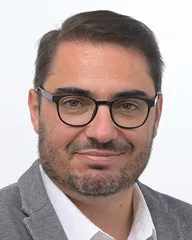
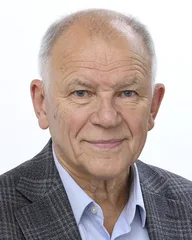
| Rank | Name | Country | Group | Speeches | |
|---|---|---|---|---|---|
| 1 |
|
Lukas Sieper | Germany DE | Renew Europe (Renew) | 494 |
| 2 |
|
Juan Fernando López Aguilar | Spain ES | Progressive Alliance of Socialists and Democrats (S&D) | 463 |
| 3 |
|
Sebastian Tynkkynen | Finland FI | European Conservatives and Reformists (ECR) | 460 |
| 4 |
|
João Oliveira | Portugal PT | The Left in the European Parliament (GUE/NGL) | 288 |
| 5 |
|
Vytenis Povilas Andriukaitis | Lithuania LT | Progressive Alliance of Socialists and Democrats (S&D) | 276 |
All Speeches (100)
Mr President, Commissioner, thank you for your words and thank you in particular to the Members who have spoken. I would like to say that perhaps the most important thing is the very broad unity that we demonstrate in priorities that go beyond the equally important simplification of the system of taxation and withholding taxes. We demand, we demand, we consensualize measures that have exactly to do with this common system of taxation at source at European level and that prevent the exit of profits, such gigantic profits, from the European Union towards tax havens, as the examples brought here by the FISC Chair, Paul Tang. Now that we have a global agreement on corporate taxation, we also need to move in a coordinated way in this direction. Commissioner, as I say, in addition to simplification, we demand and ask for courage from the Commission in the proposals that are coming and we will certainly demand from the members of the Council that they be consistent at this time when we are going to need resources for a fair response to the crisis that lies ahead.
Mr President, in these difficult times we are facing, in which, as the Commissioner was just referring to in the previous debate, we will need significant amounts of resources to face the challenges in front of us because of this war. I am pleased that in this report we managed to achieve a broad majority supporting fairer and simpler taxation in the field of withholding taxes, guaranteeing progress in different issues within our discussions. There was a positive environment of discussion between those more actively participating in the negotiations, and even at this late hour in the evening many of the shadow rapporteurs are here with us – I see as Isabel, Billy, I see Ernest, some of our colleagues that were our shadows and probably others are at home, but they were certainly intensely involved in the debate. I want to thank them and want to thank the secretariat, obviously, of the FISC Subcommittee, but also our Group's team and my own team that helped with all this work and endeavour we did together. The final result, I think, mirrors this positive environment and constructive debate we had. We want to increase the effectiveness of our tax systems, reducing avoidance and fraud risks. We want to improve cross-border investments and lower the administrative burden. These efforts should go and in hand, and this is the tone of this report on the European Withholding Tax framework. After the many recent scandals regarding tax abuse, the European Parliament has the responsibility to address the shortcomings that still allow profit-shifting and aggressive tax planning to continue. The report starts by welcoming the OECD Inclusive Framework Agreement, including the global minimum effective corporate tax for multinational corporations. This is an historic moment, and we call on the Council to ensure the agreement comes into effect already in 2023. In light of this positive momentum created, we expect the Commission to present a legislative proposal for an EU-wide withholding tax in order to ensure that payments generated within the Union are taxed at least once before leaving it. This is particularly important in the current environment we are living in. We cannot allow financial resources to leave the Union without being subject to taxation while facing inflationary pressure due to the severe shocks in the supply of energy, of essential goods, all the consequences of what we are facing at these moments. The report calls on the Commission and the Member States to ensure that all payments, including dividends, royalties and interest generated in the EU are taxed at an effective rate. These payments should cease to be a means of profit-shifting. The review of the IRD and PSD directives should be on the table and then in light of the ‘Cum-ex’ and Cum—cum’ scandals, it is clear that further cooperation and assistance between tax authorities is needed. This fraud was responsible for EUR 140 billion lost in revenues in just 11 Member States. Therefore we must act swiftly and decisively. Therefore we call on the Commission to extend the mandatory exchange of information to dividend arbitrage schemes and capital gains, including granting refunds, but also to assess the extension of reporting requirements to cross-border arrangements. The final chapter of the report is focused on simpler taxation and removing barriers to investments in the single market, building on the commitment to complete the Capital Markets Union, which is also something very important for the completion of our monetary union. Repayments of withholding taxes remain predominantly a paper-driven process: slow, burdensome and more prone to fraud. In the past, the Commission issued recommendations about simplification, but the results, unfortunately, are not totally convincing. With this in mind, we welcome the intention of the Commission to pursue legislative harmonisation for a common and standardised system of withholding taxes. There is more than one way to go in this direction, as it was exposed in the impact assessment. For the moment, pursuing legal harmonisation of procedures is the most sensible and feasible path. This can be complemented with the use of digital technologies, making the resulting system more efficient in the countries, but also to facilitate seamless procedures between different national systems. A full relief-at-source system should only be considered at a later stage and cannot be in any way detrimental to the fight against tax abuse. Colleagues I think the negotiation team managed to find a very positive and balanced text that delivers a win-win approach. Again, I thank you for your support in those negotiations, and I certainly call on your support in the vote tomorrow on this important report about fairer and simpler taxation in the EU.
Debate with the Prime Minister of Estonia, Kaja Kallas - The EU's role in a changing world and the security situation of Europe following the Russian aggression and invasion of Ukraine (debate)
Date:
09.03.2022 11:46
| Language: PT
Speeches
Madam President, Madam Prime Minister, dear High Representative, colleagues, the war that shocks us for the atrocities committed is now infiltrating our lives through the economy. It's the fuel cost of our cars, the meat at our table, the bread. But let us not allow the economic consequences to dictate any compromise in the face of barbaric aggression, for it would be a failure of humanism and solidarity that we would never forgive ourselves for. Let us bear the cost of defending freedom. Today it's the Ukrainians', tomorrow it could be ours. As in the pandemic, it is crucial for the EU to act quickly before the war results in a deep crisis. A major economic plan in response to the war crisis is therefore indispensable. It will not be the redirection of NextGenerationEU, whose funds are needed for the structural investment gap of the European Union. We need a new plan with new common resources, a NextGenerationEU 2.0. The success we have had when we did not lack ambition to respond to the COVID-19 crisis should guide us now to respond to this further challenge, which challenges the Union itself.
European Semester for economic policy coordination: annual sustainable growth survey 2022 – European Semester for economic policy coordination: employment and social aspects in the annual sustainable growth strategy survey 2022 (debate)
Date:
09.03.2022 09:47
| Language: EN
Speeches
Madam President, after two years of the pandemic Europe was on the right track. The vaccines then the RRF. These moments of solidarity and unity honour the legacy of the EU. We found ourselves in the position to deliver economic growth and sustainable reforms again. Unfortunately, reality betrayed our best hopes. With Putin’s war on Ukraine, we face now a new, humongous challenge. Energy, essential goods and supply chains are suffering a severe shock that deserves our full attention. This is certainly not the time to reinstate old fiscal rules and budget cuts, but rather to work together, invest towards our energy independence and to relieve the European people from the negative impacts of this war. We need a true European response to the economic and social consequences of Putin’s aggression.
President, President of the Commission, High Representative, President Zelenskyy, Ukrainians, a barbaric aggression against a free state and a Europe that unites against the return of the world to the Cold War. A war that is no longer just a mirage. There is a people that suffers and a world that changes. Yes, we are arming Ukraine. Yes, we have imposed unparalleled sanctions on Putin and the oligarchs. We isolate Putin's Russia from the free world. We call for the endless courage of Ukrainians and the example of the thousands Putin has arrested for shouting for an end to the war. If we are less free today because of this war, we will fight harder for the ambition of the European dream of freedom. We will support Ukraine, we will tackle the energy crisis. We will finally stand in solidarity with all refugees and affirm Europe's autonomy in the world without further delay. We will come out stronger and more united from the crisis that wanted to divide us. And we dream, we dream of a return to peace for our children, for the children of the brave Ukraine. Slava Ukraini!
EU-Russia relations, European security and Russia’s military threat against Ukraine (debate)
Date:
16.02.2022 10:16
| Language: PT
Speeches
Mr President, the threat of invasion of Ukraine has reminded us of the dark days of the Cold War, with people on both sides living in fear of a permanent threat. These are times no one wants to go back to. Well, actually, hardly anyone. Mr Putin and some of his comrades have shown us how much they miss that time. By deploying a huge army on the border with Ukraine to conduct the world's largest military exercises in more than 40 years, the Russian government wanted to convey a message of intimidation and threat to Ukraine, Europe and the world. On the part of the European Union and our transatlantic partners, the message has been understood. We were able to come together and respond to the circumstances. Our language is not that of war, but we let Mr. Putin know that war would not go unpunished. Our message is not that of the threat, but it has become clear that we are not intimidated by Russian action. Our language is that of dialogue, that of international law. It is the language of diplomacy, with which tensions are resolved, conflicts are avoided and compromises and solutions are found. It is this path that, in a cohesive way, this Parliament and the European Union itself present to Russia to resolve the situation, with realism, common sense and transparency and in full respect of Ukraine's independence and territorial integrity. The choice is now up to Mr. Putin. I want to believe that you will be able to make the right choice for the sake of Ukraine, Europe and Russia itself.
European Central Bank – annual report 2021 (continuation of debate)
Date:
14.02.2022 18:33
| Language: PT
Speeches
Madam President, President Lagarde, Commissioner Gentiloni, twenty years after the creation of the euro, one of the most remarkable instruments of European integration, as has been well remembered today, let us finally be able to complete this single monetary area with a European stability budget, on the path of NextGenEU, as has also been mentioned today. Let the lessons of the COVID crisis allow us not to go back to the times of the absence of monetary policy and to pro-cyclical and recessive fiscal policy in times of crises. The latest data show that inflation in the euro area is mainly caused by temporary factors: energy prices and failures in production chains, as the ECB has abundantly pointed out. We do not have structural inflation in the United States of America, as the ECB has also shown us. Therefore, in the face of the return of fiscal rules that causes and will cause significant uncertainty for a few months, Europe needs a responsible monetary policy that supports price stability, but also credit, investment and economic recovery across Europe.
Preparation of the European Council meeting of 16-17 December 2021 - The EU's response to the global resurgence of Covid-19 and the new emerging Covid variants (debate)
Date:
15.12.2021 10:57
| Language: PT
Speeches
Mr President, Mr Vice-President, Minister, at a time of so many concerns this Parliament must come together and send a clear message from here to the Council. We must unite against external aggressions, such as Vladimir Putin's or Lukashenko's, but we must also unite in the fight against what is the real world war of the COVID crisis. Joining together to tell European citizens that, despite the isolated voices that have come here to speak, vaccines really work and I bring here the example of my country, the leading country at European level in vaccination has not been immune to this new wave of COVID. We have the same number of cases we had a year ago, but a quarter of the critical cases, a quarter of the deaths we had a year ago in the same period. Yes, vaccines work, so Europe needs to come together and the Council should launch a debate and share best practices among Member States on the vaccination response. But also join in helping the global response, the crisis, bringing more vaccines around the world, exporting more vaccines to developing countries. It is our security, it is everyone's security that is at stake, but it is also our moral duty.
Situation at the Ukrainian border and in Russian-occupied territories of Ukraine (debate)
Date:
14.12.2021 16:15
| Language: EN
Speeches
Mr President, just a few years ago, Russia illegally annexed Crimea and backed violent separatists that control parts of eastern Ukraine. These were concrete actions against an independent country, a partner, violating its sovereignty and international law. Once again, now, Russia is sending strong signals that it may commit yet another violation with a largescale military build-up along the border with Ukraine. Deploying, for the second time this year, about 100 000 soldiers and military equipment at that border, which makes it clear as a threat to Ukraine and a threat to the stability of the region. Whether the intention is a full-scale military invasion or some kind of hybrid attack, or to intimidate and destabilise Ukraine even further, we must not tolerate it. The European Union, let us be clear, together with its transatlantic partners, must be ready to make full use of severe sanctions that will tell the Russian autocratic regime the price they must pay if they proceed with this line of behaviour. We therefore call on the European Summit, this Thursday, to prepare a strong package of sanctions, including at least instruments such as the freezing of the European assets of people associated with the Kremlin – and I said, at least. If Putin and the Russian oligarchy only know the language of power and money, they must know how much they will lose if they do not behave differently from what we have seen these last few weeks and months. We would like to establish a normal cooperation with Russia. We have sent all the signs in the past, but it would be beneficial for everyone if that could be done with Russia engaging in a completely different path that respects international law and the stability of our neighbourhood. That’s certainly the only condition in which we could establish such a normal cooperation, but we are really far from that at this moment.
Madam President, Minister, Commissioner, colleagues, 25 years after the civil war in which over 100 000 people lost their lives, Bosnia and Herzegovina is on the brink of collapse yet again. The Bosnian Serb leader Dodik is threatening to withdraw Republika Srpska from Bosnia and Herzegovina’s institutions. This could mark a return to the violence of the ‘90s, a scenario which we don’t even want to consider. It does not help certainly that some European leaders like Viktor Orbán or Janez Janša are meeting or even paying visits to Dodik in a sign of support for his nationalistic postulate. They are playing with fire, and this is unacceptable. The European Union cannot remain silent. It must play a much stronger role and use all instruments at its disposal, Commissioner, including pressure and even sanctions to preserve Bosnia and Herzegovina’s territorial integrity, unity and peace, and nurturing the Western Balkans’ hope for a peaceful and stable future in Europe. We have long been waiting for that in the Western Balkans.
The escalating humanitarian crisis on the EU-Belarusian border, in particular in Poland (debate)
Date:
10.11.2021 16:41
| Language: EN
Speeches
Madam President, the Lukashenko regime stepped over every line of human decency. It was not enough for Lukashenko to violate the democratic values and the human rights of his own people, he also had go to find third-country nationals to violate their rights as well. With the sole purpose of serving the deplorable objectives of his corrupt regime, Lukashenko does not hesitate in using human beings as pawns, exposing them to humiliation, suffering and even death. Not only must Lukashenko’s tactic be denounced, but the EU should explore every possible avenue to sanction those responsible for the organised smuggling of migrants, and those that continue assuring the survival of this despicable regime. However, when we would expect a humanitarian approach from the Polish authorities towards the migrants that are being instrumentalised, what we see is a profoundly negative behaviour. The Polish Government is disregarding human rights, not allowing people suffering to have access to medical assistance or to food goes against everything the EU stands for. The Polish authorities that chose to confront the EU rules in so many fundamental aspects are just adding up to that account. They are deliberately violating human rights, and we all know that it also violates several international conventions. We must stand strong about our European values when we want to speak loud and be heard by those that are using human beings as pawns in a cold-hearted game that we are witnessing. That is our message to Belarus, but that is also a message for us here in the European Union.
Mr President, the Western Balkans Summit was an opportunity to reaffirm the region’s European perspective. The timing was good: the relevance was enormous. However, the conclusions were, we have to say, disappointing. When it was time to give a clear signal to those countries that are on a positive path to entering the European Union, the Council failed on giving them that sign. Albania and North Macedonia are ready to start accession talks with the EU. It would have been an incentive for them and for the whole region to proceed with the necessary reforms. At the same time, it would deter the growing influence of some democratic powers in the region. The EU must reward the merit of those who did what they were supposed to. For those who did not, there must be a different outcome. The EU cannot bend the rules and, in particular, it must be strong on the rule of law criteria. The rule of law is not a formality; it’s a pillar of democracy. There can be no compromise on it. There is a well-established accession road to the EU, and the EU must stick to it, for better and for worse. Only that way are we credible in the world.
Madam President, democracy, human rights and the rule of law are the foundations of the European Union. The ambitious project that has ensured peace and prosperity since World War Two. Yet again, some Member States are going back to policies from back then. Closed borders to refugees played a part in the millions of lives lost in those dreadful times. That is why, having again push-backs in the external borders of the EU is so shocking. Are those the values that the EU should stand for? Are refugees less human? It is more than international law that is at stake. It is the sense of humanity itself. And, Commissioner, you were clear on condemning push-backs today. I compliment you for that and I concur with you. The European institutions cannot tolerate such behaviour. What we must repeal are not the refugees at our borders, but the acts of those who do not treat them as human beings.
Madam President, first, I would like to congratulate Danuta. We have had this endeavour together already in this mandate. It’s again an excellent report, a drive from this Parliament to push for the completion of the banking union. I’d like to go back to Marek Belka’s intervention. Yes, indeed, we have to say that we came to this crisis with the banking sector better prepared for the turmoil of the crisis. Yes, it is true that we faced the crisis with more resilience, even if with a lot of public policy in the middle of it to sustain the situation, also in the banking sector and the financing of the economy. But, in the end, we have all been pledged to the completion of the Banking Union. We cannot have the financing of Europe – we want the safety of the banking sector in Europe – without the third pillar, without EDIS (the European Deposit Insurance Scheme). We need EDIS because we need to protect citizens against the banking crisis all over Europe, because it will improve the confidence of depositors and investors all over Europe. It will strengthen the stability of the euro of our Economic and Monetary Union. All Member States can benefit from it. We need to complete it. We need to find the political will to do it.
Reforming the EU policy on harmful tax practices (including the reform of the Code of Conduct Group) (debate)
Date:
06.10.2021 17:09
| Language: EN
Speeches
Mr President, the Pandora Papers bring an additional layer of responsibility when we vote on this paramount Lalucq report. Our workers, families and small businesses are tired of carrying the burden left behind by those who do not pay their fair share of taxes. Instead of working together to improve conditions for all, we insist on the tax race to the bottom. To fix this, it is paramount to swiftly implement the OECD agreement and establish a minimum effective level of taxation for corporations. Then we must also review the EU list of tax havens. All the words have been said. Now we need action and probably even legislation, Commissioner. For a proper blacklist, we need a listing process with more transparency and stricter criteria that lists those jurisdictions that refuse to define fair minimum levels of taxation as well. Instead of outrage due to one more scandal, what we need is action. This Parliament has said repeatedly that, from our side, we are prepared to act.
Pandora Papers: implications on the efforts to combat money laundering, tax evasion and avoidance (debate)
Date:
06.10.2021 16:08
| Language: PT
Speeches
Madam President, Commissioner, Council representative, colleagues, what the Pandora Papers reveal is very clear: A reality that embarrasses us, where some choose the rules they abide by and the taxes they pay. Unfortunately, it's nothing new. The succession of scandals and the number of tax havens that multiply like mushrooms show that the progress of recent years, which have existed, is not enough. Countries' right of veto in tax matters must be abolished. We have come to the absurdity of having one of the protagonists of the Pandora Papers veto in the Council today. And the Black List of Tax Havens has to be reformed, with fairer criteria and more transparency. None of this is new. None of these measures is new. There is a lack of political will in the Council. There is a lack of political will in the Council to move to effective legislative instruments for the implementation of a genuine Black List of Tax havens with serious consequences for states. You can count on us to put even more pressure on the fight against money laundering, starting with the creation of a European authority. We cannot, however, remain indignant again. Here we have a responsibility to fight and to hold accountable those who have to be held accountable to make a difference.
The situation in Belarus after one year of protests and their violent repression (debate)
Date:
05.10.2021 11:51
| Language: EN
Speeches
Mr President, in less than a month, we’ll be celebrating the fall of the Berlin Wall. However, regrettable as it may be, new walls have been built to impede freedom to enter some countries. Sometimes they are not built with bricks and concrete: they are made out of repression and violation of fundamental freedoms. Every one of the thousands of protesters’ detentions, every violation of human rights, every unfair judicial decision is a brick in that wall. Belarusian people deserve and expect freedom, democracy and prosperity. The regime of Lukashenko does not hesitate to deliver the opposite just to keep him in power, whatever it takes. Now he has completely crossed the boundaries of humanity, weaponing human beings by smuggling migrants beyond the Belarusian border. This is totally unacceptable. The EU must react, strengthening and broadening the sanctions against those responsible for the state-organised smuggling and the people that continue assuring the survival of the regime. Action is needed. Additional action is clearly needed from the side of the EU and in the international community. It is clear that Lukashenko went too far, but this by no means can justify the way all these migrants are being treated at our borders. The situation on the border between Poland and Belarus is dramatic, with migrants dying during the cold nights without adequate protection. Many, including children, are stuck in limbo for weeks, with others being pushed back. The EU must be clear about what European values are about. Yes, saving lives. Yes, promoting democracy. Yes, promoting human rights in Belarus – but also in our own borders.
Mr President, let me first state that I fully concur with the High Representative: there can be no doubt that the US remains the closest and most important strategic partner of the EU. We see several of President Biden’s steps as very positive: from the commitment to multilateralism to the rejoining of the Paris Agreement and the World Health Organization, to the global agreement on corporate tax under the OECD. However, as much as we point to the positive, we must not take a blind eye to other actions, from the unilateral and non—coordinated withdrawal from Afghanistan, to the Australia–United Kingdom–United States (AUKUS) agreement in the South Pacific. The US acted alone on this, and these are matters of regional and international security that affect us directly. This trend builds from previous presidencies and was at its peak with Mr Trump. What the US shows us is not that they are not interested in the long alliance with the EU; it is just that they do not depend on the EU. They have their own strategic autonomy. The EU must also have its own. We need to stand prepared to defend our own positions. Our shared values with the US do not always converge or translate into common interests. The EU must stand united, speak in one voice and be able to stand for its values and interests in the global arena.
Mr President, dear colleagues, Madam President of the Commission, the Porto Social Summit was not a beauty contest. That means that, from now on, we must take every chance to implement the social pillar objectives in Europe. We need the reduction of poverty to be at the forefront of European policies. Unfortunately, I have to say I didn’t see it high up in the Commission President’s priorities today. That is why this group is clearly calling for an anti-poverty law in Europe with clear binding targets to improve the lives of millions of people. Is the Commission ready to respond to such a strong commitment, Madam President? Moreover, we need all the resources we can get to fight poverty and inequalities. We need economic reforms and rules that push for green and social investments to pursue sustainable well-being for all. That is also why we pushed for the recovery plans to focus on the social conditions. The Commission must ensure that this is a true priority, because we were not in Porto for the photos or the beautiful weather. We were there to make a difference for the future. If you were also there for the same reasons as we were, this is the time to set your priorities correctly, Madam President. We want the end of extreme poverty to become one of your biggest endeavours. We cannot be clearer on this matter from the side of our political family.
Madam President, China is, or can be, at the same time, a trading and negotiating partner, but also an economic rival and systemic competitor on the global level. The European Union's relationship with China must therefore consider all this, but respect for human rights must be at its heart. It is within this framework that, when we see China's systemic confrontation with Europe, namely with a process of sanctions against our colleagues or the systematic violation of human rights and the rule of law, we have to say clearly from here that we do not compact with it. These actions by China must therefore have consequences. Two days ago, elections were held in Macau. If, in most countries, the holding of elections is the greatest expression of democracy, it is clear that the elections in Macau were not. In open violation of the agreement with Portugal at the time of Macao's handover, the Chinese authorities excluded from the elections all candidates representing political openness and independence from the Beijing government. It's unacceptable! The surrender of the territory was made with the guarantee that democracy would be respected in that region. If China does not respect agreements like this, signed at the highest level with a Member State of the European Union and deposited with the United Nations, how can we believe that it will respect others? We want to cooperate and negotiate with China, but we cannot do so without very demanding conditions.
Madam President, Mr High Representative, colleagues, but also to the Lebanese people we spoke to on the ground and want to listen to the voice of this European Parliament. Lebanon faces one of the three worst economic and social crisis of the last century in the whole world. Shortage of water, electricity, fuel, decent and affordable food. Three out of four people fell into poverty in one year. The world’s highest number of refugees per capita. A default in international payments, a dramatic drop in purchasing power and in salaries. We have seen images of garbage on the streets. Hospitals are failing, schools maybe not reopening. This is how bad the situation is on the ground. On top of all of that, a year ago the blast at the port in Beirut killed hundreds and displaced thousands. A tragic symbol of the country’s tragedy, of the country’s situation. The perception of corruption and political blockage is everywhere. The situation must change now! Humanitarian aid to the population must be a priority of the new government, as well as reforms! Long awaited reforms of the political system, of the financial system, of the energy sector, of the judiciary. Corruption must stop, inaction must end. The new government has an opportunity if it understands that business as usual is not an option. Citizens deserve a government that finally decides, and that works with people’s interests in mind. People cannot wait! We need action now from the new government and the international partners must step-up if that doesn’t happen and sanctions must remain as a possibility if that doesn’t happen. We won’t leave you alone. That’s what we say to the Lebanese people. We were there, we saw your despair with our own eyes, and we will not forget.
Madam President, 20 years after September 11 we eloped from Afghanistan, committing yet another set of mistakes like we did throughout these years. The US changed the situation on the ground in terms of security for two decades, but now everything has fallen apart. We can only hope that the terrorists don’t find safe haven in Afghanistan yet again. But nobody is truly certain of that, because state building was a disaster. The social and economic conditions on the ground are dire. Corruption was the norm for many of these years. And we, as Europeans, as Europe, were always on the weak side of the international coalition, since we always lacked the capacity to determine ourselves, particularly in what relates to security. Now, we have a nation destroyed and radicalism back in power. We fear the most for those in Afghanistan, particularly women, and the least we can do is pledge that we will do all in our power for this not to be a story of despair for all of them. We need to provide them with some hope. Therefore, we must do more; we need to start building the conditions for safe humanitarian aid in Afghanistan again, and the conditions for development and equal rights to go back to those people’s lives, to those women’s lives. At the same time we need to reflect on the many mistakes of this 20 years, and on the selfishness of many European authorities and political parties that showed no solidarity towards those refugees that have left that country in despair these last weeks or months. Europe must be a land of opportunities, a safe haven for dignity, for human rights, for international law. Europe cannot become more and more the land of closed borders and closed hearts. We owe that to the Afghans now, and we certainly owe that to ourselves and to the world.
Review of the macroeconomic legislative framework (debate)
Date:
07.07.2021 22:04
| Language: PT
Speeches
Madam President, Commissioner, I shall begin by joining the many who have congratulated the rapporteur and the shadow rapporteurs who have indeed done a good job. European fiscal rules, which have been suspended because of this crisis, are now old rules, outdated rules. After the crisis has passed, we cannot go back to the past, at a rate of debt reduction that would condemn us to 20 years of stagnation in Europe. On the contrary, we need a permanent European fiscal capacity and countercyclical fiscal rules and scope for green and social investment for growth and jobs. We need a debt reduction pace adjusted to the new COVID debt, which is not the fault of any spending state, but the result of the common response to the crisis of the century, and we need a golden rule for investment in Europe. Monetary policy has acted well in this crisis, but the way out of the crisis must now be driven by responsible, growth-friendly, job-friendly fiscal policy.
Conclusions of the European Council meeting of 24-25 June 2021 (debate)
Date:
07.07.2021 10:15
| Language: EN
Speeches
Madam President, much was said here today regarding respect for the rule of law. There can be no doubt: we are seeing time and time again clear breaches of human rights and the rule of law from the Hungarian Government. These breaches should have led already to full procedures from the institutions, particularly from the Council, through Article 7, and now also through the conditionality mechanism, Madam President of the Commission. The external dimension of the EU was also of much importance in this Council meeting. The presence of the re—elected Secretary—General of the United Nations is of the utmost importance, and it’s a good sign of the EU’s commitment to multilateralism and its institutions. That commitment has to be translated into concrete actions, because the multilateral system has suffered a significant erosion over these last few years. We can certainly blame the actions of the former US administration, but we must acknowledge that the world has changed significantly. It has become more multipolar, bringing new risks, new confrontations into the international arena. We need strong multilateral institutions to cope with this reality. However, they need reforms, and the EU must be on the front line, pushing for those reforms. That requires the EU to overcome its internal difficulties that have blocked our own capacity to present ourselves with clear positions. Only with a strong voice can the EU be a relevant actor on the world stage. The EU needs to step up on our role in the international arena and the world deserves this.
Madam President, Mr High Representative, the severe economic, social and public health crisis that the people of Nicaragua are suffering is compounded by a serious human rights crisis. Over the last three years, successive violations of the basic rights of citizens have increasingly deteriorated the situation in Nicaragua with the violent repression of peaceful demonstrations, the intimidation of journalists, non-governmental organisations, activists and political opponents. A new electoral law designed to prevent the free participation of citizens in the political life of the country has resulted in the outlawing of political parties, the arrest of five presidential candidates and many other political opponents. What can be said of such a country? We certainly cannot say that it is democratic. We cannot say that it respects any of the most basic human rights. The European Union must act once again, High Representative. Imposing sanctions on those most responsible for these attacks on democracy, these human rights violations. The people of Nicaragua must know, they know that we are on their side.