
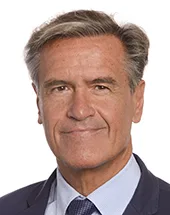
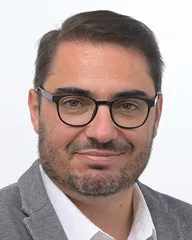
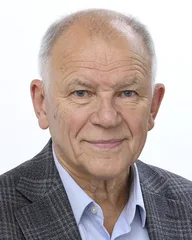
| Rank | Name | Country | Group | Speeches | |
|---|---|---|---|---|---|
| 1 |
|
Lukas Sieper | Germany DEU | Non-attached Members (NI) | 390 |
| 2 |
|
Juan Fernando López Aguilar | Spain ESP | Progressive Alliance of Socialists and Democrats (S&D) | 354 |
| 3 |
|
Sebastian Tynkkynen | Finland FIN | European Conservatives and Reformists (ECR) | 331 |
| 4 |
|
João Oliveira | Portugal PRT | The Left in the European Parliament (GUE/NGL) | 232 |
| 5 |
|
Vytenis Povilas Andriukaitis | Lithuania LTU | Progressive Alliance of Socialists and Democrats (S&D) | 227 |
All Contributions (33)
Digital Services Act (continuation of debate)
Mr President! We are writing the year 2000. If you had already installed Office 2000 months after the release, you were almost an early adopter. Google was an impressively successful start-up, Amazon expanded to Europe, and Facebook did not exist yet. Now we have the year 2022. There is no day-to-day life without these three companies. And we are finally working on an update for digital legislation with the Digital Services Act. The DSA fights illegal content on online platforms. There are clear rules on how to report illegal postings or products and how platforms can respond to them. The DSA protects consumers. Platforms now need to know more about their sellers so that they can help quickly in the event of fraud. And the DSA ensures data protection and transparency. Everyone should also have the opportunity to refuse this data collection for personalized advertising. With the DSA, the European Union is creating a proposal for a genuine European digital policy – one that puts citizens at the heart of digitalisation. And I am very happy that we are addressing this now, and I also wish the negotiators a lot of success, that a great law comes out in the end.
Digital Markets Act (debate)
Mr President! With the DMA and DSA digital package, the European Union is truly reaching a milestone. The billions in fines against digital companies in recent years have shown that there is a need for action. Now we are creating the tools to guarantee fair competition and thus make Europe the starting point for digital innovation again. How do we do that? For example, through interoperability. This means that regardless of which messenger service or platform they use, users can exchange messages with each other without needing multiple apps that they might not even want. For the DSA We will then also create a basis for larger and smaller online platforms to follow the rules that we consider useful. So that, on the one hand, we also have a clear handling of illegal content, but also can regulate it quite clearly: How can we protect our democracy online, take action against fake news and, for example, Deepfakes Finally labeling? It took a long time, but the policy update for the digital world is finally here.
State of the Energy Union (debate)
Mr President, Commissioner! Time is money! And the time that policymakers have already wasted in expanding renewables over the past few years is now costing Europeans an enormous amount of money. And we are still extremely far away from a truly modern, innovative, decentralized energy supply. Instead, we remain blackmailable from Russian gas supplies, or we make a good face to the evil game with Saudi Arabia in order to continue to get their oil. We renegotiated the European energy infrastructure with the Council last night, and it has become clear once again that all truly innovative approaches are once again completely on the brakes. It is a testament to poverty that no progress has been made, especially on crucial issues relating to transparency and traceability, including in the selection of projects supported. And to mention once again a very special example of the enormous lack of vision: How many times has sector integration been discussed here in this House on energy? The word is almost as popular here in the house as hydrogen. But when it comes to taking sector integration into account in infrastructure planning, for example through district heating, one suddenly encounters a great deal of misunderstanding on the other hand, and one feels that all sides speak a different language at once. We just have to make nails with heads. Because if you constantly talk about the fact that everything has to change, you also have to be willing to change everything for it.
Outcome of the COP26 in Glasgow (debate)
Mr President, Mr Vice-President! What is the value of climate protection that is still far away from what we actually need? And can we be satisfied with something that falls short of all the necessary goals? I have heard in the reactions, including in the media, that many oscillate between pragmatism, frustration and resignation, at least from those who have definitely recognised the problem. But you have to take the COP as it is. It is a place for climate diplomacy, and in diplomacy revolutionary events are known to be difficult and rather rare. This climate diplomacy has value in itself, and it's worth it. But it's too little and too slow. And we, as the EU, are the absolute pioneers. What we lack are comrades-in-arms: Contributors who best practices Those who want to exchange ideas, those who want to trade in a climate-neutral way together, those who want to trade in a common emissions trading scheme, for example. But what we lack more are competitors: Competitors in the race for the best solutions for the 1.5 degree goal. We are pioneers not because we do it very well, but because no one does it better. And these are my expectations for future conferences, namely that we look for competitors and competitors. Because for the climate, it is best if we are no longer the ones who do it the least badly, but if we all do it better.
The outcome of the Western Balkans summit (continuation of debate)
Mr President, ladies and gentlemen, Commissioner! Your attitude towards the Western Balkans reveals the weakness of European politicians and thus also the weakness of the European Union itself. Then they say: We regret the dependence on Chinese infrastructure projects, we are annoyed by the influence of Russian security strategy, and we are concerned about the imminent disintegration of Bosnia and Herzegovina. But when it comes to countering these developments, the heads of government often pinch: Some flee into words, deliver vague promises without mentioning a concrete time horizon; the others shamelessly place domestic political calculus above pan-European responsibility. The image being produced is clear to all observers north and south of the race track: The EU is tired of enlargement. Such a prospect of accession is only a prospect if it is still visible. The further away it moves, the more blurred it becomes. We are complaining about diminishing influence in the region. We have the tools to change that, even in our hands. The announced infrastructure investments are important. It would also be a reform of the accession process. But both cannot replace a mindset that would be necessary. It needs European politicians who still carry the spirit of the founding treaties. A clear vision was formulated in Rome in 1957: an invitation to the other peoples of Europe to join these efforts. This means all the peoples of Europe. The European Union is a promise to all Europeans.
UN Climate Change Conference in Glasgow, the UK (COP26) (debate)
Mr President, Commissioner! The facts about climate change are clear: We don't have time anymore. That is why it is always disturbing for me to hear that there are also heads of state who believe that we still have time to wait for solutions. The motto is a little: ‘Let's look, let's look further.’ Learned Austrians know this serenity, but it is what will lead us directly to the catastrophe. I'm very tired of just watching it go on. We need clear measures, because there are already sufficient targets. We need concrete agreements, because airy ambitions also have many. And we need strict deadlines, because there is no more time to lose. Every fraction more of the warming will be reflected in further catastrophes: Heatwaves, droughts, floods. COP26 must become a climate revolution. It is also important to me to say that politics has responsibility for the next generations who will come after us, who will be much worse off and who will probably not be able to do anything about it.
European solutions to the rise of energy prices for businesses and consumers: the role of energy efficiency and renewable energy and the need to tackle energy poverty (debate)
Madam President, ladies and gentlemen, ladies and gentlemen, Gas is becoming more and more expensive across Europe at the moment, while renewables remain cheap. The European women's mandate to Parliament here is very clear: Let's finally complete the energy transition. Let us finally make Europe independent of these abstruse price fluctuations that fossil energy entails. Renewable energy means above all energy policy self-determination. It also reads: No more dependence – no more dependence on dictators and autocrats in the near and far neighbourhood who can blackmail us with gas supplies. The whole thing is miserable. It also makes us, as Europe, vulnerable in terms of foreign policy. This is the consequence of the energy policy of the last decades. And if we want to guarantee energy supply, then we also have to invest in renewable energy storage. And we need to improve energy efficiency. All those who now claim that we need more gas to guarantee energy security in Europe are simply mistaken because they simply ignore the issue of dependence. They ignore the fact that year after year we will be more and more vulnerable. We will never be able to guarantee the energy security they want with gas. We will never reach it. The only way that really brings us into European energy independence is the energy transition towards renewables. And when it comes to prices, and what we can do to make the energy transition socially acceptable, I firmly believe that the most socially acceptable ecological transition is the one that does not take so much out of these people who have the least. And that means that a socially acceptable ecological energy transition must always go hand in hand with tax relief for people. So renewables up and taxes down.
Presentation of the Fit for 55 package after the publication of the IPCC report (debate)
(Beginning the speech with the micro switched off) ... it is really about the concoction, about the implementation of the climate goals. But with half-baked statements, we will not get there at all, and what has been heard, for example, from the Conservative colleagues were really almost aggressively ignorant, supposed warnings of costs – one colleague even claimed that there would be impoverishment. But what about the costs for the next generation if we completely sleep over the green transition? What about the cost of recurring natural disasters? This is the impoverishment of the Europe of the future. And now we just have to acknowledge: The truth is acceptable to men, and we will need it. Because the truth is also what the success of the European economy of the future ultimately means. And the truth has become simply vital for all of us. And that is why we need to make really clear announcements here in the Fit-for-55 package, and also give genuinely pure wine to the citizens of the Union, what will happen to them and what our common goal is.