

| Rank | Name | Country | Group | Speeches | |
|---|---|---|---|---|---|
| 1 |
|
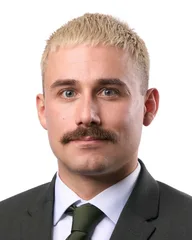
Lukas Sieper | Germany DEU | Non-attached Members (NI) | 390 |
| 2 |
|
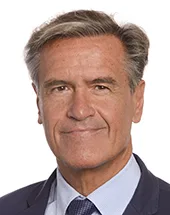
Juan Fernando López Aguilar | Spain ESP | Progressive Alliance of Socialists and Democrats (S&D) | 354 |
| 3 |
|
Sebastian Tynkkynen | Finland FIN | European Conservatives and Reformists (ECR) | 331 |
| 4 |
|
João Oliveira | Portugal PRT | The Left in the European Parliament (GUE/NGL) | 232 |
| 5 |
|
Vytenis Povilas Andriukaitis | Lithuania LTU | Progressive Alliance of Socialists and Democrats (S&D) | 227 |
All Contributions (56)
Accession to the Schengen area (short presentation)
It is sad and outrageous that we get to vote on another resolution to strengthen this Parliament's position that Romania must enter Schengen. Romania deserves to join Schengen. Romania has the legal right, according to the treaties, to be in Schengen. It is not only immoral, but also against the treaties of the European Union, for European citizens to be discriminated against and deprived of a right, as a result of political games and interests that have nothing to do with the proper functioning of the Union. If this continues, the whole of the European Union will lose. Because those who block our access now, in this case Austria, are fueling the extremist current in Romania and endangering the European project itself through this stubbornness and for internal political gains.
Iran’s unprecedented attack against Israel, the need for de-escalation and an EU response (debate)
Mr President, Iran's attack on Israel is a reprehensible act of aggression, which, together with the Hamas crimes, the hostage-taking and then Israel's intervention in Gaza, is igniting a new hotspot on the world map. The European Union must do everything in its power to avoid the escalation of this conflict, because a new front there will not only increase the number of human victims, but will play Putin's game. Putin's Russia will fuel any other conflict that could divert attention from its own aggression in Ukraine and weaken Western resources and aid to Ukraine. The diplomatic intervention of the European Union, Mr Vice-President, is also necessary because we still have the responsibility for the release from tomorrow's Houthi and Hamas of the sailor hostages on the Galaxy Leader ship, including a Romanian, but also two Bulgarians, collateral victims of this conflict. And I would like to know, Mr Vice-President, what the European External Action Service is doing to secure the release of these European citizens.
Conclusions of the recent European Council meetings, in particular on a new European Competitiveness deal and the EU strategic agenda 2024-2029 (debate)
Madam President, the European Union, in order to cope with the competitive pressure of China and the United States, needs investment in an economy that is designed on a European scale. In order to be competitive outside, we must learn to cooperate inside. We have seen how the European energy security, but also the re-introduction on the agenda of the topic of the enlargement of the Union to the East, was done under the pressure of the Russian aggression in Ukraine. The Union must now take the courageous step even further and make far-reaching investments in the economy, in energy, on the eastern border, in the Black Sea area, in Romania, in Poland, in Bulgaria, in the Baltic countries, both productive and interconnected, connecting to the European energy system the neighbouring states with aspirations to integrate into the European Union. In order to encourage the attachment to European values in these areas, it is necessary to integrate and think about the integration already now of Moldova, Ukraine, the areas of the Western Balkans, to the European economic development and to invest also for the interconnection in the Caspian Sea area. Only in this way can we think of long-term European regional competitiveness.
Return of Romanian national treasure illegally appropriated by Russia (debate)
Madam President, dear colleagues, this debate about the theft of Romania's national treasure shows very clearly what historical traumas Romanian citizens have experienced, but also the other citizens of Eastern Europe in Russia's neighbourhood. And this I hope will contribute to a better understanding in Western Europe of how totalitarian regimes in the Kremlin, throughout history, have looted and looted, attacking and trying to subjugate neighbouring countries. Today it is the case of Ukraine, of the Republic of Moldova. Romania, Poland, the Baltic states have been through this too, not many years ago. I would like this debate to help us understand that the lack of scruples must be resolutely answered in the case of Russia. The firm measures against Putin's Russia, including economic ones, and the use of the frozen assets of this Putin regime, without delay, are justified responses in this context. Romania has already paid the price of Russian dictatorship and imperialism, and this must serve as a lesson for today's Europe.
Deepening EU integration in view of future enlargement (debate)
Mr President, the European Union has become stronger after every enlargement. All the states that have integrated into the European Union have developed economically in an accelerated manner after accession, and we want the same with the countries of the Western Balkans, and with Ukraine and the Republic of Moldova, who expect the same perspectives from us. But for this, the future enlargement must get us ready, with more efficient European institutions and a high decision-making capacity. We will have to work together, especially with Ukraine, so that the Union can welcome a large country into the internal market, with the agricultural and agri-food sector. The reform of the Common Agricultural Policy must be prepared and discussed in parallel with the preparation of Ukraine's accession. At the same time, to have a permanent dialogue with both Ukraine and our farmers and to be consistent in a gradual integration path. Only in this way can we sustainably serve the geopolitical imperative and the need to strengthen the internal market alike, because the challenges are already being felt in our countries.
This is Europe - Debate with the President of Romania, Klaus Iohannis (debate)
Madam President, Mr President, the 2024 election year is crucial for Europe, because the values on which it has been built and worked so far are under siege of extremism, anti-Europeanism and disinformation. This is why, in order to keep democracy alive, this year's debates must be relevant to the daily lives of citizens and less to the survival of political parties or political leaders. For Romania, the challenge is even greater. This year we have all the elections. This can lead to the total reset of the political establishment and, despite a slow advance on the European path, Romania has become, through the effort of the whole society, a key player in the part of the Union where it is located, an eastern pillar of the Union. President Klaus Iohannis, you are the last political actor to leave the scene after this year's elections without a personal electoral stake. Until then, you have the duty to watch, assure and communicate to the Romanian citizens the importance of our European membership in a complicated year, with populist challenges, and I believe that you can do this credibly and in an assumed manner. Romania and the European Union cannot afford to slip into extremist ideas without solutions, and all this electoral pressure also raises the question of the leadership profile that the Romanian and European citizen expects today. Because, after many disappointments, Romanians feel that political leaders no longer speak enough to them and too little in their own language when they do. The effort to rebuild bridges in our crisis-stricken society will be great, but the cause is an essential one both for us and for the Union as a whole and for its future, for the credibility of the Union. Farmers, young people without perspective, ignored citizens in peripheral counties or small towns, must be remotivated and engaged in a vision of the future in which they find themselves and in which Brussels or Strasbourg are their allies, not their imagined enemies.
Empowering farmers and rural communities - a dialogue towards sustainable and fairly rewarded EU agriculture (debate)
Madam President, in recent weeks, farmers are taking to the streets in many European countries because they have lost patience. The causes are known: the energy and post-pandemic crisis, the war in Ukraine and the impact on farmers, green policies without calibration of economic impact in agriculture. But how do we get out of this situation? How do we align European ambitions with the adaptive capacity of the agricultural sector? All discussions about short-term farmers' support are meaningless unless we draw conclusions from the mistakes made in recent years. We are in great need of a project that includes the need for affordable and healthy food, and the need for an unpolluted environment, as well as reasonable and predictable incomes for farmers. We have not done this well enough so far and we are already seeing the results in an unpredictable context for farmers. The European Commission's derogations in the short term are good, but they will not solve the problem in the long term. The Commission's role is crucial in the coming weeks and months to take decisions that give a clear signal that it is able to listen, but also to hear farmers' concerns for a fair income, so that it can also take into account the environment and food production.
Improving the socio-economic situation of farmers and rural areas, ensuring fair incomes, food security as well as a just transition (debate)
Madam President, first of all, I want to address the bona fide farmers and transporters in Romania, but also throughout the Union, who are protesting these days. Your requests are justified and justified, whether they are related to national or European decisions. Through its inaction, the Commission risks blowing up a justified approach, linked to the Union's climate ambitions, but implemented superficially and without vision. Yes, we need better management of natural resources, soil quality, water, biodiversity. Yes, we must help Ukraine export grain to the areas that need it, but this must be done together with farmers, who must be given coherence when we ask them to invest massively and in the short term in green production technologies, while they already have high production costs for energy, fuels, fertilizers and also have to cope with market disturbances. Farmers' protests, which are on the rise in several Member States, are a wake-up call for reasonableness, vision and a clear perspective to ensure economic and social survival, while applying reasonable and feasible environmental and climate change measures.
30 years of Copenhagen criteria - giving further impetus to EU enlargement policy (debate)
Mr President, I believe that there is no better opportunity to celebrate the 30th anniversary of the definition of the Copenhagen criteria than with a clear decision by the Council to start EU accession negotiations with Moldova and Ukraine, with a clear perspective for the Western Balkans. It is also an opportune moment to put on the table a new vision for the European enlargement policy, facing today's realities, today's geopolitical challenges. Because, as we have seen, after each wave of enlargement, despite initial concerns, it proved to be a success and the Union came out stronger. Now we can look with maturity to a new enlargement, to think about the future of the Union in an enlarged dimension, but also with a redefined role and responsibility in this region. I would say with more courage. We cannot allow the narrow interests of some governments constantly attacking the values of the Union to question the European path of Moldova and Ukraine or to be taken hostage, Moldova and Ukraine, in a decision in the Council, because a prime minister has a particular interest. The European Union can once again show that the main objective for which peace and prosperity has been achieved within its borders can be achieved, this time, in a wider but also deeper space and for more citizens.
This is Europe - Debate with the Prime Minister of Bulgaria, Nikolay Denkov (debate)
Madam President, Prime Minister, we are together, Romanians and Bulgarians, trapped by Austrian Chancellor Nehammer on the Schengen issue, and I know that you are making great diplomatic efforts to unblock both Austria's veto and last year's Dutch reserves. I'd have two questions for you. When I led the Romanian government, I worked very closely on the issue of visa-free travel for Canada with the then Bulgarian government, and the negotiating force was greater. So I ask you if at this moment there is this kind of offensive and joint coordination with the Romanian partners, with the Romanian government? The second question is whether in these negotiations you are prepared to accept certain elements that would unlock these discussions? With a clear decision: the Council's policy in December that both countries join Schengen in the course of next year at the latest, even if this were to happen in stages, in the course of next year. So I would be interested if there is - obviously, you are not going to reveal here the negotiating elements, but I think it is important that we can have a final decision on Schengen accession this year in the Council.
EU enlargement policy 2023 (debate)
Madam President, the European Commission's recommendation to start accession negotiations with Moldova and Ukraine is a decision of great impact in the region, both politically and economically. I hope that the Member States will also take a swift decision and validate this Commission recommendation so that the actual negotiations with Moldova and Ukraine can start before next spring. The start of the negotiations will be a strong political signal for the people of the candidate countries, but also for European entrepreneurs, who need to be supported and incentivised to invest in these countries. At the same time, we need to talk about the integration of Moldova and Ukraine into some European policies gradually, before the official signing of the Accession Treaty, but also about the adaptation of the European Union's trade policy towards these countries and the budgetary allocations that will be needed. The sooner the results of these negotiations are seen, tangible results for citizens, the more credible this process of accession negotiations will be and the better it will achieve its purpose.
European protein strategy (debate)
Madam President, we need a strategy to boost protein production. We do indeed have a protein deficit in the European Union, especially vegetable protein for animal nutrition. There are already innovative technologies on the market for protein production in general and I support research in this direction, including European Union funding for research in the field, but the introduction of insects and laboratory meat into European human food before we have serious technological, health, environmental, ethical evaluations of the food model we want in the European Union, I do not think it is a wise decision. Otherwise, just stating the introduction of insects into the human diet risks provoking anti-European feelings in a society that, even if it is open to experimenting with the new, considers food an element of identity, culture, connection with nature and the living environment. So let us not give the impression that bureaucrats and politicians decide what European citizens will have on their plate in the future.
Taking stock of Moldova's path to the EU (debate)
Mr. President, first of all I would like to address the citizens of the Republic of Moldova. I know that many of them are looking at what is happening in Parliament today. Beyond the discussions we have here about administrative procedures, political positions to bring the Republic of Moldova to the European Union, it is important that the EU accession process be felt positively by the citizens of the Republic of Moldova. Here, even before we start the accession negotiations that we are asking for here today, a few things are already happening: Moldovan firefighters participate in joint actions in the European Union and benefit from the European Civil Protection Mechanism; citizens of the Republic of Moldova will soon be able to talk on the phone with others in the European Union without roaming charges; the liberalisation of European trade in Moldovan agricultural products works and must become permanent; you are already fighting corruption at home with all your weapons and punishing oligarchs, including with the help of the European Union. Dear friends, this is and will be your home. By the time of the signatures on the Accession Treaty, the most important thing is that the Republic of Moldova begins to be already in several sectors, part of the European family.
Parliamentarism, European citizenship and democracy (debate)
Mr President, the Conference on the Future of Europe was meant to open up to citizens, which we remember every five years when we have elections. More ideas came from there, from the citizens. Now, we must also put them into practice, because it is important to streamline the relationship between citizens and decision-makers in democracy. Otherwise, we risk European democracy eroding over time and losing this connection. Beyond reports and documents, Commissioner, it is important that we take decisions, because citizens first of all expect decisions that have a positive impact on their lives, and that is what we must do together, including with the Council. We can no longer allow one Member State to block 26 Member States when it comes to a legitimate, legal, moral and common sense decision, and what we are doing by the end of this mandate must give us this possibility. Otherwise, we will talk about extremes after the 2024 elections and the European project will be a project owned by extremes.
Parliamentarism, European citizenship and democracy (debate)
Mr President, I would like to ask Mrs Kempa how she sees the Polish nation-state in the European Union: with or without free movement of citizens? With or without the free movement of goods and capital? Schengen or non-Schengen and again border controls? With or without the right of young people to study in other countries of the European Union? How? How do you want to reconcile and complete self-determination, but also collaboration with the other countries, which offer so many opportunities to Poland, which has become a great exporter of vegetables and fruits, for example, in the European Union, since it has been in the European Union and is no longer one hundred percent nation-state?
State of the Union (debate)
Madam President, dear colleagues, I have listened carefully to the presentation of the state of the Union with the achievements and I agree with many of the priorities, but let us not pretend that we do not see the elephant in the room. The blocking of the Schengen area for Romania and Bulgaria, in violation of the treaties, is not a secondary issue. As a Romanian, I do not see how we can advance together on these priorities as long as the Council has a debt towards 27 million European Union citizens, Romanians and Bulgarians, who are denied a Treaty right. The abusive and defiant behaviour of the Austrian Government cannot continue. That's enough. Enough is Enough. Madam President, representative of the Council, the Commission has done its job and I thank you for that. Parliament has done its job on this subject and I thank my colleagues. Now it is up to the Council, which has a duty to solve this problem that is digging into the credibility of the Union. We cannot pretend building a stronger Europe as long as we are not able to solve an impossible simple problem, but with a strong and important impact on some citizens of European Union, in that case, Romanians and Bulgarians.
Ukrainian grain exports after Russia’s exit from the Black Sea Grain Initiative (debate)
Madam President, Commissioner, in the spring we warned the Commission that if it does not think about measures in the medium term, in the autumn we will again have problems with the transit of grain from Ukraine. That's where we are today. Romanian farmers announce that they are taking to the streets again. Ukrainians cannot sell their grain because they do not have reliable transport alternatives. The governments of Romania, Poland and Hungary are already announcing individual restrictions because the Union has not been able to come up with a joint decision that would work and give confidence to member states. Russia's strategy to use food as a weapon to increase its political influence in the world is intolerable, but where is the European Union's strategy in this regard? And at the last minute I say to you, dear colleagues from the Commission, wake up! Appoint a special EU coordinator for the export of Ukrainian grain, who will be able to coordinate the various departments in the Commission, monitor the grain leaving and transiting through Ukraine and ensure it transits through the Union, assess the grain remaining in the common market and its impact, be able to propose swift decisions that mitigate the effects of local disturbances in Ukraine’s neighbouring markets, and assess port capacities in neighbouring countries alternative to Ukrainian ports, so as to also ensure the export of European local grain and Ukrainian farmers’ grain, and this requires coordination. I also call on the Commission to quickly assess crisis management tools to allow European farmers who cannot sell their grain to have access to funding to resume their productive cycle, because if we fail to achieve this coordination, it will win Russia's strategy of using food as a weapon of political influence in the world.
Delivering on the Green Deal: risk of compromising the EU path to the green transition and its international commitments (debate)
Madam President, Mr Executive Vice-President, the European Parliament has supported the Green Deal since the beginning of the mandate, because we cannot put our heads in the sand and ignore the environmental problems that we now have and that affect not only our quality of life, but also our economics. But we need a realistic approach so that we don't fall into ideology with these discussions. This week's votes in plenary showed that we need courageous approaches, but at the same time pragmatism and feasible decisions for those who need to apply them on the ground. The Commission's ambitious proposals, however, in my view, many inadequate or unrealistic, sometimes inconsistent with other European policies, have provoked extreme reactions in Parliament. However, we take on the role of correcting them in order to make the final text feasible and applicable on the ground. And that's what we did today with the law of nature restoration. Yes, we need to continue with the green transition, but our decisions need to take into account the realities on the ground and the impact, not only environmental but also economic and social, especially on those who will have to make efforts in applying this legislation.
Ensuring food security and the long-term resilience of EU agriculture (debate)
Mr President, Commissioner, successive crises and the challenges of our society have shown the strategic importance of agriculture. Food and the environment are elements of security and strategic autonomy for the Union. We have seen in recent years, and especially in recent months, how the attempt to legislate separately, and even antagonismally, in the field of agriculture, the environment, health, food, often against agriculture, creates bottlenecks and leads us to false debates. Therefore, if we want food security in Europe, but also in the rest of the world, the capacity to produce now, but also in the decades and centuries to come, we must fundamentally rethink the European agricultural policy and food model. The new model of supporting agriculture must be linked to environmental and climate policy, health policy, but also to trade policy and international cooperation. This must also be reflected in the way in which the legislation is prepared and implemented in the European Commission, but also in the way in which the legislative decision-making process is organised in Parliament. The European Union must show political vision and strong leadership, with politicians and leaders able to think beyond the limits and interests of electoral mandates.
Situation in Lebanon (debate)
Mr President, ladies and gentlemen, Lebanon is going through a series of crises which are endangering stability and democracy in that country. A political crisis, a financial and banking crisis, an energy crisis and, above all, a crisis of confidence reinforced by the feeling of impunity surrounding the explosion of the port of Beirut. An independent judiciary must be the priority of any new president or government. We met the families of the victims in May this year – 240 dead, including around 20 Europeans, and 7,000 injured. There has been no serious investigation into the targeted killings of photographers, customs officers or military personnel who denounce the obstruction of the investigation. Four former ministers still refuse to attend the summons of the judge in charge of the case to account for their responsibility for the largest non-nuclear explosion in history. An international inquiry on this matter needs to be supported by the European Union and its Member States at the UN Human Rights Council, because this could help the internal legal inquiry, which is so necessary to regain trust in the justice system in that country.
Humanitarian and environmental consequences of the destruction of the Nova Kakhovka dam - Sustainable reconstruction and integration of Ukraine into the Euro-Atlantic community (debate)
Mr President, Ms Minister, Mr Vice-President, we should be aware that the reconstruction of Ukraine means in the meantime the preparation for accession of this country to the European Union. And this reconstruction means, of course, investment in a lot of infrastructure. But let’s not forget some key economic sectors of Ukraine, and the agrifood sector is one of these. We will need to help Ukraine not only to recover the production capacity in the agrifood sector from before the war but also to align the sector to the European Union market and legislation. And, for that, the European Union should be prepared too because we should be prepared to integrate not a simple new member, but a world leader in some crop production with a high potential of development of agrifood sector. And if we are not well prepared, we see the disturbance that we can create from both sides. So we should start now this preparation, on both sides, not only investing in Ukraine but also reforming our policies, agricultural policies and the other ones, in order to be ready for this complex process.
Ukrainian cereals on the European market (debate)
Mr Uhrík, can you please ask your national authority in charge of food safety and phytosanitary to check the cereals? Because this is his responsibility to enforce European legislation, putting some norms on the import of any products on the European market? So please, first of all, ask your national authority to do this work and not to punish the European Union for imaginative fault.
Ukrainian cereals on the European market (debate)
Madam President, Commissioner, Romanians have welcomed Ukrainian refugees with open arms, and Romania has made its ports available to Ukraine for the export of grain. It is absolutely necessary to continue to support Ukraine, but we also need to take care of European farmers in the states bordering Ukraine. The difficulties they face are not a regional problem, but a European one, and the solutions must be European and long-term. The new harvest is approaching and we need to provide predictability to farmers. The measures that have been announced by the Commission are good, but in my view they are not enough. The Commission should implement as soon as possible the solutions that we, the Renew Group, have also proposed. Solidarity lanes are still needed after 5 June and it is imperative to avoid Russian blackmail, but we must ensure that these grains reach third countries that need them and that cereal producers in the states bordering Ukraine are protected at the same time. Rapid action is therefore needed, especially since this is a topic that, we see, is used by extremist parties that sing Russia's score to undermine the European Union's effort to help Ukraine. At the same time, I believe that this crisis is a clear signal that we obviously want Ukraine and the Republic of Moldova in the European Union, but that, until then, we will have to prepare our agricultural policy and European policies in order to be able to welcome these countries into the European Union.
The role of farmers as enablers of the green transition and a resilient agricultural sector (continuation of debate)
Mr President, Commissioner, European farmers must continue to be able to produce quality, affordable and healthy food, but at the same time live off what they produce and also withstand the pressure on the market caused by Russia's aggression in Ukraine. That is why we need, now more than ever, vision, coherence and realism when we make legislative proposals and take decisions at European level. The natural resources on which we produce today must be in good condition and available to future generations. So let us not think only in the short term or from political, electoral ambitions and let us not play electoral with the future of farmers. The normative acts that the European Commission has been proposing piecemeal for more than a year now have the chance to do good on the ground only if they are viewed and negotiated in an integrated way, because their effect is linked. Farmers cannot separate things as we do into pieces in legislation. Farmers work with nature, but also for those who want food. They cannot separate these two things because that is what the bureaucratic and political approach wants.
The challenges facing the Republic of Moldova (debate)
Mr President, dear colleagues, you are politicians, some of you have held positions in the government of your state and you know what challenges exist even in times of peace and in prosperous countries. Now imagine that you are politically managing a small country, for decades under the influence of Russia, which has a border with Ukraine at war and Russian soldiers illegally on its territory. That is why I would like to hear Vice-President Borrell today, congratulating, together with us, both President Maia Sandu and the Government of the Republic of Moldova, for facing this pressure with huge challenges from Putin's Russia, but also to understand that Moldova now needs the support of the European Union and in deeds, not just in statements. Economic support, financial support, to be able to demonstrate to the citizens of the Republic of Moldova that a democratic government, a government supported by the European Union, can also cope with the economic situation and crises. In order for Putin's challenges not to be successful, the European Union must help the Republic of Moldova to cope with the crises it is going through, both those related to security, but also those related to the economy and the livelihood of Moldovan citizens.