

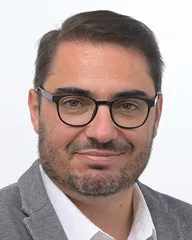
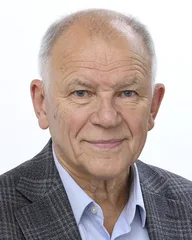
| Rank | Name | Country | Group | Speeches | |
|---|---|---|---|---|---|
| 1 |
|
Lukas Sieper | Germany DEU | Non-attached Members (NI) | 390 |
| 2 |
|
Juan Fernando López Aguilar | Spain ESP | Progressive Alliance of Socialists and Democrats (S&D) | 354 |
| 3 |
|
Sebastian Tynkkynen | Finland FIN | European Conservatives and Reformists (ECR) | 331 |
| 4 |
|
João Oliveira | Portugal PRT | The Left in the European Parliament (GUE/NGL) | 232 |
| 5 |
|
Vytenis Povilas Andriukaitis | Lithuania LTU | Progressive Alliance of Socialists and Democrats (S&D) | 227 |
All Contributions (106)
Insurance of motor vehicles (debate)
Mr President, ladies and gentlemen, Madam rapporteur, this legislative proposal that we are voting on today makes it possible to correct certain shortcomings observed in the implementation of the 2009 Directive on motor vehicle insurance. Failures to compensate accident victims in the event of the insolvency of an insurer had become too problematic to be left as they were. The creation of national bodies responsible for compensating victims in the event of the insurer’s bankruptcy is an important step forward, as is the clarification of several special cases that have arisen with the evolution of companies. The encouragement of insurance supervision by Member States of vehicles on their territory, without specifically targeting foreign cars, as well as the publication of how insurers’ bonuses are calculated, seem to be good measures. I also note that the French Insurance Federation supports this project. Nevertheless, while I still consider it positive to improve insurance conditions, it is also important to speed up the compensation of policyholders. On the other hand, while I can welcome the increase in the mandatory minimum of coverage, the increase in the cost of insurance should not have an impact on the standard of living of motorists. In France, since 2018 and the emergence of the yellow vests movement, the middle classes, often rural, who depend on the use of their vehicles are at an end. Whether it is because of the unprecedented increase in the price of petrol, the lowering of authorised speeds, the development of radar checks or, as here in Strasbourg, the future ban on diesel vehicles, motorists increasingly see the use of their vehicles as a means of getting hit by the State. Facilitating the lives of French and European citizens is our only goal.
The future of EU-US relations (debate)
Mr President, ladies and gentlemen, before I talk about the future of relations between the European Union and the United States, I would first like to thank the United States. Indeed, thanks to the United States, the French have been able to see the lack of loyalty of Brussels and our European partners. BNP Bank was ransomed by the US for $9 billion, with no reaction from Brussels. Alstom Energy, the pillar of our strategic independence, was stolen from us by the Americans, with no reaction from Brussels. According to Edward Snowden’s revelations, 70 million of our private conversations have been listened to by Americans. Presidents Hollande, Sarkozy and Chirac were spied on, with no reaction from Brussels. Thanks to the United States, the contract of EUR 56 billion with Australia for the construction of submarines by the French is taken from us, without any reaction from Brussels. In the animal world, especially in the hen, one takes his place according to the blows of beaks given and received. But the France of impotent presidents, Macron's France, takes a lot of beaks. Even Malian or Algerian leaders, between two coups, allow themselves to criticise us. De Gaulle's France didn't take as many blows and she gave them back, but she also didn't pay for McKinsey's health advice. But let's get to this report. Obviously, and I'm sorry, you're not talking about Australian submarines. On the other hand, you are calling for the creation of a ‘transatlantic parliament’, one more ‘machin’, as the General would say, dealing, for example, with ‘universal health coverage’. While our health care system does not fund dental coverage for the French, you want the French to pay for the whole world. Finally, you congratulate our cooperation – 31 times in this COVID-19 report – and state that global vaccination is the only way to end the pandemic: the only one! Do not forget to congratulate the European Medicines Agency, which has just validated the third dose of Pfizer, and especially Pfizer, which has doubled its sales this year and will pocket $34 billion in profits, thanks in particular to the Brussels contracts.
EU transparency in the development, purchase and distribution of COVID-19 vaccines (debate)
Mr President, ladies and gentlemen, Commissioner, on 22 January I asked the Commission two specific questions about the COVID vaccine contracts it signed on our behalf: Why did the Commission release the laboratories from all responsibility and who chose these vaccines? I received five lines on 10 September, without a precise answer. However, you had time to meet the halal slaughter lobbyists on 25 May and the insect-based food lobbyists on 28 October. You also received Gilead and Remdesivir lobbyists four times in one year, on July 6, September 9, December 7, 2020 and June 11, 2021. A €1 billion contract for a medicine not recommended by the WHO and used per person. Again, I asked who made this decision and why Gilead only warned us that the results were not positive the day after the contract was signed. Do we have the right to ask who made this decision and, above all, why? Do we have a right to know why you did not take any sanctions either? I note that you did not receive the other laboratories, so why this one? The Brussels administration decides on COVID vaccines and medicines for all Europeans, Pfizer or Moderna vaccines, rather than Sputnik or Chinese vaccines. But on what basis, in fact? We have a right to know. Europeans have a right to know, as no one voted for the President of the Brussels administration, Ms von der Leyen, or for her Commissioners. However, the lives of millions of French people and nations in Europe are affected by your decision. I repeat, the millions of French and Europeans have the right to know.
United States sanctions and the Rule of law (continuation of debate)
Madam President, Commissioner, ladies and gentlemen, in 2006 the European Court of Auditors recommended that Bulgaria and Romania not be brought into the European Union because of rampant corruption. Ten years later, in an audit, the Court concluded that the EUR 5 billion paid to these Balkan countries by Brussels had been seriously breached. On 2 June 2021, the US administration announced that its Treasury Department had sanctioned three Bulgarian citizens and their networks in Bulgaria for corruption. The US administration considers that corruption endangers the rule of law and democracy in Bulgaria. Yet yesterday, here, the President of the Brussels administration, Ursula von der Leyen, announced that she wanted to speed up the accession process for the Balkan countries. Brussels subsidies, i.e. the taxes of the French, Germans, Italians and many others, already account for one third of the GDP of these countries. But the Commission still wants more. Bringing Albania, Kosovo, Bosnia, corrupt countries according to Transparency International’s corruption indexes – 104th in this index, at the same level as Panama or Algeria. No, Ms von der Layen, investing our money in Albania is not investing in the future of Europe. Let's invest in France, here in Alsace or in the north of France. The Balkans have always been the crossroads of engulfed empires and it is up to the Member States to address the issue of corruption. And what a disguise for Europe to see us called to order by the US administration.
Identifying gender-based violence as a new area of crime listed in Article 83(1) TFEU (debate)
Mr President, we have gathered today to reflect on a definition of gender-based violence, which would be a new area of crime. But why do we need a new definition and why this silence on the origin of these criminals? Unfortunately, all societies have always known about these heinous crimes against women. This is a reality. On the other hand, burnt women, acid attacks, group rapes in cellars, I have never read it in Flaubert’s novels or Molière’s theatre. Now, in Sweden, Austria, France, our girls are afraid to go out alone in skirts at night. Why are two out of three sexual assaults on transport in Île-de-France committed by foreigners? Why in Germany, half of the suspects of gang rape are foreigners, especially Afghans? Why are these crimes rarer in Eastern Europe, when these countries are poorer? Can we talk about this explosive report by the Swedish Ministry of Justice, which reveals that foreigners born in Africa or the Maghreb are three to five times more involved in rape? Do we have the right to say that this is enough? Read the abominable account of Shaina's ordeal. This 15-year-old girl has been the victim for years of multiple rapes and violence committed by young people in a Parisian city. The one who gave him the coup de grace was called Driss. After getting the teenager pregnant, he stabbed her and burned her alive. For him, he did not want his mother to learn that he had pregnant a ‘pute’ because he was a Muslim. Let us first think of these crimes, these women far from any ideology.
Labour rights in Bangladesh (continuation of debate)
Mr President, Commissioner, ladies and gentlemen, in the name of globalisation, European jobs have been relocated so that Bangladeshi workers, especially women, can be exploited. As for child labour, it is estimated that around one million children are victims of child labour in Bangladesh. Children who work 16 hours a day to produce clothes that are then shipped to Europe. But the worst thing is that by not applying tariffs to products from Bangladesh, the Commission has all the while encouraged these appalling conditions. Should everything give way to so-called free trade? Should European jobs be sacrificed? Should women and children be exploited? Should we accept climate change with these Bangladeshi products shipped from the other side of the world to the European Union? The Commission claims to have improvement plans everywhere. But the reality is that we have no control over the laws and working conditions in Bangladesh. What we can control is the policy in Europe. Last November, radical groups, Islamists and Bangladeshi fanatics called for a boycott of French products after another Islamist beheaded teacher Samuel Paty. Why should we continue to distribute commercial gifts to Bangladesh when we are under hostilities in a country where workers are exploited and child labour is not eliminated? Let us import our products from elsewhere or, even better, bring production and employment back to Europe and France.