

| Rank | Name | Country | Group | Speeches | |
|---|---|---|---|---|---|
| 1 |
|
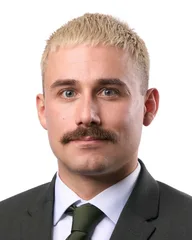
Lukas Sieper | Germany DEU | Non-attached Members (NI) | 390 |
| 2 |
|
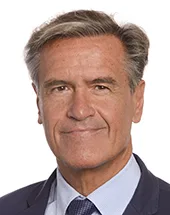
Juan Fernando López Aguilar | Spain ESP | Progressive Alliance of Socialists and Democrats (S&D) | 354 |
| 3 |
|
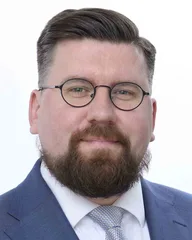
Sebastian Tynkkynen | Finland FIN | European Conservatives and Reformists (ECR) | 331 |
| 4 |
|
João Oliveira | Portugal PRT | The Left in the European Parliament (GUE/NGL) | 232 |
| 5 |
|
Vytenis Povilas Andriukaitis | Lithuania LTU | Progressive Alliance of Socialists and Democrats (S&D) | 227 |
All Contributions (42)
Commission Work Programme 2025 (debate)
Thank you very much for the question, and I'm happy to see we have a proper debate in this House. I think looking at my own country, Denmark, actually gives you the answer, because Denmark is a quite highly regulated country. We've been pushing the market economy to fuel the green investments. We have strong Medicare. We have strong renewable energy sectors. I think that's showing both that green aspects and competitiveness go hand in hand, but also that, of course, we shouldn't fear steering the market economy. No one wants regulation just for the sake of regulation. But I think if we do it right, we will actually do a favour to Europe.
Commission Work Programme 2025 (debate)
Then we got it; The Commission's long-awaited work programme, which sets the direction for Europe in the coming years. One word goes again: Competitiveness. This is important because we need to make it easier to do business and to be present in Europe. But it is as if the Commission has overlooked the fact that we are still in the midst of a climate crisis that is booming. And year after year, we break heat records. Nature is disappearing and biodiversity is collapsing. Climate change is already affecting us. So where on earth are the green ambitions to ensure that we live up to the Paris Agreement? Where is the ambitious environmental legislation that protects nature instead of weakening it? We need a Europe that runs on green energy, that restores nature and that makes sure that those who pollute also pay. It requires courage and it requires action, and I miss that in this work programme. The climate crisis does not wait, and neither can we. Then turning to another topic, Commissioner, in your work programme, you also proposed to withdraw the proposal on the EU horizontal anti-discrimination directive. I believe that this is a big mistake. In a time where we see attacks on our fundamental rights, withdrawing this proposal is the wrong way to go. I know it requires patience and courage to get this legislation over the finish line, but we've seen that it's possible to unlock equality legislation. So I urge you, Commissioner, please don't give up on our anti-discrimination laws.
Urgent need to tackle the gender pay gap (debate)
No text available
Taxing the super-rich to end poverty and reduce inequalities: EU support to the G20 Presidency’s proposal (topical debate)
Mr President! One would think that the super-rich believe that they live on a different planet than all of us, that the rules that apply to them do not apply to us. With their private jets and superyachts, they emit tons of CO2, and because of tax evasion they often pay much less tax than the rest of us. In fact, EU countries miss out on up to €60 billion a year. It is money that could finance more wild nature and more nurses, but which instead is hidden away in tax havens. It's not solidarity, and it's unfair. This summer, for the first time, the G20 agreed to work for the super-rich to pay more in taxes. It's an important step, but it takes more than just fine words. We must close down the international tax havens, and we must ensure that the very rich also contribute. That is why we have proposed across the EU a tax on the wealth of the super-rich. For the super-rich, they don't live on another planet than us, and they have to contribute far more to the community than they do today.
The historic CJEU ruling on the Apple state aid case and its consequences (debate)
Mr President! When you pay your taxes, you expect others to do the same. You should be able to do that. But the reality is, unfortunately, that some companies, if only they are big and rich enough, slip by. They employ an army of tax speculators and their job is to ensure that multinational giants contribute as little to the common fund as possible. It's insanely unsolidaristic. But fortunately, this tax hypocrisy can now become a thing of the past. Last week, Margrethe Vestager/Commission won a historic victory at the European Court of Justice. Ireland is no longer allowed to give Apple huge tax rebates. These rebates have meant that Apple has paid ridiculously low taxes in the EU and that we as a society have missed billions that could be spent on hiring more nurses, educators and setting up wind turbines, which we need to stop. If multinational giants are to benefit from our welfare states and good labour, they must pay into the common fund.
The attack on climate and nature: far right and conservative attempts to destroy the Green Deal and prevent investment in our future (topical debate)
Mr President! Europe must be the greenest continent in the world. We need a Europe that runs on green energy, takes care of the planet and restores nature instead of destroying it. We need to be the ones who put the climate bar first, so the rest of the world has to keep up. But someone's trying to stop us. That is, the Conservatives and the Liberal Group with the Left, the Radical Left and the Moderates. As temperatures rise, they will stop green progress and spread more poison in our nature. They will replace Europe's environmental law, watering down the first ever nature law in the EU. They will allow dangerous chemistry so that we cannot have the children we dream of. The left has voted against protecting nature and the soil from pesticides. Radicals have also voted against less poison in the wild, and they have removed the few environmental demands that are made on agriculture. For the past five years, I have been in the greenest parliamentary group in the EU. We have achieved a lot, but progress is under pressure. That is why it is crucial that we all come down and vote on 9 June for a green Europe that continues to make progress.
War in the Gaza Strip and the need to reach a ceasefire, including recent developments in the region (debate)
Mr President! In Gaza, children are dying of starvation. Families eat grass, and the lucky ones get animal feed. Women receive caesarean section without anaesthesia, and children are amputated without anaesthesia. We hear about mothers who can't breastfeed because they don't get enough food and because there's no substitute. Over 10,000 children have already been killed and many more injured. Entire families have been wiped out and many children are left without mother and father or siblings. Some die quickly, others suffocate slowly under the rubble. The survivors are traumatized for life, and Israeli hostages are still in Hamas custody. The International Court of Justice recently condemned Israel to ensure access to humanitarian aid in Gaza, stating that genocide cannot be ruled out. Israel has chosen to respond with more bombs and even less access to emergency aid. In the European Union, we must stand on the side of the international legal order. We must demand a ceasefire immediately, and we must embark on the necessary two-state solution. And all the while, no civilians should be fined for the work of the terrorists. Both Palestinians and Israelis have the right to live in peace and dignity.
EU2040 climate target (debate)
Mr President! The warmest year ever measured. The wettest month in man's memory. The driest summer in 100 years. Climate change has long since ceased to be something we need to worry about if our children are going to experience. Some of us discover it most in the scary articles we read on the web. Others have ruined their lives. Climate change destroys people's homes every day, destroys entire cities and kills people. This requires the EU to take responsibility. That we show that we are a green great power when it comes to the climate. That we set high and ambitious goals, and that we demand that those who infer, they also pay for it. Today, the Commission says we need a 90% climate target by 2030. If it were for us, we would be climate neutral by 2040. But I am, frankly, positively surprised, because I feel that the right wing and the black industry are blowing our necks. They will stop all climate progress and curb all green legislation. And if they get a large majority after the election, then they can get their way. That must not happen, and we in the Green Group are the guarantor of that.
Role of tax policy in times of crisis (debate)
Madam President, unfortunately, those that have been misusing this debate to spread false claims and watered down the report did not even show up for today’s debate. Allow me to be extremely honest: those that claim to stand for less or low taxation are selling false promises. If you want lower taxes, how are we going to face the huge societal challenges that we need to face? We are facing a war at our borders, and a climate and a biodiversity crisis. We have a transition to pay and an ageing society to fund. Are we going to pay for these challenges with more debt, or are those calling for less taxes actually calling for austerity, massive cuts in public services leading to less health care, less education and less infrastructure? Over the last decades, our tax laws were designed to tax more – much more – those that consume, work and can’t move around, and tax less – much less – those with capital, profits and property. Do we want to stick to this deeply unfair status quo? I don’t think so. Instead, we should look beyond political misconceptions, and stand for fair, reasonable and responsible tax policy. That is what this report is all about. While the very rich, the big polluters and the big corporations should pay more, workers and self-employed should pay less. Our tax system needs to be rebalanced. So we should unite in the call for a fairer, more just tax system – one that benefits every citizen and safeguards the future of our European Union as a social, green and economic powerhouse.
Role of tax policy in times of crisis (debate)
Madam President, dear Commissioner and dear Members, I’m standing here today as the rapporteur for the tax policy in times of crisis, the report by the fiscal subcommittee. I think we should start by recognising that the role of taxation as a policy instrument to redistribute revenue and steer behaviour remains underutilised in European policymaking. We all collectively pay every single day a high price for this failure to act at EU level, especially in times of crisis. During the most recent crises, such as COVID, the energy crisis or inflation, inequalities increased, inequalities between men and women, inequality between the very rich and the rest, and inequalities between big corporations and small businesses and self-employed. The report proposes key elements to make European tax systems more equal, fairer and green, and we want the Commission to play a stronger role in making this happen. Only a holistic and responsible EU wide tax reform will make us collectively ready to pay for the many challenges. Today, I hope we can use this plenary debate to confront the stark reality of our current tax system – a tax system where a nurse, a teacher or a fireman dedicating their lives to caring of others face a higher tax rate than a shareholder, a billionaire flying around the world in a private jet or a big multinational. Let’s be concrete and allow me to share two examples. The very rich pollute much more than regular citizens, and in 2021 and 2022 alone, we have seen a big increase in private jets in the EU, an increase of 64%. At the same time, some multinationals are misusing the crisis years to raise consumer prices for them to have even more profits, the so-called ‘excess profits’. We’ve seen that inflation has been profit driven in the EU, and this is recognised by both ECB, IMF and academia. So the scenario that we collectively live in is one where a nurse earning a normal wage contributes an important portion of her salary in taxes, funding essential public services that benefit us all, while due to political choices, a wealthy shareholder will see its profits zero or low tax in the EU. This is not merely an abstract concept, but a tangible inequality that exists within our societies. Those who contribute directly to our communities bear heavier tax than those who profit immensely. That’s not the society I want, and it is not the society that the 99% deserve. Tomorrow, Members of this Parliament stand for clear choice when voting on this report. Do they want a tax system that doesn’t make workers bear the burden, as they can’t easily move around to another country, a more gender equal tax system – and it is no coincidence that men mostly own shares and have most wealth, and that this wealth remains low taxed – a fairer tax system in which big polluters and multinationals pay taxes on their excess profits made on the back of normal people paying a higher bill in the supermarkets, a society with sufficient tax revenues to invest in our healthcare, education, infrastructure, renewable energy and innovative businesses? Regrettably, today and tomorrow, conservative voices will consciously attempt to mischaracterise progressive tax policies as synonyms with higher taxes on workers. This is deeply false. Not taxing fairly the rich, the big polluters and the multinationals is a political choice, and it shouldn’t be our political choice.
Tax the rich (topical debate)
Madam President, dear colleagues, dear Commissioner, dear Council, since 2020, the richest 1% have captured almost two thirds of all new wealth. Two thirds! That is nearly twice as much money as the bottom 99% of the world’s population. Some might think that this is only a problem for the US and it is not a European one. Well, they could not be more wrong. Wealth concentration in Europe is high, extremely high. The top 1% holds over 30% of total wealth, while the poorest half owns less than 5%. This is deeply unfair. And guess what, those at the top are mostly men, and those at the bottom are mostly women. Wealth taxation is thus also a gender issue. Over the last decades, the super rich have been protected by the dominant belief that taxing them would be detrimental for our economy. But taxing on capital has been shrinking over the last years, and wealth taxes have almost disappeared. Estimations vary, but a wealth tax in Europe could raise between EUR 200 billion and EUR 1 trillion. This is massive and it has the potential to save our planet, to educate our children and to care for our elderly. So is this proposal for a tax out of envy of people and companies that have made a fortune, who have invested cleverly or have used the capital markets to further gain profits? No, not at all. This is a matter of justice. It’s a matter of fairness. It’s a matter of showing solidarity and responsibility towards our common goods, our nature, our detrimental effects, as climate change is already harming a million people. So I call on you, Commissioner Gentiloni, to bring this forward for the G20 meeting and find a way for a European wealth tax.
Banking Union – annual report 2022 (short presentation)
Madam President, I think it is clear to all of us that even though the Banking Union is important, it might not be as interesting as, for example, the Nature Restoration Law. But I’m very happy to see the Commissioner and the Chair and greet them, because the last year has further shown the value of the Banking Union, while also calling for our collective efforts to continue in building a framework that fosters trust, transparency and accountability in the banking sector. Therefore I am also a proud rapporteur of the annual report on the Banking Union, which this year seems especially relevant, with two elements giving flavour to the report. First of all, the failure of three US banks reminded us of how important it is to implement a sound prudential framework, and the EP report stresses that the EU should fairly, timely and comprehensively implement the internationally agreed standards. The recent political agreement reached with the Council will allow for this timely implementation. The management of these failures also demonstrates the need to have a robust deposit insurance framework that fosters depositors’ confidence to avoid bank runs. Secondly, the Commission published its proposal to revise the EU crisis management framework for banks, and everyone agrees that the EU resolution framework contains some loopholes that we need to fix. The management of Credit Suisse’s failure also demonstrates the importance of having a credible resolution framework. Fifteen years after the great financial crisis, it is time to put an end to the ‘too big to fail’ issue. Obviously resolution aspects and deposit insurances go hand in hand, and I do hope that the co-legislators will now be able to agree on a comprehensive and coherent reform of the EU framework. I am particularly proud that Parliament reiterates its commitment to complete the Banking Union against this background, and I would like in this context to also thank all the shadow rapporteurs for their constructive contribution and for the smooth work to draft the report that I hope will be voted with a broad majority. This year’s annual report also considers the economic and social impact of the Russian aggression on Ukraine and calls on competent authorities to carefully monitor ongoing developments. The report also acknowledges the decreasing trends of non-performing loans in bank balance sheets, while stressing that risk reduction in bank balance sheets should continue. So far, the progressive withdrawal of the public support measures adopted during the pandemic, as well as the rising interest rates environment, have not led to an increase of non-performing loans in bank balance sheets. However, our report stresses that we should continue to closely monitor the situation and continue the progress made in the reduction of risks in the balance sheets. The report also acknowledges the banking sector’s role in financing the green transition. There is a clear recognition by Parliament that climate change poses a threat to financial stability and it is now time that the financial and prudential framework fully embeds this reality. Our report also deplores the lack of gender balance in top management positions, both in banks and in EU financial institutions. Gender—balanced boards are not only a matter of social justice: numerous studies have shown that the gender balance on boards and the workforce brings both societal and economic returns. All in all, I truly believe that we have achieved an ambitious report which advocates for the deepening of our economic integration and the completion of the Banking Union. And finally, I will switch into Danish. For til sidst vil jeg gerne appellere til mit eget land, Danmark, om at tiltræde bankunionen og dermed slutte flere års nøleri. Ved at tiltræde bankunionen vil Danmark både styrke sin egen finansielle stabilitet og det europæiske samarbejde inden for den finansielle sektor. Et dansk medlemskab vil også give os langt mere indflydelse på EU-lovgivning, der påvirker den danske finanssektor. Fordelene ved et dansk medlemskab af bankunionen er veldokumenteret. Så er det bare om at komme i gang.
Strengthening the application of the principle of equal pay for equal work or work of equal value between men and women (debate)
Mr President, I thank Samira again for her tireless efforts to fight for women, and all kinds of women. And thank you very much, colleagues, for all of your remarks. I’m extremely happy that we are finally voting on this agreement and that we move forward with this important piece of legislation. I envision a future where employees are valued for their work regardless of their gender. A future where employees know their rights and they are not afraid to exercise them, because they know that they are protected by European law. The future is here. We have achieved that and we finally have patented tools to combat pay discrimination, gender-income inequalities and to empower workers. So I look forward to the vote and I’m going to celebrate as well. And I hope that this whole House is.
Strengthening the application of the principle of equal pay for equal work or work of equal value between men and women (debate)
Mr President, dear Commissioner, dear Council and dear colleagues, today we are here voting on a historical and essential piece of legislation. We are here because we stand against pay discrimination. We stand against power abuses and because equal pay for equal work should not only be a founding principle in our Treaties, but also a fact on the ground. We are here because we care. We want to make a change. We want to push for gender equality, workers’ rights and social progress. We want a future where there is inclusion and diversity. Today we are here to vote on the best-known tool for closing the gender pay gap, to combat gender pay inequalities and pay discrimination. The Pay Transparency Directive is a huge achievement for gender equality and it will help close the current persistent gender pay gap in the European Union of 14%. Pay transparency has the value of work at its centre because employees should be valued for their work regardless of their gender. With this vote, we abolish pay secrecy contracts. We strengthen workers’ rights and workers’ individual right to information. And we ask employers to report and to fix their pay gaps. Furthermore, we ensure that all employers have pay structures in place, ensuring that the Treaty-based concept of equal pay for equal work is actually enforced. With this vote, we empower workers and we strengthen the role of social partners. This vote also marks the first time in history that our non-binary friends are recognised in legislation and the first time that we take into account intersectional discrimination as an aggravating factor. And this is a historical moment not only because having these tools and mechanisms are a huge achievement, but also because this sends a message to the world. It shows that this is what legislation can look like when you have two young feminists leading the policies. And for that, I would like to deeply thank my colleague Samira for the hard work and incredible cooperation in the past two years. You are truly an inspiring politician and it has been amazing working alongside you and your team. On behalf of Samira and I, I would also like to give a special thanks to all the shadow rapporteurs and all the teams for your constant fight for gender equality. I would like to thank the Commission as well for putting forward this legislation and supporting us in getting it over the finish line. Lastly, a special thanks should go to the Czech Presidency. Without you and without this Presidency, we would not have been able to vote on this important file today. I cannot fully express my gratitude towards the Czech Presidency, but I would like to underline that I am extremely grateful that your Presidency and your team chose to take on this file and really walk the extra mile to make this a reality. And coming from Denmark, it’s also very nice to see that it is once again proven that smaller countries can have a huge impact on European law-making. Lastly, I would also like to thank our amazing teams – Asta, Julia, Claire, Hoba, Myrthe and Blanca – and the contribution and expertise of NGOs and social partners that participated in and worked on this file. Your work was, and is, extremely essential and valuable. With today’s vote, we will be one step closer in ensuring that there are no more glass ceilings and no more pay discrimination. Today we give more rights for workers and we ensure the concept of equal pay for equal work.
Strengthening the application of the principle of equal pay for equal work or work of equal value between men and women (A9-0056/2022 - Samira Rafaela, Kira Marie Peter-Hansen) (vote)
Mr President, today’s vote is about gender equality. It is that simple. It was about gender equality when the FEMM and the EMPL Committees voted in favour with a big majority and it is about gender equality today. Since then, some have argued that the pay transparency directive is unnecessary because we have almost succeeded in closing the gender pay gap. But honestly, we are tired of women being put into this category of people who have almost the same rights as men, who have almost the same opportunities, who have almost the same pay. What is this almost? Almost is unfair, outdated, and is just not enough. So, colleagues, now is your chance. Now is your chance to vote with us to achieve change. European women need your votes today and we as co—rapporteurs hope that we can stand united as a Parliament when we will vote in favour of gender equality.
Suisse Secrets - How to implement anti-money laundering standards in third countries (debate)
Mr President, we’ve heard it all before. We’ve had this debate before. LuxLeaks, the Panama Papers, Pandora Papers, Paradise Papers, and so on. And now Suisse Secrets. I wonder how many scandals do we need to take this crime seriously. We learned from all those leaks that we have in the recent years that not only Switzerland but several EU countries have actively helped Russian oligarchs to launder money, avoid taxes and hide their wealth. Luckily, the EU showed that we are ready to take actions against Russia with economic sanctions as we have done with the oligarch freezing assets actions. And I call on us now to use this situation as a wakeup call and make sure that we are as ambitious as possible with the anti—money-laundering package. This means banning golden visas, ensuring transparency on beneficial ownership and proper exchange of tax information, and making sure that Member States transpose and enforce existing anti—money-laundering rules. And it also includes a proper risk of high—risk countries. So I hope and I count on all the EU institutions to take up the task.
One youth, one Europe (topical debate)
Mr. President! Tårnhøj rent with too small rooms. Another friend who goes down with anxiety, depression or stress. Unfortunately, the job went to someone with more experience. Does that sound familiar? It does that for me and for my peers who live in this world every single day. The pandemic has deprived us of some of the most valuable years of our lives. A whole high school time, a study start, an after school year at home on the couch in front of the computer. Europe's young people are struggling with long-term unemployment and difficulty gaining a foothold in the labour market because they are the first to be fired and the last to be hired. At the same time, we are a generation of young people with historically poor mental health. Loneliness, depression, stress and anxiety are growing folk diseases. Ladies and gentlemen, this is the future of Europe! If we're not going to create a generation lockdown, we're going to have to get out of the chair. We need to create labour markets that provide stable, quality jobs. We must make sure that we put mental and physical suffering on an equal footing, so that you do not stand alone if you break psychologically. For two years, the world’s young people have put their lives at risk – or at risk – to fight the pandemic. At least now we can make sure they have a future. I hope you'll join us.