
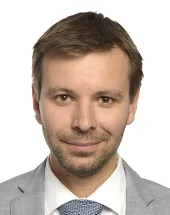
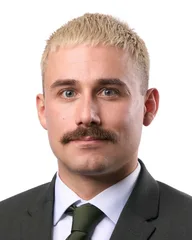
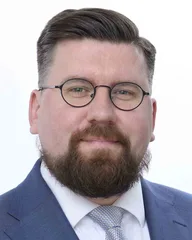
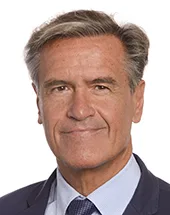
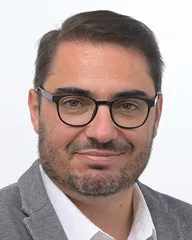
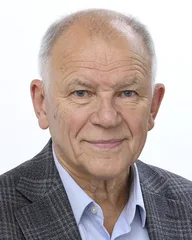
| Rank | Name | Country | Group | Speeches | |
|---|---|---|---|---|---|
| 1 |
|
Lukas Sieper | Germany DEU | Non-attached Members (NI) | 390 |
| 2 |
|
Juan Fernando López Aguilar | Spain ESP | Progressive Alliance of Socialists and Democrats (S&D) | 354 |
| 3 |
|
Sebastian Tynkkynen | Finland FIN | European Conservatives and Reformists (ECR) | 331 |
| 4 |
|
João Oliveira | Portugal PRT | The Left in the European Parliament (GUE/NGL) | 232 |
| 5 |
|
Vytenis Povilas Andriukaitis | Lithuania LTU | Progressive Alliance of Socialists and Democrats (S&D) | 227 |
All Contributions (65)
Formal sitting - 20th Anniversary of the 2004 EU Enlargement
Madam President, President of the Commission, Commissioners, honourable guests, colleagues, today we celebrate a historic milestone, a day in which millions of us – me included – were reunited with European society after decades of forced isolation. It is a day we longed for since regaining our freedom in the late 1980s and early 1990s. I remember feeling immense pride at our countries that, after decades in shadows of oppressive communist regimes, in just 15 short years we were welcomed in the European Union. Reflecting on the past two decades, I am struck by the remarkable progress we have made. I see the spread of our shared democratic values across the continent. A beacon of hope in a nowadays world with a ruthless aggressor just at our borders. Personally, I have witnessed not only improvements in our living standards, but also in the quality of our environment in our cities and villages back home. Yet we must not rest on one’s laurels, an idiom which we say a lot in Czechia. We face attempts for disintegrating the Union from the inside, attacks on its core values and principles, erosions of the rule of law and attempts to curtail democracy in several European countries. We must continue to strive for an ever-closer Union: one that is inclusive, sustainable and prosperous. A Union capable of swift actions. A Union which is immune to blackmail, not only from the outside, but mainly not from the inside. A Union that stands as a major global player. For that, we need a strong, united political will, a will I sense daily in this Parliament and we hope to feel equally from our prime ministers and political leaders. Only together we stand stronger. Long live Europe.
Russiagate: allegations of Russian interference in the democratic processes of the European Union (debate)
Madam President, dear colleagues, 24 February will mark the second tragic anniversary of the Russian full-scale invasion of Ukraine. In the wake of this aggression, we stopped taking our security for granted and recognised the urgent need to address also hybrid threats posed by Russia within our borders and our institutions. We must investigate how far the FSB reaches in Europe and stop them from reaching to the highest levels of policymaking. Also, we must expose to the fullest the financial channels from Russia, which bolster European organisations and politicians propagating hate, for instance by anti-LGBT sentiments. Their aim is clear: to create divisive conflict in our society. We owe it to our future generations and to the brave people of Ukraine, who will hopefully soon join the Union. We want a strong and confident Europe, free of hostile Russian influence. From the outset of the invasion, the European Pirate Party has vocally supported Ukraine. Today, almost two years later, I wish to reiterate that we still stand strong behind Ukraine, and I ask you, dear colleagues, to do the same. If you allow me one more message to Mrs Ždanoka directly, you said you are an agent of peace. Well, if you are an agent of peace, maybe the best for peace is that you ask your friend and ally Putin to remove his presence from Ukraine, and personally, maybe he could arrive in The Hague.
Extending the list of EU crimes to hate speech and hate crime (debate)
Madam President, dear Commissioner, absent Council, dear colleagues, roughly two years ago, the Commission proposed the inclusion of hate speech and hate crime in the list of EU crimes, a necessary move to establish ground rules for criminal offences and sanctions that would apply across Europe. You think that’s an easy one, right? But no, the Member States decided to impede on this matter and be absent from this debate. It’s painfully obvious that for some governments, protecting their citizens from the rising tide of hate crimes is about as important as yesterday’s news. Well, scratch that, it’s not even on their radar. It’s time to ditch the delays, drop the ideological fights, and focus on what matters. Combating hate and protecting victims. This is a call to action. This is what is expected from you.
Jurisdiction, applicable law, recognition of decisions and acceptance of authentic instruments in matters of parenthood and creation of a European Certificate of Parenthood (debate)
Mr President, Commissioner, absent Council, freedom of movement and the right to reside in any state in the Union is one of the main fundaments that the European Union has been built on. But there are limits threatening the most vulnerable ones in our society, the children. The recognition of parenthood, sadly, still varies among different Member States. That means that children of same-sex couples lose their rights while they move with their families to EU Member States which do not recognise their rights for parents. We hear from conservatives often: we must protect kids. I am replying to you: now is the moment to prove that you really want to protect children, and vote in favour. The same message go to the absent Member States: prove to the citizens that protection of children’s rights is also your priority as much as ours.
The lack of legislative follow-up by the Commission to the PEGA resolution (debate)
Mr President, Commissioner, absent Council, colleagues, this is at least the third time in a very short period of time we are addressing this topic in the plenary, sadly. And the reason is illegal wiretapping and spying on journalists, opposition politicians and activists in a number of Member States, as you know. We repeatedly asked the Commission to act to propose a legislation that will protect citizens from spying. We asked for measures to prevent rogue governments from abusing spyware. And still: no answers. Thank you for the elaboration on the existing legal framework, but that is not the answer that we were asking for. It is crystal clear that the European Parliament is the only institution fighting for the right to privacy of all Europeans, be it our fight against spyware or against breaking into an encryption or against remote biometric identification in publicly accessible spaces. So I will finish my speech with the same words as I did already two times in this part: please act.
Proposals of the European Parliament for the amendment of the Treaties (debate)
Mr President, dear colleagues, we are standing at the doorstep of another historic landmark: the Union of more than 30 Member States. We want to welcome Ukraine, Moldova, North Macedonia, Montenegro and other candidate countries soon. We want to welcome them to a strong, sovereign and a more democratic Union. To the Union that cannot be blackmailed by Viktor Orbán or some other Putin ally. To the Union where decisions are made by negotiating and finding compromises, not by blocking Europe’s activities and expecting bribes and gifts. It is absolutely clear that Europe is paralysed. For instance, in common security and foreign policies or tax policies. That is why we need to do reforms, to abandon unanimity voting in the Council in those areas where Europe is paralysed. Otherwise, Europe is not going to play a role in the world. It is rather going to be ridiculous. If you allow me a couple more seconds, I would like to answer Mr Madison’s question. We are elected representatives, elected to represent the European citizens. If you are unable to do this job properly, you should resign.
Urgent need for a coordinated European response and legislative framework on intrusive spyware, based on the PEGA inquiry committee recommendations (debate)
Mr President, spying on journalists, opposition politicians or activists has become, thanks to conservative governments in Hungary, Spain, Poland and Greece, a sad reality in Europe. Everyone’s privacy is under attack by governments who want to break into people’s phones, but also by legislative proposals aiming to drill holes in encrypted communication. This must stop. The Commission needs to prove that they want to respect citizens’ right for privacy, and the moment is now. We, Members of the European Parliament, did our homework. We gave you, Madam Vice-President, a comprehensive manual outlining what needs to be done in order to prevent abuses of Pegasus or any other spyware. The ball is in the Commission’s court. Do not leave it to rot away among faded roses and dry grass. Please pick it up and act. You weren’t able to finish your speech, Madam Vice-President, and I don’t know how you wanted to continue. However, I believe that many Members, as you can hear, expect that it was supposed to be an announcement of a legislative proposal.
Corrupt large-scale sale of Schengen visas (debate)
Mr President, Vice-President, well, it’s interesting to see how the extreme right and the extreme left unite here, because everybody else agrees that free movement of people across the Schengen space is one of the biggest benefits of the European Union for the citizens. This visa scandal is putting under threat the trust into the whole area and the Polish Government as a whole. It makes it more difficult for us to fight the arguments that we need to reinstate border checks, and we have already heard some of them in this Chamber. But ask the citizens whether they really want it. You can ask maybe those that are in the gallery after this debate. The bribing scandal of the Polish Government has consequences, of course, also outside Poland, for instance, for Czechia, where I come from. The border checks at the Germany-Czechia crossings to which the scandal contributed will make it more complicated for people to commute for work. And I am sure that Czech citizens will not thank the Polish Government for that. As a matter of fact, now everyone will suffer from a corrupt, large-scale sale that the Polish Government is responsible for.
European Media Freedom Act (debate)
Madam President, Vice-President, colleagues, we have been waiting for this legislation for years, and finally we got here today. The attempts to paralyse free media, to destroy critical voices, to attack journalists, have multiple names in Europe: Orbán, Babiš, Kaczyński, Janša. They hate free media. To silence, to take control, to make them starve: that is their recipe to destroy the voices that criticise them. That is why the European Media Freedom Act is one of the main successes of this Parliament in fighting against oligarchs and in preserving democracy and the rule of law in Europe. At last there will be an instrument that will oblige media to be transparent about their ownership structures. There will be a database of media owners where every citizen will easily find out who stands behind the newspaper they read. For instance, do you find out that an owner of a news service also owns coal mines? Well, it easily explains why they constantly write in their news that our fight against climate change is counterproductive. What I have personally fought for and consider my biggest success in this legislation is a ban on media ownership for top politicians: prime ministers, ministers, Commissioners. Coming from Czechia, I had experienced years of buyouts of free media by a media tycoon and a prime minister in one person: for once, Andrej Babiš has been an inspiration for my work – needless to say, a horrendous one.
Investigation of the use of Pegasus and equivalent surveillance spyware - Investigation of the use of Pegasus and equivalent surveillance spyware (draft recommendation) (debate)
Mr President, dear Commissioner, absent Council, abuses of spyware to break into mobile phones of opposition politicians, journalists, activists, but also ordinary citizens, recording everything the victims do, what they say, who they meet, gaining access to their videos and photos, email, anything stored on their devices. Dear colleagues, were speaking about the European Union. We know for sure that there are multiple governments in Europe who acquired these technologies. But where the shock starts is the undeniable evidence that some governments abused spyware to spy on their opponents and seriously undermine the rule of law and the trust of citizens in democracy in their countries. That must stop now, even though I believe that we need a ban on the use of such technologies, the compromise we reached is a good start and going into a good direction. But our work is not done. The ball is now in the hands of the Commission and the national governments. Please act.
Artificial Intelligence Act (debate)
Mr President, Madam Executive Vice-President, Commissioner, colleagues, today we are writing history. The next era will be the era of artificial intelligence. And what we are about to do in this House is to give guarantees. Guarantees that European citizens will benefit from the development of AI, that they will not be discriminated, that AI will not be abused to spy on them. We need to ensure that malfunctioning technologies will not ruin students’ future careers. That’s why technologies to proctor students during exams will be categorised as high risk. Let me also speak about spying on citizens. We do not want governments to be able to identify everyone in every moment, to record where we walk, which places we visit, or who we talk to in the streets. Imagine your favourite example of the worst politician in your country. Now, would you want them to have a remote control to such spying? I don’t. I believe that the use of facial recognition in public spaces must be banned.
Council of Europe Convention on preventing and combating violence against women and domestic violence – EU accession: institutions and public administration of the Union - Council of Europe Convention on preventing and combating violence against women and domestic violence - EU accession: judicial cooperation in criminal matters, asylum and non-refoulement (debate)
Madam President, Madam Commissioner, absent Council, every third woman in Czechia has experience with violence, often committed by their partners, and the Convention on Preventing and Combating Violence Against Women and Domestic Violence is a commitment to concrete actions to prevent violence and to improve the situation of victims. But it is also a symbol, a symbol proving that Member States, Europe, all of us, are committed to take violence against women seriously. Now, what are we hearing from some national governments and some Members of the European Parliament instead? The opposite. Hatred. Hatred against minorities, for instance, as we could hear from one of the previous speakers. Also lies. Lies about what the convention is, that it is against the tradition of Easter, or a tool to erase biological differences between men and women that we are told. It is nonsense. Let’s be fair. These are excuses and really bad excuses. We owe the victims the ratification of the convention and we need to ratify it immediately, both as Member States and as the Union.
The further repressions against the people of Belarus, in particular the cases of Andrzej Poczobut and Ales Bialiatski (B9-0163/2023, RC-B9-0164/2023, B9-0164/2023, B9-0165/2023, B9-0166/2023, B9-0167/2023, B9-0168/2023) (vote)
Mr President, I apologise, but we have not seen the result of the previous vote. If you could please say what the result was.
Council of Europe Convention on preventing and combating violence against women and domestic violence: EU accession (continuation of debate)
Madam President, Madam Commissioner, dear colleagues, today is Valentine’s Day, the day of love. Too many women have been forced to learn that love is control, that love is jealousy, that love is to having to text your whereabouts, that love is an imminent threat. Unfortunately, there are political parties and politicians – including in my country, Czechia – that on the one hand claim that they are against violence against women but on the other hand have been delaying, weakening and stopping measures that should give women the protection they need. As a matter of fact, every third woman in Czechia and in the EU experiences physical or sexual violence, often by their partners. As a matter of fact, the Istanbul Convention is a complex list of solutions to eradicate violence, to enhance prevention, to strengthen law enforcement. It is a tool to upgrade the safety net for victims of violence, meaning medical centres, psychological support, shelters for victims and so on. We need to act. I call on the Council and the Member States who have not done so yet to ratify the Convention , immediately. Act for a future in which violence against women has no place in our society. Thank you, and I hope that someone can pass on the message to the Council that is not present.
Consumer protection in online video games: a European Single Market approach (debate)
Mr President, Commissioner, colleagues, as many mentioned, video games are a highly innovative digital sector in Europe, and therefore we need to realise that building a trustworthy online environment and increasing consumer trust can boost the economic growth. Therefore we need to evaluate where the current consumer protection legislation already covers unfair practices and dark patterns, and where protection from addicting techniques is missing. At the same time, I would like to highlight that many games are based on collaborative creation, so we need to be really careful when referring to child labour. I also want to warn against the mandatory introduction of age verification as it raises concerns over privacy. Finally, we absolutely need to refrain from calling or, even worse, mandating the use of automated tools to ‘protect’ users from harmful content, because they are inefficient and have negative consequences on freedom of expression, access to information and creativity, which I believe is related to what you said, Commissioner, when you referred to our legislation proposed by the Commission in 2022 – I’m finishing President – that I believe was a fight against child sexual abuse. When you refer to grooming, that is also known as chat control that legislation – I believe that chat control will not help us to fight sexual abuse and we need to be really careful how we do that because we want to fight it, but not this way.
30th Anniversary of the Single Market (debate)
Mr President, Madam Executive Vice-President, Madam Minister, the single market seeks to guarantee the four freedoms and thanks to that, European citizens can study, live, shop, work, run their own business, retire, you name it, in any EU country they wish to. In order to secure all this, we need to regularly adjust rules on the single market to adapt to new situations. One such adjustment is the Digital Markets Act, which is crucial for a fair, competitive and trustworthy digital single market. With the Digital Markets Act, Europe has made the right choice and there are many more legislative acts in which we can contribute to the digital single market, but we will need to make the right choices – the Artificial Intelligence Act, the Media Freedom Act, the European Identity Wallet, the rules on political advertising, to name just some of these legislative acts. At the same time, the 30th anniversary is a great opportunity to remind ourselves that it is high time to renew our commitment to a single market that delivers for consumers and businesses. We have to eliminate digital barriers that prevent citizens from accessing online services across Member States equally, such as geo—blocking of digital services.
Growing hate crimes against LGBTIQ people across Europe in light of the recent homophobic murder in Slovakia (debate)
Mr President, Madam Commissioner, Mr Vice Prime Minister, Juraj and Matus, two young Slovak boys whose lives were violently ended just for being who they were. So first I have a message for everyone who spreads hatred – be it politicians, media or organisations fighting against equal rights – your words do not just hurt LGBT people, their families and their friends, hatred leads to violence and violence leads to murder. Second, as a matter of fact, LGBT people feel often insecure. How can we as a society accept that there are citizens who do not feel secure in their countries, in their hometowns? As European politicians, we share the responsibility to ensure that Europe is a safe space for everyone. And, therefore, I call on the national governments that block the inclusion of hate crime on the list of EU crimes to stop that.
Radio Equipment Directive: common charger for electronic devices (debate)
Madam President, Madam Executive Vice-President, please first allow me a reaction to Mr Ciocca. This is a debate about the common charger. I don’t think that anybody underestimates the impact of the energy crisis, but this is a debate on a different topic. On that topic, the incomplete harmonisation of charging solutions for electronic devices has been causing inconvenience for consumers and excessive e—waste for many years. Different connectors in devices imply that users had to work with multiple cables for different electronic devices, and it also provided an opportunity for some manufacturers to limit choice and lock users into proprietary ecosystems of accessories and peripherals. Proprietary charging protocols have been used to limit the power on purpose and make devices charge with reduced speeds when connected to non—proprietary chargers. Therefore our group welcomes the outcome of the trialogue, which will give more control and ownership to consumers over the products they purchase. To ultimately have a common charger, however, full interoperability is also needed on the other side of the cable – the external power supply, and therefore we are looking forward to the revision of the Ecodesign Regulation.
Presentation of the programme of activities of the Czech Presidency (continuation of debate)
Madam President, dear Commissioner, dear Prime Minister, dear Minister, dear colleagues, the Czech Government and the Czech permanent representation to the Union worked tirelessly to get ready for the Presidency of the Council. And I would like to thank them for that. It is only natural that the Presidency’s priorities react to the Russian aggression in Ukraine and its implications. Therefore, I believe that the Presidency’s priorities are well identified. At the same time, other urgent problems such as the climate emergency did not magically disappear. They are also reflected in the Presidency’s priorities and I am really happy that the Czech Government, under your leadership, Prime Minister, supports Fit for 55 and agrees that only zero- emission cars can be sold on the European market from 2035. And here comes my main question, Prime Minister. What is your measurable goal for Fit for 55? How many legislative acts do you plan to finalise in the negotiations by the end of the presidency? And please let me finish by reiterating how important the Presidency’s programme is. It is an important signal to Europe that Czechia, after years at the periphery, is back at the core of the European project, that Czechia is again dedicated to a strong, safe and united Europe. And last but not least, it is also a very important signal to us in this Parliament that voices of Members of the European Parliament, from your political group, who are, as a matter of fact, not overly present in this debate, are not the voice of the Czech Government. Thank you. And I wish you and us great success in our presidency.
Digital Services Act - Digital Markets Act (debate)
Mr President, the big tech created a strongly centralised digital environment because they want to exercise full control over our digital lives. But my political group has always been fighting to give power back to people over the technology they use. This means challenging the centralised digital ecosystem. This means ensuring that messaging services can interoperate, so that people are able to move to privacy-friendly alternatives, to switch between applications, to refuse intrusive surveillance advertising. Because our fundamental rights can prevail over the commercial interests of the big tech as long as the digital ecosystem relies on covert tracking of individuals or when legal content is removed by error from filters. While we have a lot to do in order to protect fundamental rights online, the Digital Markets Act will now challenge the big tech's power over our digital rights. And with that, Europe is making a great step forward to better protect people.
Parliament’s right of initiative (debate)
Mr President, dear Vice—President Šefčovič, absent Council, dear colleagues, the European Parliament is the only directly elected European institution, yet it is not allowed to initiate legislation. Representatives directly elected by the European citizens have only partial tools at their disposal to suggest proposals, and these are often disregarded, thrown away or heavily postponed by the Commission. Let’s be fair about that fact. Hence, I will count on the support of the European Commission President, Ursula von der Leyen, for the European Parliament’s right to initiate legislation. Nevertheless, declared support needs to be followed by actions. All 705 Members are directly elected to represent people in Brno, Košice, Dubrovnik and everywhere else. We are the direct voice of European citizens and therefore we should have the right to initiate legislation to fully represent and defend our citizens’ interests. As a matter of fact, citizens asked for it in the Conference on the Future of Europe. I would like to ask the Council what the Member States plan to do about it. (The President cut off the speaker)
Use of the Pegasus Software by EU Member States against individuals including MEPs and the violation of fundamental rights (topical debate)
Mr President, dear Commissioner, dear State Secretary, dear colleagues, we’ve been observing new revelations of wiretapping of journalists, NGO representatives and politicians practically every week. Spying on our colleagues in this House, on the Commissioner, on the head of the Spanish Government, political opponents of European governments – you name it. But this is not a movie from the period of the Cold War. This is the reality of Europe in 2022. If governments are in charge of this wiretapping, it is another proof of a collapsing rule of law. And no, Mr Zoido, it is not okay to wiretap people without a court order. I heard from some politicians that now it is not the right time to address rule of law issues in Poland, for instance. I thank the Polish Government for the enormous help they provide every day to Ukraine and its citizens. I truly do. However, that doesn’t mean that I will remain silent about rule of law issues. We owe that to Polish citizens and to Polish democracy. The war in Ukraine is an unprecedented atrocity. However, we must not forget about the democratic principles this Union is built on. Spying on opposition and journalists in Europe is a serious crack on its facade. Some may say such cracks are just wear and tear, but they are not. They are a symptom of a much bigger problem.
Outcome of Global Summit Nutrition for Growth (Japan, 7-8 December) and increased food insecurity in developing countries (debate)
The next item is the debate on the Commission statement on the outcome of the Global Summit Nutrition for Growth (Japan, 7-8 December) and increased food insecurity in developing countries (2021/2997(RSP)). I should like to remind Members that for all debates of this part-session, there will be no catch-the-eye procedure and no blue cards will be accepted. Furthermore, remote interventions from Parliament’s liaison offices in the Member States are foreseen. I would also like to remind you that interventions in the Chamber will continue to be made from the central rostrum. I therefore kindly invite you to keep an eye on the speakers’ list and to approach the rostrum when your speaking time is imminent.
Implementation of the Kimberley Process Certification scheme (debate)
The debate is closed. The vote will take place on Thursday, 16 December 2021.
Implementation of the Kimberley Process Certification scheme (debate)
The next item is the debate on the oral question to the Commission by Bernd Lange, on behalf of the Committee on International Trade, on implementation of the Kimberley Process Certification Scheme (O-000073/2021 – B9-0044/21). I should like to remind Members that for all debates of this part-session, there will be no catch-the-eye procedure and no blue cards will be accepted. Furthermore, remote interventions from Parliament’s Liaison Offices in the Member States are foreseen. I would also like to remind you that interventions in the Chamber will continue to be made from the central rostrum. I therefore kindly invite you to keep an eye on the speakers’ list and to approach the rostrum when your speaking time is imminent.