
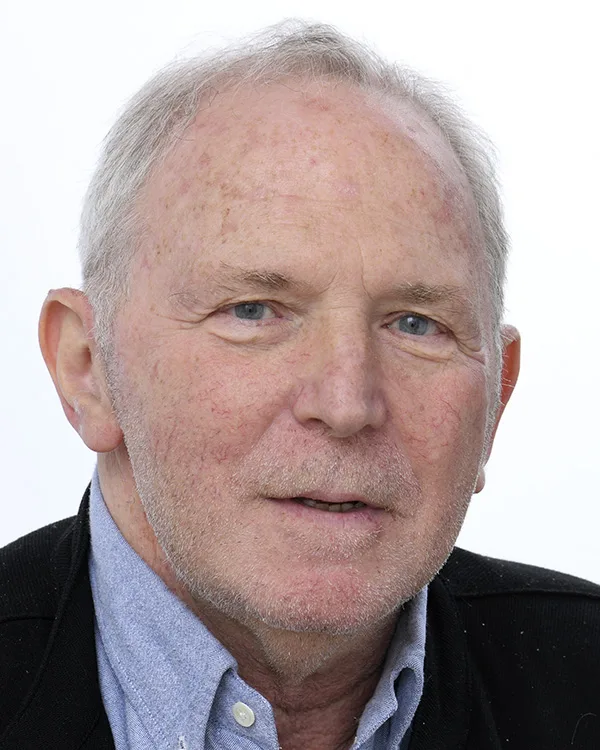

| Rank | Name | Country | Group | Speeches | |
|---|---|---|---|---|---|
| 1 |
|
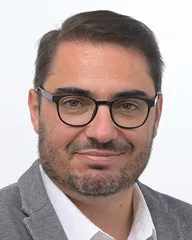
Lukas Sieper | Germany DEU | Non-attached Members (NI) | 390 |
| 2 |
|
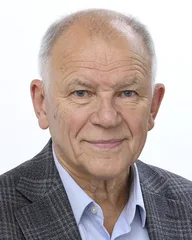
Juan Fernando López Aguilar | Spain ESP | Progressive Alliance of Socialists and Democrats (S&D) | 354 |
| 3 |
|
Sebastian Tynkkynen | Finland FIN | European Conservatives and Reformists (ECR) | 331 |
| 4 |
|
João Oliveira | Portugal PRT | The Left in the European Parliament (GUE/NGL) | 232 |
| 5 |
|
Vytenis Povilas Andriukaitis | Lithuania LTU | Progressive Alliance of Socialists and Democrats (S&D) | 227 |
All Contributions (73)
Response to the situation in Tunisia (debate)
Mr President, Tunisia is no stranger to us: it is so closely linked to the history of France, Italy and all of Europe that we owe it the same duties as we owe it to a sister or brother. Before leading the way in the Arab Spring of 2011, Tunisia had been able to negotiate its independence without resentment or violence. Habib Bourguiba, its liberator, then had to give Tunisian women the most liberal status in the Arab world and allow a powerful trade union centre to take root, which was always a factor in social and political balance. So close to our shores, so close to our hearts, Tunisia could be one of us, and that is why we need to speak loudly and true to the man who made it so quickly go back. We have to tell Mr Saïed that our assistance budget is not meant to break the independence of the judiciary, but, on the contrary, to strengthen it. We have to tell him that there are too many dictatorships on Earth for him to create a new one and that we love Tunisia too much to resign ourselves to. Commissioner, Minister, ladies and gentlemen, we have to call a cat a cat, and Mr Saïed a man with whom we will not deal, because he leads his people to misfortune and further destabilizes both sides of the border. Mare Nostrum.
EU response to the protests and executions in Iran (debate)
Madam President, why is he hanging so many young people? To scare, of course. To dissuade men and women, parents and children from taking to the streets shouting their rejection of his regime. But that is not all. If he needs terror so much, it is because this cornered old man, with his back to the wall, no longer has any other cards to play. The most distant provinces are as mobilized as the largest cities. The youngest are as young as the oldest. White collars are as much as blue collars and, naturally, men as women. Iran wants to live free, in peace and in this century. Iran, the whole of Iran, has revolted. Iran no longer wants you, your regime, your Revolutionary Guards, your tartufferie or your murders. The more you hang, the more your days will be counted. Because they are numbered, Mr Khamenei, Mr the executioner, Mr the murderer.
EU response to the increasing crackdown on protests in Iran (debate)
Madam President, there will never be any normalisation in Iran. It is now impossible to return to the status quo ante because the protests have become too widespread and the repression too harsh for this regime to take matters into its own hands. Theocracy is in agony, but tomorrow? It is not impossible that the scenes of fraternisation between demonstrators and police officers will multiply and this power will collapse brutally. Most likely, however, is a phase of militarisation of the regime that would see the custodians of the revolution take precedence over the clergy. This is the most likely hypothesis, but this military phase would have only a time, because the Pasdarans would then face the double opposition of the population and the less obscurantist part of the clergy who would want to limit the retreat of the faith. A new page opens in Iran, that of women, of life, of freedom.
Russia’s escalation of its war of aggression against Ukraine (debate)
Mr President, ladies and gentlemen, the question today is where we stand. On the Ukrainian side, the counter-offensive was a tremendous success, since after the advances from the East, the liberation troops were now advancing towards Kherson. On the Russian side, on the other hand, a political debacle is added to the military debacle. Senior regime officials are publicly accusing each other of negligence. This is unprecedented in Putin’s Russia, and it tells us that the chain of command and the president himself are no longer untouchable. This is the beginning of a general disintegration also marked by the rejection of mobilisation, the first signs of emancipation in Central Asia, the success of our sanctions and the strange and constant affirmation of Mr Prigojine, the boss of a powerful militia fuelling his ambitions. Twilight falls on an aging tsar. It is all the more dangerous, but it will lose.
The death of Mahsa Amini and the repression of women's rights protesters in Iran (debate)
Mr. Speaker, 500, 800, 3,000 or more dead. We know alas that you will not skimp, you pasdarans and other bassidjis to keep your power. Yes, this popular revolt, this revolt of women defending women and freedom can probably be crushed by your weapons. But it's not said. And beware, beware of you, profiteers and defenders of this regime! For remember, remember the crowds gathered by the 1997 presidential election when your people were able to vote for a candidate for change. Remember the months of revolt against Mahmoud Ahmadinejad's fraudulent re-election in 2009. Remember the scale of the 2019 and 2020 protests. Remember the 8 million signatures against the executions of political prisoners, remember, and you will see that Iranian anger continues to grow against your dictatorship of bloodthirsty incapable. Remember, and you will see your end approaching.
The arrest of Cardinal Zen and the trustees of the 612 relief fund in Hong Kong
Madam President, ladies and gentlemen, Kiev is not Hong Kong, Taiwan is not Ukraine, China is not Russia. As we all know, this is a matter of course. But beyond these differences of nation, geography, culture, let us see reality. The reality is that in both Beijing and Moscow we face regimes that want to destroy democracy, that want to ensure the triumph of dictatorship over freedom, that want to ensure the triumph of the moral, police, social order, against what they call decadence and what we call freedom. So, Cardinal Zen, rest assured: we will defend you and we will defend through you the cause you embody, that of China’s freedoms, with as much determination, tooth and nail, as we defend Ukraine’s freedom.
The fight against impunity for war crimes in Ukraine (debate)
Mr President, Commissioner, ladies and gentlemen, the outburst of barbarism we are witnessing today in Ukraine is unfortunately not new in the 21st century. Let us remember what happened in Aleppo. Let us remember what happened in the whole of Syria ruled by an ally of Mr Putin. It was the same, it was the same. And that is why today, when we lay the groundwork – because that is what we are doing – for a new international justice against war crimes, we are not just expressing our solidarity with Ukraine and our indignation. We also remember Aleppo and we are trying to prevent more crimes tomorrow in other countries, on other continents. We are laying the foundations, Commissioner, for a new European Union action against war crimes.
The case of Osman Kavala in Turkey
Mr President, ladies and gentlemen, Mr Erdoğan believes himself to be strong. He believes that he is immune to our criticisms, protests and pressures, because he believes that the Russian aggression against Ukraine has made his country an ally, which neither the European Union nor the United States could or should in any case do without. He is not wrong, but what he does not see, on the other hand, is that we are not unaware of his internal difficulties. The situation of the Turkish economy is such and next year's elections look so difficult for Mr Erdoğan that he needs us much more than we need him. This man cannot lock himself in a one-on-one relationship with Russia, let alone break with the Atlantic Alliance. So let us not be afraid of him, and let us make it clear to him that he will have to pay a heavy price for this life sentence against an innocent man, whom our Parliament salutes, applauds and defends.
Increasing repression in Russia, including the case of Alexey Navalny
Mr President, ladies and gentlemen, I would like to quote a few sentences from a text that I believe was published two days ago by RIA Novosti, the most official body in the Kremlin. It reads: "Denazification is a set of measures against the Nazi mass of the Ukrainian population. It is necessary to carry out a total cleaning. In addition to high-ranking officials, a significant part of the popular masses who are passive Nazis, collaborators of Nazism, are also guilty. The duration of denazification may in no case be less than one generation. “Ukro-Nazism” – do you understand? “Nazi Ukraine” – is no less a threat to peace and Russia than German Nazism was with Hitler”, etc., etc. Mr Putin’s Kremlin, that is. That is what you have just heard, i.e. quotes from that regime. Because I am not exaggerating, this is the text of Mr Putin’s regime. So what do we have to deal with this? Well, never forget that Russia is not that. Never forget to reach out to Russia and say: We don't want any harm to you. Instead, we want to build a continent of peace and stability with you.
Conclusions of the European Council meeting of 24-25 March 2022: including the latest developments of the war against Ukraine and the EU sanctions against Russia and their implementation (debate)
Madam President, Mr High Representative, ladies and gentlemen, ‘yes yes’, a Russian opposition journalist who is now a refugee in Berlin told me this weekend, from where he runs a very, very, very popular site in Russia. "Yes," he told me, "but what can I say to those of my compatriots who say to me: “But the Europeans, the Westerners are hostile to us, because they are taking these sanctions against us, who are going to suffer from them.” He asked me this question after the publication of this address to the Russian people, which the presidents of four of our main political groups signed. I replied: “But, listen, it’s very simple: Answer them that these sanctions that we take, we suffer from them too. We too are suffering, but we agree to take them and suffer because we could not remain silent in the face of the aggression against Ukraine. And he was grateful for my answer, and he said to me: Yes, very well, I will quote you. Thank you. Perfect. But at the same time I was thinking, in my own head: But am I really sincere? Do we accept to suffer as much as that?" And I knew that, yes, we accept a little, but not totally, but not completely, but not as much as the Russians will suffer, and certainly not as much, it goes without saying, that the Ukrainians suffer at every moment, they, from the war, and not from the sanctions. So, ladies and gentlemen, I have signed, together with a dozen other Members, a small amendment on tomorrow’s resolution. Small amendment by which we ask that the words "as soon as possible, as swiftly as possibleon the gas embargo. We have governments. They will see how quickly this can be done. But we, Parliament, must express by an absolute and overwhelming majority our indignation and our willingness to take the strongest, most total sanctions. We are the voice of the European nation. Let’s take it all the way to Moscow, and certainly all the way to Kiev.
Debate with the Prime Minister of Estonia, Kaja Kallas - The EU's role in a changing world and the security situation of Europe following the Russian aggression and invasion of Ukraine (debate)
Madam President, Prime Minister, High Representative, he had believed that there would be no Ukrainian resistance and he was wrong. He believed that the 27 could not react and he was wrong. He believed that the Americans would not move and he was wrong. He had believed that the Russians would applaud him and he was wrong. This powerful strategist has made a mistake on everything and we have only one last point left to delude him: Mr Putin must now understand that our nations are ready to resist him with weapons and with the abandonment of his gas. We, the Parliament, must call on our 27 governments to stop buying Russian gas and oil and to close the skies over Ukraine to Mr Putin. In doing so, we must demonstrate the will of the European nation to resist this war of aggression threatening our entire continent. But it is obviously up to our 27 governments to see how and when to do so, knowing that they will then be able to use our determination and support in their necessary discussion with the Kremlin Nero.
The deterioration of the situation of refugees as a consequence of the Russian aggression against Ukraine (debate)
Madam President, ladies and gentlemen, there are at least three categories of refugees in this tragedy. The first is obviously the Ukrainian refugees, and we owe it to them to finally organise – and this should already be done – the distribution among our 27 countries, because Poland, Romania tomorrow, cannot bear this burden alone. The second group of refugees are Russian refugees fleeing their country, repression or the danger of conscription. We owe them just as much assistance, because they are extremely brave. And let us remember that the blocking of credit cards has just made them beggars in their country of refuge. They no longer have a penny; they no longer have a penny, we have to worry about that. Then there is a third category of refugees, those who are lost in their own country. To these we must deliver food and medicine by air. The UN proposes to do so. The skies of Ukraine are under the control of the legitimate government of Ukraine. We need to support UN action at the request of the Ukrainian government to drop food and medicine over Ukraine. This is an urgency and a principle.
Russian aggression against Ukraine (debate)
Mr President, Mr Putin, you have lost. Oh, of course, you will still kill, destroy and sow grief and misfortune, but you have already lost, because empires are not rebuilt – believe a Frenchman – and do not return this absolutism of which you dream so much, believe a Frenchman always. You have lost, Mr Putin, because Ukraine is heroically and magnificently resisting, and will resist until its just victory. You have lost because you have tightened the ranks of our Union as never before, which today and here takes on the long-awaited features of a political union. You have lost because you have brought the two sides of the Atlantic closer together and you have lost, Mr Putin, because your people no longer believe you and do not accept that you are going to massacre their Ukrainian cousins. You are not just a war criminal, Mr Putin; You are also an absolute nuisance to your country itself, which you lead into the wall against its will. Long live peace, long live Ukraine and long live freedom, Mr Putin!
EU-Russia relations, European security and Russia’s military threat against Ukraine (debate)
Mr President, Mr High Representative, ladies and gentlemen, let us see our successes. Do not do it to humiliate anyone and even less to get drunk, but do it to finally become aware of our strength. United as never before between European partners and between American and European allies, we have given Mr Putin pause for thought. He had to weigh the risks of sanctions, isolation and above all a one-on-one meeting with China, which was so contrary to Russia’s interests. He is now talking again about diplomacy, negotiations and the search for a deal. Well, Mr Putin, we are ready for it. Let's talk about safety, but let's not just talk about your supposed worries. Let us also talk about the facts, your interference, your concentrations of troops, your refusal to let your neighbors choose their destiny and their allies. Rest assured, Mr. Putin. Reassure your neighbours, preserve their friendship by respecting their freedom, instead of making them adversaries, threatening them and helping, as in Belarus, to oppress them. Rest assured too, Mr Putin, since you would have concerns: we aspire only to peace, stability and cooperation. Between partners and allies, we must now consult with each other and finalize proposals to make to you. We will be ready; But peace, lasting peace, which would benefit our common continent, it is up to you, Mr Putin, to pave the way.
Implementation of the common foreign and security policy – annual report 2021 - Implementation of the common security and defence policy – annual report 2021 (debate)
Mr President, no, it is not that he has become humanistic and respectful of borders. None of us, of course, would have the naivety to believe that this is why Mr Putin had it said yesterday that some of his troops were returning to their barracks and that there was still room and time for diplomacy. But then, why did he put his foot on the brake? It was because he had made a big mistake: Instead of terrifying and dividing Westerners, its aggressiveness has brought the United States closer to Europe, tightened the ranks of Europeans and advanced the political unity of the Union as never before. So let's learn from it. Let us move even faster towards a common European defence in the framework of the Atlantic Alliance and towards the political affirmation of our Union on the international stage. This is a necessity and an urgency. This is our weapon against Mr Putin and against all Putins in the world.
Continuous crackdown on civil society and human rights defenders in Russia: the case of human rights organisation Memorial
Madam President, ladies and gentlemen, this movement that Mr Putin wants to gag was the first ray of sunshine of perestroika. I will never forget Memorial’s first meetings with former Gulag detainees who met, looked at each other, started to cry, and said in a weak voice: “It’s you, it’s really you”. Yes, they were the survivors. So why does Mr Putin want to gag this movement, which was the very symbol of a return to freedom in Russia? Well, just to rehabilitate Stalin. And why does he want to rehabilitate Stalin? But simply because this man, who introduced himself to the world and the Russians 20 years ago as the heir of Peter the Great, becomes the heir of Ivan the Terrible.
Situation at the Ukrainian border and in Russian-occupied territories of Ukraine (debate)
Madam President, ladies and gentlemen, I will not go back to what so many of you have already said, well said and legitimately said about Russian military gesticulations on the border with Ukraine. Instead, I would like to draw your attention to the ongoing negotiations between the Atlantic Alliance and Russia. He is looking for a negotiation between the Alliance and Russia. So if this negotiation opens, or even these discussions, what would we have to say to Mr Putin? Well, we'd have to tell him: Do you have security concerns? Yes, maybe, very well, but we too and we have some because you are the one who annexed Crimea. Because it was you who waged the war in Eastern Ukraine. Because you are the one who de facto annexed two parts of Georgia. Because you are the one causing instability on the continent of Europe. So, Mr. Putin, you mean security guarantees? All right, let's talk about it. But what guarantees of non-aggression and non-interference in their internal affairs do you offer to your immediate neighbours such as Ukraine, Georgia, Moldova, Belarus, Mr Putin, Belarus? So yes, these negotiations will start. All the better, we must congratulate ourselves on it. But let us recall the terms and let us remind Mr Putin of them.
The 30th anniversary of the dissolution of the Soviet Union and its importance for the future of Russia and Europe (debate)
Mr President, ladies and gentlemen, it was an inevitable thing, it was a desirable thing, it was a normal thing: it was normal that at the end of the 20th century, the century of decolonisation, the century of the end of empires – whether Ottoman, Austro-Hungarian, French, British, Portuguese or others – it was normal, inevitable and desirable for the Russian Empire to come to an end. This 30th anniversary is a moment of joy, of joy for all these liberated peoples, of joy for Russia itself, which has liberated itself from an empire that oppressed it almost as much, if not more, than the other peoples of that same empire. So what to say today? Well, two things to Mr. Putin and one thing to the Russian people. To Mr Putin, it is appalling, unacceptable and incomprehensible that on the 30th anniversary of the end of empires, of the Russian Empire, he is gagging Memorial, the movement that has been working for 30 years to restore the memory of the victims of the Soviet system. And then, Mr Putin, the second thing we want to tell you today is that you are afraid, you tell us, of the Atlantic Alliance advancing to your borders. Yes, fine, maybe; this is an argument that can be agreed upon. But then understand that we can fear the presence at our borders, those of the European Union, of an army as aggressive as yours, of a power that annexed Crimea and de facto occupied eastern Ukraine. And then, to the Russian people, we want to say that we are certain and confident that one day they will resume their march towards democracy and that with them, with a democratic Russia, we will be able to build the stability and prosperity of our common continent.
EU-Taiwan political relations and cooperation (debate)
Mr President, Commissioner, ladies and gentlemen, sometimes even a dictator can tell the truth. When Xi Jinping says Taiwan is China, yes, he is right. Taiwan is China, and Taiwan and Communist China are destined to come together one day, as West and East Germany did, as the two Koreas hopefully will someday. But under what conditions? There is the optimal condition: Mainland China is becoming a great democracy. How about that? Let us not doubt that the Taiwanese will be happy to join this great democracy and bring their experience to it. Second hypothesis: One country, two regimes. No, no. No, thank you. We've seen this before in Hong Kong. This is not the case. That is not what we will support. Certainly not. Third hypothesis: military pressure, perhaps even a military invasion. So, as mainland China knows, we will not go to war, but all our economic relations with China will be ended immediately within the hour, and China will have to bear the consequences.
Human rights situation in Myanmar, including the situation of religious and ethnic groups
Mr President, ladies and gentlemen, the situation is unbearable. The facts are abhorrent. We know the facts and figures: more than 1,000 people killed, more than 8,000 people imprisoned and, above all, hundreds of thousands of displaced people and even more Burmese citizens now at risk of extreme poverty, if not worse. But from our hemicycle, there is something even more unbearable for the MEPs that we are: It is our helplessness. Because we have to name things, we are powerless. Of course, we can, and we must – as many of our colleagues have just said – increase economic sanctions, restrict access to our market. Of course, but it will not really weigh and we know it. So, in the face of a situation like that of Myanmar, like that of Eritrea and Tigray, which we were talking about yesterday, it must be obvious to us: we need a European Union that is an actor on the international stage and that can really weigh not only in its economy, not only in its condemnation, but also in its military and diplomatic weight on the international stage. These events are a reminder! We agree today on the idea of a European defence, but let’s take action.
The future of EU-US relations (debate)
Mr President, ladies and gentlemen, only a short time ago, under the previous term of office, the two words 'European defence' were taboos. Until very recently, the words "strategic autonomy" were simply unknown to this House. Today we adopt a report stating that ‘the European Union must pursue strategic autonomy in defence and economic relations’ and that ‘the Atlantic Alliance must become an alliance of equal partners’. So let's measure how far we've come. Let us realise that there is a real epistemological break in the history of the European Union and that we are living through it. Following the speech by the President of the Commission, this report marks the opening of Year I of European defence, an absolute necessity and the first step in asserting a European player on the international scene.
Direction of EU-Russia political relations (debate)
Mr President, ladies and gentlemen, why are we so proud of this report? Why do we have to thank Andrius Kubilius? For two reasons – and a third. The first is the firmness with which this report condemns the actions and misdeeds of the Putin regime, both outside the borders of the Russian Federation and within it. The second is the warmth with which this report reaches out the hand of friendship and hope to the people of the Russian Federation. This report added something new to our condemnation of the Putin regime. This report says that beyond this regime, we obviously aspire to the best possible relations and the greatest cooperation imaginable with a people who share the same continent as us, the same culture and the same civilization as us. This second point is, of course, the most important of the two points in the Kubilius report. Because the first one, my God, we all knew. This is not new in our conception and vision of the situation. But to say, as this relationship with this force does, that beyond the present moment, one day we will rebuild this continent together: There's something new. And here, above all, there is the certainty that Mr. Putin and his regime are not eternal.
Situation in Tigray, Ethiopia (debate)
Mr President, ladies and gentlemen, it is enough to open an atlas, look at a map of Africa to understand the extent of this tragedy on the borders of Sudan – torn Sudan, bloodied Sudan, crucified Sudan. The conflict in which Eritrea, Ethiopia and Tigray are now immersed is an absolutely dramatic extension of the conflicts from the Sahel to the Indian Ocean. Almost from coast to coast to coast, a zone of total war has emerged that divides the African continent in two. These armies, these violent conflicts, destroy crops, burn silos, overturn, crumble water reservoirs and lead this part of the continent to starvation. A huge famine threatens this continent. And if we are not mobilised and driven by the duty to protect, let us be mobilised by fear, by fear that these conflicts will lead to hundreds and hundreds of thousands of refugees on our shores tomorrow, who will have only the choice between the certainty of death on the spot or the risk of death. So we must intervene, not militarily, but politically, diplomatically. Our Union must contact the African Union swiftly, immediately, so that, together, the two Unions seek to lay the foundations for historic compromises that would prevent the prolongation and amplification of this conflict. It is an emergency for Africa, it is an emergency for us.