
| Rank | Name | Country | Group | Speeches | |
|---|---|---|---|---|---|
| 1 |
|
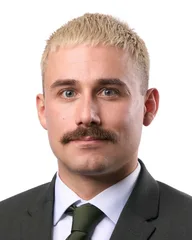
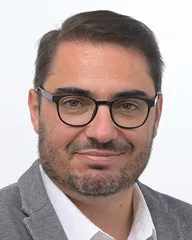
Lukas Sieper | Germany DEU | Non-attached Members (NI) | 390 |
| 2 |
|
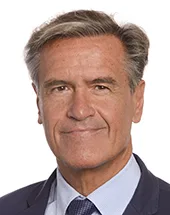
Juan Fernando López Aguilar | Spain ESP | Progressive Alliance of Socialists and Democrats (S&D) | 354 |
| 3 |
|
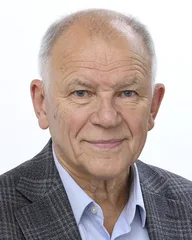
Sebastian Tynkkynen | Finland FIN | European Conservatives and Reformists (ECR) | 331 |
| 4 |
|
João Oliveira | Portugal PRT | The Left in the European Parliament (GUE/NGL) | 232 |
| 5 |
|
Vytenis Povilas Andriukaitis | Lithuania LTU | Progressive Alliance of Socialists and Democrats (S&D) | 227 |
All Contributions (89)
The attack on climate and nature: far right and conservative attempts to destroy the Green Deal and prevent investment in our future (topical debate)
Mr President, colleagues, please stop being angry and accept the fact that people and companies across Europe simply want to adjust the Green Deal. The original agreement was to respond effectively to climate change, but also to maintain competitiveness and some social and regional justice. And also to allow Member States to do what they can to make climate policy their own. And that would work. But the opposite happened. The Green Progressive majority in the European Parliament took advantage of the weak and naive Czech Presidency of Prime Minister Petr Fiala and launched a long green party. Now what's going on? Europe is slowly waking up from the party and a hangover is starting. What does that mean? Europe is losing competitiveness at the expense of China, at the expense of the United States. Emissions in the world are not falling, they are growing. You promised to protect the climate and prosperity, but you only made people's lives more expensive. So please don't be surprised that people simply want to fix this thing and abolish the biggest nonsense, such as banning internal combustion engines or imposing allowances on households, after the elections.
Regaining our competitive edge - a prosperous EU in a fragmented global economy (topical debate)
Mr President, Commissioner, Minister, European industry is stagnating and the rest of the world is producing cheaper and at our expense and with more emissions. As a result, Europe is losing competitiveness and global greenhouse gas emissions are not falling. And that's wrong, this can't be! Emission permits are the most expensive in the world. The European emission allowance is indeed the most expensive and makes production artificially more expensive and raises energy prices for citizens. Therefore, Commissioner, I invite you to submit adjustments that will make it possible to fix the price of an emission allowance on a long-term basis at EUR 30 per allowance. This will re-launch Europe's competitiveness and provide more affordable energy for citizens, as we will not shut down unnecessarily some stable fossil resources prematurely. Yes, Europe will move away from fossil fuels, but not before we can replace them with new nuclear resources and occasional renewables. It is for Europe's competitiveness and for the sake of the global climate that some countries in the European Union continue to use coal and other fossil fuels for energy for many years to come, and the price of an emission allowance cannot prevent this.
EU2040 climate target (debate)
Mr President, Commissioner, in the autumn, Commission President Ursula von der Leyen promised in Prague that you would listen to industry and people. So we logically expected that you would no longer consider new climate ambitious targets and bureaucracy, and vice versa, that you would correct the adopted climate package, that you would, for example, cap the price of an emission allowance, or that you would propose lifting the ban on internal combustion engines. Well, what did you do? Quite the opposite, in fact. At a time when the European Union is no longer competitive due to high energy prices, are you considering another ambitious climate plan and want to spend up to €600 or €700 billion per year to achieve it? Seriously? After all, it's just an increase in prices and a threat to competitiveness again. It is obvious that people, industry and agriculture are simply not the ones you listen to. And I'll tell you something in the end. There are places in Europe where people are fed up with these unrealistic climate ambitions and your cabinet. So maybe it's time to pack up your fiddles and go do some damage somewhere else.
Ozone depleting substances - Fluorinated gases regulation (joint debate - Gas emissions)
Mr President, Commissioner, colleagues, for ozone-depleting substances I think we have reached a very good deal. We will protect more the ozone layer, which is perfect, and I would like to thank the rapporteur, Jessica Polfjärd. On fluorinated gases, I would also like to start by thanking the rapporteur, Bas Eickhout. We are known from time to time to have different positions, but Bas has always remained constructive and from time to time even inclusively democratic. So, Bas, many thanks for it. But now, seriously, I was not happy, and I would even say I was a little shocked, when I saw the proposal from the European Commission, which was mainly driven by ideology and ambitions. In fact, it was imposing a risk on the availability of asthma medical inhalers, and the availability of heat pumps at a time of growing demand and a project called REPowerEU, and also some risk for the electricity grid. So it was not a good situation. I was even more shocked when some colleagues from the European Parliament wanted to go even further, just to be, let’s say, more ambitious than the European Commission, without seeing the full picture. But in the end, I must say that I’m happy with the final proposal, because I think we have succeeded, finally, to balance and to protect European citizens and businesses from, let’s say, unrealistic ambitions. And we strike a balance that’s very important between existing and emerging, more sustainable technologies. So it’s a good proposal in the end. We don’t impose a major risk on the energy and healthcare sectors within the EU, and I’m happy for this.
Urban wastewater treatment (debate)
Mr President, ladies and gentlemen, I heard a few years ago that water is a rare matter of course and that is actually a beautiful statement. And we definitely need to protect the water, and we want the water to return to the environment clean. That is why we support this proposal as such, there are a lot of good provisions. At the same time, however, we must be aware that all the objectives contained in the proposal must be economically and technically acceptable. And unfortunately, we have again come to a situation where some sub-objectives are unachievable thanks to an exaggerated green ideology that wants as much ambition as possible. One example for everything. For the Czech Republic as the watershed of Europe, the roof of Europe, the required concentrations on phosphorus and nitrogen are basically impossible to meet. So please support Amendment 253, which corrects this situation and solves this problem.
Revision of the EU Emissions Trading System - Monitoring, reporting and verification of greenhouse gas emissions from maritime transport - Carbon border adjustment mechanism - Social Climate Fund - Revision of the EU Emissions Trading System for aviation (debate)
Mr President, tomorrow's climate package, which was agreed during the Czech Presidency, will not help much to protect the climate, while weakening European states. Key industries such as steel, glass, cement, porcelain, metalworking and chemical production will be put under enormous pressure thanks to the high cost of emission allowances. In many cases, the climate tariff to protect local industry from cheap imports will only translate into an end price for Europeans. The extension of emission allowances to families who are drowning themselves and driving a private car, I consider this today, sorry, to be insane. Bottom line, the agreement of the Czech Presidency will make people's lives more expensive, deepen inflation, while the climate will not help much and will endanger industry in Europe. This is, I'm sorry, a pavilion that cannot be supported.
Fluorinated Gases Regulation - Ozone-depleting substances (debate)
Mr President, ladies and gentlemen, the protection of the ozone layer is one of the priorities of Renew Europe and, therefore, we really welcome the agreement that is put on the table on the ozone-depleting substances. We believe that further restriction of those substances will help close the ozone layer and as such will contribute to the public health. So I believe we will be able to support this proposal successfully tomorrow. Now, concerning the second regulation on fluorinated gases, we have here, as correctly said, ambitious proposals from the Environmental Committee aiming to vastly and fastly reduce the use of fluorinated gases. The direction is good, to my feeling with this report, we would undermine further sustainability elements such as the circular economy, energy or material efficiency. And as well, we could put a risk on meeting the goals of the REPowerEU. This is the reason why some elements have been some amendments, parallel plenary amendments have been tabled in order to address those concerns. I believe that we will be able also to support those amendments. One example for all Renew Europe proposes to bring into the game the spare parts, because we definitely do not want to force the public to buy new devices before the end of the given life of their currently used product. At the end, I would like to thank to both rapporteurs and all the shadow teams and all those working on those two pieces of legislation. They are very interesting, very technical, and I believe we will have tomorrow a successful vote.
Surge of respiratory infections and the shortage of medication in Europe (debate)
Mr President, Commissioner, we need Europe to be self-sufficient in the development and production of medicines and active substances. We lag behind America and Asia, and we depend on these locations. It is therefore essential that the production and development of medicines for Europe take place primarily in Europe. Please prepare appropriate programmes to channel funding towards strengthening pharmaceutical capacities in Europe. I would like to ask you to do this with one specific task: to develop new antibiotics for Europe. Recognize that the lack of medicines or the low effectiveness of antibiotics can have fatal consequences for the population. That is why investing in the development and production of medicines is the most important priority in Europe. In addition to better access to medicines, they will of course also provide us with sufficient skilled jobs.
EU response to the increase in energy prices in Europe (debate)
Madam President, Madam Commissioner, Minister Bek many thanks for your inspiring speeches. However, there are four elements that I have been missing. So first, introduce a cap on the price of the allowances, ideally below EUR 40. Secondly, for the gas imported to Europe, try to distinguish between the LNG and the pipeline gas in order to reduce the risk that the ships will sail somewhere outside Europe and it could cause the reverse effect. Third, put forward a kind of a package for energy-intensive industries and also for industries using natural gas as an input commodity for production, for example, a chemical industry or a fertilizer industry. And of course, I am not talking only about SMEs. And the fourth point, I will manage it in five seconds. You mentioned a lot on renewables and energy efficiency. Great idea, but in the long term, also, please open your heart to the nuclear and the fusion, which is having enormous progress in the past times.
Revision of the EU Emissions Trading System - Social Climate Fund - Carbon border adjustment mechanism - Revision of the EU Emissions Trading System for aviation - Notification under the Carbon Offsetting and Reduction Scheme for International Aviation (CORSIA) (joint debate – Fit for 55 (part 1))
Madam President, I would like to also drop a few words on the Social Climate Fund, as the Renew Europe shadow rapporteur. This week we are going to vote the Parliament position on this fund, and I am proud to say that this fund has been one of the political priorities of the Renew Europe Group. The EU has quite steep green ambitions and this bears a risk of a negative social impact and therefore it is very logical and we welcome the existence of such tools, such as the Social Climate Fund, simply to balance this risk and provide help to the most vulnerable groups of citizens and micro-entrepreneurs and businesses. To the design of the fund, we also welcome and we are pleased that through this fund we can support not only sustainable investments but also to a certain extent the direct income. Member States then have a possibility to address their local situations through their climate plans to simply address specifically what they need. Thank you very much once again and I believe that we will have a positive vote and we will enter into the next phase, which is the negotiation with the Council.
The Power of the EU – Joint European Action for more affordable, secure and sustainable energy (debate)
Madam President, Commissioner, Minister, I certainly welcome the European Commission's measures to reduce the impact of high energy prices and the measures that result precisely from the war in Ukraine. And yes, we are building even more renewables, and yes, let's focus on energy efficiency, but please, not across the board with that energy efficiency. It is precisely because of the war in Ukraine that some Member States will have to adjust their decarbonisation pathways and will simply not be able to afford to increase energy efficiency as much. So instead of blanket, binding targets for energy efficiency, let's focus on supporting those states that can actually increase that efficiency, and give them some incentives. Furthermore, please pay attention to the fact that reducing imports of energy commodities from Russia will delay the departure from coal. This will necessitate an amendment to the legislation in force and under discussion. Please focus on this and make proposals so that coal sources are not discriminated against during their essential operation.
Strengthening Europe in the fight against cancer(debate)
Madam President, more than 3 million people in Europe fall ill with cancer every year and 1 million people, including 2,000 young people, die. These numbers show the severity of the disease and how crucial it is to tackle cancer together. Prevention, early diagnosis and access to quality care can save lives. That is why we need to build Europe's top cancer centres working together across Europe, ensure preventive screening to avoid unnecessary losses and, where possible, provide free vaccinations, such as for cervical cancer. In addition to common types of cancer, we will also focus more on rare types of cancer in the future. And in what way? For example, by developing transformational therapies that can cure these rare types of cancer. Allow me to thank all those involved in the preparation of the report on the fight against cancer. Oh, thank you.
A European Action Plan Against Rare Diseases (debate)
Madam President, I am very proud that within the TRANSFORM MEP Interest Group, we help to promote the enormous potential of transformative therapies for rare disease patients. One of the key challenges today is lack of data. Methods based on the collection and use of real world data represents a possible solution. Therefore, the European Health Data Space shall enable usage of real world data in the lifetime management of transformative therapies. Furthermore, cross-border patient data exchange and adequate funding for a European reference network are crucially important. Madam Commissioner, let me invite you to propose an EU Rare Disease Action Plan based also on the recommendations of the Rare 2030 foresight study. This is very important, because this concerns some 30 million EU patients who are waiting for us to take action.
European solutions to the rise of energy prices for businesses and consumers: the role of energy efficiency and renewable energy and the need to tackle energy poverty (debate)
Madam President, high energy costs are a risk to citizens and businesses and the key factor is the price of the allowances. It is unpredictable and it has grown too high. Therefore, it is time to introduce a maximal predictable price and also to limit the trading with the allowances only to businesses among the Emissions Trading Scheme (ETS), with no more speculations and no more investment funds etc. Another factor in how to stabilise the cost of energy is also to respect technology neutrality. It is not possible to reach the EU climate goals only through renewables. Other planet—friendly solutions, such as nuclear or low—carbon gases, simply must be put on an equal footing in a delegated framework of the sustainable finance or within the state aid rules. Failing to do so would not only further increase the cost of energy, but would also question the meaningfulness of the European climate measures.