






The European Commission Guidelines on inclusive language (topical debate)
Thank you very much, Honourable Member. I recommend Rules 171 and 172 of our Rules of Procedure and Rule 10 para. 1. Please read these terms and conditions in peace.
The European Commission Guidelines on inclusive language (topical debate)
The next item is the topical debate (Rule 162) on the European Commission Guidelines on inclusive language (2021/3021(RSP)). As in the recent part-sessions, the possibility to speak remotely from Parliament’s Liaison Offices in the Member States is foreseen. I would also like to remind you that speakers continue to speak from the main rostrum in the Chamber. Therefore, please kindly check the list of speakers and approach the rostrum when the time comes for your intervention.
A European Action Plan Against Rare Diseases (debate)
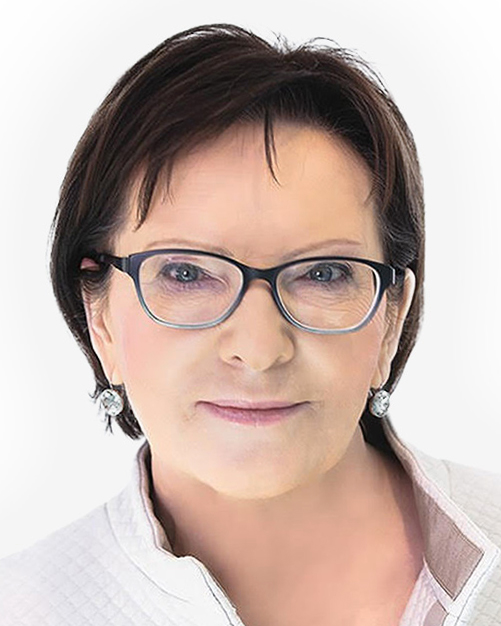
Madam President, I'm sorry. Commissioner, I'm sorry. Although we are talking about rare diseases today, nearly 36 million Europeans suffer from them. 75% of them begin to get sick in childhood. 80% of these diseases are genetic. Fifty percent of patients with a rare disease are children. I say this as a pediatrician and as a former health minister in his country who started to reimburse medicines for rare diseases. These diseases are serious, chronic, progressive, very often having their tragic end. In Europe, many people are still born, live and die from rare diseases without a diagnosis. A quarter of patients do not have access to a diagnosis before the age of five. 95% of patients do not have access to treatment. They do not have sufficient access to medical and social care to provide them with a better quality of life. We observe a lack of specialists and expert centers for individual rare diseases. And yet, these centers could be created. Centres that would operate in accordance with harmonised standards developed for Member States by the European Union Committee of Experts on Rare Diseases. The most important after the diagnosis of a rare disease is the possibility of access to modern therapeutic options, which, unfortunately, are still too expensive. In my country, Poland, pharmacotherapy is only available to 3-5 % of patients. The remaining 95% of patients benefit from conservative treatment and rehabilitation. Commissioner, we did a great job during the pandemic. We were able to negotiate good prices for vaccines with pharmaceutical companies. Today, I ask you to consider the creation of a purchasing platform in which we, from a position of strength, could negotiate with companies good prices for already invented drugs for rare diseases. I want children and adults with rare diseases from the east and west of Europe, from those poorer and richer countries, to have the same access to these medicines. They deserve it.
The next item is the report by Abir Al-Sahlani, on behalf of the Committee on Civil Liberties, Justice and Home Affairs, on the report with recommendations to the Commission on legal migration policy and legislation (2020/2255(INL)) (A9-0314/2021). I would like to remind you that in any debate during this part-session there is no catch-the-eye procedure and no blue cards will be accepted. As in the recent part-sessions, the possibility to speak remotely from Parliament’s Liaison Offices in the Member States is foreseen. I would also like to remind you that speakers continue to speak from the main rostrum in the Chamber. Therefore, please kindly check the list of speakers and approach the rostrum when the time comes for your intervention.
Condemning police violence against Romani people in the EU (debate)
The next item is the statements by the Commission and the Council on condemning police violence against Roma in the EU (2021/2907(RSP)). I would like to remind you that in any debate during this part-session there is no catch-the-eye procedure and no blue cards will be accepted. As in the recent part-sessions, the possibility to speak remotely from Parliament’s Liaison Offices in the Member States is foreseen. I would also like to remind you that speakers continue to speak from the main rostrum in the Chamber. Therefore, please kindly check the list of speakers and approach the rostrum when the time comes for your intervention.
In accordance with Art. 4 of the Rules of Procedure, I would like to inform you that no request has been received to put to the vote the corrigendum tabled by the EMPL Committee, announced at the opening of yesterday's meeting. The corrigendum is therefore deemed to have been adopted.
I'm closing the meeting. It will be re-opened tomorrow at 10 a.m. 8.30 and will start with the announcement of the results of the second part of today's vote. The agenda has been published and is available on the website of the European Parliament. I wish you a good night.
EU-Taiwan political relations and cooperation (debate)
The next item is the report by Charlie Weimers, on behalf of the Committee on Foreign Affairs, on the European Parliament recommendation to the Vice-President of the Commission / High Representative of the Union for Foreign Affairs and Security Policy on EU-Taiwan political relations and cooperation (2021/2041(INI)) (A9-0265/2021).
The next item is the statement by the Vice-President of the Commission / High Representative of the Union for Foreign Affairs and Security Policy on the situation in Tunisia (2021/2903(RSP)).
The next item is the report by Nikolai Villumsen, on behalf of the Committee on Employment and Social Affairs, on the protection of workers from the risks related to asbestos (2019/2182(INL)) (A9-0275/2021).
Employment and social policies of the euro area 2021 (debate)
The next item is the report by Ms Gálvez Muñoz, on behalf of the Committee on Employment and Social Affairs, on employment and social policy in the euro area 2021 (2021/2062(INI)) (A9-0274/2021).
The EPP Group and the non-attached Members informed the President of the decisions on the changes in the composition of the parliamentary committees. These decisions will be recorded in the minutes of today's meeting and will enter into force on the day of this announcement.
I'm closing the meeting. It will resume tomorrow, Wednesday 6 October 2021 at 10 a.m. 9.00 and will start with the announcement of the results of the second part of today's vote. The agenda has been published and is available on the website of the European Parliament.
Disinformation and the role of social platforms (debate)
The next item is the debate on the question for oral answer to the Commission by Raphaël Glucksmann, on behalf of the Special Committee on Agriculture and Rural Development. Foreign Interference in All Democratic Processes in the European Union, including Disinformation on Disinformation and the Role of Social Platforms (O-000060/2021 - B9-0038/21) (2021/2870(RSP)).