

| Rank | Name | Country | Group | Speeches | |
|---|---|---|---|---|---|
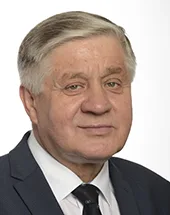
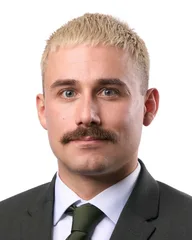
| 1 |
|
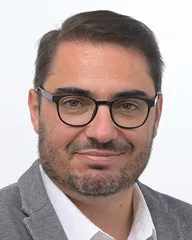
Lukas Sieper | Germany DEU | Non-attached Members (NI) | 390 |
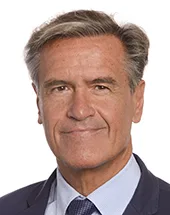
| 2 |
|
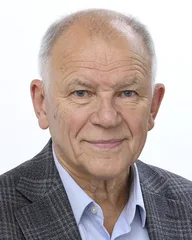
Juan Fernando López Aguilar | Spain ESP | Progressive Alliance of Socialists and Democrats (S&D) | 354 |
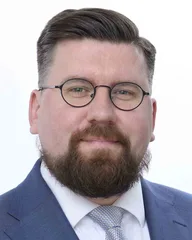
| 3 |
|
Sebastian Tynkkynen | Finland FIN | European Conservatives and Reformists (ECR) | 331 |
| 4 |
|
João Oliveira | Portugal PRT | The Left in the European Parliament (GUE/NGL) | 232 |
| 5 |
|
Vytenis Povilas Andriukaitis | Lithuania LTU | Progressive Alliance of Socialists and Democrats (S&D) | 227 |
All Contributions (38)
Binding annual greenhouse gas emission reductions by Member States (Effort Sharing Regulation) - Land use, land use change and forestry (LULUCF) - CO2 emission standards for cars and vans (joint debate – Fit for 55 (part 2))
Mr President, thank you very much. Mr. Commissioner, I'm sorry. The Land Use Regulation aims to strengthen the sector’s contribution to increasing overall climate ambition. In my view, the proposed targets should be adapted accordingly so that each Member State has a real chance of achieving the proposed national targets. The distribution of the EU target on a country-by-country basis vis-à-vis previous commitment-based scenarios raises serious concerns. The new methodology for the 2030 targets leads to significant divergences in Member States’ efforts. Measures to increase the capacity of forests to absorb CO2 are important, not only in Poland but also in other Member States. Poland is of the opinion that the proposed targets do not take into account the potential of each Member State in the land sector. Poland notes that the calculation proposed by the European Commission does not take into account any long-term trend. It is necessary to provide as much flexibility as possible during and between reference periods. I will therefore vote against this regulation.
EU islands and cohesion policy (debate)
Mr President, thank you very much. Mr. Commissioner, I'm sorry. The proposals set out in the report are in line with Articles 174 and 349 of the Lisbon Treaty. In this regard, a declaration indicating the need to develop integration strategies that will allow islands to face the challenges and overcome the barriers of their insularity is important. Parliament rightly calls for an assessment of the disaster risk prevention strategy; Calls on the Commission to assess the need for a regulation laying down specific agricultural measures for all islands at NUTS 2 and NUTS 3 level; stresses the need to continue the implementation of the second Cork Declaration for a better life in rural areas; Calls on the Commission to maintain the long-term co-financing rate for the ORs at 85%; calls for additional budgetary resources to be allocated and for an island pact and an action plan modelled on the future rural pact to be drawn up as soon as possible. The implementation of the above-mentioned tasks will improve the economic, territorial and social cohesion of islands in line with the policies of the European Union.
Global approach to research and innovation: Europe’s strategy for international cooperation in a changing world (debate) (debate)
Madam President, I'm sorry. Commissioner, I'm sorry. One of the pillars of the new strategy is to ensure reciprocity and a level playing field in international cooperation. Over the last three years of cooperation under Horizon 2020, scientific relations have been established with third countries, including 30 cooperation initiatives with several countries such as Canada, Japan, China, India or African countries. Poland is the founder of the initiative, as well as the initiator of activities in Central Europe in the field of research and innovation in agriculture BIOEAST, which aims to increase the participation of 13 countries in framework programmes for research and innovation in agriculture, including the bioeconomy. Horizon Europe is a new €97 billion programme to support research and innovation. Poland's goal is to make fuller use of the potential of national science and increase its share of funding from the European Union framework programmes. Question: What mechanism will the European Commission use to ensure that all areas of the European Union have equal access to the funds of the programme and to ensure the sustainable development of the European Union, 13 countries of Central and Eastern Europe and Poland?
Trans-European energy infrastructure (debate)
Mr President, thank you very much. The High House! The Regulation under consideration is crucial for the financing of infrastructure projects with significant cross-border relevance. The budget is, let me remind you, 6 billion euros. Unfortunately, the regulation no longer provides for the possibility of financing gas projects. In connection with the war in Ukraine, Poland in its energy policy until 2040 introduces the fourth pillar of energy sovereignty, the most important goal of which is the rapid independence of the domestic economy from imported fossil fuels and derivatives from Russia. I believe that investments with critical gas infrastructure supporting the objective of Europe's independence from Russian gas should continue to be supported by the creation of alternative instruments for this purpose. I also support the creation of a specific category and funding opportunities for smart gas grids, and in particular the possibility of supporting and upgrading existing natural gas infrastructure networks.
Need for an urgent EU action plan to ensure food security inside and outside the EU in light of the Russian invasion of Ukraine (debate)
Madam President, I'm sorry. Mr. Commissioner, I'm sorry. The agreed joint text of the resolution, which will be voted on tomorrow, has serious shortcomings. points out, on the one hand, the need for additional flexibility in the new CAP and an increase in food production in the European Union, and, on the other hand, insists on promoting the objectives of the Green Deal, especially in the Farm to Fork Strategy; These two directions, ladies and gentlemen, are irreconcilable. The following elements, proposed by Commissioner Wojciechowski, are positive and expected by farmers: firstly, intervention on the pigmeat market, secondly, the use of the crisis reserve; thirdly, the temporary suspension of the Green Deal set-aside obligation and the possibility for Member States to pay aid to farmers to buy fertilisers. In addition, the text clearly shows the application of double standards for Member States, which is typical of the European institutions. The only country criticized by name is Hungary, but the name Nord Stream 2 is never mentioned in the whole text. We still have a "better and worse Europe".
General Union Environment Action Programme to 2030 (debate)
Madam President, I'm sorry. Mr. Commissioner, I'm sorry. The general objective of the 8th Environment Action Programme is to accelerate the European Union’s transition to a climate-neutral economy. In Poland, my country, whose energy economy is largely based on fossil fuels, one of the sensitivities of this programme is the provisions on the withdrawal of environmentally harmful subsidies, including those for fossil fuels. The ECR will vote against the EU Environment Action Programme because, firstly, the programme calls for the phasing out of fossil fuel subsidies, the replacement of which by alternative energy sources would be extremely time- and cost-consuming, and is therefore a burdensome demand, impossible to achieve in the short term, especially now during the war. Second, the nature of the plan does not justify resolving issues relating to future commitments of Member States and the date for phasing out fossil fuel subsidies should be set out in a separate legal act. Thirdly, the programme comes at a time of unprecedented energy crisis, but it does not address the problem of energy poverty. Fourthly, the action programme does not seize the opportunity to take into account carbon sinks, which have a high potential in agriculture, where CO2 is absorbed by the soil.
Implementation of the 2021-2027 cohesion policy (debate)
Madam President, I'm sorry. Commissioner, I'm sorry. For many years, the aim of cohesion policy has been to strengthen economic, social and territorial cohesion between the areas of the European Union. Under cohesion policy 2021-2027, Poland will receive EUR 72 billion, which will be allocated to the implementation of investments resulting from the state development policy. It is positive for Poland that we will once again receive a programme for Eastern Poland, which will accelerate the development of these most delayed voivodships. The main objective of this programme is to consolidate the conditions conducive to the competitiveness of the macro-region and a higher quality of life in Poland. The common financial framework that we have adopted and cohesion policy are being implemented with a two-year delay due to the introduction of a two-year transition period. The Polish government submitted the Partnership Agreement, the national operational programmes on 15 December 2021 and the regional programmes will be submitted on 15 March 2022. These documents are to be approved in accordance with the Commission declaration by the end of June 2022. We await their urgent approval. Poland is a country that effectively uses European funds, thanks to which the differences related to the standard of living of its inhabitants in relation to more developed countries are rapidly decreasing. This confirms the need to pursue policies leading to an equal standard of living in the different regions of the country. Cohesion policy, in accordance with Article 174 of the Treaty on the Functioning of the European Union, must be more open to tasks related to rural infrastructure development and tasks in the agri-food sector. In my view, it is also necessary to revise the implementation system for the 2023-2027 period in terms of introducing significant simplifications and a more flexible approach to the objectives of the European Green Deal, given the new challenges arising from COVID-19 and Russia’s military aggression against Ukraine.
Implementation report on on-farm animal welfare (debate)
Madam President, I'm sorry. Commissioner, I'm sorry. In Poland, animal welfare on farms is maintained. The existing legislation in this area is sufficient and we are constantly increasing the level of well-being. The implementation report on animal welfare on farms contains 55 conclusions and recommendations, some of which I consider appropriate. Thus, first, by the end of 2023, the European Commission will evaluate and review animal welfare legislation, including on the transport and slaughter of animals. Secondly, the European Commission will ensure investment in the welfare of livestock farmers. Thirdly, calling on the European Union to provide financial resources and an appropriate time horizon for farmers should any changes be made to the rules on animal husbandry. Fourthly, the need to carry out a scientific assessment and to take into account the consumer’s purchasing power when making legislative changes. Fifth, a voluntary approach to the animal welfare labelling scheme. Sixth, call for short food supply chains based on locally produced food. Seventhly, I do not support point 17 of the report on the European Parliament’s support for the citizens’ initiative entitled ‘Let’s put an end to cage farming’, which refers to the complete cessation of the rearing and rearing of animals in a cage system.
The protection of persons with disabilities through petitions: lessons learnt (debate)
Mr President, thank you very much. Commissioner, I'm sorry. The report highlights the many difficulties faced by people with disabilities. It is clear that people with disabilities need special support. Their rights and dignity need to be protected and help in areas of particular relevance to them, such as health and education, to enable them to participate widely in society or the labour market. The resolution also refers to digitalisation as an opportunity to integrate vulnerable groups, while also requiring investment in appropriate digital skills. However, it is important to separate the real need to help those in need from the imposition of ideological issues. The resolution should not mention the Istanbul Convention, which contains harmful elements, such as the idea of gender as a socio-cultural choice that can be freely made. For this reason, the ECR Group will not support the above-mentioned report.
The role of development policy in the response to biodiversity loss in developing countries, in the context of the achievement of the 2030 Agenda (debate)
Mr President, thank you very much. Commissioner, I'm sorry. Biodiversity is essential to life. More than half of the world's GDP depends on nature. The Commission's report focuses on the need to address the root causes of biodiversity loss and restore ecosystems. The positive side of this report is to highlight the dependence of agri-food systems and smallholders on biodiversity; recognise the rights of indigenous peoples and their knowledge and experience in the fight against biodiversity loss and environmental degradation and underline the fact that environmental crime poses a global threat to nature conservation and sustainable development, stability and security. Unfortunately, the project also has some drawbacks. We do not support the addition of recognition of the right to a safe, clean, healthy and sustainable environment to the Charter of Fundamental Rights, the introduction of a system of criminal sanctions and multilateral environmental agreements. The ECR will therefore abstain.
EU contribution to transforming global food systems to achieve the Sustainable Development Goals (debate)
Mr President, thank you very much. Mr. Commissioner, I'm sorry. All available indicators show that we are not on track to avoid hunger in the world by 2030. The Union should reflect before renewing and strengthening its commitment to ending hunger and ensuring the right to adequate food in the world. Experts point out that the Green Deal will disrupt the ability to feed the world's population, and that other countries will take our place in the global market for food expansion without blinking. The experts' report clearly shows that, as a result of the implementation of the Green Deal, agricultural production in all branches will collapse, production efficiency and thus the value of EU agricultural exports will decrease drastically. According to scientists, cereal yields in the European Union will fall by 11%. The same applies to milk and other raw materials. It follows from the above that the Union has other objectives than eradicating hunger in the world. Commitment to the world seems inappropriate if we take into account the current policies of the European Union. To help the building citizens of the world, the Union should buy surplus food from farmers and pass it on to those who are starving to death. It can also help by transferring its state-of-the-art crop and animal production technologies, which yield the highest yields and the largest meat production.
A new ERA for Research and Innovation (continuation of debate)
Mr President, thank you very much. Mr. Commissioner, I'm sorry. The European Commission's Communication on the New European Research Area contains important data and information showing that, firstly, the 2030 target of 3% of GDP for R&D investment is far from being achieved by the Member States of the European Union. Secondly, a more effective transfer of research results to the real economy is needed to stimulate business investment. In Poland, the new recently adopted economic development strategy called the Polish Deal includes tax breaks for prototypes, reductions for industrial robotization or reductions to support employee investments. Let us remember that research and development can also effectively solve the problems of agriculture in Central and Eastern Europe, as evidenced by the BIOEAST initiative, which aims to increase the participation of 13 countries, i.e. Central European countries, in the Horizon 2020 and Horizon Europe framework programmes for research and innovation in agriculture and the bioeconomy, due to the fact that these countries have so far received little funds for this purpose.
General Union Environment Action Programme to 2030 (debate)
Mr President, thank you very much. The 8th Environment Programme to be in place until 2030 aims to accelerate the transition to a climate-neutral, resource-efficient, clean and circular economy in a just and inclusive manner and to achieve the environmental objectives of the UN 2030 Agenda and its Sustainable Development Goals. While this objective seems reasonable, the report's attempt to include the need to phase out all fossil fuel subsidies at EU, national, regional and local level by 2025 at the latest makes the report unacceptable for countries such as Poland, where fossil fuels now make up a large part of the energy mix and gas is expected to be a bridge to the wider use of renewable energy sources in the coming years. I will therefore vote against the solutions contained in the report.