

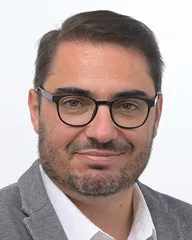
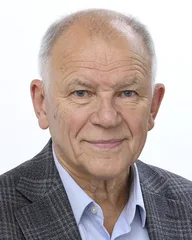
| Rank | Name | Country | Group | Speeches | |
|---|---|---|---|---|---|
| 1 |
|
Lukas Sieper | Germany DEU | Non-attached Members (NI) | 390 |
| 2 |
|
Juan Fernando López Aguilar | Spain ESP | Progressive Alliance of Socialists and Democrats (S&D) | 354 |
| 3 |
|
Sebastian Tynkkynen | Finland FIN | European Conservatives and Reformists (ECR) | 331 |
| 4 |
|
João Oliveira | Portugal PRT | The Left in the European Parliament (GUE/NGL) | 232 |
| 5 |
|
Vytenis Povilas Andriukaitis | Lithuania LTU | Progressive Alliance of Socialists and Democrats (S&D) | 227 |
All Contributions (62)
Refugees in Europe: CARE (debate)
Madam President, Commissioner, since the launch of the Russian offensive on Ukraine on 24 February, more than 3.5 million people have fled the country, and the vast majority have sought refuge in the European Union. The action of the Temporary Protection Directive has been a gesture that honours and grows the European Union. This is a measure that the Greens/EFA Group had requested in the past for other crises and conflicts, and we are pleased to see that it is now finally being implemented. This decision has probably already saved lives. Welcoming all those fleeing wars and bombing is part of our duty of humanity. With this draft CARE Regulation, the European Union will quickly release €10 billion. This money comes from envelopes from the Cohesion Fund and the Aid Fund for the Most Deprived that had not been used for the 2014-2020 period. These funds will be used for the reception of these refugees, especially in the countries bordering Ukraine, which have the largest number of them. We must collectively ensure that all refugees can meet their basic needs: sleeping accommodation, sufficient food, access to health care. It is important that the many children who have entered the European Union can go to school. All this, of course, has a cost, which the CARE Regulation aims to cover. There is an urgent need to: that is why the Greens/EFA Group supports the swift adoption of this report and why we have not tabled any amendments. The adoption of the CARE Regulation must, however, lead us to think of long-term solutions to ensure the reception of refugees, especially if the conflict in Ukraine continues, and, more generally, of all those fleeing war, fleeing oppression and seeking refuge in our Union, wherever they come from.
Protection of animals during transport - Protection of animals during transport (Recommendation) (debate)
Madam President, ladies and gentlemen, I do not understand you. In December, we unanimously adopted an unprecedented investigation report. It was the result of 18 months of work in the committee of inquiry on the protection of animals during transport. He says very clearly that European law is not respected, that it is insufficient and that this causes immense suffering for hundreds of millions of animals every year. Poultry crammed into transport boxes that are far too small. Lambs transported for more than 24 hours without access to water. Calves transported from the Czech Republic to Spain for fattening. The 14,000 sheep who died in the sinking of their cargo ship. Animals struck at the port of Cartagena before being transported for ten days from Spain to Saudi Arabia. We've all seen the same images. We have all heard the same testimonies. So yes, the text proposes advances for animals that go to slaughter or for certain species, today little covered by the legislation. But today, you are about to reject any significant measures to improve animal protection. Prohibit the transport of unweaned animals less than five weeks old? You don't want it. Prohibit the transport of females during the last third of gestation? You say no. Limit the transport time of animals to eight hours, for whatever reason? It's not yet. Banning the export of animals to third countries that do not even comply with European rules? Out of the question for you. However, this is what the citizens are asking for in very large numbers. So I am disappointed that so many members have chosen to put the interests of agribusiness ahead of the protection of animals. I'm disappointed and angry. I hope that the Commission will do better in 2023 when it makes its proposals.
An EU ban on the use of wild animals in circuses (debate)
– Madam President, tigers, lions, elephants, giraffes or even sea lions: not all of these animals have a place in a circus. For them, being used in a circus means being deprived of their natural environment, undergoing violent training from an early age, being exhibited in stressful numbers contrary to their nature and being subjected to repeated transport when the circus is itinerant. The origin of these animals is sometimes questionable, between trafficking and poaching. The majority of Member States have already adopted measures that prohibit or severely restrict the use of wild animals in circuses, but a handful of countries refuse to adopt the measures recommended by veterinarians. Don't think we're against circuses. Circuses are all the more creative, their shows all the more beautiful, more moving when there is no animal suffering. More and more circus artists are proving that a circus without animals is possible and is gaining public support. Animals are neither clowns nor acrobats. I heard you, Commissioner, earlier, and I admit that I am disappointed. My position today is that the Commission must act to ensure that there are no more animals in circuses.
Outcome of Global Summit Nutrition for Growth (Japan, 7-8 December) and increased food insecurity in developing countries (debate)
Mr President, last week, at the Nutrition for Growth Summit, the European Union committed to providing at least EUR 2.5 billion for nutrition by 2024. This is a commitment that must be welcomed in the face of the many emergencies, but if we want to end hunger and malnutrition by 2030, development and humanitarian aid will not be enough. We need a complete overhaul of our food systems, as we called for with the Farm to Fork Strategy. Trade agreements, agricultural policies, fisheries, extractive industries, everything needs to be rethought! For example, one billion people depend on the resources of the oceans. According to a study published in NatureIf we can protect our oceans to provide enough seafood to developing populations, 166 million people would be prevented from being directly malnourished. I have two questions, Commissioner: How do DG INTPA services intend to work with DG MARE to align nutrition and fisheries management objectives? And, following the summit, does the EU foresee political commitments on the transformation of food systems?
New orientations for the EU’s humanitarian action (debate)
Mr President, first of all, thank you to the rapporteurs. The report we are adopting today comes at a crucial time. Humanitarian aid faces many challenges. In addition to the ever-increasing number of conflicts, climate change will increase the need for humanitarian aid. The ongoing drought and famine in Madagascar is a striking example. And this is just the beginning. Today's world is fragile and the needs are enormous. What to deal with this? We must prevent this as much as possible, through our development aid policy. We need to work with vulnerable populations and indigenous communities to help them build resilience to climate change. The European Union and its Member States are the largest contributors to humanitarian aid, but there is a growing lack of funding. We need to increase our contribution and have a strong annual budget for humanitarian aid. We need to strengthen our coordination with other donors and ensure predictable and flexible humanitarian funding. Women and girls are often the hardest hit in crises. Specific actions are needed for them, as they also have a central role to play in the resolution of humanitarian crises. Finally, humanitarian aid must remain firm on its principles of humanity, neutrality, impartiality and independence. This is true for the European Union’s action, but it will be necessary to be vigilant with regard to instrumentalisation when private actors fund humanitarian aid. Let's act now.
The humanitarian situation in Haiti following the recent earthquake (debate)
Madam President, today in Haiti, Haitians do not live, they survive. The earthquake of 14 August, one month after the assassination of President Moïse, showed once again the vulnerability of the country. This disaster has left thousands of people suffering who are already deprived of basic services. The silence of the international community is a disgrace. The rights to safety and to life, physical and mental integrity of Haitians are constantly violated. Every day, Haitians are murdered by armed bandits benefiting from the complacency of the police and judicial authorities. Gangs control the country, the population is trapped, parents keep their children at home for fear of kidnapping. With an average of five kidnappings per day, each Haitian is waiting for his turn. Women and girls, when abducted, are victims of gang rape. Since 2018, justice has been on its knees. The international community has been turning a blind eye for so many years. According to civil society, the UN field office is more part of the problem than the solution. It is our duty to support civil society and the agreement for a Haitian solution to the crisis to restore a climate of security and democracy. To not act is to be complicit.
Farm to Fork Strategy (debate)
Madam President, the Farm to Fork Strategy is crucial to align our food system with the objectives of the Green Deal and the fight against climate change. This will necessarily mean the end of industrial livestock farming. Livestock accounts for more than 14% of global greenhouse gas emissions. According to FAO, 40 per cent of cultivated land is used to feed livestock. Imports of soybeans to feed industrial livestock directly contribute to deforestation – in the Amazon, for example. Industrial farming leads to immense suffering for animals, whether during farming, transport or slaughter. We prefer other forms of farming that are respectful of the climate and the environment, but also more rewarding for farmers. But above all, let’s act to reduce our consumption of animal products. The strategy is moving in the right direction. The revision of all animal welfare rules in 2023 must be an opportunity, at a minimum, to move away from the most cruel practices, such as cage farming or the transport of unweaned animals.
The role of development policy in the response to biodiversity loss in developing countries, in the context of the achievement of the 2030 Agenda (debate)
Mr President, as the rapporteur has said, this report is timely, as COP 15 on biodiversity starts this month. I would like to recall some things about the objective of protecting 30% of land and seas by 2030. First, this objective only makes sense with a global network of protected areas with clear management plans and objectives. Quantified targets for areas with a high level of protection are needed to put an end to ‘paper parks’. Moreover, these conservation objectives must not justify the violation of the rights of people in developing countries. In addition, a decolonial approach to conservation must be implemented, with indigenous peoples, local communities, the peasantry and small-scale artisanal fishermen at the centre. Finally, these conservation objectives will only be greenwashing if we do not transform our trade rules and free trade agreements; our agricultural policies and banned pesticide exports to the South; fisheries agreements and subsidies for overfishing; extractive industries and their devastation on land and at sea; lastly, our demand for products means the destruction of ecosystems. Any development policy will be futile if we do not review our economic model: its impacts on biodiversity and living conditions in developing countries are devastating.
EU contribution to transforming global food systems to achieve the Sustainable Development Goals (debate)
Mr President, Commissioner, I would like to start today with a major concern about the organisation of the UN World Summit on Food Systems. Civil society and small producers have been completely excluded from a process in the hands of agribusiness. Discarded are the indigenous peoples whose lands and seas are nevertheless taken over and excluded peasant organizations and small-scale artisanal fishermen. It is unacceptable to hold a summit on food systems excluding those who produce 70% of the food consumed in the world. We cannot leave the keys to our food system to the agribusiness giants alone. Let us not be blinded by their false good solutions. The real solutions to feed the world, we have: redistribute resources equitably, promote peasant agroecology, end the overexploitation of the oceans, for which we are responsible in developing countries, review our trade rules in the face of free trade drifts and promote food sovereignty. But we also need to align our own policies with these objectives: we import 63% of the seafood we consume, our fishing fleet is active on all oceans, sometimes in direct competition with local people. To feed fish from aquaculture, fishmeal made, as in Senegal, from fish normally consumed by the population is imported. The European Union has a role to play in ensuring that the Sustainable Development Goals are achieved everywhere. We need to rethink our entire food system.
Plans and actions to accelerate a transition to innovation without the use of animals in research, regulatory testing and education (debate)
Mr President, Commissioner, when we talk about the use of animals for scientific purposes, I always have this image in my head, that of a monkey tied by the wrists and staring at the camera held by the whistleblower. One sees suffering in his eyes. He seems to be asking: "Why?" Since these animals don't speak, I repeat it here: Why? The 2010 Directive on the protection of animals used for scientific purposes was an important step forward. It provided for procedures not involving the use of live animals to be used as soon as possible. Why has the number of animals used almost not decreased? A comprehensive action plan with quantified targets and dedicated resources is needed. We need to train young scientists in the use of alternative methods. We can give priority in allocating research funds to projects that use alternatives. We can support private actors who want to reduce the use of animals. Alternatives often perform much better than animal testing. So we all have to win, human or non-human animals.
Establishment of Antarctic Marine Protected Areas (MPAs) and the conservation of Southern Ocean biodiversity (debate)
Madam President, I would like to start by thanking Grace O’Sullivan and Catherine Chabaud, who initiated this resolution on the creation of marine protected areas in the Southern Ocean. This resolution is crucial because, faced with the blockage of China and Russia, the European Union must be united. The oceans are at the forefront of the fight against climate change and constitute important but fragile biodiversity reserves. The creation of MPAs in the Southern Ocean would be a powerful tool to preserve the unique ecosystems of this particularly vulnerable region. To be fully effective, it is also necessary to address the problems caused by tourism and the krill fishery, which is at the base of the food chain of many species, including penguins, whales, seals and fish. I hope that these negotiations will be successful and that they will serve as a precedent to strengthen international cooperation for the protection of biodiversity and in particular for a comprehensive agreement on biodiversity, beyond national jurisdictions. To strengthen our credibility, it is also important to implement the biodiversity strategy and to create enough marine protected areas in Europe to cover 30% of European waters.
European Maritime, Fisheries and Aquaculture Fund (debate)
Madam President, ladies and gentlemen, I feel a mess in the face of this new Maritime, Fisheries and Aquaculture Fund. We are facing a collapse of marine biodiversity. Small-scale fishermen face competition from increasingly aggressive industrial fishing. We could have tried to live up to it. Instead, you abdicate. You reintroduce harmful subsidies. For example, subsidies that were limited to vessels of less than 12 metres will be available up to vessels of 24 metres. This means less money for small-scale coastal fishing, but also an increased risk of overfishing, especially in the Mediterranean. Harmful subsidies are contrary to the UN Sustainable Development Goals. Our predecessors removed them several years ago. Reintroducing them runs counter to ongoing WTO negotiations to ban them globally. Finally, no budget has been specifically allocated for the protection of marine biodiversity and ecosystems. I can't endorse that. That is why our group has submitted a request to reject this agreement and why I will vote in favour of this request to reject this new EMFF.