
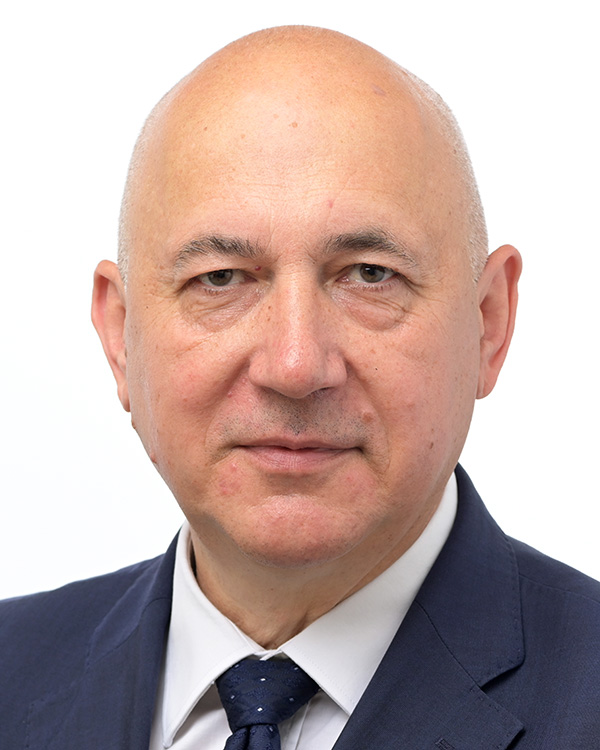

| Rank | Name | Country | Group | Speeches | |
|---|---|---|---|---|---|
| 1 |

|
Lukas Sieper | Germany DEU | Non-attached Members (NI) | 390 |
| 2 |

|
Juan Fernando López Aguilar | Spain ESP | Progressive Alliance of Socialists and Democrats (S&D) | 354 |
| 3 |

|
Sebastian Tynkkynen | Finland FIN | European Conservatives and Reformists (ECR) | 331 |
| 4 |

|
João Oliveira | Portugal PRT | The Left in the European Parliament (GUE/NGL) | 232 |
| 5 |

|
Vytenis Povilas Andriukaitis | Lithuania LTU | Progressive Alliance of Socialists and Democrats (S&D) | 227 |
All Contributions (214)
The human rights situation in Xinjiang, including the Xinjiang police files
Madam President, I'm sorry. At the outset, it is impossible not to agree with my previous speaker, Mr Procaccini, who rightly noted the hypocrisy in this House. Indeed, today we have spent a lot of time voting on the fight against CO2 emissions, and at the same time we are working with the world's largest economy, which is one of the biggest emitters of CO2 – I am thinking here of China. Of course, the situation in the northwestern Xinjiang Autonomous Region of China, inhabited by about 10 million ethnic Uighurs and Kazakhs, has deteriorated sharply. Particular attention should be paid to 2014. This is the Chinese government’s campaign with the Communists’ characteristic message of ‘Strong Strike Against Violent Terrorism’. Starting in April 2017, the Chinese government launched round-ups in which an estimated 2 million Kazakhs and Uighurs were detained. He has placed them in large out-of-court political re-education camps, where they are held without charge and without any legal norms. Uyghurs and other ethnic minorities in Xinjiang are subjected to arbitrary detention, torture, forced labour, political indoctrination, extreme restrictions on religious and cultural practices, and forced sterilization. We are talking about genocide, but in fact there are no hard and real actions.
Building of a wall on the Polish – Belarus border in the Białowieża primeval forest (debate)
Madam President, I'm sorry. The level of infantilism – I do not mean to say ill-will – of those foolish statements that have been made here from the mouths of my previous speakers is reaching its peaks. I would like to make you aware of the nonsense we were dealing with when the situation on the Polish-Belarusian border was described by various types of representatives of NGOs, various types of politicians who ran there like, I don't want to say, clowns with commercials, when this first wave of illegal migrants brought by Lukashenko, with Putin's consent, arrived in Belarus. Here we heard about a man named Ibrahim, who supposedly sailed for six days on the Bug, the border river, in cold water, going out only at night to warm himself by the fire. We heard about a little kitten, a kitten, who supposedly followed his mistress or master from Afghanistan. Come on, guys, come on! There are limits – without being wrapped in cotton – to stupidity. We are dealing with hybrid warfare. If we had allowed the Polish border guards, if Poland had allowed the first stage of the war that Putin is waging in Ukraine to be carried out, we would not have had poor refugees in Poland – because no one from Yemen, Nigeria, Chad, Afghanistan, Syria had reached the Polish-Belarusian border on foot, but had been brought to Belarus by Lukashenka, often with their own money. They wanted to destabilize the situation in Poland before Putin's attack on Ukraine. And today, Poles would not be so open to real war refugees if smuggled Chechens, Afghans - because we know it from the services of various countries - were prepared to carry out destructive actions on the territory of Poland. And today I really bow to the Polish border guards, the Polish army, the Polish police for how effectively they protect Europe, also from such irresponsible, not to say harsher, unwise people as those who talk out of this lectern.
Threats to stability, security and democracy in Western and Sahelian Africa (debate)
Mr President, thank you very much. We are talking about the African region, which poses yet another threat from the point of view of the security of the European Community as a whole. I am talking about the demographic situation. Today, the population of the Sahel countries is almost 80 million people. The demographic outlook is that by 2030 there will be an increase to 120 million, and by 2050 there will be a doubling of 250 million people who, as a result of the destabilised situation in their countries – through desertification, wars, conflicts, Islamic groups – will move north, move to Europe. We have to be aware of that. I would also like to draw attention to another threat, not only from those factors that I have already mentioned, namely wars, conflicts, Islamic groups, namely the emergence of Russia in these countries. Putin’s military ‘egg’, the Wagner Group, has passed from Syria through countries such as Mali, Chad, Burkina Faso. Today, they are destabilising the situation in these countries. Let us remember that they are also fighting in Ukraine. The Wagners were given the task of assassinating President Zelensky. Putin is destabilizing the Sahel in order to destabilize the euro.
Discharge 2020 (debate)
Madam President, I'm sorry. Mr President, thank you very much. Ladies and Gentlemen, I too would like to begin with a word of thanks, especially to my colleagues who have supported me in the preparation of these reports. I would like to express my special thanks to Ms. Kamila Wrzesińska. Thank you to all of you who participated in these discussions. To sum up today's debate, I would like to stress – and I agree with my previous speaker, Mr Czarnecki – that I think that it is completely inappropriate to discuss granting or postponing discharge for the European Border and Coast Guard Agency (FRONTEX). We are at a particular moment in our history and this discharge should be granted, because protecting the external borders of our Community, the European Union, is the most important thing in the current situation. This agency – I want to say it very clearly – is doing its job well. Also in terms of budgetary control, we do not see any major problems. We must remember that some shortcomings characterize most agencies, if not all agencies. And I would like to refer to my own experience here. As a former head of the Ministry of the Interior and Administration in the Government of the Republic of Poland, I cooperated with Mr Leggeri. It is not for me to judge the allegations that are being made against him today, but I would like to thank him very much for this cooperation. I give concrete examples: Yesterday, ladies and gentlemen, about fifty people legally brought to Belarus by the Belarusian regime, Lukashenko, tried to cross the Polish-Belarusian border, which is the external border of the European Union. They attacked Border Guard officers, in cooperation with the Belarusian regime. If we disavow the actions of Frontex today, which is also responsible for security on the southern flank – Spain, Italy, Malta, Greece – we will destabilise the secure borders that guarantee the security of the European Community as a whole. Thank you, Mr Leggeri, for your cooperation. Thank you to all Frontex officers.
Discharge 2020 (debate)
Dear President, Dear President of the Court of Auditors, Ladies and Gentlemen, I will discuss my discharge reports for the Clean Sky Joint Undertaking (now the Clean Aviation Joint Undertaking) and for the Bio-based Industries Joint Undertaking (now the Circular Bio-based Europe Joint Undertaking). Overall, it should be noted that the main deficiencies in the functioning of the JUs relate to in-kind contributions, the surplus of unused budget appropriations from previous years, i.e. carry-overs, procurement procedures and sound financial management. Now let's get to the details. The accounts of the Clean Sky Joint Undertaking for the financial year 2020 present fairly its financial position, the results of its operations and its cash flows. However, in my report, I have identified many shortcomings and shortcomings in the operation of this project. As a result of the COVID-19 pandemic, the pace of conclusion of grant agreements with partners has slowed down. This led to the recovery of a significant part of the overpaid pre-financing, resulting in a significant increase in payment appropriations for operational activities in 2020. This situation had a negative impact on the implementation rate of the operational payment budget. At the end of 2020, it was 82.6%. The JU also did not make full use of the funds from previous years. The Joint Undertaking more than doubled its payment budget for infrastructure and communication expenditure. This doubling of the payment budget, together with the impact of the COVID-19 pandemic, resulted in a low implementation rate of 47.7% at the end of 2020. I will now set out the problems with regard to labour issues. The number of statutory staff of the Joint Undertaking remained stable at 42 between 2017 and 2020. However, the use of temporary agency workers increased significantly during the same period. The tasks performed by temporary agency workers are more of a permanent nature. The practice of the Joint Undertaking leads to the creation of de facto permanent posts outside the establishment plan, which may result in high staff turnover and uncertainty among contract staff and thus negatively affect the overall performance of the Joint Undertaking. In my report, I also called on the Joint Undertaking to report to the discharge authority on the developments regarding OLAF’s final report on two investigations received in September 2021. In both cases, OLAF confirmed the suspicion of fraud. Now let us turn to the discharge for the Bio-based Industries Joint Undertaking. The 2020 annual accounts present fairly the financial position of the Joint Undertaking, as well as the results of its operations, its cash flows and the changes in net assets. However, there are many shortcomings. First of all, I negatively assess the relatively large surplus in the Joint Undertaking's budget of unused budget appropriations from previous years. I will now discuss the shortcomings in procurement procedures and staff selection procedures. All Union institutions and bodies are required to implement solutions for the processing of data submitted in the context of procurement procedures. The Commission has developed an integrated portal where all published offers are publicly available. The Joint Undertaking does not use all modules of the Platform. The Joint Undertaking should make use of the Commission’s e-procurement solutions to ensure the widest possible competition in e-procurement. I called on the Joint Undertaking to react as soon as possible in this regard. Clean Sky, like BBI, too often uses temporary staff, which should remain a transitional solution. I propose to grant discharge to these Joint Undertakings.
The social and economic consequences for the EU of the Russian war in Ukraine - reinforcing the EU’s capacity to act (debate)
Mr President, thank you very much. The social and political consequences of Russia's aggression against Ukraine should, in the first place, be the fall of the scales from the eyes of those politicians in Germany, France, the Netherlands or Belgium who believed that by doing business with Putin and fuelling the Russian war machine with billions of euros from the Russian satrap, it would be possible to create a peace-loving democrat. Today is the time for real action! No high-profile words, marches, protests or drawing crayons on the sidewalks will stop Russia's aggression against Ukraine, only tough and consistent sanctions. A complete abandonment of Russian gas and oil. Solidary military support for Ukraine – and I mean heavy military equipment, not unnecessary helmets in the Bundeswehr’s warehouses – can stop Putin. Another extremely important social and political aspect of Russia’s aggression against Ukraine must be the full solidarity of all EU Member States. With those countries that today took on their shoulders a huge humanitarian effort for millions of Ukrainian war refugees, such as Slovakia, the Czech Republic or my country, Poland. It is therefore a shame that, to this day, the European Commission has not sent a single euro of aid to these countries. We in Poland do not create closed ghettos, we are not talking about relocation. Millions of Poles take Ukrainians under their roof. We show absolute solidarity and expect, like other countries in Central and Eastern Europe, such solidarity from the European Commission.
Ongoing hearings under Article 7(1) TEU regarding Poland and Hungary (debate)
Madam President. Ladies and Gentlemen, I will start with a quote, words that two weeks after Russia's aggression against Ukraine were uttered by the former US ambassador to Poland, admitting in the same interview that she herself often disagreed with the Polish government. I quote: "The EU is currently dealing with the rule of law in Poland and discussing sanctions. Time to say it out loud! As regards the rule of law problem, much of what reached the West was the result of Russian disinformation. Both the EU and America accepted it uncritically," said Ms Mosbacher. More than two months have passed since Putin's attack. At that time, we witnessed the heroism of Europeans and the discrediting of European elites. I am thinking here of buses and trucks on German, Italian or Belgian registration numbers, which could be found on Polish motorways when they brought humanitarian aid to Ukraine. I am also thinking of French or German politicians who hung on the phone with a war criminal and raced in ideas on how to block or bypass the sanctions imposed on him. What was Poland doing at the time? Proud Poles, without financial support from Brussels, welcomed, mainly into their homes, millions of refugees from war-torn areas. And the Polish government did not even mention relocation in a word. Our country has been at the forefront of humanitarian and military assistance to our neighbours, and our politicians have awakened the consciences of the European elites. The words of Prime Minister Morawiecki about the fact that the Nord Stream pipeline flows the blood of innocent people will certainly go down in history. Why did you plan this debate on our rule of law? Do you want to drown out your burning consciences? Shame that your journalists and citizens remind you of every day? More than a million Ukrainians have been kidnapped and sent to Russia, often to Siberia. Stalin did the same with Poles 80 years ago. And all this is happening right in front of our eyes. And what are you doing? The European politicians? Politicians who have the audacity to instruct the Polish government today. Your "green deal" is to be powered by Russian gas. Your leaders are urging your companies not to liquidate business in Russia, because you dream of dirty, blood-stained rubles, which you will exchange for euros, supposedly already clean. You can't wash that stain off your honor anymore. History won't forget that. You may try to blame the Poles, but it is our country that is on the lips of the whole free world today. Much has already been said about the generosity of Poles in providing humanitarian aid and receiving refugees. This is one more quote from recent days about the government's actions: ‘the ruling Law and Justice party in Poland has breathed a sigh and gained more prestige thanks to its tough policy towards Russia, after years of being under the scrutiny of Brussels’. This is written by the prestigious Spanish daily, pointing out that it was our government that was right on many issues and today it is using it to show what is really happening in our country. Today is an important day for Poles, a national holiday. It was established in memory of the Constitution of 3 May, the one from 231 years ago, when Poland reformed itself to avoid German-Russian annexation, when Poland was an example for Europe, introducing the first constitution precisely on our continent, a constitution that gave many freedoms to the weakest, who were exploited by serfdom - a form of slavery that was then widespread in Europe. I would like to ask the French: How would you feel if someone tried to teach you on July 14th? Has he debated the police's violent response to the yellow vest protests and tried to rebuke your authorities for it? So why are you ruining the Polish holiday? Why are you trying to take away our right to be proud Europeans? On our most important national holiday! The Constitution of May 3 was a model for your constitutions. You're forgetting that today. And I'll end with these words: Long live Poland! Long live Europe! But a Europe based on true values, those derived from the Old and New Testaments, from Greek philosophy, from Roman law, and not from neo-Marxist leftist gibberish.
Destruction of cultural heritage in Nagorno-Karabakh
Madam President, I'm sorry. Both in the colloquial and political perception of the Azerbaijani-Armenian conflict, this conflict is a territorial dispute and has a national character. However, as reported by the Vatican, since the ceasefire between the Azerbaijanis and Armenians and the takeover of much of Nagorno-Karabakh by the Azerbaijanis, there has been a brutal destruction of the Armenian religious and cultural heritage in these lands. In the territories occupied by the Azerbaijani army there are at least 1,456 monuments of Armenian culture, religion and history. Armenians around the world fear that these monuments may meet the same as the churches and monuments in Nakhchivan. According to official data, 28,000 historic buildings have been demolished in the region so far, including 89 churches, 5,840 hand-carved stone crosses, the so-called chachkars, and 22,000 tombstones. The concept of genocide came into international law through studies and research into the horrific massacre of the Armenian people. This research was conducted by a Polish lawyer of Jewish origin Rafał Lemkin. Today, the world has to protest. Today, the world must pay attention to another threat. This threat, this bestiality, is cultural genocide.
Debate with the Prime Minister of Estonia, Kaja Kallas - The EU's role in a changing world and the security situation of Europe following the Russian aggression and invasion of Ukraine (debate)
Madam President, I'm sorry. Dear Prime Minister, I would like to thank you for your voice, the voice of political realism of the politician of the country neighbouring Russia. We, the people of Central and Eastern Europe, must today invoke in this House the voices of realism coming from countries that have centuries-old, difficult experiences of neighbourhood with Russia. It doesn't matter if it was Bolshevik Russia or if it is Putin's Russia today. It has always sought to subjugate our countries. Therefore, the policy of soft power, the policy of subordinating security, including energy security, to the interests of individual states today ends with barbarism and the murder of the civilian population in Ukraine. When in 2008 the President of Poland Lech Kaczyński spoke prophetic words in Tbilisi: Georgia today, Ukraine tomorrow, then the Baltic States, and then it will be time for my country, Poland, in many capitals of Western Europe, including this House, to say that this is an exaggeration. When the government of Prime Minister Jarosław Kaczyński started the construction of a gas port in Świnoujście, there were voices from Germany that it was a fanaticism, and this construction could threaten, note, the bats that inhabit the destroyed bunkers left by the Nazis on the island of Wolin. Today, German local government officials from Mecklenburg refuse to accept Ukrainian refugees. Why is that? Because they believe they will pose a threat to critical infrastructure. Which one? In this commune, the Nord Stream 1 and Nord Stream 2 gas pipelines intersect. If individual countries continue to pursue this type of policy, Putin will continue to murder innocent Ukrainians. We can only stop Putin by being in solidarity, by being one fist.
The deterioration of the situation of refugees as a consequence of the Russian aggression against Ukraine (debate)
Madam President, I'm sorry. In the current situation of natural danger, it is that not only Ukrainian citizens are seeking refuge in Poland, but also numerous legally residing citizens of virtually all countries of the world, including students from Africa, the Middle East, Asia, but also Belarus and Russia. It is worth remembering that one of the most important tools used by Russia during its aggression against Ukraine is information manipulation. Poland is open to helping refugees of all nationalities, I stress all nationalities. And reports of discriminatory treatment by Polish services of citizens of some countries were verified on the spot by diplomats of these countries and turned out to be fake news. Representatives of numerous African countries, including heads of diplomatic posts supporting their citizens at the border, point to excellent work, professionalism, dedication of Polish services and Poles involved in providing assistance to refugees. Examples include thanks received from representatives of Angola, Azerbaijan, Belgium, Egypt, Iran, Israel, Kenya, Morocco, South Africa, Sierra Leone, Jamaica, Syria, Tanzania and Zambia. That is why I have a heartfelt request to all those of you who are repeating Russian lies from this place: don’t be Putin’s usuful idiots.
Foreign interference in all democratic processes in the EU (debate)
Madam President, I'm sorry. I am pleased that important words have been said here regarding the limitation of the influence of Putin's propaganda in the countries of the European Union. He is pleased that measures have been taken to limit the activities of radio and television stations such as Sputnik and Russia Today. But it is impossible not to notice that over the past years Putin has manipulated public opinion in the European Union with impunity and with full premeditation. They turned a blind eye to the destabilisation and social unrest in the Member States during the coronavirus pandemic. Today we observe how the same anti-vaccine portals or profiles support Putin's aggression in Ukraine. A year ago, the German weekly Der Spiegel published an analysis of the manipulations carried out by Russia Today in Germany. It was a year ago, and today despite this tragedy, the war in Ukraine, the German Chancellor says that Germany will not give up Russian gas or Russian coal. The French president, on the other hand, says that Russia should be respected. Yes, Russia as a state – yes, but not Putin and his criminal spawns in Ukraine. Step by step, Putin tried to prepare public opinion in the European Union and in Russia for the aggression against Ukraine. An example is the attempt to destabilize the situation on the Polish-Belarusian border. How many fake news stories, also reproduced here in this House, were aimed at my country, at the Polish border guards, at the Polish army, at the Polish police! Today, we must do everything to ensure that the civilised world says "No!" to Putin.
The death penalty in Iran
Mr President, thank you very much. My country, Poland, as a member of the European Union and the Council of Europe, is committed to the abolition of the death penalty worldwide. The aim is to oppose the use of the death penalty or, as a first step, to introduce a moratorium. We support calls for the ratification of the Second Additional Protocol to the International Covenant on Civil and Political Rights as widely as possible. That is why we are actively involved in promoting and lobbying for the biennial resolution presented by the European Union to the Third Committee of the UN General Assembly for a moratorium on the death penalty. Bearing in mind the inherent dignity of every human being, it is particularly difficult for us to accept that in many countries the death penalty can still be imposed on a child or a person with mental disabilities or for reasons such as membership of religious minorities. We are also seriously concerned about the imposition of the death penalty as a sanction for certain forms of conduct such as apostasy, blasphemy or adultery. Iran is a beautiful country, a country full of beautiful and good people. Poland experienced this heart of Persians, Iranians after the Second World War, when more than 120,000 of our citizens found support and support among Iranians. This resolution, which we are discussing today, brings closer the day when peace and the rule of law will return to Iran.
The Rule of Law and the consequences of the ECJ ruling (debate)
Madam President, I'm sorry. I allowed myself to be so remarked that I hope that today there will be no censorship, because yesterday, contrary to the rules of this House, Mrs President tried to censor my speech. The CJEU judgment confirms the dangerous tendency of the EU institutions to extend their legal provisions beyond the EU Treaty. This type of action, which extends the EU treaties, must be taken negatively. This is a dangerous trend that may create legal uncertainty in the European Union. This can be clearly seen, for example, in the comments of those of you who in this Chamber are trying to extend today's ruling of the CJEU to ideological and political charges against those countries in which parties from outside the present establishment rule. I would like to call on you, instead of putting undue pressure on the European Commission, to give up these emphasic and political-ideological rashes, just to read into the reasoning behind today's decision of the CJEU. It expressly states that the procedure provided for may be initiated only if there is reasonable evidence that the breach of legal principles affects or seriously risks affecting, in a sufficiently direct manner, the sound financial management of the Union budget or the protection of the financial interests. And Poland, when it comes to spending EU funds, is at the top of the summit of countries against which it has no objections.
The surveillance of politicians, prosecutors, lawyers and journalists, and other persons and entities in EU Member States using cyber surveillance software(debate)
Madam President, I'm sorry. Perhaps, to begin with, such a remark: Here, Mr Lenaers was kind enough to bring up a Polish lawyer who told such a nasty story about a canary. However, he did not say that this lawyer is now suspected by the Polish public prosecutor’s office – and is hiding outside Poland – of crimes of extortion of over PLN 70 million and money laundering. I don't prejudge his guilt. This should be decided by the court, but this lawyer, who here in the European Parliament was wrapping up these stinking stories, is hiding and fleeing from the Polish justice system today. Ladies and Gentlemen, We are having this debate on a day when information may come at any time about Russian aggression, which could be the source of a serious global crisis. I would like to remind you that the harbinger of these events was a hybrid attack on the border of the European Union with the use of immigrants, which took place from the territory of Belarus. The Polish government used huge forces to prevent the flow of migrants from west of Europe, becoming a tool of blackmail and pressure from post-Soviet satraps. The Polish state has been facing security challenges for years. Recently, the coordinator of the special services, Minister Mariusz Kamiński, referred to the allegations formulated by the Polish opposition regarding the use of allegedly illegal software that helps the services in the performance of their tasks. I would like to draw your attention to the words of Minister Kamiński, who indicates that politicians involved in criminal matters are trying to tell stories about the alleged... (The Chair interrupted the speaker) ...emphasize without the court's permission. This kind of thesis formulated by the Polish opposition is a lie for the needs of the political struggle. Is it through such debates that we try to strike at our services in the European forum... (The Chair took the floor)
Digital Services Act (continuation of debate)
Mr President, thank you very much. Everything that is legal offline must be legal online. No to online censorship. Therefore, there is a need to strike a balance between the protection of freedom of expression and the need to quickly remove illegal content from the internet. Appropriate involvement of regulators from Member States where the recipient of a service offered by a provider of intermediary services established in another Member State is located is necessary. It is also necessary to guarantee channels for two-way communication between online platforms and the authorities of all Member States. It should be maintained in the text of the Regulation that the DSA is without prejudice to the right of recipients of the service to appeal the decision to a court or administrative authority in the country where they are established, in accordance with the applicable law of that country. Poland also calls for the addition of provisions that would directly prevent the removal and blocking of legal – I stress legal – accounts of political parties and protect political pluralism in the European Union.
Forced labour in the Linglong factory and environmental protests in Serbia
Mr President, thank you very much. On Tuesday, we discussed in this House cooperation with the Western Balkan countries in the fight against organised crime. I said from this point of view that leaving the countries of this region to themselves will inevitably mean that countries such as China, Russia or Turkey will play an increasing role in these countries, alongside unfortunately organised criminal groups. These countries will not only use the Western Balkans to do business, but they will also do everything to destabilise the political situation across Europe. In recent years, we have heard more and more about the side effects of business activities carried out in Serbia by large international corporations, especially Chinese ones. China has been implementing its policy towards the Western Balkans region for several years, based on investments in infrastructure projects, but this is only one side of the coin. The other one, the dark one, we're discussing today. The inhumane treatment of Vietnamese workers, the supply of corrosive, unaccountable, untransparent capital to investments, and capital flows from authoritarian states must all be condemned. But the question is still open: Will the European Union give up the countries of the Western Balkans? Will we put our friends in the hands of China and Russia?
The proposed Council decision on provisional emergency measures for the external border with Belarus based on article 78(3) TFEU (continuation of debate)
Madam President, I'm sorry. This year, more than 38,000 attempts to illegally cross the border were recorded at the Polish-Belarusian border. In December, there were 838 such trials. Last day, a group of 40 aggressive young men, mainly citizens of Iraq and Syria, with the support of Belarusian services, tried to cross our border. I would like to stress once again: This is not a humanitarian crisis, it is a hybrid war that Belarus, with the support of Russia, is waging against Poland, Lithuania and Latvia. The best example of this is the fact that the actions of the Belarusian services, which helped these illegal migrants to forcibly cross the Polish-Belarusian border, were supervised personally by General Grzegorz W. Kolodko. Roman Podliniev, deputy head of Belarusian border guards. Turning to the Council decision on temporary emergency measures at the external border with Belarus, I would like to point out that, of course, while understanding the Commission's obligations and powers to take legislative initiative, it is disappointing that the Polish side could not refer to it at the stage of drafting the document. This only confirms my country's concerns that the views of the Member State directly concerned by the European Commission's proposal are not sufficiently taken into account, also in the context of the work on the Pact on Migration and Asylum. In my view, such a course of action is not in line with the spirit of Article 4 of the Treaty on the Functioning of the European Union and hinders the adoption of measures which could be fully accepted by the Council. I am afraid that despite the intention of the proposal itself to stop further waves of migrants coming from Belarus to the territory of the European Union, this initiative will ultimately prove counterproductive and will ultimately confirm the creation of a new migration route. Concerns also seem to be warranted that the publication of such a decision will not provide a stimulus for further illegal attempts to cross the borders of the European Union.
Cooperation on the fight against organised crime in the Western Balkans (continuation of debate)
Mr President, thank you very much. This is a zero-one situation. If we want the Western Balkans – as one Polish poet wrote – to be ‘active other devils’, if we want the Western Balkans to serve satraps like Putin, like undemocratic China, and unfortunately also like Turkey, to destabilize the situation in our countries, let us leave the countries of the Western Balkans to themselves. Trafficking in human beings, illegal migration, arms trafficking, organ trafficking, money laundering and corruption are not just a problem for the Western Balkan countries. We too are being ricocheted as Member States today. If we leave the Western Balkans to themselves, these ‘other devils’ will use this region of our continent to, as Churchill used to say at the time, continue to be the ‘soft underbelly of Europe’ to destabilise the situation in our countries. That is why we must do everything to ensure that the fight against organised crime in the Western Balkans is also a fight from our democracies, our countries and our services. As a former Minister of Internal Affairs and Administration in the Government of the Republic of Poland, I take pride in the fact that it is the Polish border guards, the Polish police today support the fight against crime in the Western Balkans.
International ports’ congestions and increased transport costs affecting the EU (debate)
Mr President, thank you very much. The current challenges of overloading international seaports and increasing transport costs affecting the European Union call for global action in view of the global nature of maritime transport. The adoption of binding regional measures can be counterproductive and exacerbate the current disadvantage. Among the proposed solutions requiring the involvement of the European Union at international level are: the establishment of an international system for the exchange of information on the situation on shipping routes and the congestion of key seaports, as well as the selection of alternative ports for cargo handling, the development of global solutions for port operations, the designation of transport workers, seafarers, port workers, logistics operators as key workers and thus enabling them to operate in the event of restrictions to counteract the pandemic, ultimately making maritime professions more attractive. Today's experience should be a valuable contribution to the European Commission's contingency plan for freight transport in the European Union.
Presentation of the Court of Auditors' annual report 2020 (debate)
Madam President, I'm sorry. I promise I'll do everything I can to make sure you don't have to use that wooden hammer. Mr President of the Court of Auditors, Commissioner, thank you very much. Thanking the Court of Auditors for presenting the annual report for 2020, it is impossible not to notice, underestimate and address special words of thanks to all the staff of the Court of Auditors who came to work in an exceptional year, because a pandemic of the scale that affects Europe today happens once every 100 years, and yet your staff has performed this task in an exemplary manner. The Court has no reservations on the reliability of the accounts or on the revenue of the European Union budget, although it gives an adverse opinion on the legality and regularity of expenditure. The material error rate of 2.7% indicates that the level of error compared to 2019 remained at the same level, also for 2018, 2017 or 2016. In the context of the ECA’s conclusions on the possible increase in the level of outstanding commitments in subsequent years, it should be noted that this increase should be significantly reduced by ensuring an adequate level of payment appropriations in subsequent annual budgets of the European Union. The level of payments should reflect the increasing pace of implementation, especially of programmes under shared management, mainly cohesion policy and rural development.
Fundamental rights and the rule of law in Slovenia, in particular the delayed nomination of EPPO prosecutors (debate)
Mr President, thank you very much. Once again in this House we are witnessing an attack on the sovereign government of a Member State of the European Union. After Poland and Hungary, today is the time for Slovenia. This time, the government of Prime Minister Jansza is the target of the attack. This attack is contrary to the existing treaties, which clearly state that justice matters remain the exclusive competence of the Member States. After Warsaw and Budapest today, Ljubljana and the citizens of Slovenia, who have democratically decided who and what party to govern, are under attack by the left-wing majority in this parliament. Perhaps it is high time, Ladies and Gentlemen, that you recognize that your neo-Marxist visions of the resonant attempts to instruct the countries of Central and Eastern Europe are not necessarily shared by the citizens of our countries. You talk about values, you talk about the rule of law, well, you know, we recognize these true values in the Old and New Testaments, in Roman law, in Greek philosophy, in Aristotelian logic, and not in neo-Marxist utopias. We joined the European Union of Robert Schuman, Konrad Adenauer, de Gasparri, Monnet, not Karl Marx. We joined the European Union, in which the Member States are the sovereign subject of the community we have agreed to, and not some conglomerate, a superstate that appears in your mind and you want to write further scenarios for a new wonderful world.
The escalating humanitarian crisis on the EU-Belarusian border, in particular in Poland (debate)
Madam President, I'm sorry. Unfortunately, it should be noted with regret that this extremely important debate from the point of view of the security of citizens of the entire European Union has again turned, at least in the speeches of some of you, into a pretext for attacking the Polish government. It is with great regret that I note that the head of the largest faction in the European Parliament, Mr Manfred Weber, is once again attacking the Polish government. Today, he did not appeal to Donald Tusk, as he did during the last debate on Poland. And the only words that should come out of this lectern today are the words to the Polish border guards, the Polish army, the Polish police, who, together with their counterparts in Spain, Greece and Italy, make sure that the state can say these uncreated dirty words. You voted today as a left-wing majority that we will discuss the humanitarian situation on the Polish-Belarusian border. Well, you've already voted that a snail is a fish, that a carrot is a fruit, you can vote that there is no gender, that dad is mom and mom is dad, but what does this have to do with common sense? I thank you very much for this sensible voice, which makes it clear that this situation, which today affects the entire European Union, is a hybrid war against the security of the entire European Union by the criminal regime of Lukashenko and his Moscow protector. If we, through these kinds of debates, send a signal, as the High Representative for Foreign Affairs has very accurately said, to those unfortunate people in the Sahel, the Middle East, that they can come here because we will take care of them, because we will open the door wide, then we will have a repeat of 2015. All those who say today from this lectern that we should open the borders, take care of these unfortunate people, you are really fuelling the money for those who organise the smuggling of these unfortunate people. Let this reflection finally reach you. Today, the proceeds from trafficking in human beings, from the organization of illegal migration are greater than the proceeds from trafficking in arms or drugs. Such debates, which are taking place today with the participation of representatives of the irresponsible left, really encourage hundreds of thousands more inhabitants of Chad, Mali, Senegal, Somalia or the Middle East to reach Europe here. Today we are standing behind the Polish border guards, behind the Polish police officers, behind the Polish army.
2019 Discharge: European Border and Coast Guard Agency (debate)
Madam President, I'm sorry. Ladies and Gentlemen, I would like to say with full confidence that we should adopt the second report on discharge in respect of the implementation of the budget of the European Border and Coast Guard Agency for the financial year 2019, which includes the Agency's discharge. It should be noted that the Court has issued a fully positive opinion and the Agency has so far accepted or partially accepted all of the Court's recommendations. In addition, Frontex is leading the initiative to set up joint liaison offices in Brussels for Justice and Home Affairs agencies in order to make efficient use of resources, share facilities and services and support networking. The Agency also participates in the Network of Public Procurement Officers of European Union Agencies, assessing interinstitutional tenders in terms of needs and financial resources. Frontex has already completed and is currently implementing actions to ensure transparency, prevent and manage conflicts of interest and protect whistleblowers. In February 2021, the Agency adopted an updated Fundamental Rights Strategy and a decision was taken on 5 May 2021 to implement the Agency’s transparency. The Agency had already prepared an initial action plan and, at the time of the Agency’s reply, the policy was finally fine-tuned with a view to its adoption by the end of the second quarter of 2021. The ongoing efforts of the Agency to create a register of all documents produced by the Agency, in parallel with its transformation and digitalisation, are to be welcomed. The Agency actively published key documents on its website and made them available through the Public Access to Documents Register. We continue to call on the Agency to continue its efforts to improve access to documents. It should be stressed that, at the meeting of the Committee on Budgetary Control on 1 September 2021, the Deputy Director-General of the Directorate-General for Migration and Home Affairs stated that all investigations concerning the Agency had been completed and that none of them had identified signs of inadequate budgetary or financial management or breach of fundamental rights, or that the Agency had refused to comply with its obligations under its Regulation. In addition, on 14 July 2021, the Frontex Scrutiny Working Group of Parliament’s Committee on Civil Liberties, Justice and Home Affairs published a report of an investigation into Frontex concerning alleged fundamental rights violations, the purpose of which was to gather all relevant information and evidence on alleged fundamental rights violations in which the Agency allegedly participated or was allegedly aware and did not take action, as well as on internal governance and procedures for reporting and handling complaints. This Working Party has not found conclusive evidence of direct pushbacks or collective expulsions by Frontex in case of serious incidents that could be investigated by the Working Party. It should be added that the European Ombudsman, having received the conclusions of a strategic inquiry into the Agency’s complaints mechanism for the purpose of reporting alleged violations of fundamental rights, considered that there were no grounds for further investigation of the issue and decided not to pursue it further. Finally, I would like to stress that just two years after the entry into force of Regulation 2016/1624, the Commission has presented a proposal for a new regulation on the Agency, without an impact assessment for such new legislation. I therefore call on the Commission and the Agency to swiftly find the appropriate solution to ensure the proper and timely implementation of the Agency’s mandate under Regulation 2018/1986 of the European Union. May I also, as a former Minister of the Interior and Administration, collaborating on a daily basis with the Frontex Headquarters in Warsaw, pay tribute to the officers and staff of Frontex and thank them for their daily work. Together with the police, border guards and army of those EU Member States that are now external countries, they take care of the security of our borders and, consequently, the security of our citizens. There are often very unfair words in this House for those who often risk their lives to make sure that our common European home is safe. I would like to express my gratitude to Mr Fabrice Leggeri, Executive Director of Frontex, for his recent visit to the Polish-Belarusian border and his words of appreciation to the Polish Border Guard, which today, together with the services of Lithuania and Latvia, secures the eastern border of the Union against the hybrid war waged by the Lukashenka regime. This regime, often using naive people, brings them with their heavy money and legally – I stress: legally, to Belarus by cruise line. These people pay for this trip, have visas, and then are deceived and pushed by officers of the Belarusian services across the Polish-Belarusian border. I want to stress that we are talking about illegal migrants, not refugees. As regards refugees, Polish legislation makes it clear, in line with the Conventions, the Geneva Convention, that every person has the right to make an application for international protection. It is worth saying from this point of view, Ladies and Gentlemen, that these people crossing the border illegally do not apply for this international protection because they want to get to France, Denmark, the Netherlands, Sweden and Germany. Ask your neighbors, ask your constituents if they want illegal migrants to be in your homelands.
Pushbacks at the EU's external border (debate)
Madam President, I'm sorry. Ladies and Gentlemen, Let me start this speech with a word of thanks to all the officers, from Spain, from Ceuta to Italy, Greece, also Bulgaria, Romania, and ending with the Polish Border Guard and the Polish police, because it is on their shoulders today that you are responsible so that today here, in Strasbourg or in Brussels, you can speak out in plenary on sometimes not very wise issues, so that you can be safe. That's the first one. Second, let's put this discussion in order. Namely, people trying to cross the border illegally are staying on the territory of Belarus – I will refer to the situation of my country – legally. I would emphasise that they are legally resident in Belarus. This status gives them the possibility to make themselves known at border crossing points in order to lodge an application for international protection. Therefore, it must be assumed that they deliberately choose an illegal way to cross the border. Also the parents of those children you spoke about, also those mothers of those children you spoke about illegally, consciously choose such a decision in order to legalise their stay in the European Union, bypassing the restrictions in the Polish systems. Only about 44% of migrants currently in guarded centres of the Border Guard have applied for international protection. Most detainees declare their willingness to travel to Western Europe, Germany, the Netherlands and Belgium. Ask the citizens of Berlin, Munich, Madrid if they want these illegal migrants – not refugees – illegal migrants? It should always be borne in mind that, although the term ‘push-back’ is a term used in the context of migration, it does not follow from the legal order. Therefore, we should not use this term in the legal context of compliance or non-compliance with the law, as it is a journalistic language. In its actions, Poland aims to prevent ‘push-in’, i.e. illegal border crossings, by migrants who are instrumentally exploited by the Belarusian regime, which collects between USD 10 000 and USD 15 000 from these illegal migrants to legally arrive in Belarus. And you are talking about some uncreated dirty things here.
European Union Agency for Asylum (continuation of debate)
Mr President, thank you very much. Ladies and Gentlemen, To begin with, I would like to express my strong opposition to being referred to in this House as ‘associates’ or ‘associates’, as was the case with the far left. I represent this part of Europe and this country, whose citizens lost their lives at the hands of their comrades during World War II and after World War II; Hundreds of millions of people from Central and Eastern Europe. This phrase may not be as pejorative for a colleague as it is for me or the people of Central and Eastern Europe, but I can assure you that ‘associates’ and ‘associates’ carry the same negative emotional load as ‘Heil Hitler’. Ladies and Gentlemen, Returning to the essence of the matter, the asylum agency should be seen primarily as a tool for implementing the new asylum management system. Therefore, the regulation establishing the new agency should not be dealt with outside the Pact on Migration and Asylum, as it does not meet the expectations of the Member States. The compromise to postpone the entry into force of the monitoring mechanism, which may lead to the intervention of the Agency on the territory of a Member State without its agreement, is unsatisfactory as it interferes with the competences of the Member States in its current form.