
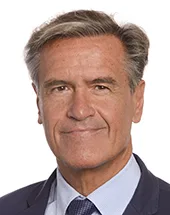
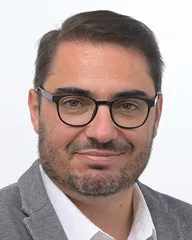
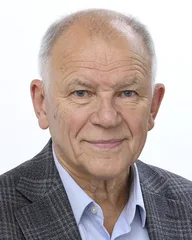
| Rank | Name | Country | Group | Speeches | |
|---|---|---|---|---|---|
| 1 |
|
Lukas Sieper | Germany DEU | Non-attached Members (NI) | 390 |
| 2 |
|
Juan Fernando López Aguilar | Spain ESP | Progressive Alliance of Socialists and Democrats (S&D) | 354 |
| 3 |
|
Sebastian Tynkkynen | Finland FIN | European Conservatives and Reformists (ECR) | 331 |
| 4 |
|
João Oliveira | Portugal PRT | The Left in the European Parliament (GUE/NGL) | 232 |
| 5 |
|
Vytenis Povilas Andriukaitis | Lithuania LTU | Progressive Alliance of Socialists and Democrats (S&D) | 227 |
All Contributions (60)
Corrupt large-scale sale of Schengen visas (debate)
Mr President, thank you very much. The hypocrisy and cynicism of the PiS government reached its zenith. On the one hand, PiS pisses on poor people who are stuck on the Belarusian border, feeding politically on their misfortune. On the other hand, he sells visas to the left and right like lettuce in a stall under Polish consulates. Today we have to be clear: PiS created the visa mafia, which violated the security foundations of Poland and the European Union. There is a mafia in every country, but Poland has become the first state ruled by the mafia. Law and Justice politicians turned out to be cynical traffickers of the safety of Poles and Europeans, their work stability and the safety of children. I would like to remind you that every day almost one hundred thousand Poles commute to work in Germany. Find your passports in the drawers, because soon we will need them because of the stupidity of the Law and Justice party. In 2007, President Lech Kaczyński introduced Poland to the Schengen area. Today, he would burn with shame if he saw his brother demolish Poland's interests in Europe. Poles want to feel that the government cares about their safety. Poles want to be in the Schengen area. Poles want to be in the European Union. We're about to testify to that.
Council of Europe Convention on preventing and combating violence against women and domestic violence – EU accession: institutions and public administration of the Union - Council of Europe Convention on preventing and combating violence against women and domestic violence - EU accession: judicial cooperation in criminal matters, asylum and non-refoulement (debate)
Let me first address my colleagues on the right, it seemed to me that adult men no longer believe in fairy tales, in monsters, and I am surprised that colleagues here in this room talk so much about gender ideology and the gender monster. I am astonished to accept this, especially since your sons are listening to you. And violence starts with words, and then unfortunately we have what we have. So I appeal for common sense to my colleagues here. My speech was supposed to be for less than a minute. In the European Union, one woman experiences violence in less than a minute. That is why this convention is so important and I am, of course, very pleased with its ratification. But I still wonder why, as the European Union, when we have unified so many things, we have common roaming, we have common license plates, we have one standard for cucumber and carrot, we still do not have one definition of rape. Why is this happening? That's a very simple definition. ‘No’ means no, only ‘yes’ is consent. Sex without consent is rape. After all, this definition is very simple. As parliamentarians of the European Parliament, when working on a new directive, we must finally standardise this once and for all, like many other things in the European Union, because it affects more than half of society and it concerns human rights.
Guidelines for the 2024 budget - Section III (debate)
Mr President, first of all, congratulations Janusz for your work – excellent. I have been involved in the works of the budgetary procedure for a few years, and now I must say that from the position of the FEMM Committee, it resembles ‘Groundhog Day’. We repeatedly called for the Citizens, Equality, Rights and Values Programme to include separate gender-related budget lines, with no success. We called for the Daphne programme resources to increase the special budget for gender-related issues, but with no success. We continued to call for the connection between attacks on the rule of law and worrisome backlash against gender equality and women’s rights in the EU, and attacks on LGBTI+ people will be connected to the budget issues, without success. And what’s most important, we repeatedly call for gender equality perspective to be fully integrated into all policy areas, at all stages of the budgetary process. Yet, the European Court of Auditors found again that gender mainstreaming is the least successfully implemented overarching policy priority, again and again and again, without success.
Women activism – human rights defenders related to sexual and reproductive health and rights (SRHR) (debate)
Madam President, I'm sorry. Fundamentalists ruling Poland know that for Polish women freedom and the right to decide about their lives and health is like air. That's why they'll do anything to cut off the air. They attack, they push their knees, they harass. As a result of their actions, at least 6 women died: Iza, Anna, Justyna, Dominika, Agnieszka, Marta. But we know there could be more victims of the barbaric ban. Yesterday's show trial against Justyna Wydrzyńska, a human rights defender who provided assistance to another woman, is a show tailored to the Belarusian Lukashenka. Justyna is the first person in Europe to be convicted of helping with abortion. But Justyna's not a criminal. Justyna is a heroine who will become a symbol of the fight for women's rights. Justyna is like millions of Polish women. She is steadfast and will continue to fight. It's unstoppable. However, Polish women cannot go alone. Once again, I appeal to all the European institutions for solidarity. After all, Polish women must have the same rights as Finnish, Spanish and French women. And one more thing. The prosecutor accusing Iza said that giving that phone number was a crime of aiding and abetting. Therefore, I am proud to take part in this crime and give a number that saves the lives and health of millions of Polish women. The Pole hasn't died yet.
The EU priorities for the 67th session of the UN Commission on the Status of Women (debate)
Mr President, Commissioner, minister, dear colleagues, as you are aware, in March, a delegation of the European Parliament’s Committee on Women’s Rights and Gender Equality, which I have an honour to chair, will attend the 67th session of the United Nations Commission on the Status of Women called CSW. This year’s CSW will focus on innovation and technological change and on education in the digital age for achieving gender equality and the empowerment of all women and girls. The gender gap in digital access and skills persists, with women remaining digitally marginalised. Growing gender inequalities exist in terms of access to connectivity, digital education and skills, as well as access to technologies, preventing women’s economic independence and empowerment. However, when women and girls do have access to Internet, they also face online violence and experience different forms of cyber harassment. This is why it’s of the utmost importance that the European Union shows strong leadership and takes a unified position on the importance of empowering women and girls in all their diversity and achieving gender equality in the digital transformation. In light of the current backlash against gender equality happening across the EU and worldwide, we must take strong action to unequivocally denounce attacks on women and girls and support calls for the standardisation of women’s rights. We need to ensure that all women and girls can finally enjoy equal rights. But this can only be achieved if all EU institutions – I stress, all EU institutions – cooperate and speak with one voice. Therefore, I want to use this opportunity to call on my colleagues from the Commission and from the Council to ensure the full involvement of Parliament and the FEMM Committee in the decision-making process concerning the EU’s position at the 67th session of the CSW, and to guarantee that we are properly represented, which was not always the case at the events and high-level meetings organised during the session. We also repeat our constant calls, which have not been always heard, for this Parliament to receive adequate information and access to the EU position document ahead of the negotiations. Given this, on behalf of the FEMM Committee, I would like to ask whether first the Commission can provide details of the main points in the European Union position for the UN CSW 67 and on how Parliament’s priorities will be incorporated. Will the Commission grant Parliament access to the EU position paper on the preparation for the 67th session? How will the Commission ensure a stronger coordinated EU approach and ambitious and robust commitments, including specific measures to promote real, real progress towards gender equality? How can we adjust our policies to improve widespread access to science, technology, engineering and mathematics? Secondly, what can be done to accelerate the implementation of the international commitments already made? What new measures are planned against the effects of digital marginalisation and against their disproportionate impacts on women and girls? Taking into account all forms of discrimination with specific attention to gender-based violence, including online violence, of course. What concrete actions through the relevant future EU strategies and policy processes, including budgetary policies and collection of relevant gender desegregated data, are planned? Specifically, what steps will be taken to mainstream – really mainstream – the gender perspective in all real regular prevalent EU policies and programmes? Thank you for your time and I count on your fruitful cooperation in this regard, finally, and for the future.
Human rights and democracy in the world and the European Union’s policy on the matter - annual report 2022 (debate)
Mr President, women’s rights are human rights; in 2023, it cannot be anymore an empty slogan, but it’s still a case. Millions of girls and women and LGBTI+ people around the world continue to experience everyday discrimination in the enjoyment of civil, cultural, economic, political and social rights. In every conflict and every crisis, girls and women always pay the highest price. They are on the front of the victims and they are often even used as a weapons of war. Fighting human rights globally, we need also to be credible, Commissioner. We live in a Europe of inequalities where women in Poland have less rights than in 2004 when Poland was entering EU. Where within European Union we have LGBTI+ zones. So while talking about human rights worldwide, we should think also about our own credibility. And it’s always the case.
Eliminating violence against Women (debate)
Madam President, I'm sorry. Victims of violence, women, have their names. Today we heard some of these names again from this rostrum. I will talk about another, about Izabela from Pszczyna, a 30-year-old Polish woman who lost her life only because a group of barbaric politicians in Poland led to the fact that Izabela could not perform a safe, legal abortion. There are hundreds of thousands, if not millions, of women like Izabela from Poland or Teresa from Spain, whom we have heard about here today. We hear about them in the media every day. And what have we, as the European Union, done? Not much. We still do not have a single standard for women's rights. Polish women today have fewer rights than when Poland joined the European Union. We standardize everything we can. We standardize bananas, carrots. Oh, yeah! We will have one standard when it comes to charger. And when it comes to protecting women from violence, we still don't have a single standard. That's the reality. And that's a shame. Therefore, from here, Minister, Commissioner, today there must be one basic declaration: You will never, ever walk alone. The European Union will always be on your side. And this declaration women need to hear from this place today.
Corporate Sustainability Reporting Directive (debate)
Madam President, I thank Pascal Durand for his tremendous work on this dossier. The report is undoubtedly a big improvement in comparison to the initial Commission proposal, which, as we recall, laid out ambitious mandatory reporting requirements, but only in the field of corporate environmental sustainability. However, we must remember that sustainability does not only concern environmental matters. This is why it’s important that the information disclosed by companies should also cover issues such as anti-discrimination, diversity, gender—equality measures, as well as instruments to achieve greater participation of women in leadership positions, just to name a few. I am very happy to have the clear reference to the existing references in the report, and thank you very much for that, but we must remember that this kind of approach will not help us to achieve full equality. The European Gender Equality Institute shows clearly we need 60 years in the European Union for reaching complete gender equality. And if we will not put it in our wider perspective, we will never achieve it, Commissioner, so we need to make some improvements in this directive.
Whitewashing of the anti-European extreme right in the EU (topical debate)
Mr President, thank you very much. Do you want to see what the far-right government looks like? Come to my homeland, to Poland. LGBT-free zones, women reduced to incubators, an alliance between the throne and the altar, an attack on the media and the judiciary – these things happen when we, ordinary people, look away, pretend not to see. When the far right is whitewashed, normalized, our Community, the European Community loses. Because the European Union – and we must be clear about this – is based on completely different values and principles than those proclaimed by the extreme right. The European Union was founded, among other things, on the great dream that the rule of the far right should never happen again. From the experience that Auschwitz, that this largest concentration camp did not fall from the sky. It was ordinary people who, through their indifference, led to this, whitewashing precisely such views as we have also experienced here today. We have another crisis. The far right will look for its scapegoats. He is already searching today, there are already victims in Bratislava, among others. But if we, ordinary people, look away, there will be more such victims. The last prisoner of the Auschwitz-Birkenau camp, Professor Marian Turski, said: There is an 11th commandment: Don't be indifferent. Let's not be indifferent.
The death of Mahsa Amini and the repression of women's rights protesters in Iran (debate)
Women's hell has been going on in Iran for years. Poverty, violence, huge unemployment, lack of protection against this violence, marital rape and early or forced marriages – this is everyday life in Iran. Seventeen days ago, brave girls and women raised their heads. They opposed this disgraceful regime. Today, women in Iran know that they have their rights, and they will not hesitate to use them. The question is: What will we, as a democratic world, do about it? That is why, Mr President, we have not only a moral but also a democratic commitment. We must impose strong sanctions on the Iranian regime. In every conversation with this regime, we must stress the importance of human rights. We can't let these women down. Women in Iran need to know that they will never walk alone again. This is our commitment.
Global threats to abortion rights: the possible overturn of abortion rights in the US by the Supreme Court (debate)
There is a special place for everyone who violates human rights, so I fully agree with you, but we are today talking again, and again, and again on the resolution, describing how there are still violations of human rights. But I want to stand here one day when we will work on the resolution that finally puts in place a kind of a standardisation, that puts the issues concerning the right to abortion at the front of human rights. I am still waiting for a date when we will debate that issue in this House, and this day has not come.
Global threats to abortion rights: the possible overturn of abortion rights in the US by the Supreme Court (debate)
Madam President, I'm sorry. U.S. Secretary of State Madeleine Albright once said that there is a special place in hell for women who don't support other women. Today I have the impression, listening to this room, that these were prophetic words. There must be something to it. Ladies, there is a special place for women who are not in solidarity with other women. Another women's rights icon, Judge Ruth Bader Ginsburg, once said she didn't believe an abortion ban would ever come back. Generations of women have experienced the consequences of the Roe vs Wade case. Unfortunately, two years after Judge Ginsberg's death, this scenario comes true. Not only in the United States, but also in many other places around the world, including the European Union. In Poland, just a few days ago, a register of pregnancies was announced, straight from the dystopian series ‘The Handmaid’s Tale’. This shows that women's rights are not given once and for all. This shows that women's rights, as well as human rights, because one and this has been mentioned here many times, does not exclude the other, because it is the same, women's rights must be fought for every day. I have a request to the European Council and the European Commission. Europe must lead by example: leading by example. This is our foreign policy. We need to set an example, so we need to regulate this issue internally as soon as possible, for example by amending the Charter of Fundamental Rights, but internationally to ensure that reproductive rights, sexual rights, including women's rights, are finally universally recognised as human rights, and that no woman ever again does this to another woman, as some are doing here in this room today. I wish this for all women in the world. (The speaker agreed to respond to the speech signalled by the blue card)
Prosecution of the opposition and the detention of trade union leaders in Belarus (debate)
Madam President, I'm sorry. Mr. Commissioner, I'm sorry. One thing is certain: There will be no free, secure Europe, no European Union without a free, secure, independent Belarus. Unfortunately, as the European Union, we have not yet done this lesson, because for all the years of Lukashenko's rule, we naively believed that Lukashenko could be civilised. Unfortunately, that did not happen. The hope is for such courageous people as the unionists discussed today. I come from the country of ‘Solidarity’, the country where the world’s largest labour movement arose, the power of which was overthrown by communism. This is the strength of trade unions, also in Belarus. Only these people cannot be left alone and that is why the European Union must do its job. He must give these people hope, he must commit himself to concrete things, to chart a road map for Belarus, to show what the next stages will be. Unfortunately, Belarusians and Belarusians continue to fail in this matter. Žyvie Bielaruś.
Building of a wall on the Polish – Belarus border in the Białowieża primeval forest (debate)
Madam President, I'm sorry. Commissioner, I'm sorry. Colleagues and colleagues! Remember the wall the world was talking about in 2018? It was a wall built by hatred, xenophobia, parochialism. Wall of former US President Donald Trump. A wall on the border with Mexico that was supposed to stop illegal immigration. Did he keep anyone but the animals, of course? No, because people will always find a way to jump over any wall to find a safer place. Unfortunately, animals are not able to cope in this way. No wall has stopped migration. Currently, in the oldest forest in Europe, protected by UNESCO, a similar wall is being built in the Białowieża Forest. It is good that colleagues learn to pronounce this name, because maybe soon this game will only be a thing of the past. At the heart of the Natura 2020 site, a wall is being built that will cause irreversible changes to the environment, destroying the migration routes of protected animals. In 2017, the Commission rose to the challenge and referred Poland to the Court of Justice of the European Union when the same Law and Justice government began mass logging. Today, Commissioner, the Commission is delaying any action in breach of EU law. Let me remind you, for example, of the Habitats Directive, which assumes that, for such investments, a Member State sends an impact assessment to the European Commission – attention – before construction begins, and not after construction begins. Commissioner, why did you ask for this post factum? Why are you violating EU law? What are you waiting for in the European Commission? Why hasn't another infringement procedure been initiated in this case yet? They appeal to NGOs, they appeal to the world of science, they appeal to the inhabitants of this region, and you allow another wall to be erected. Really, we did not overthrow the Berlin Wall in order to build another wall in the second place, in another place in Europe. Because it's never solved anything yet.
The impact of the war against Ukraine on women (debate)
Mr President, Commissioner, dear colleagues, despite the heroic resistance of the Ukrainian people, Russia’s barbaric war continues, and, as usual in such conflicts, girls and women pay the highest price. This is why the Committee on Women’s Rights and Gender Equality has prepared a resolution on the impact of this war on girls and women, which strongly condemns the Russian aggression and orders the EU and its Member States to ensure that women seeking refuge in Europe receive all the support they need. Every day, independent media alert us that mass rapes, sexual and gender—based violence, torture and genocide are being used as a weapon of this war. We will not rest until the perpetrators of those crimes are brought to justice. This is the promise, this is the declaration which must be heard today in this House. But, even when they are, deeply wounded lives might never recover from such a trauma. Since the beginning of the Russian aggression, more than 5 million people have been forced to flee the country, with an estimated 90% of refugees being girls, women and children. As European citizens, we have reacted to the incoming refugees with unprecedented solidarity and, for the first time, the Council of the EU triggered the Temporary Protection Directive. From this place, I want to thank you, Commissioner Johansson, for your personal involvement in this case. However, this is merely the first step and Member States need to increase their efforts in this regard. The risk of violence and sexual exploitation does not end once vulnerable women and children cross the border, as human traffickers increasingly profit from the crisis. Member States must improve the registration of all refugees and volunteers and ensure refugees can travel safely. People need specialised support as survivors of violence. Those women need to gain access to livelihoods, including their ability to work and earn income to get stability and possible independence. The economic empowerment of women and integration is crucial here. Women within Ukraine and in the host EU countries require access to the full range of sexual reproductive health services. It is therefore absolutely unacceptable that, for instance, women seeking refuge in Poland – the EU country with the highest proportion of refugees – are forced to continue pregnancies that are the result of a brutal rape. Finally, we need to ease the burden on civil society as they have worked tirelessly to help refugees, filling the gaps created by the sometimes slow and indecisive actions of our governments. It is high time that the Member States step up their efforts here. Considering all the above, I would like to ask the Commissioner and the Commission what specific strategies to prevent and combat the trafficking of women and children is the EU implementing in this context? Second, what is your role in providing support to coordinating health services on the refugees’ arrival in the EU, which ensures that women have access to the full range of sexual and reproductive health services, including emergency contraception, contraception itself, legal and safe abortion care, antenatal care and skilled assistance during childbirth. Third, what is the EU’s role in collecting evidence against war atrocities that have been committed, in particular investigating war crimes, including rape? Fourth, what are the EU’s medium—term plans for managing the situation of women refugees? (The speaker spoke in a non-official language) Long live the heroic Ukrainian women.
Situation in Afghanistan, in particular the situation of women’s rights (debate)
Madam President, I'm sorry. Commissioner, I'm sorry. Women's hell continues in Afghanistan. 87% of Afghan girls and women have experienced intimate partner violence in their lives. In 2021, Afghanistan ranked last in the Women, Peace and Security Global Index. Once again, we have been debating the situation of women here in recent months. We talked about women's hell in Belarus, in Poland, in Afghanistan today. We will probably talk many times about women's hell in Ukraine. We can't turn our heads anymore. Commissioner, I'm sorry. Madam President, I'm sorry. The situation of women in Afghanistan has not looked tragic since yesterday, in a week. Decades of war, pandemic, freezing of financial aid, drought and poverty, inefficiency of the Taliban – this is the reality of Afghanistan today. That's why with Afghanistan, with this regime, we can't do business as usual. But we have to help these women. We must ensure that a fund is set up to give women who want to get out of this regime the opportunity to do so. Women who want to stand up to this regime will have our support. That is why today, from this place, we must say clearly and distinctly, show solidarity and say to everyone, to all the girls and to all the women of Afghanistan: You'll never walk alone. We stand with you, we stand in solidarity.
Gender mainstreaming in the European Parliament – annual report 2020 (debate)
Mr President, it’s a special day today, International Women’s Day, and it’s unfortunately a bitter sweet day, bitter because of what’s happening in Ukraine and sweet because we have a bunch of good news, and let me start with that. Today, the Commission has announced the launch, the proposal of the Directive on combating violence against women and domestic violence. The other good news – the Women on Boards and the Pay Transparency Directives are unblocked and in progress. And is it good news for our colleague Beata Kempa, who was complaining about gender pay gap. Here we are, and I hope they will be on the board supporting us. But let me congratulate both rapporteurs for their excellent work and, as the Chair of the Committee on Women’s Rights, I’m happy to see that Parliament has endorsed gender mainstreaming and we are leading by example. It was said that 40% of the Members of this House are women, but look around. What time is it now? That’s not the prime time for debate. This is the reality we are now. Look at the speakers list. Where are all our male colleagues on this list? It is not a women’s only topic. If you want gender mainstreaming, we need our colleagues, male colleagues on the board. I represent the FEMM Committee. Only two members out of 37 of my committee are male, full Members. I am also a Member of another committee where there is money and power – the Budget Committee – where out of 41 Members of this committee, only 10 are women. Doesn’t it show clearly the inequality in this House? This House, the sanctuary of the European democracy? There is much room for improvement, so I congratulate my colleague rapporteurs for their excellent work and I keep my fingers crossed for you.
Russian aggression against Ukraine (continuation of debate)
The war returned to Europe. It's a war between two worlds: Putin's aggressive and authoritarian world and the other, where we want peace and democracy. This is a war in which Putin is a criminal and Ukrainian children, men and women are heroes. This is not just an aggression against Ukraine, it is Putin's war with the whole of Europe, with our values, our dreams of peace. That is why today we must realise that there will be no safe Europe without a safe and independent Ukraine. Ukraine, which is part of the European Union. This is the moment, this hope for the millions of Ukrainians who see their hope in us, in the European Union. That is why today we must open wide the door for Ukraine before Putin closes it forever tomorrow. As a Pole from the country of legendary Solidarity, today I ask the whole democratic world for solidarity with Ukraine. For our freedom and yours! No more war! Fame of Ukrajini!
The EU priorities for the 66th session of the UN Commission on the Status of Women (debate)
Mr President, climate change affects everyone: women, men, boys and girls. But unfortunately it affects them in different ways. Systemic discrimination has led to gender-differentiated impacts of climate change with respect to food security, health, livelihoods and even the deterioration of human rights, including sexual and reproductive health rights, making women the ones to pay the highest price. Therefore, the procrastination must finally end. We must recognise that gender-responsive climate action goes hand-in-hand with the just transition by promoting inclusive opportunities for all in the green economy. Our policies connected with the green transition need to take into account gender-specific needs and should not negatively affect women, girls and people facing intersectional discrimination. I am glad that our committee, as every year, will participate in this meeting. In this regard, we have to ensure that this Parliament and the FEMM Committee will be fully involved in the decision-making process regarding the EU’s position at the 66th session, and in particular that our resolution is included in the final EU negotiating position. We are representing the second-largest world democracy by population. We are the champions in so many issues. Therefore, we have obligations and responsibilities. We should have the ambition to lead for a better, equal and more just life for many girls and women around the world.
EU-Russia relations, European security and Russia’s military threat against Ukraine (debate)
Madam President, I'm sorry. We are the world's second democracy. It is a huge responsibility not only to support the democratization of the world, but also for peace in the world. Unfortunately, this is another debate and another situation in which we see that peace is not given once and for all. This is another lesson that we, as the European Union, have been better prepared for. This is another crisis created by Russia, because Russia wants Belarus and Ukraine, and Belarus and Ukraine want independence and freedom. We therefore need real action, financial support for these countries. Union leadership is needed on the Conference for the Future of Belarus and support for Ukraine. We need a new EU strategy for Belarus, which we still have not worked out, and a plan for Ukraine, because, unfortunately, they have not worked so far. It is also necessary to abolish the principle of unanimity in the Union's foreign policy, because today we have 27 foreign ministers, and thus 27 different positions. Long live a free and independent Ukraine!
Sexual and Reproductive Health and Rights in the European Union (continuation of debate)
Madam President, I'm sorry. Commissioner, I'm sorry. Mr. Secretary of State! The women's hell continues. This hell has its real victims, its real suffering and the dramas of millions of women. Simone Veil, quoted many times today, said that these are the women we meet every day, not knowing anything about their dramas and their despair. We are the second democracy in the world. We are a community that is at the forefront of the world in many areas when it comes to advancing the example of human rights. But today in the European Union in 2022, half of our society does not have equal rights. Polish women and Maltese women still do not have the same rights as French, Swedish or Belgian women. This is a great injustice, but it is also a great commitment. I would like to say that I am really proud that a woman has become President of the European Parliament. A woman is leading this debate today, and the Commissioner is with us. But it's also a big commitment. Commissioner, Madam President, this is a great commitment to millions of our grandmothers, mothers, daughters, colleagues and friends. That's a big responsibility. You have a chance to change this reality. I am counting on it and I think millions of Europeans are counting on it. Don't let them down.
MeToo and harassment – the consequences for the EU institutions (debate)
Mr President, thank you very much. A clear signal must come from here today: zero tolerance for sexual harassment and violence, wherever it occurs: on the street, at work, at school or in this House. Because it is a secret that in the corridors of this House not all employees can feel safe, that harassment and sexual violence can meet us everywhere, also in the temple of European democracy. Unfortunately, today, during this debate, we have another example of the fact that sexual harassment, violence and discrimination are mainly spoken of by women. Of the 21 people speaking today, only four are men, two of whom are likely to recount the old song that violence does not exist, that harassment and sexual violence, where 90% of the victims are women and which affects 30% of women, that they are all inventions. Unfortunately, the reality is that one in three women in the European Union has experienced some form of physical or sexual assault since the age of 15. Unfortunately, many boys and men still do not understand that ‘no’ means ‘no’. However, we are not only perpetrators, but also victims. Therefore, in all this discussion, a special education of boys and men is needed, so that we finally understand that ‘no’ really means ‘no’. Today, from this point of view, I would like to call on my colleagues in particular to make use of an important instrument. I myself have completed such training in the European Parliament on anti-violence, anti-harassment in the workplace. Unfortunately, few of us have completed this course. I would also like to appeal to my colleagues in the European Commission. Today, education, the workshops organised by the Commission, are not enough. Real action is needed today. I would like to finally work in a workplace where I will not be afraid of how my colleagues are treated. Today, I'm not sure they're safe here.
Plans to undermine further fundamental rights in Poland, in particular regarding the standards of the European Convention of Human Rights and Sexual and Reproductive Health and Rights (debate)
Madam President, I'm sorry. Commissioner, thank you very much. It is impossible to hide, unfortunately, that thanks to the rule of Law and Justice, the hell of women in Poland continues. And we have another debate on this today. Let us recall: At the beginning of December, the Polish parliament was working on a bill that would punish abortion, assistance in abortion, miscarriage with twenty-five years in prison. Recently, Law and Justice politicians invented the Institute of Family and Demography. What's the point? Of course, to de facto control, monitor pregnancies and possibly take away further rights. At the same time, the Ministry of Health is consulting a draft pregnancy register resembling those we know from catastrophic, dystopian series such as The Handmaid’s Tale. All this is happening in 2021 in the heart of the European Union. What's the effect? The effect is chilling, chilling against millions of women, girls, mothers who will simply be afraid to get pregnant. We already know these examples. We remember these examples. We know the names of women who are also victims of the Law and Justice policy when it comes to violating women's rights. I therefore appeal to the European Commission: This is another debate in which we discuss the regression of women's rights. Today, women in Poland have fewer rights than when Poland joined the European Union in 2004. It is time to take decisive action.
The European Commission Guidelines on inclusive language (topical debate)
Madam President, I'm sorry. Mr. Commissioner, I'm sorry. Mr Weber, I hope you are ashamed of what you have provoked today. It's an embarrassing spectacle based on fake news. And you know it well. You are also well aware that today at this time a different debate was to take place, much more important for the average European: debate on rising energy prices, inflation and poverty. At this time of night. Right now. Meanwhile, we are having this embarrassing spectacle, the witch-hunt that you, your group and these populists - because they are clapping at you today - are orchestrating against Europeans. It's really embarrassing. Today you stand in the same row with Kaczyński, with Orban, who are raising their hand against women, against minorities and are afraid of a language full of respect and tolerance. And you two are in the same row today. And that's the most embarrassing thing. Today, Europe needs peace. Today, Europe needs responsible politicians, because this document of the European Commission will not abolish Christmas. The holidays will be abolished by irresponsible politicians who will do nothing to stop inflation, rising prices, and the diminishing value of wages. Such politicians will abolish Christmas, because people will not have anything to put on the pot, what to put on the table for Christmas. And of course, you're not interested, because you'd rather scare people.
Outcome of the COP26 in Glasgow (debate)
Mr President, thank you very much. Commissioner, thank you very much. The dilemma of the glass we are talking about today is not whether it is half full or half empty after the last conference. The dilemma of the glass is that it will just be empty in a moment, because in many places in the world there will be no water. This is a real dilemma. If we are talking about global challenges, we need to think locally. I represent in this debate, among others. Poland, Europe’s biggest polluter. The country where the government cuts down Europe’s oldest forest, the Białowieża Forest. A country where 100,000 people die each year from smog. We must stand in solidarity on this matter and I know that the Commissioner is in solidarity on this matter, thinking about energy justice. That the poor know that if we talk about the energy revolution, their energy bills will be lower, their lives will be better, without fear of their future, including their financial future – not only energy, not only environmental. Fingers crossed, Commissioner.