
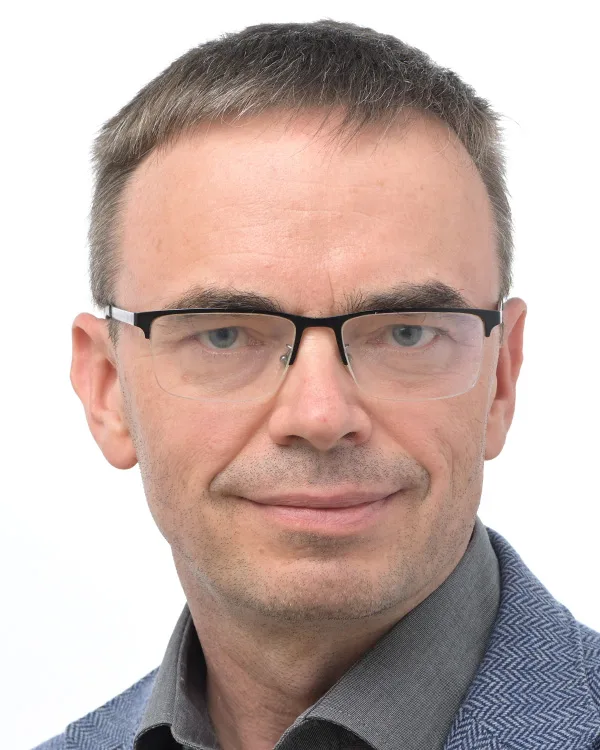

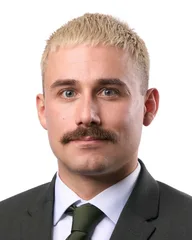
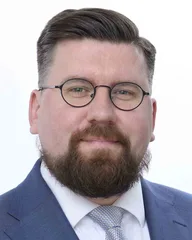
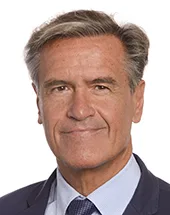
| Rank | Name | Country | Group | Speeches | |
|---|---|---|---|---|---|
| 1 |
|
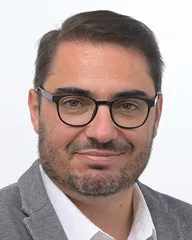
Lukas Sieper | Germany DE | Renew Europe (Renew) | 487 |
| 2 |
|
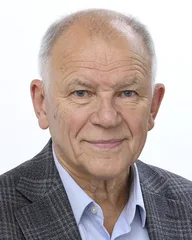
Juan Fernando López Aguilar | Spain ES | Progressive Alliance of Socialists and Democrats (S&D) | 454 |
| 3 |
|
Sebastian Tynkkynen | Finland FI | European Conservatives and Reformists (ECR) | 451 |
| 4 |
|
João Oliveira | Portugal PT | The Left in the European Parliament (GUE/NGL) | 284 |
| 5 |
|
Vytenis Povilas Andriukaitis | Lithuania LT | Progressive Alliance of Socialists and Democrats (S&D) | 273 |
All Speeches (59)
Implementation of the common foreign and security policy – annual report 2021 - Implementation of the common security and defence policy – annual report 2021 (debate)
Date:
15.02.2022 17:47
| Language: EN
Speeches
Mr President, the threat landscape around us is becoming ever more complex, with the additional challenges being compounded by new and non—traditional threats. For our Union to be able to provide security to our citizens and to contribute to maintaining peace and resolving conflicts in the world, it is imperative that we manage to harmonise our national threat assessments, agree on the level of our collective ambition and make the necessary investment to meet that ambition. Europe must continue to maintain a values—based approach to foreign and security policy, and to support, defend, when necessary, the rules—based international order. To be successful, we need to back the values—based approach by unity, strength and resolve. Principles and resolve without capabilities will not do the trick; neither will new capabilities without political will to use them when necessary. At this moment, when Russian aggressive posturing is testing the foundation of European security architecture, we must display clarity of thought and words, but also readiness to turn our words into action.
Situation at the Ukrainian border and in Russian-occupied territories of Ukraine (debate)
Date:
14.12.2021 16:34
| Language: EN
Speeches
Madam President, the current massing of Russian troops and military equipment on Ukraine’s borders is extremely dangerous and provocative. The situation must be de-escalated quickly in order to avoid catastrophic consequences. I believe that the political solution to this situation is not yet impossible and must be pursued, but the fact that Russia continues to renege on its previous commitments obviously makes it more difficult. It is clear from the steps of the Russian leaders that they see the aggression they launched in 2014 as an unfinished business. What the EU can and must do is to be firm and consistent in our support for Ukraine’s sovereignty and territorial integrity. We must also be strong and consistent in helping Ukraine to boost its resilience against external pressure and provocations. On sanctions, I sincerely believe that Russia’s current leaders are ultimately rational players on the international scene. They have shown they will not shy away from using military means to achieve their goals if, but only if, they believe that the benefits are greater than the costs. So the task of the international community is to tell them very unequivocally that in case of any military adventure, the price Russia will have to pay is going to be far greater than any possible gain. So yes, the threat of new effective countermeasures, including well-targeted sanctions, can change the Kremlin’s calculus and help avert a military escalation. And finally, we must also be consistent and resolute in reminding Russia’s president that Ukraine’s geostrategic choices are for the Ukrainians to make, and no third party will ever have a veto in this.
Challenges and prospects for multilateral weapons of mass destruction arms control and disarmament regimes (short presentation)
Date:
13.12.2021 21:01
| Language: EN
Speeches
Madam President, it is inevitable that solid and comprehensive arms control, non—proliferation and disarmament architecture based on binding treaties and reinforced by a reliable and transparent verification mechanism is a key to maintaining peace, stability and security in the world, as well as guaranteeing sustainable development. The report on WMD, arms control and disarmament regimes that we are going to vote on this week focuses on key opportunities as well as challenges in this regard. It emphasises the proactive role that the European Union, as a key donor of relevant international organisations, has been playing and continues to play in the global non—proliferation and disarmament efforts. Yet, despite all those great efforts, the Europeans have recently had to watch, with growing alarm, the crumbling of some key elements of the post—Cold War arms control architecture. This process, unless swiftly reversed, is bound to have a profoundly negative impact on European, as well as global, security. Over the past few years, we have witnessed the termination of the INF Treaty following Russia’s violations of the terms of that treaty, and we have seen the departure of the US and Russia from the Open Skies Treaty. We have struggled as Europeans to keep the JCPOA, the Iran nuclear deal, from completely falling apart. Today the jury’s still out when it comes to the future of that important agreement. The decision by the US and Russia to extend by another five years the New START Treaty was indeed a rare piece of positive news in an otherwise rather gloomy cycle. The report insists on the need to revive our efforts to reverse that negative cycle and to ensure universal adherence to existing, as well as future, disarmament and non—proliferation treaties. It is imperative that any talks about the possible successor treaty to the INF include all countries that are in possession of, or are developing, systems that would be limited or banned by the treaty. A notable case here is China’s rising military power. The report reaffirms its support to the JCPOA and it commends the central role played by the IAEA, the International Atomic Energy Agency. It calls for the entry into force of the Comprehensive Test Ban Treaty and for the start of negotiations on the so—called Fissile Material Cut—off Treaty. The report also covers the loosening of global ethical norms against chemical weapons, a negative trend exemplified by the use of banned chemical agents in the Syrian war and against the Russian opposition leader Alexei Navalny. And it points to the lack of a binding verification mechanism for compliance with a Biological and Toxin Weapons Convention. But as already mentioned, the bulk of the report is naturally devoted to nuclear weapons. So let me conclude by reiterating my deep conviction that the Nuclear Non—Proliferation Treaty, or the NPT, must remain the cornerstone of the international efforts at nuclear non—proliferation and disarmament. The NPT, which recently celebrated its 50th anniversary, is the only nuclear weapons control treaty that brings together almost the entire international community and also includes among its members all the five recognised nuclear weapon states. The upcoming NPT review conference, long delayed by the pandemic, provides us with an opportunity to give a new impetus to nuclear disarmament efforts, and we must not let that opportunity to go to waste. We must also refrain from initiatives that might deviate from or weaken the goals of the NPT. I do sincerely believe that while we all share the long term goal of living in a world free of nuclear weapons, this objective can only be reached if we approach it in a realistic and reciprocal manner. Finally, I would like to thank all the shadow rapporteurs and our advisors for their constructive cooperation.
Human rights violations by private military and security companies, particularly the Wagner Group
Date:
25.11.2021 11:00
| Language: EN
Speeches
Madam President, I believe this resolution is extremely timely since just last week, the Council reached an agreement to apply new sanctions on the so-called ‘Wagner Group’ – a private military security company with very close ties to Russian leadership. The Wagner Group has been deploying its mercenaries in various conflict zones across the world. The group is often used in order to obscure Russia’s role in those conflicts and to try to maintain a degree of deniability regarding Russia’s direct involvement. We must not be deceived by those clumsy efforts, and we are not. The Wagner Group and other similar companies have, over the years, committed innumerable human rights violations. But sadly, they have so far largely escaped investigation, prosecution and punishment. This is absolutely unacceptable. We must make sure that all those crimes are investigated and prosecuted, and we must demand that the authorities of the countries in which our CSDP missions operate, terminate any contracts with PMSCs accused of having committed human rights violations. We have to fully utilise the EU Global Human Rights Sanctions Regime, and we must demand that all governments contracting PMSCs ensure strict compliance with international humanitarian law, democratic oversight and accountability. And we must remain at the forefront of international regulatory efforts in this regard.
Situation in Belarus and at its border with the EU and the security and humanitarian consequences (debate)
Date:
23.11.2021 17:31
| Language: EN
Speeches
Madam President, in this tense and tragic situation at the Belarusian border, Lukashenko is the sole culprit, he and not the vulnerable people whom he exploits and manipulates. Lukashenko has three goals. First, to divide the European Union – because we have over the past year shown remarkable unity in condemning his human rights violations. Secondly, Lukashenko wants to paint us Europeans as hypocritical, lecturing him on human rights but not able to fully live up to our own high standards. And thirdly, he wants to regain a seat at the international negotiating tables that he lost after falsifying last year’s election results. We must deny him all of those goals. We must increase pressure on Lukashenko’s regime and toughen the sanctions regime. But in doing this, we also must look critically at ourselves and make sure that no individual Member State and no company exploits the loopholes or exceptions and exemptions in those sanctions, so we really must stand united in order to prevail.
EU-Taiwan political relations and cooperation (debate)
Date:
19.10.2021 18:08
| Language: EN
Speeches
Mr President, first, I do believe that it’s important that we have, for the first time ever, a chance to debate here and vote on a concrete set of comprehensive recommendations dedicated to the development of EU—Taiwan ties. Taiwan is an economically and technologically advanced democracy and as such it is for us a like—minded and valuable partner in a strategically important region. Therefore, I believe it’s important to look for concrete ways to enhance our trade and economic relations, our cultural and youth exchange, industrial and technological cooperation, as well as intensify overall bilateral relations under the guidance of the One China policy. Secondly, I agree fully with Commissioner Vestager in that any further escalation of tensions in the Taiwan Strait is bound to have deep negative effects on both regional and global security, as well as trade and the economy. In this regard, China’s increasingly aggressive rhetoric and military posturing are of considerable concern. This means that we must stay alert and be very clear in our condemnation of such escalatory steps. Finally, I believe it’s imperative that we express full solidarity with Lithuania, our fellow EU Member State that has been targeted by Chinese sanctions over the issue of setting up a Taiwanese representative office. We should urge the Vice President / High Representative and the Council to take all appropriate steps.
Madam President, the minute only allows me to make three brief points. First, I believe it’s a very solid report and it reflects very strong unity among the major political groups in the Parliament when it comes to our approach to China. I would like to congratulate the rapporteur Hilde Vautmans on that. Secondly, China is no doubt a rising global power, and the higher it rises, the more our relationship with China moves into the realm of strategic rivalry. It’s a relationship that is multifaceted and complex. We are looking for a comprehensive approach to China that would cover a variety of different policy areas, and this quest, if it has underscored anything, I think it is the need for greater unity among European Union Member states, but also the need for a greater EU strategic autonomy across a variety of policy areas, from security to trade to industrial and technological development. And finally, the human rights dialogue has been and will be a part of that complex relationship, and we cannot accept any attempts by China to intimidate us by imposing arbitrary sanctions on Members of this Parliament, and our actions must be guided by solidarity with the colleagues who have been targeted by such sanctions.
Mr President, we must not abandon hope and we must seek cooperation with those in Russia who share our core values, so that one day we can have a constructive partner in Moscow. In the meantime, we must admit that there are certain key differences between our world outlook and value system and those of the current Russian regime. This sets limits on how trusting our relationship can be. Let’s work our way, so to say, from inside out. First, the way Russia treats its own people – Russia’s human rights record – is ugly. It’s treatment of dissidents and political opposition is truly horrible. Second, the way Russia disrespects the sovereignty and territorial integrity of its closest neighbours is in contravention of international law and contrary to the EU’s special security interest. Third, and most importantly, we must consider the way Russia keeps interfering in our internal affairs, be it by supporting radical populist parties, be it under the guise of protecting the so-called traditional values, or be it by promoting conspiracy theories aimed at undermining Europeans’ trust in our democratically elected institutions. So yes, we need to work with Russia on common challenges, but we must always remain sober, alert and situationally aware.
Madam President, there’s no denying that the results of our 20 year engagement in Afghanistan were not what we would have liked to see. There have been missed opportunities. There’s been wishful thinking and erroneous assumptions. But in the situation we find ourselves in today, our efforts will have to focus mainly on two things. First, averting the pending humanitarian catastrophe, which, if we allow it to happen, will have profoundly negative implications for European security, but first of all, for the lives of millions of Afghans. And second, when it comes to the access of women and girls to healthcare and education, the gains made over the past 20 years have been significant and we have to do what we can so these gains are not completely erased. We know our means and our access are limited, so we have to use them smartly. And finally, we have to do the lessons learned and bolster European capabilities, including military capabilities, so as to be able to respond more swiftly, more resolutely and more robustly to similar crises in the future.