
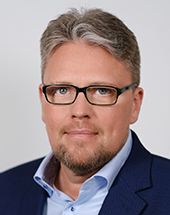

| Rank | Name | Country | Group | Speeches | |
|---|---|---|---|---|---|
| 1 |

|
Lukas Sieper | Germany DEU | Non-attached Members (NI) | 390 |
| 2 |

|
Juan Fernando López Aguilar | Spain ESP | Progressive Alliance of Socialists and Democrats (S&D) | 354 |
| 3 |

|
Sebastian Tynkkynen | Finland FIN | European Conservatives and Reformists (ECR) | 331 |
| 4 |

|
João Oliveira | Portugal PRT | The Left in the European Parliament (GUE/NGL) | 232 |
| 5 |

|
Vytenis Povilas Andriukaitis | Lithuania LTU | Progressive Alliance of Socialists and Democrats (S&D) | 227 |
All Contributions (77)
The accession of Romania and Bulgaria to the Schengen area (debate)
Madam President, ladies and gentlemen, We are talking today about the accession of Romania and Bulgaria to the Schengen area, and many in Germany are now thinking: Yeah, that's the way it is! That's why there are now about ten times as many Romanians and Bulgarians living in Germany as there were ten years ago. And these people often receive social benefits, often receive child benefits for children at home, and they often work in the low-wage sector, like in the meat industry, where they are exploited under slave-like conditions and contribute to wage dumping. Nothing really positive. About half a year ago I went through Romania on my trip to Ukraine, and I got to know Romania. I would like to describe Romania kindly like this: Romania is the Wild West of Europe. Wild West in the middle of Europe! In Ukraine, I have seen a much better infrastructure and much more order. The question is: How could it happen? How could a country with such infrastructure, a country that is so corrupt and so criminal, become a member of the European Union? If no one ever looked at it, did I ask myself, when I drove through this country, was no one ever looking at it? Apparently not. So, and now a lot of money has flowed in recent years. You always think that if you invest money in corrupt countries, everything will get better. No, no! These corrupt structures are using this money. For example, a study by the Centre for Democracy notes: The amount of EU money is comparable to the largest organised crime markets, such as trafficking in human beings, prostitution and smuggling, drug trafficking and illicit fuel. So much money comes from the EU. Roughly 2 billion have been plunged into criminal structures. The Bulgarian-Turkish border was in the hands of the mafia for years. Now she has been recaptured, it is rumored. The mafia now wears uniforms. These are unbearable conditions! That must end. We do not need Romania and Bulgaria in the Schengen area, nor in the EU.
EU response to the increase in energy prices in Europe (debate)
Madam President, ladies and gentlemen, Germany is experiencing the biggest energy crisis in its history. This means: historical inflation, a historical loss of purchasing power. A wave of bankruptcy is rolling towards us, which will cost millions of jobs. Millions of people probably have to freeze. We have to get used to blackouts. Who's to blame? It's not Russia. Germany had the highest energy prices before the war in Ukraine. Germany's crazy energy policy is to blame. If you get out of coal and nuclear energy at the same time and rely on Russian cheap gas as the only baseload-capable energy, you should better not impose sanctions on Russia. Sanctions that do not help Ukraine. Sanctions that use Russia massively – that deserves to be stupid and stupid. And sanctions that destroy our country, Germany. What we need is a renaissance of coal, a renaissance of nuclear power. And we need the exit from the Green Deal for safe energy and for social peace and prosperity for all of us.
EU action plan for the social economy (debate)
Mr President, ladies and gentlemen. The Commission wants to strengthen the social economy. That is fundamentally correct. But is it about making the social economy more social, making it more humane, for example improving the working conditions of carers? No. The Commission wants to make care climate-neutral. What a surprise! The German workers' welfare is particularly enthusiastic about this. She is now exchanging her outdated vehicle fleet for electric cars, and once again on the shoulders of the taxpayers. Because they have to pay for it again. And what about the social economy in Germany in general? Social economy is for the most part an apron organization of parties and churches, and they enjoy special rights: Special tax rights, special labour rights, and they do not need to be particularly transparent, accountability reports do not have to be published, which leads to massive scandals really popping up on a monthly basis – scandals about the executive floors, where one affords thick company cars, salaries over 150 000. Dear Members of Parliament, the social economy is largely not social, it is asocial. It is robbing the community and we have to fight against it. We finally need transparency and justice in the social economy.
A new trade instrument to ban products made by forced labour (debate)
Mr President, ladies and gentlemen. Forced labour is the slavery of the 21st century and must be fought. A ban on imports of products manufactured under forced labour conditions is a good approach; That is why, of course, I will agree. Nevertheless, a few critical suggestions. Who is it against today? Is this against Bangladesh? Is this against Qatar? These would be good examples. No, it's against China, and it's about supporting the Uyghurs. And the Uyghurs are actually being oppressed and exploited. But nobody really lives free in China, because communism and human rights and freedom are not compatible. And to declare the Uyghurs as saints per se is also not quite right, because in Islamic terror worldwide, Uyghurs are always in the first row, also with Al-Qaeda and ISIS. And all this legislation has been shown to us by the United States, and we have already heard that. The United States is engaged in a trade war with China. And the US in particular does not care – they really work with every rogue state in the world when it comes to their advantage. We shouldn't forget that either.
Revision of the EU Emissions Trading System - Social Climate Fund - Carbon border adjustment mechanism - Revision of the EU Emissions Trading System for aviation - Notification under the Carbon Offsetting and Reduction Scheme for International Aviation (CORSIA) (joint debate – Fit for 55 (part 1))
Madam President, ladies and gentlemen, Today we are talking about the European Social Climate Fund. That is, we are talking about the consequences of the Green Deal for the people. And here it becomes clear: The Green Deal is not only neither green nor not a deal; No, much more: It is antisocial, it drives people into poverty, and it leads to social discord. Why am I saying this? Slowly, the financial burden on people becomes clear. Slowly we have exact numbers. The extension of emissions trading to transport and housing alone puts an additional burden on European households of EUR 1112 billion. EUR 1112 billion. And this Social Fund will be introduced to alleviate this burden. This will be fed with 144 billion euros, which will then solve the problems. The only bad thing is that this money should not get the poorest of the poor again – i.e. very few people who can really afford the heating costs – no, here again the buyers of e-cars should be promoted and supported. All this can't be true. In the face of the crisis, we know: We need safe and affordable energy, and it comes from coal and nuclear power. We need a renaissance of coal and nuclear power, and the Green Deal Belongs to the garbage.
Building of a wall on the Polish – Belarus border in the Białowieża primeval forest (debate)
Madam President, ladies and gentlemen, We are all happy that the borders within Europe have fallen. But I think it was also clear to all of us that the basic prerequisite for this is secure external borders. And these secure external borders have been a problem since 2015 at the latest, when Angela Merkel set quite wrong incentives in Germany with the welcome culture. Since 2015, anyone who manages to come to Germany is allowed to stay, is welcomed with open arms in the German social system and is allowed to make up for his entire family at the expense of taxpayers a short time later. Thank God, many other European countries are sceptical about this policy, and they welcome borders. In October 2020/2021, the heads of government of Austria, Hungary, Bulgaria, Cyprus, Czechia, Denmark, Estonia, Greece, Hungary, Lithuania, Latvia, Poland and Slovenia sent a letter to the Commission asking it to refinance border installations as a matter of priority. Thank God, because these attachments are important, and we are regularly blackmailed, blackmailed by despots. First it was Erdoğan who wanted to flood us with illegal migrants, and then it was Core Democrat Lukashenko, Putin’s best friend – or, I don’t know, maybe I am also covering up; I think Schroeder is Putin's best friend, you don't know for sure. In any case, it has put massive pressure on the EU and blackmailed us. And thank God, thank God, the robust poles have saved us from it, and for that we have to say thank you. I would like to thank the Polish Government and the Polish people for doing this for all of us. So, and now they want to build a border facility, 180 kilometers. And here, too, I say: Thank goodness. But this measure should be prevented again, as Greens always try to prevent: For nature conservation reasons, of course, this must not be built, because bats are in danger, voles and other cute animals. We have known this policy for years, now for decades. Whenever something is to be built that the Greens and the Left do not want, there are some endangered animals that will definitely be protected. I can't stand this madness anymore. We need these border facilities. And again on behalf of the German people: Many thanks to Poland. Thank you very much, thank you very much. Keep it up! Don't give up!
The impact of the war against Ukraine on women (debate)
Madam President, ladies and gentlemen, More than 5 million women and children have already fled the cruel war in Ukraine and face many dangers: Robbery, rape. And we have to protect them. They need safe escape corridors. They need safe accommodation. They need food and, of course, medical care. And the countries that do the most are Poland and Hungary. It is all the more sad how the EU treats them. They had no support, and I remind you: The Erdoğan despot was supported with 3 billion euros to help refugees from Syria – the Erdoğan despot. The Poles and the Hungarians are now being attacked by the gender ideologues in the EU. The LGBTIQ scene is particularly important, apparently particularly threatened, among refugees. I'm horrified, I'm really horrified. And I would like to remind you once again: It is not Poland and Hungary that prevent LGBTIQ beings from entering Poland and Hungary. It is the Hungarians themselves who prevent men with wigs and high heels from entering.
Competition policy – annual report 2021 (debate)
Mr President, ladies and gentlemen. This report explicitly welcomes aid to accelerate the phase-out of coal. Coal, the black gold, the source or rather the roots of the EU and the source of our prosperity, is for this Parliament only black dirt and the great climate killer. I see it in a completely different way: We need safe energy. We need affordable energy. And just now the crisis has shown how vulnerable we are, how vulnerable we are from external influences, for example from Russian gas, if we get out of coal and nuclear power at the same time. We must not continue this madness. We don't need a quicker exit. We need a quick exit from the exit. We need a renaissance of coal and nuclear power for safe energy, affordable energy, secure jobs. That's important. And we have to stand up for that.
The situation of marginalised Roma communities in the EU (debate)
Mr President! I like to get up, I like to follow the rules. Reality and truth can never be discriminatory and never racist. Reality must remain reality. And we can only solve problems if we talk openly about it, if we are honest. And the problem of the Sinti and Roma is their own structures and their own clan chiefs and not us, the Western cultured society.
The situation of marginalised Roma communities in the EU (debate)
Thank you for the question. And again: There are no statements about the conditions in Gelsenkirchen, Essen and Duisburg that I have told. It's in the newspaper, says the police. Our police say a lot about crime. All of these are realities. That's really happening. It has nothing to do with discrimination and racism. The causes are quite different, Mr Pîslaru. The causes are that there are criminal clan chiefs, creepy criminal clan chiefs who mercilessly exploit their own people. And that's what we need to talk about. We need to talk about these problems. Their own clan chiefs exploit their people! (The speaker agreed to reply to a question on the blue card procedure.)
The situation of marginalised Roma communities in the EU (debate)
Mr President, ladies and gentlemen. Only 28% of Roma children in the EU graduate from school. The reason for this is believed to be known here: Roma are discriminated against. And the solution should once again be to invest a lot of money, money for social workers, who should then solve these problems. I think it's naive and blue-eyed. Mr Pîslaru, I appreciate you very much. You have reported on your visit to Roma settlements in the Czech Republic and Romania. I have also been to Roma settlements in my home country – Gelsenkirchen, Duisburg, Essen, Dortmund. There is also no running water, because the hygienic devices have been torn out. And there is also no electricity, because even the power lines were ripped out of the walls. And there were also rats, because the apartments were completely littered. We are talking about apartments in Germany that were still perfectly fine half a year before the arrival of the Roma – perfectly fine – and are now so-called scrap properties. Entire streets degenerate into scrap properties in my home in the Ruhr area, attracting tens of thousands of Sinti and Roma. And I'll tell you the main income. Main incomes are social fraud, prostitution, undeclared work, robbery. This is all bitter, but unfortunately the reality. I look forward to your blue card. I am really happy because we have seen the same problems in your homeland and in my homeland. The big question is: Why is that so? Maybe you can answer that right away. (The speaker agreed to reply to a question on the blue card procedure.)
EU Protection of children and young people fleeing the war against Ukraine (debate)
Mr President, ladies and gentlemen. I myself travelled to Ukraine with aid supplies, and I experienced a country in fear. And I've seen men who are deeply willing to defend their country. And I have seen women and children fleeing. And, of course, they are in danger. They are particularly vulnerable. Criminal traffickers are waiting. Forced prostitution, forced labour, organ trafficking – all real dangers. And we have to protect them. But unfortunately we must also protect them from young men from Africa and the Middle East, who have mixed with them and are once again using this terrible crisis to enter Europe illegally. In Düsseldorf, an 18-year-old Ukrainian woman was raped by a Tunisian and a Nigerian. And she then fled from Germany to Poland because she no longer felt safe in Germany. This is a scandal! I myself took in refugees in my apartment, a young woman with her three-month-old baby and her mother. These refugees have papers. These refugees want to work. You want to learn German. The young mother is already working in gastronomy. After three weeks in Germany, she works in gastronomy. Five million people have already made their way, and many more will come. And if we want to help these real refugees, we must finally decide: Do we help real refugees or do we help lucky knights? Do we help young men from the Middle East and Africa who come to us without papers completely illegally and without any reason for flight, who leave their parents, their families, their children in their homeland, who travel through tens of safe countries and then abuse our hospitality? I want to create space, I want to create resources for real refugees. I want to help real refugees. I want to help women and children.
A new EU strategic framework on health and safety at work post 2020 (debate)
Mr President, Commissioner, ladies and gentlemen! Today we are talking about the EU strategy on health and safety at work. In 2018, 3,300 people died in fatal accidents at work and 200,000 died from work-related illnesses. That's way too much, of course. This topic is very important to me personally, because as a climber at the last German coal mine I was responsible for occupational safety for many years. And we did well there. Although mining is dangerous, we had one of the lowest accident rates in German industry. How did we do that? We invested a lot. Occupational safety costs money, a lot of money, and this has led to the fact that German coal is and has been more expensive than coal from Russia, China or Colombia. And I'm digressing for a moment now, because it's up-to-date. But the German coal industry has not only provided secure jobs, but also energy security for our country. German coal is the only domestic energy. And it has also secured the German hard coal reserve. It's been just four years now, and all of a sudden German politicians can once again imagine that this German hard coal reserve is a good thing. Time and politics are sometimes so fast-paced. But back to the actual topic: What is the Commission proposing now to ensure greater safety at work? COVID-19 is to be added to the list of occupational diseases. This is not at all clear to me now. Yes, and of course we also have to face the final opponent in terms of occupational safety: climate change. Climate change is also threatening us in the workplace. There have always been warm jobs: Wherever machines run, it's warm, in kitchens it's warm. This has been dealt with so far. But the main reason now is that climate change is particularly bad for skin diseases. Skin cancer is the big issue. Skin cancer – tell that to a German construction worker who is laughing! They like to work with a free upper body. And now it's also the case that when it gets too warm and there are skin problems, people usually put on something. That's why nobody works naked in the desert! And I can't think of a job in Europe where people work naked. As a rule, they all have something on. That's it! That should be fun now. Now on to the serious issues: The current studies from the USA say that the increased number of skin cancers has nothing to do with the right sun at all, but with the artificial, with the wrong sun from pears or spotlights. I really can't think of anything more about the whole thing than that we're constantly talking about bullshit here. Perhaps interesting is: Who knows what's the safest job in the world? Does anyone have any idea? It's a nuclear power plant! Nuclear power plants are pretty much the safest jobs in the world. Yes, an insecure job, I think, is this Parliament. Apparently a very insecure job, because that was the only parliament in the world that was sent home in the COVID-19 crisis. We fled, we were out of here. This is obviously particularly dangerous. And then we talk about a constant increase in mental illness. Unfortunately, I also see this danger in this Parliament and in the Commission. And this has a lot to do with the fact that people who are not so highly qualified get incredibly much here – not necessarily earning but getting – and spend years in their own right. bubble Stop dealing with people who earn their money with honest work. And that should be changed. The people here, the parliamentarians, should once again work a bit decently.
European Semester for economic policy coordination: annual sustainable growth survey 2022 – European Semester for economic policy coordination: employment and social aspects in the annual sustainable growth strategy survey 2022 (debate)
Madam President, ladies and gentlemen, What is it about today? We are talking about the European Semester for economic policy coordination – employment and social aspects. What is important to the EU when it comes to employment and social aspects? It is about the EU's climate neutrality targets. This is important to the EU. Sustainable economic growth should be the goal of an inclusive and sustainable socio-ecological change of our economy – socio-ecological change! At least we're being honest. So for me, this is nothing more than ecosocialism, which is what this is all about. Billions are to be invested here in the future – trillions that we do not have, that we generate – to transform our economy, wherever it may be. This will have consequences: People will fall by the wayside. In order to help these people who are in poverty, can no longer afford the energy, can no longer afford their housing, then we set up a social climate fund. So first we invest trillions to drive people into poverty, and then we invest hundreds of billions that we don't have and generate again to help them. So it doesn't make sense to me, this Parliament has gone crazy. But – and this is interesting now – as early as 1977, French President Mitterrand said: Europe will be socialist or not. Within a few decades, the EU has transformed itself from an economic area into an eco-socialist transfer and debt area. This must finally end. And the alternative for Germany is the only party that opposes it – in Germany.
The EU priorities for the 66th session of the UN Commission on the Status of Women (continuation of debate)
Mr President, ladies and gentlemen. I'm outing myself today: I'm an old white man, and I love women. And that is why I fight with all my heart for equality and against the oppression of women. I am therefore all the more appalled to see what is important to the EU and what it values: It is important for the EU to recognise that women are disproportionately affected by climate change. It is also important to promote the implementation of targeted gender equality measures in connection with gender mainstreaming in climate policy. It also notes that women and girls are particularly likely to be climate refugees, 80% of them. And it is also a huge scandal that only 32% of renewable energy workers are women. Such a scandal! Personally, I have other problems: I have problems with oppression and exploitation of women, I have a problem with violence against women, I have a problem with sexual assault against women, I have a problem with child marriages, I have a problem with forced marriages, and I have a problem with genital mutilation. And all of this takes place overwhelmingly, for example, in North Africa and the Middle East, and in the country where the situation is worst for women: This is Afghanistan, before the Taliban, at the time when this puppet government was in power, supported by the EU with 4 billion euros – 4 billion! And all this has brought nothing. Other things are important to me. And we should finally take care of the real problems and make ourselves all honest. The enemy of women is not climate change. The enemy of women is Islam. It is the anti-gender ideology of Islam.
One youth, one Europe (topical debate)
Mr President, ladies and gentlemen. 2022 is the European Year of Youth. That's a good thing, because our youth is our future. But what about our youth? For many years now, we have not been able to cope with rampant youth unemployment – in some cases over 40 per cent. In the supposedly rich Germany, there are actually very few unemployed young people, but many working young people who are considered poor – in this supposedly rich country. In the last three years, the number of working young people who are considered poor in Germany has doubled. In addition, with the Reconstruction Fund, the EU has added a billion-dollar mountain of debt to future generations. These are all real reasons to be afraid. Our youth are indeed afraid, but not of these real problems that I have raised, but of another problem: Our youth are afraid of climate change. And that is understandable, after all, we have declared a climate emergency. That sounds threatening. There are actually young people who think they don't need to learn anymore because they are about to die. This madness is in the minds of some young people. They are afraid of dying in the future or soon because of climate change. That's insanity. It is the EU's climate policy that is to blame for this insanity. Here, fear and panic are stirred up in an irresponsible way. And it should go even further: The Commission now intends to make environmental sustainability the core issue of education – environmental sustainability. What we need is an education without ideology. And what we need is a future for our youth without debt. What we need is a future with less EU and more freedom.
Empowering European Youth: post-pandemic employment and social recovery (debate)
Mr President, ladies and gentlemen. Today we are talking about youth unemployment, an issue that shows how different labour markets are in Europe. Greece has the highest youth unemployment rate (39%, unbelievable), followed by Spain and Italy; the lowest in the Netherlands, Austria and Germany. Why this is so in Germany, I know. German teenagers are particularly smart, who like to go to study. It is a miracle of the German education system that anyone can really study in Germany. Classic training places where you get dirty and where you have to work physically are very unpopular. That's why the construction industry and gastronomy, for example, hardly find any apprentices. The solution should bring poverty migrants from all over the world – only that works very badly. The right solution for me, for example, would be to motivate Greek young people to do an apprenticeship in Germany. That's what happened ten years ago, and the project was called: The Job of my life. There, Spanish young people were recruited to do an apprenticeship in Germany. This project has failed terribly: Almost none remained. So, the solution cannot be to bring poverty migrants from all over the world. We must promote intra-European labour mobility.
European framework for employees' participation rights and the revision of the European Works Council Directive (debate)
Mr President, Commissioner, ladies and gentlemen, rapporteur Gabriele Bishoff! Today we are talking about more democracy in the workplace, an issue that strikes my heart. So, for over 30 years – all my working life since my first year of apprenticeship – I have been part of co-determination in my company. And, Mrs Schmit, I must commend your speech, because everything you have said about co-determination, I can sign one-to-one. In my speech, I no longer have to go into the merits of co-determination at all. Thank you for each of your words. What you forgot: Co-determination is based on the Works Constitution Act – a very, very good law. I would wish, and have wished for many years, that some or indeed all European countries would have adopted this German model of co-determination. Unfortunately, most did not do it, otherwise there would not be many problems here now. You talk to many works councils – I also talk recently to works councils of Krupp, RWE, Continental and, most recently, Krombacher Brauerei. And they're worried. They are concerned about 11 million jobs created by the Green Deal They will soon be lost. When they talk about sustainability, they mean the sustainability of their jobs. What is your report really about now? Is it really about more co-determination? So, I read something else. It says: ‘Worker participation’ shall, inter alia, ‘support the transition to a carbon-neutral, climate-neutral, resource-efficient economy and gender equality’. In addition, of course, it is about a quota in management positions for women. That's all normal. But that has nothing to do with co-determination. This is politics and this is ideology. Politics has nothing to do with the company. We are not here in Cuba, and that will continue to be the case. We are here in Europe, we are free here and we will not be influenced. I do not want European workers to be influenced by ideological theses. Freedom must be at the forefront. We need a policy for prosperity, for sustainability. We really need that. But we need secure jobs. I don't want a single one of those 11 million jobs to be lost. And again: We are not here in Cuba, and that will remain the case.
Major interpellations (debate)
Mr President, ladies and gentlemen. What is it about today? To assess the quality of the Commission's replies to written questions by the Commission itself. As you can see, we like to express ourselves a bit complicated here. But what is it about? In every democracy in the world, it is the fundamental right of deputies to ask questions to governments. Now we have no government here, thank God, but we have the almighty and enlightened commission. Now it is normal in every democracy in the world that MPs are allowed to ask as many questions as they want. Here it is different: The number of questions is limited. It is also normal for these questions to be answered promptly. In the German Bundestag, for example, answering such a question takes an average of one week. Here, the Commission has set itself the task of answering the questions within six weeks. Six weeks – just, she just set out to do it; She doesn't really make it. Two-thirds of the requests made take much longer. For example, last year, at the height of the first wave of coronavirus, on May 15, I made a request. It was about the detailed figures for short-time work in Europe – I would have liked to know that. The answer came at the peak of the second wave of coronavirus, on 14 September, and the answer was that the Commission does not know that very well. But I was also given good advice on where to be smart. But that is actually not the point of these questions, and that is not how parliamentarians are dealt with. Now the Commission says: Yes, because of Corona we just have so much to do, we had a problem. I think that's all, but this problem is an ancient one: Twenty-five years ago, British MP Anita Pollack addressed it for the first time, and we've been talking about it almost every year since then. Members of the Commission have already been described here as idiots because they dared to ask questions in order to create stress and to do work and circumstances. You don't want that. We must finally come to a normal parliamentary procedure, as it works in every democracy in the world. This should also be possible in this European Parliament at some point. It is absolutely disrespectful – and I say it very clearly – how the Commission treats us MEPs here.
Protecting workers from asbestos (debate)
Mr President, ladies and gentlemen. Asbestos is sick. Asbestos has caused an incredible amount of misery, and asbestos kills. Asbestos has been banned since 2005. Thank goodness most of the public buildings have been refurbished. But with the Green Deal and the upcoming clean-up wave, this issue is now returning to our consciousness. How will the EU respond to this? Once again, it's the limit that just needs to be changed. The number has not yet been said by anyone – that is quite interesting. The limit is now 100 000 fibres per cubic metre, and it is to be reduced to 1000 fibres per cubic metre – interestingly, no one has mentioned this today – from 100 000 to 1000. And what does the interest group of the European construction industry say about this? This limit is illusory. It is not to be observed at all! No one can control it, that is, it cannot be implemented. Already the current limit value cannot be implemented. In doing so, this Parliament and the Commission are once again proving how completely alien they are to the world, how far they are from reality and from practice. This way you will not be able to help the master craftsman. You will not be able to help the subcontractor. This is pure dream dancing. Let's finally get back to the ground of reality.
Employment and social policies of the euro area 2021 (debate)
Madam President, ladies and gentlemen, Today we have the report on future social and employment policies. This report is 13 times about the Green Deal and 13 times about gender equality – not to be confused with equality between men and women. Of course, this is also an important topic, as well as women and ecology. For me, this has little to do with social employment policy. What is this really about? The Green Deal de-industrialises Europe, destroys millions of value-added jobs and creates poverty. In order to alleviate this poverty, trillions will be pumped into the social system over the next few decades – trillions that are deposited with nothing, neither with wealth nor through economic growth, money that is simply generated, money that comes out of nowhere. Everyone seems to like this, and no one is surprised. The majority of this House has set out and seems to be unstoppable. It wants eco-socialism – it is all about eco-socialism. And I would like to remind you: Socialism has not provided wealth and freedom at any time and in any country in the world, but only poverty and unfreedom.
European solutions to the rise of energy prices for businesses and consumers: the role of energy efficiency and renewable energy and the need to tackle energy poverty (debate)
Madam President, ladies and gentlemen, Today we are talking about a completely new phenomenon: on energy poverty. Rightly so: We are witnessing fuel and heating costs exploding. Last winter, 30 million Europeans were in cold homes, and we are facing even worse for this winter. And what does the EU want to do? Once again, it wants to distribute hundreds of billions to those in need through a fund – money that, of course, is being regenerated to solve the problems it has created itself. This is the Green Deal. The Green Deal is responsible for the problems. And what we are experiencing now is just the tip of the iceberg. The tonne of CO2 is now priced at just 25 euros. If we want to achieve the goals, it must be at least 150 euros. This will lead to an explosion of prices. Therefore, in all clarity: The Green Deal is the end of social peace and prosperity in Europe. Mrs von der Leyen said it was a noble task. This noble task, this warm feeling at heart, to save the world from climate change – Mrs von der Leyen can afford it, but unfortunately not the vast majority of Europeans. Ms von der Leyen also mentioned that the Green Deal is something like the moon landing. So I would like to remind you: There are no people on the moon. And on the moon it's freezing cold. So I wish Mrs. von der Leyen good luck on her moon landing. And, Mrs von der Leyen, please take the Commission and the European Parliament with you on your journey to the moon. Because that's where you belong, so that you don't cause any more harm to the people here.
Reversing the negative social consequences of the COVID-19 pandemic (debate)
Mr President, ladies and gentlemen. Today we are talking about reversing the negative social consequences of the COVID-19 pandemic. But are we really talking about the consequences of COVID-19? I don't think so. I believe that we are talking here and now about the consequences of the measures decided by our governments. First and foremost, we're talking about the side effects of lockdown. And I would like to state quite clearly: This lockdown was haphazard, and it was pointless. The German healthcare system, for example, was never even on the brink of congestion. And at the same time, in the midst of this crisis, we closed hospitals and dismantled intensive care beds! Unfortunately, these are facts. And now we are talking about the consequences, the consequences of the measures that governments have decided on for our people. And these measures and these consequences are indeed devastating. The right groups have been approached, Commissioner, you have approached the children. Schools and schools should never have been closed. It was not medically justified in any way, and the consequences are catastrophic. Obesity and concentration disorders in children are now normal. And, Commissioner, you mentioned women. The women actually carried most of the burden. They had to raise their children. Many are single parents. Those who are not single parents have encountered massive problems in their relationships, for example. Domestic violence has exploded. In my home state of North Rhine-Westphalia, from November to January, not a single woman and not a single child could be admitted to women's shelters because the places were completely overloaded. So we all, when we see ourselves as politicians, we have made these problems. And now we have to wash out this crap, and not the disease. It was we, our decisions, that led us to these problems, which now have to be washed out by the people – and indeed it has been rightly said – the weakest of the weak, not the strong, who have benefited in this crisis. So I clearly demand: In the future, let's make a policy with understanding, with a sense of proportion. No more lockdown.
Fair working conditions, rights and social protection for platform workers - New forms of employment linked to digital development (debate)
Madam President, ladies and gentlemen, Today we are talking about so-called platform work. These are people who work for the Lieferando or MyHammer apps, for example, but also people who offer business translations and complex IT solutions. Most of them offer this as a side job. And it is precisely these people that the European Commission has now recognised as the new working slaves of the 21st century. And it is precisely these people who need to be protected – of course, the Commission needs to call for new rules. What is stupid is that in Germany, for example, the Bertelsmann Stiftung sees no problems at all in this area. The Bertelsmann Stiftung says: These people are younger, better educated and earn more than others. And even the chairmen of the association of platform workers see no problems at all. I see a problem. I see a problem in this report because I miss a very important factor in this report. There is not a word in this whole report about LGBTIQ and gender! The most important app, dear colleagues, is my-hammer.de! My-hammer.de – I can hardly stand it! And there's no outcry, no demonstration, no jumping teenagers. My-hammer.de, that's what platform work stands for, and yet not a word about LGBTIQ and not a word about gender equality in your report. This is a scandal. I urge you to: Let's work together – under the rainbow – to ensure LGBTIQ justice and gender equality in platform work!
Decent working and employment conditions in the aviation sector - Impact of the COVID-19 crisis on aviation (debate)
Mr President, ladies and gentlemen. I'm not a green frequent flyer. I have flown once in the last ten years. I prefer to take the train and stay on the ground. Just like the backbone of the German aviation industry – ground staff, those who care about safety, luggage, catering. They were not well before the crisis. As a rule, migrants work in this area for temporary employment agencies in the low-wage sector. And how did they fare in the crisis? 191,000 employees have lost their jobs or are on short-time work. But there was generous support. Has she reached the weakest? Of the support funds, the airlines have received 32 billion and the airports 2.85 billion. Not even 10% have returned to the most vulnerable, and this is actually the case in every area where funding and support has flowed. Those who already have a lot have got something else. But Corona can't last forever. It has to go up again soon. But then comes the next problem, then comes the consequences of Green Deal for the aviation industry and, thank God, Lufthansa has made a very clear statement. A Lufthansa spokesman said: "Only strong and competitive companies are able to invest in new technologies". In Germany, airlines are subject to a triple air traffic tax, ETS and CORSIA, while airlines from Turkey, the Gulf States and Asia can operate under completely different environmental and social statutes. But the Greens don't care. When Lufthansa no longer exists, they sit in a rainbow T-shirt in a Qatar Airways aircraft and fly into the colorful, diverse future. Only the 600,000 employees of the German aviation industry will not be on board.