
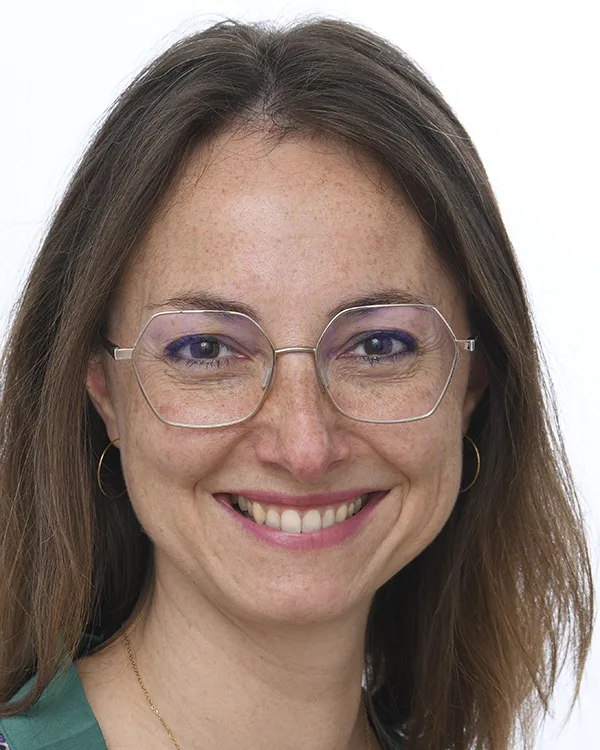

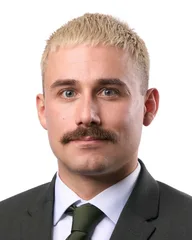
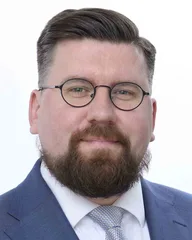
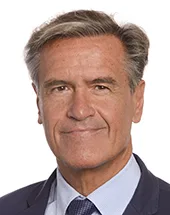
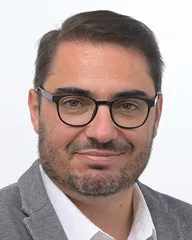
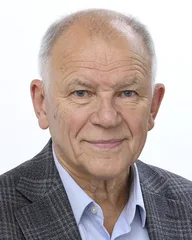
| Rank | Name | Country | Group | Speeches | |
|---|---|---|---|---|---|
| 1 |
|
Lukas Sieper | Germany DEU | Non-attached Members (NI) | 390 |
| 2 |
|
Juan Fernando López Aguilar | Spain ESP | Progressive Alliance of Socialists and Democrats (S&D) | 354 |
| 3 |
|
Sebastian Tynkkynen | Finland FIN | European Conservatives and Reformists (ECR) | 331 |
| 4 |
|
João Oliveira | Portugal PRT | The Left in the European Parliament (GUE/NGL) | 232 |
| 5 |
|
Vytenis Povilas Andriukaitis | Lithuania LTU | Progressive Alliance of Socialists and Democrats (S&D) | 227 |
All Contributions (108)
Discharge 2021 (continuation of debate)
– Madam President, ladies and gentlemen, once again this year the LIBE Committee delivered opinions for the various bodies working in the field of justice and home affairs. Agencies that are examined in the context of the discharge budget exercise perform key tasks in different areas such as security, migration, protection of fundamental rights. These areas obviously have significant impacts on the lives of our fellow citizens, especially the most vulnerable. Thus, far from being a technical exercise, the budgetary discharge process reveals a major political importance in monitoring the proper use of European public money. The work of European agencies and bodies must therefore be exemplary and respect the tasks assigned to them and the values of the European Union. Our role as Parliament, as co-legislator, is to ensure strict scrutiny aimed at the best functioning in accordance with the law. I can therefore only urge you, ladies and gentlemen, to be serious and demanding when you vote on the report on Frontex. The rapporteur mentioned the many dysfunctions that still exist within this agency, despite the change of direction. It is the most endowed agency in the European Union, with an ever-increasing budget, and malfunctions in terms of human and financial mismanagement, but also non-respect for fundamental rights at borders, cannot leave us indifferent.
2022 Rule of Law Report - The rule of law situation in the European Union - Rule of law in Greece - Rule of law in Spain - Rule of law in Malta (debate)
Mr President, ladies and gentlemen, it took years before our Assembly’s warnings of abuses of the rule of law in countries such as Hungary and Poland led to a European response. These years have allowed autocratic leaders to pass liberticidal laws, to get their hands on the media and the judiciary, and to misappropriate EU funds for private purposes. The abuses of the rule of law in other countries, including Greece today, must trigger a real European upsurge. These include illegal forced returns of migrants, illegal surveillance of political opponents, lawyers, journalists, members of civil society, and government interference in the judiciary. Since 2008, the austerity imposed on Greece and its consequences have led other European states to fear any "Greek-style" public deficit scenario. Let us now avoid turning a blind eye to the "Greek-style" democratic drift. Does the EPP not want to import a national debate into the European Parliament? So what about the interference of the governments of which you are a part in our parliamentary work? Let us not allow our European states to fall into illiberal drifts! We must defend the democratic values of the European Union.
The Rights of children in Rainbow Families and same sex parents in particular in Italy (continuation of debate)
Mr President, please, I would like it to be noted that Mr has made profoundly homophobic statements saying that it is dangerous for children to have homosexual parents. I want it to be recorded and the remark to be made to him, at the very least. It is unacceptable to say something like that in this House. This was already the case for a previous intervener. These points should be systematically raised, recorded and banned in our assembly.
The Rights of children in Rainbow Families and same sex parents in particular in Italy (debate)
(start of the off-microphone intervention) ...and other large Italian cities prevented by the Meloni government from recognising the same-sex relationship between a couple and their children; national hemicycles in Italy and France, rejecting the European Commission's proposal on the mutual recognition of parenthood in Europe. The extreme right and the conservative right are destroying families and endangering children. This is not a national controversy imported to the European Parliament, it is a matter of violation of the fundamental rights of these families. And we expect the Italian government to change its law and bring it into line with Article 3.1 of the Convention on the Rights of the Child and the Charter of Fundamental Rights of the European Union, which provide that the best interests of the child must be a primary consideration in any decision concerning children. The bond between a child and his parents is unwavering. The rights of LGBTQI+ families are unwavering and we will fight to the end in this Parliament and in every Member State to ensure that the parental link legally established in a state is recognised throughout the European Union. A family is a family. A child is a child. Love is love.
Lack of actions taken by the Commission in the context of the duty of sincere and loyal cooperation (debate)
Mr President, ladies and gentlemen, 20 months ago the journalist collective Forbidden Stories revealed the illegal use of Pegasus spyware. Intrusive surveillance that has still claimed more than 50 000 victims worldwide, thousands of European citizens affected, at least four European governments involved, but also all European governments that are users of this type of software and then spying by third countries as further evidence of foreign interference. And where are we 20 months later? Well, the scale of the scandal, but also the silence of our governments and the Commission triggered our work in the committee of inquiry. On a mené des dizaines d’auditions, de victimes, d’experts, des missions en Israël, en Hongrie, en Pologne, en Grèce et la semaine prochaine en Espagne, où j’espère sincèrement, sincèrement, que nous pourrons compter sur l’entière collaboration des autorités nationales, contrairement à ce que l’on a vécu dans le cadre de nos missions précédentes. And 20 months later, yes, the States involved, on the one hand, are not or not very collaborative, but it must also be acknowledged that it is all the European States that do not cooperate with our committee of inquiry. This lack of cooperation is a real slap in the face of European democracy. The purpose of our committee of inquiry is to shed light, to gather facts about a serious situation of violation of the fundamental rights of citizens. It is about enforcing and strengthening the European framework, but it is also about providing redress to victims and ensuring that the legal frameworks and democratic bulwarks are in place in our Member States. And today, they too easily hide behind this concept of national security, which seems to allow everything. It is therefore time for the European Commission to also assume its responsibilities and launch infringement procedures against those Member States that do not cooperate with our institution.
Combating organised crime in the EU (debate)
Madam President, cybercrime, investment fraud, corruption, trafficking in human beings, organised crime affects a huge number of sectors, including environmental crime, which has risen to the third place of criminal activity in the world. Environmental crime is multifaceted. Trafficking in wildlife waste, illegal discharges of substances, and often has very long-term consequences for human health, the environment, ecosystems, but also our economies, our security. And this is the paradox. While it generates as much profit as drug trafficking, sanctions are low and impunity is often required. The judiciary and the competent authorities, including the European Public Prosecutor's Office, must be given the human and financial resources to carry out the fight against environmental crime. And if the conservative right really wants to make it a priority in the fight against organised crime, why did it vote against all the opinions of the committees strengthening the environmental crime directive? However, this directive is key. A little coherence would not hurt and we are counting on all the political groups, but also on all the governments to support it and accompany it with the necessary means.
The erosion of the rule of law in Greece: the wiretapping scandal and media freedom (topical debate)
Madam President, ladies and gentlemen, as long as the excesses of the Mitsotakis government demand it, as long as the European Commission does not take the necessary measures in the face of the too many excesses that you have just pinned on, Commissioner, as long as the conservative right wing of this Parliament prevents us from doing our work properly on the rule of law in Greece – including in our Pegasus Committee of Inquiry –, believe me, our Parliament will keep Greece on the political agenda. We refuse to attend the illegal wiretapping of journalists or political opponents without flinching. We therefore reject the continued pressure on civil society, the criminalisation of migrants and their supporters, the ongoing attacks on press freedom, opposition rights, the separation of powers – the list is only getting longer, just consult the Rule of Law Report in Greece. The list is only growing in a country where, however, political priorities, after so many years of austerity, should be elsewhere, given the social and economic situation, behind schedule. Let's face it: Greece follows the same path as Poland and Hungary before it. However, history has shown us that, without a firm and immediate reaction from the European institutions, the breaches of the rule of law, when they are so advanced, worsen, to the detriment of all European democracy and fundamental rights, which we are supposed to protect. In the cradle of democracy, the rule of law is failing, and so it is up to us to act. And it is up to the European Commission to be the guarantor of the Treaties and to go beyond recommendations if Member States deviate from them at this point.
Criminalisation of humanitarian assistance, including search and rescue (debate)
Mr President, Seán Binder, Sarah Mardini, Cédric Herrou, Walid C, Anouk Van Gestel, Miriam Berg and so many others have been the subject of life-changing trials. Let us pay tribute to them today, because no, it is not normal to be prosecuted for showing solidarity and humanity. No, it is not normal to be prosecuted for having hosted or rescued migrants from a certain drowning, in the Mediterranean in particular, for having carried out tasks that our governments themselves should take care of and which would not be necessary with a safe, legal, humane migration policy. Acts of solidarity are criminalised across the EU against international law and the values enshrined in our Treaties. Saving lives is an issue of civilization. These heroes and heroines are the pride of our continent. My questions are simple: When will our governments and the European Commission ensure the protection of those who uphold our values and human rights? When will the Commission, as guarantor of the Treaties, finally launch infringement procedures against Member States that abuse criminal law provisions to criminalise humanitarian workers and engaged citizens?
Terrorist threats posed by far-right extremist networks defying the democratic constitutional order (debate)
Madam President, the far right is still striking. An attempted coup in Germany; in France, a racist attack against representatives of the Kurdish community and racist violence against football fans; a soldier robbing an arms depot and training the police in a manhunt for several weeks in Belgium; attacks on migrants across Europe. All these manifestations of far-right terrorism are multiplying in Europe and are undermining our values, our democracies, the lives and security of our fellow citizens. However, warnings about these threats have been increasing for several years, but priority and attention have long been elsewhere, allowing the deployment of violent right-wing networks, with the complicity of part of the political world. The one who represents this extremist ideology here, on the bench of our assemblies, but also the one who collaborates with the far right in government alliances. This is the case for Sweden, which currently holds the Presidency of the Council of the European Union. This is also the case for more than 100 Members of this House who supported the far-right candidate for Vice-President of this Parliament. It is here and now that the fight against the far right begins.
The Commission’s reports on the situation of journalists and the implications of the rule of law (debate)
Mr President, Reporters Without Borders denounces the grim daily life of many journalists in Europe: physical attacks, liberticidal laws, SLAPPs, intimidation, censorship, lack of pluralism and independence, media concentration and surveillance. Press freedom is at risk in 22 out of 27 Member States, according to the European Commission. These threats to press freedom and its work lead to unsustainable forms of self-censorship, while journalists often denounce corruption, violations of the rule of law and injustices committed by the powerful and European leaders. Daphne Caruana Galizia in Malta, Ján Kuciak in Slovakia, Giórgos Karaïváz in Greece, Peter de Vries in the Netherlands: these investigative reporters died for their work, murdered on European territory. Others, at the origin of the revelations about the illegal use by our governments and by our secret services of spyware such as Pegasus, often against themselves, are now being prosecuted and intimidated in our states. Julian Assange, who was among the finalists for the European Parliament’s Sakharov Prize, is currently facing 175 years in prison in the United States for his work as a whistleblower. Where has the sacrosanct freedom of the press gone? The media, along with justice, are indispensable counter-powers to our democracies and our rule of law. The Qatargate scandal, which is shaking our institution, reminds us that some are being corrupted at the expense of democracy and that foreign interference in European affairs is also aimed at undermining our democracies. This scandal was revealed thanks to the existence of checks and balances. Faced with an increasingly muzzled press, we will not be silent, and we recall Montesquieu’s teaching: ‘For power not to be abused, it is necessary that, by the disposition of things, power stops power.’ Let’s protect journalists, protect what is most dear to our democracies, and punish those who allow themselves to spy on these checks and balances, those who prevent a free and independent press from functioning!
FRONTEX's responsibility for fundamental rights violations at EU's external borders in light of the OLAF report (debate)
Mr President, Commissioner, today, it is once again the work of NGOs, but also of investigative journalists, that we must welcome. While their activities are increasingly criminalised, without them, the OLAF report, which describes Frontex’s actions, would never have come into existence. And without them and the press, today’s debate would never have been possible or public. Frontex and its former management have enjoyed complacency and laissez-faire from the Member States, too happy to see the borders of Fortress Europe rise, borders that are increasingly deadly. It is also too happy not to have to show solidarity and humanity in welcoming exiles. The OLAF report is overwhelming. In addition to its many internal dysfunctions, Frontex knowingly – knowingly – ignored violations of fundamental rights. Frontex knowingly allowed national authorities to actively commit illegal pushbacks, in total contradiction with international and European law. The most funded agency in the European Union has lied to this Parliament and is increasingly openly despising European values. We do not want European taxpayers' money to be used to finance this. That is why tomorrow Parliament, this Parliament, must refuse budgetary discharge to Frontex.
The Dutch childcare benefit scandal, institutional racism and algorithms (debate)
Mr President, an algorithm – yes, an algorithm! – decided that social assistance for disadvantaged children should be withdrawn from precarious households and then reimbursed. This decision affects racialised people suspected of fraud on the basis of their skin colour – not white. This is not the Chinese social score system, it is the work of the Dutch government, which has been trying to stifle the case for months. How often will it be necessary to repeat that algorithms and automated decisions pose risks to fundamental rights, especially for racialized and precarious people? My colleagues have talked about these risks and institutional racism, but we must also talk about the control and regulation of national and European public authorities, which deliberately violate data protection in a form of general apathy. Withdrawn aid to people of colour in the Netherlands, data on the sexual orientation or religion of people who come to our borders collected by Frontex, massive and indiscriminate collection of police data by Europol: but where will this end? Public authorities have an exemplary role to play, and the Commission must react when fundamental rights and European law are violated. Colleagues, the ongoing negotiations on artificial intelligence give us the opportunity to put the necessary red lines in place now.
Outcome of the Commission’s review of the 15-point action plan on trade and sustainable development (debate)
Mr President, Commissioner, the revision of the sustainable development chapters in the trade treaties represents a considerable step, it must be acknowledged, towards more sustainable international trade, which involves civil society and Parliament more, and refers to implementation and monitoring mechanisms and sanctions for non-compliance with the provisions set out therein. But there are still "buts". With all due respect, Commissioner, I hope this Parliament does not have to doubt the seriousness with which the Commission and DG TRADE are considering this issue. Indeed, I expected an exchange with the Commissioner for Trade because, while the 15-point action plan is, I repeat, a step forward, there are still problems, and your answers to the questions addressed by our President, Mr Lange, are in my view far from satisfactory, particularly in the context of the application of the implementation roadmaps – implementation roadmaps. I would like to understand how the Commission intends to go to the end of the logic if, for example, a trading partner fails to honour its commitments. What sanctions will be implemented? What mechanism will be applied? Will we go through a dispute settlement mechanism? Another dimension that was highlighted during the various exchanges was the issue of human rights, which is not part of the sustainable development chapters. In our view, this is a fundamental shortcoming, since we know that, in the context of trade, many human rights violations unfortunately still take place. The Ombudsperson has recently raised this issue, and she proposes to set up a fully-fledged and parallel mechanism, which would also be open to stakeholders from our trading partners. Again, I have a very concrete request to the Commission: How does the Commission intend to follow up on the Ombudsman's proposal? I believe that this would be a real and substantial complement to this revision of the sustainable development chapters in our trade agreements.
Surveillance and predator spyware systems in Greece (debate)
Mr President, investigative journalists, opposition leaders, opposition members, our colleague MEP Nikos Androulakis... The list of people tapped by the conservative Greek government of Mr Mitsotakis using the Predator spyware is only getting longer. In the face of accusations of illegal wiretapping and conflicts of interest, the Greek government’s reactions – sorry – are a bad farce: there would be no scandal, but a web of lies invented by the press. And yet, public threats are made to public officials and the parliamentary committee of inquiry is hampered in its work. As a guarantee of European values, the European Commission is also deafeningly silent. Yet history shows us that, without a firm and immediate response from the European institutions, breaches of the rule of law are worsening in Greece, as in other countries before it. And no European alliance can protect these excesses. We must collectively defend fundamental rights and democratic values. Our committee of inquiry must shed light on the actions of Member States that have deliberately and unlawfully listened to their citizens. In the cradle of democracy, the rule of law is failing. It is therefore for us to act.
Future of EU-Africa trade relations (debate)
Madam President, Commissioner, the relationship between the European Union and Africa must become a genuine partnership between equals. We in the European Parliament are ready, given the report that is on our table and that needs to be voted on. But are we ready, across Europe, for such a partnership? At the WTO, the EU continued to oppose the lifting of intellectual property rights on all pandemic measures, including vaccines, but also tests and medicines, a measure requested by developing countries, while the vaccination rate is still only 18% in Africa. The current Russian anti-Western propaganda is causing trouble between us by making us believe that European sanctions threaten the food security of the African continent and the lives of millions of people. Togo and Gabon, as two French-speaking countries, have recently applied to join the Commonwealth and no longer seem to expect much from Europe. These relationships must fundamentally change and start on a new footing. A real partnership, on an equal footing, calls for listening to the concerns of our partners, for generalising and amplifying the decolonial process as initiated in Belgium, and also for putting an end to the colonial practices of European companies that continue to exploit the resources of these countries and make local populations suffer. Finally, trade and economic partnership agreements must take into account the evolution of the local economy, regional integration, economic diversification and, above all, the Sustainable Development Goals.
A new trade instrument to ban products made by forced labour (debate)
Mr President, 25 million: this is the estimate of the number of people forced into forced labour worldwide, including in Brazil or Indonesia, where the European Union wants to conclude free trade agreements, or in China, with which the European Union wanted to conclude an investment agreement. Six to ten million are children: figures that are only increasing as a result of the pandemic and the war in Ukraine, which are further driving families into precariousness. The products of this modern slavery land on the European market. Fifty billion euros of goods arriving in Europe are tinged with child labour. The United States or Canada have acted to ensure that their citizens are not complicit in these human rights violations. So what is the EU waiting for to do the same? For this Parliament, prohibiting forced labour products from entering its market is the best way to do so and the best way to tell states that, as long as they do so, there will be no more trade or investment with them.
Use of the Pegasus Software by EU Member States against individuals including MEPs and the violation of fundamental rights (topical debate)
Mr President, I wonder whether we should not start our debates again, given that the Council is now honouring us with its presence and that we would have liked it to participate in all our debates, since many questions are addressed to it.
Use of the Pegasus Software by EU Member States against individuals including MEPs and the violation of fundamental rights (topical debate)
Mr President, ladies and gentlemen, the revelations of spying on human rights defenders, journalists, political opponents and lawyers by the governments of Member States and third countries prompted this Parliament to open a committee of inquiry to shed light on the Pegasus case and other equivalent software. On the eve of the start of the work of our committee of inquiry, we learned that our institution, through the surveillance of MEPs, had been spied on. Before them, there was the European Commission and at least one of its Commissioners, and this week it was the turn of the Spanish Prime Minister and his Defence Minister. The silence in the ranks is deafening. Listening to our Catalan colleagues puts all our communications and parliamentary work at risk. The worm is in the fruit. No, this is not a purely national question: European law has been violated. Citizens across Europe have been spied on illegally, sometimes by their government, sometimes by the government of another state. The integrity and security of the European Union, its institutions and representatives are at stake. The Commission and the Council, which I regret not to see with us at the moment, at the time of this debate, have already been more quick to take swift action on security issues. I want to hear your strong condemnation of these espionage acts. I want to hear you say that investigations are being opened and that the violation of parliamentary immunity is a red line. No, listening to parliamentarians, political opponents, journalists, lawyers or human rights defenders is not a matter of national security alone, in a Europe driven by democratic values, the rule of law and respect for fundamental rights. On International Press Freedom Day yesterday, journalists denounced a new normality that they must take into account: new normal, where this type of espionage in the exercise of their profession is legion. Well no, this kind of espionage cannot be a new reality that we will have to deal with. We need to legislate. In the face of what poses a threat to our security, the response must be strong: trade sanctions, revision of judicial and police cooperation agreements, strict application of the Regulation ePrivacy and the Dual-Use Regulation, Directive Due diligence for European businesses, and so on. The tools are within our reach, but they are nothing without a very strong political will. I expect all political groups to lift the taboos. Our committee of inquiry will have to provide the answers you do not give. It will have to establish responsibilities, provide remedies and reparations to victims, ensure that sanctions are taken against offenders and lead to prohibitions of these tools. The debate today is important. We expect Parliament, through our President, to stand firm in protecting its own Members, recall the principle of parliamentary immunity and condemn spying on its Members. And the message must be unambiguous: this type of interference is unacceptable and will not be tolerated. Our house must ensure the protection of all its members and also of its staff. Recall that assistants were also targeted by these eavesdroppings. An attack on one of us is an attack on all of us. That this Parliament, in addition to the establishment of our Committee of Inquiry, take a strong step by calling on the European Commission and the Council to clearly denounce the illegal use of this type of spyware, to open investigations and ensure transparency, but also to work best with our Committee of Inquiry. This is because, I repeat, it is not just about parliamentarians, but also about all citizens and the European institutions.
Strengthening Europol’s mandate: cooperation with private parties, processing of personal data, and support for research and innovation (debate)
Mr President, is Europol on its way to becoming the European NSA: illegal analysis of personal data, development of facial recognition, exclusion of the European data protector, mass surveillance, registration of political activists, cooperation with third countries spying on us? Having come to legalise illegal practices, the reform of the European Police Cooperation Agency, presented as a technical one, was proposed without evaluation or impact assessment, while considerably extending the powers of the agency. However, the impact of Europol’s tasks on fundamental rights is very real and, as legislators, it is up to us to protect them effectively. It is true that we have secured the establishment of a fundamental rights officer and a consultative forum. These are positive developments, but largely insufficient to ensure respect for the fundamental rights of citizens in Europe and elsewhere. In a democracy, democratic scrutiny of the activities of an agency in charge of police cooperation is indispensable. On this International Press Freedom Day, seeing my own country, Belgium, drop by 12 places in the Reporters Without Borders ranking because journalists are victims of violence there, including by the police, confirms to me that we are not apprehending security issues at the right end. Colleagues, I am deeply convinced that this reform is not the right one and that we certainly cannot risk Europol falling into the same trap as the NSA.
EU Protection of children and young people fleeing the war against Ukraine (debate)
Madam President, Commissioner, ‘in wars, children may not be targeted, but they are killed’. These are the chilling words of French resistanceist André Frossard recalling the cruelty of war, its violence, death and exile. For the youngest, more than a life in suspense, it is a stolen innocence, a life under construction that breaks and clashes violently with fear and the unknown – something no child should ever know. Children are therefore the first victims of the atrocities committed by adults, and at least 158 children have already paid with their lives for these atrocities. It has to stop. Nearly 2 million children have already fled the war, 60% of Ukrainian children are internally displaced and millions of children are still living there in the daily anguish of the conflict. The European Union is taking responsibility. It acted swiftly with the implementation of the Temporary Protection Directive. It must ensure swift protection and access to rights for all children and young people fleeing Ukraine, without distinction. The most vulnerable must be protected, so that the horror of war is not compounded by discrimination and risks to their dignity. The EU must also provide direct means to ensure the safe passage of official transport across borders to states, avoid trafficking in human beings and exploitation of children, facilitate the continuity of care they need, offer increased protection to unaccompanied minors with the immediate appointment of a guardian, and also facilitate family reunification. Enabling these children and teens to look to the future, ensure a dignified life for them and enable them to integrate means giving them access to the Child Guarantee and European funds. This means guaranteeing them automatic access to education, culture, health, psychological assistance, housing and sexual and reproductive rights. Today's reception by citizens, associations, civil society and local authorities is exemplary. You are the face of a welcoming Europe and once again take pride in this Europe of solidarity that your actions and your voices have been calling for for so many years. It is now up to the Member States and the European Union to make the human and financial resources directly available to associations, municipalities and solidarity-based citizens, on which not all solidarity efforts can be based. Yes, what is happening today in the European Union for people fleeing the war in Ukraine proves how European solidarity works. What is being put in place today must constitute the common foundation on which the European asylum and migration policy must be built, a policy based on reception and solidarity and marked by humanity. This call is now being made by a vast majority of this Parliament, following work in cooperation with all political groups. Thank you, ladies and gentlemen, for the Ukrainian youth and for the European youth.
The need for an ambitious EU Strategy for sustainable textiles (debate)
Madam President, Commissioner, as you said, the social and environmental impacts of the textile sector are no longer to be demonstrated. I would add to the long list that you have already drawn up that workers are 60% at risk in this sector, in addition to being victims of forced labour, that women, the majority of the workforce in this sector, work under poor conditions for indecent pay – not to mention child labour – and that they handle dangerous chemicals, sometimes banned, without protection. And as consumers, we often do not know that when we wear these clothes, we too experience the effects of endocrine disruptors and other substances that are harmful to health and the environment. Regulating the textile sector is therefore one of the keys to achieving the European Green Deal and the Sustainable Development Goals. The European strategy for sustainable textiles must drastically reduce the environmental and social footprint of the sector and, above all, apply to all businesses – all of them, including SMEs, which make up the majority of the sector. Unfortunately, the Corporate Due Diligence Directive does not do so, as it is limited to the largest multinationals. Moreover, in order to have a real impact, the strategy must be complemented by tools that must be adopted for the textile sector, such as a ban on the import of products made with forced labour, but also a ban on harmful chemicals. Citizen demand is high. It is high time to respond.
The deterioration of the situation of refugees as a consequence of the Russian aggression against Ukraine (debate)
Mr President, almost two weeks since the Russian invasion of Ukraine and already two million people on the roads of exile fleeing an attack that is every day more deadly and unfair. Two million, and more to come. So many broken lives and childhoods, separations due to war, unwavering resistance. In the face of this tragedy, Europe is activating the temporary protection of Ukrainian refugees. All in all, it is a normal and welcome decision after so many years of solidarity with the exiles resting solely on the shoulders of solidarity citizens and associations, without any real support from the public authorities. This protection must now apply to anyone fleeing Ukraine. It must also be accompanied by human and financial resources to ensure a dignified reception and protection of such persons in the Member States. The awakening of consciousness touches the heart of our humanity. The momentum of solidarity and generosity that invades us must make us aware that anyone fleeing their country must find refuge in Europe, at all times, without distinction or discrimination. Fortress Europe must fall. Long live a welcoming Europe!
Citizenship and residence by investment schemes (debate)
Mr President, European passports and visas for sale... For a majority of exiles, the dream of joining the European Union ends at our borders. For a minority of the ultra-rich, on the other hand, a slap of the finger, accompanied by a nice sum of money, is enough to obtain the European grail. A promise to invest in exchange for a golden passport that allows you to travel freely, open a bank account, vote, do business, even launder your money and exercise your influence. Rights granted with impunity to Russian oligarchs, faithful servants and purveyors of funds of the Putin regime. Their European passport or visa must be withdrawn immediately. But the golden passport and visa system itself carries inherent risks of tax evasion, corruption, money laundering, dirty money invested in European economies. Already eight years ago, this Parliament demanded a ban on golden passports, which would have closed a door to Russian interference. Today, the reality of war is catching up with us, pointing to the urgency of what the European Commission and the Member States have so far missed: a real political will to, among other things, abolish the golden passport system within three years, regulate golden visas to make them unattractive, strictly regulate the commercial intermediaries who benefit from this system. The time when the European Union served oligarchs and other undesirable corrupts is over. Get around! European citizenship is not for sale.
Fundamental rights and the rule of law in Slovenia, in particular the delayed nomination of EPPO prosecutors (debate)
Mr President, Commissioner, Minister, ladies and gentlemen, just a few weeks before the end of the Slovenian Presidency, we are learning, not without some relief, of the appointment for five years of the European Public Prosecutor’s Office, which is thus becoming fully operational, and I welcome that. Finally, Slovenia joins the fight against fraud and corruption linked to the European budget. But why does Prime Minister Janez Janša, who delayed and then blocked the appointment of delegated prosecutors, call these appointments temporary? I would like to understand and, above all, to remove any doubt as to whether there is any intention to reform the procedures for appointing prosecutors and to bring the country's independent judiciary to a standstill, which would be yet another breach of the rule of law. Today we want a firm and unambiguous commitment from Slovenia so that we can once and for all close our exchanges on these nominations and to mark Slovenia’s return on the train of democracy, judicial independence, respect for the rule of law, freedom of the press, opposition and civil society. Universal values that we want to continue to share with the Slovenian people.
Multilateral negotiations in view of the 12th WTO Ministerial Conference in Geneva, 30 November to 3 December 2021 (debate)
Madam President, ladies and gentlemen, the majority of our trade flows today prevent the achievement of the Sustainable Development Goals. In particular, international trade is responsible for 30% of our CO2 emissions, 30% of greenhouse gases and the loss of biodiversity worldwide. I often hear that trade should not serve other agendas, but neither should it serve them. Trade must serve the agenda of a fair globalisation that respects the Sustainable Development Goals, which are unanimously recognised as capable of ensuring a better and more sustainable future for all. Two important summits have just taken place, the Biodiversity Summit and the Climate Summit. G7 trade ministers have made these issues a priority in the WTO. The World Economic Forum identifies these issues as major risks. It is not an eco-friendly fad to demand that the EU puts the Green Deal on the agenda of international trade rules. The European Union, in turn, must rise to the challenges of the 21st century.