
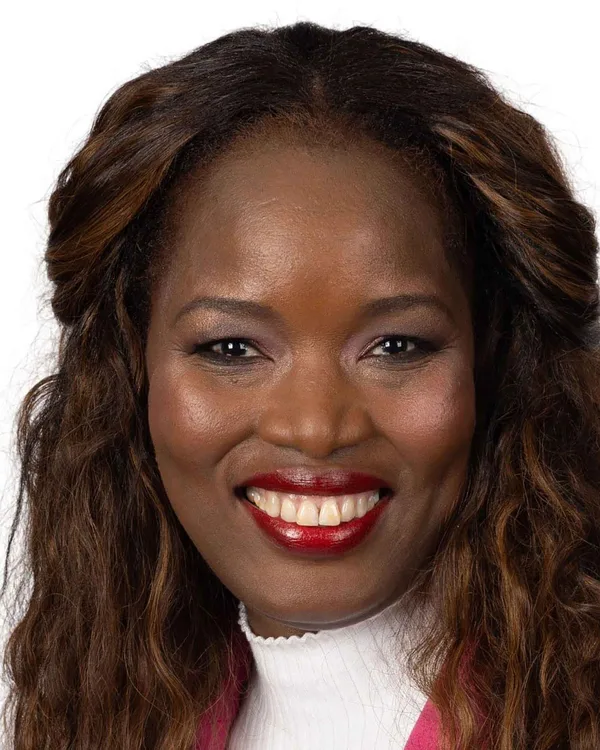

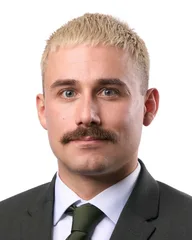
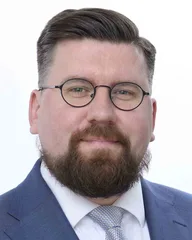
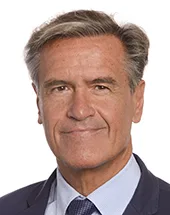
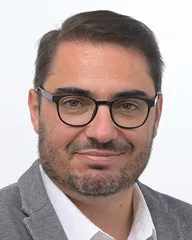
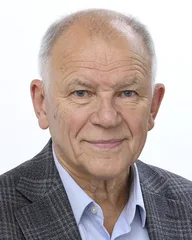
| Rank | Name | Country | Group | Speeches | |
|---|---|---|---|---|---|
| 1 |
|
Lukas Sieper | Germany DE | Renew Europe (Renew) | 494 |
| 2 |
|
Juan Fernando López Aguilar | Spain ES | Progressive Alliance of Socialists and Democrats (S&D) | 463 |
| 3 |
|
Sebastian Tynkkynen | Finland FI | European Conservatives and Reformists (ECR) | 460 |
| 4 |
|
João Oliveira | Portugal PT | The Left in the European Parliament (GUE/NGL) | 288 |
| 5 |
|
Vytenis Povilas Andriukaitis | Lithuania LT | Progressive Alliance of Socialists and Democrats (S&D) | 276 |
All Speeches (131)
The need to combat antisemitism and protect Jewish life in Europe, following the recent attacks against the Jewish community in the Netherlands and Belgium (debate)
Date:
29.04.2026 17:13
| Language: EN
Speeches
Madam President, colleagues, this Monday, a man was attacked by three other men in the Brussels metro and his Star of David was ripped off. They did not steal anything from him; they wanted to take his dignity and his right to exist away. Let's be honest, we all know deep down why in Europe we need to protect Jewish schools, neighbourhoods and institutions. Some of us have the courage to say it out loud; others do not only remain silent, they also try to deny the reality of antisemitism. And today, as we speak here, two Jewish men have been stabbed in London by terrorists who subsequently tried to attack the police. We all know why these men were stabbed – because they exist. It is the same exact reason why schools have to be watched, museums protected, synagogues sometimes hidden. Not antisemitism, but the contrary of it has been seen as shameful. Dear colleagues, there is only one correct reaction to the brutal attempt to silence Jewish voices and destroy Jewish existence. That is to be honest and to have courage – the courage to defend the Jews' right to exist, the courage to protect our civilisation from falling.
Situation of fundamental rights in the European Union in 2024 and 2025 (debate)
Date:
28.04.2026 17:09
| Language: EN
Speeches
Mr President, dear Commissioner, I would like to say first that all human beings indeed should have the same rights – not only in speeches, not only in history books, not only in declarations that we make, but in the reality that we shape. I would like to tell you that, today, in the European Union, there are still many women and girls who are captive in a marriage that they cannot leave without facing honour crimes, honour-related violence, or even attempts to kill them. These girls are Muslim girls in Europe; why are they let down by the system? Because we did not have the courage to fight for them. This is something that actually doesn't show that we're credible about fundamental rights. We can't overlook certain forms of problems because we lack courage. Second, let's remember that the principle of subsidiarity is not an option, it is the backbone of the EU. So our challenge today is not choosing between fundamental rights and sovereignty, but finding a balance where both can still exist without undermining each other. This is the way to protect everyone.
Importance of consent-based rape legislation in the EU (debate)
Date:
27.04.2026 18:36
| Language: EN
Speeches
Madam President, Commissioner, we all here agree that women need to be protected against rape. Only, my feeling, my impression is that we fight rape a lot in our imagination – by speaking to each other like we are doing today. And it's very frustrating because, in reality, women are still suffering. There has been little progress since we negotiated the law last term against violence against women. Why is it a problem? Because each time that we are going to speak about women, we find a reason to add competences that are not EU competences, and these stand in the way of efficiency. Our opportunity to really say something about consent‑based legislation is unique, and we should focus on that instead of dividing the Parliament. Countries that ratify the Istanbul Convention already have legislation. But what if a woman leaves Belgium, where we actually have such a law, and goes to work in another country in the EU where the law doesn't exist, and she is raped there? It is that woman that we need to protect, together. To do that, Madam rapporteurs, we need to stick to EU competences. You will always have my support to fight for consent‑based legislation. But we should not forget that this is about women, and we need to focus on them.
Global Gateway – past impacts and future orientation (debate)
Date:
26.03.2026 10:27
| Language: EN
Speeches
Madam President, dear colleagues, dear Commissioner, I think it's pointless to waste time listing all the arguments that underscore the necessity of the Global Gateway initiative. Recent geopolitical developments are perhaps the strongest argument of all. If we in Europe wish to put ourselves back on the world map, strategically well‑considered investments in infrastructure, technology and energy are the best means to that end. We must also dare to align our investments much more closely with our objectives in the field of migration management, for example, with women's rights and with the strategic and economic interests of the Member States. Today, I note with great disappointment that the Global Gateway is still too heavily steered from Brussels and is still too often based on a centralist, old‑fashioned logic. In my view, this does not take sufficient account of the specific expertise and often deep‑rooted historical, economic and diplomatic ties that many Member States have with certain partner countries. We cannot reduce those Member States to mere implementers. They are core architects. The Global Gateway is a unique opportunity. Let us therefore seize it with both hands and with due consideration to innovate.
Recommendation to the Council on EU priorities for the 70th session of the UN Commission on the Status of Women (debate)
Date:
12.02.2026 09:34
| Language: NL
Speeches
No text available
Spain’s large-scale regularisation policy and its impact on the Schengen Area and EU migration policy (debate)
Date:
10.02.2026 19:26
| Language: NL
Speeches
No text available
Situation in Northeast Syria, the violence against civilians and the need to maintain a sustainable ceasefire (debate)
Date:
10.02.2026 15:21
| Language: EN
Speeches
Mr President, dear colleagues, Commissioner, once again, the Kurds in Syria are being sacrificed on the altar of cynical geopolitics. Their communities that heroically defeated ISIS are being displaced, shelled and coerced into perilous negotiations in Damascus by a regime backed by extremist militia, freed ISIS fighters and groups supported by our own NATO ally, Türkiye. These are the same Kurds who, with our allies, dismantled the caliphate only to face betrayal from those who now called a regime built on extremism and terror. Remember, al-Jolani is the man who once rejoiced over the 9/11 attacks, who has overseen atrocities against Alawites, Druze and now Kurds, and who has released thousands of ISIS prisoners to bolster his ranks, all while shaking hands in the West and promising peace he never delivers. Yet, less than a year ago, the EU pledged EUR 2.5 billion in financial support to the new Syrian regime for 2025 and 2026. A resurgent network of al-Qaeda and ISIS remnants on Europe's doorsteps threatens us all. So, dear colleagues, why are we paying for it? If we abandon the Kurds now, we abandon not only them, but also Europe.
Preparation of the European Council meeting of 18-19 December 2025, in particular the need to support Ukraine, transatlantic relations and the EU’s strategic autonomy (debate)
Date:
17.12.2025 10:14
| Language: EN
Speeches
Madam President, dear colleagues, the only Russian assets existing in Belgium are sitting in Euroclear, not in the office of the Prime Minister. Belgium has been and remains a steadfast supporter of Ukraine. I deeply regret that last week, Belgium was singled out for raising legitimate legal and financial concerns about the EU plan to use frozen Russian Central Bank assets parked at Euroclear to support Ukraine. Why legitimate questions? Because there is no such thing as free money. There is always a risk, and nobody thought about who will pay. Belgium was asked to carry all the weight alone, to bear, as one Member State and its taxpayers, a disproportionate share of the legal and financial risk. How is that fair and realistic? As an MEP, as a democratically elected Member of this Parliament, it must be said clearly: blackmail and threats of isolation like last week are not path to a stronger Europe. No Member State should ever be treated as a vessel. Prime Minister Bart De Wever has shown courage by standing with Ukraine and by standing at the same time for Belgian citizens, and he is right to insist that European solidarity cannot mean reckless exposure for one Member State. I fully support him.
Escalation of the war and the humanitarian catastrophe in Sudan (debate)
Date:
25.11.2025 16:23
| Language: EN
Speeches
Mr President, Madam Commissioner, dear colleagues, we are here today because Sudan is bleeding. Just four weeks ago, the Rapid Support Forces attacked a women's hospital, resulting in hundreds of deaths. They stormed a fragile health care facility: the last hope for so many women who had no access to anything else. We must think of them today, which is a day against violence against all women. The maternity clinic in el-Fasher was the only partially functioning healthcare facility in the region. At least 460 patients and their companions, including pregnant women, newborns and family members who had found shelter there, did not survive the attack. We have seen these kinds of things before. In 2003, we promised 'never again'. And yet today we are repeating the same mistakes: statements, sanctions that never bite, humanitarian crumbs while the killers receive weapons through the back door. Europe can no longer hide behind complexity because silence is only complicity. I stand with the women of Darfur. We must stand with them – women who are being raped as weapon of war. We must stand with the children who are starving. We must stand with every Sudanese fighting for dignity. We carry them, these women and these children, in our heart. But it's not enough. As Europe, we must now carry them in our actions.
International Day for the Elimination of Violence against Women (debate)
Date:
25.11.2025 12:14
| Language: EN
Speeches
Madam President, can any woman or girl today walking the streets of Europe tonight feel that she is safe? No. We cross the road when it gets dark. We clutch our keys like they're our weapons. We ask our daughters to text us when they get home, because it can happen to any of us – the President shared the data – on a quiet suburban road in France, in a flat in Rome, behind closed doors in Madrid or Vienna, in the public transportation in Brussels – anywhere. In the past week alone, 11 women were murdered by men who claimed that they loved them: four in France, three in Italy, two in Spain, one in Germany, one in Austria. Eleven preventable deaths. Today we are working on the Victims' Rights Directive in the LIBE Committee and many other committees to protect women. Offenders need to pay. I would like to also say that on the International Day for the Elimination of Violence against Women, we must remember that women and girls still undergo female genital mutilation or the effect of parallel justice systems. All women deserve protection.
Enhancing police cooperation in relation to the prevention, detection and investigation of migrant smuggling and trafficking in human beings; enhancing Europol’s support to preventing and combating such crimes (debate)
Date:
24.11.2025 19:43
| Language: EN
Speeches
Madam President, dear colleagues, so many women have been sexually abused and abandoned in the hands of criminals for too long. This regulation is not just another file. It is a weapon to smash the criminal empires that traffic in human lives and destroy women. It forges unbreakable cooperation between Member States, Europol and now national police forces, so that together we can hunt down and destroy these networks who have grown rich on other people's despair. Europe has been blind for too long. The EES finally gave Europe eyes. Today, with this regulation, we are giving Europe arms. For the first time, police forces in every Member State will have the clear legal basis and the digital tools they need to rip apart these ruthless networks. Thank you very much for your work and for the good cooperation. Today, we stop being spectators of tragedy and we can actually act to protect the victims. Today, we can control who enters, protect those who need protection and prosecute those who should be prosecuted. Yet, one thing waved on me: it's nothing short of shameful that the very men and women who are asked to do this dangerous work – our police people – so often feel abandoned by politics that they serve. We must adopt this regulation and ECR will vote for it. But we must also remember that laws do not arrest criminals – police officers do. They need our unwavering focus, our pragmatism and, above all, our respect. Because, in the end, it's their courage, not our paragraphs, that will keep Europe safe. But this is an excellent start.
The first European Annual Asylum and Migration report and the setting up of the Annual Solidarity Pool (debate)
Date:
12.11.2025 16:05
| Language: EN
Speeches
Madam President, dear Commissioner, dear Minister, migration policy is not just a policy file. It is the heartbeat of our continent's future, touching lives, economies and security across borders. Thank you for your report. I welcome this report and its clarity on the annual solidarity pool. Yet, to progress demands balance. Regarding return policy, for example, in 80 % of the cases we fail. It leaves us overwhelmed and migrants in modern slavery or certain criminals travelling to Europe unchecked. More efficient and targeted procedures will ensure fairer outcomes for everyone. By incentivising swift, dignified returns, we reclaim control over our borders. Fewer irregular entries mean fewer tragedies at sea and in the desert, and less power for human smugglers. Better border controls strengthen Schengen, protecting therefore the internal market while building credibility with our citizens and partners alike. Creating the vital space for our Member States, also to invest in genuine humanitarian aid, legal pathways and root‑cause solutions in origin countries, and creating the space also for our Member States to face the challenges together. Effective returns are not punitive. They are the foundation for compassion. With a centre‑right vision, we can forge a Europe that is secure, humane and united.
Commemorating the 10th anniversary of the islamist attacks of 13 November 2015 in Paris (debate)
Date:
12.11.2025 15:31
| Language: EN
Speeches
Madam President, on 28 October, the Rapid Support Forces attacked a women's hospital in Sudan. The el‑Fasher maternity clinic was the only partially functioning healthcare facility in the region. That last hope was wiped out. It became a slaughterhouse. At least 460 patients and their companions, including pregnant women, newborns and family members, died in the RSF's attacks. Doctors, a nurse and a pharmacist were abducted, leaving no one to help. This massacre is not an isolated incident. Nearly 2 000 civilians have been killed around el‑Fasher. Reports say the streets are littered with corpses. This is degrading to human dignity and poses a huge risk to public health, which was already very fragile. This conflict has forced 13 million people to flee their homes, and two thirds of the Sudanese population, including 16 million children, are in urgent need of humanitarian aid. The healthcare system has largely collapsed and there is a threat of widespread famine. I have therefore taken the initiative, with the support of my political group, to request a debate, and it's good that this will be becoming a reality in the next session. Dear colleagues, Sudan needs us.
Changing security landscape and the role of police at the heart of the EU’s internal security strategy (debate)
Date:
21.10.2025 11:19
| Language: EN
Speeches
Mr President, dear colleagues, dear Commissioner, in every European country you will hear horrifying stories about how police officers have been treated. You will hear their frustration about how their work and the effort and intention they put into it is less and less likely to lead to convictions and change in society. Motivation drops, and it starts making less sense for young people to commit to the mission of a police officer. And this is at a time when the security landscape has fundamentally shifted: cybercrime, hybrid warfare, organised crime and persistent terrorism – the lines between internal and external security are blurred by these global challenges. The EU must view these threats as a common European problem, demanding the implementation of a unified, robust and adaptable internal security strategy. As a believer in EU security sovereignty and as rapporteur, I hailed the Entry/Exit System as a triumph of our common pragmatic resolve over bureaucratic apathy. It is a vital shield to strengthen our Schengen external borders and empower our border protection officers. Border guards and national law enforcement are at the forefront of integrating EES data into criminal databases for real-time alerts on watch lists, individuals and documents. This ties into protecting the EU's focus on preventive policing against terrorism and trafficking. I believe this is the path we must continue to follow. At the heart of this strategy, the role of our police forces – the primary gatekeepers of our democratic way of life – is essential. We need to honour them. We need to support them. We need to address their needs by prioritising resources to improve their functioning and well-being, and by giving back a sense of purpose to their mission. And this is for the security of every European citizen.
Madam President, as a staunch defender of democratic principles and the rule of law, I am profoundly appalled by the incarceration of former French President Nicolas Sarkozy. This decision strikes at the heart of our shared European values, transforming a man who boldly led France through economic turmoil and global crisis into a symbol of judicial overreach. Sarkozy's conviction, rooted in allegations long-contested and in procedural ambiguities, reeks of selective prosecution, a dangerous precedent that undermines the presumption of innocence and erodes public trust in institutions. Of course, no one is above the law – not even a former president – but no one deserves to be denied their fundamental legal rights either. As Members of Parliament, it is our duty to question a system in which the rule of law appears to be eroding. As a Member of Parliament, I therefore call on the French authorities, the European Parliament and fellow MEPs to demand a thorough review of the rule of law in France. It is our responsibility to make justice serve the people, not settle scores.
Madam President, President von der Leyen, the truth is that the left killed the drug report before your plane even took off and then blamed you for standing by the corpse. The public remains anxious all over Europe and angry, we see it today here in France. People worry about transparency, security and respect for the European values, a more powerful voice at the international stage, protection for businesses, justice and law enforcement, a realistic migration policy. To address these concerns, we cannot afford to be blindsided, cowards or hypocrites. So, was your speech an appropriate answer today? I have some doubts. I heard a lot of new initiatives. Some of it sounded like more bureaucracy to me. You smuggled the deregulation agenda in there, but it seemed like you had to hide it from the Socialists. You are afraid to lose their support. You accept their blackmail. Why? A centre-right majority is possible in this House. A majority that will reduce red tape, a majority that will protect our citizens, a majority that will set the innovative powers of our private sector free. The future of Europe cannot be secured with the left, but with the centre-right.
Temporary derogation from certain provisions of Regulations (EU) 2017/2226 and (EU) 2016/399 (A10-0082/2025 - Assita Kanko) (vote)
Date:
08.07.2025 12:34
| Language: NL
Speeches
Why do we need the Entry/Exit System (EES)? We need EES in order to be able to carry out passport checks on third-country nationals more accurately and efficiently. We need EES to be able to see at any time which third-country nationals are in the EU and whether they are still complying with the time limits of their stay. We need EES because it is the cornerstone of the European border architecture and because other important security systems will be built on EES in the future. We need EES because it is a piece of the puzzle to keep our citizens safe. Only by strictly guarding the Schengen external borders will we be able to keep the internal borders open. This is crucial for our citizens and businesses. Colleagues, I am pleased that today we can vote on the Entry/Exit System. It is already from the year 2017, after the attacks in Brussels and Paris, that this system was approved by the Council and Parliament. Eight years later, we are still waiting for it to be implemented. If we approve the changes to the system today, the Member States can really start this autumn. This is the first time that they have unanimously agreed to this. So I call on all of you to vote for this now. I would like to thank our staff, the Commission, the Polish Presidency and all the shadow rapporteurs for their constructive attitude. I now look forward to a positive vote that confirms our hard work in recent months and strengthens Schengen.
Combating the sexual abuse and sexual exploitation of children and child sexual abuse material and replacing Council Framework Decision 2004/68/JHA (recast) (debate)
Date:
17.06.2025 09:18
| Language: NL
Speeches
Mr President, today we are taking an important step in the fight against one of the most heinous forms of crime: the sexual abuse of children. Every day we hesitate, children continue to suffer. This directive is not about paper compromises or political colours. She is about our children, about their voices, about the fact that abuse today is happening not only behind closed doors, but in the pixel heat of live streams, deepfakes and online networks that are growing faster than our code can follow. So no, we don't have time for semantics or symbols anymore. What we need is decisiveness. As ECR shadow rapporteur, I am proud of our contribution to this text, and I thank rapporteur Lenaers, all colleagues and our staff for the constructive cooperation. What is on the table today is not a technical adaptation of a directive. It is a necessary change of course, because the system as it is today is failing and abandoning our children. Perpetrators hide behind outdated legislation and victims are left with traumas, without recognition or justice. Therefore, the limitation period should be extended so that victims have time to speak when they are ready, not when the clock tells them to. The internet needs to become safer, international cooperation needs to improve, penalties need to be tougher. Victims must be able to count on structural support, psychological, legal, human. They wear the scars for a lifetime and are entitled to help, not shame. The text we are presenting today is not perfect. There are provisions on which we are divided, but let us not forget why we are here: to protect children. I therefore call for Parliament's mandate to be approved, to do justice to victims and to show that, regardless of party political boundaries or ideology, this Parliament can stand united for the most fundamental values: the safety and dignity of every child.
Signature of acts adopted in accordance with the ordinary legislative procedure (Rule 81)
Date:
16.06.2025 17:16
| Language: EN
Speeches
Madam President, Brussels – the capital of Europe – has been without a government for over a year now. In the meantime, gunfire echoes through the streets, the drug trade is thriving openly and the debt is piling up into a financial disaster. And yet they dare to send a pitiful letter to the EU: 'give us money', they say. Isn't that embarrassing and outrageous? You don't solve problems with begging letters, but with courage and leadership. Brussels deserves leaders with backbones, not egos; real politicians who stop pointing fingers and start taking action. It is time to set arrogance aside and take back the future of the city that hosts the European institutions. That is why we must support the idea of the Belgian federal government taking over. Because, dear colleagues, we want you to feel always welcome and safe in Brussels, because Brussels must serve the citizens and the institutions and not the other way around.
Mr President, a French report, drawn up at the request of Minister Retailleau, reveals a deeply rooted, well-organised movement: The Muslim Brotherhood. They want to introduce Sharia law. They use organizations to infiltrate our schools and indoctrinate our children. They spread radical ideas. Women are systematically considered to be inferior: they are displaced and hidden under headscarves that diminish their strength and freedom. The movement uses a double discourse, legalism and victimhood as tactics. Let's take a look at the facts: There are 207 mosques and places of worship with nearly one hundred thousand believers, 280 organizations and 21 schools with 4,200 pupils. You name it, this movement is deliberately infiltrating our society. The movement is partly funded from Qatar, Saudi Arabia and also through our own tax money. Such research should also be carried out at European level. We need to wake up.
Crackdown on democracy in Türkiye and the arrest of Ekrem İmamoğlu (debate)
Date:
01.04.2025 19:59
| Language: EN
Speeches
Madam President, dear colleagues, if there is anyone left here who trusts Erdoğan, I wonder what possesses him. In his relationship with the EU, Erdoğan has sufficiently demonstrated that he can only be trusted in one area: he will stab you in the back. What did he not do? Abuse of power at home, interference in conflicts, violation of international law, failure to respect agreements, so on. After yet another act, Erdoğan thinks the impeachment of Istanbul mayor, İmamoğlu, is a good idea. It's important that such a large number of citizens in Türkiye took to the streets to protest this, and we must support them. As EU, we do business with Türkiye and I stressed this several times: we must do it while respecting our own values and standards, especially with Erdoğan in charge. When an elected leader is removed like this from office, it strikes at the heart of democracy. The protests show that people do not want this. All people deserve fair elections, respect for the rule of law and politicians who serve and not oppress. What he does paralyses the potential of people and amputees the future of a nation. We cannot accept this for the people.
Presentation of the New European Internal Security Strategy (debate)
Date:
01.04.2025 15:27
| Language: EN
Speeches
Mr President, shootings in Brussels, threats in our ports, drugs in our schools, illegal migration and modern slavery in our cities, rape crimes even in daytime. Organised crime knows no boundaries and criminals too often are still outfoxing us. They use borders, busy trade routes and technology to hide their activities. I welcome the awareness that started emerging in recent years, particularly strong awareness among the so‑called 'coalition of the willing', including Belgium, the Netherlands and Germany. These countries must continue to take the lead, but the problems must also be heard and tackled more widely within the European and global frameworks, through what you call security diplomacy. Dear Commissioner Brunner, as an MEP, as Chair of the Intergroup on the Police and as a mother, I greatly appreciate that this Commission is working so hard to change the mindset and will international agreements. This strategy is an important step and it gives hope also to our police forces. To them, I would like to say today, thank you and we shall help you.
Presentation of the proposal on a new common approach on returns (debate)
Date:
11.03.2025 16:04
| Language: NL
Speeches
Mr President, Commissioner, this is historic. We've been waiting for this for so long. Citizens want to see courage and decisiveness, and any immigration system that cannot deport 80% of asylum seekers who have been expelled is unbelievable. We can then talk endlessly about six weeks or twelve weeks for this or that procedural step, or about two or three chances of a review of the decision in court. But it's just not credible. That is why this Commission proposal is the most important proposal in the field of migration that we have seen in ten years. I am doing this as constructively as possible and I call on all my colleagues to do the same. We must move towards a situation where we can effectively implement the decisions of our immigration services. We owe it to our citizens. Specifically, I believe that the "obligation to co-operate" will help with enforcement. The European Return Order is a logical complement to national instruments and well embedded in our Schengen structure. The "return hubs" in third countries with fundamental rights safeguards have long been necessary. You can count on us.
European Council meetings and European security (joint debate)
Date:
11.03.2025 10:41
| Language: EN
Speeches
Madam President, Commissioner, for energy we used to look at Russia; for trade we depend on China; for defence we rely on the United States. When we fail, we blame someone else. The truth is that we are weak because we neglected our potential power. Because by not investing enough, or soon enough, in defence and industry, we gave up the right to be respected. We abandoned our primary duty, which is to provide security and pride to our citizens. They wonder when we will take responsibility. Right now, we are only excited because Trump woke us up. Basically, he just showed us that there is no such thing as a free lunch. And we are upset? The fact that we needed this wake-up call about defence is so disturbing for our citizens. We need to remember that Europe was stronger, and can be strong again. We need to remember that still the end of the Cold War was not the end of history, that we cannot earn respect if we do not change our mindset. We need to invest in our defence and values, and stand firm for our principles – not only when it's comfortable, but also when it is not. Because to the question of whether our citizens can count on us, the answer must be 'yes'!
Collaboration between conservatives and far right as a threat for competitiveness in the EU (topical debate)
Date:
12.02.2025 13:13
| Language: NL
Speeches
Mr President, this debate makes no sense. What is destroying our prosperity is the policy of the left. We all know very well that this pampering policy is the life insurance of the left-wing parties, with a newcomer as an eternal victim who is never responsible for himself, but always needs help. This is not only racist and paternalistic, but clearly a huge loss of income for society as a whole. The potential of the newcomer is always untapped. On the left she prefers to see as long as possible with a benefit, not with a job. As far as migration policy is concerned, the left prefers to continue with the current chaos. Any attempt at solution is seen as racism or fascism. But that's how you destroy Schengen and the internal market. This is how you promote poverty, not competitiveness. It is out of desperation that so many of our citizens vote for extremists. But they have no solutions, only shouts. The answer to the problems lies clearly with the centre-right. This parliament has to work on that.