

| Rank | Name | Country | Group | Speeches | |
|---|---|---|---|---|---|
| 1 |
|
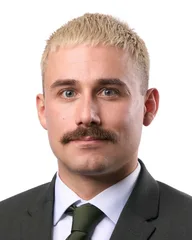
Lukas Sieper | Germany DEU | Non-attached Members (NI) | 390 |
| 2 |
|
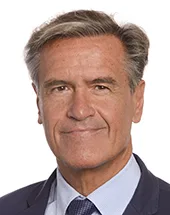
Juan Fernando López Aguilar | Spain ESP | Progressive Alliance of Socialists and Democrats (S&D) | 354 |
| 3 |
|
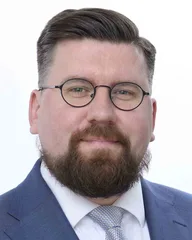
Sebastian Tynkkynen | Finland FIN | European Conservatives and Reformists (ECR) | 331 |
| 4 |
|
João Oliveira | Portugal PRT | The Left in the European Parliament (GUE/NGL) | 232 |
| 5 |
|
Vytenis Povilas Andriukaitis | Lithuania LTU | Progressive Alliance of Socialists and Democrats (S&D) | 227 |
All Contributions (51)
An EU strategy to boost industrial competitiveness, trade and quality jobs (debate)
Mr President, colleagues, Minister, Commissioner, finally a debate on prosperity and job creation in the European Union. It is high time, because our European economy bleeds, because of external factors, but also because of failing policies. The so acclaimed global Brussels effect of our standards is taant, the attractiveness of our internal market is failing and autocratic regimes are – unfortunately – on the rise. The reality is, colleagues, that we are losing prosperity, jobs and international clout. And what does the Commissioner say about this? More regulation, spending and state aid. Even more unsecured European spending, transfers and taxes. Even more centrally managed economy with a Sovereignty Fund. And a tug of protectionism with a blightful ‘Buy European Act’, in violation of WTO rules. The rudder has to change! With the completion of the internal market. With better enforcement that tackles actual protectionism. With diversification of our supply lines. With – urgently – new trade agreements. With a shift in the budget towards research, innovation and development. With limited and temporary State aid, focused on market failures and innovation, while respecting a level playing field. More room for our industry to experiment. And finally, colleagues, faster permitting pathways, not only for renewable energy, but for all investments.
30th Anniversary of the Single Market (debate)
Mr President, Commissioner, Minister, the internal market is undoubtedly the crown jewel of the European Union. Internal trade alone accounts for 56 million jobs and 8 to 9 % of our GDP. But the work is not finished. For years, I have been advocating the completion of the internal market, which would create enormous growth in our prosperity. I would also ask the Commission to finally act against de facto protectionism. Unfortunately, there are limits again. French retailers, for example, systematically refuse to sell products from our thriving Flemish agro-industry. It must be a ‘Produit de France’. Finally, the revision of State aid rules risks undermining the level playing field for companies from small Member States. So, ladies and gentlemen, there is reason to celebrate, but there is also a lot of work to be done by the Commission and the Council.
EU response to the US Inflation Reduction Act (debate)
Mr President, Madam Vice-President, I have listened carefully to you. I also read your opinion yesterday in, among others, the Flemish newspaper De Tijd. Good luck with the task force that was set up. I hope that you will really succeed in eliminating discrimination against European companies. But we also have European homework. Agree to state aid in so far as it focuses on innovation, on renewable energy, on excellence or in case of market failure. But your temporary crisis framework creates very serious problems, undermines the level playing field. Read in the same newspaper De Tijd the cry for help of large Flemish companies, such as Unilin, such as Kronos, Aluminium Duffel. They cannot compete against large companies from large Member States benefiting from massive state aid and are at risk of closure. Confidence in the EU is weakening in this way. Restore it quickly.
Suspicions of corruption from Qatar and the broader need for transparency and accountability in the European institutions (debate) (debate)
Mr President, ladies and gentlemen, like all of you, I am deeply shocked by the events. At the same time, I am happy that we have a high-performing police force and an independent justice system. And we certainly need to strengthen our own rules on transparency and accountability. But I would like to warn against an interinstitutional ethics body, a body made up of third parties, even though they are independent, that would check our compliance with our rules. We must not allow ourselves to be co-supervised by a body co-appointed by the executive. A parliament that respects itself controls the executive, not the other way around. On the other hand, we must work to strengthen our own committee which enforces our own code of conduct.
A truly interconnected Energy Single Market to keep bills down and companies competitive (topical debate)
Mr President, ladies and gentlemen, it is actually sad that we have to have this debate today. My party has been pushing for years to complete the internal market, including the energy market. That this did not happen comes at a very high price. Our companies are suffering. The European Union is de-industrialising. There is an exodus to the United States and the EU always responds with more rules, with more administrative burdens, instead of focusing on growth and further growth. This could come from the completion of the internal market with a growth rate of 9%. Today we also see the consequences of the lack of energy corridors. Terminals and pipelines must be built feverishly, while green electricity could have flowed from south to north and from east to west for a long time. Finally, I would like to stress that it is unacceptable that we should stop using the stable form of energy that is nuclear energy.
Preparation of the European Council meeting of 20-21 October 2022 (debate)
Mr President, uncertain economic times also require long-term solutions and the EU rightly linked structural reforms to the recovery fund. But where are the EU reforms? When will the completion of the internal market, which could generate up to 9% growth in GDP, take place? For when the much-needed new trade agreements could make new markets more accessible and make us less dependent? When is the action plan for our SMEs and growth? Focus on research and development, innovation and sustainable growth. Do not dig a new debt pit that our children and grandchildren will pay. On the contrary, carry out thorough reforms that do not cost anything but ensure sustainable growth. We are counting on the Czech Presidency to break the deadlock.
Outcome of the Commission’s review of the 15-point action plan on trade and sustainable development (debate)
Mr President, Commissioner, ladies and gentlemen, rules-based trade creates prosperity, ensures open strategic autonomy with supply chains that are diverse and also ensures stability. The job numbers in the European Union are impressive. The Commission’s 2021 study shows that as many as 38 million jobs depend on our exports in the EU. That is 11 million euros more than ten years earlier. In this respect, Commissioner, I would like to express my disappointment: no satisfactory progress has been made during this period on new trade agreements. I therefore call for the swift conclusion of new trade agreements. Secondly, trade agreements, our trade agreements, are a lever for human rights, a lever for decent working conditions, a lever for sustainability. In terms of sustainability – indeed – we must be wary of working with one approach towards our various partner countries. We have to take into account the challenges of that partner country, we have to take into account the opportunities of that partner country. For example, with New Zealand, we set the standards very, very high and fast, but not all countries have the same opportunities, have the same resources. Finally: Indeed, if there are problems, enter into dialogue, enter into mediation, but sanctions as the ultimate remedy.
AccessibleEU Centre in support of accessibility policies in the EU internal market (debate)
Mr President, Commissioner, people with disabilities belong in our society. Not on the edge, not on the sidelines, but in the middle! Like everyone else, they want to be able to participate in economic, social and cultural life. They do not want to be patronized from a care perspective, but can fully develop their talents and skills. Unfortunately, they still face far too many obstacles. For example, people with reduced mobility in several Member States have difficulties accessing public transport. People with an auditory or visual problem often struggle to find a job or to keep their job. People with disabilities sometimes have to move to the other side of the country to find a suitable home. So the rudder must: This has to be different! That is why, Commissioner, we support the proposal to create a European centre, ‘AccessibleEU’. Here's an example of how to do it: gathering knowledge, sharing knowledge, providing support and incentives to Member States to implement strong accessibility policies.
The UK government’s unilateral introduction of the Northern Ireland Protocol Bill and respect for international law (debate)
Mr President, the United Kingdom and the European Union are united in solidarity in their support for the Ukrainian people. At the same time, however, Brexit is still . Our British friends know that we respect their choice, but there are consequences. The integrity of our internal market and the protection of our consumers are red lines. We know that the EU is flexible and pragmatic with Vice-President Šefčovič's October package, but the Northern Ireland Protocol and the Withdrawal Agreement must be maintained. I note that both parties agree with the principle of a express lane or green lane in respect of goods intended only for the Northern Irish market. I think it should be possible to reach an agreement on the basis of this principle, provided that there are firm guarantees that the goods will only go to the Northern Irish market. I therefore ask that both parties sit down at the table and come to an agreement with good sense, which should allow us to develop further ambitions: cooperation on research and development, cooperation in and around the North Sea, on energy, on CO2 storage, so that we can work towards a sustainable future partnership with our long-standing British friends.
EU-India future trade and investment cooperation (short presentation)
Madam President, colleagues, Commissioner, if the EU wants to play its role as a global actor, it has to promote rules—based trade and show by example that trade agreements deliver, bring peoples together and raise the standards worldwide on safety of labour, sustainable development goals and human rights. In these geopolitically unstable times, more than ever we have the duty to diversify our supply chains and open up new markets. Colleagues, nine years after negotiations were suspended, the political leaders of both the EU and India agreed last year in May to resume negotiations for a balanced, ambitious, comprehensive and mutually—beneficial trade agreement, a separate negotiation on a standalone investment protection agreement and another agreement on geographical indications. This report confirms this approach. An agreement with India will be favourable for economic reasons as the untapped potential is huge. With its 1.3 billion inhabitants, India is the largest democracy in the world and a solid alternative for an EU that wants to diversify its supply chains. Although in recent years the EU has become India’s leading trade partner, figures show that the potential in economic cooperation with India remains mainly untapped. India is one out of the EU’s four strategic partners within the European—Indo-Pacific strategy. Therefore, the agreement is also of geopolitical importance. Dear colleagues, in this own—initiative report, the European Parliament gives its full support to the negotiations, based on the current mandate. MEPs also firmly welcome the establishment of a Trade and Technology Council with India that should be launched by the end of this year under the Czech Presidency. We have listed the following positive priorities: a comprehensive free trade agreement with a dedicated chapter on SMEs on digital trade and raw materials, and an ambitious and enforceable TSD chapter aligned with the Paris Agreement. We encourage the negotiators to touch upon the longstanding market access irritants both across governance levels and sectors, with the comprehensive elimination of tariffs and quotas on a reciprocal basis, while paying attention to sensitive products and ensuring that reductions will not be compensated by an increase in domestic taxes and levies; a standalone investment protection agreement with a dedicated EU—India Investment Court system, with a view to the founding of the Multilateral Investment Court; a robust chapter on public procurement applicable at all levels of governance and a prohibition of certain discriminatory bi—national practices; an agreement on the establishment of a bilateral ex-ante and ex-post consultation platform between the EU and India, designed to facilitate discussions or consultations in advance of any new measure that could negatively affect trade or investment; and, finally, we propose – following the good experience we have had in the FTA with Vietnam – the establishment of a parliamentary joint committee to allow parliamentary oversight. Colleagues, I conclude that, without any doubt, challenging negotiations await. However, not only the EU but also India and the world have changed. In all contacts with our Indian partners we have clearly understood the political will to succeed. I hope that negotiations can succeed and that this parliament will be able to give its consent in the current mandate. We therefore need to grab this opportunity to strengthen EU—India ties with both hands. Finally, I would like to thank my entire colleagues for the good cooperation, and I hope for the approval of my report with a broad majority tomorrow.
Digital Services Act - Digital Markets Act (debate)
Mr President, ladies and gentlemen, Commissioners, the Digital Markets Act is certainly a good thing. The law creates much-needed, fair competition and also offers growth opportunities for our young companies. The Digital Services Act is also a major step forward. The law ensures that there are uniform rules in the internal market and provides much better protection for the users of the digital platforms. Nevertheless, I am very concerned about freedom of expression, despite some important adjustments. I am afraid that important private players will restrict free speech. Humor, satire, parody, critical voices, legitimate political opinions will not get through the algorithm mill. Algorithms that have no nuance. I am happy to come from a country where the Constitution forbids censorship. Offline and online. This should also have been the starting point for the EU, with the exception of some exhaustively listed major crimes. The EU that prides itself on protecting rights and freedoms.
A new trade instrument to ban products made by forced labour (debate)
Mr President, we agree that forced labour is one of the most serious violations of human rights. President Lange said that an estimated 25 million people worldwide are victims of forced labour. It is up to us to tackle the import of products made with forced labour. Such products do not belong on our internal market or on the shelves of our stores. As far as we are concerned, these rules could have been better integrated into the rules on due diligence. However, it is waiting. As a result, an import ban is chosen, modelled on the United States. I have a number of reservations about this: Firstly, there will be 27 customs authorities and we must therefore be vigilant that rogue importers do not opt for the weakest link of the 27. There will also be a need for international cooperation, looking at the United States. This cooperation must go beyond countering malign imports. In short, we must try to tackle forced labour worldwide. Finally, I would like to draw particular attention to the administrative burden, especially for SMEs, which will not be able to monitor the entire supply chain, and call for consistency in the relevant regulations, when adopted.
The call for a Convention for the revision of the Treaties (debate)
I am convinced that the EU can and must pursue a migration policy within the existing treaties. Trade agreements are a full competence of the European Union. The investment protection treaties are a mixed competence, as they involve the transfer of competences by the Member States, i.e. judicial competence. However, trade agreements are a full competence that is not exhausted by the Union. The French Presidency of the Council was therefore very disappointed in this respect. There is only one trade agreement during this period, namely with Vietnam. We must exhaust our powers, deliver results and create added value for citizens. All of this is possible under the Lisbon Treaty.
The call for a Convention for the revision of the Treaties (debate)
Mr President, we are in favour of a bottom-up European Union and work together if that adds value. We also want more respect for subsidiarity. The European Union is built on representative democracy. Commissioner, you did not give a vote to the citizens, but to a few hundred citizens. All citizens should be treated equally and this is only possible if they can exercise their right to vote. In our view, therefore, no treaty change is necessary. After all, this would be a flight ahead, away from the problems that need to be tackled now. The European Union must ensure growth and create jobs, invest much more in innovation, protect borders and have ambitions to conclude trade agreements. Within the existing treaties there is so much undeveloped territory, but these paths are not entered. Addressing the recent crises has shown that the Lisbon Treaty allows all this and is not only future-proof, but also very flexible. (The speaker accepted a "blue card" response)
Conclusions of the special European Council meeting of 30-31 May 2022 (debate)
Mr President, as my colleague Johan Van Overtveldt writes today in Politico, we have to be prepared for the reconstruction of Ukraine. So this will provoke a very, very huge cost. Vice-President Dombrovskis argued for the aggressor—pays principle. My question is, is there a decision on this principle? I agree with him. Is it possible to use the confiscated money – around USD 600 billion – and is there a legal fundament for it?
Data Governance Act (debate)
Mr President, Commissioner, ladies and gentlemen, I have heard our entrepreneurs complain about the lack of data for ten years. Indeed, our backlog towards the United States and China on accessible data is huge. This is detrimental to our entrepreneurship, to research, to innovation, to our competitiveness, to our prosperity and to our European values. In this sense, the European Union therefore needs a data economy. This regulation is a step in the right direction. My thanks and congratulations go to the rapporteur and all those who have contributed to it. The EU must continue on that momentum, respecting our privacy, but also without any hint of protectionism. In this sense, I welcome the new agreement in principle with the United States to achieve transatlantic data transfer. We need a broad digital partnership with the United States. This will be of exceptional importance for the growth of our SMEs, but with shared values and a counterweight to China and Russia.
Tackling non-tariff and non-tax barriers in the single market (debate)
Mr President, the single market is the main source of prosperity in the EU. Lack of access to the single market would reduce my country's gross national product by as much as 18%. The report therefore rightly calls for the completion of the single market. Recent studies have shown that this would result in a 9% increase in our combined national product. The profit is there for the taking. Unfortunately, protectionism is on the rise and more and more retailers are selling products exclusively from their own country. This obliges companies to relocate their production and undermines trust in the European Union. These actual obstacles are therefore rightly addressed in the report. I would therefore like to call once again on the Commission to take firm action against this.
Digital Services Act (continuation of debate)
Mr President, there is a lot of good in the Digital Services Act. There will be greater transparency, better protection for consumers and uniform rules for the digital single market. But I am deeply concerned about freedom of expression, a fundamental right. Any exception to this must be limited and it is unacceptable that some powerful private players should be allowed to self-righteously censor the public debate that blind algorithms can silence citizens. The major internet platforms are the mail and mailboxes of the twenty-first century and they must be made subject to a universal service obligation. Everyone should have the right to place messages and receive messages. And the major platforms should only be allowed to remove well-defined, manifestly illegal content. Any other discussion about freedom of expression in a state governed by the rule of law belongs to the courts. I come from a Member State where the Constitution prohibits censorship. Let this be a guide for the European Union.
Barriers to the free movement of goods (debate)
Mr President, I remember very well the major problems with product standards that differ from one Member State to another. There was always a screw, a bolt, a nut that collided with another standard of another Member State, making it difficult or impossible for products to cross the border. Fortunately, the single market put an end to this. The single market is a boon for our upward social convergence, for internal free trade, for jobs and for prosperity. But today, the internal borders are de facto being closed again for a number of goods. More and more shops sell only products manufactured in their own country, with large labels ‘produit de’ or ‘made in’. I know of producers who were obliged to relocate their production to another Member State, even though they had sufficient production capacity in their own country. Of course, the short chain is a good thing, but what I denounce is pure protectionism. This undermines our internal market. I have repeatedly drawn the Commission's attention to this de facto protectionism, and I again ask the Commission to draw up a report on these de facto obstacles and to place the deepening of the internal market at the top of its agenda.
Digital Markets Act (debate)
Mr President, I support the negotiating mandate for the Digital Markets Act. The omnipotence of Big Tech currently prevents fair competition in our internal market, deprives our SMEs of growth opportunities or even eliminates them altogether, at the expense of our innovative strength. It is clear that the current competition rules are not sufficient to create a level playing field in our digital single market. That is why our regulation must indeed become more proactive, taking into account the digital speed. But our regulations must not become protectionist. The U.S. is and will continue to be an important partner to jointly set digital standards worldwide, given the advancing China. Nor should we damage the functioning of the Trade and Technology Council.
Multilateral negotiations in view of the 12th WTO Ministerial Conference in Geneva, 30 November to 3 December 2021 (debate)
Mr President, Vice-President, ladies and gentlemen, I am firmly in favour of fair, rules-based free trade. This ensures prosperity, high-quality jobs, development and stability. For this we need a multilateral regulator and referee, but unfortunately the World Trade Organization is in a deep crisis today. She can't make any agreements. The rules are not adapted to the digital world and dispute resolution is blocked. In the light of this, and in order to find a solution, we can support the main thrust of this resolution. Firstly, there must be an end to harmful fishing subsidies. Secondly, we want progress on sustainable and digital trade. Finally, we would like to see the establishment of a working group with a clear mandate for a WTO reform by unblocking the settlement of disputes, by allowing for multilateral agreements between frontrunners and by making a correct distinction between developed and developing countries. To this end, let us work with the United States and other like-minded democratic countries. However, my group cannot approve the resolution in its entirety. We regret the passage on the lifting of patents for vaccines. This frustrates innovative research and development, which are precisely the levers for our future prosperity. What we need is a drastic increase in production possibilities and free delivery via COVAX and/or at production costs. I hope that the Commission's positive proposals will enable us to reach an agreement in Geneva.
The outcome of the EU-US Trade and Technology Council (TTC) (debate)
Mr President, I very much welcome the results of the first meeting of the EU-US Trade and Technology Council and would like to congratulate the Commission on this. I am a staunch supporter of the Trade and Technology Council: we must strive to set global standards together as the EU and the US. This is a big challenge. Chinese standardization is on the rise. If we don't set the tone, other powers will. Mr Dombrovskis, this must indeed be done on the basis of our shared values, and that will not always be easy. We have, on the one hand, the US, which has a huge advantage in terms of data and, on the other hand, a single capital market, where there is hardly any regulation and a lot of room for experimentation, and, on the other hand, the EU, which not only suffers from a large backlog, but also tends to want to regulate too much. The Commission should therefore adopt regulatory incentives without unnecessary barriers. I also agree with Mr Dombrovskis' desire for a more intense partnership. We have to put all the problems on the table: the protectionist ‘Buy American Act’, the ‘Jones Act’ and also the imminent charges on electric vehicles. A sustainable partnership must be based on openness and equality. Finally, I would like to call for going beyond the legislative dialogue and pursuing the creation of a genuine transatlantic parliamentary cooperative.
Preparation of the European Council meeting of 21-22 October 2021 (debate)
Mr President, ladies and gentlemen, I have repeatedly pointed out here that the European Union is lagging behind in terms of digitalisation, investments in, for example, artificial intelligence. In 2020, more than 80 percent of that investment took place in the United States and in China. In the European Union, only 4%, only 4%. You therefore urgently need to make the switch to a budget for the 21st century, with more investment in research and development. Cooperation with the United States is also crucial. The Trade and Technology Council (TTC) should deliver on data regulation. We must have the ambition to set the standards worldwide, to create a TTC effect. Finally, regulation: Yes, but it should stimulate the market. It should not slow down the market. We need to give our start-ups opportunities. We need to have a lot more growth companies. We do not have a single European company in the global top 15 of digital companies.
The future of EU-US relations (debate)
Mr President, we welcome the first agreements in principle at the summit of the Trade and Technology Council. It is good that it could take place in not so obvious circumstances. The United States remains our most important partner. First of all, however, frictions must be eliminated, such as the tariffs on aluminium and steel and the inadequacy of our companies' access to the American market and public procurement. We also need to work towards an agreement on a carbon border tax. The United States must now also make it clear whether they want to work together with us and with other partners to save and modernise the World Trade Organization. Finally, we really hope that an agreement will be reached on the new economy with common standards for artificial intelligence.
State of the Union (debate)
Mr President, Mr President of the Commission, you are quite right to focus on resilience, more investment, structural reforms and 5G, but the whole internal market must be completed with great concern for our SMEs. Put subsidiarity and diversity at the heart of your policies. Unfortunately, I didn't hear anything about it again. The EU must protect its citizens and its jobs. So it is great that you are strongly committed to cyber security, but we urgently need a comprehensive migration pact. We also urgently need instruments to combat dumping. Finally, I ask for even more ambition for the EU as a global player. We must be the driving force behind multilateralism. We need more free trade agreements and we need to be the global actor of peace and stability.