

| Rank | Name | Country | Group | Speeches | |
|---|---|---|---|---|---|
| 1 |
|
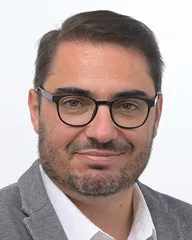
Lukas Sieper | Germany DEU | Non-attached Members (NI) | 390 |
| 2 |
|
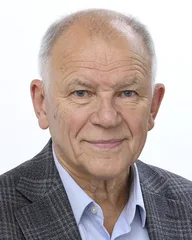
Juan Fernando López Aguilar | Spain ESP | Progressive Alliance of Socialists and Democrats (S&D) | 354 |
| 3 |
|
Sebastian Tynkkynen | Finland FIN | European Conservatives and Reformists (ECR) | 331 |
| 4 |
|
João Oliveira | Portugal PRT | The Left in the European Parliament (GUE/NGL) | 232 |
| 5 |
|
Vytenis Povilas Andriukaitis | Lithuania LTU | Progressive Alliance of Socialists and Democrats (S&D) | 227 |
All Contributions (102)
Topical debate (Rule 169) - Social Europe: making life affordable, protecting jobs, wages and health for all
Mr President, ladies and gentlemen! I listened very carefully yesterday to Mrs von der Leyen's speech, and Mrs Bischoff, you said yes, competitiveness – Competitiveness – I have been hearing this for several months, but then for whom? As long as we have a healthy, participatory society, if people don't feel taken with them, can't be there, are afraid of the future and not because something comes from the outside, but because I lose my job due to different reasons, then I'm not part of this competitiveness, then I don't matter. Social justice is the kit that holds a society together. I said that in the last legislature. We do not have a problem with knowledge, we have a problem with implementation. Once again, we are discussing the social question. The issue of homelessness is in this legislature or is still not being seriously addressed in this legislature. We have 500 million people with disabilities. We just got the Global Disability Summit in Berlin. We are talking about disability poverty and lack of accessibility. This is a target group. These are citizens who don't matter at all. So I expect this Commission to come up with legislative proposals. I am not even talking about the anti-discrimination directive, which is currently being cancelled. I expect concrete guidelines from the Commission that we will not once again have fun debating the importance of social Europe.
The need for EU support towards a just transition and reconstruction in Syria (debate)
Madam President, Commissioner, dear Council! Just because one has chased a dictator from the court does not mean that a complete dictatorship has disappeared; Countries that have experienced dictatorships know this. Assad is gone, but the dictatorship has remained. The fear is still there, the mistrust below the people is still there. Al-Sharaa is the new president – I would say he is the point of contact on Syria issues, but still far from being seen as an elected president. And he hasn't been able to really convincingly portray how he envisions a united Syria. I was in Syria, Suweida and Damascus 14 days ago, and the great fear, of course, is that a state will disintegrate. But then this state must interest me, then I must also interest the people in this state; then I have to go to Suweida, then I have to show myself in the Kurdish areas and not only say: I want a united Syria, but please come by me. We need to solve the problem of poverty, youth unemployment, violence against women – I know we don’t know where else to erase. Please donate the money directly on site and not to a dictator, a terrorist in a suit – the picture has been tried many times.
Recommendation to the Council on the EU priorities for the 69th session of the UN Commission on the Status of Women - EU priorities for the 69th session of the UN Commission on the Status of Women (joint debate - EU priorities for the upcoming session of the UN Commission on the Status of Women)
Mr President! This morning, Commissioner Lahbib, we had the debate on Disability strategy, and here I would like to use the room again to draw attention to the situation of disabled girls and women. And we are not only talking about the girls and women in wheelchairs, but also those with learning difficulties. Every second woman with a disability is affected by violence, and that can happen within the family, that can happen in institutions, that can happen anywhere. And women are often not believed, especially those with learning difficulties – because they cannot put it into words, they have no communication, they are not believed, because they are simply convinced that a woman with a disability is only disabled and not a woman. It's a woman without a uterus, if you will. We have two major conferences next year – the Women's Conference in New York and the Conference of Persons with Disabilities in June. Two important areas, because important conferences, where we will also be present as a Parliament. The Commission has to report in Geneva on the state of play regarding the implementation of the Convention on the Rights of Persons with Disabilities – and here, I believe, disabled women should play a major role.
Need to update the European strategy for the rights of persons with disabilities (debate)
Madam President, Dear Commissioner, welcome to our House and to this important issue, I am very pleased. First of all, I have some bad news for all of us: There is no European Member State that has implemented the UN Convention on the Rights of Persons with Disabilities as it should. We all failed! We are all in the same boat. The good news: We can do better. We can do better with the development of the strategy. There is still – as the colleagues have said – that people with disabilities – or disabled people, I am in favour of the social model – still live in poverty, especially women, who still live and work in institutions, supposedly for their protection. If you ask yourself, you have a disabled friend and you have a disabled colleague, and the answer is no – where are the people? Mostly in places where they are supposed to be so safe. One in two women with disabilities is affected by violence. It's not visible. That's what's happening in these closed spaces, and we have to break that down. We must break it up by stopping funding such institutions. I'm not talking about social media. For example, I'm talking about agriculture. It is often the organic, organic or agricultural farmer who receives EU funding but then uses the services of disabled people who then work for one euro an hour – thus circumventing European social standards! There is no company in Germany that does not produce in facilities or for workshops. It is the best developed dumping wage model we have in the European Union. I don't have to go to India or Bangladesh. If our standards are to have human rights-compliant regulations, this must also apply to disabled people. And it must be clear: Where is our money going? I would ask you to pay attention to this for the next strategy. We're talking about the MFF., which is very important. I see that we have an opportunity to act and then have to question it just as well, have to control it – what do you actually do with our money? – and that this is not necessarily the good and the beautiful and the love. I'll come to the end. It's Christmas and we want to do something good. No, well-intentioned is not well done!
Toppling of the Syrian regime, its geopolitical implications and the humanitarian situation in the region (debate)
Mr President! I throw a number into the room: 54. And I throw another number into the room: 48. 54 Years of the Assad Dictatorship: Father Assad and Bashar al-Assad, his son. Less than 48 hours after the fall of the Syrian population itself, without bloodshed, I would like to mention, it has not been possible to cry out immediately for deportations. I have followed this debate, I feel the same way as my S&D colleague Thijs: It disgusts me how inhumanely people talk about people. Supposedly, as if they had no free will of their own, as if it were already God-given, that they must of course automatically plunge into chaos, as if there had been no civil rights movements in the past, no opposition movement in Washington, in Paris, in Berlin. The people are here! There is a democracy plan, and I call on you, Mrs Kallas: Get in touch with the new movements, the old, experienced activists and talk to the people! They are tired of making decisions about their heads. They are tired of knowing what is good or what is bad for them, for the men, for the women, for the women. minorities. This is my appeal to you, Mrs Kallas.
Recent legislation targeting LGBTQI persons and the need for protecting the rule of law and a discrimination-free Union (debate)
Mr President! I believe I am the only woman in the progressive camp who is not lesbian, queer or anything else – and I do not feel threatened. That's crazy! And I find these words really painful so far. What do you take away from children of men when they say: ‘I am a lesbian, I am gay’? I notice in the schoolyard – as a boy – that the neighbor who is next to me, that I find him somehow sexy. And maybe I want to have an ice cream with him when I'm 14, 15. It doesn't hurt anyone, we don't take anything away from anyone. And we have been fighting for a very long time to get back to the ground of professionalism, Commissioner Helena Dalli, dear team here in Parliament, and we have been fighting for a very long time for the implementation of the Anti-Discrimination Directive. And this is a very, very important point. This Anti-Discrimination Directive covers once people from the LGBTIQ+ group, but also people with disabilities. And we hope that we will finally be able to get Germany to unblock this, that we will not be able to boo guy or the boo woman In the European Commission, in the Council, we are saying that we want to continue here when it comes to human rights, when it comes to our rights. This is now our work for the next few months when it comes to new elections at the end of February. That's what we're going to fight for.
Rise of energy prices and fighting energy poverty (debate)
Madam President, We often have the floor here today. competitiveness – competitiveness – and that everyone is somehow ready for change. I come from Lower Saxony, I come from Großburgwedel, and Großburgwedel is not very far from Gorleben. We know what it means to have nuclear energy on your doorstep. What do we do with this shit? To those of you who are still advocating today that we must somehow reanimate nuclear energy, the old rubbish dumpsters, I ask: What do we do with this shit? We have to sell this dirt to the citizens on our doorstep in Gorleben. Wir haben Gorleben erklärt: Gorleben is not safe! Gorleben stands for Rebecca Harms. Rebecca Harms was a great fighter in the European Parliament against nuclear energy. Of course, we also have to explain to them: How do we want to reshape the energy transition in the 21st century? The energy transition for companies does not mean that we stick to the old, dirty mechanics, because then those who demand it must give me an answer: Where's the dirt? Best regards from Gorleben!
Urgent need to tackle the gender pay gap (debate)
No text available
The devastating floods in Spain, the urgent need to support the victims, to improve preparedness and to fight the climate crisis (debate)
Madam President, ladies and gentlemen! After this very emotional debate, I would like to throw a number into the room: 100 million people with disabilities live in the European Union, and they are the last to be remembered and the first to be forgotten. People with disabilities, elderly people, people who are homeless, who are not immediately seen or who do not appear in rescue plans. And this is important for the next Commission that when it comes to funding, when it comes to civil protection, we take these very groups into account. And this is not a small niche group that we are talking about, we are talking about citizens in the European Union who have a visible or invisible disability. No, they can't hear when an alarm goes off. No, they may not be able to see if it's raining – and it's not about removing puddles, we're talking about a climate disaster. Disabled people are the last we think of and the first we forget. Therefore, my call to the next Commission, but also to this House in the next five years: Valencia is today, and the next disaster is coming – and I am happy when people like us are taken into account in the household.
Ensuring sustainable, decent and affordable housing in Europe - encouraging investment, private property and public housing programmes (debate)
Mr President, ladies and gentlemen! The fight against poverty is probably now on the Commission's agenda in this upcoming legislature, and this is very well heard. But we also have the long-term budget ahead of us, so we can decide what money will go into housing – social housing. As the European Union, we have said: Homelessness must end by 2030. It is very nice that we are dealing here with the issue of social affairs and housing at EU level, but then we also need an answer for the municipalities that say we would like to do this, but please give us the money for it. It is not just the classic house building when we talk about housing and so-called fears of descent – we are an ageing continent. How often do we read in newspapers: Older lady, older gentleman, has lived for 50, 60, 70 years, since childhood in his apartment, in his house, and suddenly – April, April –: You have to move out. In the old age with the financial situation, you can usually no longer afford this. If we do not want society to fly around our ears, we must invest in social standards, but also in social housing.
La Hulpe declaration on the future of social Europe (debate)
Mr President! We have achieved a lot here as a team, and I see that we are sitting here closed in the front row. I am very happy, dear colleagues, we were really a megacool team. We have reached the minimum wage, the Climate Social Fund. We are now trying, in the next parliamentary term, to implement the poverty-resistant basic security as a legislative initiative and to protect people from poverty. Then one hears after La Hulpe one or the other voice that says: Well, now it's good too! We have better things to do now, we have to take care of the right problems! Social, that's quite nice, but the defense to the outside, from the outside, that's what we need now! That's right! We need defence when it comes to external attacks on Europe. But we also need internal security, and that is social justice, that is protection. The fight against external attacks is right. But if there are no answers for the elderly woman, the elderly lady, the young people who are afraid of what is coming to them, if there is no protection, then we should not be surprised if Europe disintegrates. And there is no army to help.
European Disability Card and European Parking Card for persons with disabilities - European Disability Card and European Parking Card for persons with disabilities for third country nationals legally residing in a Member State (joint debate - Disability cards)
Mr President, Commissioner Helena Dalli, ladies and gentlemen! We have achieved a lot within the framework of this and we were a really cool team, I have to say that here at this point. This shows that we can work together very well beyond the political groups and borders. A European Severely Disabled Card – why do you really need it? What did we actually do? This is needed for compensating for disadvantages. Compensation for disadvantages – if I had no disadvantages, I would not need compensation for disadvantages either. I think we have to get there – I start at the end and not at the beginning. It doesn't matter which country I am in, if my disability doesn't suddenly stop, but then the disadvantages suddenly disappear and I can travel by train. It does not matter whether I have acquired a disability in Germany or in France. Of course, again to pour water into the wine: What good is my passport if I don't get on the train? There was always the question: What does all the fun cost? That annoyed me mega. The first questions that always came up: How much does this EU passport cost us? Then I think: What kind of image do you have of disabled people? No, of course - Attention, irony: We agree that 100 million people with disabilities in the European Union will meet on the same day, at the same time, to abuse and flood the services in the other country. I hope that this card will change the way people with disabilities think and see things in the Member States and that one day we will be on an equal footing with everyone else.
Council decision inviting Member States to ratify the Violence and Harassment Convention, 2019 (No. 190) of the International Labour Organization (debate)
Mr President! Violence can look different: There is verbal violence, there is indirect violence, there is of course rarely in public space, but sometimes also in a very public space, as happened to the Spanish footballers. It is accepted: ‘It's always been done that way’, ‘There's nothing there’; Let's talk about humor, Altherrenwitz. No, that's not funny! If there's an imbalance of no-more-up-eye height, it's not funny. On the one hand, it is up to the women to be in solidarity with each other, to support each other and then also to take legal action, but also to the manager. And in the case of violence, assaults in the workplace, it is the manager who has to make it clear again and again: Such attacks have nothing to look for in our company! If this is made clear from the very top, then you support the women. I am very pleased when we adopt, ratify and clarify this today: Violence is never acceptable.
Recommendation to the Council, the Commission and the EEAS on the situation in Syria (debate)
Madam President, Commissioner! Syria is on the agenda, and it is very, very important. We have multiple crises and wars and we need to talk about Syria, one of the largest states in the Middle East region. There is still war. People took to the streets for democracy, for freedom, for freedom of the press. What did they get? The bombs! They got flight, expulsion, even more torture, even more restrictions from the Assad regime. Wouldn't that have been bad enough? Then came the IS. You can choose misery. Bashar al-Assad is still sitting firmly in the saddle and he is being tortured, he is being driven out, he is being kidnapped. Men and women are never seen again in prison. The relatives are blackmailed. The police rang the doorbell and said: If you want your loved ones to be well, you pay. And then they pay, every day. When we talk about support for Syria, for the people of Syria, we as Europe, as a Commission, as a Parliament must be clear: Where is the money going? There is not always a ‘Red Cross’ on it, because at the end of the day it also passes through the door of Bashar al-Assad and his family. It is not only Bashar al-Assad, it is also the Social Fund his dear wife. Here, as a Commission, as a Parliament, we have to look very closely: Where is the money going? There will be no peace with Assad. There is no democracy with Assad and his family. That must be clear to us. No negotiations, no peace, no acceptance, no normalisation with the Bashar al-Assad regime!
Addressing urgent skills shortages and finding the right talents to boost job creation (European Year of Skills) (debate)
Madam President, ladies and gentlemen. A survey once found that people with a migrant background are more likely to believe in earning their money or taking up a job as a YouTube star later than they are to make it to a job via education. What is the reason? This is discrimination. It's the wrong address, it's the name, the migration history, the origin you bring. It's also sometimes like a person with a disability when you're told it's clear that's your given path, that's where you're going, that's going to be your future. And that may not be the company or job or area you dreamed of. Why am I telling you this? Because if there are already fears, worries, restraint and negative experiences in early childhood and early education, then older people, people in professional life are more likely not to get involved or are more likely not willing to continue their education. Then they are afraid or afraid of further education. And it must be clear, even if you are further educated, that this is also worthwhile. This must also be clear to companies and employers.
Quality jobs in a competitive future-oriented social market economy (topical debate)
Dear Minister, dear President, dear Commissioner, dear colleagues! Quality jobs, quality jobs, what is it? Is it the IT professional, the auto mechanic? Or is it the woman who sits at the checkout and collects our purchase? What are professionals? By definition, skilled workers are people who have completed vocational training. This does not always have to be associated with a high school diploma. We cannot argue elitistically. We need everyone and we need everyone in the European Union. We are an ageing continent and we need professionals of all kinds. We need to invest in inclusive, appreciative, rewarding activities. We must no longer invest EU funding in institutions, in job opportunities that clearly contradict human rights. I also expect much more commitment from the next Commission. We need to invest in inclusion companies, but we also need professionals from abroad. And at the end of the day, the name must not matter whether the person comes from Ukraine or the refugee from Syria. Here all people are equal. We need them for a strong Europe.
International day for the elimination of violence against women (debate)
Mr President, Commissioner, ladies and gentlemen! Yes means Yes, No means No, and we repeat this demand mantra-like every time for generations. For a similar, comparable demand, my mother took to the streets in the early 1970s. And we repeat it over and over again. I think we can say: Do not educate your daughters, but educate your sons. And Mr. Buschmann, to you: Your obstruction of this law, this directive, is a disgrace to the European Union! I do not understand that what Germany has already ratified, such as the Istanbul Convention – and now I come to the UN Convention on the Rights of Persons with Disabilities, where something similar is in it; Every second woman with disabilities is a victim of violence. The form of violence we can choose. And that Germany blocks Minister Buschmann of the FDP here and says there is no legal basis is simply a lie.
Commission proposal for a Council recommendation on developing social economy framework conditions (debate)
Mr President, ladies and gentlemen, dear spectators outside on the screens! I am very pleased that you are following the debate here. We visited Madrid with the Social Committee almost a year ago and looked at social enterprises with a focus on people with disabilities. And it has been shown, as the Commissioner rightly pointed out, that the social economy, the social economy and inclusive enterprises can indeed provide a good example, an alternative to marginalised special structures. No, people with disabilities do not have to be kept in workshops, locked up, sealed off from the outside world. Even if there are outdoor workplaces like in Germany, which are highly propagated, and this again and again with shift change projects, in which I look at how it works in the workshop, and in return, a disabled person from a workshop can get a taste of what it looks like in the non-disabled world. But then he or she has to hush again, hush into the cup and then back into the structure that is intended for him or her as a disabled person. And that is no longer appropriate in the 21st century. Article 27: I was at the publication and debate of the State Report – in the case of Germany – in Geneva. Once again, the UN has criticised massively, human rights organisations have criticised massively that we in the European Member States - now as an example, but also others - adhere to the special structures for disabled people. As a European Union, as a Parliament, as a Commission, we must support the social economy as a new alternative form of economy. These companies must have tax advantages, they must be on an equal footing with the aforementioned special structures and no structure falling behind them or no entrepreneurship falling behind them. Women must have the chance to start a company, a social enterprise, so the feminism aspect, the gender aspect is very, very important to us here. I was once asked by a young woman with a disability: ‘Is there any funding if I want to start a business as a disabled person, as a disabled woman?’ I couldn’t think of anything. I believe that when we talk about numerous subsidies, it must be clear: It has to go into the social economy, and really no funding – explicitly. And here we have resolutions, ladies and gentlemen: No longer in special structures. I do not want to see that ESF funds, ERDF funds continue to go into structures that are contrary to Article 27 of the UN CRPD.
International Day for the Eradication of Poverty (debate)
Madam President, World Poverty Day is today. Fourteen days ago we talked about basic security here in this House. Oh, hurrah! Within a very short time, we are talking about poverty in the European Union. I am addressing our guests on the podium here, I am addressing those who may be sitting at home now and watching the debate – people affected by poverty. And I would like us to stop talking about socially weak people. These people are not socially weak, they are financially weak, partly for generations. And that is a circumstance that we cannot accept. Who are we talking about? We are talking about women’s poverty, we are talking about old age poverty, we are also talking about so-called disability poverty – people with disabilities, with diseases that live in poverty for different reasons. Whoever is poor is to blame. That is often the thought. If we invest in the fight against poverty and in social standards, it's a goodie, it's a goodie. Social benefit. This is an investment in our democracy. This is an investment in our country, in the European Union. Anyone who still believes that people living in poverty are an annoying, unpleasant factor has not recognised the signs of the times – and my colleague Dragoş Pîslaru rightly said that – even out there on the screen. We have adopted basic child protection here in the European Parliament. In-work poverty – In-work poverty – was a debate at the Committee. I would like us to stop having these debates and simply get legislative proposals that social policy in the European Union is not goodwill, but a must-have that we no longer talk about the Social Union, but introduce it. I don't want to hear Mimimi take anything away from anyone. No, we get something to do with it, because that's the only way the European Union works.
Rising precariousness in Europe including the need for aid to the most deprived (debate)
Mr President, Commissioner, ladies and gentlemen, Poverty reduction or the fact that people in the European Union are poor is nothing new. What does poverty mean? Poverty is that maybe I can't afford the healthy food, that I can't afford the textbooks, that I can't afford to go to the theater. This is also part of social participation. We have managed to set up a Social Climate Fund in the European Union, which is far too small. We have put in place basic child protection, which unfortunately is not yet available in all European Member States. Let's finally set up a basic EU security in the European Union. Investing in poverty reduction is not a goodie. Investing in poverty reduction is not a soft skill. It must finally be in the next Commission after the election with the new Parliament for all of us crystal-clear It is an investment in the future and not a breadcrumb or maybe a piece of cake blame for the people living in poverty. We need to get people out of structural poverty and not keep them there.
COVID-19 pandemic: lessons learned and recommendations for the future (debate)
Mr President, ladies and gentlemen. When Corona broke in on us, the women, the children, the weakest in society, people with pre-existing illnesses, pensioners in nursing homes were the first to pay the prices. People with disabilities or people with diseases were denied access to the clinics because of overcrowding. They were denied health care. Of course, the word ‘triage’ was never officially pronounced. Doctors had to make decisions under the most difficult conditions. I hope none of us ever have to make such decisions. I think we can only apologise for what we have expected of the medical staff, the doctors, during this time. people with long COVID, ME/CFS, Post-VacThese people are unable to take to the streets because of the disease. They are not visible. We must not forget them. We need to raise funds, and we need to call on our Member States to raise funds to invest in research and health care for people who lie in their beds in isolation in the dark and care for their loved ones.
Roadmap on a Social Europe: two years after Porto (debate)
Mr President, Commissioner, dear Minister, dear citizens on the podium! Financial union, economic union – what we need is a social union. We've made it, we've won the minimum wage. When the financial crisis, economic crisis, real estate crisis hit us in 2007/2008, many young people were unemployed. The Youth Guarantee, a strengthening of the Youth Guarantee, was the result. But we need a lot more. Homelessness is a serious issue in the European Union. But when we talk about supplying people in winter, we also need to talk as well about how access to water, shelter is in the heat summers in the European Member States. Another crisis we had some time ago is the corona crisis. How many people are at home in the dark? You are suffering from ME/CFS, not only because of coronavirus, but also because of it, can no longer participate. We lack workers who cannot participate in training. Poverty reduction must be the focus of our work in the next legislature; That's what we're going to argue about.
Start of the European Year of skills (debate)
Madam President, as we enter the European Year of Skills, it’s important to recognise the significance of the opportunity for Member States to incentivise workers to upskill and reskill themselves in light of the just transition. Member States utilise the available resources to empower persons and encourage employers to provide their workers with the tools they need to succeed. This includes providing paid trainings and allowing workers to participate in training during working hours. We, as Greens, corrected the narrow focus on the lack of skilled workforce for management positions and expanded the scope to promoting upskilling and reskilling for all workers in all sectors. We also managed to include language on green skills for green quality jobs, stressed the need for jobs that allow workers to get skilled while still receiving pay from their employers. Also, we managed to have one recital on the importance of upskilling and reskilling. Unfortunately, the improvements on migration, the specifics on gender and green skills did not survive the negotiations. The Swedish Council Presidency was reluctant on social dialogue and rather focusing on a broader positive impact on society, on democracy. But let us continue to work towards promoting quality jobs together.
Council of Europe Convention on preventing and combating violence against women and domestic violence – EU accession: institutions and public administration of the Union - Council of Europe Convention on preventing and combating violence against women and domestic violence - EU accession: judicial cooperation in criminal matters, asylum and non-refoulement (debate)
Madam President, We are slowly approaching the end of the debate, and it is very, very difficult for me to bear how much nonsense, dear women, we have actually had to listen to ourselves here for about an hour. We are really being told everything again. We have no idea how we define gender – our gender. We do not know what violence, assault, verbal violence, psychological violence, psychological violence or even ‘yes, you have no idea’ what that means and we cannot talk about it. This, I think, shows how important this discussion is, how important this resolution, this decision for tomorrow is, that it is also voted accordingly. No means no. There is no ambiguity. Waltraud Schoppe was a very well-known woman in 1983, the first Green member of the Bundestag to speak in the Bundestag on the subject of rape in marriage. She was laughed at. In 1997, rape in marriage was criminalized in Germany. I think for many men today it is still a nonsense that there is such a thing in their worldview. Violence does not begin with slaps. Violence ends with death, with femicide. That too is part of the truth. I am pleased to have strong women here in the room, that tomorrow we will also vote together, in solidarity with our male colleagues at our side, which I would also like to mention, dear colleagues.
Revision of the EU Emissions Trading System - Monitoring, reporting and verification of greenhouse gas emissions from maritime transport - Carbon border adjustment mechanism - Social Climate Fund - Revision of the EU Emissions Trading System for aviation (debate)
Mr President! If I had been told 15 years ago that we were going to get the European minimum wage, I would have said: No way! Never! If I had been told 15 years ago, when the banking and financial crisis hit us, that we will sit here today and instead of saving we will invest, we will invest in social standards and we will try to help the poor in the European Union, and not only with money, but also try to get them structurally out of poverty, I would have said: Never! Fifteen years later, today I can say: Hurrah, we did it! Of course, there's still room for improvement. It is not yet what we imagine as greens, what is needed to help the single parent on the outskirts of Bucharest or the carer who travels in Brittany with her car to visit patients out of mobility poverty or structural poverty. We can do that today. Today is a first step with the Social Climate Fund. I would like to thank all those who have participated. It is a first step for more and I will continue to advocate for it as a social politician.